Fiber-Packed Global Comfort Sides: High-Fiber Recipes to Pair with 2026 Menu Stars
Last updated: June 13, 2026
Most adults fall short of the recommended 25-38 grams of daily fiber, but adding globally-inspired high-fiber sides to your meals can bridge that gap while elevating flavor. Fiber-packed global comfort sides combine the nutritional benefits of whole grains, legumes, and vegetables with the bold flavors of international cuisines, making them perfect companions for popular 2026 menu stars like grilled chicken, butter chicken, tacos, and steak. These sides deliver 5-10 grams of fiber per serving while complementing rather than competing with your main dishes.
Key Takeaways
- High-fiber sides contain 5+ grams of fiber per serving, with excellent options reaching 8-12 grams
- Global cuisines offer diverse fiber sources: Middle Eastern lentils, Mexican black beans, Asian edamame, and Mediterranean chickpeas
- Meal prep friendly: Most high-fiber sides store well for 4-5 days, making weekly batch cooking practical
- Pair strategically: Match mild sides with bold mains and vice versa to balance flavors
- Gradual introduction prevents digestive discomfort when increasing fiber intake
- Kids accept fiber-rich sides better when familiar flavors and textures are maintained
- Budget-friendly ingredients: Dried beans, lentils, and whole grains cost less than $2 per pound
- Versatile for different diets: Many options work for keto, low-carb, vegetarian, and vegan eating patterns
What Are High-Fiber Side Dishes from Different Cuisines?
High-fiber side dishes from global cuisines are accompaniments that deliver at least 5 grams of dietary fiber per serving while showcasing traditional flavors and cooking methods from around the world. These dishes typically feature legumes, whole grains, vegetables, or combinations of these ingredients prepared with regional spices and techniques.
Popular high-fiber sides by region include:
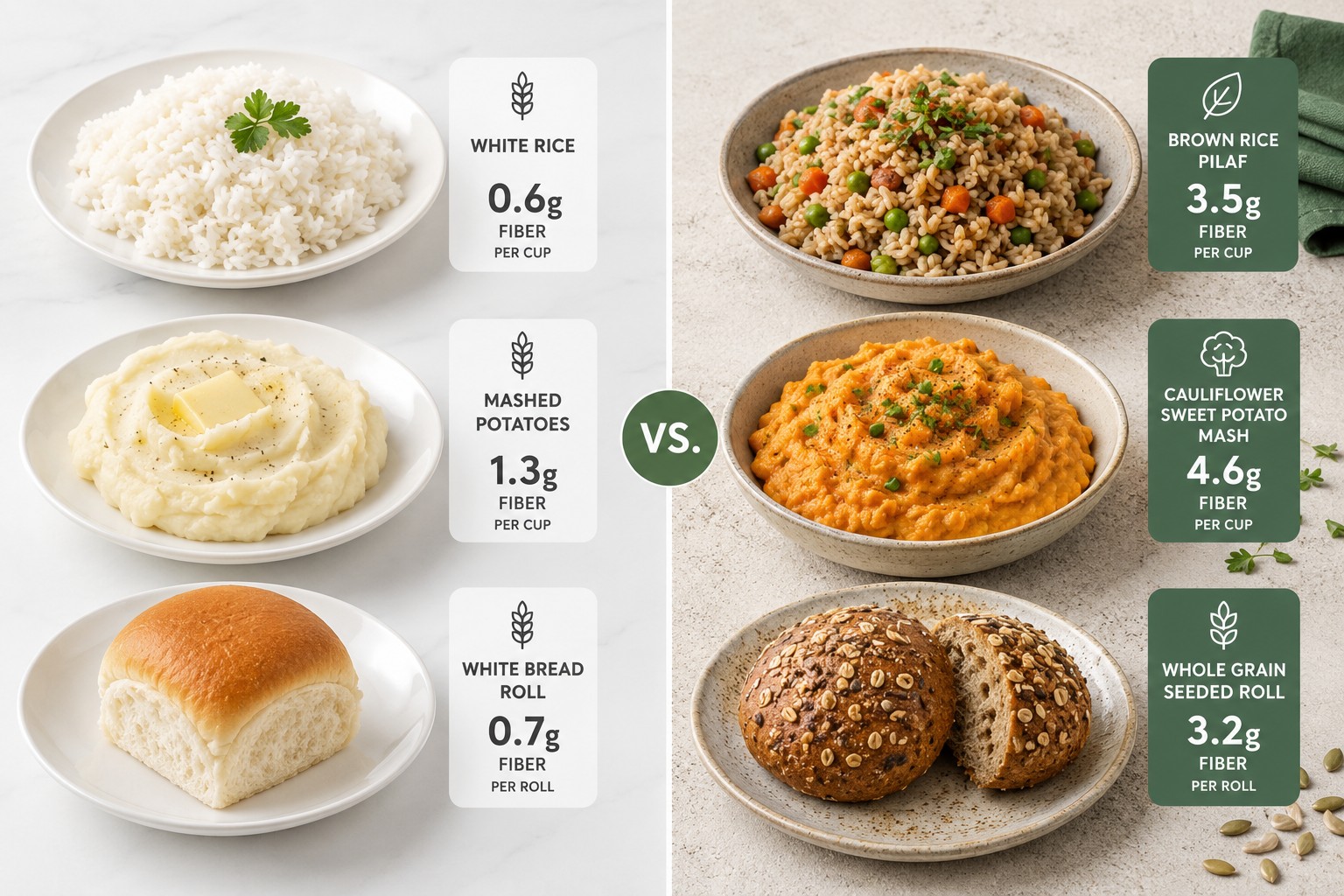
- Middle Eastern: Spiced lentil salads (8g fiber), tabbouleh with extra bulgur (6g fiber), roasted chickpeas with za’atar (7g fiber)
- Mexican: Refried black beans (9g fiber), cilantro-lime quinoa (5g fiber), elote-style roasted corn with peppers (4g fiber)
- Indian: Dal tadka with red lentils (7g fiber), whole wheat roti (3g per piece), cauliflower and chickpea curry (6g fiber)
- Mediterranean: White bean and tomato stew (10g fiber), farro pilaf with herbs (6g fiber), roasted Brussels sprouts with tahini (5g fiber)
- Asian: Edamame fried rice with brown rice (7g fiber), sesame green beans (4g fiber), miso-glazed eggplant (3g fiber)
Choose sides that complement your main dish’s flavor profile. Pair mild, creamy sides like white bean stew with spicy grilled chicken, or bold, spiced lentils with simply prepared steak.
How Much Fiber Should a Side Dish Have to Be Considered High Fiber?
A side dish qualifies as high-fiber when it contains at least 5 grams of dietary fiber per standard serving (typically ½ to 1 cup). This threshold represents 13-20% of the daily recommended fiber intake for adults and makes a meaningful contribution to digestive health and satiety.
Fiber content categories for side dishes:
- Moderate fiber: 3-4.9 grams per serving
- High fiber: 5-7.9 grams per serving
- Very high fiber: 8+ grams per serving
The best high-fiber sides for pairing with 2026 menu stars fall into the high or very high categories. For example, a cup of cooked black beans provides 15 grams of fiber, while a cup of quinoa offers 5 grams. When planning meals, aim for sides that contribute at least 20% of your daily fiber needs.
Common mistake: Don’t assume all vegetable sides are high in fiber. A cup of steamed broccoli has only 2.4 grams, while the same amount of cooked lentils delivers 8 grams. Legumes and whole grains consistently outperform plain vegetables for fiber content.
Best Fiber-Rich Sides to Pair with Grilled Chicken or Steak
The best fiber-rich sides for grilled chicken or steak are those that balance the protein’s richness without overwhelming its flavor, while adding textural contrast and nutritional density. Choose sides with 6-10 grams of fiber that complement the cooking method and seasoning of your main dish.
Top pairings for grilled proteins:
- Cilantro-lime black beans (9g fiber per cup): The bright citrus cuts through rich steak while adding creamy texture
- Roasted sweet potato and chickpea medley (8g fiber per serving): Natural sweetness balances smoky grilled flavors
- Mediterranean farro salad with vegetables (7g fiber per cup): Chewy grains and fresh herbs complement juicy chicken breast
- Spiced red lentil dal (7g fiber per cup): Warm spices enhance simply seasoned proteins
- Quinoa pilaf with roasted vegetables (6g fiber per cup): Nutty flavor pairs well with both chicken and beef
Decision rule: Choose grain-based sides (farro, quinoa, bulgur) when your protein is simply seasoned. Select legume-based sides (beans, lentils) when your protein has bold marinades or rubs, as the creamy texture provides contrast.
For chicken breast preparations that tend toward dryness, pair with moisture-rich sides like dal or bean salads dressed with vinaigrette.
High-Fiber Global Side Dishes vs Regular Sides Nutrition Comparison
High-fiber global sides deliver 3-5 times more fiber than traditional Western comfort sides while often providing more vitamins, minerals, and plant-based protein. The nutritional gap becomes significant when you consider that most people eat sides at least twice daily.
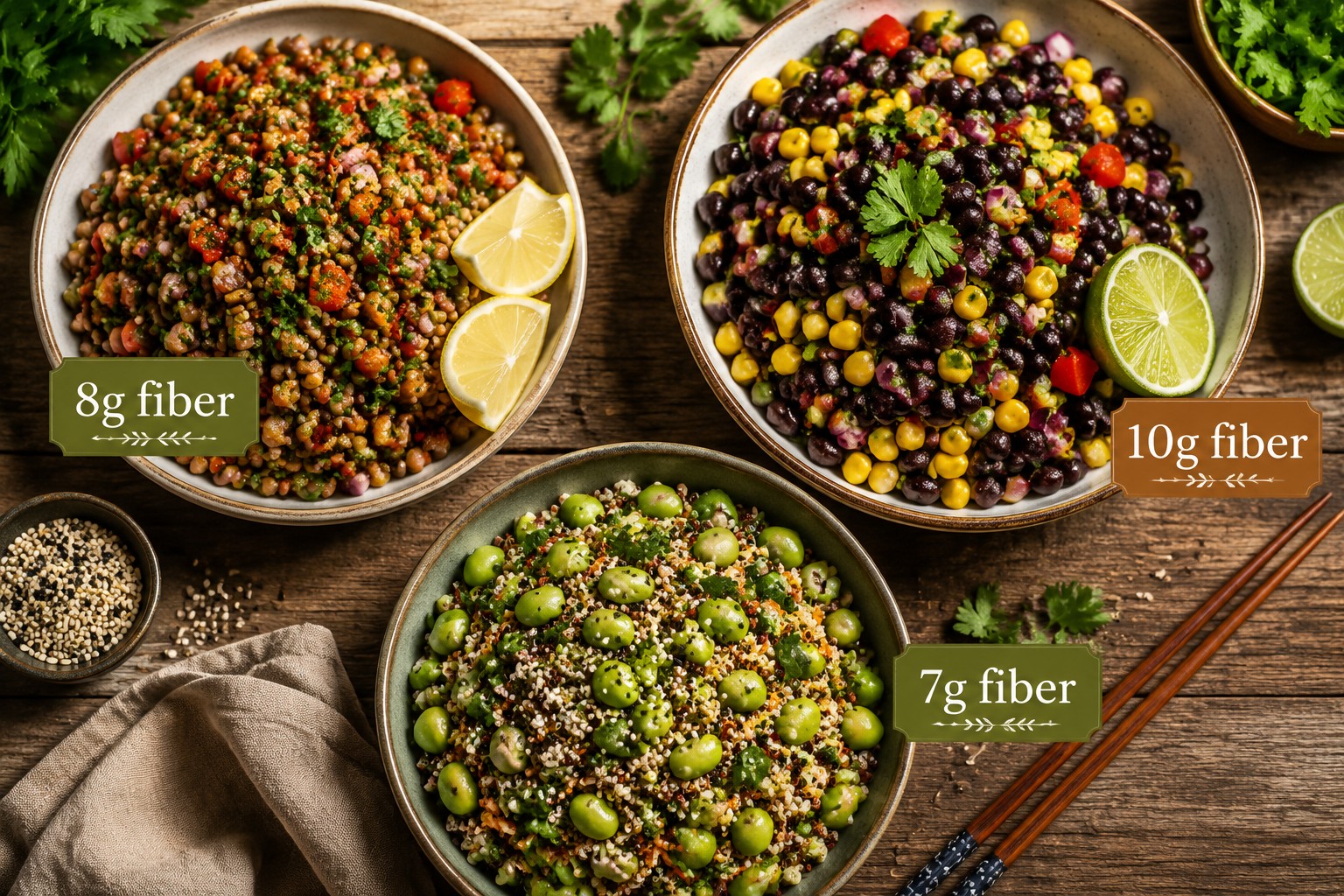
Nutritional comparison per 1-cup serving:
| Side Dish | Fiber (g) | Calories | Protein (g) | Key Nutrients |
|---|---|---|---|---|
| Traditional white rice | 0.6 | 205 | 4 | Minimal |
| Brown rice pilaf | 3.5 | 218 | 5 | Magnesium, selenium |
| Regular mashed potatoes | 2.2 | 237 | 4 | Potassium |
| Mashed sweet potato with skin | 6.6 | 180 | 4 | Vitamin A, potassium |
| White bread stuffing | 1.8 | 178 | 6 | Minimal |
| Quinoa herb stuffing | 5.2 | 222 | 8 | Iron, magnesium |
| Buttered corn | 2.9 | 155 | 5 | Vitamin C |
| Black bean and corn salad | 9.4 | 194 | 10 | Folate, iron |
The fiber difference translates to better blood sugar control, improved satiety, and enhanced digestive health. High-fiber sides also tend to be more nutrient-dense, providing vitamins and minerals that traditional sides lack.
Where to Buy Ingredients for International High-Fiber Recipes
Ingredients for international high-fiber sides are available at mainstream supermarkets, ethnic grocery stores, and online retailers, with most staples costing $1-3 per pound. Standard grocery stores now stock 80-90% of ingredients needed for global fiber-rich recipes due to increased demand in 2026.
Shopping guide by ingredient type:
Legumes and grains:
- Dried lentils, chickpeas, black beans: Any supermarket bulk section or canned goods aisle
- Specialty grains (farro, bulgur, freekeh): Natural food stores, Whole Foods, Trader Joe’s
- International rice varieties: Asian markets for forbidden rice, basmati; Latin markets for specialty beans
Spices and seasonings:
- Basic spices (cumin, coriander, turmeric): Regular supermarket spice aisle
- Specialty blends (za’atar, garam masala, berbere): Middle Eastern, Indian, or African markets
- Fresh herbs: Farmers markets for best prices on cilantro, parsley, mint
Online options:
- Amazon and Thrive Market: Bulk organic grains and legumes with delivery
- Specialty importers: Kalustyans, Penzeys for authentic spice blends
- Ethnic grocery delivery: Weee! for Asian ingredients, Mercato for Mediterranean
Budget tip: Buy dried legumes and whole grains in bulk. A pound of dried lentils costs $1.50-2.00 and yields 6-7 cups cooked, compared to $2-3 for a single 15-ounce can.
Why Is My High-Fiber Side Dish Not Turning Out Right?
High-fiber side dishes fail most often due to incorrect liquid ratios, insufficient cooking time, or inadequate seasoning, since whole grains and legumes require different techniques than refined ingredients. The dense structure of fiber-rich foods demands more water and longer cooking than their processed counterparts.
Common problems and solutions:
Mushy or undercooked grains:
- Cause: Wrong water-to-grain ratio or cooking time
- Fix: Use 2:1 liquid ratio for quinoa, 2.5:1 for brown rice, 3:1 for farro. Add 10-15 minutes to package directions for altitude above 3,000 feet
Bland flavor:
- Cause: Fiber-rich ingredients absorb flavors differently than refined foods
- Fix: Season cooking liquid with salt (1 teaspoon per cup of dry grain), toast grains before cooking, add aromatics like garlic and onion to cooking water
Hard or crunchy beans:
- Cause: Old beans, hard water, or acidic ingredients added too early
- Fix: Soak dried beans 8-12 hours, use filtered water if your tap water is very hard, add tomatoes or vinegar only after beans are tender
Gummy lentils:
- Cause: Overcooking or too much stirring
- Fix: Red and yellow lentils cook in 15-20 minutes; green and brown need 25-30 minutes. Stir only once or twice during cooking
Edge case: If beans remain hard after extended cooking, they may be over a year old. Old beans never fully soften. Buy from stores with high turnover or check packaging dates.
Are High-Fiber Sides Good for Weight Loss and Gut Health?
High-fiber sides support both weight loss and gut health by increasing satiety, stabilizing blood sugar, and feeding beneficial gut bacteria. Research consistently shows that people who consume 25-35 grams of fiber daily have better weight management outcomes and more diverse gut microbiomes than those eating low-fiber diets.
Weight loss benefits:
- Increased fullness: Fiber absorbs water and expands in the stomach, triggering satiety signals 20-30% faster than low-fiber foods
- Reduced calorie absorption: Some fiber types bind to dietary fat, preventing full absorption
- Blood sugar stability: Fiber slows glucose absorption, preventing insulin spikes that trigger fat storage
- Lower calorie density: High-fiber sides typically contain 150-220 calories per cup versus 250-400 for refined alternatives
Gut health benefits:
- Prebiotic fuel: Soluble fiber in beans, lentils, and oats feeds beneficial bacteria like Bifidobacteria and Lactobacilli
- Improved regularity: Insoluble fiber in whole grains adds bulk to stool and speeds transit time
- Reduced inflammation: Fiber fermentation produces short-chain fatty acids that reduce gut inflammation
- Diverse microbiome: Varied fiber sources (legumes, grains, vegetables) support broader bacterial diversity
Choose high-fiber sides if: You’re trying to lose weight without feeling hungry, managing blood sugar, or improving digestive regularity. Pair them with lean proteins like chicken breast for optimal satiety.
Who Should Avoid Eating Too Much Fiber in One Meal?
People with inflammatory bowel disease (IBD), irritable bowel syndrome (IBS), or those recovering from gastrointestinal surgery should limit fiber intake to 10-15 grams per meal to avoid triggering symptoms. Additionally, anyone rapidly increasing fiber consumption should do so gradually to prevent bloating, gas, and cramping.
Groups requiring fiber moderation:
Active IBD or IBS flare-ups:
- Limit to 5-8 grams of fiber per meal during acute symptoms
- Choose well-cooked, peeled vegetables and refined grains temporarily
- Reintroduce high-fiber sides slowly as symptoms improve
Post-surgical recovery:
- Follow medical guidance, typically starting with low-residue diet (10-15g daily total)
- Wait 4-6 weeks before introducing high-fiber sides
- Begin with soft, well-cooked options like mashed sweet potatoes
Children under 5:
- Calculate appropriate fiber as age + 5 grams per meal (3-year-old needs 8g per meal maximum)
- Spread fiber throughout the day rather than concentrating in one meal
- Monitor for constipation or diarrhea when introducing new high-fiber foods
Elderly with reduced mobility:
- Increase water intake proportionally with fiber (8-10 glasses daily)
- Choose softer high-fiber options like well-cooked lentils over raw vegetables
- Watch for signs of intestinal blockage if activity level is very low
Warning sign: If you experience severe cramping, bloating, or changes in bowel habits after eating high-fiber sides, reduce portion sizes by half and increase gradually over 2-3 weeks.
Common Mistakes When Cooking Beans and Lentils for Side Dishes
The most common mistakes when cooking beans and lentils include skipping the soak for beans, adding salt or acid too early, and using old legumes that never fully soften. These errors result in tough, unevenly cooked sides that discourage people from incorporating these fiber-rich ingredients.
Critical mistakes and corrections:
1. Not soaking dried beans:
- Problem: Longer cooking time, tough skins, increased gas production
- Solution: Soak beans 8-12 hours or use quick-soak method (boil 2 minutes, rest 1 hour)
- Exception: Lentils and split peas don’t require soaking
2. Adding acidic ingredients too early:
- Problem: Tomatoes, vinegar, or lemon juice prevent beans from softening
- Solution: Cook beans until tender, then add acidic ingredients for final 10-15 minutes
- Applies to: All bean varieties, not lentils
3. Insufficient water:
- Problem: Beans absorb 2-3 times their volume in water; too little causes scorching
- Solution: Use 3-4 cups water per cup of dried beans, checking and adding more as needed
- Test: Beans should always be covered by 1-2 inches of liquid during cooking
4. Overcooking lentils:
- Problem: Red and yellow lentils turn to mush in 25+ minutes
- Solution: Set timer for 15 minutes for red/yellow, 25 minutes for green/brown, taste-test frequently
- Visual cue: Lentils are done when they’ve lost their shape slightly but aren’t falling apart
5. Not salting cooking water:
- Problem: Bland beans that require excessive seasoning later
- Solution: Add 1-2 teaspoons salt per pound of dried beans to cooking water (doesn’t toughen them)
- Timing: Add salt at the beginning for lentils, after 30 minutes for beans
Quick fix: If beans are taking too long to cook, add ¼ teaspoon baking soda to the pot. This raises pH and speeds softening, though it may slightly affect texture.
Can I Meal Prep High-Fiber Sides for the Whole Week?
Most high-fiber sides store well for 4-5 days when refrigerated properly, making them excellent candidates for weekly meal prep. Grain-based and legume-based sides actually improve in flavor as seasonings meld, while maintaining their nutritional value and texture better than many other prepared foods.
Best sides for meal prep (5-day storage):
- Cooked whole grains (quinoa, farro, brown rice): Store dry, add dressing before serving
- Bean salads: Improve in flavor; keep dressing separate if using delicate greens
- Cooked lentils: Maintain texture well; reheat with splash of broth
- Roasted vegetables with chickpeas: Stay crisp if stored uncovered for first 24 hours
Moderate storage (3-4 days):
- Mashed sweet potatoes: May separate slightly; stir before reheating
- Grain pilafs with fresh herbs: Add fresh herbs day-of for best flavor
- Bean dips and spreads: Texture thickens; thin with water or oil
Poor storage (1-2 days):
- Crispy preparations (roasted chickpeas): Lose crunch quickly
- Sides with raw vegetables: Become soggy
- Dishes with dairy: Risk of spoilage
Meal prep strategy:
- Sunday prep: Cook 3-4 cups each of two different grains and two types of beans
- Portion: Divide into 1-cup containers for grab-and-go convenience
- Season variably: Keep base ingredients plain, add different seasonings daily for variety
- Freeze extras: Cooked grains and beans freeze for 3 months; thaw overnight in refrigerator
Pro tip: Prepare components separately and assemble daily. Cook grains and legumes in bulk, but add fresh vegetables, herbs, and dressings each day for optimal texture and flavor.
Alternatives to Quinoa for High-Fiber Grain Sides
Several whole grains match or exceed quinoa’s fiber content while offering different flavors, textures, and price points. Farro, bulgur, barley, and freekeh are excellent alternatives that pair well with 2026 menu stars and provide 5-8 grams of fiber per cooked cup.
High-fiber grain alternatives:
Farro (7g fiber per cup cooked):
- Flavor: Nutty, slightly sweet
- Texture: Chewy, similar to barley
- Best for: Mediterranean-style sides, grain salads
- Cooking time: 25-30 minutes
- Cost: $3-5 per pound
Bulgur (8g fiber per cup cooked):
- Flavor: Mild, slightly nutty
- Texture: Light, fluffy when cooked properly
- Best for: Tabbouleh, pilafs, Middle Eastern sides
- Cooking time: 12-15 minutes (fastest option)
- Cost: $2-3 per pound
Pearl barley (6g fiber per cup cooked):
- Flavor: Mild, slightly sweet
- Texture: Creamy, risotto-like
- Best for: Mushroom barley pilaf, soup-like sides
- Cooking time: 45-50 minutes
- Cost: $1.50-2.50 per pound (most economical)
Freekeh (8g fiber per cup cooked):
- Flavor: Smoky, earthy
- Texture: Chewy, firm
- Best for: Bold-flavored mains, roasted vegetable sides
- Cooking time: 20-25 minutes
- Cost: $4-6 per pound
Brown rice (3.5g fiber per cup cooked):
- Advantage: Familiar, widely available, gluten-free
- Disadvantage: Lower fiber than alternatives
- Best for: Asian-inspired sides, when gluten-free needed
Decision rule: Choose bulgur when time is limited, barley when budget matters most, farro for Italian-inspired meals, and freekeh when pairing with smoky or grilled proteins.
What Counts as a Comfort Food Side Dish with Fiber?
A comfort food side with fiber combines the familiar, satisfying qualities of traditional comfort foods (creamy texture, rich flavor, nostalgic appeal) with ingredients that deliver at least 5 grams of fiber per serving. These sides reimagine classics using whole grains, legumes, and fiber-rich vegetables while maintaining the emotional satisfaction of comfort food.
Fiber-rich comfort side examples:
Creamy mashed sweet potatoes with skin (7g fiber):
- Replaces regular mashed potatoes
- Maintains creamy texture with added natural sweetness
- Pairs perfectly with roasted chicken thighs or steak
Whole grain mac and cheese with cauliflower (6g fiber):
- Uses whole wheat pasta plus hidden vegetables
- Keeps cheese sauce richness
- Appeals to kids and adults equally
Refried black beans with spices (9g fiber):
- Traditional Mexican comfort with authentic flavor
- Creamy, satisfying texture
- Complements tacos, enchiladas, grilled meats
Loaded sweet potato skins (8g fiber):
- Comfort food presentation with fiber boost
- Customizable toppings (beans, cheese, vegetables)
- Works as side or light main
Whole grain cornbread with jalapeños (4g fiber per piece):
- Southern comfort classic upgraded
- Pairs with chili, barbecue, grilled proteins
- Familiar taste with nutritional improvement
Key characteristics: Comfort sides with fiber maintain familiar flavors and textures while incorporating whole food ingredients. They don’t taste “healthy” or compromise on satisfaction, making them sustainable additions to regular meal rotation.
Do High-Fiber Sides Work with Keto or Low-Carb Main Dishes?
High-fiber sides can work with keto or low-carb eating patterns when you choose non-starchy vegetables and moderate portions of lower-carb legumes, though traditional grain-based sides exceed most keto carb limits. The key is selecting sides with high fiber-to-net-carb ratios and adjusting portion sizes accordingly.
Keto-friendly high-fiber sides (5-10g net carbs):
- Roasted Brussels sprouts with bacon (4g net carbs, 4g fiber per cup): Perfect for keto
- Cauliflower rice pilaf with herbs (3g net carbs, 3g fiber per cup): Grain substitute
- Sautéed green beans with almonds (4g net carbs, 4g fiber per cup): Classic pairing
- Roasted asparagus with parmesan (2g net carbs, 3g fiber per cup): Low-carb option
- Zucchini noodles with pesto (3g net carbs, 2g fiber per cup): Pasta alternative
Low-carb friendly (10-15g net carbs):
- Small portion black beans (12g net carbs, 8g fiber per ½ cup): Moderate serving
- Lentil salad (11g net carbs, 8g fiber per ½ cup): Reduced portion
- Quinoa (17g net carbs, 3g fiber per ½ cup): Occasional option
Not compatible with strict keto:
- Full portions of grains (quinoa, farro, brown rice): 30-40g net carbs per cup
- Large servings of beans: 20-30g net carbs per cup
- Starchy vegetables (regular potatoes, corn): 25-35g net carbs per cup
Strategy for low-carb eating: Focus on non-starchy vegetable sides prepared with healthy fats, and use small portions (¼-½ cup) of legumes as garnish rather than main side. This approach provides fiber benefits while maintaining carb control.
When pairing with grilled chicken breast or steak on a low-carb plan, prioritize vegetable-based high-fiber sides over grain-based options.
How to Make High-Fiber Sides That Kids Will Actually Eat
Kids accept high-fiber sides more readily when familiar flavors and textures are maintained, portions are age-appropriate, and new foods are introduced alongside accepted favorites. The key is making fiber-rich ingredients taste good rather than emphasizing their health benefits.
Kid-friendly preparation strategies:
1. Blend into familiar dishes:
- Add white beans to mac and cheese (puree for invisibility)
- Mix cauliflower rice into regular rice (50/50 ratio)
- Incorporate lentils into spaghetti sauce or taco meat
- Why it works: Familiar taste with hidden nutrition
2. Make it fun and interactive:
- Build-your-own taco bar with black bean option
- Loaded sweet potato bar with various toppings
- Grain bowls where kids choose their mix-ins
- Why it works: Control increases acceptance
3. Adjust textures:
- Mash beans smooth rather than leaving whole
- Cook vegetables until soft, not crunchy
- Make grain sides creamy with broth or cheese
- Why it works: Kids often reject unfamiliar textures before taste
4. Use cheese and mild seasonings:
- Whole grain pasta with cheese sauce
- Quinoa with butter and parmesan
- Black beans with melted cheese
- Why it works: Familiar flavors reduce resistance
5. Start with sweet options:
- Roasted sweet potato wedges (kids love natural sweetness)
- Corn and black bean salad (corn adds sweetness)
- Honey-glazed carrots with chickpeas
- Why it works: Sweet flavors are universally appealing
Portion guidelines for kids:
- Ages 2-3: 2-3 tablespoons per side
- Ages 4-8: ¼-⅓ cup per side
- Ages 9-13: ½ cup per side
- Ages 14+: ¾-1 cup per side
Common mistake: Don’t force kids to “clean their plate” of high-fiber sides. Pressure creates negative associations. Instead, serve small portions alongside familiar foods and allow them to request more.
Edge case: If a child has sensory processing issues, work with an occupational therapist before introducing high-fiber sides with challenging textures.
FAQ
How much fiber do I need daily? Adults need 25-38 grams of fiber daily (25g for women, 38g for men). Most Americans consume only 15-17 grams, creating a significant gap that high-fiber sides can help fill. Aim for 8-12 grams of fiber per meal to reach daily targets.
Can I eat too much fiber in one day? Yes, consuming more than 70 grams of fiber daily can cause bloating, gas, cramping, and nutrient malabsorption. Increase fiber gradually over 2-3 weeks and drink 8-10 glasses of water daily to prevent digestive discomfort.
Do canned beans have as much fiber as dried beans I cook myself? Canned beans contain the same fiber as home-cooked dried beans (7-9 grams per ½ cup), though sodium content is higher. Rinse canned beans under water for 30 seconds to reduce sodium by 40% while maintaining fiber content.
Which has more fiber, brown rice or quinoa? Quinoa contains more fiber (5.2g per cup cooked) than brown rice (3.5g per cup cooked). However, both are good sources, and variety in grain choices provides different nutrients and prevents meal fatigue.
Will high-fiber sides help me lose weight? High-fiber sides support weight loss by increasing fullness, stabilizing blood sugar, and reducing overall calorie intake. Studies show people who eat 25+ grams of fiber daily lose 2-3 pounds more over 6 months than those eating low-fiber diets, even without other dietary changes.
How do I reduce gas from eating beans? Reduce gas by soaking dried beans 12 hours and discarding soaking water, starting with small portions (¼ cup) and increasing gradually, cooking beans thoroughly until very soft, and adding digestive spices like cumin, ginger, or fennel to recipes.
Can I freeze cooked high-fiber sides? Most cooked grains, beans, and lentils freeze well for 3 months in airtight containers. Cool completely before freezing, portion into single servings, and thaw overnight in the refrigerator. Texture may soften slightly but remains acceptable.
Are high-fiber sides safe during pregnancy? High-fiber sides are safe and beneficial during pregnancy, helping prevent constipation and supporting healthy blood sugar levels. Pregnant women need 25-30 grams of fiber daily. Introduce fiber gradually if increasing intake and drink plenty of water.
What’s the fastest high-fiber side to make? Bulgur wheat is the fastest high-fiber side, cooking in just 12-15 minutes and providing 8 grams of fiber per cup. Quick-cooking lentils (red or yellow) are second fastest at 15-20 minutes with 7-8 grams of fiber per cup.
Do high-fiber sides need special storage? Store cooked high-fiber sides in airtight containers in the refrigerator for 4-5 days. Keep grains slightly dry (don’t add all dressing) to prevent sogginess. Most sides can be eaten cold, room temperature, or reheated.
Can diabetics eat high-fiber sides with carbs? Yes, high-fiber sides benefit diabetics because fiber slows glucose absorption and prevents blood sugar spikes. Choose sides with at least 5 grams of fiber per serving and pair with lean protein for optimal blood sugar control.
Why do my lentils turn mushy? Lentils turn mushy from overcooking or excessive stirring. Red and yellow lentils cook in 15-20 minutes and naturally break down more than green or brown varieties. Use a timer, stir only once or twice, and remove from heat when lentils are just tender.
SEO Meta Title: Fiber-Packed Global Comfort Sides: Recipes for 2026


