
What Is the Best Way to Cook Chicken Breast to Keep It Juicy?
When you want to know what is the best way to cook chicken breast to keep it juicy, the answer is usually a simple pan method with a gentle finish.
You get better results when you use even thickness, controlled heat, and the right resting time.
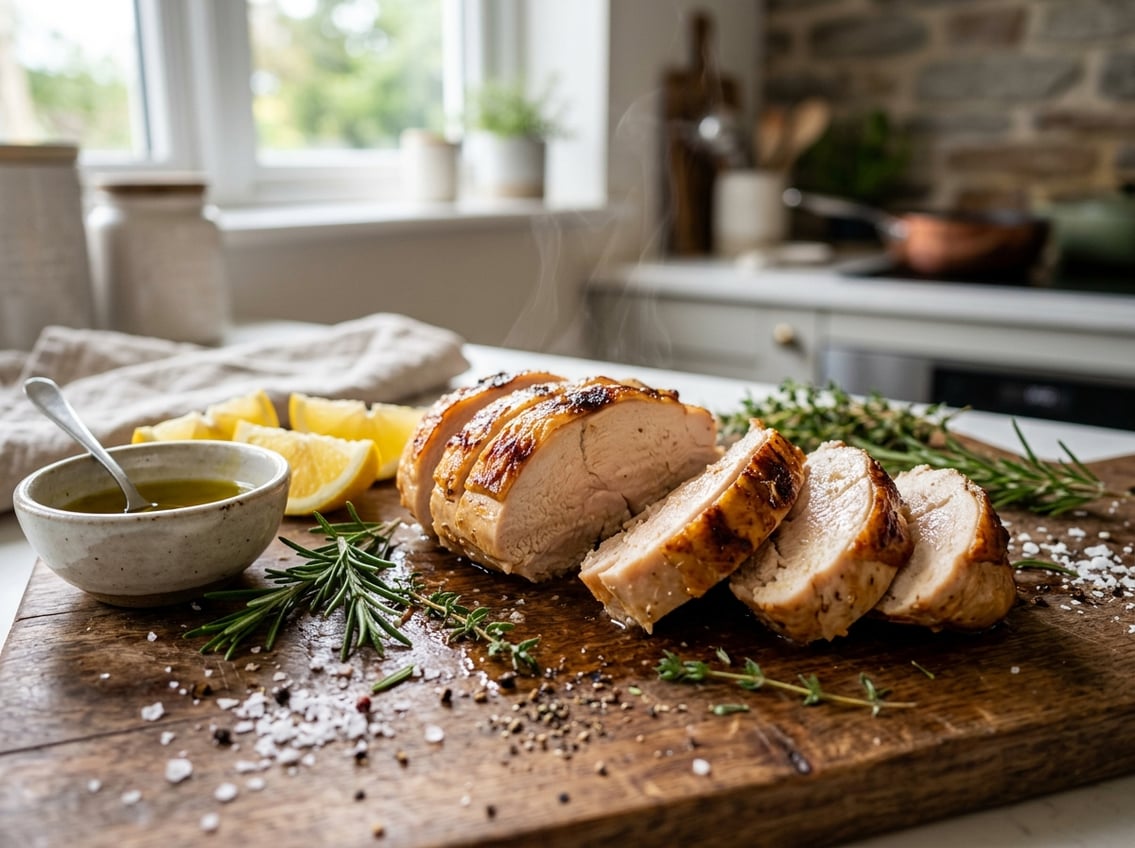
The most reliable approach is to give chicken breast a quick sear in a hot pan, then finish it gently with lower heat and a covered rest so it stays tender and moist.
This works well for weeknight dinners, meal prep, and any chicken breast recipe that needs a clean, mild flavor.
If you have struggled with dry chicken breast before, you are not alone.
Juicy chicken breast is very achievable when you pay attention to prep, heat, and doneness.
The Best Overall Method for Moist Results
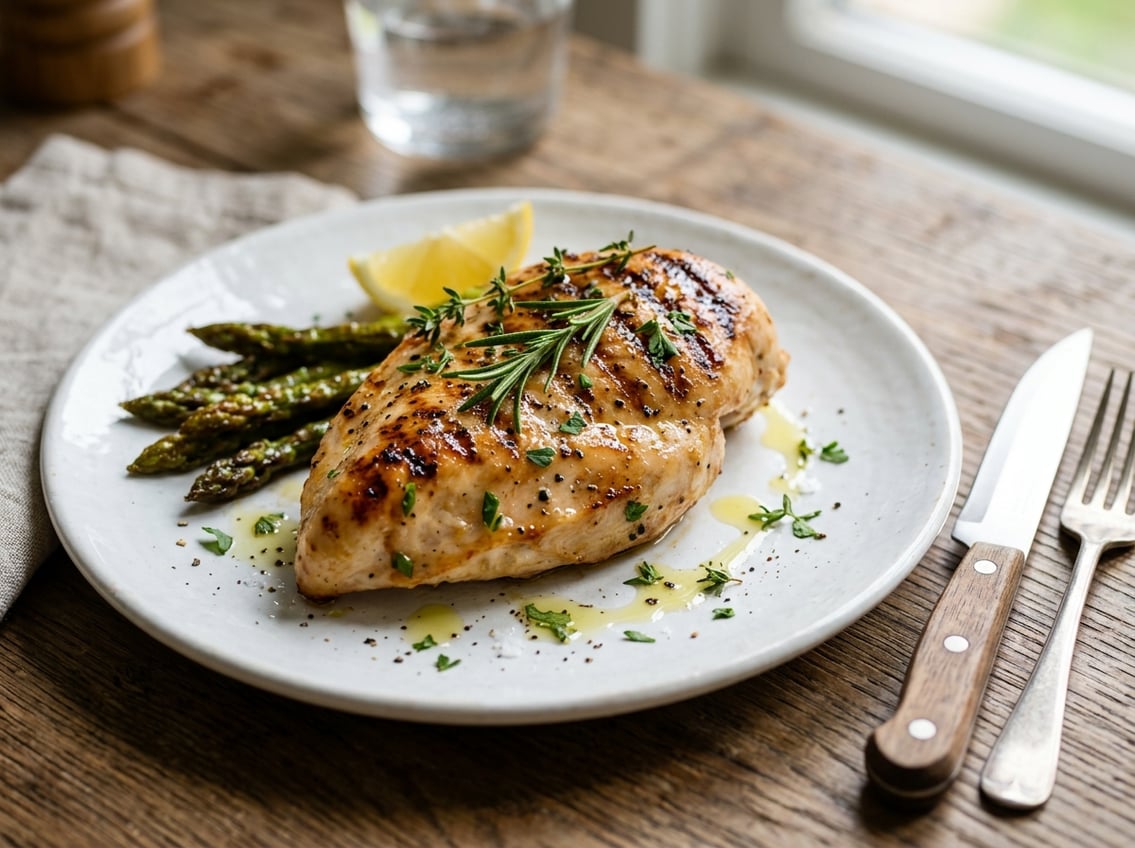
Start by giving the chicken breast a brief sear, then finish it on low heat with the pan covered.
This gives you a little color on the outside while the inside cooks through more gently.
This approach works especially well for boneless skinless chicken breasts, since they can dry out fast if you use high heat for too long.
You can use this method when you cook chicken breasts for salads, wraps, pasta, or meal prep.
Why a Sear-Then-Gentle-Finish Approach Works Best
A short sear builds flavor and helps the surface look appetizing.
Lowering the heat after searing keeps the inside from tightening too fast.
That balance helps you make a perfectly cooked chicken breast that stays tender instead of stringy.
You also get more control than when you use high heat the whole time.
How to Cook Chicken Breast in a Pan Without Drying It Out
Heat oil in a skillet, add the chicken, and let it cook briefly on the first side without moving it.
Flip it, reduce the heat, then cover the pan so the chicken finishes gently.
The Kitchn recommends this covered-skillet method for juicy results, with a short stovetop start followed by a covered rest and a final temperature check using an instant-read thermometer as described here.
That combination helps the meat stay moist while it cooks evenly.
When to Choose a Covered Skillet vs. Oven Finish
Choose a covered skillet when you want speed and simple cleanup.
This works well for thinner or medium chicken breasts and for nights when you want to stay at the stove.
An oven finish makes more sense for thicker pieces or when you cook several breasts at once.
Both methods can produce juicy chicken breasts if you avoid overcooking and check the internal temperature.
The Internal Temperature That Keeps It Juicy
Chicken breast needs to reach 165°F in the thickest part, according to the USDA standard for safe poultry cooking.
An instant-read thermometer helps you stop at the right moment instead of guessing.
For juicier texture, pull the chicken as soon as it reaches that safe point.
Let it rest before slicing so the juices stay inside the meat instead of running onto the cutting board.
Prep Steps That Make Chicken Breast Tender
Good prep changes the final texture more than many cooks expect.
If you want a tender chicken breast, start by making the pieces even, well seasoned, and ready to cook at the same pace.
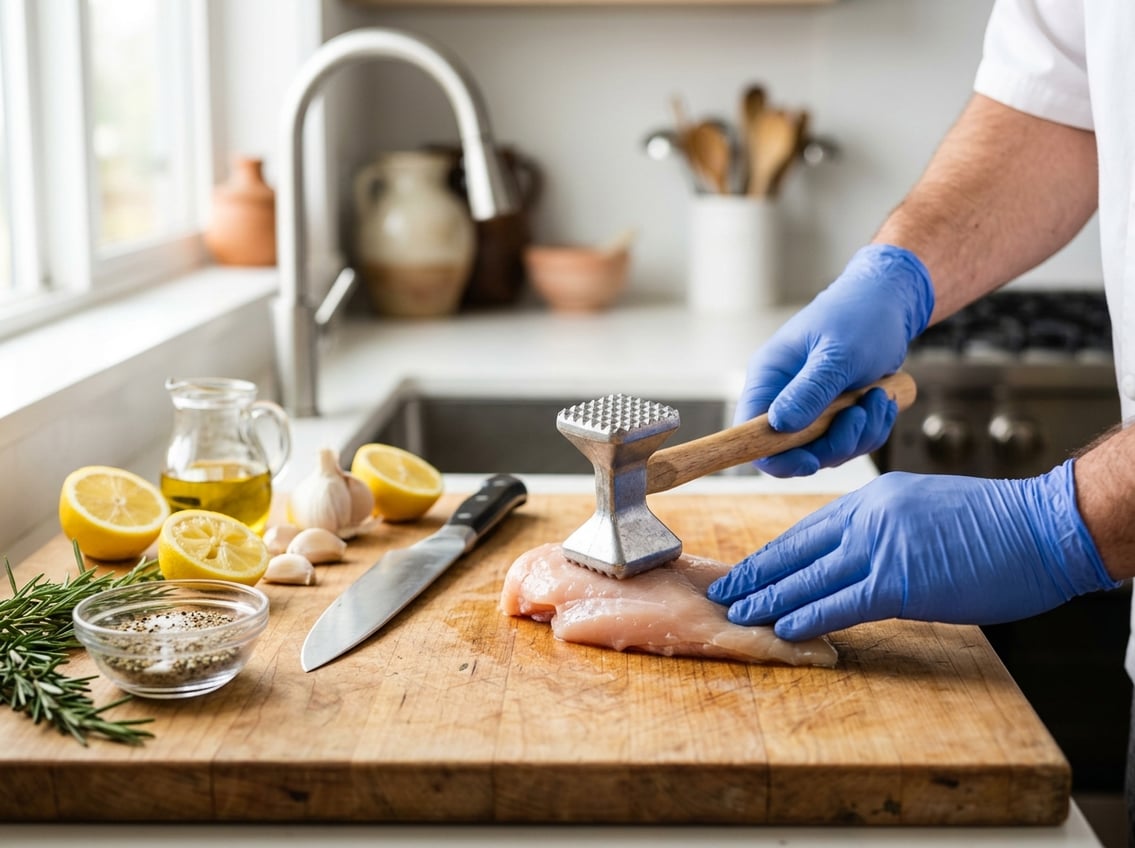
Pounding to Even Thickness for Faster, More Even Cooking
Pound thicker ends so each chicken breast is close to the same thickness.
This helps the thin part from overcooking while the thick part catches up.
Even thickness makes timing easier.
It is one of the simplest ways to improve chicken breasts without changing the flavor at all.
How Salt, Brining, and Marinades Improve Moisture Retention
Salt helps chicken hold onto moisture better during cooking.
A quick brine can also improve flavor and juiciness, which The Kitchn notes can happen in as little as 15 minutes before cooking in its method notes.
Marinades add flavor, especially when they include salt or an acidic ingredient in the right amount.
Keep marinades simple if you want the chicken itself to stay the main flavor.
How to Season Chicken for Better Flavor and Browning
Use salt and freshly ground black pepper as your base.
You can add garlic powder, paprika, thyme, or other spices if they fit the dish.
Seasoned chicken breasts brown better and taste more complete, even with a simple side dish.
If you want a stronger crust, a light coating of flour can help, though it is not required.
Why Patting Dry Matters Before Searing
After brining or marinating, pat the chicken dry before it hits the pan.
Dry surface moisture helps the outside brown instead of steaming.
That step also makes the sear more even.
You still keep the inside moist, since the drying step only affects the surface.
Common Mistakes That Dry It Out
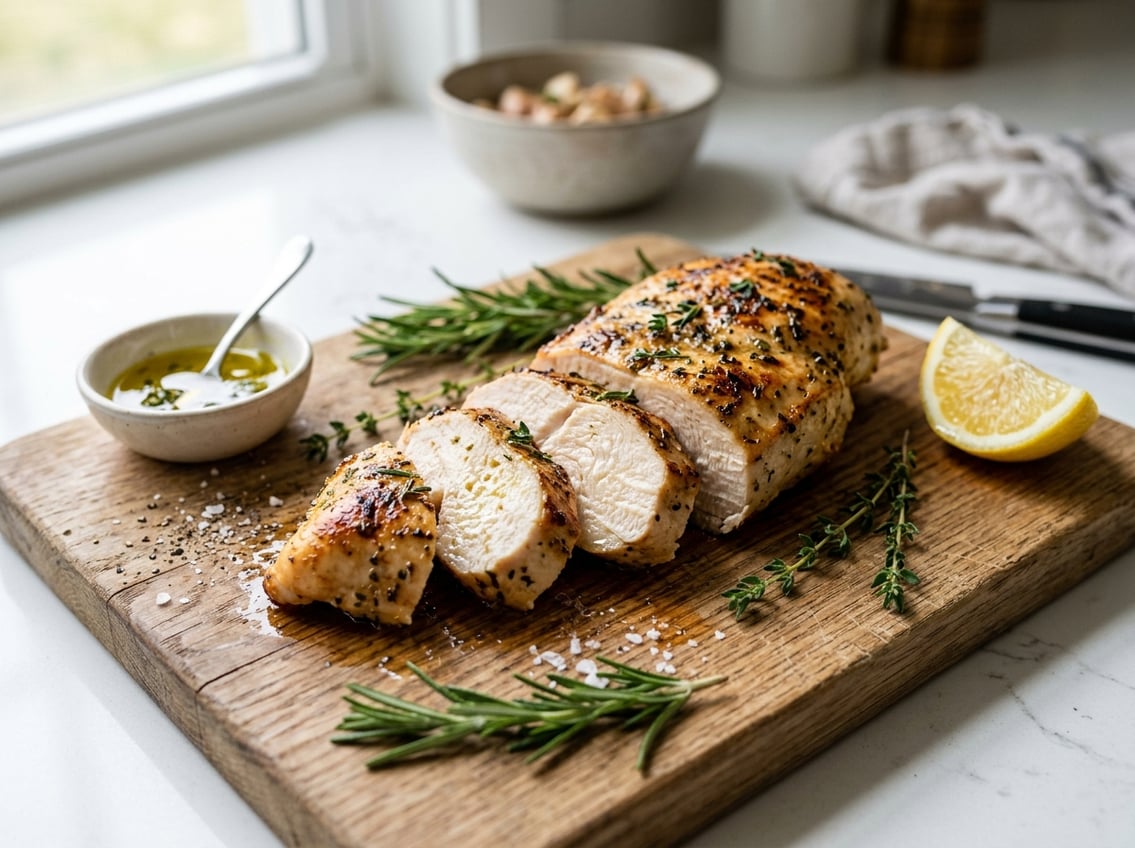
Dry chicken breast usually comes from a few repeat errors.
Most of them are easy to fix once you know what to watch for.
If you want a juicy chicken breast every time, focus on temperature, pan space, rest time, and heat level.
Overcooking and Skipping the Thermometer
Guessing often leads to overcooking.
Chicken breast goes from done to dry very quickly if it stays on heat too long.
Use a thermometer so you can stop at 165°F instead of waiting for visual cues alone.
Color is not a reliable sign of doneness by itself.
Why You Shouldn’t Overcrowd the Pan
If you cook chicken breast in a pan with too many pieces at once, the temperature drops and the chicken steams.
That can prevent browning and lead to uneven cooking.
Leave space between the breasts so heat can move around them.
If needed, cook in batches rather than crowding the pan.
Cutting Too Soon Instead of Letting It Rest
If you slice too early, the juices run out onto the board.
Let the chicken rest for a few minutes so the muscle fibers relax and the moisture stays inside.
This short pause makes a real difference in the final bite.
It is one of the easiest ways to keep chicken breast juicy.
Using the Wrong Heat for the Chicken’s Thickness
Very high heat can burn the outside before the center is ready.
Very low heat from the start can leave the chicken pale and slow to cook.
Match the heat to the thickness.
Thin pieces need less time, while thicker breasts do better with a quick start and a gentler finish.
Best Variations and Serving Uses
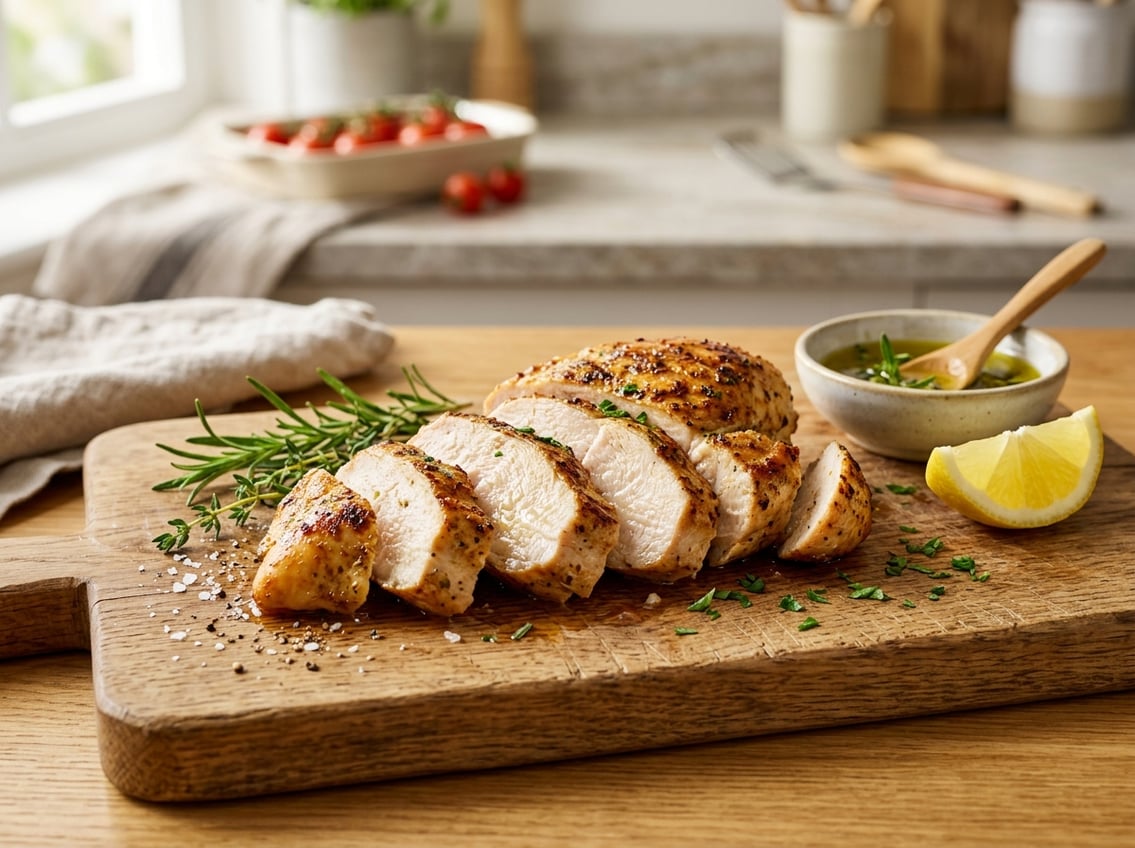
Once you know the basic method, you can adapt it for many meals.
The same moisture rules apply whether you want slices for dinner, shredded meat for meal prep, or a fuller chicken breast recipe for the week.
When Baked Chicken Breast Is the Better Option
Baked chicken breast can be the better choice when you want hands-off cooking or you are making several pieces at once.
It also works well for larger meal prep batches.
Use the same basics— even thickness, seasoning, and a thermometer— so the texture stays tender.
Baking is easiest when you keep the oven moderate and avoid leaving the chicken in too long.
How Blackened Chicken Breast Fits Into the Same Technique
You can keep blackened chicken breast juicy if you control the heat and do not overcook it.
The bold seasoning works best when the chicken stays moist underneath.
Use a hot skillet for flavor, then lower the heat as soon as the outside is seasoned and browned.
That keeps the spices from burning while the inside finishes gently.
Best Ways to Slice or Shred It for Chicken Salad and Meal Prep
For chicken salad, let the breast cool slightly before slicing or dicing it.
If you want shredded chicken, pull it apart while it is still warm enough to separate easily.
A juicy breast makes better chicken salad because it stays soft after mixing with dressing.
It also holds up better in storage, which is useful for lunches.
Other Chicken Recipes That Use the Same Juicy-Cooking Principles
This method helps in many chicken recipes, from tacos to pasta to rice bowls. When you cook chicken breast for a recipe, use even thickness, salt, controlled heat, and rest time.
You can use these habits for a simple chicken breast recipe you make often. Once you learn how to cook chicken breast well, you have a dependable base for many meals.


