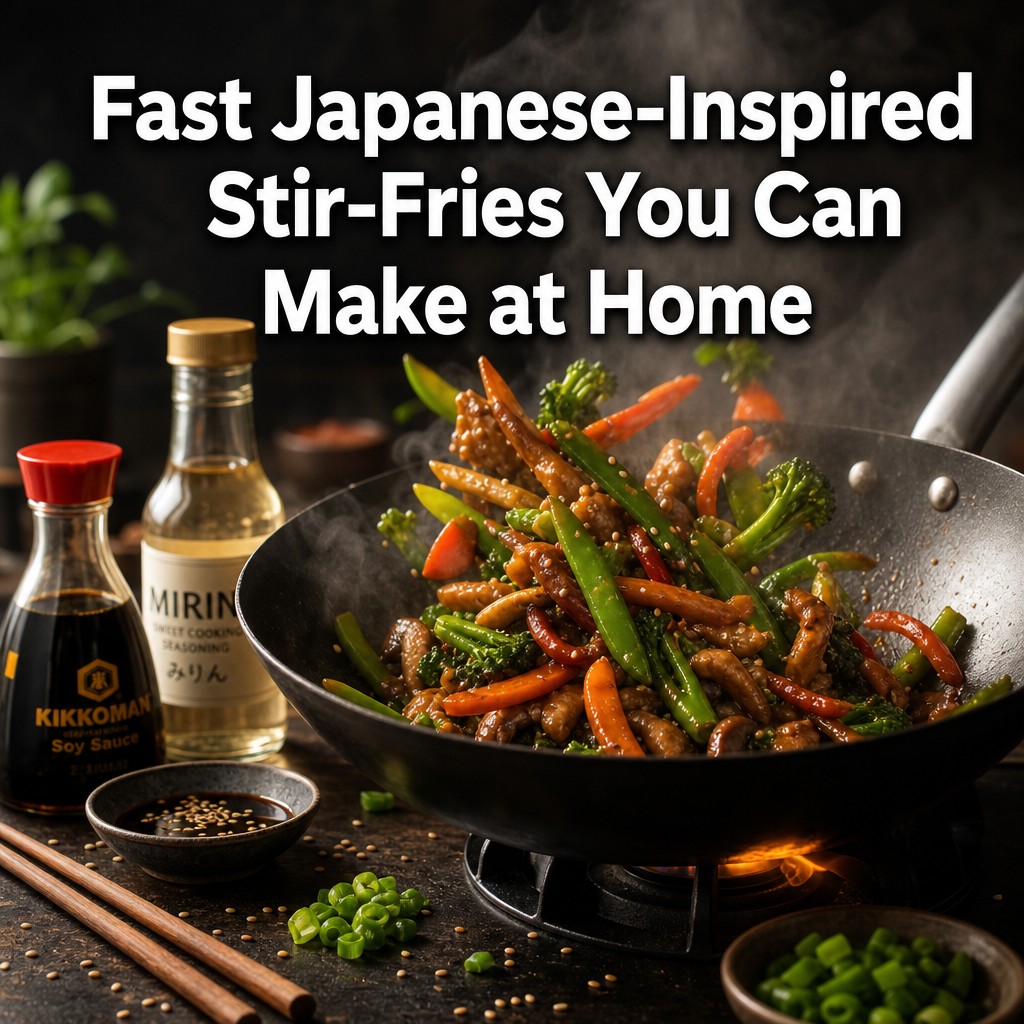
Fast Japanese-Inspired Stir-Fries You Can Make at Home
Last updated: June 9, 2026
Quick Answer
Fast Japanese-inspired stir-fries you can make at home typically take 15-20 minutes from start to finish and rely on a handful of pantry staples like soy sauce, mirin, and sake. Unlike Chinese stir-fries that often use heavy sauces and high heat, Japanese versions emphasize lighter seasoning, umami depth, and quick cooking that preserves vegetable texture. You don’t need a wok or specialty equipment—a regular skillet works perfectly for dishes like teriyaki chicken, yakisoba noodles, and vegetable stir-fries.
Key Takeaways
- Japanese stir-fries use lighter sauces and emphasize umami flavors compared to Chinese-style preparations
- Most recipes require only 15-20 minutes of active cooking time with minimal prep
- Essential sauces include soy sauce, mirin, and sake—all available at major grocery stores
- A regular non-stick skillet works just as well as a wok for home cooking
- Common vegetables include cabbage, snap peas, shiitake mushrooms, carrots, and bean sprouts
- Teriyaki stir-fries feature a sweet-savory glaze, while yakisoba uses Worcestershire-based sauce
- Meal prep is possible but best done by storing components separately
- These dishes are naturally low in calories and high in vegetables, making them suitable for weight loss
What Makes a Stir-Fry Japanese Style vs Chinese Style?
Japanese stir-fries use lighter sauces with less oil and emphasize the natural flavors of ingredients through umami-rich seasonings like soy sauce, mirin, and dashi. Chinese stir-fries typically involve higher heat, more oil, and bolder sauces such as oyster sauce, hoisin, or black bean sauce.
The cooking technique differs too. Japanese preparations often cook ingredients separately or in smaller batches to maintain distinct textures, while Chinese methods favor tossing everything together at high heat for that characteristic “wok hei” (breath of the wok) flavor.
Key differences:
- Sauce thickness: Japanese sauces are thinner and more delicate; Chinese sauces are often thicker and coat ingredients heavily
- Oil usage: Japanese cooking uses minimal oil; Chinese stir-fries use more oil for flavor and heat transfer
- Sugar content: Japanese dishes balance sweet and savory subtly; Chinese dishes may use more sugar or sweet bean pastes
- Vegetables: Japanese stir-fries favor cabbage, snap peas, and mushrooms; Chinese versions often include bok choy, water chestnuts, and bamboo shoots
Choose Japanese-style if you prefer lighter meals that let individual ingredients shine. Opt for Chinese-style when you want bolder, more complex sauce profiles.
What Is the Easiest Japanese Stir-Fry for Beginners?
Teriyaki chicken stir-fry is the easiest Japanese dish for beginners because it requires only four main ingredients—chicken, vegetables, teriyaki sauce, and rice—and takes about 15 minutes to cook. The sauce is forgiving, the technique is straightforward, and you can buy pre-made teriyaki sauce to simplify the process even further.
Simple teriyaki chicken stir-fry steps:
- Cut 1 pound of chicken breast into bite-sized pieces
- Heat 1 tablespoon oil in a skillet over medium-high heat
- Cook chicken 5-6 minutes until golden and cooked through
- Add 2 cups mixed vegetables (snap peas, carrots, bell peppers)
- Stir-fry 3-4 minutes until vegetables are crisp-tender
- Pour in ¼ cup teriyaki sauce and toss to coat
- Serve immediately over rice
Common beginner mistake: Overcrowding the pan. If your skillet is too full, ingredients will steam instead of sear. Cook in two batches if needed to maintain high heat and get that slight caramelization.
For even simpler preparation, consider using chicken breast tenderloins which cook faster and don’t require as much cutting.
What Sauces Do I Need for Japanese Stir-Fry?
You need three essential sauces for authentic Japanese stir-fries: soy sauce (shoyu), mirin (sweet rice wine), and sake (Japanese rice wine). These three ingredients form the foundation of most Japanese cooking and can be combined in different ratios to create teriyaki, yakisoba sauce, and simple stir-fry seasonings.
Essential sauce pantry:
- Soy sauce: Provides saltiness and umami; use regular or low-sodium
- Mirin: Adds sweetness and shine; contains about 14% alcohol that cooks off
- Sake: Enhances flavors and tenderizes protein; use cooking sake or drinking sake
Optional but useful:
- Teriyaki sauce: Pre-made versions save time for quick weeknight meals
- Oyster sauce: Not traditionally Japanese but adds depth to vegetable stir-fries
- Sesame oil: A few drops add nutty aroma; use sparingly as finishing oil
- Rice vinegar: Brightens flavors in lighter preparations
Basic teriyaki sauce ratio: Mix 3 tablespoons soy sauce, 3 tablespoons mirin, 2 tablespoons sake, and 1 tablespoon sugar. Simmer 2-3 minutes until slightly thickened.
Store-bought teriyaki sauce works perfectly for beginners and busy weeknights. Look for brands with short ingredient lists and no high-fructose corn syrup for better flavor.
How Long Does It Take to Make a Japanese Stir-Fry?
Most Japanese stir-fries take 15-20 minutes total, with 10 minutes for prep (cutting vegetables and protein) and 5-10 minutes for actual cooking. Noodle-based dishes like yakisoba may add 3-4 minutes for boiling noodles, bringing total time to about 25 minutes.
Time breakdown by dish type:
- Teriyaki chicken or beef: 15 minutes (5 min prep, 10 min cooking)
- Vegetable stir-fry: 12 minutes (7 min prep, 5 min cooking)
- Yakisoba noodles: 20 minutes (8 min prep, 8 min noodles, 4 min stir-fry)
- Donburi (rice bowl): 18 minutes (6 min prep, 12 min cooking and assembly)
Speed tips:
- Buy pre-cut vegetables or use frozen stir-fry mixes to eliminate 5-7 minutes of prep
- Use pre-cooked chicken breast from rotisserie chicken to skip protein cooking
- Prep ingredients the night before and store in containers
- Cook rice in advance or use microwaveable pouches
The key to speed is having everything ready before you start cooking. Japanese cooking calls this “mise en place”—once the pan is hot, the actual stir-frying happens very quickly.
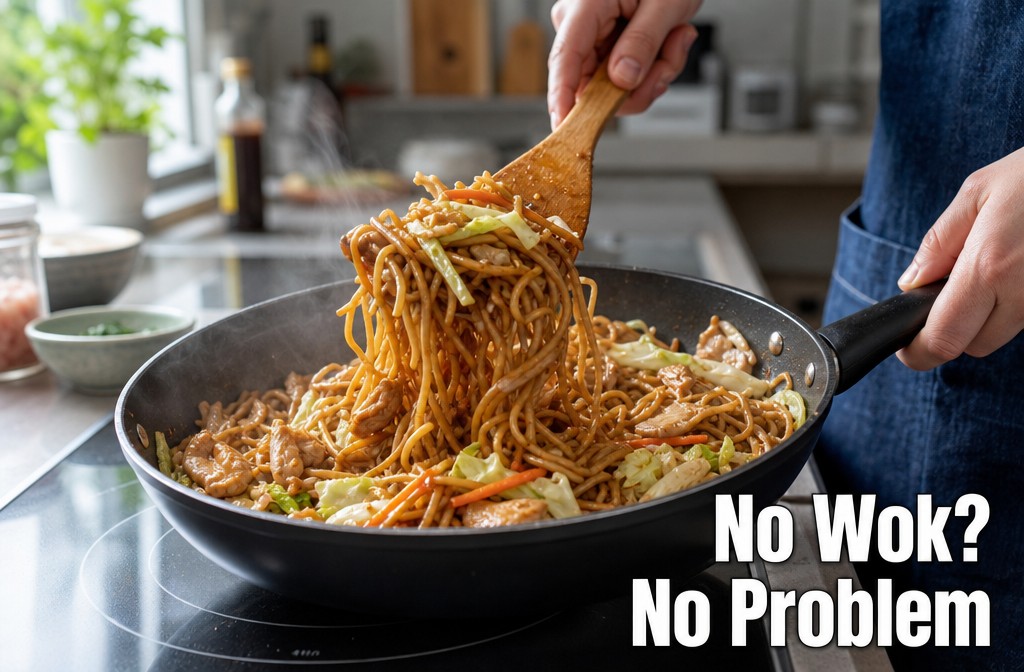
Can I Make Japanese Stir-Fry Without a Wok?
Yes, you can make excellent Japanese stir-fry without a wok using a regular 12-inch non-stick or stainless steel skillet. Japanese home cooks rarely use woks—they typically use flat-bottomed frying pans that work better on modern stovetops and distribute heat more evenly for the lighter cooking style Japanese dishes require.
Why a skillet works well:
- Flat bottom provides better contact with electric and induction burners
- Wider surface area prevents overcrowding
- Lower sides make it easier to flip and toss ingredients
- Non-stick coating requires less oil, matching Japanese cooking style
Best pan choices for Japanese stir-fries:
- 12-inch non-stick skillet: Ideal for beginners, easy cleanup, minimal oil needed
- Stainless steel skillet: Better heat retention, develops fond for sauce
- Cast iron skillet: Excellent heat distribution but requires more oil
Technique adjustment: Since skillets have less depth than woks, cook in smaller batches if you’re making a large quantity. This prevents steaming and ensures proper browning.
The high, sloped sides of a wok are designed for Chinese-style tossing over extremely high heat. Japanese stir-fries use moderate heat and gentler stirring, making a regular skillet perfectly suitable and often preferable.
Teriyaki Stir-Fry vs Yakisoba: What’s the Difference?
Teriyaki stir-fry features protein and vegetables coated in a sweet-savory glaze made from soy sauce, mirin, and sugar, typically served over rice. Yakisoba is a noodle dish using wheat noodles stir-fried with a tangy, Worcestershire-based sauce that’s less sweet and more savory than teriyaki.
Teriyaki characteristics:
- Thick, glossy sauce that clings to ingredients
- Sweet-forward flavor profile with caramelized edges
- Usually served as a rice bowl (donburi)
- Sauce made from soy sauce, mirin, sake, and sugar
- Best with chicken, salmon, or beef
Yakisoba characteristics:
- Thin, tangy sauce that coats noodles without pooling
- Savory-forward with slight sweetness and tang
- Always includes wheat noodles (similar to ramen)
- Sauce contains Worcestershire, soy sauce, oyster sauce, and ketchup
- Typically includes cabbage, carrots, and pork or seafood
Texture difference: Teriyaki creates a sticky glaze, while yakisoba sauce is absorbed into the noodles, creating a drier finish with no excess liquid on the plate.
Choose teriyaki when you want a saucy, rice-based meal with pronounced sweetness. Pick yakisoba for a noodle dish with more complex, tangy flavors and a street-food vibe.
Where to Buy Mirin and Sake for Stir-Fry?
Mirin and sake are available in the international aisle of most major grocery stores (Walmart, Kroger, Safeway), Asian supermarkets, and online retailers like Amazon. Look for mirin near soy sauce and rice vinegar, and cooking sake in the same section or near cooking wines.
Buying guide:
Mirin options:
- Hon mirin (true mirin): 14% alcohol, authentic flavor, $8-12 per bottle
- Aji-mirin (seasoned mirin): Less alcohol, added sweeteners, $4-6 per bottle
- Mirin-fu (mirin-style): No alcohol, corn syrup base, $3-5 per bottle
For best results, choose hon mirin or aji-mirin. Avoid mirin-fu if possible, as it lacks the complexity of real mirin.
Sake options:
- Cooking sake (ryorishu): Specifically for cooking, contains salt, $5-8 per bottle
- Drinking sake: Any inexpensive sake works fine, $10-15 per bottle
- Substitute: Dry sherry or Chinese rice wine (Shaoxing) in a pinch
Where to find them:
- Whole Foods, Trader Joe’s: Carry both in international sections
- Asian grocery stores: Widest selection, best prices
- Amazon: Convenient but check shipping costs
- Local liquor stores: May carry drinking sake
Substitution if unavailable: Replace mirin with 1 tablespoon sugar + 2 tablespoons water per ¼ cup mirin. Replace sake with dry white wine or water with a splash of rice vinegar.
What Are Common Mistakes When Making Japanese Stir-Fry at Home?
The most common mistakes are using too much sauce (which makes dishes soggy), cooking over too-low heat (causing steaming instead of searing), and adding all ingredients at once (resulting in uneven cooking). Japanese stir-fries should be lightly sauced with distinct textures, not swimming in liquid.
Top mistakes and fixes:
1. Overcrowding the pan
- Problem: Ingredients release moisture and steam instead of browning
- Fix: Cook protein first, remove it, then cook vegetables in batches
2. Using too much sauce
- Problem: Dish becomes soupy and flavors get diluted
- Fix: Start with 2-3 tablespoons sauce per serving; you can always add more
3. Not prepping ingredients first
- Problem: Vegetables overcook while you’re still cutting protein
- Fix: Have everything cut and measured before heating the pan
4. Adding garlic and ginger too early
- Problem: They burn and turn bitter before other ingredients cook
- Fix: Add aromatics after protein is mostly cooked, stir for 30 seconds only
5. Skipping the protein sear
- Problem: Chicken breast comes out dry and pale
- Fix: Pat protein dry, use medium-high heat, don’t move it for first 2 minutes
6. Using cold ingredients
- Problem: Temperature drops too much, causing uneven cooking
- Fix: Let refrigerated ingredients sit 10 minutes before cooking
Edge case: If you’re using frozen vegetables, thaw and pat them completely dry first. Excess water will create steam and prevent proper stir-frying.
What Vegetables Are Used in Japanese Stir-Fry?
Japanese stir-fries commonly use cabbage, snap peas, shiitake mushrooms, carrots, bean sprouts, and green onions—vegetables that cook quickly, maintain crunch, and absorb sauces well. Unlike Chinese stir-fries that favor bok choy and water chestnuts, Japanese versions emphasize sweeter, milder vegetables.
Most common vegetables:
- Cabbage: Adds bulk, slight sweetness, stays crisp; use Napa or regular green cabbage
- Snap peas or snow peas: Provide crunch and bright color; cook 2-3 minutes only
- Shiitake mushrooms: Contribute umami depth; remove stems before slicing
- Carrots: Add sweetness and color; julienne or cut into thin matchsticks
- Bean sprouts: Quick-cooking, mild flavor; add in last minute of cooking
- Green onions: Used as aromatic and garnish; separate white and green parts
Secondary vegetables:
- Bell peppers (red or yellow for sweetness)
- Broccoli florets (blanch first for faster cooking)
- Zucchini (cut into half-moons)
- Asparagus (trim woody ends, cut into 2-inch pieces)
Vegetable swap rules:
- Replace snap peas with green beans (add 2 minutes cooking time)
- Substitute shiitake with button mushrooms (less umami but more affordable)
- Use pre-shredded coleslaw mix instead of cutting cabbage
- Swap fresh bean sprouts with frozen stir-fry vegetable blend
Cooking order: Add firm vegetables (carrots, broccoli) first, medium vegetables (peppers, mushrooms) second, and delicate vegetables (snap peas, bean sprouts) last.
Is Japanese Stir-Fry Healthy for Weight Loss?
Japanese stir-fries are excellent for weight loss because they’re naturally low in calories (250-400 calories per serving), high in vegetables (2-3 cups per portion), and use minimal oil compared to other stir-fry styles. The light sauces add flavor without excessive sugar or fat, and the high vegetable content provides fiber that promotes satiety.
Nutritional benefits:
- High vegetable volume: 2-3 cups per serving fills you up with few calories
- Lean protein: Chicken breast or tofu provides 25-30g protein per serving
- Low fat: Uses 1-2 tablespoons oil total, versus 3-4 in Chinese stir-fries
- Moderate sodium: Homemade versions contain 600-800mg sodium (controllable)
Calorie breakdown (typical serving):
- Teriyaki chicken stir-fry with rice: 450 calories
- Vegetable yakisoba: 380 calories
- Tofu and vegetable stir-fry: 280 calories
- Beef and broccoli over rice: 520 calories
Weight loss optimization tips:
- Serve over cauliflower rice instead of white rice (saves 150 calories)
- Use cooking spray instead of oil (saves 80-100 calories)
- Double the vegetables and reduce protein portion slightly
- Choose low-sodium soy sauce to reduce water retention
- Skip added sugar in homemade teriyaki sauce
Choose Japanese stir-fry for weight loss if: You want satisfying, flavorful meals that don’t feel like “diet food” and you prefer lighter preparations over heavy sauces.
How to Get That Restaurant Flavor in Homemade Japanese Stir-Fry?
Restaurant flavor comes from three key techniques: cooking at higher heat than most home cooks use, adding a small amount of butter at the end for richness, and seasoning in layers rather than all at once. Restaurants also use MSG (monosodium glutamate) or dashi powder to boost umami, which you can replicate at home.
Restaurant secrets:
1. Use higher heat
- Restaurants cook at 500-600°F; home cooks often use 300-350°F
- Preheat your pan for 2-3 minutes before adding oil
- You should see immediate sizzle when ingredients hit the pan
2. Add finishing butter
- Stir in 1 tablespoon cold butter at the very end
- Creates glossy coating and rounds out flavors
- This is the secret to many Japanese restaurant dishes
3. Season in layers
- Light soy sauce during cooking
- Main sauce near the end
- Final sprinkle of salt or soy sauce before serving
4. Boost umami naturally
- Add ½ teaspoon dashi powder to sauces
- Use shiitake mushroom soaking liquid in place of water
- Include a small amount of oyster sauce (1 teaspoon)
5. Don’t skip the garnish
- Toasted sesame seeds add nutty flavor and texture
- Fresh green onion provides brightness
- Pickled ginger on the side cuts richness
Texture secret: Pat protein completely dry before cooking. Moisture prevents browning and that characteristic restaurant sear. This applies whether you’re cooking chicken breast in the oven or stir-frying it.
Can I Meal Prep Japanese Stir-Fry for the Week?
You can meal prep Japanese stir-fry components separately for 3-4 days, but fully assembled stir-fries don’t reheat well because vegetables become soggy and lose their crisp texture. The best approach is to prep and cook protein and vegetables, then store them separately and combine with fresh sauce when ready to eat.
Best meal prep method:
Sunday prep:
- Cook 2-3 pounds of chicken breast and slice into bite-sized pieces
- Wash and cut all vegetables, store in airtight containers
- Mix sauce and store in small jars or containers
- Cook rice and portion into containers
Daily assembly (5 minutes):
- Heat 1 tablespoon oil in skillet
- Add pre-cooked protein and vegetables
- Stir-fry 3-4 minutes until heated through
- Add sauce and toss 1 minute
- Serve over reheated rice
Storage guidelines:
- Cooked protein: 4 days refrigerated, 3 months frozen
- Cut raw vegetables: 3-4 days in airtight containers
- Cooked vegetables: 3 days (texture degrades)
- Mixed sauce: 1 week refrigerated
- Cooked rice: 4 days refrigerated, 1 month frozen
What doesn’t meal prep well:
- Fully assembled stir-fries (vegetables get mushy)
- Noodle dishes (noodles absorb sauce and become gummy)
- Bean sprouts (turn slimy after 1 day)
What meal preps perfectly:
- Marinated raw protein (cook fresh each time)
- Teriyaki sauce in jars
- Pre-portioned frozen vegetables
- Individual rice portions
For best results, think of meal prep as preparing components rather than finished dishes. The quick assembly time (5 minutes) still saves significant time versus starting from scratch.
What to Serve with Japanese Stir-Fry Besides Rice?
Japanese stir-fries pair well with cauliflower rice, soba noodles, udon noodles, quinoa, or simply served alone as a low-carb option. Traditional Japanese meals also include miso soup, pickled vegetables (tsukemono), and a small salad with ginger dressing as side dishes.
Carb alternatives to white rice:
- Cauliflower rice: Low-carb, absorbs sauce well, 25 calories per cup
- Brown rice: More fiber and nutrients, nuttier flavor
- Quinoa: Higher protein, fluffy texture, 220 calories per cup
- Soba noodles: Buckwheat noodles, earthy flavor, served hot or cold
- Shirataki noodles: Nearly zero calories, unique texture, requires rinsing well
Traditional Japanese sides:
- Miso soup: Light, warming, adds protein if made with tofu
- Edamame: Steamed soybeans with sea salt, high protein snack
- Cucumber sunomono: Vinegar-dressed cucumber salad, refreshing and light
- Pickled vegetables: Ginger, daikon, or mixed pickles add tang and crunch
- Seaweed salad: Mineral-rich, slightly sweet and salty
Complete meal combinations:
Light dinner (500 calories):
- Vegetable stir-fry over cauliflower rice
- Miso soup
- Small cucumber salad
Hearty dinner (700 calories):
- Teriyaki chicken stir-fry over brown rice
- Edamame
- Pickled ginger
Low-carb option (350 calories):
- Beef and vegetable stir-fry (no rice)
- Seaweed salad
- Miso soup
Weeknight shortcut: Serve stir-fry over microwaveable rice pouches (90 seconds) with store-bought miso soup packets and frozen edamame (5 minutes to steam).
FAQ
How much soy sauce should I use in a Japanese stir-fry? Use 2-3 tablespoons of soy sauce per pound of protein and vegetables combined. Start with less and add more to taste, as you can always add but can’t remove excess saltiness.
Can I use frozen vegetables for Japanese stir-fry? Yes, but thaw and pat them completely dry first to remove excess moisture. Frozen vegetables work best in saucy dishes like teriyaki where slight texture loss is less noticeable.
What’s the best oil for Japanese stir-fry? Use neutral oils with high smoke points like vegetable oil, canola oil, or grapeseed oil. Avoid olive oil (burns easily) and use sesame oil only as a finishing oil, not for cooking.
Do I need to marinate chicken for Japanese stir-fry? No, marinating isn’t necessary for quick stir-fries. A light dusting of cornstarch on the protein before cooking creates better texture and helps sauce adhere.
How do I prevent my stir-fry from being watery? Pat all ingredients dry before cooking, don’t overcrowd the pan, and add sauce only in the last 1-2 minutes of cooking. Excess moisture comes from wet ingredients or cooking at too-low heat.
Can I make Japanese stir-fry vegetarian? Absolutely. Replace protein with firm tofu, tempeh, or extra vegetables and mushrooms. Use the same sauces and techniques for equally flavorful results.
What’s the difference between yakisoba noodles and ramen noodles? Yakisoba noodles are steamed and slightly thicker, designed for stir-frying. Ramen noodles are boiled and more delicate. You can substitute ramen in yakisoba, but cook them slightly less to prevent mushiness.
How do I store leftover Japanese stir-fry? Store in airtight containers for up to 3 days refrigerated. Reheat in a skillet over medium heat rather than the microwave to restore some texture to the vegetables.
Is teriyaki sauce gluten-free? Traditional teriyaki contains soy sauce, which has wheat, so it’s not gluten-free. Look for tamari-based teriyaki sauce or make your own with gluten-free tamari instead of regular soy sauce.
Can I use chicken thighs instead of chicken breast? Yes, chicken thighs work excellently in stir-fries and stay more moist than breast meat. Cut them into similar-sized pieces and cook 1-2 minutes longer.
What can I substitute for mirin if I don’t have it? Mix 1 tablespoon sugar with 2 tablespoons water or white wine for every ¼ cup mirin needed. This approximates the sweetness, though it lacks mirin’s subtle complexity.
How do I know when my stir-fry is done? Vegetables should be crisp-tender (cooked but still have bite), protein should reach safe internal temperature (165°F for chicken), and sauce should coat ingredients without pooling in the pan.
Conclusion
Fast Japanese-inspired stir-fries you can make at home deliver restaurant-quality flavor in 15-20 minutes using simple pantry staples and everyday ingredients. The key is understanding that Japanese stir-fries emphasize lighter sauces, quick cooking, and the natural flavors of fresh vegetables—no wok or specialty equipment required.
Start with a basic teriyaki chicken stir-fry to build confidence, then experiment with yakisoba noodles, vegetable combinations, and homemade sauces. Keep soy sauce, mirin, and sake stocked in your pantry, and you’ll always be 20 minutes away from a satisfying, healthy meal.
Your next steps:
- Stock your pantry with the three essential sauces (soy sauce, mirin, sake)
- Try the beginner teriyaki chicken recipe this week using properly cooked chicken breast
- Experiment with one new vegetable combination each time you cook
- Prep components on Sunday for quick weeknight assembly
The beauty of Japanese stir-fries is their flexibility and speed. Once you master the basic technique, you can create endless variations based on what’s in your refrigerator, making them perfect for busy weeknights when you want something better than takeout but don’t have time for complicated recipes.


