
What to Do When Chicken Breast Is Too Dry Fast Fixes
When chicken breast turns out too dry, you can quickly add moisture and change how you serve it. Use broth, sauce, steam, or a quick simmer, and improve the texture by slicing, shredding, or mixing it into a moist dish.
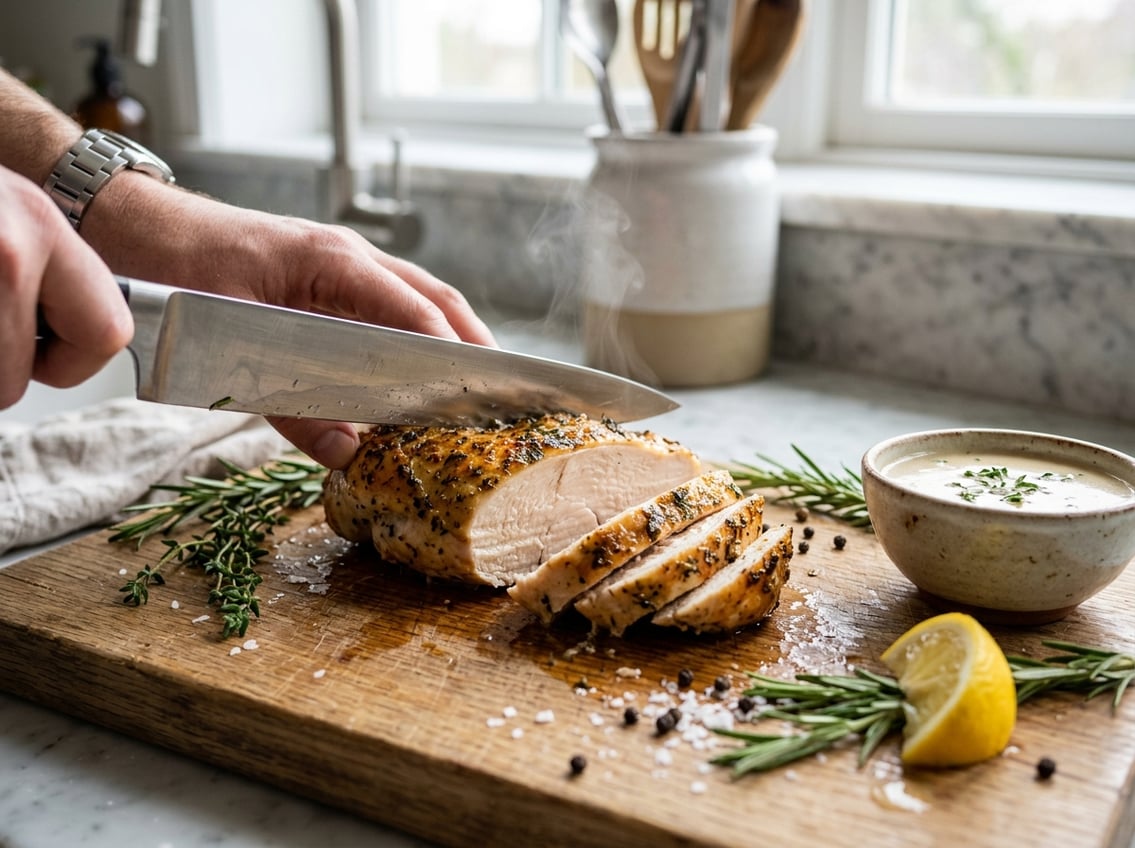
You do not need to throw away a dry chicken breast. If it is only slightly overcooked, you can save it in minutes with gentle heat and a little liquid.
If the chicken is very dry, you can still help it by changing the texture and serving it with sauce or broth. The key is to avoid more high heat.
Overcooking makes lean chicken lose more moisture, which turns the meat tough and stringy, as explained in a guide to reviving dry chicken breast.
Fix It Right Away
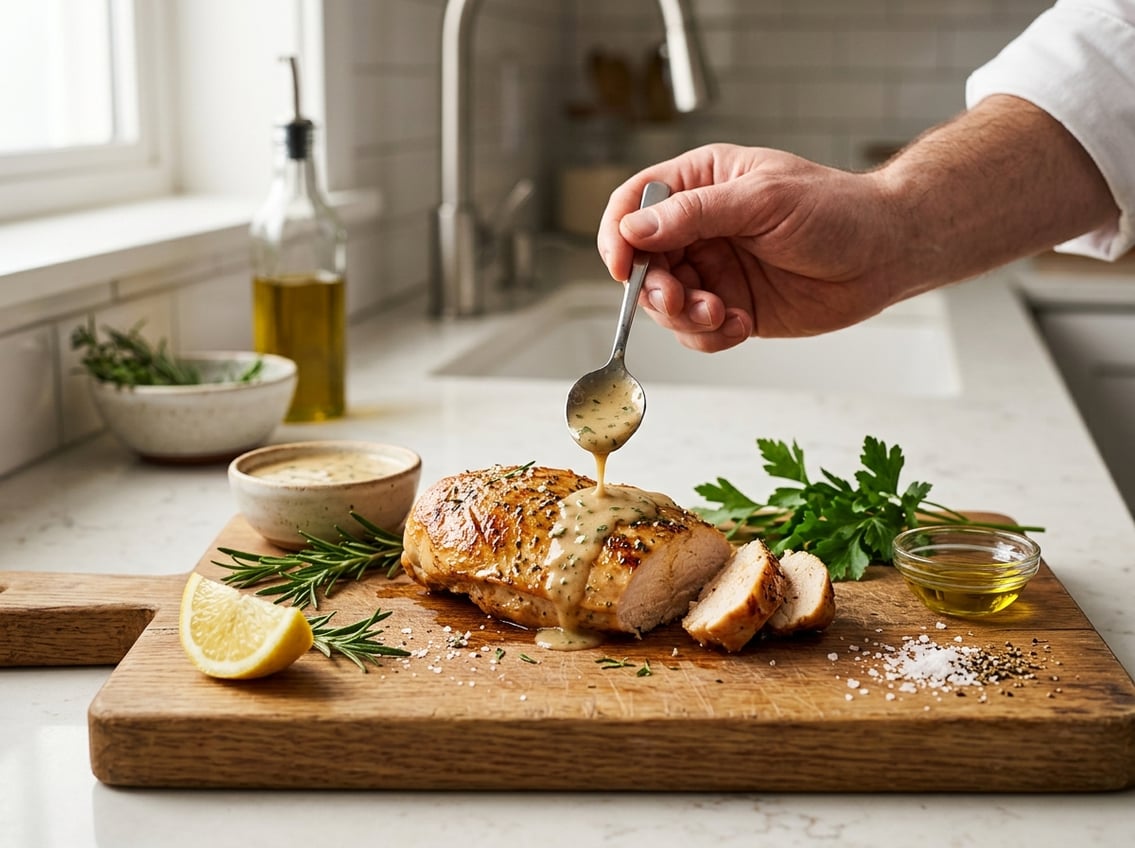
If the chicken is still warm, you can add moisture and stop extra drying fast. The goal is to soften the meat without cooking it again at a high temperature.
These quick fixes work best right after you notice the problem.
Rest With a Splash of Broth or Butter
Place hot chicken in a covered dish and add a few spoonfuls of warm broth, pan juices, or melted butter. The lid traps steam and gives the meat a better chance to reabsorb moisture.
Use just enough liquid to coat the bottom, not so much that the chicken swims in it.
Slice or Shred to Add Moisture Back Faster
Cut the chicken into thin slices or shreds to help it absorb liquid more quickly. Spoon sauce, broth, or a little oil over the pieces.
More surface area means more contact with moisture and makes the chicken easier to eat.
Use Low Heat Instead of Re-Cooking It
Avoid putting dry chicken back in a hot pan or oven. Warm it gently in a covered dish with liquid or use very low heat.
Gentle heat and added moisture are the safest first steps, as noted in a chicken rescue guide.
Best Ways to Add Moisture Back
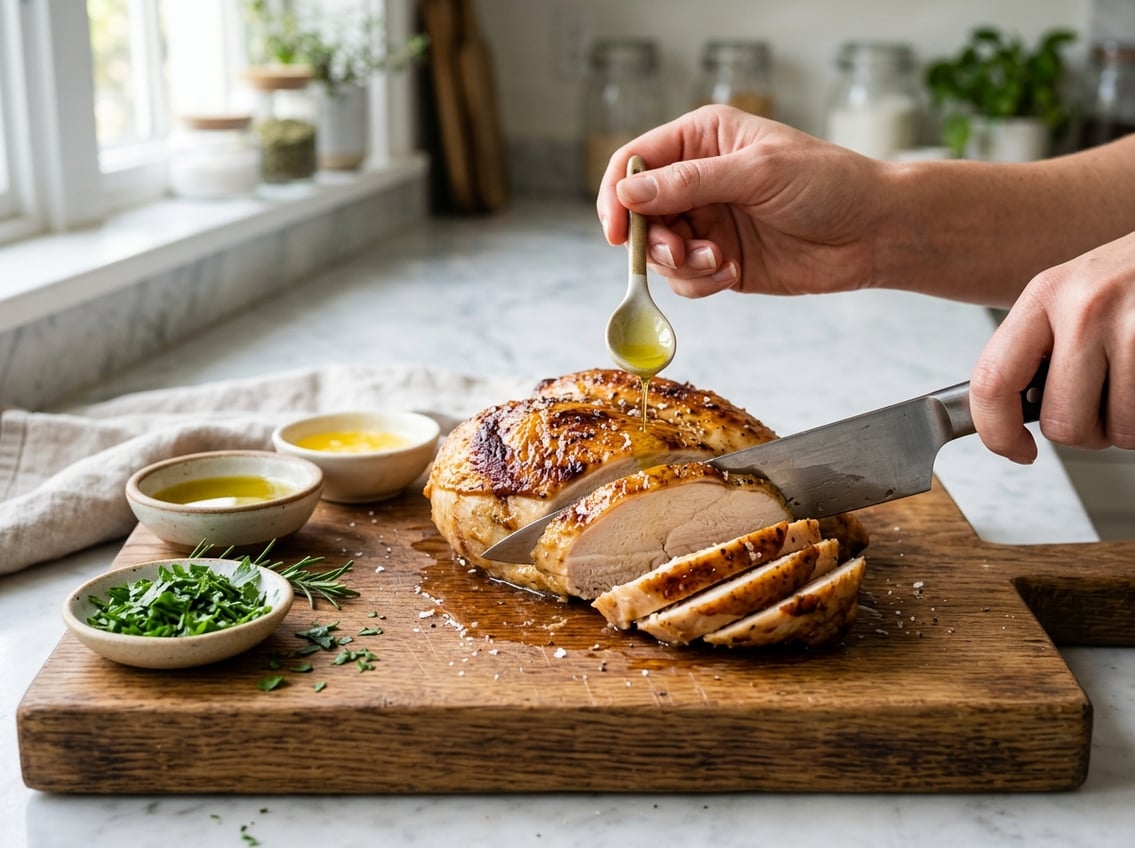
To get a more reliable fix, use moisture plus gentle heat. These methods help the chicken taste closer to moist or juicy chicken breast again.
They work especially well for leftovers or chicken that cooled down before you noticed it was dry.
Simmer Gently in Broth or Gravy
Place the chicken in a skillet or saucepan with broth, gravy, or another flavorful liquid. Keep the heat low and let it warm slowly.
The liquid gets into the meat as it warms. Do not let it boil, since that can make the texture worse.
Reheat With Sauce for Better Texture
Warm the chicken in a sauce such as cream, tomato, curry, or barbecue. Sauce coats the chicken and makes each bite feel less dry.
A few tablespoons can make a big difference. Let the chicken warm in the sauce for a few minutes before serving.
Steam or Cover in the Oven to Rehydrate
You can use steam to add moisture without harsh heat. Place the chicken in a covered pan with a little water or broth, or wrap it in foil and warm it in a low oven.
This method helps keep the meat from drying out more. According to a detailed chicken moisture guide, steaming and adding sauce are simple ways to put moisture back into cooked chicken.
Turn It Into a Better Dish
If the texture is too dry to enjoy on its own, you can turn the chicken into a dish with other moist ingredients. This is often the easiest way to make dry chicken taste like a fresh meal.
Mix Into Chicken Salad, Wraps, or Sandwiches
Shred or chop the chicken and mix it with mayo, yogurt, hummus, or a creamy dressing. Add celery, pickles, avocado, and herbs for more moisture and flavor.
A dry chicken breast can taste much better when it is folded into a filling with a creamy binder.
Add to Pasta, Rice, and Casseroles
Stir dry chicken into pasta with sauce, rice bowls with dressing, or baked casseroles with broth or cream. The extra liquid in the dish helps soften the meat while it heats.
This is an easy way to use up leftovers without wasting food.
Use in Soups, Tacos, and Saucy Bowls
Add dry chicken to soups and stews so the liquid surrounds every bite. Use tacos, burritos, and grain bowls with salsa, queso, dressing, or another sauce.
A dish with bold sauce or broth will usually cover the dry texture better than serving the chicken plain.
Why It Happens and How to Prevent It
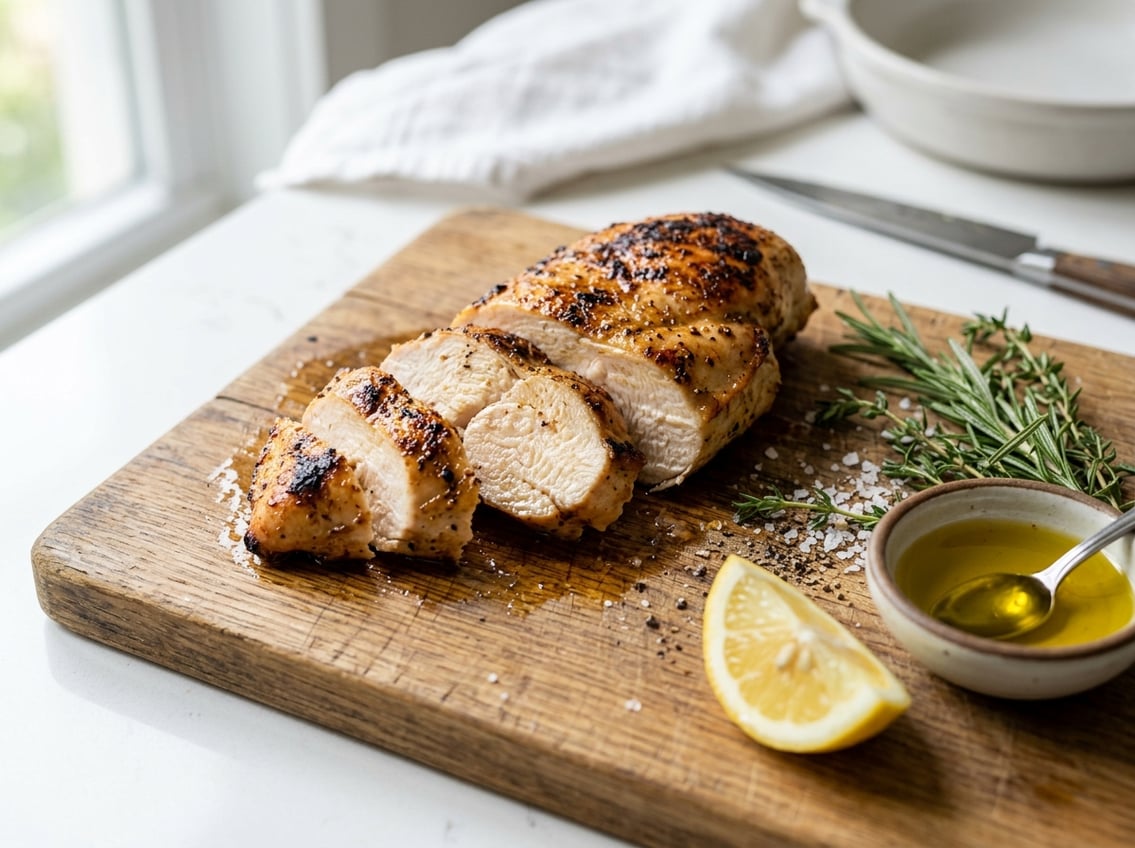
Dry chicken breast usually happens from too much heat, too long on the stove, or uneven cooking. Since chicken breast is lean, it loses moisture quickly when it goes past the right temperature, as explained in this guide on why chicken breast gets dry.
A few simple habits can help you keep chicken juicy from the start.
Common Causes of Tough, Dry Meat
Thin ends cook faster than thick parts, which leads to uneven texture. High heat, overcrowded pans, and skipping the resting step also raise the risk of dry chicken breast.
If you cook chicken straight from the fridge without checking thickness, part of it may dry out before the center is done. Even cooking matters.
Cook to Temperature, Not Time
Use a meat thermometer and aim for 165°F in the thickest part. Time alone is not reliable because chicken size and heat level change the result.
When you cook to temperature instead of guessing, you are more likely to get moist, juicy chicken. A thermometer is one of the simplest tools for better results.
Brining, Marinating, and Resting for Better Results
A short brine helps the meat hold onto moisture. A marinade adds both flavor and juiciness.
Even 30 minutes of brining or marinating can make a difference, as mentioned in tips for moistening dry chicken breast.
Let the chicken rest after cooking so the juices settle back through the meat. This way, you keep the chicken breast juicy instead of losing moisture on the cutting board.


