
How Do You Know Chicken Breast Is Done Boiling? Key Signs
When you want to know if chicken breast is done boiling, check the internal temperature and look for a few visual signs.
Boiled chicken is done when the thickest part reaches 165°F and the meat looks opaque, white, and no longer raw in the center.
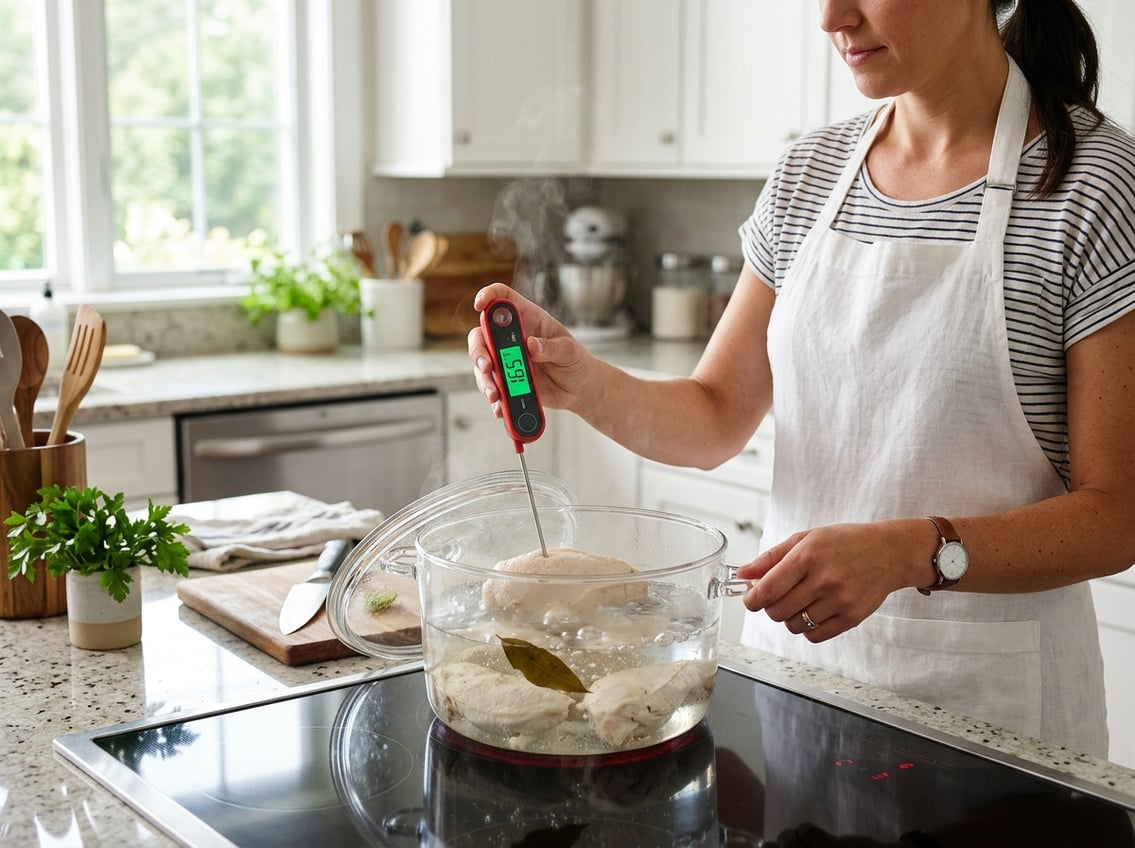
You can use boiling times as a guide, since chicken breast size and thickness change the cook time.
The safest way to know for sure is to use a thermometer, not guess by color alone.
Check Doneness the Right Way
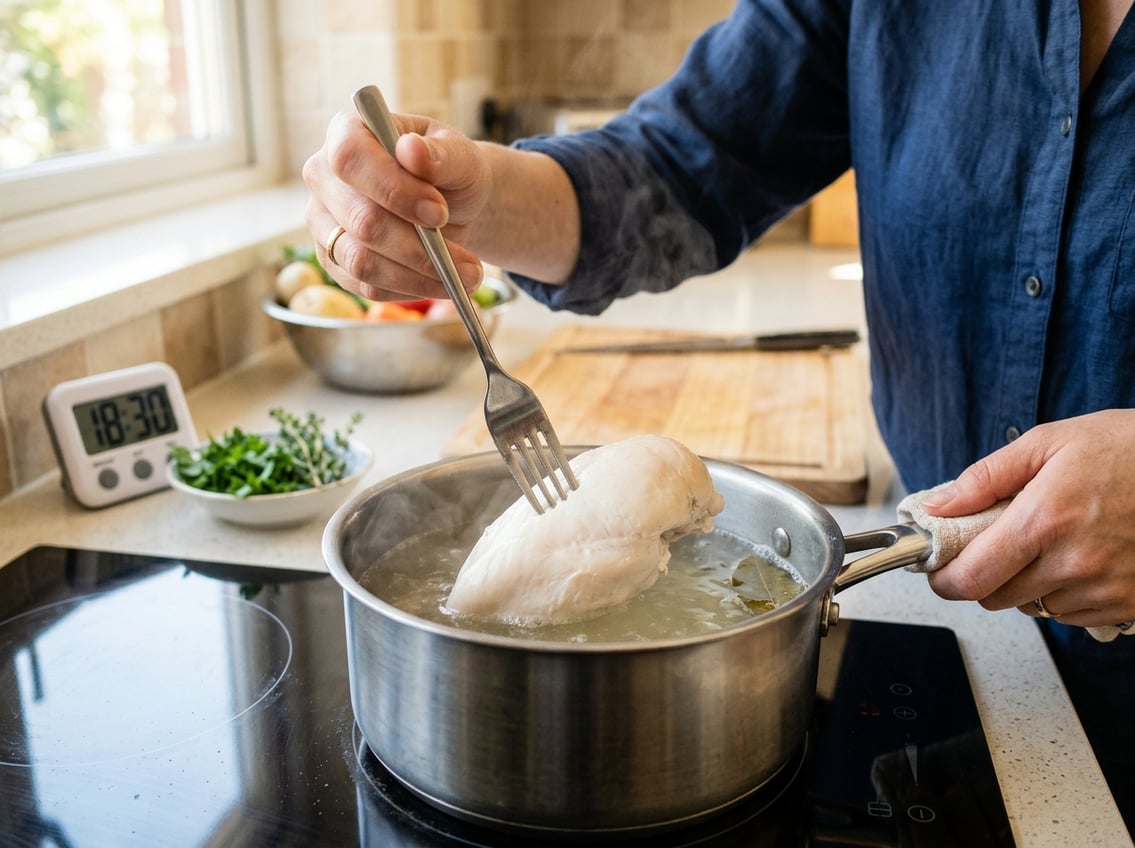
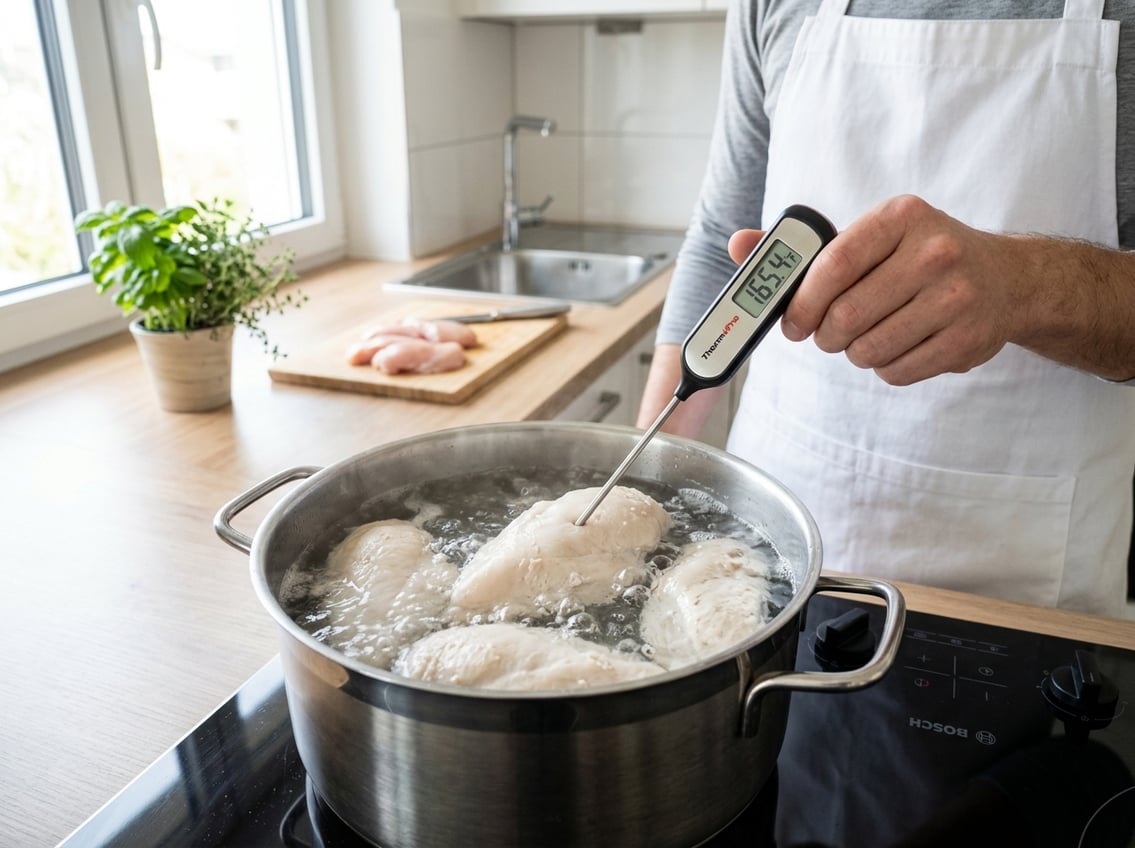
Use a meat thermometer to remove the guesswork from boiling chicken.
Visual signs help, but they should support the temperature reading.
Use an Internal Temperature of 165°F
Chicken breast is done when the thickest part reaches 165°F.
This is the standard food safety target for poultry.
According to Better Homes & Gardens, you should check the internal temperature to confirm doneness.
Time alone can vary too much based on breast size and whether the chicken is fresh or frozen.
Where to Insert the Thermometer
Insert the thermometer into the thickest part of the breast.
Stay away from bone if you are cooking bone-in chicken, since bone can give a false reading.
If the chicken breast is uneven in shape, check the center from the side if needed.
Place the tip in the densest area, not near the edge where heat reaches first.
Visual Signs That Support Doneness
A done chicken breast looks white and opaque through the center.
The juices should run clear, and the meat should feel firm, not soft and rubbery.
Slice into the thickest part if needed.
If you see pink, translucent meat, give it more time and check again with the thermometer.
Boiling Times for Chicken Breast
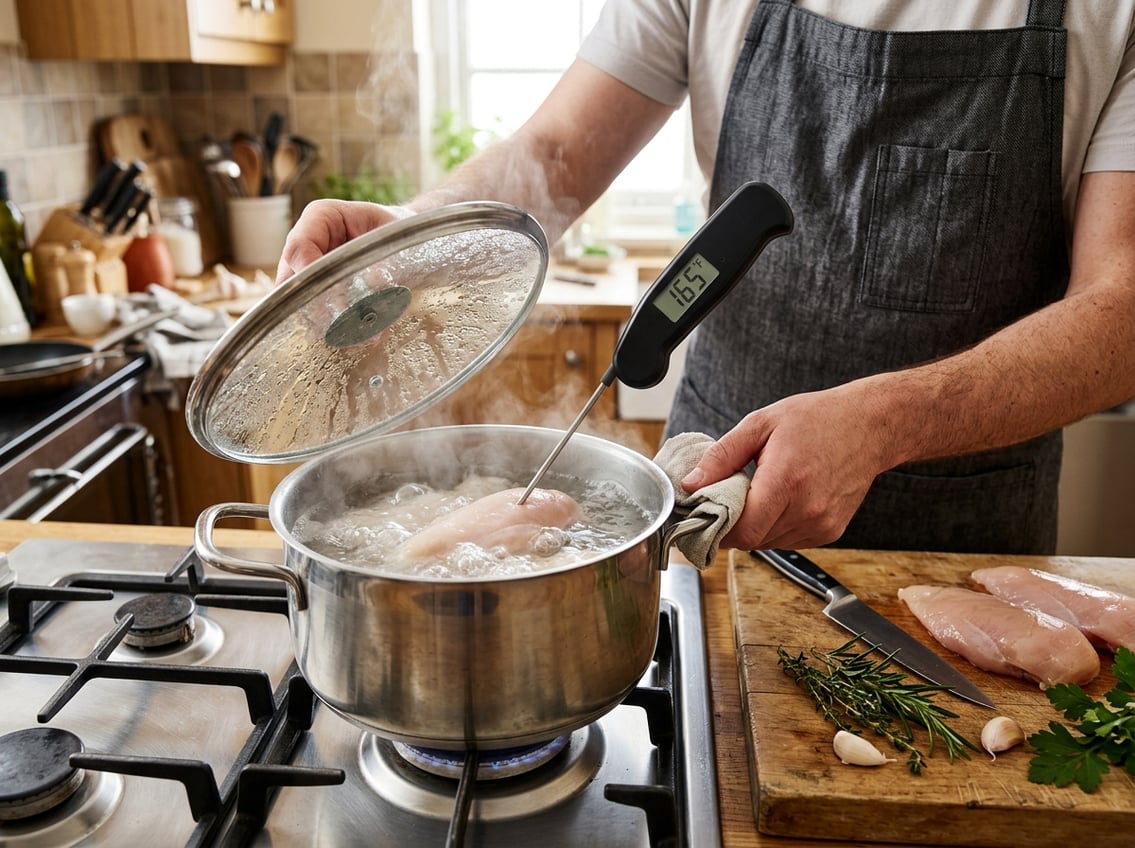
Boiling times give you a starting point when planning dinner.
The exact time depends on whether the breast is boneless or bone-in, and thicker pieces need more time to cook through.
Boneless Skinless Breast Timing
Boneless, skinless chicken breast halves usually boil in about 12 to 15 minutes.
That range matches the method described by Better Homes & Gardens.
Smaller pieces can cook even faster.
If you cut the chicken into 2-inch pieces, the time can drop to around 8 to 10 minutes.
Check the temperature early, since smaller pieces can move from underdone to dry quickly.
Bone-In Breast Timing
Bone-in chicken breast takes longer, usually about 30 minutes.
The bone slows heat flow, so this cut needs more time before the center reaches 165°F.
If the chicken was frozen first, the cook time can increase.
A thermometer helps you know when the center is safe.
How Thickness and Size Change Cook Time
A thick breast will take longer than a thin one, even if both weigh about the same.
Uneven pieces may also finish at different times in the same pot.
Choose similar-sized pieces so they cook at the same rate.
If one breast is much larger, leave it in longer and test it separately.
How to Keep the Meat Juicy
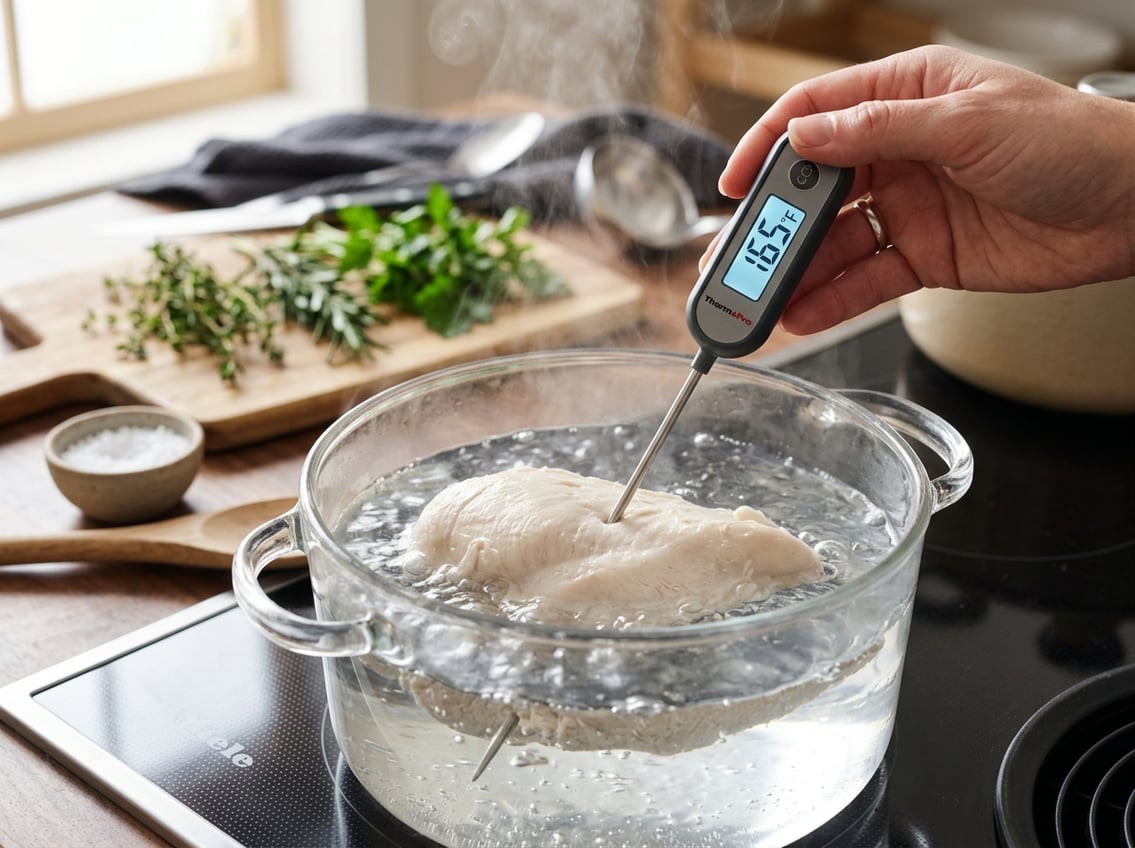
Juicy chicken depends on gentle heat and careful timing.
If the water stays at a hard boil for too long, the meat can turn stringy and dry.
Boil Then Simmer for Better Texture
Start the chicken in boiling liquid, then reduce the heat to a simmer.
This keeps the cooking gentle and helps the meat stay tender.
A rolling boil can push moisture out of the chicken faster.
A steady simmer gives you more control and a better final texture.
Choose Water or Broth for Flavor
Water works well if you want a plain chicken breast for salads, casseroles, or shredding.
Broth adds more flavor and can make the meat taste richer.
You can also season the liquid with herbs, garlic, onion, or celery.
That adds flavor without changing the cooking method.
Avoid Overcooking and Dryness
Check the temperature as soon as the chicken is close to done.
Once it reaches 165°F, remove it from the heat right away.
Letting boiled chicken stay in the hot liquid after it is done can dry it out.
If you need to wait before serving, move it to a plate or take it out of the pot.
Special Cases and Safety Notes
Frozen chicken, color changes, and storage all affect how you judge doneness.
Safety checks matter just as much as timing, especially when you are not starting with fully thawed meat.
What to Know About Boiling Frozen Chicken
Better Homes & Gardens recommends thawing chicken first when possible.
If you cook it from frozen, expect the time to increase and always confirm doneness with a thermometer.
Frozen chicken can cook unevenly.
The outside may look ready while the inside still needs more time.
When Color and Clear Juices Can Mislead
White meat and clear juices are helpful signs, but they are not enough on their own.
Chicken can lose its pink color before it reaches a safe internal temperature.
A thermometer is still the best tool, especially for thicker breasts or bone-in cuts.
If you cut into the meat and see any raw or glossy areas, keep cooking and check again.
Safe Handling After Cooking
Once the chicken is done, remove it from the heat and let it cool before storing.
Let the cooked chicken cool fully, then refrigerate it for up to three days or freeze it for up to two months.
Wash your hands, cutting board, knife, and thermometer after handling raw chicken.
That helps prevent cross-contamination and keeps your kitchen safer.


