
When Does Chicken Breast Go Bad in the Fridge? Safety Guide
When you store chicken breast in the fridge, the safety window depends on whether it is raw or cooked. Raw chicken breast stays safe in the refrigerator for only 1 to 2 days, while cooked chicken breast is good for 3 to 4 days when kept at 40°F or below.
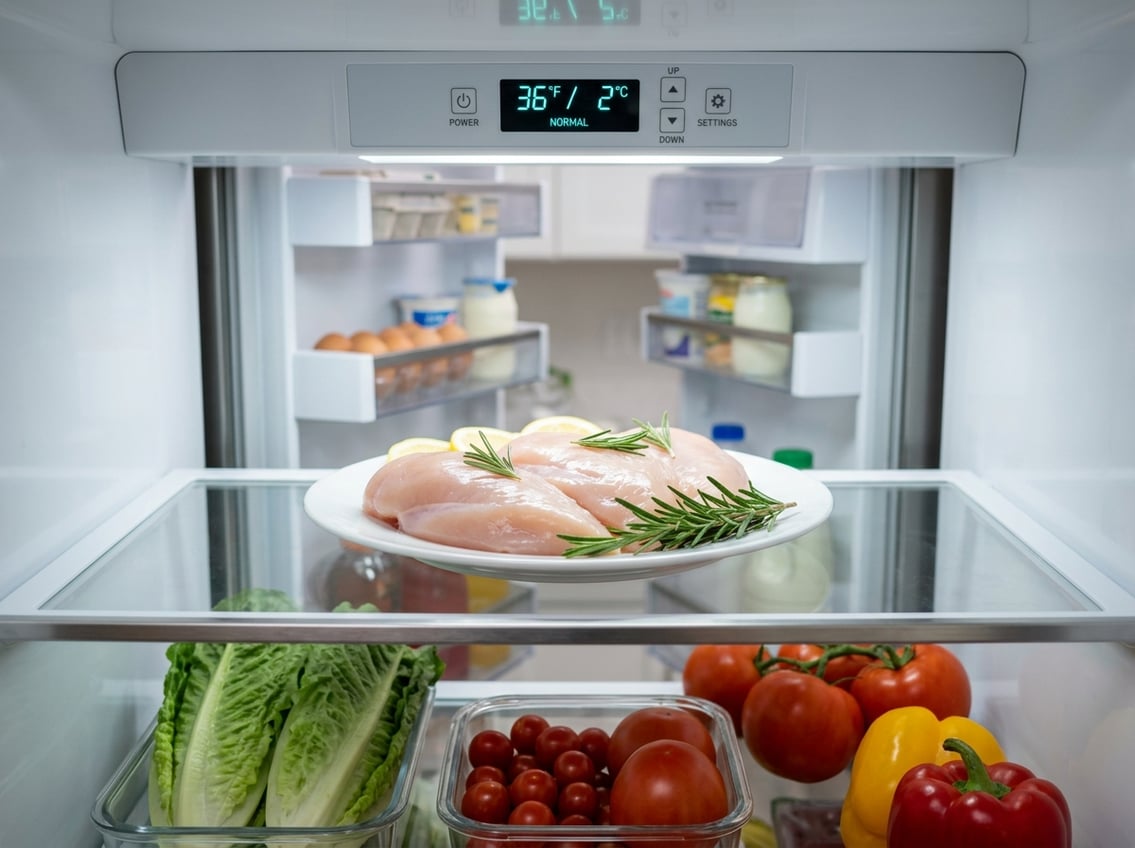
If you keep chicken too long, its smell, texture, and color can change. How you handle the meat, where you place it in the fridge, and whether you freeze it before the safe window ends also matter.
Safe Fridge Timelines for Chicken Breast
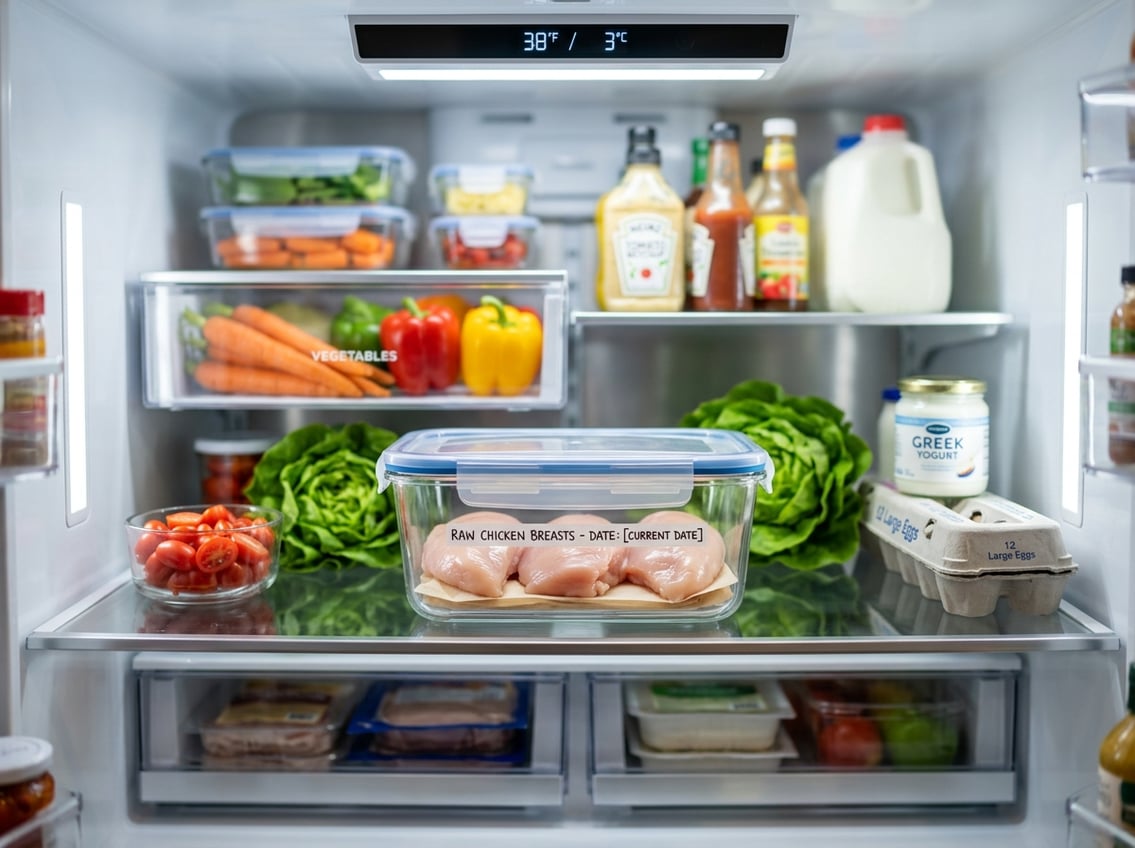
How long chicken lasts depends on whether it is raw or cooked. The clock starts when you refrigerate the chicken.
Keeping the fridge at 40°F or below slows bacterial growth, which is important for safety and quality.
Raw Chicken Breast: 1 to 2 Days
Cook or freeze raw chicken breast within 1 to 2 days of bringing it home, based on USDA guidance. That short window applies even if the chicken appears fine.
If you do not plan to cook it soon, freeze it instead of leaving it in the fridge past that range.
Cooked Chicken Breast: 3 to 4 Days
Store cooked chicken in the refrigerator for 3 to 4 days when you cool it promptly and keep it in a sealed container. This matches common fridge guidance and USDA advice.
Refrigerate leftovers within 2 hours of cooking for best quality. Label the container with the date to make tracking easier.
When to Freeze It Instead
Freeze chicken if you will not cook raw chicken within 1 to 2 days or eat cooked chicken within 3 to 4 days. Freezing stops spoilage, while refrigeration only slows it down.
Use the freezer sooner instead of trying to stretch the fridge timeline.
How to Tell When It Is No Longer Safe
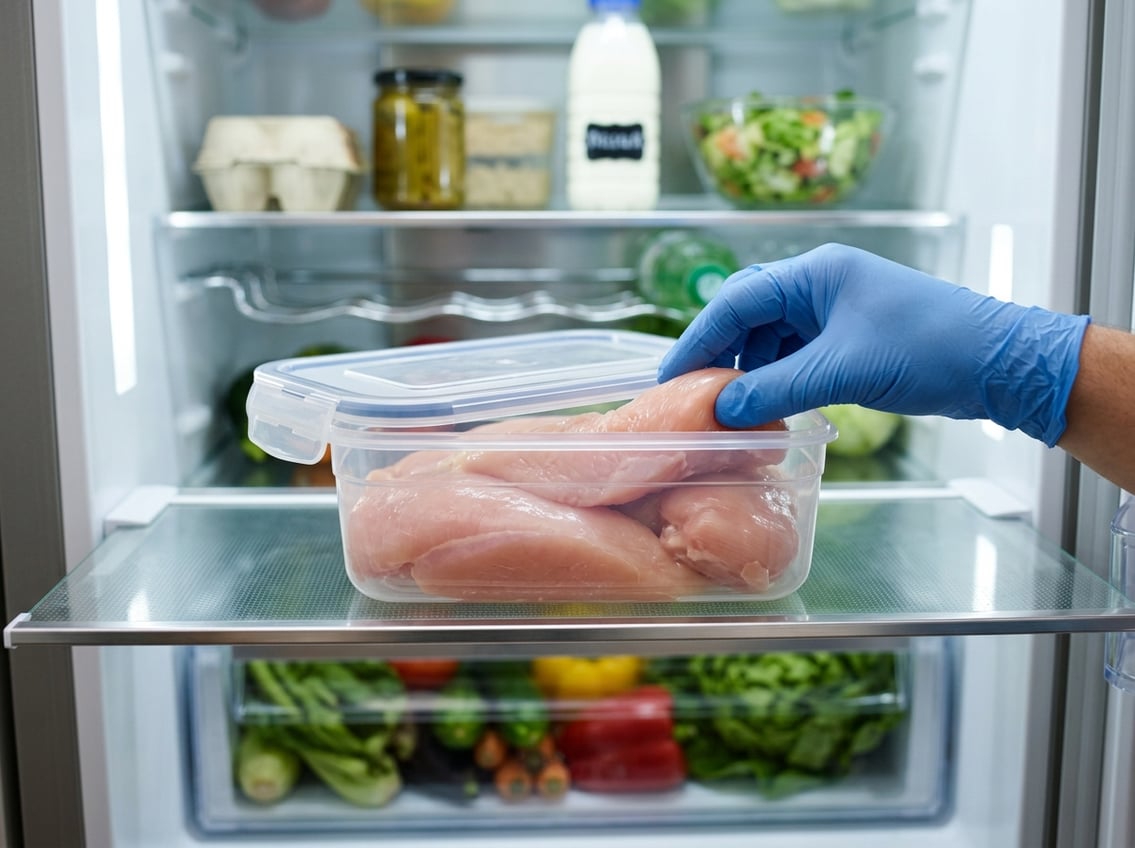
Use your senses to spot spoilage, but also trust the time limits above. A package can look normal but still be unsafe if it stayed in the fridge too long.
Smell, Texture, and Color Changes
Bad chicken often smells sour, rotten, or like ammonia. The texture may feel sticky, slimy, or tacky instead of smooth and moist.
Color changes matter too. Raw chicken that turns gray, dull, or has greenish patches should be thrown away.
Cooked chicken that smells off or looks moldy should also be discarded.
Why the Date on the Package Is Not the Only Test
Sell-by or use-by dates help, but they do not tell you everything. Chicken may spoil sooner if your fridge runs warm, the package was opened, or the meat was left out before chilling.
Use the date as a guide, but also check storage time, smell, texture, and color.
Why Cooking Spoiled Poultry Does Not Make It Safe
Cooking kills many bacteria, but it does not undo spoilage or remove all toxins. If chicken has gone bad, cooking it will not make it safe.
If you see spoilage signs or the chicken has passed the safe fridge window, throw it out.
Best Ways to Store It in the Fridge
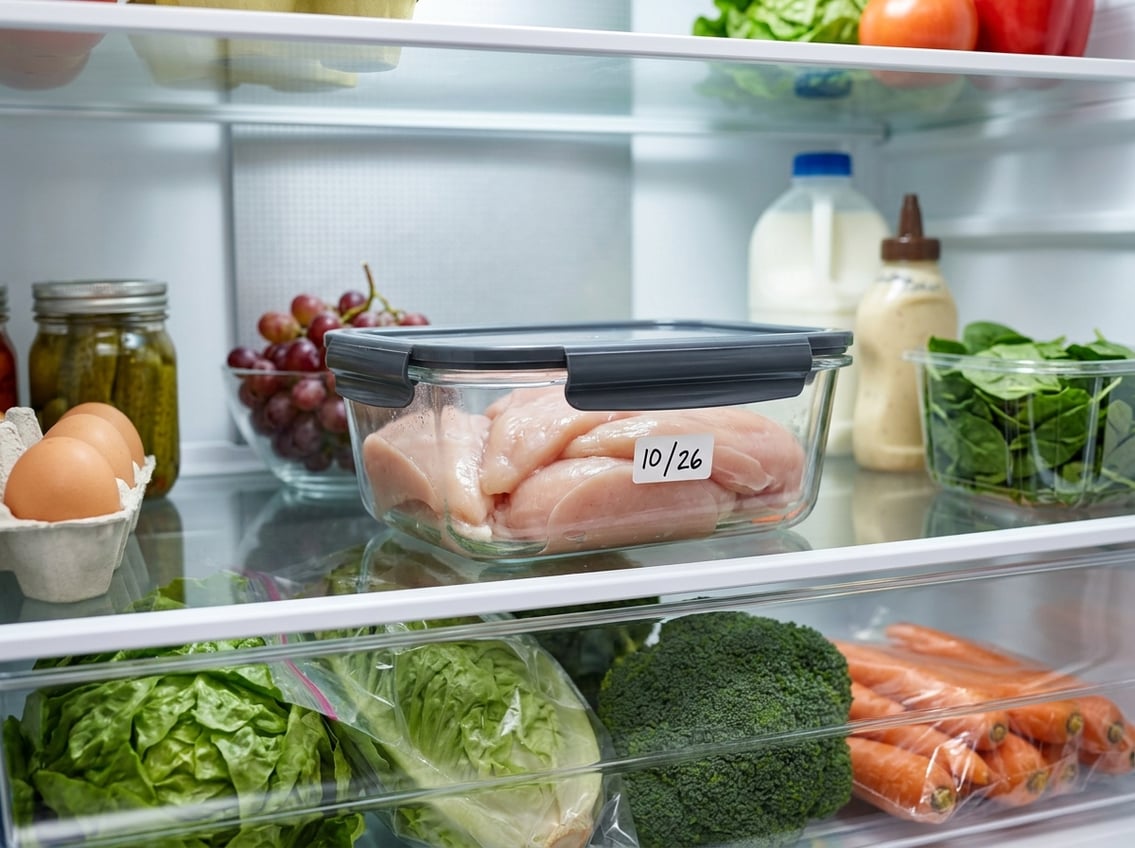
Good storage helps chicken stay safe longer within the normal time limit. The main goals are clean packaging, cold temperature, and protection from drips that can spread germs to other foods.
Storing Raw Chicken Without Cross-Contamination
Keep raw chicken sealed in its original package if unopened. Once opened, move it to a leakproof container or wrap it tightly so juices do not spread.
Wash your hands, cutting boards, and counters after handling raw poultry. Keep raw chicken away from produce, ready-to-eat foods, and cooked leftovers.
Store Raw Chicken on the Bottom Shelf
Place raw chicken on the bottom shelf of the refrigerator so drips cannot fall onto other foods. This step lowers the risk of cross-contamination.
Keep the chicken in a shallow container to catch any leaks.
Storing Cooked Chicken in Airtight Containers
Store cooked chicken breast in airtight containers after it cools. Small containers help food chill faster and keep leftovers organized.
If you have a large amount, divide it into portions before refrigerating. This makes reheating easier and helps you use it before it spoils.
What to Do If You Are Not Cooking It Soon
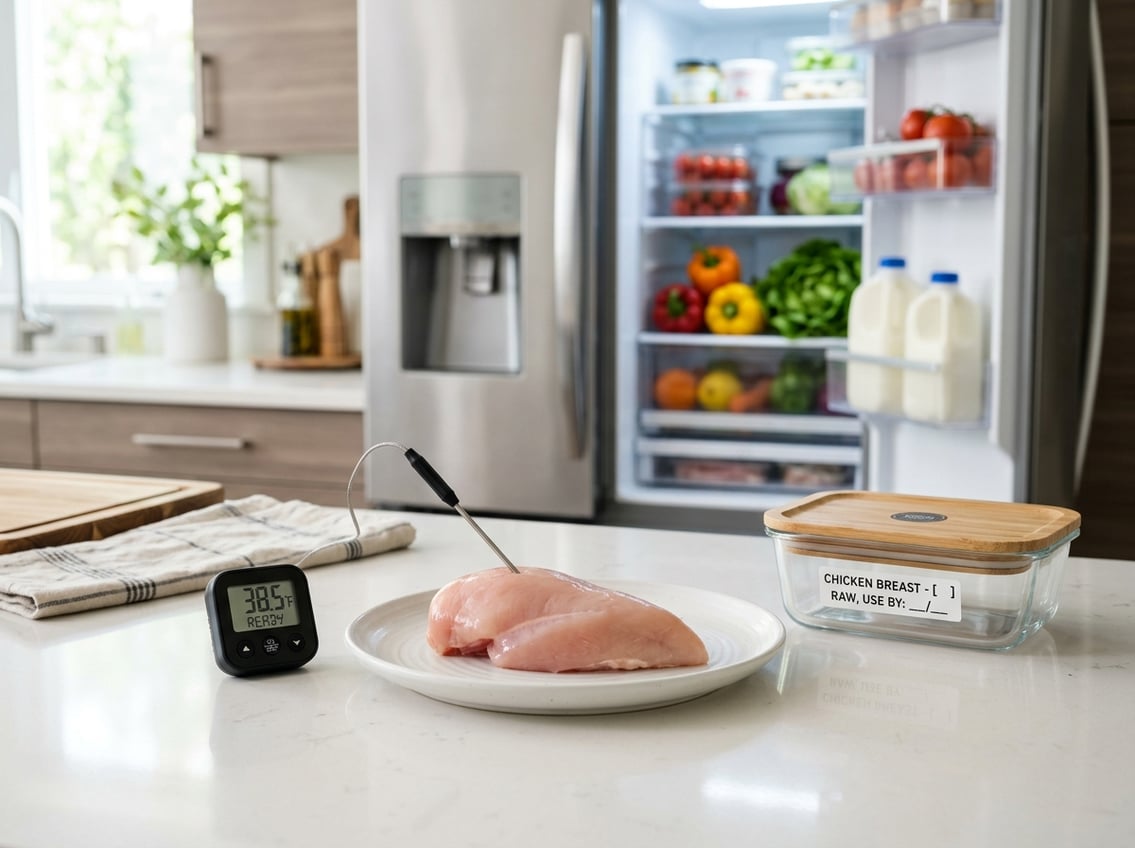
If you will not use chicken soon, freezing is the safest move. Freezing preserves quality much longer than refrigeration and gives you more flexibility with meal planning.
How to Freeze Chicken Properly
Freeze raw chicken breast in airtight packaging, freezer bags, or vacuum-sealed bags. Press out as much air as possible before sealing to reduce freezer burn.
Label the package with the freezing date. For best organization, freeze chicken in meal-sized portions.
How Long Frozen Chicken Breast Keeps Its Quality
Frozen chicken breast keeps good quality for months, especially when wrapped well. Raw chicken can keep well in the freezer for up to 9 months, while cooked chicken quality may last around 4 months.
Quality drops slowly over time, so use it sooner for better texture and flavor.
Safe Thawing Before Cooking
The refrigerator thaws chicken safely. This method keeps the meat at a safe temperature.
You can use cold water or a microwave if needed. Both methods require you to cook the chicken right after thawing.
Never thaw chicken on the counter. The outside can warm into the danger zone before the center thaws.


