
Is It Safe to Defrost Chicken Breast in the Microwave? Key Rules
You can safely defrost chicken breast in the microwave if you use low power, watch it closely, and cook it right away.
The main risk is letting the chicken warm unevenly or sit too long in the temperature danger zone.
The key is to thaw only until the meat is pliable, not cooked, and move straight to cooking as soon as it is thawed.
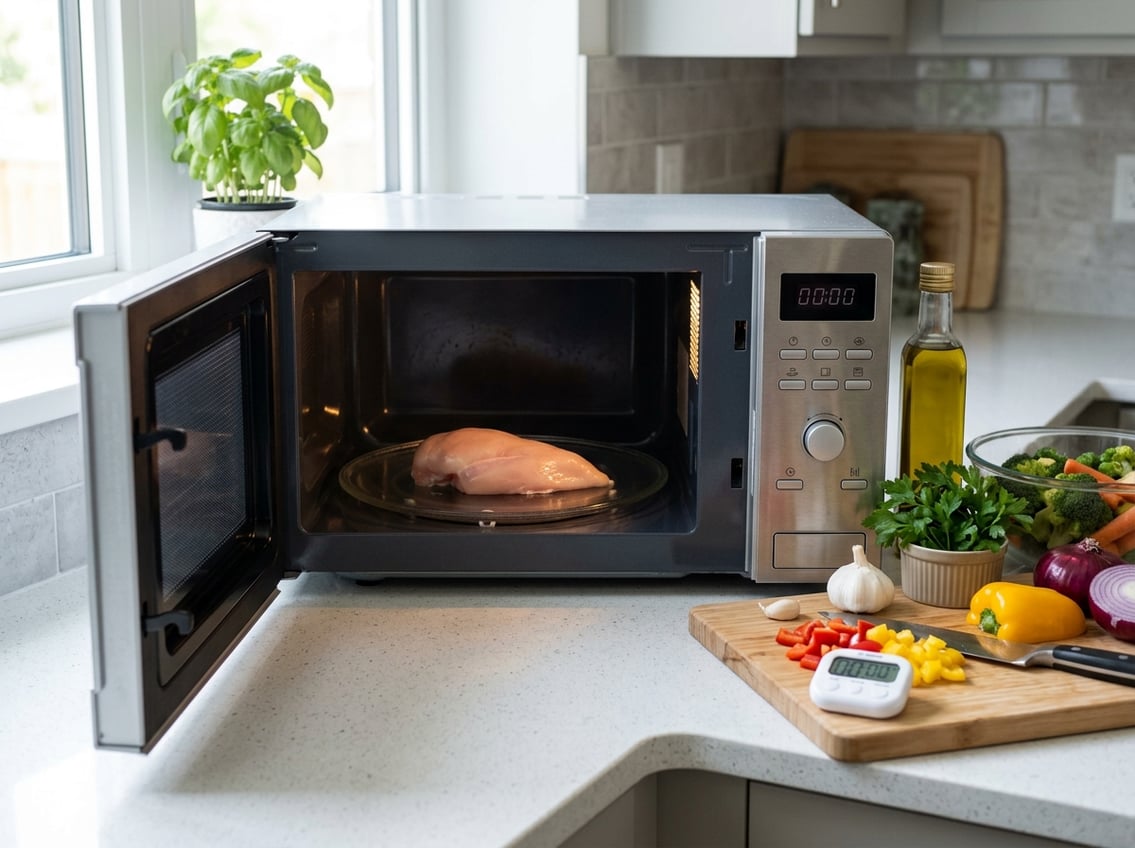
When Microwave Thawing Is Safe
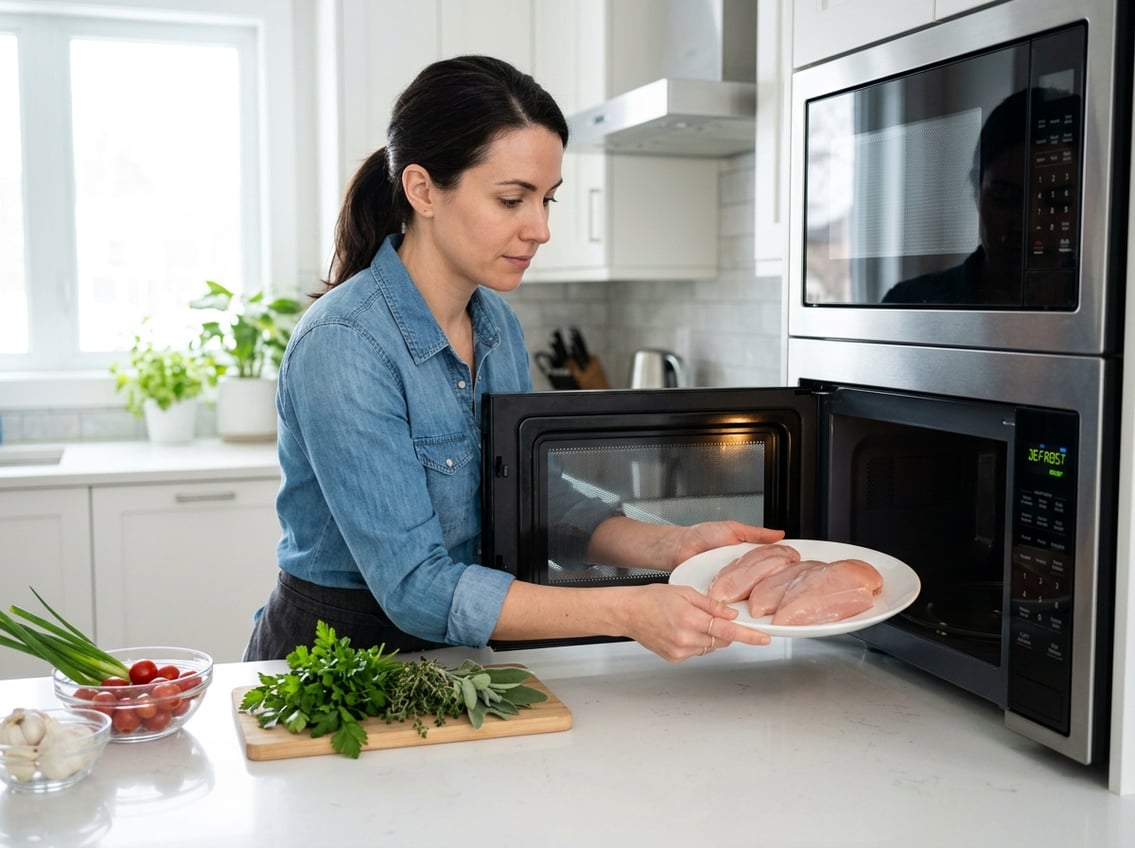
Microwave thawing works best when you need chicken breast quickly and you can cook it immediately after.
You can safely use this method when you use a microwave-safe plate, low power, and short checks to prevent partial cooking.
The Short Safety Answer
Defrosting chicken in the microwave is safe when you thaw it only until it is flexible and then cook it right away.
USDA guidance notes that chicken thawed this way should not sit around before cooking.
Why Chicken Breast Needs Extra Care
Chicken breast is lean and thin in many spots, so it can thaw unevenly.
The edges may warm faster than the center, which is why how you defrost chicken matters as much as the cooking step.
Boneless, skinless pieces are the easiest to manage.
Thick or stuck-together breasts need more attention because a clump of frozen meat can stay icy in the middle while the outer layer starts to cook.
Why Immediate Cooking Matters
Once the surface of the chicken warms, bacteria can begin to grow if it stays out too long.
Chicken thawed in the microwave should go straight from thawing to the pan, oven, or air fryer.
How to Thaw It Correctly
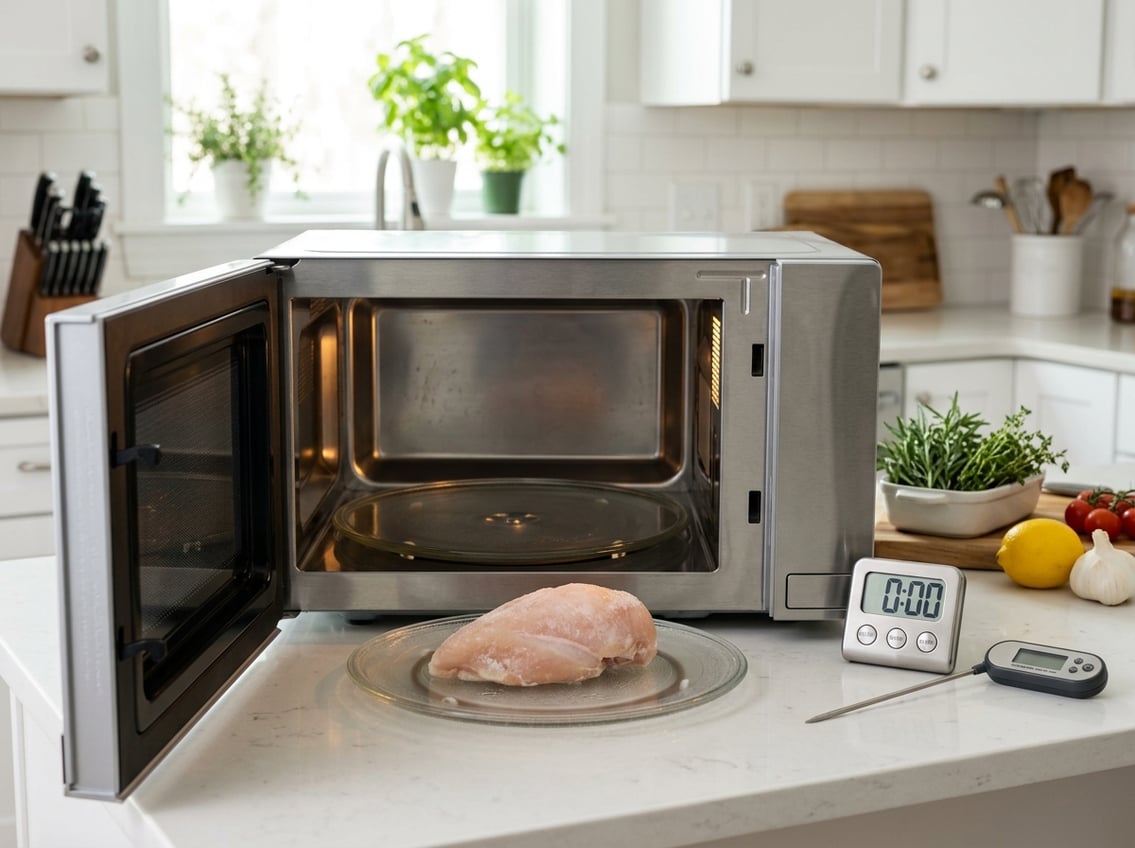
Good technique matters more than speed.
You want steady thawing, not hot spots, so check the chicken often and keep the pieces separated as they soften.
Use a Microwave-Safe Plate or Dish
Place the chicken breast on a microwave-safe plate or shallow dish that can catch juices.
This keeps the microwave clean and helps you move the chicken straight to the stove when it is ready.
Do not use a tightly covered container.
Steam needs room to escape during defrosting.
Choose the Defrost Setting or Low Power
Use the defrost setting if your microwave has one.
If not, use low power, often about 30 percent.
Short bursts are safer than a long run.
Many defrosting times depend on thickness, so start small and add time in short steps.
Flip and Separate for Even Thawing
Flip the chicken every 30 to 60 seconds.
If you have more than one piece, separate them as soon as they loosen.
This step helps the thick parts thaw before the thin edges begin to warm too much.
It also keeps results more even across the whole piece.
Check Thickness, Texture, and Ice Crystals
Look at the thickest part first.
The chicken should feel soft enough to bend, not hard in the center.
Small ice crystals are fine if you are about to cook right away.
Stop thawing when the meat is mostly pliable, then move directly to cooking.
Frequent checks and short increments help prevent overcooking.
Best Alternatives When You Have More Time
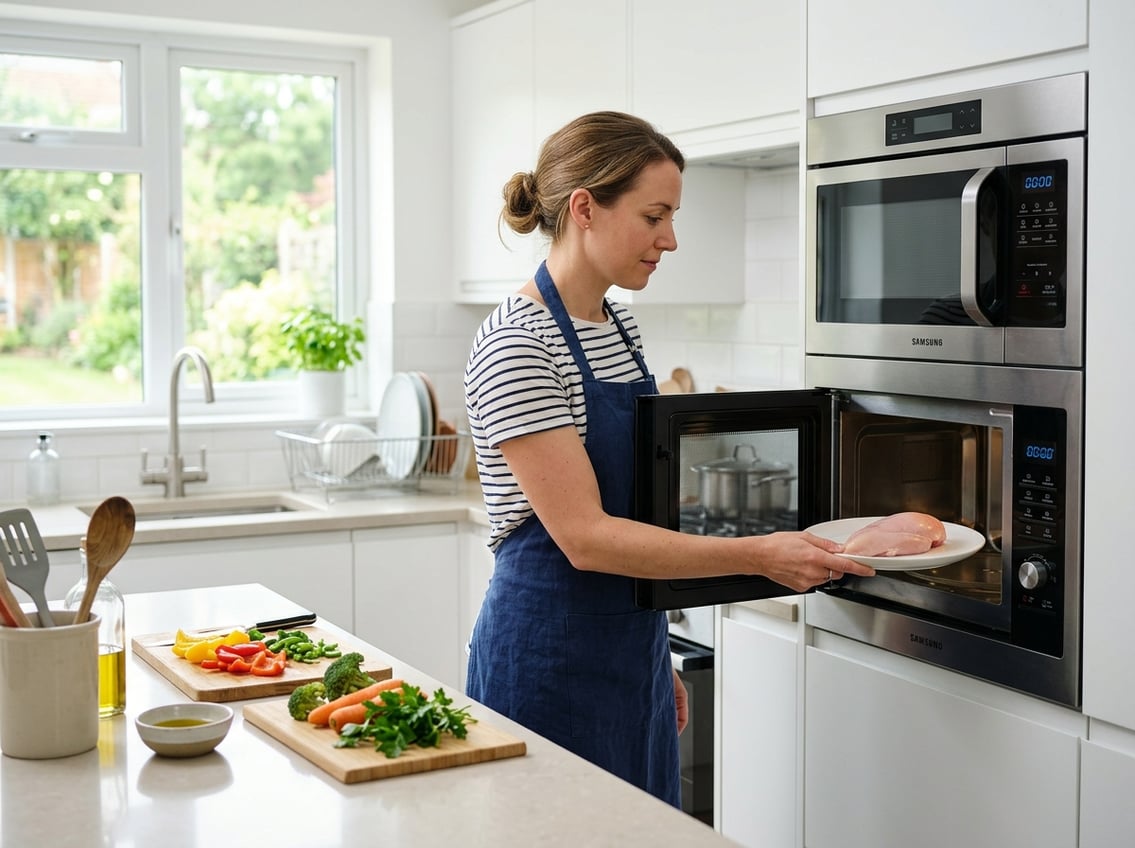
Microwave thawing is useful when you are short on time.
If your schedule allows, slower methods can give you more control and less risk of uneven thawing.
Refrigerator Thawing for the Safest Results
Refrigerator thawing is the safest method because it keeps the chicken cold the whole time.
It takes planning, often overnight or longer for larger pieces, yet it gives you the most even thaw.
Place the chicken on a plate or in a container on the lower shelf of the fridge.
This keeps juices from dripping onto other foods.
Cold Water Thawing With a Leak-Proof Bag
If you need a faster option, seal the chicken in a leak-proof bag and submerge it in cold water.
Change the water every 30 minutes so it stays cold.
This method is faster than the fridge and gentler than the microwave.
It still requires careful handling, so cook the chicken as soon as it is thawed.
When Microwave Thawing Is Not the Best Choice
Skip the microwave if you need to step away from the kitchen, or if you are thawing several thick pieces at once.
It is also not ideal if you want the chicken to sit for a while before cooking.
For big meals, refrigerator thawing is usually easier to manage.
That is also true for larger portions that need even thawing from edge to center.
Mistakes to Avoid After Thawing
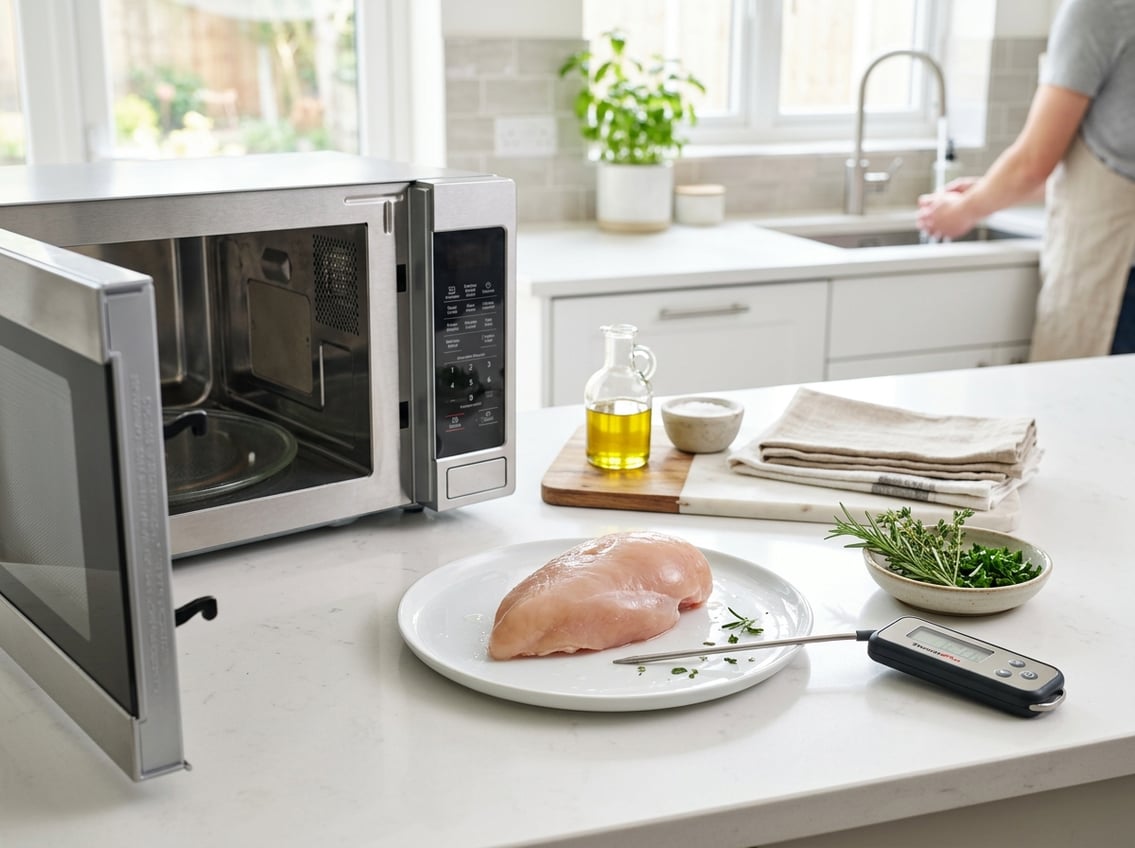
The biggest mistakes happen after the thaw, not during it.
Once the chicken is pliable, your next move should be cooking, not waiting.
Do Not Leave Chicken Sitting in the Microwave
Take the chicken out as soon as it is thawed enough to cook.
If it sits in the microwave after the cycle ends, the warm spots can keep rising in temperature.
That extra time can affect both safety and texture.
Keep an eye on defrosting times so you do not go past the point you need.
Watch for Edges Starting to Cook
If the edges turn white or feel firm, the microwave is heating too hard.
Stop, flip the chicken, and lower the power or shorten the next burst.
You want thawed chicken, not partially cooked chicken.
Defrosting works best when the meat stays raw and flexible throughout the process.
Know the Rules for Refreezing Defrosted Chicken
Thaw raw chicken in the microwave only if you plan to cook it right away. Uneven warming during microwaving makes immediate cooking especially important.
If you want to refreeze defrosted chicken, cook it first if you thawed it in the microwave. After cooking, you can freeze the chicken to save leftovers.


