
What Is the Best Way to Fix Chicken Breast? Easy Fixes
What is the best way to fix chicken breast? You usually fix it by changing the texture first, then the flavor.
If your chicken breasts are dry, tough, or bland, slice, shred, or chop the meat and add moisture back with sauce, broth, or a quick chicken marinade.
The best long-term answer is to control heat, use even thickness, and stop cooking at the right temperature, not the clock. That matters whether you are learning how to cook chicken breast for the first time or trying to improve how to cook chicken breasts you already make often.
You do not need to throw out overcooked chicken. With the right fix, you can turn it into a meal that feels moist and satisfying again.
How to Rescue Dry or Tough Chicken Right Away
If you already cooked your chicken breasts badly, you still have good options. The fastest fixes add moisture, soften the texture, and spread the flavor through the meat.
Slice Thin and Add Moisture Back
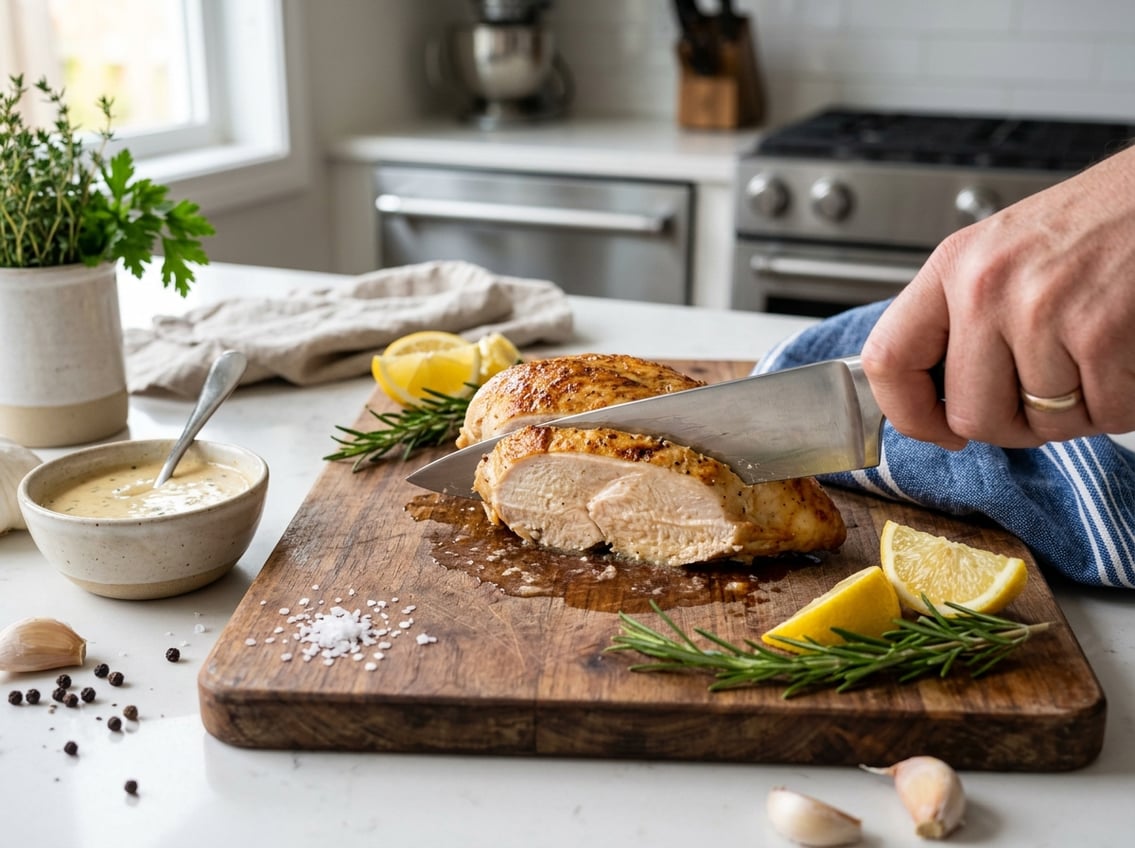
Thin slices make dry chicken feel less chewy. Cut against the grain so the meat seems softer, then spoon over pan juices, gravy, salsa, or a light sauce.
A little fat helps too. Olive oil, butter, or a creamy pan sauce can make juicy chicken breast feel much better in just a few minutes.
Shred Into Sauce, Broth, or Chicken Marinade
If the chicken is very dry, shredding works better than serving it in whole pieces. Toss it with warm broth, pasta sauce, enchilada sauce, or a leftover chicken marinade that has been cooked or simmered.
Once shredded, the meat absorbs liquid fast and tastes more tender.
Turn Overcooked Pieces Into Better Leftovers
You can use overcooked chicken in wraps, salads, soups, casseroles, and rice bowls. Chop it small and mix it with ingredients that add moisture, such as yogurt dressing, mayo, pesto, or broth-based sauce.
This keeps the chicken from drying out even more when reheated.
The Main Reason Chicken Breast Turns Out Bad
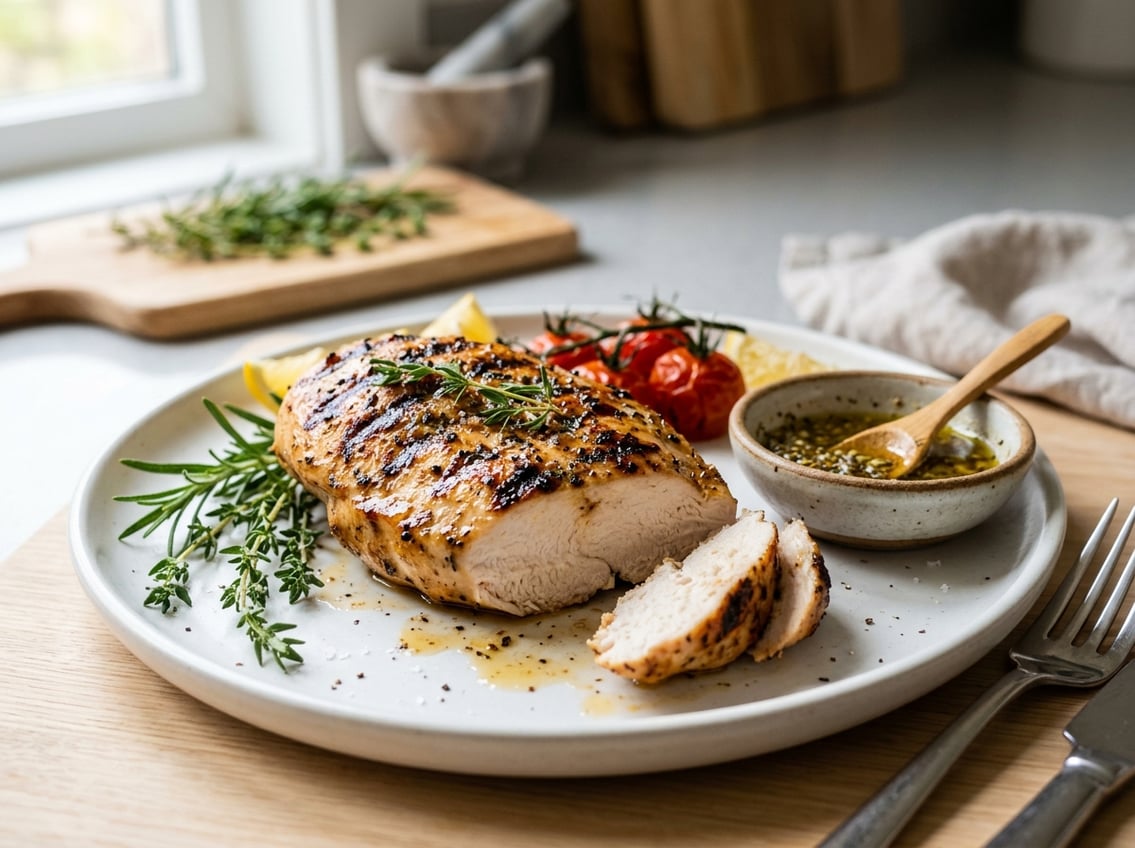
Chicken breast goes wrong for a few common reasons, and most of them start before the pan or oven is hot. Lean meat has less fat and fewer built-in protections, so small cooking errors show up fast.
Why Boneless Skinless Chicken Breast Dries Out Fast
A boneless skinless chicken breast has little fat and no skin to shield it. It can dry out quickly if the heat is too high or the cook time runs too long.
Chefs in the Simply Recipes report recommend brining or marinating because it adds moisture and flavor before cooking. That extra prep gives you a better chance at a juicy chicken breast, even if you miss the timing a little.
How Uneven Thickness Affects Doneness
A thick end and a thin end do not cook at the same rate. When one side finishes first, the thinner part often dries out while the thicker part is still catching up.
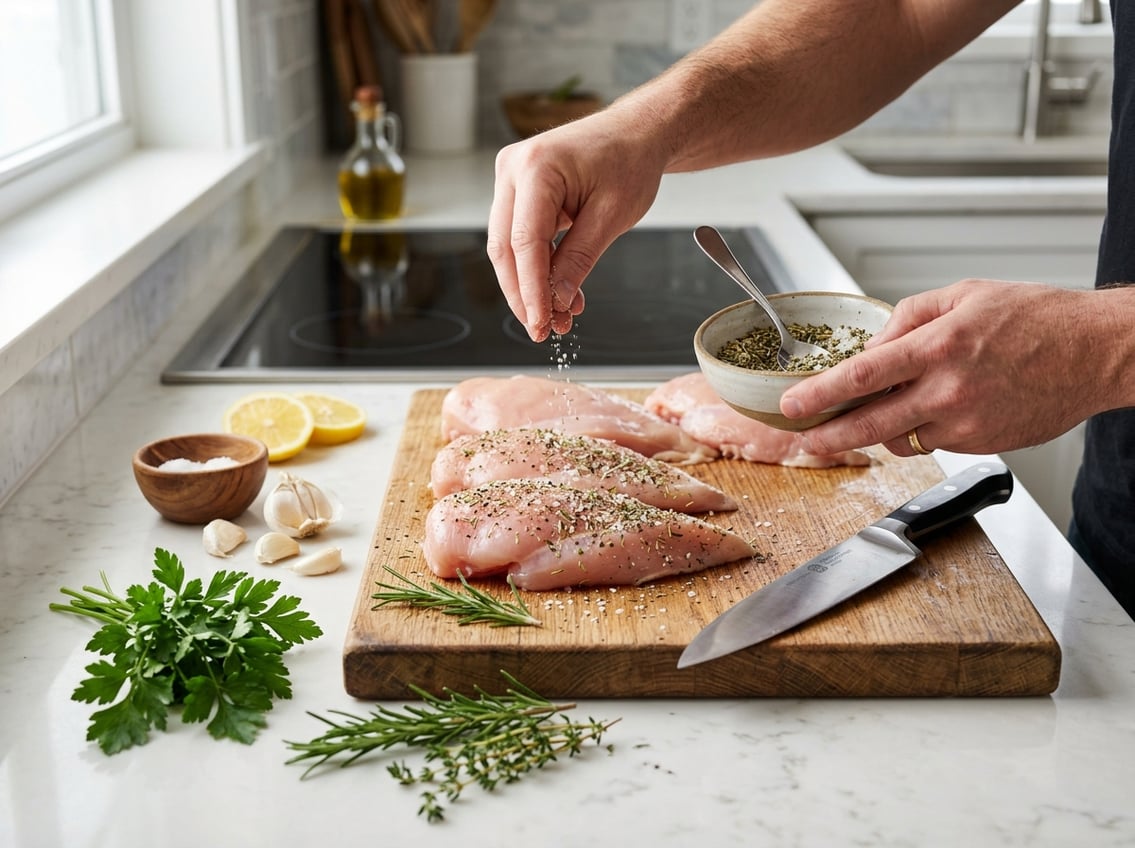
Pound chicken to an even thickness so the whole piece cooks more evenly. This makes it easier to get chicken breasts that feel tender instead of stringy.
Why a Meat Thermometer Matters More Than Time Alone
Cook time is only a rough guide. Chicken breast can be done early or late based on thickness, starting temperature, and cooking method.
A meat thermometer shows you the actual internal temperature, which is more useful than guessing. For most home cooking, that matters more than the clock if you want chicken that stays moist and safe to eat.
Best Methods to Keep It Juicy Next Time
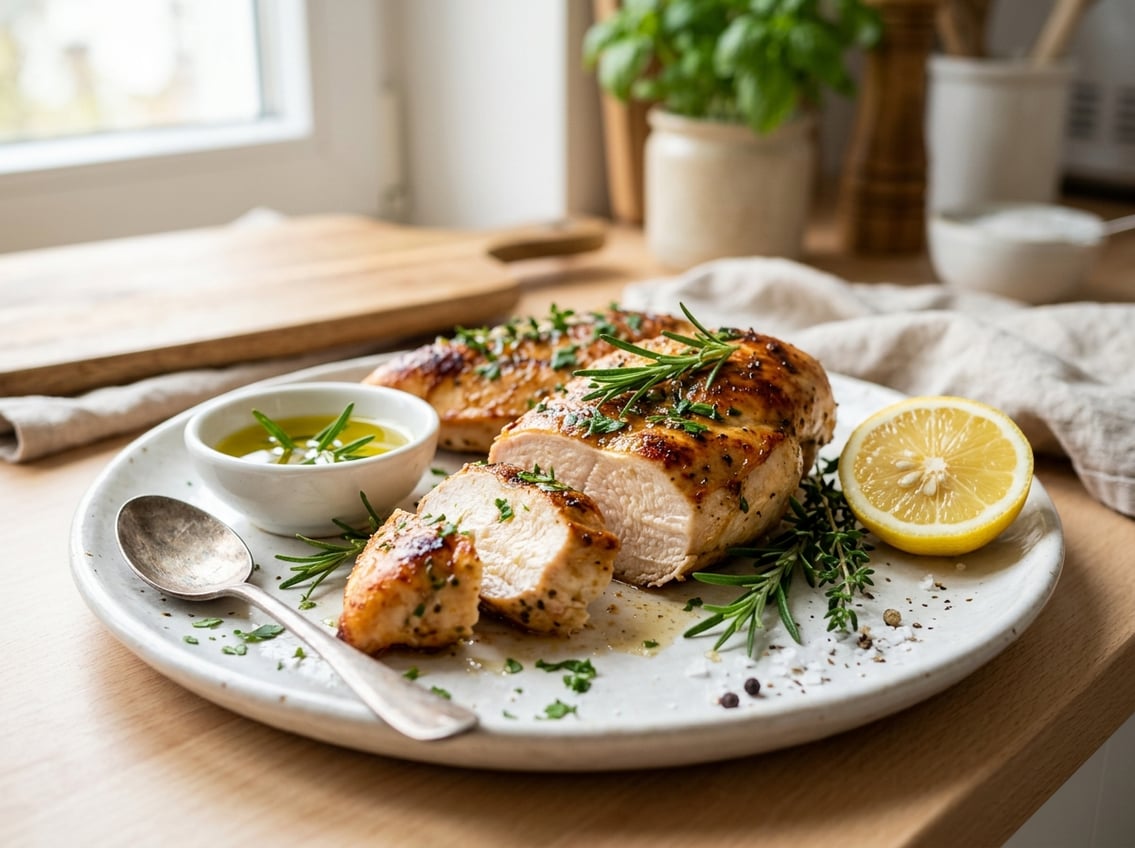
Your best results start before cooking. Brining, marinating, and using the right heat level all help a baked chicken breast stay moist instead of turning dry and chewy.
Brining vs. Marinating Before Cooking
Brining adds salt and moisture, which helps the meat hold onto liquid during cooking. Marinating adds flavor and can help tenderize the surface, especially when you use acidic ingredients or yogurt.
According to chefs quoted by Simply Recipes, both brining and marinating improve boneless skinless chicken breast before it hits the heat. A short brine can work in under an hour, while an overnight marinade gives stronger flavor.
How to Bake Chicken Breast Without Drying It Out
To bake chicken breast well, start with even thickness and a lightly oiled surface. Use moderate oven heat, and check the temperature early so you can pull it before it goes too far.
For a baked chicken breast, a thermometer is the most reliable tool. It helps you stop cooking at the right moment and protect the moisture that keeps chicken breasts tender.
Skillet Techniques for Better Browning and Moisture
A hot skillet gives you good browning fast, which adds flavor before the chicken dries out. After searing, lower the heat or cover the pan so the inside finishes gently.
A short rest after cooking also helps keep the juices in the meat instead of letting them run out on the cutting board.
Small Upgrades That Improve Flavor and Texture
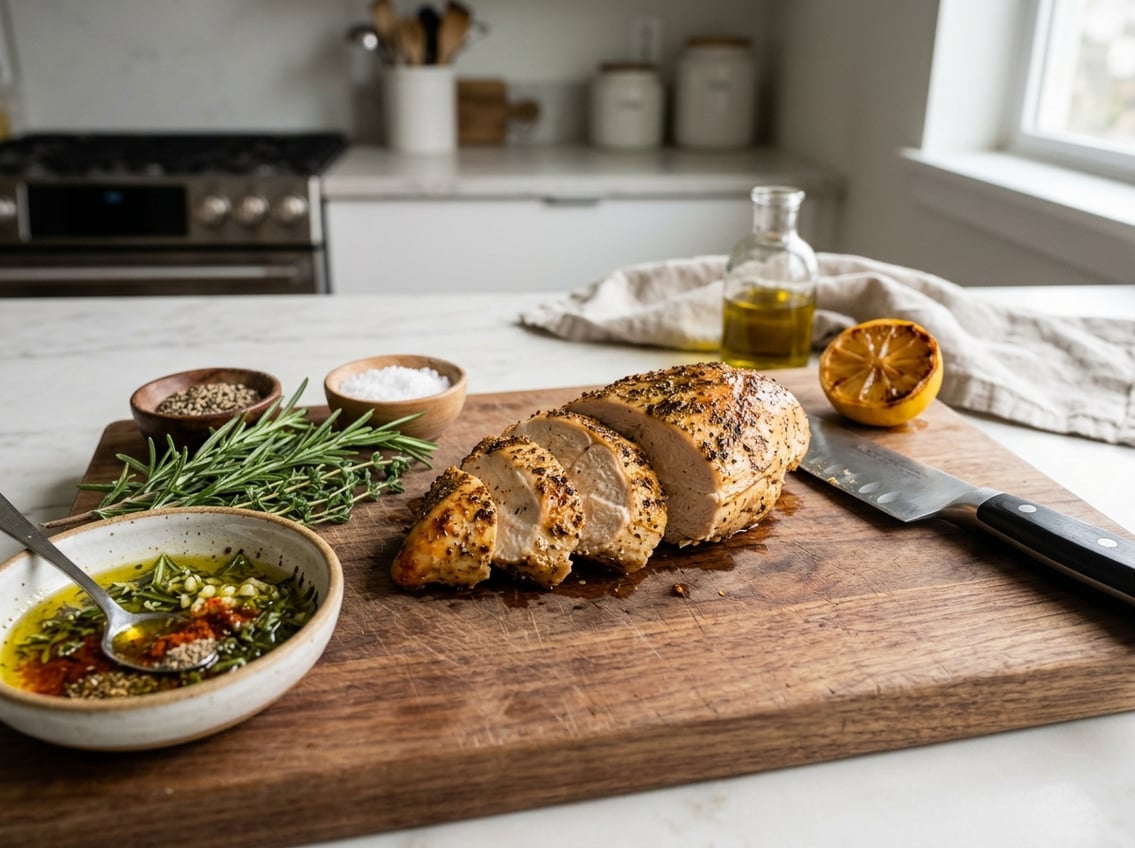
Small details make a noticeable difference with chicken. A few simple upgrades can improve both the taste and the bite of a plain baked chicken breast.
When to Use Lemon for Lemon Chicken Breast
Lemon works best when you want clean, bright flavor without heavy sauce. Use zest for stronger aroma, then add juice near the end so it tastes fresh, not harsh.
That balance is useful for lemon chicken breast because the acid wakes up mild chicken without hiding it. Pair it with herbs, garlic, or olive oil for a simple finish.
How Parchment Paper Helps in the Oven
Parchment paper helps keep moisture from escaping too quickly in the oven. It also makes cleanup easier and can reduce the chance of sticking.
If you bake chicken breasts with parchment, you can keep the surface from drying out while still getting even cooking. This is a simple trick that works well for weeknight meals.
Resting, Slicing, and Serving for Better Results
Resting is not optional if you want good texture.
After cooking, let the chicken sit for a few minutes so the juices settle back into the meat.
Check doneness with your meat thermometer.
Slice the chicken against the grain for a softer bite.
Serve it right away, or add sauce before it reaches the table so the chicken breast stays moist and appealing.


