
What Is the Temp of Chicken Breast When It’s Done?
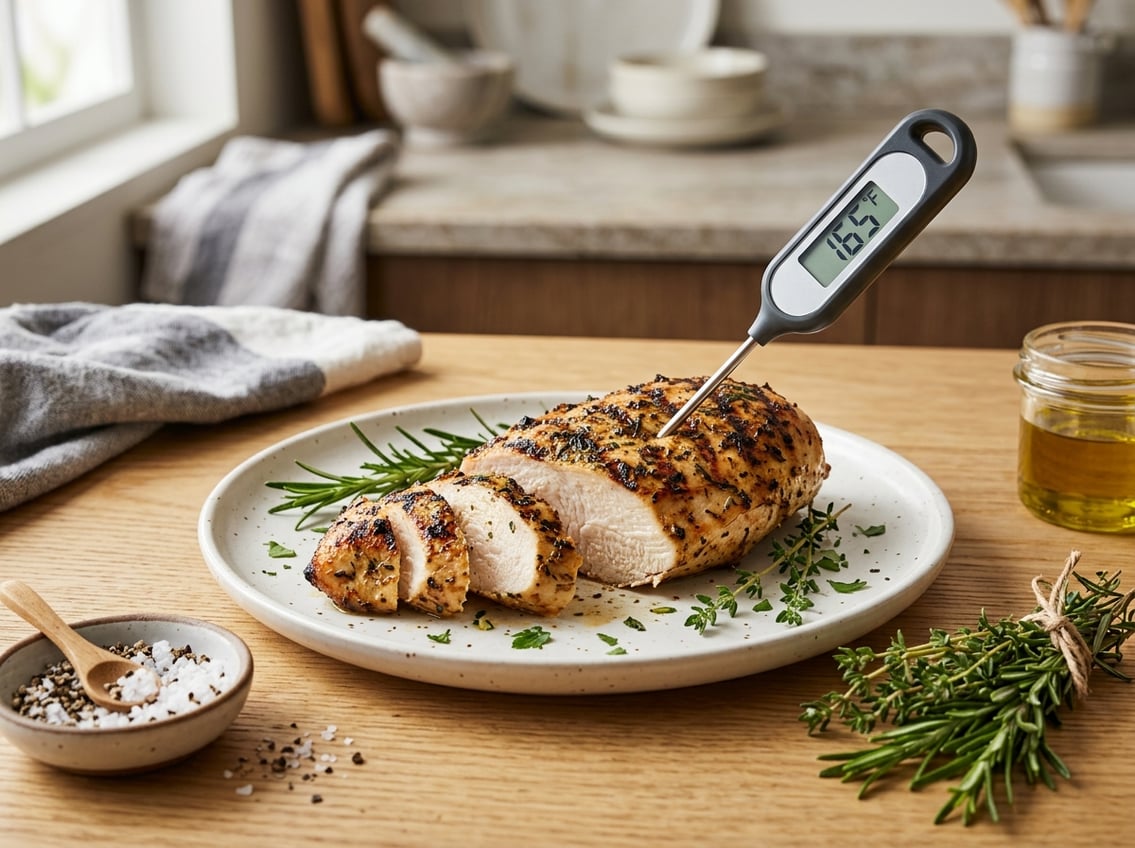
When you ask what is the temp of chicken breast when it’s done, the short answer is 165°F, or 74°C, in the thickest part of the meat. That is the standard you should use for safe, fully cooked chicken breast.
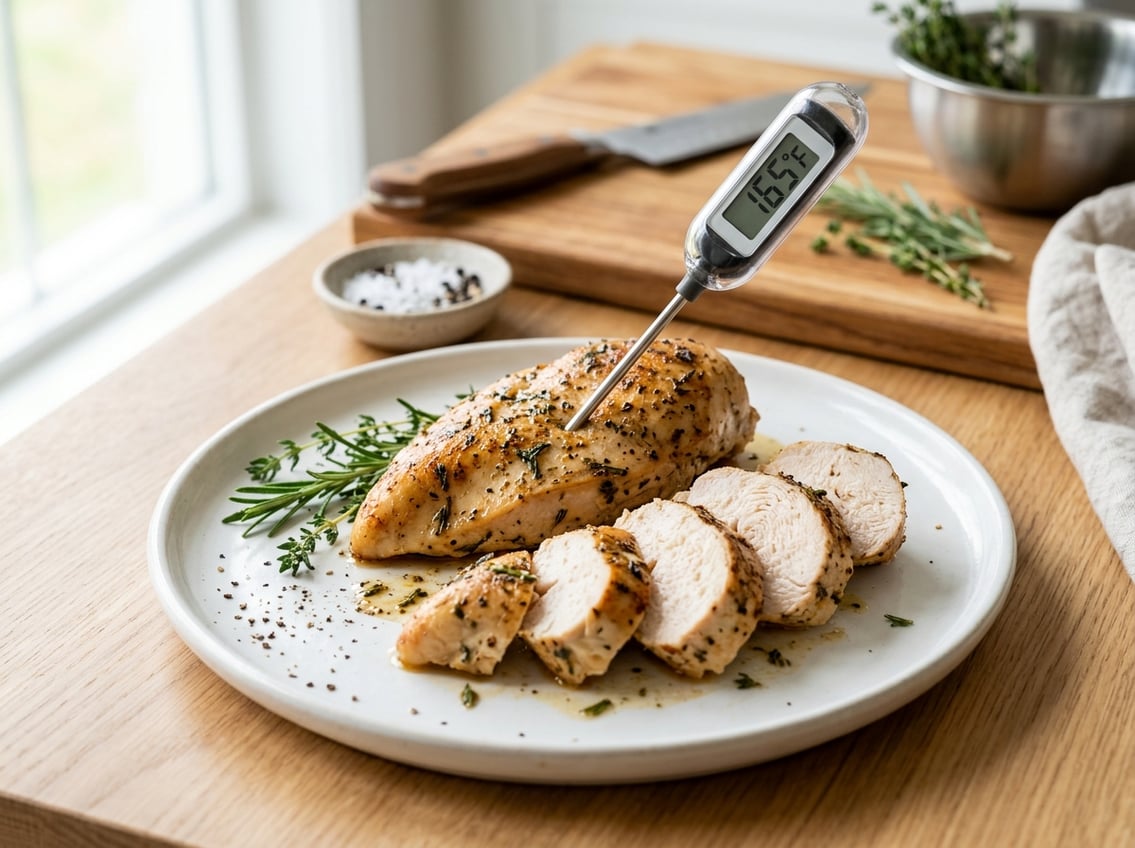
If you want juicy chicken breast and good food safety, use a thermometer and cook to internal temperature instead of guessing by color or time alone. That gives you the best chance of avoiding dry meat and foodborne illness.
Chicken breast is lean, so it can go from undercooked to overcooked quickly. Knowing the right temperature takes the guesswork out of dinner and helps you cook with more confidence.
Safe Internal Temperature for Chicken Breast
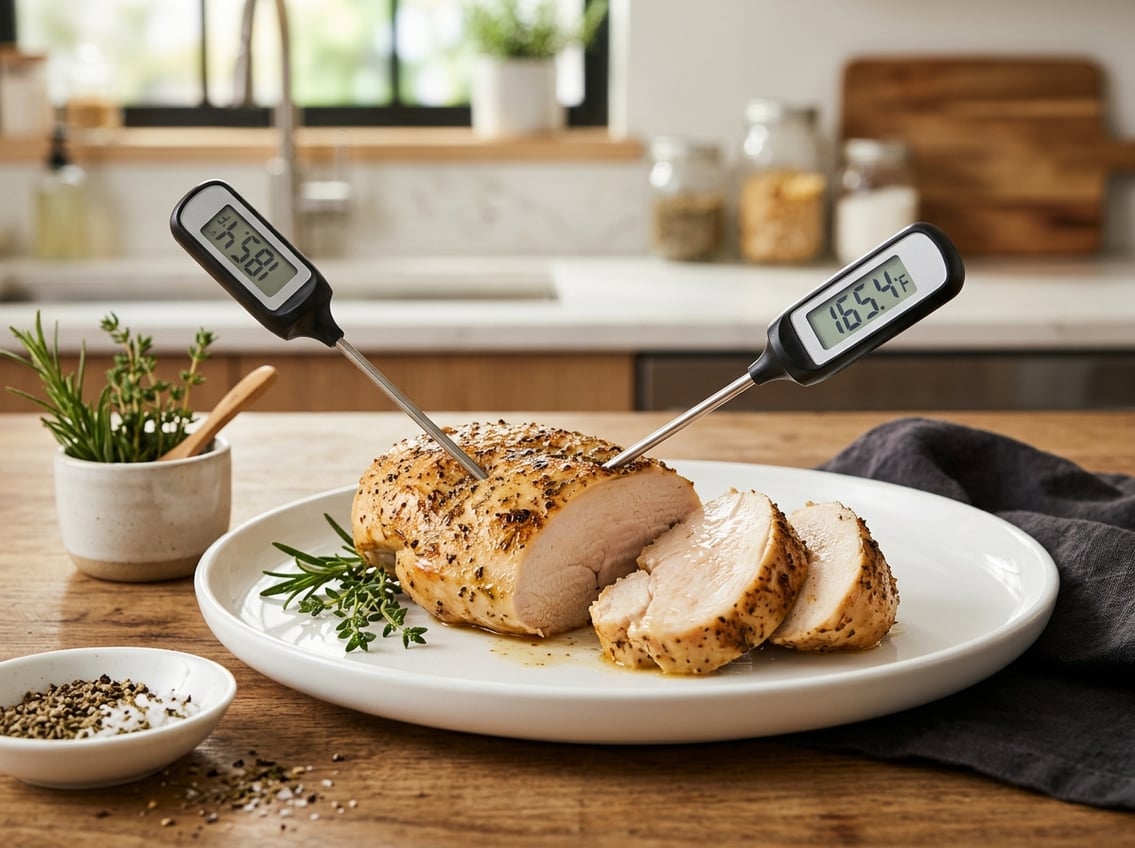
For chicken breast, food safety depends on reaching the correct internal temperature. The USDA standard is clear, and it applies whether you bake, grill, roast, or pan-cook your chicken.
The USDA Standard: 165°F (74°C)
According to the USDA chicken internal temperature guide, chicken is safe when the internal temperature reaches 165°F (74°C). Check this number in the thickest part of the chicken breast.
This applies to chicken breast as well as other poultry cuts. Some cooks use 75°C as a rounded figure, but the standard safe target in the US is 165°F (74°C).
Why Food Safety Matters for Poultry
Raw or undercooked chicken can carry bacteria such as salmonella and campylobacter. These can cause foodborne illness, which is why food safety rules are strict for poultry.
The USDA recommendation helps make sure those harmful bacteria are destroyed. The safe answer is the one that protects you first, which is 165°F (74°C).
Can You Pull It Off the Heat Before 165°F?
You can sometimes remove chicken breast a little early if you account for carryover cooking. Many cooks pull it at about 160°F and let it rest, since the temperature can rise a few degrees.
That approach can work when you measure accurately and rest the chicken long enough. If you are unsure, waiting until 165°F (74°C) is the safest choice.
How to Check Doneness Accurately
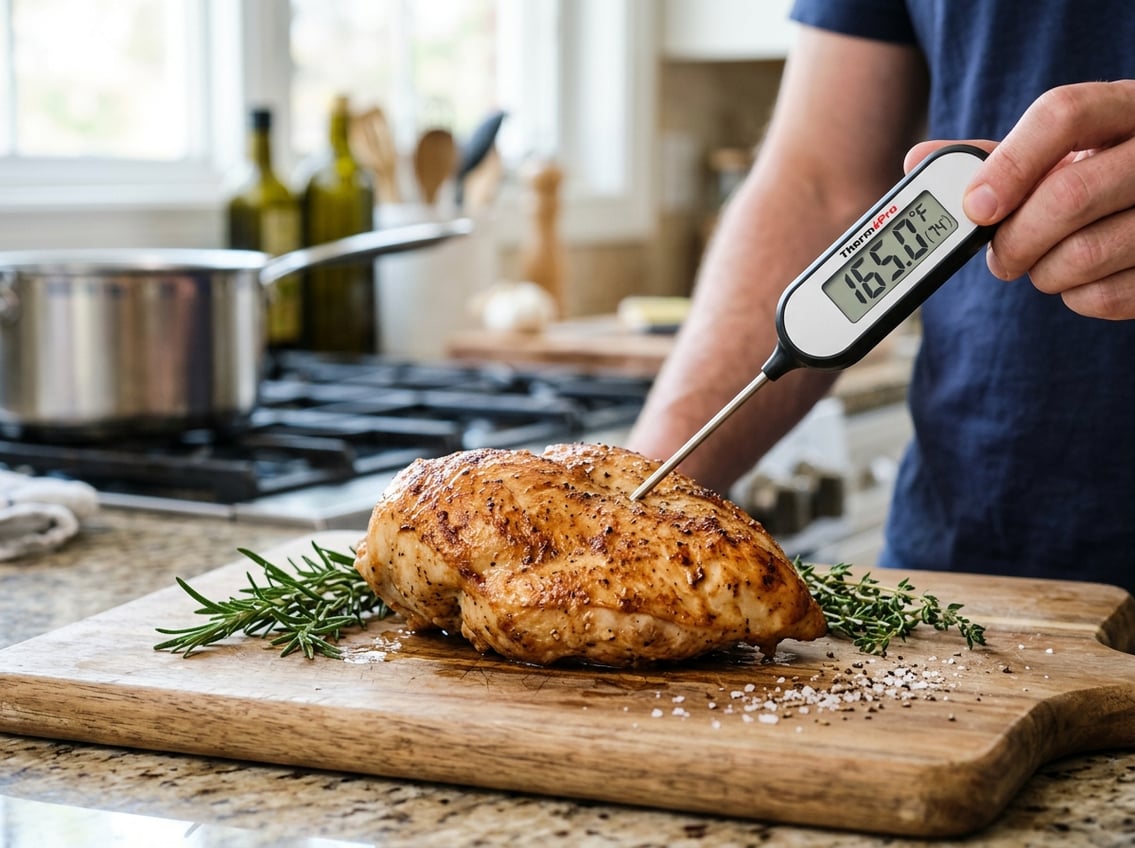
A thermometer gives you the most reliable answer. Read the actual internal temperature, not just the outside of the meat.
Where to Insert a Meat Thermometer
Insert the probe into the thickest part of the chicken breast. Avoid touching bone, since bone can give a false reading.
For a thin breast, slide the thermometer in from the side so the tip lands near the center. That helps you get the true internal temperature for food safety.
Instant-Read vs. Probe Thermometer
An instant-read thermometer is useful when you want a quick check near the end of cooking. A digital meat thermometer gives fast, clear numbers and works well for most home cooks.
A probe thermometer stays in the chicken while it cooks, so you can watch the temperature without opening the oven or grill. Both tools work well if you place them correctly and read the thickest part of the chicken breast.
Why Color and Juices Are Not Reliable
Chicken can stay slightly pink even when it is fully cooked. Juices can also run clear before the meat reaches a safe internal temperature.
Color is not a dependable sign of doneness. For food safety, a thermometer is the tool that matters most when checking chicken breast.
How to Keep Chicken Breast Juicy
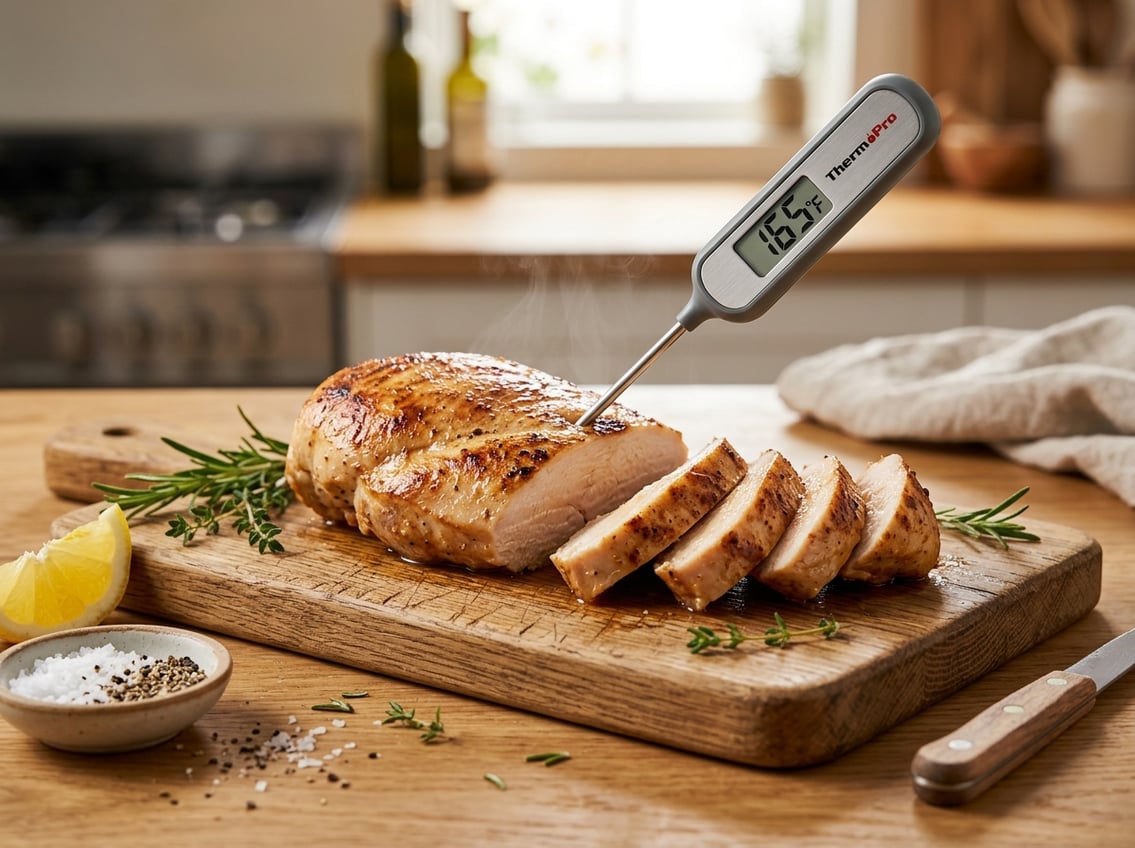
Lean chicken breast dries out fast if it cooks too long. You can keep it moist by planning for carryover heat, using simple moisture-building steps, and watching the cooking temperature closely.
Carryover Cooking and Resting Time
Chicken keeps cooking after you remove it from the heat. That rise in temperature is called carryover cooking, and it can add a few degrees while the meat rests.
Let chicken breast rest for several minutes before slicing. Resting helps the juices settle, so the meat stays more tender when you cut into it.
Brining and Marinades for Better Moisture
Brining helps chicken breast hold onto water during cooking. A simple saltwater brine can make a real difference, especially for boneless, skinless pieces.
Marinades can add flavor and help the surface stay moist. As noted in a guide to keeping baked chicken breast moist, salt, liquid, and herbs are common ways to improve moisture before cooking.
Why Tenderness Changes With Temperature
Chicken breast gets firmer as the internal temperature rises. If you cook it far past 165°F (74°C), the proteins tighten more and the meat can feel dry.
Cooking time matters, but temperature matters more. When you control the internal temperature, you keep more tenderness in the final result.
Best Cooking Methods and Timing
Different cooking methods change how fast chicken breast reaches the safe internal temperature. You want the same target, but your cooking time and heat level will vary.
Baking Chicken Breast in the Oven
For baking chicken breasts, a moderate oven gives you even cooking and steady control. Bake until the internal temperature reaches 165°F (74°C), then rest before slicing.
Thicker breasts take longer than thinner ones. If the oven runs too hot, the outside can dry out before the center is done.
Skillet Cooking Over Medium-High Heat
A skillet over medium-high heat gives you good browning and quick cooking. This method works well for thinner chicken breasts or breasts that you pound to even thickness.
Keep an eye on the temperature near the end of cooking. The outside can look done before the center reaches the right internal temperature.
Grilling and Sous-Vide Notes
Grilling can produce good flavor, but you need careful heat control. Use a thermometer so you know when the center has reached 165°F (74°C).
Sous-vide uses exact temperature control, so it can make chicken breast very tender when done correctly. This method lets timing and temperature work together in a precise way.
How This Differs From Roasting a Whole Chicken
When you roast a whole chicken, you need to check more than one spot. The thickest part of the breast and the inner thigh should both reach the safe temperature.
Chicken breast alone usually cooks faster than a whole bird. The best cooking temperature and timing depend on the cut, even though the safe internal temperature stays the same.


