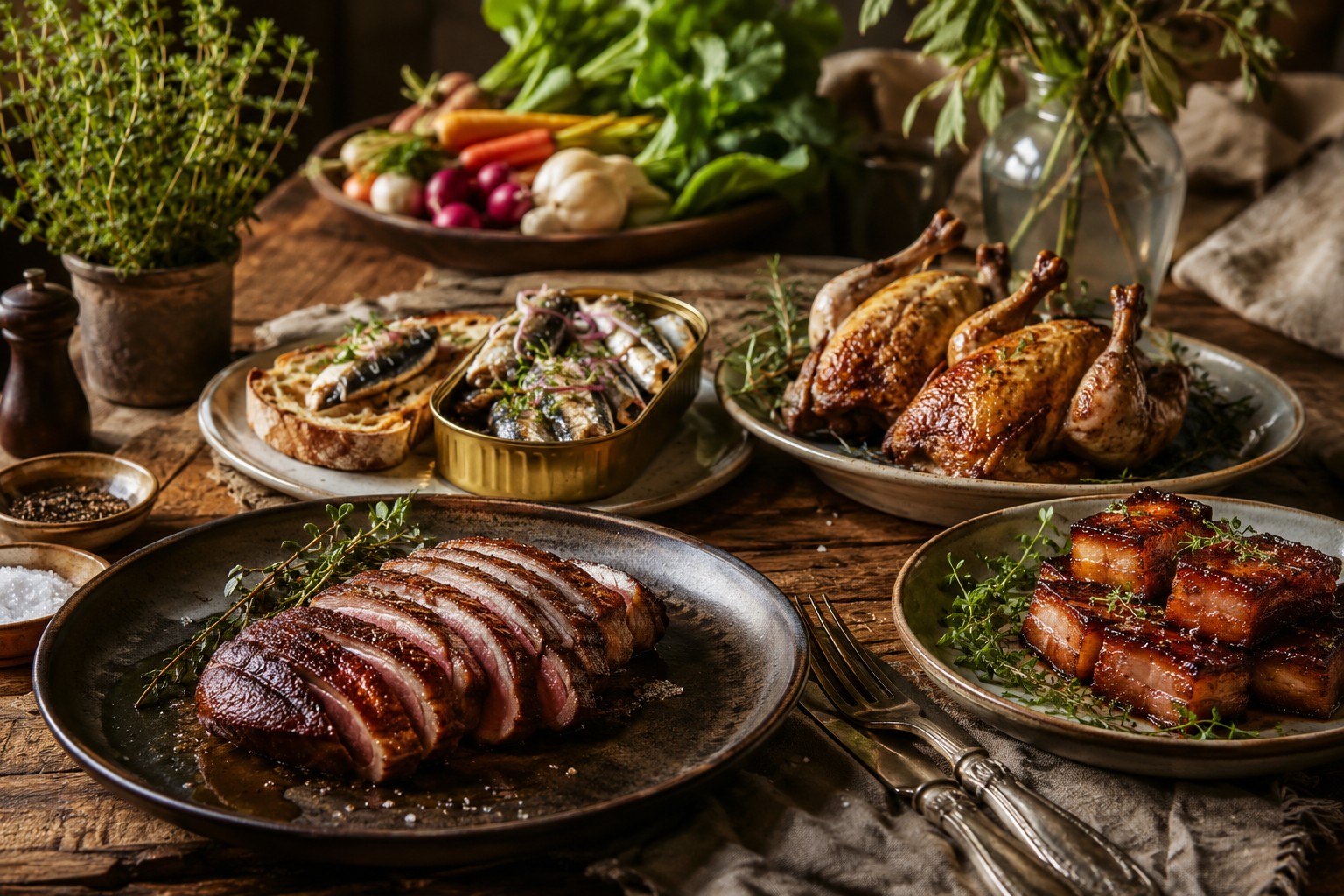
High-Quality Alternative Proteins: Duck, Quail, Pork, and Tinned Fish Recipes for 2026 Tables
Last updated: June 2, 2026
Home cooks are moving beyond basic chicken and beef to premium, sustainable proteins that deliver restaurant-quality flavor and nutrition. High-quality alternative proteins like duck, quail, pork, and tinned fish offer superior taste, diverse cooking methods, and often better environmental footprints than conventional options. These proteins are becoming staples on 2026 tables as sourcing improves and recipes become more accessible.
Key Takeaways
- Duck and quail provide richer flavor and higher nutrient density than chicken, with duck offering 23-25g protein per 100g serving
- Pork delivers complete protein at lower cost than beef while producing fewer greenhouse gas emissions per pound
- Premium tinned fish (sardines, mackerel, anchovies) retain omega-3 fatty acids and offer shelf-stable convenience without quality loss
- Duck breast cooks best using a cold-pan method to render fat slowly, preventing greasiness
- Quail requires only 12-15 minutes of cooking time, making it ideal for quick dinner parties
- Tinned fish quality depends on packing medium—olive oil preserves texture better than water or vegetable oil
- Cost comparison: Quail runs $8-12 per pound vs. chicken at $3-5, but portion sizes are smaller
- These proteins work well for those choosing between different poultry options who want to expand beyond standard cuts
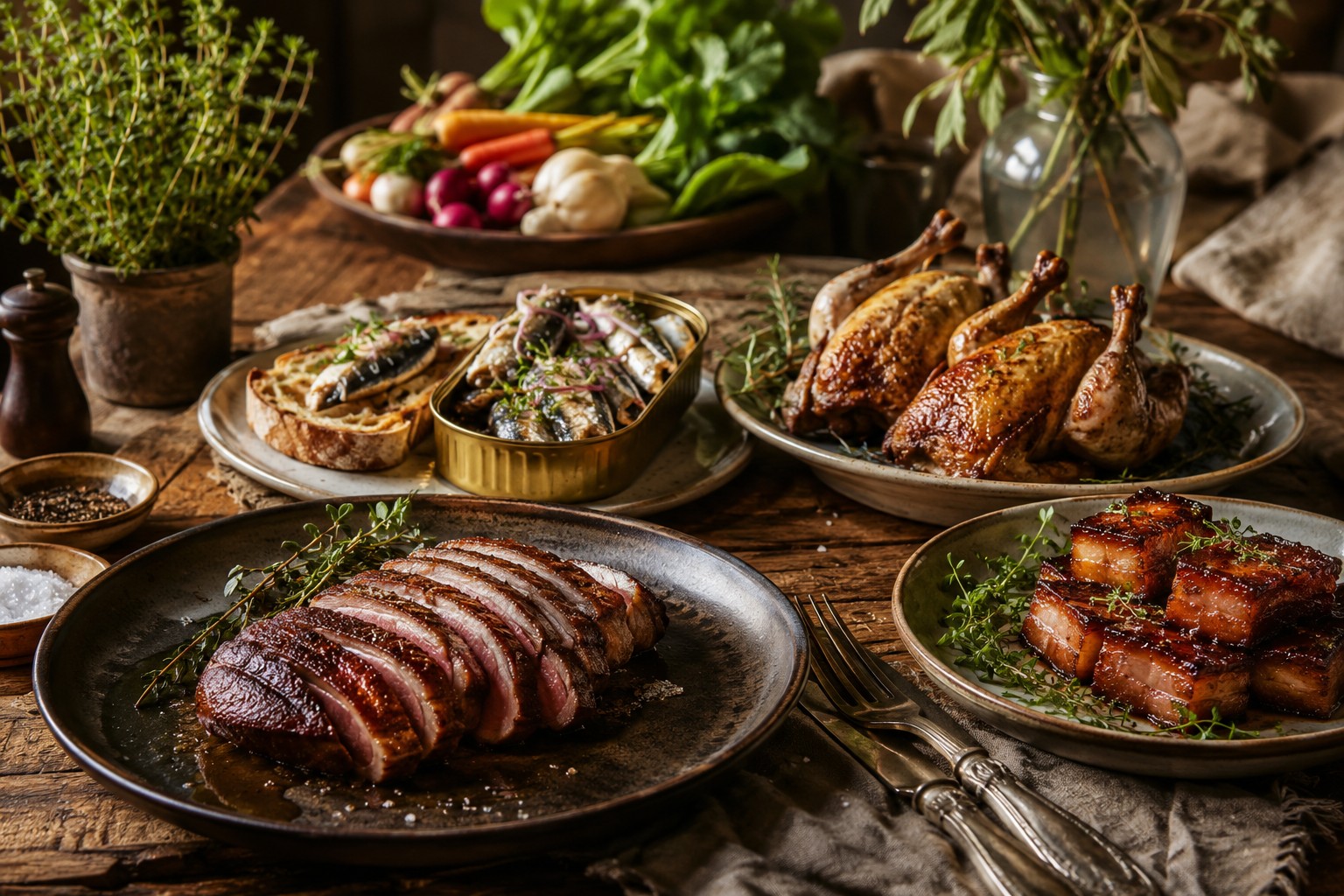
What Are Alternative Proteins and Why Are Duck, Quail, and Pork Considered High Quality?
Alternative proteins are any protein sources used in place of conventional beef and chicken. Duck, quail, and pork qualify as high-quality alternatives because they provide complete amino acid profiles, distinctive flavors, and often better fat composition than standard proteins.
Duck meat contains all nine essential amino acids and provides higher levels of iron and B vitamins than chicken. A 100g serving of duck breast delivers approximately 23.5g of protein along with significant amounts of selenium and phosphorus. The fat in duck is primarily monounsaturated (similar to olive oil), making it a healthier choice than many assume.
Quail offers an exceptional protein-to-weight ratio with minimal waste. Each bird weighs 4-6 ounces but provides dense nutrition, including high levels of vitamin B6, niacin, and phosphorus. The meat is naturally tender and cooks quickly, reducing energy use.
Pork provides complete protein at roughly 26g per 100g serving (for lean cuts like tenderloin). It contains more thiamine than any other meat and offers substantial amounts of selenium, zinc, and B vitamins. Modern pork is significantly leaner than decades past, with tenderloin containing less fat than skinless chicken thigh.
Choose these proteins if:
- You want more flavor complexity than chicken provides
- You’re looking for nutrient-dense options beyond beef
- You value cooking versatility and premium presentation
- You want to reduce reliance on industrial chicken production
How to Cook Duck Breast for Beginners at Home
Start duck breast in a cold pan, skin-side down, then gradually increase heat to medium. This method renders the fat layer slowly, creating crispy skin without greasiness. Cook skin-side down for 6-8 minutes, flip for 2-3 minutes, then rest for 5 minutes before slicing.
Step-by-step process:
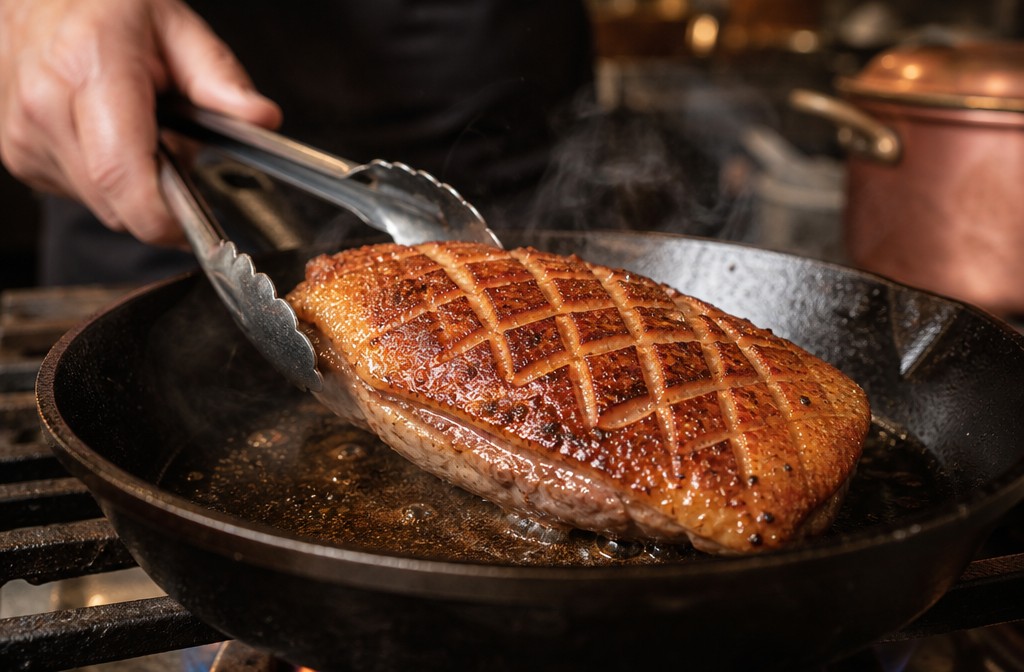
- Score the skin: Use a sharp knife to cut crosshatch patterns through the fat layer (not into the meat), spacing cuts about 1/2 inch apart
- Season generously: Salt and pepper both sides at least 15 minutes before cooking
- Cold pan start: Place breast skin-down in a cold, dry pan
- Gradual heat: Turn burner to medium and let fat render slowly for 6-8 minutes
- Monitor color: Skin should turn deep golden brown; pour off excess fat as it accumulates
- Flip briefly: Turn breast over and cook flesh side for 2-3 minutes for medium-rare
- Rest properly: Transfer to cutting board and rest 5 minutes before slicing against the grain
Common mistake: Starting with a hot pan causes the outside to burn before fat renders, leaving you with greasy, undercooked duck. The cold-pan method prevents this entirely.
Duck breast should reach an internal temperature of 135°F for medium-rare (the recommended doneness). Unlike chicken, duck can be safely served pink in the center. If you’re used to cooking chicken breast to higher temperatures, this takes some adjustment.
Duck vs Chicken: Protein Content and Nutritional Comparison
Duck breast contains slightly more protein than chicken breast (23.5g vs 22g per 100g raw), but the real nutritional advantage lies in its superior mineral and vitamin content. Duck provides 2-3 times more iron, significantly more selenium, and higher levels of B vitamins than chicken.
Nutritional comparison per 100g raw:
| Nutrient | Duck Breast | Chicken Breast |
|---|---|---|
| Protein | 23.5g | 22g |
| Fat | 4.5g | 2.5g |
| Iron | 2.7mg | 0.9mg |
| Selenium | 18mcg | 14mcg |
| Vitamin B12 | 0.4mcg | 0.3mcg |
| Calories | 135 | 120 |
The fat content in duck is higher but consists primarily of heart-healthy monounsaturated fats. Duck fat has a fatty acid profile closer to olive oil than to butter or beef fat, with approximately 50% monounsaturated fat content.
Choose duck over chicken when:
- You need higher iron intake (especially important for those with anemia)
- You want richer flavor for special occasions
- You’re preparing dishes where rendered fat adds value (like confit or roasted vegetables)
- You’re not strictly counting calories but prioritize nutrient density
Duck costs more per pound ($8-14 vs $3-5 for chicken), but the flavor intensity means smaller portions satisfy. For everyday meals where chicken breast remains the practical choice, stick with poultry; for weekend cooking and entertaining, duck elevates the experience.
Best Tinned Fish Brands for Gourmet Recipes in 2026
Premium tinned fish brands for 2026 include Ortiz (Spain), Nuri (Portugal), Fishwife (USA), and Patagonia Provisions (USA). These producers use sustainable fishing methods, pack fish in high-quality olive oil, and process within hours of catch to preserve texture and omega-3 content.
Top brands by category:
Sardines:
- Fishwife: Smoked sardines in olive oil with bright, modern branding; wild-caught from the Cantabrian Sea
- Matiz: Spanish sardines with firm texture, packed in premium olive oil
- King Oscar: Widely available, consistent quality, good entry point for beginners
Mackerel:
- Patagonia Provisions: Lemon-pepper mackerel with sustainable sourcing and excellent flavor
- Scout: Canadian mackerel in olive oil, clean taste without fishiness
- Nuri: Portuguese spiced mackerel, traditional recipes dating to 1920s
Anchovies:
- Ortiz: Gold standard for Spanish anchovies, hand-packed, intensely flavorful
- Agostino Recca: Sicilian anchovies with perfect salt balance
- Bela: Portuguese anchovies in olive oil, less salty than Spanish varieties
What to look for:
- Packing medium: Olive oil preserves texture and adds flavor; avoid soybean or sunflower oil
- Origin: Spain, Portugal, and Pacific Northwest produce highest-quality tinned fish
- Processing: “Hand-packed” indicates careful handling and better presentation
- Sustainability: Look for MSC certification or clear sourcing information
Premium tinned fish costs $6-15 per tin compared to $2-4 for standard brands, but the quality difference is substantial. The fish holds its shape, tastes fresh rather than metallic, and works well in upscale preparations like tinned fish toasts, pasta, or grain bowls.
Easy Quail Recipes for Dinner Parties
Quail cooks in just 12-15 minutes, making it perfect for dinner parties where timing matters. The simplest preparation is pan-roasted quail with herbs: season birds, sear in hot pan for 3 minutes per side, finish in a 400°F oven for 6-8 minutes, then rest and serve.
Pan-Roasted Quail with Herbs (serves 4):
Ingredients:
- 8 semi-boneless quail (2 per person)
- 3 tablespoons olive oil
- 4 garlic cloves, smashed
- Fresh thyme and rosemary sprigs
- Salt and black pepper
- 2 tablespoons butter
- Lemon wedges for serving
Method:
- Pat quail completely dry and season generously with salt and pepper inside and out
- Heat olive oil in large oven-safe skillet over medium-high heat
- Place quail breast-side down and sear for 3 minutes until golden
- Flip birds, add garlic and herbs to pan, transfer to 400°F oven
- Roast 6-8 minutes until internal temperature reaches 155°F
- Remove from oven, add butter to pan, baste birds
- Rest 3 minutes before serving with pan juices and lemon
Grilled Quail Skewers: Butterfly quail, marinate in olive oil, lemon, garlic, and za’atar for 2 hours. Thread onto skewers and grill over high heat for 4-5 minutes per side. The small size means they cook through quickly without drying out.
Common mistake: Overcooking quail makes it dry and tough. These small birds need only 12-15 minutes total cooking time. Use an instant-read thermometer and pull them at 155°F—carryover heat will bring them to 160°F during resting.
Quail pairs beautifully with grain salads, roasted vegetables, or creamy polenta. The mild, slightly gamey flavor works with bold seasonings like harissa, chimichurri, or Asian-inspired glazes.
Is Pork a Good Alternative Protein Source Compared to Beef?
Pork provides comparable protein to beef (26g vs 25g per 100g) at lower cost and with significantly reduced environmental impact. Pork production generates roughly 60% less greenhouse gas emissions per pound than beef, making it a more sustainable choice for regular consumption.
Pork vs Beef comparison:
Nutritional advantages of pork:
- Higher thiamine content (essential for metabolism)
- More selenium per serving
- Leaner cuts (tenderloin) have less saturated fat than most beef cuts
- Lower cost per gram of protein ($4-7 per pound vs $8-15 for beef)
Environmental considerations:
- Pork requires less land and water than beef production
- Faster growth cycle means lower resource input per pound
- Modern pork farming has improved efficiency significantly since 2000
When to choose pork over beef:
- For everyday meals where cost matters
- When you want complete protein without beef’s environmental footprint
- For dishes requiring tender, quick-cooking cuts (stir-fries, tacos, sandwiches)
- When preparing Asian or Latin American recipes where pork is traditional
When beef is better:
- For dishes requiring long, slow cooking (pot roast, beef stew)
- When you need the specific flavor profile of beef
- For grilling steaks where beef’s marbling creates superior results
Pork tenderloin, in particular, rivals chicken breast for leanness while delivering more flavor. At roughly 120 calories per 100g with 22g protein and only 3g fat, it’s one of the most efficient protein sources available. For those deciding between chicken breast and other options, pork tenderloin deserves consideration.
Where to Buy Quail and Duck Meat Near You
Specialty butcher shops and Asian markets stock quail and duck most reliably. Whole Foods, Sprouts, and upscale grocery chains increasingly carry both, especially duck breast. For consistent availability, order online from D’Artagnan, Marx Foods, or Fossil Farms, which ship frozen products nationwide.
Local sourcing options:
Butcher shops:
- Call ahead to confirm availability or place special orders
- Many butchers can source quail and duck with 2-3 days notice
- Expect to pay $10-14 per pound for duck breast, $8-12 per pound for whole quail
Asian markets:
- Often carry whole frozen duck and sometimes fresh duck breast
- May stock quail in freezer section
- Prices typically 20-30% lower than specialty shops
Farmers markets:
- Some poultry farmers raise duck and quail alongside chicken
- Seasonal availability varies by region
- Opportunity to ask about farming practices and get cooking advice
Online retailers (nationwide shipping):
- D’Artagnan: Premium quality, wide selection, reliable shipping
- Marx Foods: Restaurant-quality products, good for bulk orders
- Fossil Farms: Specializes in game and specialty meats
- Snake River Farms: High-end pork products including heritage breeds
Cost expectations for 2026:
- Duck breast: $12-16 per pound (fresh), $8-12 (frozen)
- Whole duck: $6-9 per pound
- Quail: $8-12 per pound (typically 4-6 birds per pound)
- Heritage pork: $8-14 per pound depending on cut
Order frozen products if fresh isn’t available—properly frozen duck and quail maintain quality well. Thaw in refrigerator for 24 hours before cooking.
Common Mistakes When Cooking Duck So It Doesn’t Turn Out Greasy
Starting with a hot pan is the primary mistake that causes greasy duck. The fat layer under duck skin needs slow rendering at gradually increasing temperature. Begin in a cold pan, skin-side down, and raise heat slowly to medium over 6-8 minutes.
Five mistakes that cause greasy duck:
Hot pan start: Sears the outside before fat renders, trapping grease inside
- Fix: Always start duck breast in a cold, dry pan
Not scoring the skin: Unscored skin prevents fat from escaping
- Fix: Cut crosshatch pattern through fat layer (not into meat) before cooking
Cooking skin-side up first: Fat can’t render properly when skin faces up
- Fix: Always begin skin-side down and cook 80% of total time on that side
Insufficient draining: Letting duck sit in rendered fat makes it greasy
- Fix: Pour off accumulated fat every 2-3 minutes during cooking
Skipping the rest: Cutting immediately causes juices and fat to run out
- Fix: Rest duck breast 5 minutes on a rack (not a plate) before slicing
The proper technique: Score skin, season well, place in cold pan skin-down, turn heat to medium, render for 6-8 minutes while pouring off fat, flip for 2-3 minutes, rest on a rack for 5 minutes, slice and serve. This method produces crispy skin with tender, non-greasy meat every time.
Save the rendered duck fat—it’s excellent for roasting potatoes or vegetables. Strain it through a fine-mesh sieve and store in the refrigerator for up to three months.
Are Tinned Sardines and Mackerel as Healthy as Fresh Fish?
Tinned sardines and mackerel retain nearly all their omega-3 fatty acids, protein, and minerals, making them nutritionally equivalent to fresh fish. The canning process actually softens bones, making them edible and adding significant calcium. Tinned fish packed in olive oil may offer slight advantages by adding heart-healthy fats.
Nutritional comparison (per 100g):
| Nutrient | Fresh Sardines | Tinned Sardines (oil) | Fresh Mackerel | Tinned Mackerel (oil) |
|---|---|---|---|---|
| Protein | 25g | 24g | 19g | 18g |
| Omega-3 | 1.5g | 1.4g | 2.6g | 2.3g |
| Calcium | 380mg | 380mg | 12mg | 240mg |
| Vitamin D | 4.8mcg | 4.5mcg | 16mcg | 15mcg |
Advantages of tinned over fresh:
- Bones become soft and edible, dramatically increasing calcium content
- Shelf-stable for 3-5 years without refrigeration
- No preparation required—ready to eat from the tin
- Often more affordable per serving than fresh
- Consistent quality regardless of season
Potential concerns:
- Sodium content can be high (200-400mg per serving); rinse fish if watching salt intake
- Some brands use lower-quality oils (soybean, sunflower) that don’t add nutritional value
- BPA in can linings (choose brands that specify BPA-free cans)
Best practices:
- Choose fish packed in olive oil for maximum benefit
- Look for wild-caught rather than farmed when possible
- Check sodium content and rinse if needed
- Buy from reputable brands that test for heavy metals
Tinned fish works excellently in recipes where you’d use fresh: pasta, salads, grain bowls, or on toast. The texture is softer than fresh but the flavor is often more concentrated. For everyday omega-3 intake, tinned sardines and mackerel are practical, affordable, and nutritionally sound choices.
Who Should Avoid Eating Pork or Duck for Health Reasons?
People with alpha-gal syndrome (red meat allergy), certain religious dietary restrictions, or gout should avoid or limit pork and duck. Those with high cholesterol should choose lean cuts and remove duck skin, though moderate consumption of these proteins fits most healthy diets.
Medical considerations:
Alpha-gal syndrome:
- Tick-borne allergy to mammalian meat (affects pork but not duck)
- Causes delayed allergic reactions 3-6 hours after eating pork
- If diagnosed, avoid all pork products completely
Gout:
- Duck and pork are moderate-purine foods (50-150mg per 100g)
- May trigger flare-ups in people with active gout
- During flare-ups, limit to small portions (3-4 oz) or avoid entirely
- Between flare-ups, moderate consumption is usually acceptable
High cholesterol:
- Duck skin is high in saturated fat; remove it if managing cholesterol
- Lean pork cuts (tenderloin, loin chops) are low in saturated fat
- Duck and pork in moderation (2-3 times per week) fit heart-healthy diets
Kidney disease:
- High protein content requires careful portion control
- Consult with dietitian about appropriate serving sizes
- May need to limit to 3-4 oz portions
Religious dietary laws:
- Pork is prohibited in Islamic and Jewish dietary laws
- Duck is generally permissible in both traditions (if properly slaughtered)
- Check specific religious guidance for your practice
When these proteins are fine: For most people without specific medical conditions or dietary restrictions, duck and pork are healthy protein choices. The key is preparation method (avoid deep-frying), portion size (3-6 oz per serving), and frequency (2-4 times per week as part of varied diet).
How Much Does Quail Cost Per Pound Compared to Chicken?
Quail costs $8-12 per pound compared to chicken at $3-5 per pound, but quail’s small size means you need less per person. Two quail (8-12 oz total) typically serve one person as a main course, making the actual cost per serving $4-6 compared to chicken’s $2-3.
Cost breakdown for 2026:
Quail pricing:
- Fresh semi-boneless quail: $10-14 per pound
- Frozen whole quail: $8-10 per pound
- Typical weight: 4-6 oz per bird
- Serving size: 2 birds per person (8-12 oz)
- Cost per serving: $4-6
Chicken pricing (for comparison):
- Whole chicken: $2-3 per pound
- Chicken breast: $4-6 per pound
- Chicken thighs: $3-5 per pound
- Serving size: 6-8 oz per person
- Cost per serving: $2-3
Value considerations:
Quail costs 2-3 times more per serving than chicken, but offers distinct advantages:
- Faster cooking time (12-15 minutes vs 30-45 for chicken)
- Elegant presentation for entertaining
- Richer flavor requiring less seasoning
- Minimal waste (semi-boneless birds are nearly 100% edible)
- Novelty factor for special occasions
When quail is worth the premium:
- Dinner parties where presentation matters
- Special occasions and celebrations
- When you want restaurant-quality results at home
- For guests who appreciate culinary experiences
When to stick with chicken:
- Everyday family meals
- Batch cooking and meal prep
- Feeding large groups on a budget
- When choosing between chicken breast and thighs already meets your needs
Buy quail frozen in bulk (5-10 pounds) to reduce cost by 20-30%. Many online retailers offer discounts for larger orders, bringing the price closer to $6-8 per pound.
Can You Substitute Duck for Chicken in Any Recipe?
Duck can replace chicken in most recipes, but requires adjustments for higher fat content and richer flavor. Reduce added fats by half, decrease cooking time by 20-30%, and use duck in dishes where its stronger taste complements other ingredients rather than in delicate preparations.
Successful substitutions:
Works well:
- Stir-fries: Duck’s rich flavor stands up to bold sauces
- Tacos and burritos: Shredded duck confit replaces chicken perfectly
- Salads: Sliced duck breast adds protein and sophistication
- Curries: Duck’s fat content enriches coconut-based sauces
- Pasta: Duck pairs excellently with mushrooms, greens, and cream sauces
Requires modification:
- Soups: Use duck legs instead of breast; skim excess fat from broth
- Casseroles: Reduce butter or oil by half to compensate for duck fat
- Grilled dishes: Duck breast needs different heat management than chicken breast
- Sandwiches: Duck is richer; use smaller portions than you would chicken
Doesn’t work well:
- Mild dishes where chicken’s neutral flavor is essential (chicken noodle soup, simple chicken salad)
- Recipes requiring long, slow cooking of breast meat (duck breast overcooks easily)
- Dishes where you need large quantities on a budget
Adjustment guidelines:
- Reduce added fat: Cut butter, oil, or cream by 30-50% since duck releases its own fat
- Adjust cooking time: Duck breast cooks faster than chicken breast (8-10 minutes vs 12-15)
- Consider the flavor profile: Duck’s richness works with earthy, bold flavors (mushrooms, red wine, berries, soy sauce)
- Account for cost: Duck costs 2-3 times more; reserve for special preparations
- Choose the right cut: Duck breast for quick cooking, duck legs for slow braises
For everyday recipes where chicken breast is the standard, stick with chicken. For weekend cooking and entertaining, duck transforms familiar dishes into special occasions.
Best Way to Cook Canned Fish Without It Tasting Fishy
Drain canned fish thoroughly, rinse under cold water if packed in water or low-quality oil, then pair with bold, acidic ingredients like lemon, capers, pickled vegetables, or fresh herbs. The “fishy” taste comes from oxidized oils and excess salt, both of which proper draining and bright flavors neutralize.
Techniques to minimize fishiness:
Preparation:
- Open tin and drain completely, pressing gently to remove excess liquid
- If fish smells strongly, rinse briefly under cold water and pat dry
- Break fish into chunks rather than mashing (preserves texture, reduces oiliness)
- Let fish come to room temperature before using (cold fish tastes more metallic)
Flavor pairings that work:
- Acid: Lemon juice, vinegar, pickled onions, or capers cut through richness
- Fresh herbs: Parsley, dill, cilantro, or basil add brightness
- Aromatics: Shallots, garlic, or red onion provide sharpness
- Creaminess: Greek yogurt, cream cheese, or avocado balance intensity
- Crunch: Toasted bread, crackers, or raw vegetables add textural contrast
Recipe: Elevated Tinned Fish Toast (serves 2)
Ingredients:
- 1 tin premium sardines or mackerel in olive oil, drained
- 2 thick slices sourdough bread, toasted
- 2 tablespoons cream cheese or ricotta
- 1 tablespoon capers, rinsed
- Fresh dill or parsley
- Lemon wedges
- Flaky sea salt and black pepper
- Optional: thinly sliced radish or cucumber
Method:
- Toast bread until golden and crispy
- Spread cream cheese or ricotta on warm toast
- Arrange drained fish on top, breaking into chunks
- Scatter capers and fresh herbs over fish
- Squeeze lemon juice generously over everything
- Top with radish or cucumber if using
- Finish with flaky salt and pepper
Common mistakes:
- Using fish straight from refrigerator (cold amplifies fishiness)
- Skipping acid (lemon or vinegar is essential)
- Mashing fish into paste (releases more oil and intensifies flavor)
- Pairing with bland ingredients (fish needs bold flavors to balance)
Premium tinned fish packed in good olive oil tastes significantly less fishy than budget brands. The quality of the packing medium makes a substantial difference in final flavor.
What Proteins Are Trending for Upscale Home Cooking in 2026?
Duck, heritage pork, premium tinned fish, and small game birds like quail are trending for upscale home cooking in 2026. These proteins offer restaurant-quality results, sustainable sourcing stories, and distinctive flavors that elevate everyday meals into special occasions.
Top trending proteins:
Duck confit and duck breast:
- Home cooks are mastering restaurant techniques
- Sous vide and air fryer methods make duck more accessible
- Duck fat is valued as a cooking medium for vegetables and potatoes
Heritage pork breeds:
- Berkshire, Duroc, and Mangalitsa pork offer superior marbling
- Emphasis on local sourcing and humane farming
- Pork belly, collar, and cheeks gaining popularity beyond tenderloin
Premium tinned fish:
- Spanish and Portuguese conservas becoming pantry staples
- Tinned fish boards replacing charcuterie at gatherings
- Focus on sustainability and artisanal production methods
Quail and other small birds:
- Elegant presentation for dinner parties
- Quick cooking time appeals to busy home cooks
- Perceived as special-occasion protein without intimidating preparation
Why these proteins are trending:
- Sustainability focus: Consumers want alternatives to industrial chicken and beef
- Flavor intensity: Home cooks seek more interesting tastes than standard proteins provide
- Restaurant techniques at home: Cooking shows and online content make advanced methods accessible
- Instagram appeal: These proteins photograph beautifully and signal culinary sophistication
- Sourcing transparency: Specialty proteins often come with clear origin stories
How to incorporate trending proteins:
Start with one new protein per month. Try duck breast first (most similar to chicken in preparation), then move to tinned fish (requires no cooking), followed by quail (quick but requires new techniques), and finally heritage pork (familiar cooking methods, different flavor).
Buy from specialty retailers that provide cooking instructions and sourcing information. Many online suppliers include recipe cards with orders, reducing the intimidation factor.
Join online communities focused on home cooking to share results and get troubleshooting help. The learning curve for these proteins is shorter than most home cooks expect.
Frequently Asked Questions
Is duck healthier than chicken? Duck provides more iron, selenium, and B vitamins than chicken, though it contains slightly more fat. The fat is primarily heart-healthy monounsaturated fat. Duck is healthier if you need higher iron intake; chicken is better for strict calorie restriction.
How many quail do I need per person? Serve 2 quail per person as a main course (8-12 oz total) or 1 quail per person as an appetizer. Quail are small birds, typically 4-6 oz each, so portions differ significantly from chicken.
Can you eat tinned fish straight from the can? Yes, all tinned fish is fully cooked and safe to eat directly from the can. For best flavor, drain excess oil or liquid, let fish come to room temperature, and pair with crackers, bread, or fresh vegetables.
What’s the best cut of pork for quick weeknight dinners? Pork tenderloin cooks in 15-20 minutes, making it ideal for weeknight meals. It’s lean, tender, and takes well to various seasonings. Pork chops (boneless, 1-inch thick) are also quick, cooking in 8-10 minutes.
Why is my duck breast tough? Overcooking makes duck breast tough. Cook to 135°F internal temperature for medium-rare, then rest 5 minutes. Duck breast should be pink in the center, similar to steak. Cooking beyond 145°F results in dry, tough meat.
Where can I buy duck fat for cooking? Specialty grocery stores, butcher shops, and online retailers sell rendered duck fat in jars. You can also save fat rendered from cooking duck breast—strain it and store in the refrigerator for up to 3 months.
Are tinned sardines high in mercury? No, sardines are low-mercury fish because they’re small and low on the food chain. They’re safe to eat several times per week, unlike larger fish like tuna or swordfish that accumulate more mercury.
Can I cook frozen quail without thawing? It’s better to thaw quail in the refrigerator for 24 hours before cooking. Frozen quail cooks unevenly and the skin won’t crisp properly. If you must cook from frozen, add 50% more cooking time and expect less-than-ideal results.
What does quail taste like? Quail tastes like a cross between chicken and duck—slightly gamey but mild, with tender, moist meat. The flavor is richer than chicken but not as strong as duck or other game birds.
Is pork tenderloin the same as pork loin? No, pork tenderloin is a smaller, more tender cut (1-1.5 pounds) that cooks quickly. Pork loin is larger (2-5 pounds), less tender, and requires longer cooking. Tenderloin is better for quick meals; loin is better for roasting and slicing.
How long does opened tinned fish last in the refrigerator? Transfer opened tinned fish to a covered container and refrigerate for up to 3 days. Don’t store fish in the original tin after opening, as the metal can impart off-flavors once exposed to air.
Can I substitute duck fat for butter in recipes? Yes, duck fat works excellently in place of butter for roasting vegetables, frying eggs, or making confit. Use a 1:1 ratio. Duck fat has a higher smoke point than butter, making it better for high-heat cooking.
Conclusion
High-quality alternative proteins like duck, quail, pork, and tinned fish bring restaurant-level flavor, superior nutrition, and sustainable sourcing to home tables in 2026. These proteins require slightly different techniques than standard chicken and beef, but the learning curve is manageable and the results are worth the effort.
Start with one new protein this month. Try pan-seared duck breast using the cold-pan method, or build a tinned fish toast with premium sardines, cream cheese, and fresh herbs. Once you master one technique, the confidence to explore quail, heritage pork, and other alternatives follows naturally.
Source these proteins from specialty butchers, Asian markets, or reputable online retailers like D’Artagnan or Fishwife. Quality matters significantly with alternative proteins—premium products deliver better flavor and texture than budget options.
Incorporate these proteins into your regular rotation alongside familiar chicken preparations to add variety without abandoning reliable weeknight meals. Reserve duck and quail for weekends and entertaining, use tinned fish for quick lunches, and treat pork tenderloin as a fast weeknight alternative to chicken.
The shift toward diverse, high-quality proteins makes home cooking more interesting, more sustainable, and more aligned with how professional chefs approach menu planning. Your 2026 table deserves better than the same chicken breast every week.
SEO Meta Title: Alternative Proteins: Duck, Quail, Pork & Tinned Fish


