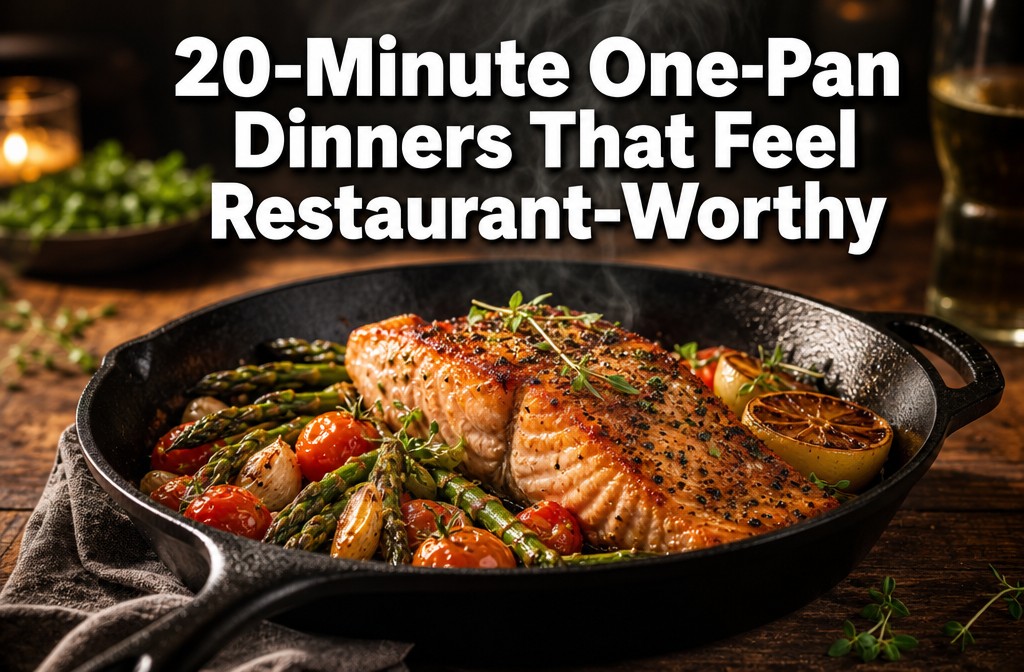
20-Minute One-Pan Dinners That Feel Restaurant-Worthy
Last updated: May 21, 2026
Quick Answer
20-minute one-pan dinners that feel restaurant-worthy rely on fast-cooking proteins like salmon, chicken thighs, or sausage combined with quick-cooking vegetables, then finished with pan sauces built from fond, broth, and finishing touches like butter, herbs, or acid. The key is layering flavor through searing, deglazing, and using pantry staples that add depth without extending cook time. These meals work in a single skillet or sheet pan, delivering both convenience and the polished taste of a plated restaurant dish.
Key Takeaways
- Restaurant-quality comes from technique, not time: Searing proteins to build fond, deglazing with wine or broth, and finishing with butter, acid, or fresh herbs create layered flavor in under 20 minutes.
- Choose fast-cooking proteins: Salmon fillets, boneless chicken thighs, shrimp, and sliced sausage all cook through in 8-12 minutes and absorb flavor quickly.
- One-pan means building flavor in stages: Start with proteins, remove if needed, sauté aromatics and vegetables in the same pan, then combine and finish with a quick sauce.
- Avoid sogginess by managing moisture: Don’t overcrowd the pan, pat proteins dry before searing, and use high heat to evaporate excess liquid while building caramelization.
- The right pan matters: Stainless steel or cast iron skillets create better fond and searing than nonstick, which is crucial for restaurant-style pan sauces.
- Pantry shortcuts deliver depth fast: Chicken or vegetable broth, soy sauce, Worcestershire sauce, Dijon mustard, and canned tomatoes add complexity without chopping or prep.
- Finishing touches elevate the dish: A squeeze of lemon, handful of fresh herbs, knob of butter, or sprinkle of Parmesan transforms a simple skillet meal into something special.
- Cost per serving stays reasonable: Most one-pan dinners run $4-7 per serving using supermarket proteins and seasonal vegetables, comparable to casual dining but far cheaper than takeout.
- Beginners can succeed with these recipes: The format is forgiving because everything cooks in one vessel, and visual cues (golden color, sizzling sounds) guide timing better than complex multi-pot recipes.
- Healthy versions are absolutely possible: Lean proteins, plenty of vegetables, and controlled amounts of oil or butter make these dinners nutrient-dense and balanced without sacrificing flavor.
What Makes a One-Pan Dinner Taste Restaurant Quality
A one-pan dinner tastes restaurant quality when it uses the same flavor-building techniques professional kitchens rely on: searing proteins to create fond (the browned bits stuck to the pan), deglazing with liquid to lift that fond into a sauce, and finishing with fat, acid, or fresh herbs to balance richness and brightness. These steps happen quickly in a single skillet but create the layered, complex taste that makes restaurant food memorable.
The core techniques that elevate flavor:
- Searing at high heat: Creates a golden crust on proteins and caramelizes natural sugars in vegetables, adding depth and texture.
- Building fond: The browned bits left in the pan after searing contain concentrated flavor compounds that become the base of your sauce.
- Deglazing: Adding wine, broth, or even water to the hot pan dissolves the fond and creates an instant sauce with minimal effort.
- Finishing with contrast: A squeeze of lemon juice, splash of vinegar, or handful of fresh parsley cuts through richness and makes flavors pop, just like in restaurant plating.
Recent cooking instruction emphasizes that restaurant-worthy one-pan meals come from technique, not complexity, with browning, deglazing, and finishing sauces as the core methods that make simple dinners taste polished [3]. The lesson specifically frames one-pot meals as “building layers of flavor” rather than just combining ingredients.
Common mistake: Skipping the searing step or using medium-low heat to “be safe” results in steamed, pale food that lacks the caramelized flavor and texture contrast found in restaurant dishes. Always preheat your pan until a drop of water sizzles on contact before adding protein.
Can You Really Cook Restaurant-Style Food in 20 Minutes
Yes, you can cook restaurant-style food in 20 minutes by choosing ingredients that cook quickly and using high-heat techniques that build flavor fast. The 20-minute benchmark is realistic for weeknight dinners when you focus on thin-cut proteins, pre-prepped vegetables, and sauces that come together in the pan rather than requiring separate preparation.
Major food media outlets currently use “20 minutes” as a practical standard for weeknight cooking, not just marketing. The Kitchn’s recent roundup focuses on 10 one-pan dinners ready in 20 minutes or less, demonstrating that very short-cook dinner formats remain highly relevant for busy home cooks [2].
What makes 20 minutes achievable:
- Fast-cooking proteins: Salmon fillets (6-8 minutes), shrimp (4-5 minutes), boneless chicken thighs (10-12 minutes), and sliced sausage (already cooked, just needs browning).
- Quick-cooking vegetables: Cherry tomatoes, spinach, bell peppers, snap peas, and thinly sliced zucchini all soften in under 10 minutes.
- Pantry-based sauces: Instead of making stock from scratch, use store-bought broth, canned tomatoes, or jarred ingredients that add instant depth.
- Parallel cooking: While protein sears, you can chop herbs or measure sauce ingredients, maximizing efficiency.
Decision rule: Choose 20-minute recipes if you have 30 minutes total (including 10 minutes for prep and cleanup). If your protein is frozen or you need to chop multiple vegetables from scratch, add 10-15 minutes to the timeline.
The “20-minute” window is increasingly paired with pantry and freezer staples, which is how cooks are meeting the restaurant-worthy bar quickly, using ingredients like chicken broth, frozen peas, shredded carrots, bell peppers, aromatics, and quick-thickening agents [4].
Best Proteins for Quick One-Pan Meals Under 20 Minutes
The best proteins for quick one-pan meals under 20 minutes are salmon fillets, boneless chicken thighs, large shrimp, and pre-cooked sausage because they cook through rapidly, develop good color when seared, and pair well with pan sauces. These proteins also absorb seasonings quickly and stay tender even when cooked at higher heat.
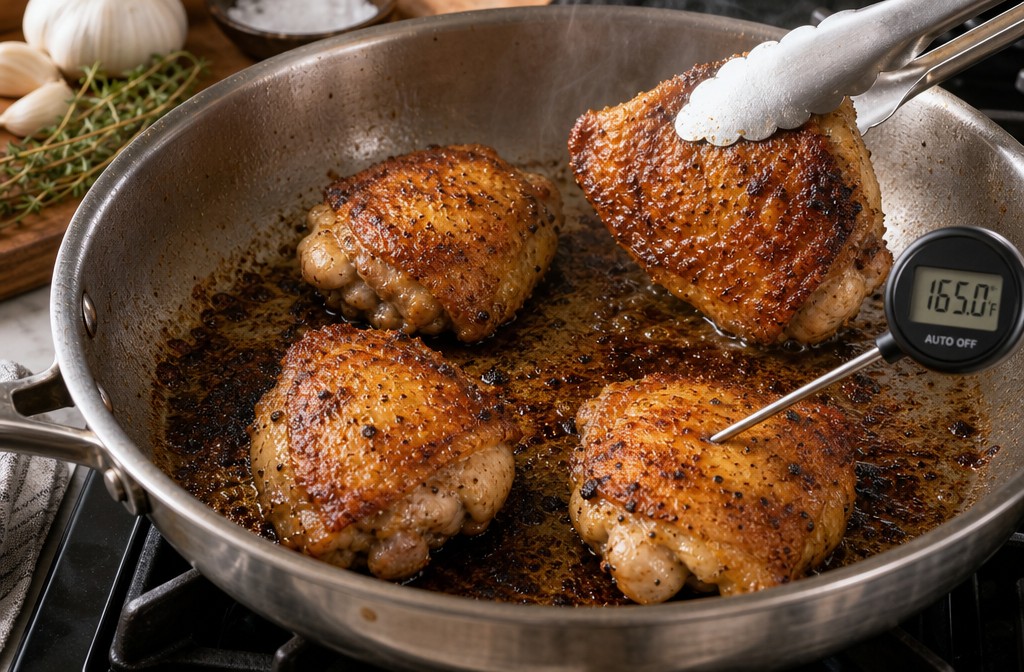
Top protein choices and cook times:
| Protein | Cook Time | Why It Works | Best Pan Method |
|---|---|---|---|
| Salmon fillets (6 oz) | 6-8 minutes | High fat content keeps it moist; skin crisps beautifully | Sear skin-side down 5 min, flip 1-2 min |
| Boneless chicken thighs | 10-12 minutes | More forgiving than breast; stays juicy; great for pan sauces | Sear both sides, finish covered |
| Large shrimp (16-20 count) | 4-5 minutes | Cooks almost instantly; absorbs marinades fast | High heat, flip once when pink |
| Pre-cooked sausage (sliced) | 3-4 minutes | Already cooked; just needs browning and heating | Sear slices until caramelized |
| Thin pork chops (½ inch) | 8-10 minutes | Quick-cooking; pairs with fruit and savory sauces | Sear 4-5 min per side |
Chicken, sausage, pasta, and skillet rice dishes are the most common “restaurant-worthy” one-pan formats because they absorb flavor quickly and finish in one vessel [4]. For more guidance on cooking chicken thighs perfectly, see our complete guide to cooking chicken thighs in the oven.
Edge case: If using frozen shrimp, add 2-3 minutes to thaw under cold running water first. Cooking from frozen creates excess moisture that prevents proper searing and can make your pan dinner watery.
Common mistake: Using chicken breast instead of thighs in quick one-pan recipes. Breasts dry out easily in the 10-12 minute window and require more careful temperature monitoring. If you prefer breast, learn why chicken breast can turn tough and how to prevent it.
How to Get a Good Sear on Meat in One Pan Quickly
To get a good sear on meat in one pan quickly, pat the protein completely dry with paper towels, preheat your pan over medium-high to high heat for 2-3 minutes, add a thin layer of high-smoke-point oil, and resist the urge to move the meat for the first 3-4 minutes. The meat will release naturally from the pan when a proper crust forms.
Step-by-step searing technique:
- Dry the surface thoroughly: Moisture creates steam, which prevents browning. Pat protein with paper towels until no dampness remains.
- Season generously: Salt and pepper just before searing (salt draws out moisture if applied too early).
- Preheat the empty pan: Heat for 2-3 minutes until a drop of water sizzles and evaporates immediately.
- Add oil, then protein: Use avocado, grapeseed, or vegetable oil (not olive oil, which smokes at lower temps). Add protein presentation-side down.
- Don’t touch it: Let it cook undisturbed for 3-4 minutes. It will stick at first, then release when the crust forms.
- Flip once: Use tongs to flip, then cook the second side 2-3 minutes or until done.
For chicken thighs specifically, you’ll want to know the safe internal temperature to ensure they’re fully cooked while maintaining juiciness.
Why this works: The Maillard reaction (browning) requires surface temperatures above 300°F and minimal moisture. High heat and dry surfaces create the golden crust and complex flavors found in restaurant cooking.
Common mistake: Adding protein to a cold or medium-heat pan results in sticking, uneven cooking, and pale, steamed-looking meat instead of a caramelized crust.
One-Pan Dinner vs Sheet-Pan Dinner: What’s the Difference
A one-pan dinner typically refers to a skillet or sauté pan meal where ingredients cook together in stages and often include a sauce, while a sheet-pan dinner uses a rimmed baking sheet in the oven where proteins and vegetables roast simultaneously with minimal stirring. Both use a single cooking vessel, but the cooking method and final texture differ significantly.
Key differences:
| Aspect | One-Pan (Skillet) | Sheet-Pan (Oven) |
|---|---|---|
| Cooking method | Stovetop searing, sautéing, simmering | Oven roasting at 400-450°F |
| Typical time | 15-25 minutes active cooking | 20-30 minutes mostly hands-off |
| Texture result | Saucy, some caramelization, cohesive dish | Dry-roasted, crispy edges, separate components |
| Best for | Pan sauces, quick proteins, one-dish meals | Batch cooking, crispy vegetables, meal prep |
| Attention needed | Active monitoring and stirring | Minimal (one flip halfway) |
Food editors draw a distinction between “one-pan” and “one-pot,” but audiences use both terms interchangeably for weeknight efficiency. Simply Recipes notes that a one-pot dinner is cooked in one vessel and served directly from it, while contemporary roundups use “one-pan” broadly for skillet, sheet-pan, and pan-roasted meals [1][2].
Choose skillet one-pan dinners if: You want a cohesive dish with sauce, need dinner in under 20 minutes, or prefer stovetop cooking with more control over browning and texture.
Choose sheet-pan dinners if: You want hands-off cooking, need to cook larger quantities, or prefer crispy, roasted textures without sauce.
What Pans Work Best for Quick Elegant Dinners
The best pans for quick elegant dinners are 12-inch stainless steel skillets or cast iron pans because they create superior fond for pan sauces, tolerate high heat for proper searing, and distribute heat evenly for consistent cooking. A heavy-bottomed pan with sloped or straight sides gives you the most versatility for different proteins and vegetables.
Pan comparison for one-pan dinners:
- Stainless steel (12-inch): Best overall for restaurant-style cooking. Creates excellent fond, works with metal utensils, oven-safe, and allows you to see browning clearly. Requires oil and proper preheating to prevent sticking.
- Cast iron (10-12 inch): Exceptional heat retention and searing capability. Naturally nonstick when well-seasoned. Heavy and requires maintenance, but delivers unmatched browning.
- Carbon steel: Similar to cast iron but lighter. Heats quickly, develops seasoning over time, and works on all cooktops including induction.
- Nonstick (avoid for searing): Convenient for delicate fish or eggs, but cannot tolerate the high heat needed for proper searing and doesn’t create fond for pan sauces.
What if you don’t have a nonstick pan for one-pan cooking? You don’t need one. Stainless steel and cast iron are actually better for restaurant-worthy dinners because they create the browned bits (fond) that make pan sauces flavorful. Just preheat properly, use enough oil, and let proteins release naturally when the crust forms.
Decision rule: Use stainless steel or cast iron for proteins that need searing (chicken, salmon, pork, beef). Reserve nonstick for delicate fish like sole or flounder, or for dishes with sticky sauces that might burn.
Common mistake: Using nonstick pans at high heat, which damages the coating and releases potentially harmful fumes. Nonstick pans should stay below 400°F, which is too low for proper searing.
Why Does My One-Pan Dinner Turn Out Soggy
Your one-pan dinner turns out soggy when there’s too much moisture in the pan, the heat is too low to evaporate liquid quickly, or the pan is overcrowded so ingredients steam instead of sear. Excess moisture prevents caramelization and creates a watery, pale dish instead of the golden, restaurant-quality result you want.
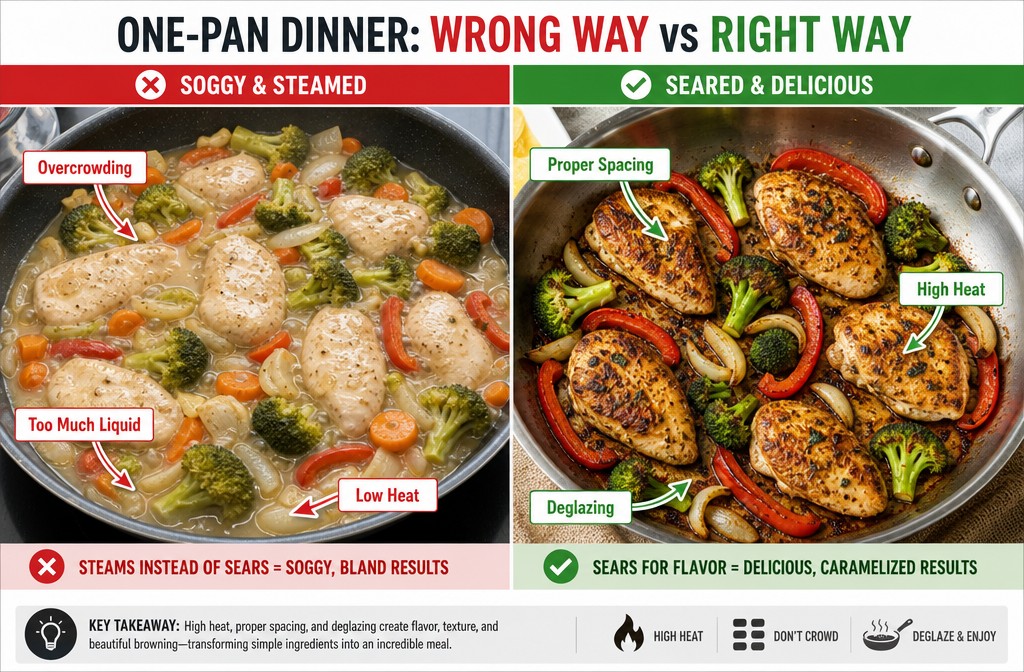
Common causes and fixes:
Overcrowding the pan: When ingredients touch, they trap steam and moisture. Fix: Use a 12-inch pan for 4 servings, or cook in batches if needed. Leave space between pieces.
Not drying proteins: Wet surfaces create steam instead of sear. Fix: Pat chicken, fish, or meat completely dry with paper towels before seasoning and cooking.
Adding liquid too early: Pouring broth or wine before proteins brown traps moisture. Fix: Sear proteins first, remove from pan if needed, then add liquid to deglaze after vegetables soften.
Using frozen vegetables without thawing: Frozen vegetables release significant water when heated. Fix: Thaw and pat dry, or use fresh vegetables for better texture.
Cooking at too-low heat: Medium or medium-low heat doesn’t evaporate moisture fast enough. Fix: Use medium-high to high heat for searing, then reduce if needed for simmering.
Using too much sauce or broth: More liquid than the pan can reduce in 20 minutes creates a soupy result. Fix: Start with ½ cup liquid, then add more only if needed. You can always add, but you can’t remove.
Edge case: If your recipe includes watery vegetables like zucchini or mushrooms, salt them lightly and let them sit for 5 minutes, then pat dry before cooking. This draws out excess moisture before it hits the pan.
How Much Do Ingredients Cost for Fancy One-Pan Dinners
Ingredients for fancy one-pan dinners typically cost $4-7 per serving when using supermarket proteins, seasonal vegetables, and pantry staples, making them significantly cheaper than restaurant meals ($15-25 per entrée) or even takeout ($10-15 per serving). The cost varies based on protein choice, with chicken thighs and sausage at the lower end and salmon or shrimp at the higher end.
Cost breakdown for common one-pan dinners (4 servings):
| Dish Type | Protein Cost | Vegetables & Pantry | Total | Per Serving |
|---|---|---|---|---|
| Chicken thigh with vegetables | $6-8 (1.5 lb) | $4-6 | $10-14 | $2.50-3.50 |
| Salmon with asparagus | $12-16 (1.5 lb) | $5-7 | $17-23 | $4.25-5.75 |
| Sausage and peppers | $5-7 (1 lb) | $4-5 | $9-12 | $2.25-3.00 |
| Shrimp with tomatoes | $10-14 (1 lb) | $5-7 | $15-21 | $3.75-5.25 |
These estimates assume supermarket prices in 2026 and include olive oil, garlic, herbs, broth, and basic seasonings from your pantry. Organic or specialty ingredients add $1-2 per serving.
Cost-saving strategies:
- Buy chicken thighs instead of breasts (often 30-40% cheaper and more flavorful). Learn more about why chicken thighs are often preferred.
- Choose seasonal vegetables (summer tomatoes and zucchini, fall squash, winter root vegetables).
- Use frozen shrimp or fish when fresh is expensive (quality is comparable for cooked dishes).
- Build your pantry with versatile staples: chicken broth, canned tomatoes, soy sauce, Dijon mustard, dried herbs.
Decision rule: If you’re cooking for a family of four, one-pan dinners cost $10-20 total compared to $40-60 for takeout or $60-100 for dining out, saving $30-80 per meal while delivering comparable or better quality.
One-Pan Dinners for Beginners or Experienced Cooks
One-pan dinners work well for both beginners and experienced cooks, but for different reasons. Beginners benefit from the simplified workflow and visual cues that make timing easier, while experienced cooks appreciate the efficiency and the opportunity to showcase technique through browning, deglazing, and sauce-building in a single vessel.
Why beginners succeed with one-pan dinners:
- Fewer decisions: Everything happens in one place, so there’s no juggling multiple pots or coordinating timing across burners.
- Visual feedback: You can see when chicken is golden, vegetables are tender, or sauce has thickened, making it easier to judge doneness without relying on timers.
- Forgiving format: If something cooks a minute too long, the moisture in the pan and the presence of vegetables help prevent overcooking.
- Minimal cleanup: One pan means less intimidation about the mess, which encourages beginners to cook more often.
If you’re just starting out with chicken, check out what you can make with chicken thighs for beginner-friendly ideas.
Why experienced cooks still use one-pan dinners:
- Technique showcase: Building fond, deglazing properly, and finishing sauces demonstrate skill even in a simple format.
- Speed without sacrifice: Experienced cooks can layer flavors quickly using aromatics, wine, and finishing touches that beginners might skip.
- Weeknight practicality: Even skilled home cooks need fast dinners on busy nights, and one-pan meals deliver restaurant quality without the time investment of elaborate recipes.
Common mistake for beginners: Following the recipe exactly without tasting and adjusting. One-pan dinners are forgiving and benefit from seasoning adjustments at the end—add more salt, a squeeze of lemon, or fresh herbs to make the dish your own.
Are 20-Minute One-Pan Recipes Actually Healthy
Yes, 20-minute one-pan recipes can be healthy when they include lean proteins, plenty of vegetables, and controlled amounts of added fat, typically delivering balanced meals with 400-600 calories, 25-35g protein, and multiple servings of vegetables per portion. The key is choosing recipes that emphasize vegetables and whole ingredients rather than heavy cream sauces or excessive cheese.
What makes a one-pan dinner healthy:
- Protein-forward: Salmon, chicken thighs, shrimp, or lean pork provide 25-35g protein per serving, supporting satiety and muscle maintenance. For more on chicken thigh nutrition, see whether chicken thighs are a good protein source.
- Vegetable-rich: Recipes that include 2-3 cups of vegetables per serving add fiber, vitamins, and minerals while keeping calories reasonable.
- Controlled fat: Using 1-2 tablespoons of olive oil or butter per serving adds flavor and helps absorb fat-soluble vitamins without excessive calories.
- Minimal processed ingredients: Cooking from scratch with whole foods avoids the sodium, preservatives, and added sugars found in many convenience foods.
Healthy one-pan dinner guidelines:
- Aim for at least 50% vegetables by volume on your plate
- Choose cooking methods that add minimal fat (searing with spray oil, roasting, or using broth-based sauces)
- Limit cream, cheese, and butter to 1-2 tablespoons per serving as finishing touches
- Include fiber-rich vegetables like broccoli, Brussels sprouts, or leafy greens
Edge case: If you’re following a specific diet (low-carb, Mediterranean, etc.), one-pan dinners adapt easily. Swap proteins, adjust vegetables, and modify sauces to fit your nutritional goals while keeping the convenient format.
Common misconception: That restaurant-worthy means heavy or indulgent. Many restaurant techniques (searing, deglazing, fresh herbs) add flavor through method rather than fat, making it possible to create impressive dishes that are also nutritious.
Common Mistakes That Ruin One-Pan Dinners
The most common mistakes that ruin one-pan dinners are overcrowding the pan, using insufficient heat, adding all ingredients at once without considering cook times, and forgetting to taste and adjust seasoning before serving. These errors result in soggy, bland, or unevenly cooked meals instead of the restaurant-quality results you want.
Top mistakes and how to avoid them:
Overcrowding the pan: Ingredients steam instead of sear when packed too tightly.
- Fix: Use a 12-inch pan for 4 servings, or cook proteins in batches if needed.
Not preheating the pan: Adding food to a cold pan causes sticking and prevents browning.
- Fix: Heat empty pan for 2-3 minutes over medium-high heat before adding oil and ingredients.
Adding all ingredients simultaneously: Fast-cooking vegetables (spinach, tomatoes) turn mushy when added with proteins that need 10+ minutes.
- Fix: Add ingredients in stages—protein first, then firm vegetables, then delicate items in the final 2-3 minutes.
Using too much liquid: Excess broth or sauce creates a soupy mess instead of a cohesive dish.
- Fix: Start with ½ cup liquid, let it reduce, then add more only if needed.
Skipping the fond: Deglazing the pan is what creates restaurant-quality sauce, but many home cooks skip this step.
- Fix: After searing protein, add ½ cup wine or broth to the hot pan and scrape up browned bits with a wooden spoon.
Not seasoning in layers: Adding salt only at the end results in flat, one-dimensional flavor.
- Fix: Season protein before searing, add salt when sautéing vegetables, and taste sauce before serving to adjust.
Forgetting the finishing touch: Restaurant dishes always have a final flourish that home cooks often skip.
- Fix: Add fresh herbs, a squeeze of citrus, a drizzle of good olive oil, or a sprinkle of Parmesan just before serving.
Recent teaching from video-based cooking educators stresses that “restaurant-worthy” usually means a finish of acidity, herbs, butter, or cheese rather than more ingredients [5].
Edge case: If you’re adapting a recipe and it turns out too salty, add a splash of cream, a spoonful of sugar, or a squeeze of lemon juice to balance the flavor. If it’s too bland, it likely needs both salt and acid (lemon or vinegar).
Alternatives to One-Pan Cooking for Fast Meals
The main alternatives to one-pan cooking for fast meals are sheet-pan dinners (oven-roasted), Instant Pot or pressure cooker meals (hands-off), stir-fries (high-heat wok cooking), and simple pasta dishes (one-pot boiling). Each method offers speed and convenience but with different textures, techniques, and levels of active cooking time.
Comparison of fast dinner methods:
| Method | Time | Hands-On? | Best For | Texture Result |
|---|---|---|---|---|
| One-pan skillet | 15-25 min | Active | Saucy dishes, seared proteins | Caramelized, cohesive |
| Sheet-pan oven | 25-35 min | Mostly passive | Batch cooking, crispy vegetables | Roasted, dry |
| Instant Pot | 20-40 min | Passive | Tough cuts, rice, beans | Tender, braised |
| Stir-fry | 10-15 min | Very active | Asian-inspired, crisp vegetables | Crisp-tender, saucy |
| One-pot pasta | 15-20 min | Semi-active | Creamy or tomato-based pasta | Soft, saucy |
Choose one-pan skillet dinners if: You want restaurant-quality searing and pan sauces, prefer stovetop cooking with visual control, and enjoy the process of building flavors in stages.
Choose sheet-pan dinners if: You want hands-off cooking, need to make larger quantities for meal prep, or prefer crispy, roasted textures without sauce.
Choose Instant Pot if: You’re cooking tougher cuts of meat, want completely hands-off cooking, or need to cook rice and protein simultaneously.
Choose stir-fry if: You want the fastest possible dinner (10-15 minutes), have ingredients prepped and ready, and prefer crisp-tender vegetables with bold Asian flavors.
Edge case: You can combine methods—for example, sear chicken in a skillet, then transfer to a sheet pan with vegetables to finish in the oven. This hybrid approach gives you the best of both techniques when cooking for larger groups.
Frequently Asked Questions
What’s the difference between one-pan and one-pot dinners?
One-pan dinners typically use a skillet or sauté pan on the stovetop with searing and sauce-building, while one-pot dinners often refer to Dutch oven or stockpot meals that simmer or braise. Both cook in a single vessel, but one-pan emphasizes quick, high-heat cooking and one-pot emphasizes longer, liquid-based cooking.
Can I use a nonstick pan for restaurant-style one-pan dinners?
Nonstick pans work for delicate proteins like fish but don’t create the fond (browned bits) needed for restaurant-quality pan sauces. For best results, use stainless steel or cast iron, which tolerate high heat and develop the caramelized flavor that makes these dinners special.
How do I prevent chicken from drying out in a 20-minute one-pan dinner?
Use boneless chicken thighs instead of breasts (thighs stay juicier), don’t overcook past 165°F internal temperature, and finish with a pan sauce or cover the pan for the last 2-3 minutes to trap moisture. For more tips, see our guide on how long to cook chicken thighs.
What vegetables cook fastest for one-pan dinners?
Cherry tomatoes, baby spinach, thinly sliced bell peppers, snap peas, asparagus tips, and zucchini all cook in under 10 minutes. Add them after proteins have seared so they don’t overcook and turn mushy.
Can I make one-pan dinners ahead for meal prep?
Yes, but the texture is best when served immediately. If meal prepping, slightly undercook vegetables and store components separately, then reheat together in the pan before serving. Sauces can be made ahead and reheated with freshly cooked protein and vegetables.
Do I need expensive ingredients to make restaurant-worthy one-pan dinners?
No. Restaurant quality comes from technique (searing, deglazing, finishing) rather than premium ingredients. Supermarket chicken thighs, frozen shrimp, and seasonal vegetables deliver excellent results when cooked properly.
How do I know when my pan is hot enough to start cooking?
Flick a few drops of water into the empty pan. If they sizzle and evaporate immediately, the pan is ready. If they just sit there, keep heating. This ensures proper searing and prevents sticking.
What’s the best way to deglaze a pan for sauce?
After removing seared protein, add ½ cup wine, broth, or even water to the hot pan. Use a wooden spoon to scrape up all the browned bits stuck to the bottom. Let the liquid reduce by half, then add butter, cream, or herbs to finish the sauce.
Can I double a one-pan dinner recipe for more servings?
Only if you have a very large pan (14+ inches). Otherwise, the pan becomes overcrowded and ingredients steam instead of sear. It’s better to cook in two batches or use two pans simultaneously.
What should I serve with one-pan dinners?
Since the pan already includes protein and vegetables, you often just need a simple starch: crusty bread, rice, pasta, or roasted potatoes. Keep sides minimal so the one-pan dish remains the star.
How do I clean a pan with stuck-on fond after cooking?
If you deglazed properly, most fond becomes part of your sauce. For remaining bits, let the pan cool slightly, add hot water and a drop of dish soap, then use a wooden spoon or non-abrasive scrubber to loosen residue. For stainless steel or cast iron, this is normal and easy to clean.
Are one-pan dinners suitable for special diets like keto or paleo?
Yes, one-pan dinners adapt easily to most diets. Choose appropriate proteins and vegetables, swap out ingredients that don’t fit your plan (skip grains for keto, avoid dairy for paleo), and adjust sauces using compliant ingredients like coconut milk or bone broth.
Conclusion
20-minute one-pan dinners that feel restaurant-worthy prove that impressive home cooking doesn’t require hours in the kitchen or complicated techniques. By focusing on fast-cooking proteins like salmon, chicken thighs, shrimp, and sausage, then building flavor through proper searing, deglazing, and thoughtful finishing touches, busy home cooks can create meals that rival restaurant quality while using just one skillet and minimal cleanup.
The key takeaways are simple: choose the right pan (stainless steel or cast iron for best results), master basic techniques like high-heat searing and deglazing, avoid common mistakes like overcrowding or insufficient heat, and never skip the finishing touch of fresh herbs, acid, or a knob of butter. These dinners cost $4-7 per serving, work for both beginners and experienced cooks, and can be adapted to virtually any dietary preference while remaining healthy and satisfying.
Your next steps:
- Choose your protein: Start with boneless chicken thighs or salmon fillets, which are forgiving and flavorful. Check out the best ways to cook chicken thighs for technique guidance.
- Invest in the right pan: A 12-inch stainless steel skillet is the single best tool for restaurant-quality one-pan dinners.
- Stock your pantry: Keep chicken broth, canned tomatoes, garlic, olive oil, and fresh herbs on hand for quick sauce-building.
- Practice the technique: Try one recipe this week, focusing on proper searing and deglazing. The skills transfer to countless variations.
- Experiment with finishes: Once you master the basics, play with different finishing touches—lemon and capers for brightness, cream and Parmesan for richness, or fresh basil and balsamic for Italian flair.
For more inspiration and specific recipes, visit our complete collection of cooking guides to expand your weeknight dinner repertoire.
References
[1] One Pot Dinner Recipes 8721859 – https://www.simplyrecipes.com/one-pot-dinner-recipes-8721859
[2] One Pan Dinners Ready In 20 Minutes Or Less 23780151 – https://www.thekitchn.com/one-pan-dinners-ready-in-20-minutes-or-less-23780151
[3] 20 Minute Dinners For When You Are Dunzo – https://www.nytimes.com/2026/05/12/dining/20-minute-dinners-for-when-you-are-dunzo.html
[4] Watch – https://www.youtube.com/watch?v=mELzB0Sq_QY
[5] Watch – https://www.youtube.com/watch?v=W_8YliFlYmw
[6] One Pan Dinners Everyone Is Making – https://www.halfbakedharvest.com/one-pan-dinners-everyone-is-making/
[7] One Pot Meals – https://www.tasteofhome.com/collection/one-pot-meals/


