
What Is the Temperature of Chicken Thighs Cooked: Safe, Juicy, and Delicious Results
Cook chicken thighs until their internal temperature reaches a safe minimum, then decide on texture. Aim for at least 165°F (74°C) for food safety. For juicier, more tender dark meat, you can cook thighs up to about 190–195°F (88–91°C) to break down connective tissue.
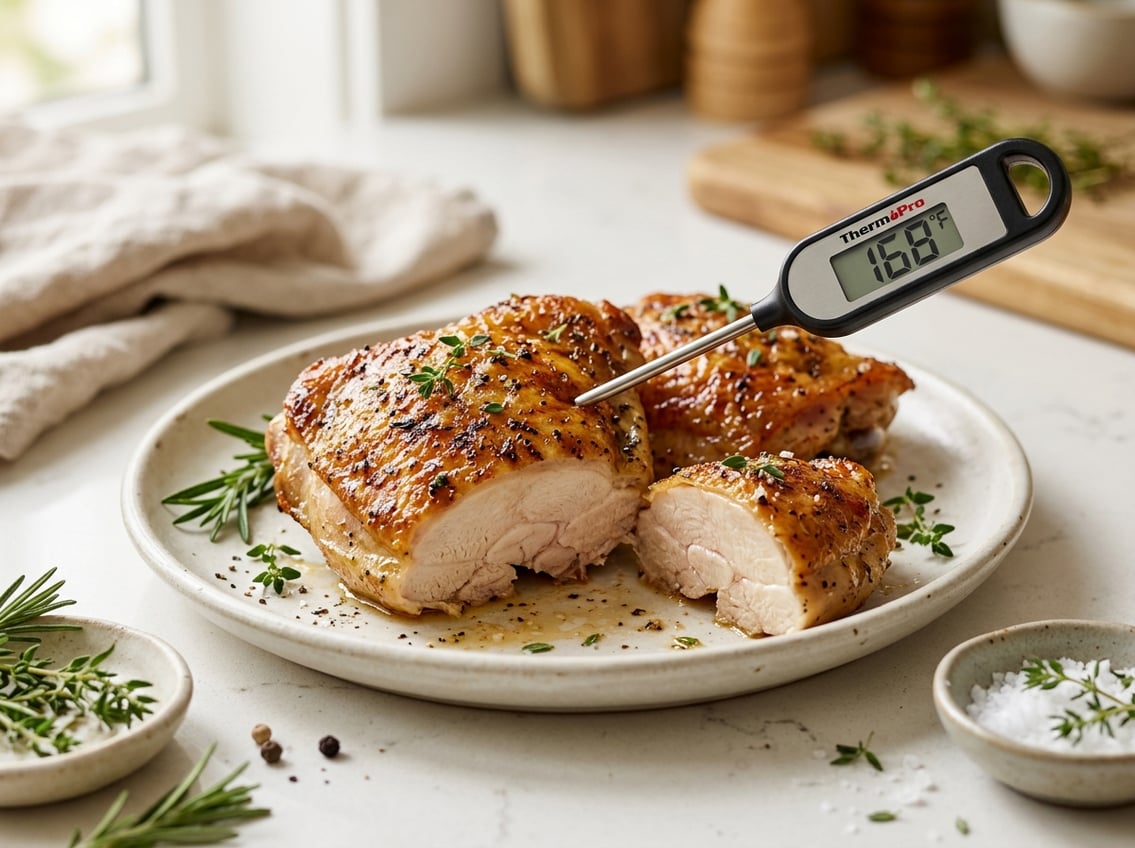
This article provides clear USDA safety guidance and practical tips for measuring temperature accurately. You’ll also find techniques that balance crisp skin, bone-in vs boneless timing, and deeper flavor through slower cooking.
Expect actionable oven methods and simple ways to boost tenderness and taste while hitting the right internal temperature every time.
Safe Internal Temperature Guidelines for Chicken Thighs
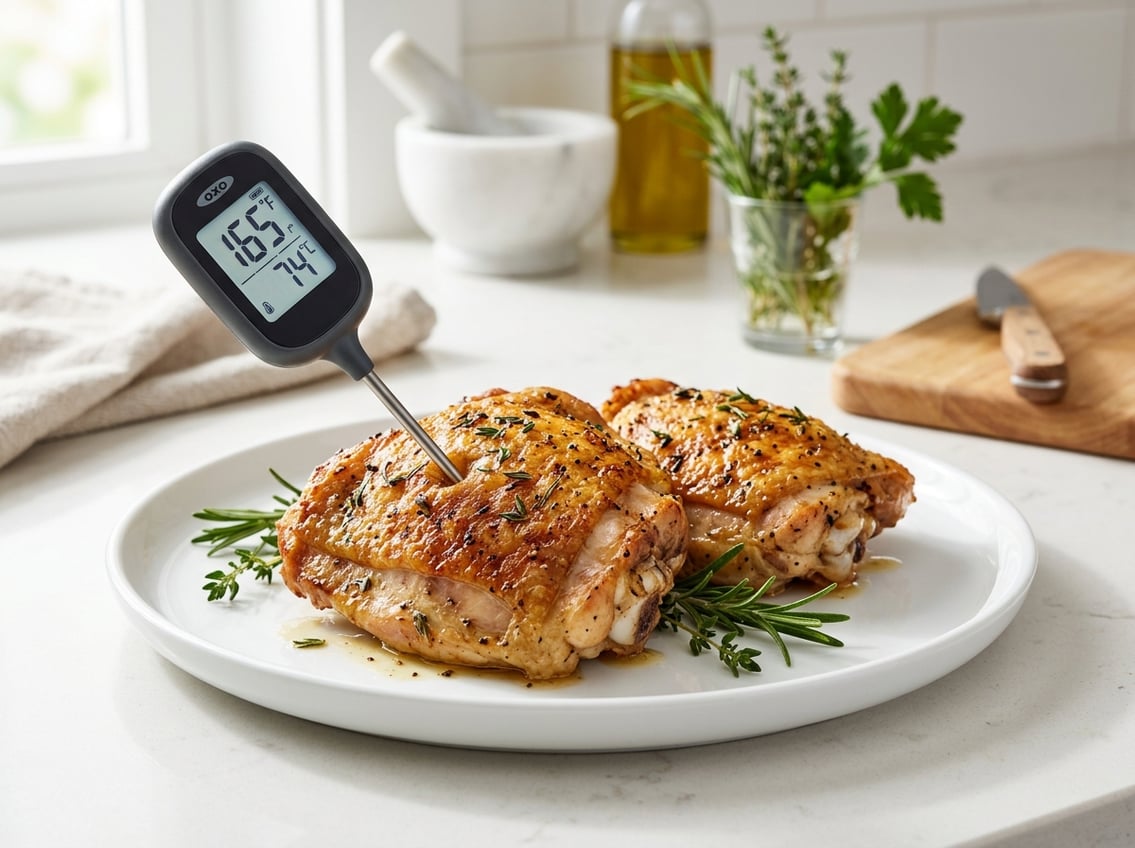
Cook chicken thighs to a temperature that kills harmful bacteria while still allowing connective tissue to break down for tenderness. Use a thermometer and check near the bone for accurate readings.
USDA Recommendations and Food Safety
The USDA sets the safe minimum internal temperature for all poultry at 165°F (74°C). Reach that temperature in the thickest part of the thigh, touching but not resting on bone, to ensure pathogens like Salmonella are eliminated.
Many chefs prefer cooking dark meat such as thighs to 170–175°F to melt collagen and improve texture. That higher range is about eating quality, not a safety requirement, so you can follow it if you want juicier, more tender thighs.
Always allow a brief rest after removing thighs from heat. Residual heat can raise the internal temp slightly. Resting for 3–5 minutes evens juices and completes short carryover cooking.
The Importance of Using a Meat Thermometer
A meat thermometer is the only reliable way to confirm internal temperature. Insert an instant-read thermometer into the thickest part of the thigh, avoiding bone, and hold until the reading stabilizes.
Calibrate your thermometer periodically and clean the probe between uses. If the thermometer reads below 165°F (74°C), return the piece to heat and recheck.
For bone-in thighs, check several spots near the bone because heat distribution varies. If you prefer target doneness at 170–175°F, use the thermometer to hit those specific numbers rather than guessing by color or juices.
Optimal Cooking Temperatures for Best Texture and Flavor
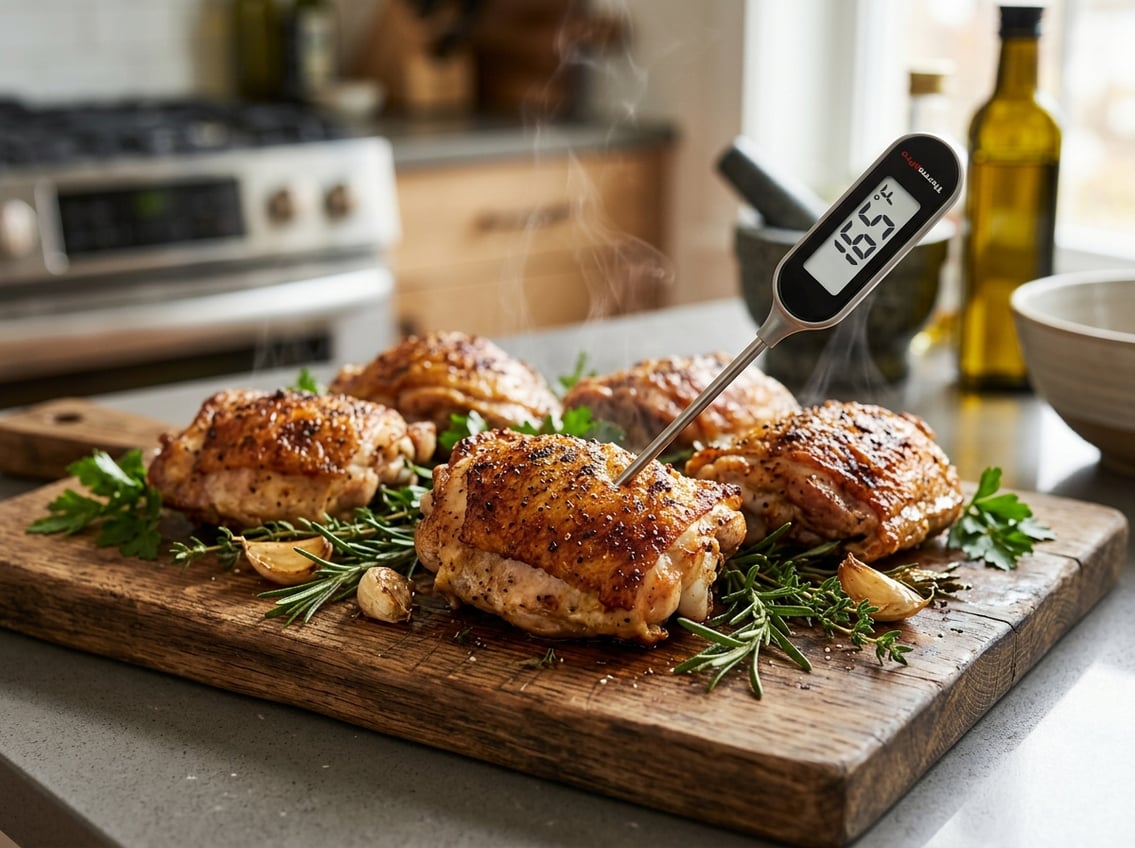
Cook chicken thighs to specific internal temperatures to control tenderness and juiciness. Use an instant-read thermometer inserted into the thickest part, avoiding bone, to confirm the exact temperature.
Why Higher Temperatures Yield Tender Chicken Thighs
Chicken thighs contain more connective tissue (collagen) than breast meat. When you raise the internal temperature beyond the USDA minimum, that collagen progressively breaks down into gelatin.
This gelatin keeps the meat moist and gives you tender chicken thighs rather than dry, stringy meat. Hold thighs between 175°F and 195°F for a period to let collagen convert while the muscle fibers relax.
At about 175°F the meat is tender and still clings to the bone. At 190–195°F it becomes almost falling-off-the-bone and very succulent.
Slow, indirect heat or braising lets you reach and maintain these temperatures without overcooking the exterior.
Choosing the Right Internal Temperature for Bone-In vs Boneless Thighs
Bone-in chicken thighs heat more slowly and often yield juicier results when taken to higher temps. The bone helps distribute heat and slows moisture loss, so you can safely take bone-in thighs to 190–195°F for melt-in-your-mouth texture.
Check temperature near the thickest meat, at least 1/4 inch from the bone. Boneless chicken thighs will reach target temps faster and can dry if left unattended.
For tender results, pull boneless thighs at 175°F for immediate serving or hold them at lower oven or sous-vide temperatures until collagen has softened.
If you prefer very tender, shreddable boneless thighs, cook them longer to the higher end of the range but watch for textural changes beyond 195°F, where meat can become stringy.
Measuring Internal Temperature Accurately
Use an instant-read or probe meat thermometer and aim for a steady, reliable reading in the thickest part of the thigh. Insert the probe so the tip sits in the meatiest spot without touching bone.
Allow the thermometer to stabilize before recording the internal temperature.
Where to Insert the Thermometer
Insert the probe into the thickest part of the thigh—usually the center of the meaty portion where the leg joins the hip. Push the tip at least ½ to 1 inch into the meat so the sensor sits fully inside the muscle.
Hold the thermometer steady until the display stops changing. For instant-read thermometers that report in 1–3 seconds, wait for the number to stabilize. For slower models, give 5–10 seconds.
If you’re using a leave-in probe for roasting, position the sensor similarly and check the roast’s display rather than opening the oven often.
Avoiding False Readings from Bones
Avoid touching bone. Bone conducts heat and gives an artificially high reading.
When the probe touches bone, the thermometer may show the internal temperature as safe while the surrounding meat is undercooked. Angle the probe so the tip is centered in muscle and at least ¼ inch away from any bone.
If you’re unsure, take two readings: one in the thickest center and one slightly offset. Trust the lower reading; that reflects the true internal temperature for safe doneness.
Oven Methods for Cooking Chicken Thighs
Choose oven temperatures that produce crispy skin or tender meat, and adjust cooking time for bone-in vs boneless thighs. Use an instant-read thermometer to confirm a safe final temperature of 165°F (74°C).
Baking Chicken Thighs at Different Oven Temperatures
Baking at 425°F (220°C) crisps skin quickly and gives a golden exterior while keeping meat juicy. Use this for bone-in, skin-on thighs and roast on a baking sheet for about 30–40 minutes depending on size.
At 400°F (200°C) you get a balance of browning and even cooking. Boneless thighs typically finish in 25–30 minutes. Rotate the pan once for uniform color.
Lower-temperature roasting at 350°F (175°C) yields more tender, fall-off-the-bone meat but less crisp skin. Expect 40–50 minutes for 4–8 ounce bone-in pieces.
For extra-crisp skin, finish high and broil 1–3 minutes at the end, watching closely to avoid burning.
Key tips:
- Pat skin dry and oil lightly for better browning.
- Preheat the oven and use a hot baking sheet for faster sear.
- Avoid overcrowding the pan; leave space for air circulation.
How Long to Cook Chicken Thighs in the Oven
Cooking time depends on temperature, bone presence, and thigh size. Boneless, skinless thighs at 425°F usually take 20–30 minutes.
Bone-in, skin-on at 400–425°F take 30–40 minutes. At 350°F, plan for 40–50 minutes for bone-in pieces.
Always check internal temperature: insert an instant-read thermometer into the thickest part away from bone. Target 165°F (74°C) for safe, fully cooked meat.
If you prefer slightly more tender texture, you can remove thighs at 160–162°F and let carryover heat raise them to 165°F while resting for 5–10 minutes.
Visual and tactile cues:
- Juices run clear when cut.
- Meat should be opaque and springy to the touch.
- Rest thighs 5–10 minutes before serving to let juices redistribute.
Effect of Skin and Bones on Cooking Time and Temperature
Skin and bone change how heat moves through a thigh and how the surface browns. Pay attention to skin presence for crisping and to bones when timing and measuring internal temperature.
Cooking Skin-On vs Skinless Chicken Thighs
Skin-on chicken thighs retain more fat and moisture during cooking. The skin insulates the meat and slows direct evaporation.
Cook skin-on thighs at moderate-high heat (example: 375°F/190°C in the oven) for 35–45 minutes for medium-size pieces, then check the thickest part with an instant-read thermometer.
Use a hot finish or broil briefly to crisp skin while avoiding overcooking the meat. Skinless thighs heat and release moisture faster, so they often reach safe internal temperature sooner.
Reduce oven time by about 10–15 minutes compared with skin-on, or lower pan temperature to avoid drying. For both types, target at least 165°F (74°C) for safety, but many chefs prefer 175–195°F (79–91°C) for more tender dark meat.
Differences in Bone-In and Boneless Chicken Thighs
Bone-in chicken thighs cook more slowly because the bone draws heat and creates a cooler zone near the joint. Plan roughly 10–15 minutes extra in the oven for bone-in versus similar-sized boneless thighs.
When testing doneness, insert the thermometer into the thickest part of the meat, not touching bone, to avoid low readings.
Boneless thighs cook more evenly and predictably, making them better for faster methods like pan-searing or stir-frying. They also respond more to carryover heat, so remove them from heat a few degrees below target and rest briefly.
For bone-in thighs, rest for 5–10 minutes to allow juices to redistribute and residual heat to finish collagen breakdown.
Enhancing Flavor and Tenderness
Use acid or enzymatic components to help the marinade penetrate, salt to season and retain moisture, and time to let connective tissue relax. Finish with a high-heat blast or sear to develop color and texture without drying the meat.
Marinating Chicken for Better Results
Marinades improve flavor and can tenderize when designed properly. Combine an acid (like 2 tbsp lemon juice or 1/4 cup yogurt per pound), salt (1 tsp kosher per pound), oil (1–2 tbsp), and aromatics (garlic, herbs, spices).
Acid breaks down surface proteins. Yogurt or pineapple enzyme needs short contact—pineapple for 30 minutes, yogurt for up to 6 hours—to avoid mushy meat.
Always marinate in the refrigerator and use a nonreactive container or a resealable bag. For bone-in thighs, aim for 4–12 hours for noticeable flavor penetration.
Pat thighs dry before cooking to help skin crisp.
Tips from the Test Kitchen for Perfect Thighs
Use a probe thermometer and target the temperature that matches your texture goal. Aim for 175°F for juicy thighs or 185–195°F for very tender, pull-apart meat.
Insert the probe into the thickest part and avoid the bone.
Cook with gentle, sustained heat at 300–325°F in the oven or on an indirect grill. This method melts connective tissue into gelatin without drying out the muscle fibers.
For crisp skin, finish under a 450–500°F broiler. You can also sear the thighs skin-side down in a hot skillet for 1–2 minutes.
If you braise the thighs, brown them first. Then simmer in flavorful liquid and cook until the probe reads 185–195°F.
Let the thighs rest for 5–10 minutes before serving so the juices redistribute.


