
What To Do If Chicken Thighs Are Still Frozen: Fast, Safe Solutions
You pulled chicken thighs from the freezer and they’re still solid. Don’t panic.
If you need them now, you can thaw pieces quickly using cold water or the microwave, or cook them from frozen if your recipe allows. Whichever route you choose, make sure the meat reaches 165°F before serving.
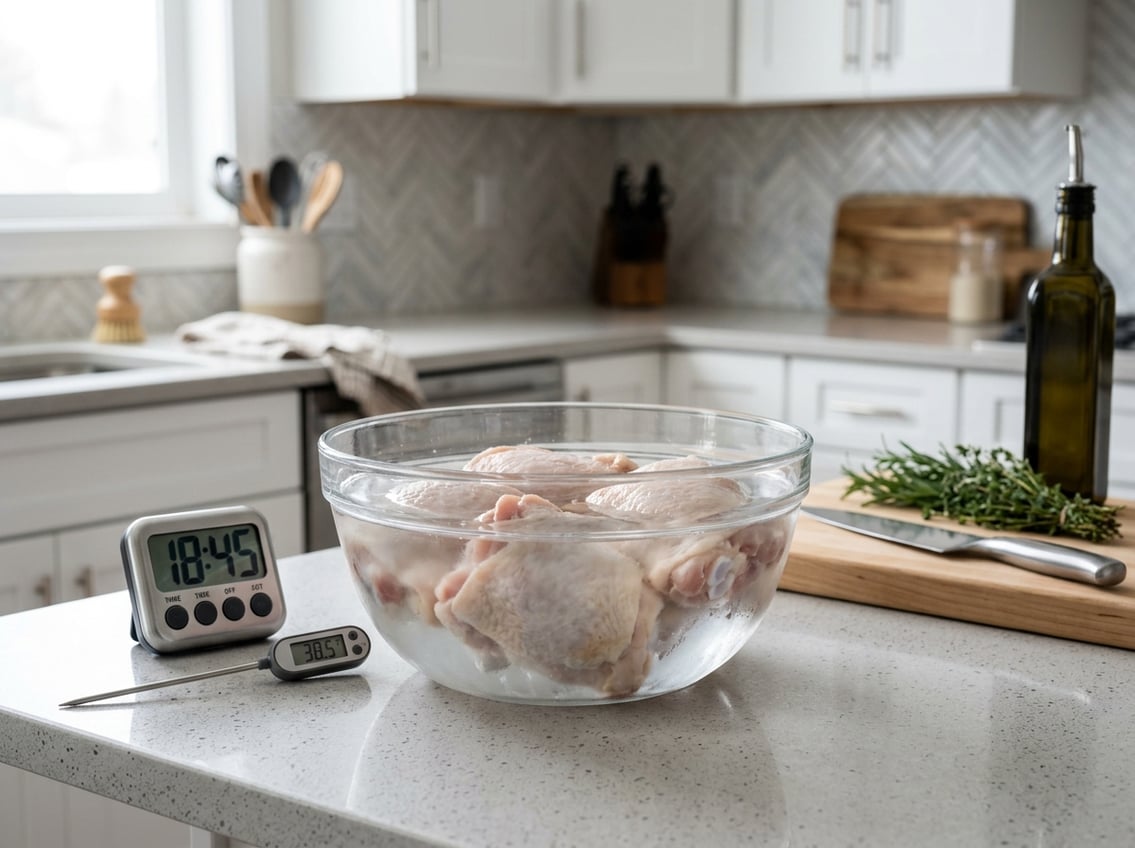
This post explains how to check if the thighs are safe, the fastest and safest thawing methods, how to cook thighs straight from frozen, and when it’s okay to refreeze. Follow these step-by-step options to get dinner on the table safely.
Assessing the Situation: Safe Next Steps
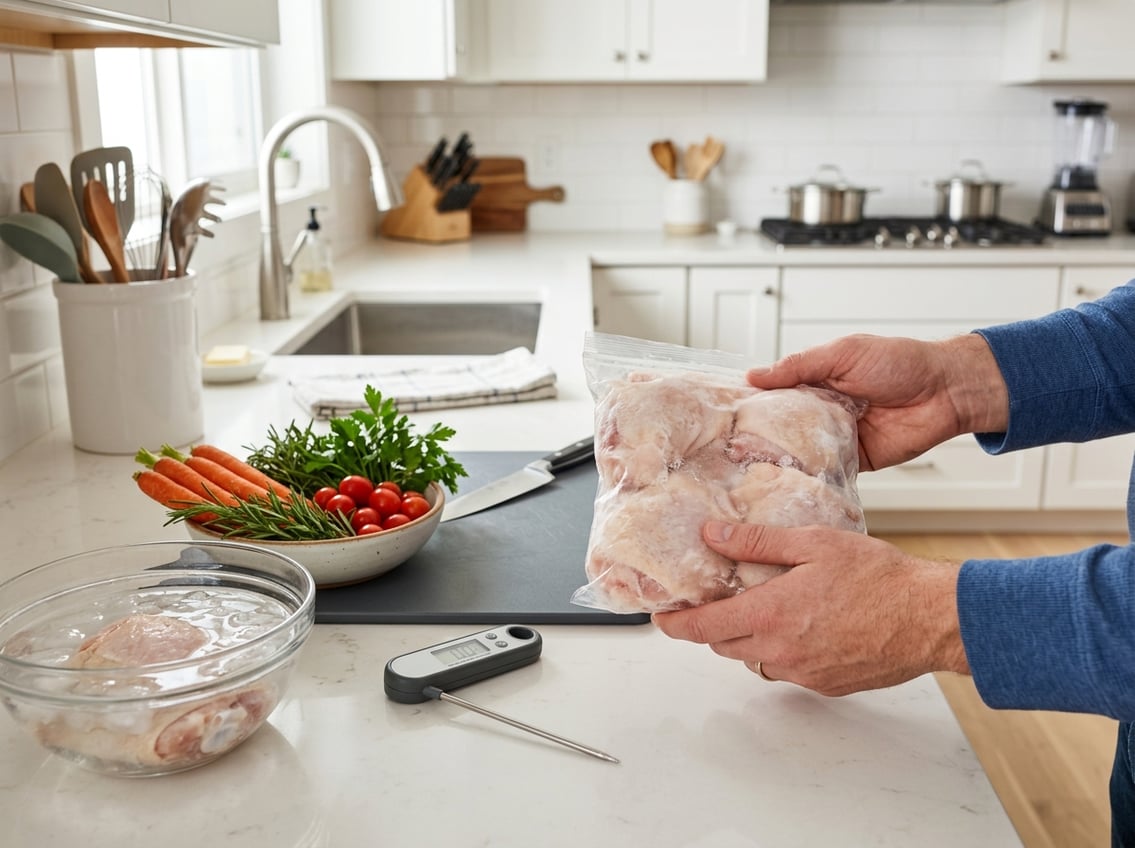
Decide quickly whether to cook the thighs from frozen, thaw them safely first, or discard them. Focus on how long they have been at unsafe temperatures, packaging integrity, and signs of spoilage.
Is It Safe to Cook Frozen Chicken Thighs?
You can cook boneless or bone-in chicken thighs from frozen if you adjust time and technique. Increase oven or stovetop cooking time by about 50% compared to thawed pieces, and use a thermometer to confirm the internal temperature reaches 165°F (74°C).
Use oven roasting at 350–400°F, simmering in a covered pan, or pressure cooking. Avoid slow cookers for fully frozen thighs, as they can keep meat at unsafe temperatures too long. Always finish cooking in one session.
When to Postpone Cooking or Discard
Postpone cooking if the thighs have been above 40°F (4°C) for more than 2 hours or above 90°F (32°C) for more than 1 hour. Bacteria can multiply to unsafe levels even if the meat looks normal.
Discard thighs if the packaging is compromised, or if you see green, gray, or slimy surfaces. Throw them out if they smell sour or rotten after thawing. Also discard if you see extensive thaw-refreeze ice crystals with off-odors or mushy texture.
Identifying Quality and Safety After Thawing
Thaw chicken safely in the refrigerator, in cold water changed every 30 minutes, or in the microwave using the defrost function. Never thaw on the countertop.
After thawing, cook thighs stored in the fridge within 1–2 days. If you thawed in cold water or microwave, cook immediately.
Check color (should be pink), smell (neutral or mild poultry scent), and texture (firm, not sticky or slimy). If any of these fail, discard the meat. After cooking, use a thermometer to verify you reached 165°F at the thickest point.
Effective Quick-Thaw Methods
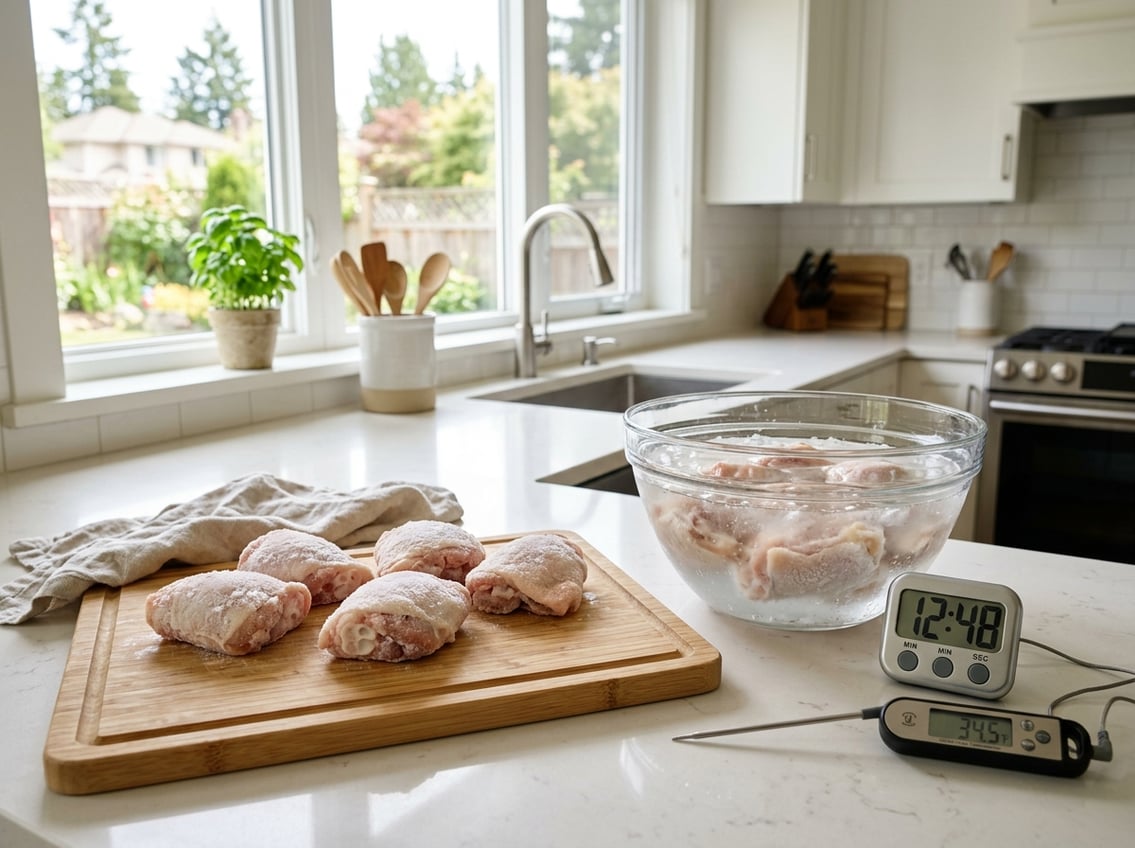
Use methods that keep the chicken below 40°F on the outer surface and get the center thawed enough to cook immediately. The fastest safe options are a cold water bath or your microwave.
Cold Water Thawing Technique
Place the thighs in a leakproof plastic bag and remove as much air as possible. Submerge the sealed bag in a large bowl or sink filled with cold tap water.
Change the water every 20–30 minutes to keep it cold. Thawing takes about 1–2 hours for a pound of thighs, or longer if pieces are frozen together.
Cook the chicken immediately after thawing. Never reuse the water for other food prep.
This method keeps the outer layer below 40°F and preserves texture. You need to pay attention to water changes and use a watertight bag.
Microwave Defrosting Instructions
Remove plastic wrap and place thighs on a microwave-safe plate. Use the microwave’s defrost setting or set power to 30% and defrost in short intervals (2–3 minutes), rotating and flipping pieces each time.
Stop when ice is gone but before edges begin to cook. If the microwave creates hot spots, separate partially thawed pieces to finish thawing evenly.
Cook the chicken immediately after microwave defrosting. Do not refrigerate or refreeze it raw.
Check frequently with your hand or a thermometer. Avoid overcrowding the plate.
Avoiding Unsafe Thawing Practices
Do not thaw thighs on the counter, in warm or hot water, or in direct sunlight. These methods let the outer surface rise above 40°F while the interior remains frozen, which increases the risk of bacterial growth.
Never refreeze raw chicken thawed in the microwave or cold water unless you cook it first. Avoid using slow cookers to thaw and then cook frozen thighs.
Always use an instant-read thermometer to ensure cooked thighs reach 165°F.
Cooking Frozen Chicken Thighs Directly
You can cook frozen chicken thighs without thawing, but expect longer cook times and use methods that deliver even heat. Use a thermometer, separate pieces if possible, and avoid oil splatter.
Adjusting Cooking Time and Method
Cooking time increases about 50% compared to thawed thighs. For example, a baked thigh that needs 30–40 minutes at 400°F will take about 45–60 minutes from frozen.
Spread pieces in a single layer so heat circulates. If thighs are frozen together, separate them under cold running water before cooking or increase time further and check multiple spots with your thermometer.
Do not pan-fry from fully frozen, as oil can splatter and the exterior may burn before the center cooks through.
Start with moderate oven or air fryer temperatures to allow heat to penetrate. Finish with a short higher-heat blast for crisp skin if desired.
Recommended Cooking Techniques
For oven baking, preheat to 375–400°F. Place thighs on a rimmed baking sheet or in a shallow baking dish with a little oil, spaced at least 1 inch apart. Expect 45–60 minutes for bone-in pieces.
For air frying, use 360–380°F and arrange thighs so air can flow. Cook 20–30 minutes, flipping halfway. Smaller, boneless thighs finish faster.
For pressure cooking, use 12–18 minutes high pressure for frozen thighs plus a natural release of 5–10 minutes. To crisp skin, broil or sear briefly after pressure cooking.
If you can thaw just the surface, sear briefly in a hot pan, then finish in a 375°F oven until safe temperature is reached.
Ensuring Internal Temperature for Safety
Always use a calibrated instant-read thermometer. Insert into the thickest part, avoiding bone.
Measure temperature in multiple spots on larger pieces or batches. If one spot reads 165°F but the center is lower, continue cooking and recheck after a few minutes.
Do not rely on color or juices alone. If the meat develops an off smell at any point, discard it.
Storage and Refreezing Guidelines
Keep thawed chicken thighs cold, store them tightly sealed, and only refreeze when handled safely.
Properly Storing Thawed Chicken Thighs
Store thawed chicken thighs in the coldest part of your refrigerator at 40°F (4°C) or below.
Place thighs in an airtight container or a heavy-duty resealable bag, squeeze out excess air, and label with the date.
Use raw thawed chicken within 1–2 days for best safety and quality.
If you cut or trim the thighs, transfer pieces to shallow containers so they cool quickly and stay below 40°F.
Keep raw chicken separate from ready-to-eat foods.
Use a dedicated shelf or tray to catch any drips and clean surfaces and utensils after contact.
Can You Refreeze Thawed Chicken?
Refreeze chicken thighs only if they were thawed in the refrigerator and have not been left above 40°F for more than 2 hours.
Refreezing after refrigerator thaw preserves safety, though texture and moisture may decline.
If you thawed chicken in cold water or the microwave, cook it fully to 165°F (74°C) before refreezing.
Cooked chicken that reached 165°F can be safely refrozen; raw chicken thawed outside the fridge should not be refrozen without cooking first.
When refreezing, package tightly in freezer-safe material and remove as much air as possible.
Label with the refreeze date and use refrozen uncooked thighs within about 4–6 months for best quality.
Handling Leftovers Safely
Cool cooked chicken thighs quickly by dividing into shallow containers and refrigerating within 2 hours (1 hour if above 90°F).
Store leftovers in airtight containers and eat within 3–4 days or freeze within that window.
Reheat leftovers to 165°F before serving.
If you plan to refreeze leftover cooked thighs, do so only after they have reached a safe internal temperature and have been cooled properly.
Discard leftover chicken that smells off, has slimy texture, or has been left at room temperature beyond safe time limits.
When in doubt, throw it out.
Preventing Last-Minute Freezer Surprises
Keep a simple thawing plan and packaging routine so you rarely face frozen thighs at dinnertime. Small habits like scheduling thaw times and packaging for quick water or microwave thawing save time and reduce waste.
Planning Ahead to Thaw Chicken Thighs
Move the number of thighs you need from the freezer to the refrigerator 24–48 hours before cooking. Boneless or smaller pieces can thaw in about 24 hours, bone-in may need closer to 36–48 hours.
Put the package on a tray or in a shallow pan to catch any drips and place it on the bottom shelf to avoid contaminating other foods.
If you forget to start thawing the day before, use cold-water thawing. Keep thighs sealed in a leakproof bag and submerge in cold water, changing the water every 30 minutes until pliable.
For single meals, the microwave defrost setting works, but you must cook immediately because parts can begin to warm. Always plan for extra cooking time if you end up cooking from frozen.
Packaging Tips for Easy Thawing Later
Label and portion before freezing. Freeze thighs in meal-sized packs (2–4 per bag) so you only thaw what you need.
Use a vacuum sealer or press out air from zip-top bags to remove excess air. Flatter, thinner packages thaw far faster and more evenly than bulky lumps.
Wrap each package in a layer that prevents freezer burn. Use plastic wrap or butcher paper, then place the package in a freezer bag or airtight container.
Add a dated label and brief cooking notes, such as “bone-in, 4 pieces, 8–10 oz each.” Store packs flat for faster thawing and easier stacking.

