
How Long Does Chicken Thighs Take on the Grill: Grill Times, Temperatures, and Best Practices
You can grill boneless chicken thighs in about 10–15 minutes total and bone-in thighs in about 25–30 minutes. Aim for an internal temperature of 165°F to ensure safety while keeping the meat juicy.
For reliably juicy grilled chicken thighs, cook boneless thighs 6–8 minutes per side and bone-in thighs 8–12 minutes per side over medium heat, or until the thickest part reaches 165°F.
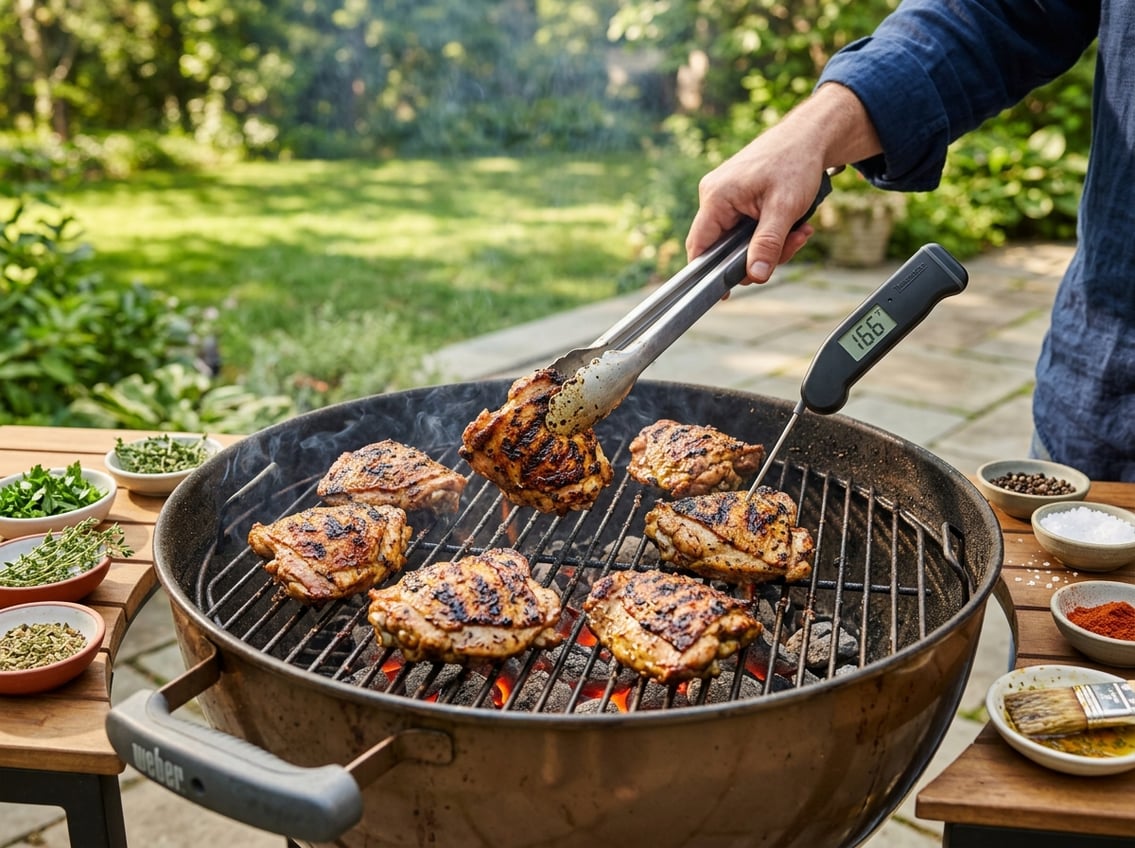
Grill temperature, bone-in vs. boneless cuts, thickness, and simple prep steps all affect timing and texture. You’ll get clear guidance on grill setup, temperature targets, flipping and resting techniques, and quick flavor boosts to make perfect grilled chicken thighs.
Essential Chicken Thigh Grilling Times
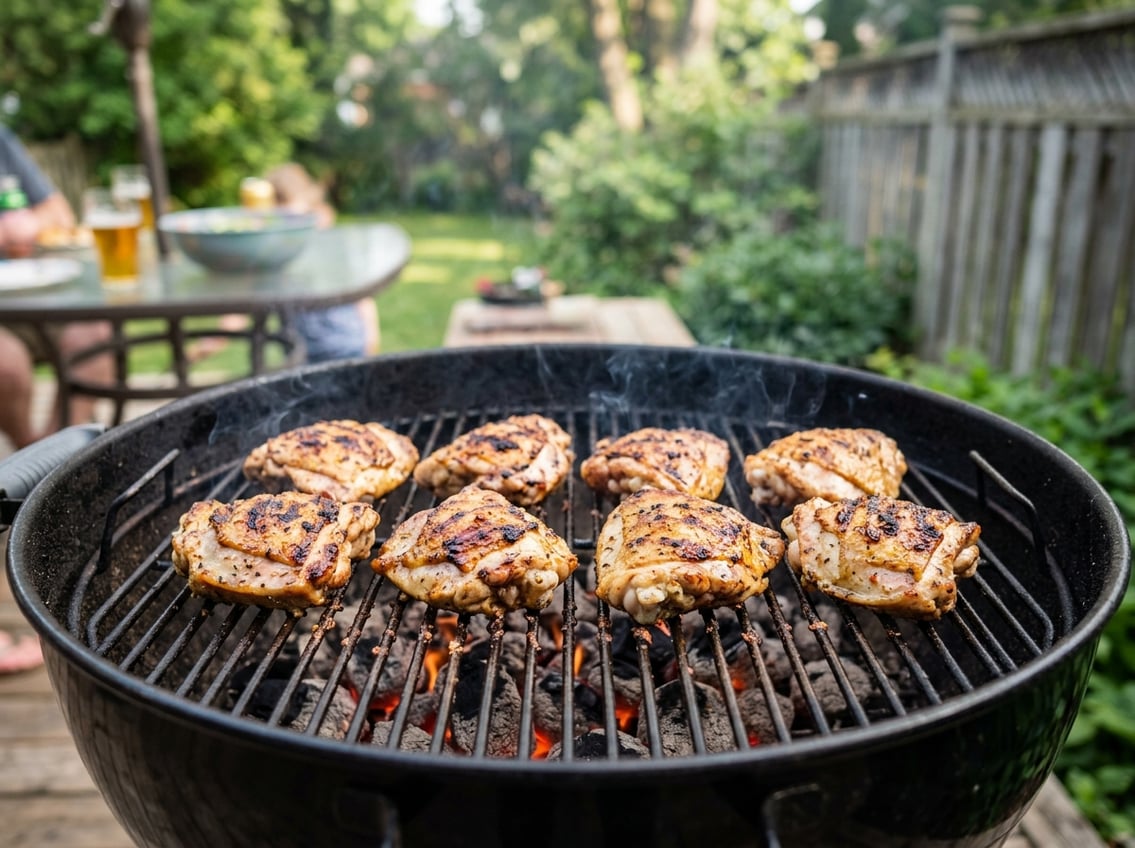
Bone-in thighs take noticeably longer than boneless. Grill at medium-high surface heat (about 400–450°F) and use internal temperature, not just time, to know when to remove the meat.
Bone-In vs Boneless Thighs: Typical Cook Times
Bone-in chicken thighs usually need about 25–30 minutes on a medium-high grill surface to reach around 185°F. Grill skin-side down briefly to control flare-ups, then rotate and finish skin-side up to crisp without burning.
Use a probe thermometer in the thickest part, avoiding the bone. Boneless chicken thighs cook faster, typically 10–15 minutes at the same surface temperature. Thinner pieces may finish in under 10 minutes.
Flip every 4–6 minutes and remove when the thickest point reads 175–185°F. For grilled boneless chicken thighs, brush lightly with oil to prevent sticking and promote even browning.
How Thickness Affects Cook Duration
Thickness changes cook time more than weight. A 3/4–1 inch boneless thigh takes about 10–12 minutes. A 1.5–inch bone-in thigh needs 25–30 minutes.
Thicker cuts need lower indirect heat after the initial sear to avoid burned skin and undercooked interior. Flatten thicker pieces or group similar sizes on the grill to ensure even cooking.
Use an instant-read thermometer to check doneness. Rest thighs 5–10 minutes after grilling so juices redistribute and carryover heat raises internal temperature a few degrees.
Direct Heat Versus Indirect Heat Methods
Direct high heat (400–450°F) gives a quick sear and crisp skin. Use direct heat for 4–6 minute intervals per side, moving pieces to cooler zones when skin chars.
Indirect heat lowers flare-up risk and cooks through without burning the skin. Start bone-in thighs over direct heat to render fat and get color, then move to indirect heat and close the lid until they reach 180–190°F.
For mixed batches, sear all pieces first, then transfer larger bone-in cuts to indirect heat while finishing smaller boneless cuts over direct heat.
Temperature Targets for Safe and Juicy Chicken
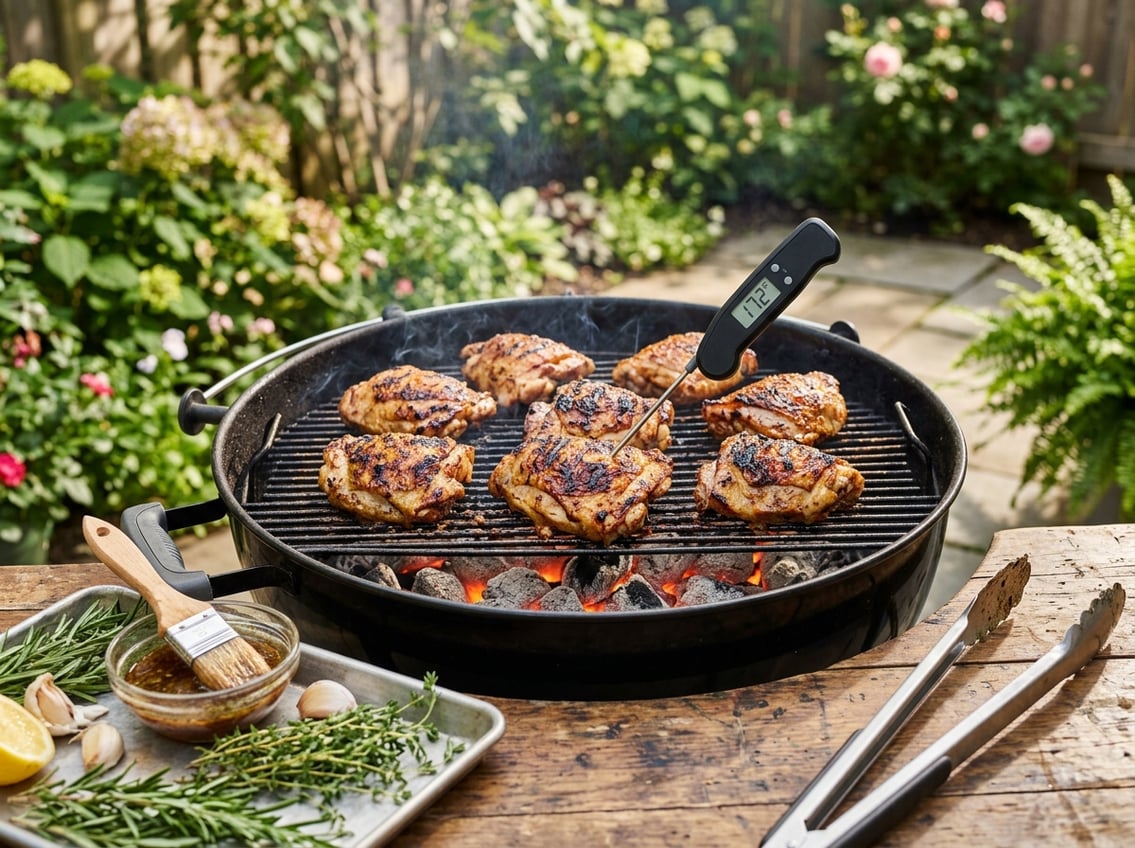
Aim for a safe minimum of 165°F (74°C) measured in the thickest part of the thigh. Consider higher targets—175°F to 195°F—for more tender, gelatin-rich results.
Use an instant-read thermometer to confirm doneness. Check away from bone and let thighs rest briefly.
Using a Meat Thermometer Effectively
Insert the probe into the thickest part of the thigh without touching bone. Hold the thermometer steady until the reading stabilizes.
For safety, reach 165°F (74°C) to kill common pathogens. For juicier, more tender thighs, target 175°F (79°C) for a balance of firmness and moisture, or 190–195°F (88–91°C) if you want collagen to break down into gelatin and produce very tender meat.
Track temperature rather than time. Grill variables make minutes unreliable.
Check multiple pieces in a batch. Calibrate your thermometer in boiling water (should read ~212°F/100°C) occasionally to ensure accuracy.
Why Internal Temperature Is Key to Doneness
Internal temperature determines both food safety and texture. Pathogen reduction depends on reaching a specific temperature for a sufficient time.
Connective tissue converts to gelatin at higher temperatures, changing mouthfeel. If you stop at 165°F, thighs will be safe and juicy compared with breast meat.
Pushing to 175°F–195°F increases succulence because collagen melts over that range. Avoid exceeding 205°F; meat can become stringy and lose chicken flavor.
Instant-Read Thermometer Tips
Choose a fast, accurate instant-read model with a thin probe. Digital probes that stabilize in 1–3 seconds save heat loss and prevent overcooking.
Insert the probe perpendicular to the meat into the thickest area, staying at least 1/4 inch from bone. Test several thighs, especially those nearer the grill edge where heat varies.
Clean and sanitize the probe between uses. Use features like a rotating display or backlight when grilling at dusk or over charcoal for easier reading.
Preparing Chicken Thighs for Grilling
Trim excess fat, remove loose skin, and decide whether you’ll grill bone-in or boneless skinless thighs. Season simply or use a brine or marinade.
Trimming and Seasoning Fundamentals
Trim visible fat and any ragged skin edges; excess fat causes flare-ups and uneven charring. If using boneless skinless chicken thighs, press out excess moisture with paper towels so rubs and marinades stick better.
Salt early: sprinkle ½ to 1 teaspoon kosher salt per pound and let sit 15–30 minutes at room temperature or up to 2 hours in the fridge for deeper penetration. For dry rubs, combine 1–2 teaspoons each of paprika and garlic powder, ½ teaspoon black pepper, and 1 tablespoon brown sugar for a balanced crust.
If you keep the skin, pat it dry and season under and over the skin for more flavor. For bone-in thighs, a light oil coating prevents sticking. For boneless skinless thighs, oil helps even searing.
Bring thighs close to room temperature before grilling to reduce cooking time differences.
Chicken Marinade and Brine Advice
Choose a brine for juiciness: dissolve ¼ cup kosher salt and ¼ cup sugar per quart of water. Submerge thighs for 30 minutes to 2 hours.
Rinse and pat dry before seasoning to avoid overly salty results. Use marinades to add flavor rather than tenderize; acids (vinegar, citrus) can firm meat if left too long.
Marinate boneless skinless thighs 30 minutes to 4 hours. For bone-in thighs, 2 to 6 hours is safe.
Keep marinades refrigerated and discard used marinade or boil it before using as a sauce. Balance oil, acid, and aromatics: 3 parts oil to 1 part acid, plus garlic, herbs, and a teaspoon of salt per pound works well.
If you plan to grill immediately, a 30–60 minute marinade gives noticeable flavor without changing texture.
Best Lemon Chicken Marinade Ideas
For a bright lemon marinade, combine ¼ cup olive oil, 2 tablespoons lemon juice, 3 cloves minced garlic, 1 tablespoon honey, 1 teaspoon kosher salt, and ½ teaspoon black pepper.
Marinate boneless skinless thighs 30–90 minutes; bone-in 1–3 hours. Add herbs to vary flavor: 1 tablespoon chopped rosemary or 2 tablespoons chopped parsley.
For a Mediterranean twist, include 1 teaspoon dried oregano and 1 teaspoon lemon zest. If you want a zesty glaze, reserve 2 tablespoons of the marinade before adding raw chicken and brush during the last 3–5 minutes of grilling.
For a softer bite, swap half the lemon juice for plain yogurt to create a tangy, tenderizing marinade.
Setting Up and Preheating the Grill
Get the grill to an even, high surface temperature for searing, then create a cooler zone for finishing. Trim excess fat, clean grates, and have a digital probe thermometer ready to track internal temperatures.
How to Preheat Your Grill Properly
Start with a clean grate. Scrape off residue with a wire brush or a ball of foil.
For gas grills, open the lid, turn all burners to high, and run 10–15 minutes until the built-in surface thermometer reads about 450–500°F. For charcoal, light a full chimney and spread coals into an even layer; let them ash over for 20–25 minutes to reach similar surface heat.
After the initial high-heat period, oil the grates lightly using a folded paper towel dipped in oil and held with tongs. Place a temperature probe in the thickest thigh to monitor internal temperature while grilling.
Bring the chicken to room temperature for 20–30 minutes before placing it on the grill.
Two-Zone Grilling Setup Explained
Two-zone grilling gives you direct heat for searing and indirect heat for gentle cooking. On a gas grill, turn half the burners to high and leave the other half off.
On charcoal, pile coals to one side only. This creates a hot zone around 450–500°F and a cooler zone around 325–375°F.
Start thighs skin-side down over direct heat for 4–6 minutes to crisp skin, then move them to the indirect side to finish. Use the cooler zone to avoid burning while allowing the internal temperature to climb steadily to 165°F or up to 175–185°F for more tender thighs.
Rotate pieces between zones if flare-ups occur.
Preventing Flare-Ups and Uneven Grilling
Trim large fat pockets and pat thighs dry to reduce drip that causes flare-ups. Keep a spray bottle of water nearby for small flames and a pair of tongs to move pieces quickly to the indirect zone if flames spike.
Avoid pressing down on the thighs; that squeezes out juices and feeds flare-ups. Arrange similar-sized thighs together and space them at least 1–2 inches apart.
Close the lid when using the indirect zone to stabilize temperature. If one side of the grill runs hotter, swap a few pieces after 5–8 minutes to even out color and doneness.
Step-by-Step Techniques for Perfect Grilled Thighs
Trim excess fat, pat the thighs dry, and preheat the grill to about 450°F. Control flare-ups by moving pieces to a fresh grate area after each flip.
Always cook to an internal temperature rather than time alone.
Grilling Bone-In Chicken Thighs Skin-Side Down
Start skin-side down over medium-high direct heat for 4 minutes to render fat and develop color. Move the thigh to a cooler zone or flip to skin-side up and continue in 4–6 minute intervals, rotating positions to avoid repeated flare-ups.
Use a probe or instant-read thermometer at the thickest part, next to the bone. Aim for 185°F for tender thighs.
Expect about 25–30 minutes total for bone-in pieces at 450°F. Trim loose skin and excess fat beforehand to reduce flare-ups.
If the skin darkens too quickly, lower the direct heat and finish in indirect heat until temperature is reached.
Perfecting Grilled Boneless Chicken Thighs
Boneless thighs cook faster and more evenly. Start over direct medium-high heat for 3–5 minutes per side.
Brush lightly with oil and season just before grilling to prevent sticking and promote crust formation. Flip every 4–5 minutes and move pieces when you see flare-ups.
Pull boneless thighs when they reach 185°F for best texture. They often finish around 10–15 minutes total at 450°F depending on thickness.
If you use a glaze or sauce, apply during the last 3–5 minutes to avoid burning sugars.
Resting and Slicing for Optimal Juiciness
Let thighs rest 5–10 minutes after removal to let juices reabsorb. Tent loosely with foil.
When slicing, cut across the grain for a tender bite. For bone-in thighs, slice meat away from the bone then cut.
For boneless, make a single cut to check doneness before serving. Use a thermometer to confirm final temperature after resting.
If pieces fall below target, return to indirect heat for a few minutes rather than slicing cold meat.
Flavor Variations and Recipe Enhancements
Try different rubs, marinades, and finishing sauces to turn basic grilled chicken thighs into distinct dishes. Focus on seasoning timing, acid balance, and when to apply sticky sauces so your thighs stay juicy and develop crisp skin.
Simple Rubs and Classic Marinades
Use a dry rub when you want crisp skin and concentrated surface flavor. Mix kosher salt, black pepper, smoked paprika, garlic powder, and a pinch of brown sugar.
Pat the thighs dry, rub evenly, and let them rest 20–30 minutes at room temperature before grilling. For a quicker option, rub with oil and the same spice mix right before placing on the grill.
Balance acid, oil, and aromatics in marinades so the meat tenderizes without becoming mushy. Try a lemon chicken marinade with 1/4 cup olive oil, juice and zest of one lemon, 2 cloves minced garlic, 1 tsp Dijon, and 1 tsp salt.
Marinate boneless thighs 30–60 minutes. Bone-in thighs can marinate 2–4 hours.
Discard used marinade or boil it before using as a sauce. If you’re short on time, apply salt at least 15 minutes before cooking to help retain moisture.
Brush on any sugar- or honey-based sauces during the last 4–5 minutes to prevent burning and achieve a glossy finish.
Creative Chicken Thighs Recipe Ideas
Try global profiles to keep grilled chicken thighs interesting.
For a Mediterranean take, marinate thighs in yogurt, lemon, oregano, and garlic for 1–3 hours. The yogurt flavors and tenderizes the meat.
Grill over medium-high heat. Finish with chopped parsley and a squeeze of lemon.
For smoky-sweet BBQ, rub the thighs with a mix of paprika, cumin, and brown sugar. Grill to 185°F and brush with your favorite barbecue sauce during the final 5 minutes.
This prevents burnt sauce and gives a sticky glaze.
For an Asian-inspired option, marinate thighs in soy sauce, rice vinegar, honey, sesame oil, and grated ginger for 30–60 minutes. Reserve some marinade, boil it, and glaze the thighs after grilling.


