
Which Is the Best Way to Cook Chicken Thighs: Expert Methods and Tips
You want juicy, tender chicken thighs with crispy skin and a simple, reliable method to get them every time.
Pan-searing followed by oven-roasting bone-in, skin-on thighs gives the best balance of crisp skin and moist, flavorful meat.
Searing renders fat and locks texture while the oven gently finishes the interior.
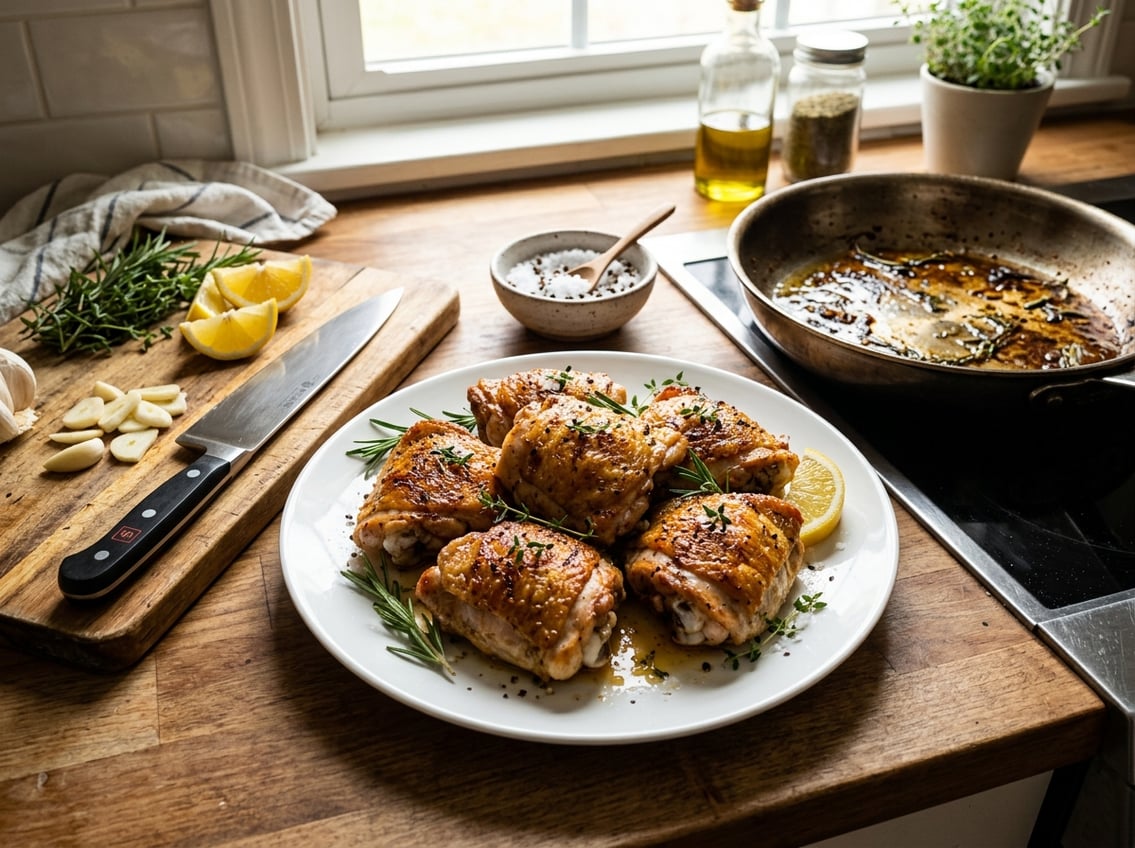
This guide explains why that method usually wins and when other approaches—baking, air frying, grilling, broiling, frying, braising, or slow cooking—might suit your goal better.
You’ll also find tips on choosing the right thighs and temperatures for your preferred texture.
Choosing the Right Chicken Thighs
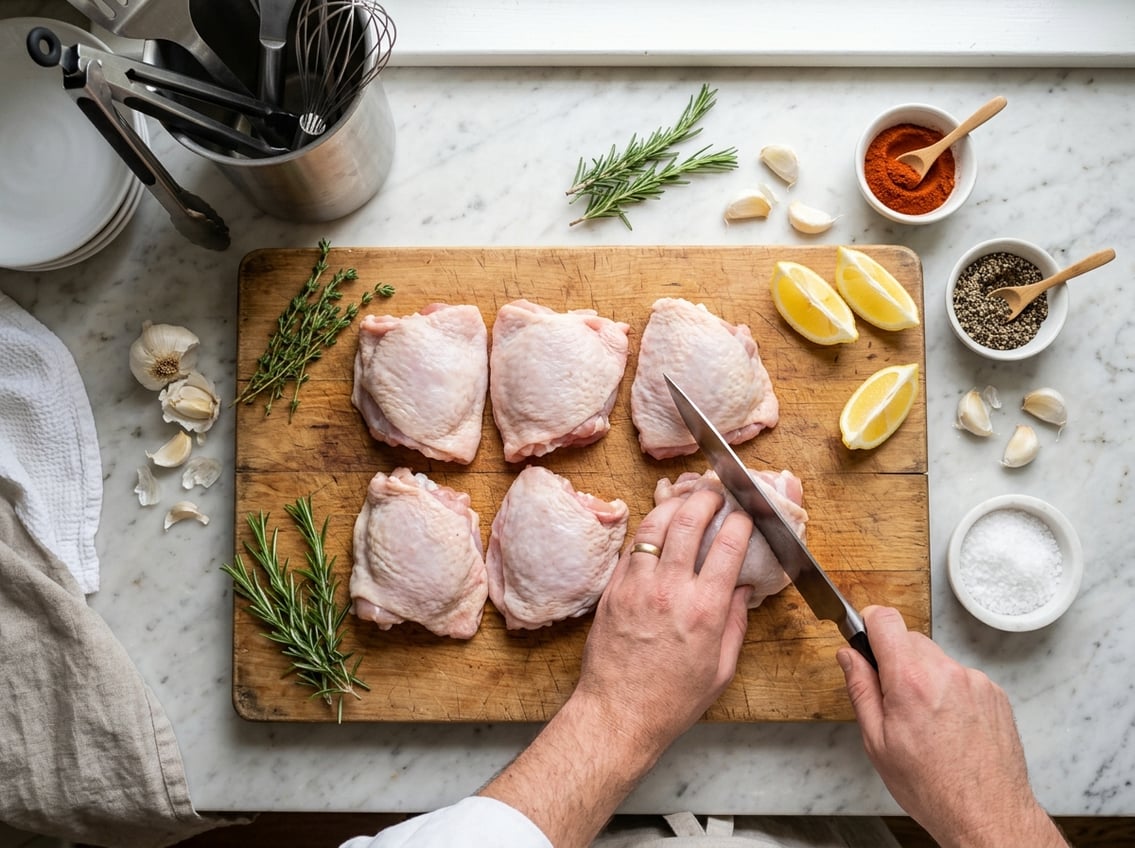
Pick thighs that match your cooking method and texture preferences.
Bone-in, skin-on thighs offer deep flavor and crisp skin, while boneless or skinless thighs work for faster, leaner dishes.
Pay attention to color, smell, and packaging date to ensure freshness.
Bone-In vs. Boneless
Bone-in chicken thighs retain more moisture and flavor during longer cooking.
The bone slows heat transfer, helping the thigh stay juicy when you braise, roast, or grill.
If you cook to higher internal temps (175–185°F) to break down connective tissue, bone-in thighs are forgiving and yield tender results.
Boneless chicken thighs cook faster and are easier to portion and slice.
Use them for quick pan-sears, stir-fries, or sheet-pan meals where even thickness matters.
Trim excess fat and pound slightly for uniform thickness to prevent uneven cooking.
Choose boneless thighs when you want convenience or bite-sized pieces for sauces and skewers.
Skin-On vs. Skinless
Skin-on chicken thighs provide the best chance at crisp skin and added fat for flavor.
Sear skin-side down in a hot pan or roast skin-up in the oven to render fat and create a golden crust.
Keep skin on for roasting, grilling, or pan-to-oven methods that rely on rendered fat to baste the meat.
Skinless chicken thighs reduce fat and cook a bit faster.
They work well for braises, curries, and recipes where you want sauce to cling directly to the meat.
Pat skinless thighs dry and season well.
Using a fat (oil, butter) and proper heat control is essential to avoid sticking or drying out.
How to Prepare Chicken Thighs
Check the sell-by date and avoid strong odors.
Fresh thighs look pink with minimal liquid in the package.
For bone-in or skin-on thighs, trim excess flap skin to prevent burning and uneven crisping.
For boneless thighs, trim visible connective tissue and excess fat for better texture and cleaner browning.
Use a paper towel to pat thighs dry before seasoning.
Dry skin sears crisply and skinless meat browns more evenly.
If you marinate, do so for at least 30 minutes and up to 24 hours.
Acidic marinades change texture, so limit time for delicate mixtures.
Bring thighs to near room temperature (15–20 minutes) before cooking to promote even doneness.
Pan-Searing and Oven-Roasting for Juicy, Crispy Results
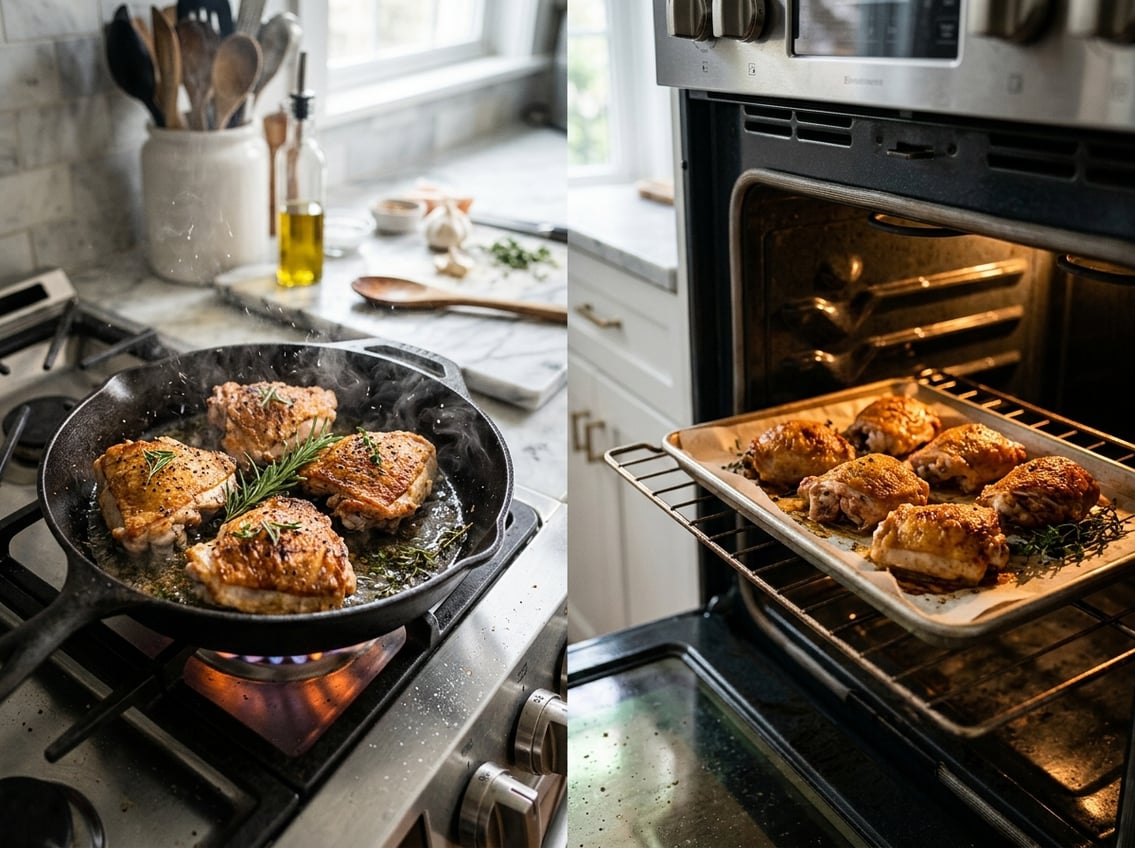
This method uses a high-heat sear to render and crisp skin, then gentle oven roasting to finish the meat.
It works best with bone-in, skin-on chicken thighs and simple seasoning or a short marinade.
Pan-Searing Technique
Let thighs reach room temperature and pat the skin dry with paper towels.
Season both sides with salt and pepper, and any dry spices you like.
Use a heavy skillet—cast iron works well—so heat stays steady.
Add a thin film of neutral oil and place thighs skin-side down in a cold-to-medium-hot pan.
This helps fat render gradually while avoiding splatter.
Sear without moving for 6–9 minutes until the skin is deeply golden and the edges are crisp.
Tilt the pan and spoon rendered fat over the skin if the pan isn’t hot enough.
Flip briefly—about 1 minute—to color the flesh side before transferring to the oven.
Finishing in the Oven
Preheat the oven to 375°F–400°F.
Transfer the whole skillet to the oven, or move thighs to a rimmed baking sheet or roasting pan.
Roast until the internal temperature reaches 175°F for tender, well-broken-down connective tissue.
165°F is safe but may be less tender.
Check after 12–20 minutes depending on thigh size and oven temp.
Let the thighs rest uncovered for 5 minutes to stabilize juices and keep skin crisp.
For extra crispness, broil 1–2 minutes at the end while watching closely.
Seasoning and Marinades
For straightforward flavor, use kosher salt and freshly ground pepper plus 1–2 complementary spices.
Apply salt at least 30 minutes before cooking, or overnight for deeper seasoning.
Acidic marinades (lemon juice, vinegar, yogurt) add tang and tenderize.
Limit marinating time to 1–4 hours to avoid mushy texture.
If you use a wet marinade, include oil and aromatics and pat skin dry before searing.
For a simple herb finish, add butter, smashed garlic, and thyme to the pan during the last oven minutes and baste the thighs once.
Hands-Off Methods: Baking, Roasting, and Air Frying
These methods let you cook without constant attention while still delivering juicy meat and good browning.
Focus on patting thighs dry, using moderate-high oven or air-fryer temps, and checking internal temperature for safety and best texture.
Bake Chicken Thighs in the Oven
Baking works well for both boneless and bone-in chicken thighs.
Pat thighs dry, season, and place skin-side up on a rimmed baking sheet or in a shallow dish.
Set the oven to 400°F for boneless thighs (about 20–25 minutes) and 425°F for bone-in (25–35 minutes).
Use an instant-read thermometer; remove at 165°F and rest 5 minutes.
To get crispy baked chicken thighs, brush a little oil on the skin or rub with a high-smoke oil.
Avoid overcrowding the pan.
If liquid pools, elevate thighs on a rack to keep skin crisp.
Add herbs or a glaze in the last 5–7 minutes to prevent burning.
Air Fryer Chicken Thighs
Air frying concentrates heat and airflow for fast cooking and a crisp exterior.
Pat thighs dry and lightly oil the surface; season simply or use a dry rub.
Arrange thighs in a single layer with space between pieces.
Cook boneless thighs at 375°F for about 12–16 minutes, flipping halfway.
Cook bone-in at 360–380°F for 18–22 minutes, depending on size.
Check for 165°F internal temperature and let rest briefly.
The air fryer gives a golden-brown crust like pan-searing but with less splatter.
If you want extra crispness, finish at a higher temp for 2–3 minutes.
Use this method for quick weeknight chicken thigh recipes or to reheat leftovers.
Roasted Chicken Thighs Techniques
Roasting uses dry heat and longer cook times for deep browning and concentrated flavor, ideal for bone-in thighs.
Preheat oven to 425°F, pat thighs dry, and season generously.
Roast on a rimmed sheet or in a roasting pan, skin-side up, for 30–40 minutes depending on size.
Flip once only if you want even color underneath.
Otherwise, roast uninterrupted for best rendered fat and crispy skin.
Check for 165°F internally and rest before serving.
For roast-style recipes, add vegetables to the pan so they caramelize in rendered fat.
Consider starting at 450°F for 10 minutes, then lowering to 375°F to finish if you want extra crispness.
Grilling and Broiling for Flavorful, Charred Thighs
You’ll get crispy, well-charred skin and juicy meat by controlling heat, using a thermometer, and choosing the right method for bone-in or boneless thighs.
Use direct heat for fast searing and indirect or broiling for finishing without burning.
How to Grill Chicken Thighs
Preheat your grill to medium-high (about 375–425°F) for boneless thighs and aim for 350–400°F for bone-in.
Pat skin-on chicken thighs dry, season or marinate, and let them sit at room temperature 15–30 minutes before cooking.
Place thighs skin-side down over direct heat to sear for 3–5 minutes until the skin crisps and develops color.
Flip and move to a cooler zone (or reduce flame) to finish cooking.
Target internal temperature: 165°F for safety; many cooks pull bone-in at 175°F for extra tenderness.
Use a probe thermometer inserted into the thickest part without touching bone.
Rest thighs 5 minutes after grilling to let juices redistribute.
For clean grill marks, avoid constant flipping.
One or two turns works best.
Direct vs. Indirect Grilling
Direct grilling puts thighs right above flames for fast browning and char.
Use direct heat for boneless, skinless thighs or to sear skin-on pieces.
Watch closely to prevent flare-ups from fat dripping.
Indirect grilling places thighs away from the heat source and cooks them with circulating air at 325–400°F.
This method suits bone-in thighs and prevents over-charring while the interior reaches temperature.
Start with a sear on direct heat, then move to indirect for even cooking.
Try a two-zone setup: one side high (direct), one side medium-low (indirect).
Sear 3–6 minutes per side, then transfer to indirect until the thermometer reads 165–175°F.
Keep a spray bottle for small flare-ups and flip thighs once or twice during the indirect phase.
How to Broil Chicken Thighs
Set your oven broiler to high and position the rack 6–8 inches from the element.
Broiling gives intense top heat that crisps skin quickly, so use skin-on chicken thighs for best results.
Brush thighs lightly with oil and season.
If using a sugary glaze, apply near the end to avoid burning.
Broil skin-side up on a rimmed sheet or broiler pan for 6–9 minutes, watching closely.
Flip and broil 4–8 minutes more until the thickest part reaches 165°F.
Thinner boneless thighs may finish in under 10 minutes total.
Let broiled thighs rest 5 minutes.
If skin hasn’t crisped enough, give a final 1–2 minute blast under the broiler, but stay attentive to prevent charring.
Frying and Southern-Style Chicken Thighs
Frying gives chicken thighs a crisp, golden exterior while keeping the meat moist and flavorful.
Proper oil temperature, a well-seasoned coating, and timing matter most for successful fried thighs.
How to Fry Chicken Thighs
Start with bone-in, skin-on thighs for maximum flavor and juiciness.
Boneless, skinless thighs work if you want lower fat and faster cook time.
Pat thighs dry, then season under the skin and in a buttermilk or salty brine for at least 2 hours.
Dredge in seasoned flour, pressing to form an even crust.
Heat oil to 325–350°F for batch frying.
Lower temps let fat render and the interior cook without burning the crust.
Use a thermometer and avoid overcrowding the pan so temperature recovers quickly.
Cook bone-in thighs about 12–15 minutes, turning once, until internal temp reaches 175–185°F.
Boneless thighs need roughly 6–8 minutes per side and 165°F safe temp.
Rest on a wire rack so the crust stays crisp.
Southern Fried Chicken Techniques
Southern-style fried chicken uses buttermilk marinades, seasoned flour, and often a double-dredge for extra crunch.
Soak thighs in buttermilk with salt, paprika, garlic powder, and cayenne for 2 hours or overnight.
For a thicker crust, dip marinated thighs in flour, then back into buttermilk, then into flour again.
Press flour into nooks and crannies to create an even, golden coating.
Let coated pieces sit 10–15 minutes before frying so the crust adheres.
Kosher salt, black pepper, paprika, garlic powder, and a touch of cayenne create a classic Southern profile.
Use a cast-iron skillet or Dutch oven for stable heat and more even browning.
Shallow and Deep Frying Methods
Shallow fry in 1–2 inches of oil if you want less oil use and a pan-fried texture. Heat to 325–350°F and turn pieces halfway.
Fry in small batches to maintain temperature. Use a heavy skillet to reduce temperature swings.
Deep fry by fully submerging thighs in 350–375°F oil for faster, more even browning. Bone-in thighs brown well when submerged.
Cook until the crust is deep golden and the internal temperature reaches your target range. An electric fryer or deep pot helps you control temperature.
For both methods, choose a neutral oil with a high smoke point like canola or peanut. Drain on a rack instead of paper to keep the crust crisp.
Adjust times for size and thickness to avoid undercooking or burning the chicken thighs.
Slow Cooking, Braising, and Recipe Variations
These methods use long, gentle heat to break down connective tissue and render fat. You get tender, flavorful thighs.
Braised Chicken Thighs
Braising combines a short sear with low simmering in a flavorful liquid. Start by seasoning and browning bone-in, skin-on thighs to render fat.
Add aromatics like onion, garlic, and herbs, then pour in a braising liquid such as stock, wine, or tomatoes. Maintain a gentle simmer in the oven at 300–325°F or on the stovetop over low heat.
Cook until the thighs are fork-tender, usually 45–75 minutes depending on size. Reduce the braising liquid into a pan sauce or gravy for serving.
Braised chicken thighs pair well with mashed potatoes, polenta, or crusty bread to soak up the sauce.
Slow Cooker Methods
The slow cooker creates set-it-and-forget-it tenderness, especially with bone-in thighs. Brown the skin first if you want texture.
Add raw thighs to the slow cooker with 1/2–1 cup liquid and aromatics. Cook for 4–6 hours on high or 6–8 hours on low.
Use thicker sauces like tomato-based, curry, or cream to minimize evaporation and concentrate flavor. For crispy skin, move finished thighs to a hot oven or broiler for 3–5 minutes.
Check for tenderness; meat should pull easily from the bone. Adjust seasoning at the end to sharpen the final dish.
Popular Chicken Thigh Recipes
Highlight thigh richness with dishes like braised thighs in red wine and tomatoes, coconut curry thighs, honey-soy glazed thighs, and coq au vin adaptations. Each style uses thighs’ higher fat and connective tissue for tender results and robust sauces.
Match cooking technique to sauce. Long braises suit wine and tomato bases.
Slow-cooker curries benefit from coconut milk and spices. Quick pan-sear then oven-finish works for glazed or roasted preparations.
Choose bone-in, skin-on for maximum flavor and moisture. Boneless thighs work for quicker weeknight recipes.
Cooking Times and Tips for Perfect Texture
Use precise bake times, target temperatures, and simple rest-and-serve steps to get tender, juicy thighs with crisp skin.
Follow small adjustments for bone-in vs. boneless and low vs. high oven temps to get your preferred texture.
How Long to Bake Chicken Thighs
Bake bone-in, skin-on thighs at 400°F (204°C) for 35–45 minutes. This range gives you crispy skin and a tender interior.
Check at 30 minutes if your thighs are small. Larger pieces may need the full 45 minutes.
For boneless, skinless thighs, reduce time to 20–30 minutes at 400°F. Start checking at 18–20 minutes to avoid drying them out.
If you prefer extra tenderness, roast bone-in thighs at 325°F (163°C) for 45–60 minutes. This breaks down connective tissue and gives more pull-apart tenderness.
Use an oven-safe skillet or a rimmed baking sheet with a wire rack to keep skin crisp. Flip only if necessary to keep juices in.
Adjust time by about 5 minutes for crowded pans or convection ovens.
Optimal Internal Temperatures
Aim for 165°F (74°C) as the USDA minimum for safety. Many cooks prefer 170–180°F (77–82°C) to break down collagen and make the thighs more tender.
Bone-in, skin-on thighs often benefit from finishing around 175°F (79°C). Insert the probe into the thickest part without touching bone.
Remove the pan from the oven when the temp hits your target. Let carryover heat raise the temperature a few degrees.
For crispy skin, broil briefly (1–2 minutes) after removing at a slightly lower temp. Watch closely to avoid burning.
Record temperatures and times for your oven and preferred texture to repeat results consistently.
Resting and Serving Suggestions
Let thighs rest 5–10 minutes uncovered or loosely tent them with foil.
Resting allows the juices to redistribute and keeps your chicken juicy.
Rest uncovered on a cooling rack for crisp skin.
Tent lightly with foil if you want moister meat.
Slice boneless thighs against the grain to make them seem more tender.
Serve immediately after resting with pan juices or a quick pan sauce for extra moisture and flavor.
If you reheat, use a moderate oven at 325°F to keep the texture.
Avoid microwaving, as it can make the skin rubbery and the meat dry.


