
What Do Chicken Thighs Look Like When They Go Bad: Identification and Safe Storage
You can spot bad chicken thighs quickly by looking, smelling, and feeling for changes. Fresh thighs stay light pink with white fat, have little to no odor, and feel slightly moist but not sticky. If the meat turns gray, green, or yellow, gives off a sour or sulfur-like smell, or feels slimy or tacky, throw it away.
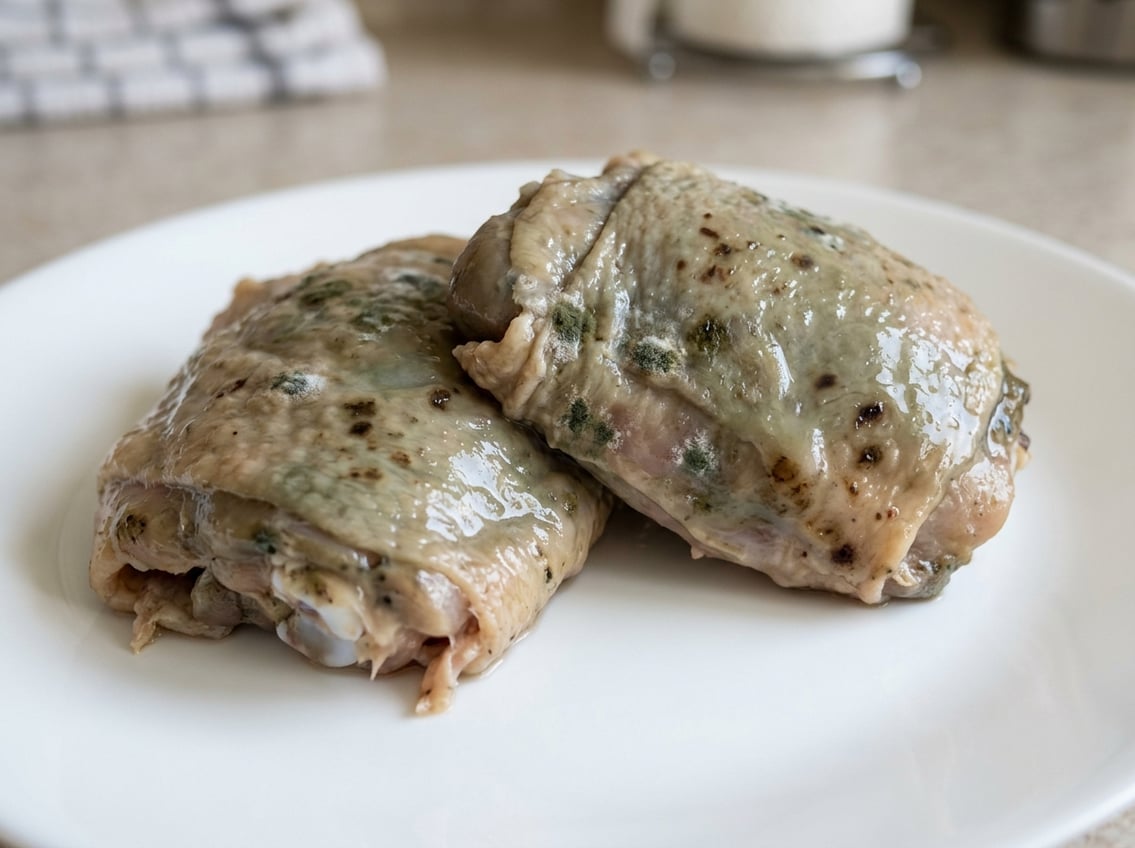
Check for changes in appearance, smell, and texture to know when to cook, freeze, or discard your chicken thighs.
Visual Signs of Spoiled Chicken Thighs
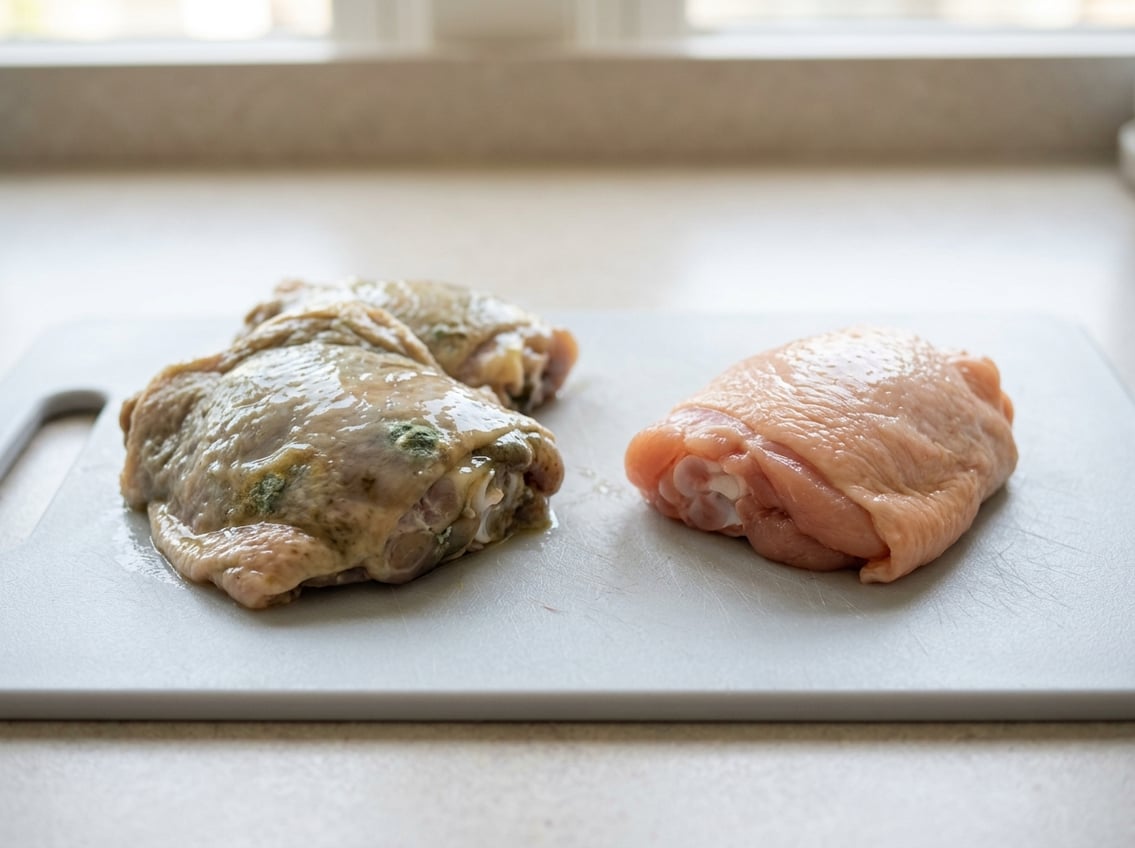
Watch for changes in color, visible growths, and packaging problems. These signs together indicate that chicken thighs are unsafe to eat.
Color Changes to Watch For
Fresh raw chicken thighs appear pale pink with white fat. If the flesh turns gray, green, or has large areas of yellowed fat, discard it.
Small, even darkening from air exposure can be normal. Wide, blotchy, or greenish patches signal bacterial or enzymatic breakdown.
If you see persistent dark spots or an overall color that doesn’t match normal pink-to-pale-brown aging, do not cook it. Use color checks along with smell and texture before deciding to throw chicken away.
Mold and Surface Growth
Mold on chicken thighs appears as fuzzy, green, black, or white colonies and means the meat is spoiled. Discard the entire package when you spot any visible fungal growth.
Bacterial biofilms can create slimy films that look wet and glossy rather than fuzzy. If the surface feels tacky or slimy after rinsing your hands, that texture plus any discoloration or odor is a strong sign to throw the chicken out.
Packaging Issues and Leaks
Check the package for tears, punctures, or swollen packaging. These suggest contamination or bacterial gas production.
Any liquid pooling inside a package that is cloudy, green-tinged, or has an unusual odor signals spoilage. Vacuum-sealed packages that are bloated or drip when opened are risky.
Also check printed dates. If the chicken is past the “use by” date and shows color, odor, or texture changes, discard it.
Smell and Texture Indicators
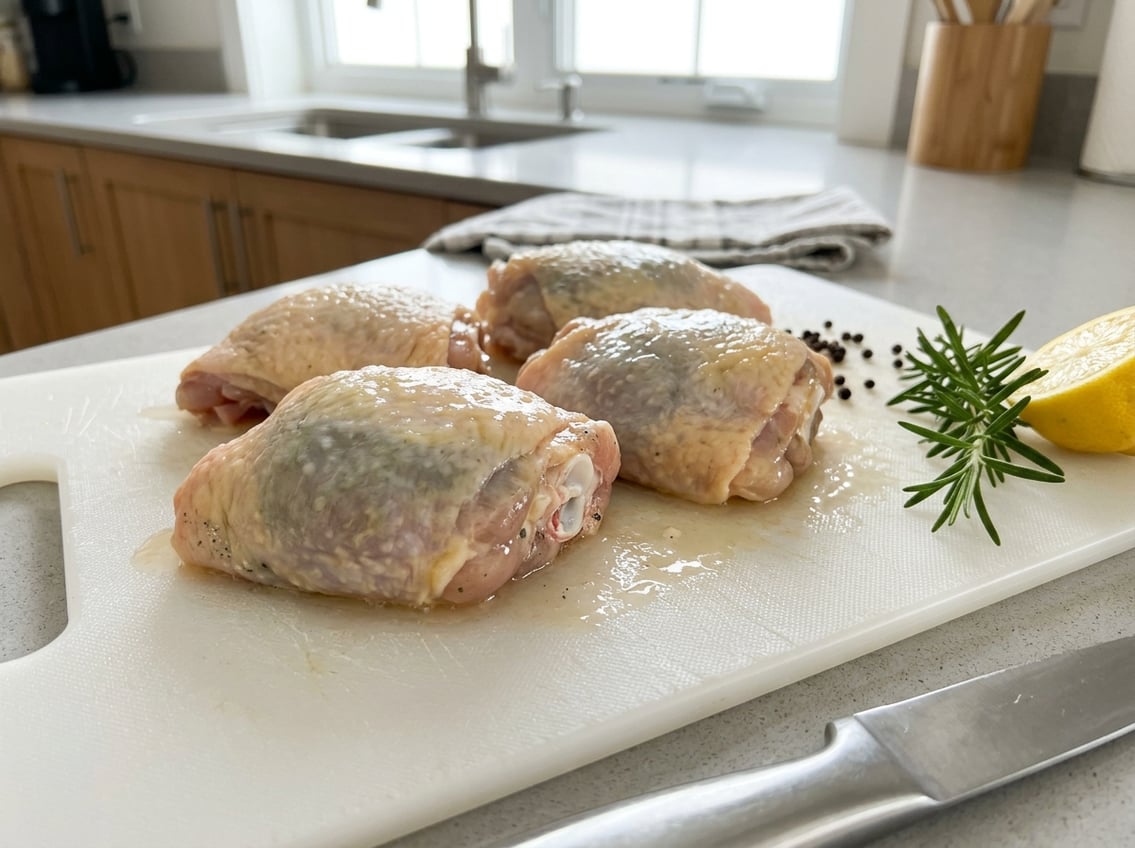
Smell and feel give the quickest cues about spoiled chicken thighs. Pay attention to sharp or sulfuric odors and any tacky or slimy coating when you touch the meat.
Unpleasant and Strong Odors
If your chicken thighs emit a sour, rotten, or sulfur-like smell (often compared to rotten eggs), discard them. Fresh raw chicken has little to no odor. A pronounced chemical or pungent scent signals bacterial growth or spoilage.
Small variations in scent can occur with packaging or marinades. Sniff uncooked meat after patting it dry. If the smell intensifies as the meat warms to room temperature, that’s a strong warning sign.
Changes in Texture and Sliminess
Fresh chicken thighs feel moist and slightly tacky but remain firm to the touch. When meat becomes slimy, sticky, or leaves a slippery residue on your fingers, bacteria have likely multiplied to unsafe levels.
Check both skin and flesh. Slime often forms under the skin or around joints on bone-in thighs. Press the meat; if it fails to bounce back or feels overly soft and mushy, throw it out.
Shelf Life
Raw chicken thighs stay safe for only a short time in the refrigerator. You can keep them much longer in the freezer.
Refrigerator Storage Times
Store raw chicken thighs at 40°F (4°C) or below. In the fridge, raw thighs typically remain good for 1–2 days. Cooked thighs last 3–4 days.
Keep raw thighs in their original packaging or place them in a sealed container on the bottom shelf to prevent juices from dripping onto other foods. If you don’t plan to cook within two days, freeze them to preserve safety and quality.
Always check for spoilage signs—off smells, sticky or slimy texture, and color changes—before cooking, even within the recommended window. Use a food thermometer and cook to 165°F (74°C) to destroy pathogens.
Freezer Storage Durations
When frozen properly, raw chicken thighs maintain best quality for up to 9 months. Wrap tightly in heavy-duty freezer bags or vacuum-seal to minimize freezer burn and moisture loss.
Label packages with the date so you can rotate stock and use older packages first. Thawed chicken should be used within 1–2 days if you thaw in the refrigerator. If you thaw in cold water or the microwave, cook immediately.
Cooked thighs can be frozen too. Expect quality for about 2–6 months, depending on packaging and freezer conditions.
Proper Storage and Freezing Techniques
Store fresh thighs cold and separate from ready-to-eat foods. Use airtight packaging and label with the date to track how long they stay at safe temperatures.
Best Practices for Refrigeration
Keep raw chicken thighs at 40°F (4°C) or below and use them within 1–2 days. Place thighs on the lowest fridge shelf in a leak-proof container or a sealed plastic bag to prevent cross-contamination.
Pat thighs dry with paper towels before storing to reduce surface moisture. If you buy bulk packs, divide into meal-sized portions so you only open what you need.
How to Freeze Chicken Thighs Effectively
Freeze thighs at 0°F (-18°C) or colder for best quality. Properly frozen thighs remain safe indefinitely but maintain best quality for about 9 months.
Remove excess air from packaging to prevent freezer burn. Use a vacuum sealer or wrap tightly in plastic wrap, then place in heavy-duty freezer bags. Label each package with the freeze date and portion size.
For cooked chicken thighs, cool to room temperature no longer than two hours before freezing, then store in airtight containers for up to 4 months. To thaw, move packages to the refrigerator for 24 hours or use the cold-water method in a sealed bag, changing water every 30 minutes.
Understanding Freezer Burn
Freezer burn causes dry, discolored patches and changes texture and flavor in frozen chicken thighs. You can still eat affected meat in many cases, but you should use cooking methods that compensate for moisture and taste loss.
How to Recognize Freezer Burn
Look for pale, grayish-white or leathery spots on the surface of the thighs. Ice crystals inside or on the package signal moisture loss from the meat surface.
Check texture by touching the exposed area. Freezer-burned flesh feels dry, tough, or slightly grainy. Smell the chicken after it thaws; a neutral or mildly stale odor is common, but sour or rotten smells indicate spoilage unrelated to freezer burn.
Checklist:
- Color: white, gray, or brownish patches
- Surface: dry, brittle, or leathery areas
- Packaging: visible ice crystals or torn seals
- Smell: stale vs. clearly off
Does Freezer Burn Mean Chicken Is Bad?
Freezer burn does not automatically mean the thighs are unsafe to eat. The problem is quality loss—dryness, leathery texture, and muted flavor—rather than bacterial danger if the meat remained continuously frozen.
If you stored the meat properly in airtight packaging at a constant freezer temperature, you can trim badly affected parts and use the rest. Use moist cooking methods—stews, braises, soups, or slow-cooking—to help with dryness and flavor changes.
Discard chicken if you see pack tears with visible thawing and refreezing, strong rotten odors after thawing, slimy texture, or unusual colors beyond gray or white patches.
Prevent freezer burn by wrapping thighs tightly in freezer-safe packaging, removing air, and labeling with dates. Freeze within a day of purchase and use within recommended storage times for best quality.
Safe Handling and Refreezing Guidelines
Control temperature and timing to minimize bacterial growth and quality loss. Keep raw chicken at or below 40°F (4°C) while thawing, cook if you used quick thawing methods, and refreeze only when those conditions are met.
Safe Methods to Thaw Chicken Thighs
Thaw chicken thighs in the refrigerator at 40°F (4°C) or below. Place them on a plate or tray to catch drips and let them sit on the lowest shelf. This method keeps the meat cold while thawing and lets you safely refreeze raw thighs if you change plans.
If you need faster thawing, use cold water in a sealed, leak-proof bag and change the water every 30 minutes until thawed. Cook the thighs immediately after cold-water thawing. Do not refreeze raw chicken that you thawed this way unless you cook it first.
Microwave defrosting also requires immediate cooking. Never thaw on the countertop or in hot water; those methods let the surface enter the 40–140°F (4–60°C) danger zone where bacteria multiply quickly.
Is Refreezing Chicken Thighs Safe?
You can refreeze raw chicken thighs only if they stayed refrigerated at 40°F (4°C) or below the entire time after thawing.
Refreezing raw thighs causes some texture and moisture loss. This affects quality, not safety, if you handle them correctly.
If you thawed thighs by cold water or microwave, cook them fully before refreezing.
You can freeze cooked chicken again within 3 to 4 days of refrigeration. Cool and package it in airtight containers or heavy-duty freezer bags to reduce freezer burn.
Check for signs of spoilage such as off odor, slimy texture, or discoloration before refreezing.
Label packages with the date. Use frozen thighs within the recommended times: raw for up to 9 to 12 months for best quality, and cooked for about 4 months.
Keep the freezer temperature at 0°F (-18°C) or lower.


