
Is It OK to Eat Chicken Thighs on a Diet? Nutrition, Benefits, and Best Ways to Enjoy Them
You can include chicken thighs on a diet without derailing progress.
Chicken thighs provide high-quality protein and important nutrients. When you control portions and choose lean prep methods like skinless, baked, grilled, or stir-fried, they fit well into a weight-loss plan.
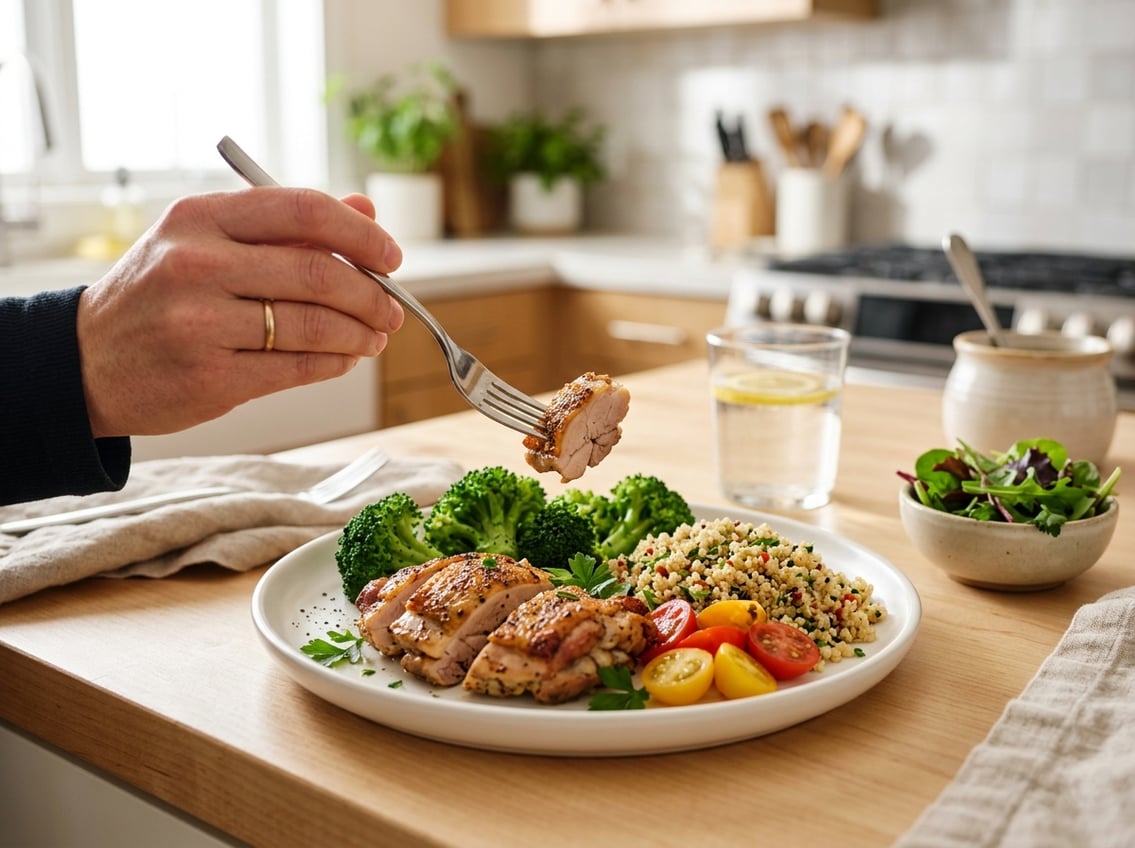
This article breaks down what’s in a thigh versus breast and explains how thighs affect satiety and calories. You’ll also find practical meal ideas and swaps that make it easy to enjoy dark meat while staying on target with your goals.
Nutritional Profile of Chicken Thighs

A typical 3-ounce serving of skinless chicken thigh gives you a concentrated source of protein, moderate fat, and several B vitamins and minerals.
Chicken thighs provide more iron, zinc, and certain B vitamins per ounce than breast meat, but also more calories and total fat.
Essential Macronutrients
A 3-ounce skinless chicken thigh delivers about 20 g protein and roughly 9 g total fat.
Protein supplies all essential amino acids for muscle repair and satiety, making thighs useful on a calorie-controlled plan when portioned correctly.
Most of the fat in thighs is mono- and polyunsaturated, with about 2 g saturated fat per 3-ounce serving.
If you leave the skin on, calories and fat nearly double. A roasted thigh with skin can reach about 278 kcal and 18 g fat per 3-ounce portion.
Chicken thighs contain essentially zero carbohydrates, so they won’t impact your carbohydrate budget.
Key Vitamins and Minerals
Chicken thighs offer several B vitamins that support energy metabolism.
You get meaningful amounts of niacin (vitamin B3), vitamin B6, and some vitamin B12, which help convert food into energy and support nervous system function.
Thighs provide more iron and zinc per ounce than breast meat, which helps with oxygen transport and immune function.
You’ll also find phosphorus for bone health and selenium as an antioxidant.
Sodium content depends on added salt and processing, so monitor that if you track sodium intake.
Comparing Thighs and Breasts
Chicken breast is leaner. A 3-ounce cooked breast typically has 120–140 kcal and 2–3 g total fat, while a skinless thigh has about 164 kcal and 9 g fat.
Choose breast if you need the lowest-fat, lowest-calorie option for strict calorie or fat targets.
Thighs offer higher iron, zinc, and B12 per ounce and have a richer flavor.
If you prioritize micronutrients or prefer taste and juiciness, thighs work well in a diet when you control portion size and cooking method.
Chicken Thighs and Weight Loss
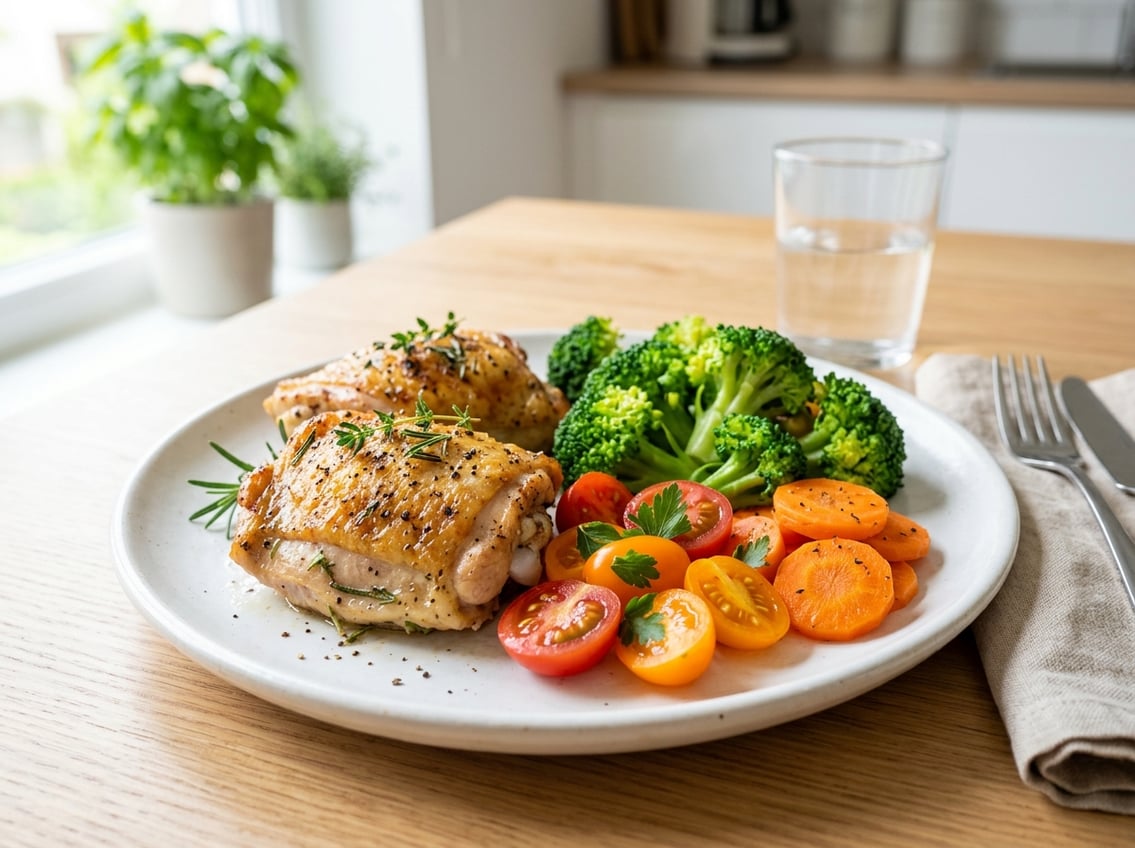
Chicken thighs provide concentrated protein, modest fat, and several B vitamins and minerals that support metabolism.
With the right portion control and cooking methods, they fit into a calorie-controlled plan without undermining satiety or nutrient goals.
Role of Protein in Satiety
Chicken thighs deliver about 20–22 grams of protein per 3-ounce cooked, skinless serving, which helps you feel full after a meal.
Protein slows gastric emptying and stimulates hormones that reduce appetite, so including a thigh can lower the chance of snacking later.
Combine a thigh with fiber-rich vegetables or whole grains to further extend satiety.
That mix stabilizes blood sugar and spreads calories across protein, fiber, and complex carbs, making it easier to meet daily calorie targets.
Fat Content and Its Impact
A skinless chicken thigh has roughly 8–10 grams of total fat per 3-ounce cooked portion, including about 2 grams of saturated fat.
Cooking method matters: frying or leaving the skin on adds substantial calories compared with baking, grilling, or roasting.
Dietary fat promotes fullness and aids absorption of fat-soluble vitamins, but you must balance those benefits with your daily fat and calorie limits.
If you’re tracking macros, count thigh fat toward your total daily fat allowance and prefer skinless thighs or trimmed portions to keep calories manageable.
Portion Sizes and Calorie Control
Portion control determines whether chicken thighs help or hinder weight loss.
A typical recommended serving for weight management is 3–4 ounces cooked, about the size of your palm.
Two small thighs often exceed a single serving, so weigh or eyeball portions if you track calories.
Pair a single thigh with plenty of low-calorie vegetables and a modest portion of whole grain or starchy veg to create a plate that hits protein needs without excess calories.
Use simple cooking methods and avoid calorie-dense sauces to keep each meal aligned with your daily calorie target.
Health Benefits of Chicken Thighs
Chicken thighs provide concentrated protein, key vitamins and minerals like selenium, and small amounts of beneficial fats that support muscle maintenance, metabolism, and cellular health.
You get more iron, zinc, and B12 per ounce than in breast, and modest levels of conjugated linoleic acid (CLA) appear in dark meat.
Support for Muscle and Metabolism
Chicken thighs deliver about 20 grams of high-quality protein per 3-ounce cooked serving, which helps you preserve or build lean muscle when combined with resistance exercise.
Protein supports resting metabolic rate because muscle tissue burns more calories than fat, so adequate protein helps maintain energy expenditure during weight loss.
Thighs supply essential amino acids such as leucine, which triggers muscle protein synthesis more effectively than lower-quality proteins.
Including thighs in meals spaced through the day — for example, 20–30 g of protein at each eating occasion — helps sustain muscle repair and satiety.
Micronutrients for Health
Chicken thighs contain higher levels of iron, zinc, selenium, and vitamin B12 than the same weight of breast meat.
Selenium supports antioxidant enzymes that protect cells from oxidative damage and support immune function.
Zinc contributes to immune response and wound healing.
Iron and B12 help maintain red blood cell production and energy levels, reducing fatigue.
If you choose skinless thighs and use low-fat cooking methods, you keep micronutrient intake high while controlling added calories and saturated fat.
Conjugated Linoleic Acid (CLA) Benefits
Dark meat contains small but measurable amounts of conjugated linoleic acid (CLA), a group of fatty acids studied for modest effects on body composition.
Some research links dietary CLA to slight reductions in body fat and preservation of lean mass when combined with exercise, though effects are modest and vary by dose.
You won’t get therapeutic CLA doses from a single serving, but including chicken thighs alongside other nutrient-dense foods contributes modestly to your intake of naturally occurring CLA.
Pair thighs with whole grains and vegetables to optimize nutrient density while keeping portion sizes aligned with your calorie targets.
Smart Cooking Methods and Meal Ideas
Focus on cooking methods that limit added fat and sodium while keeping protein high and flavor intact.
Choose techniques that let you control portion size and pair thighs with fiber-rich vegetables and whole grains.
Grilled and Baked Chicken Thighs
Grilling and baking deliver deep flavor without much oil.
Trim visible fat and cook bone-in or boneless thighs over medium heat (350–400°F/175–200°C) until internal temperature reaches 165°F (74°C).
Turn once and avoid charring, since too much blackening adds harmful compounds.
For baking, use a rack so fat drips away and roast at 400°F (200°C) for 25–35 minutes for boneless, slightly longer for bone-in.
Marinate with acid like lemon or vinegar plus herbs and garlic to boost flavor without sugar.
Aim for 3–4 ounce portions cooked weight to keep calories in check.
Low-Fat Cooking Methods
Choose poaching, steaming, or braising when you need the lowest added fat.
Poach thighs in seasoned broth or water at a gentle simmer for 20–30 minutes.
Steaming preserves moisture and nutrients with zero added fat.
Use nonstick pans or an air fryer to crisp skin with minimal oil — spray lightly rather than pouring oil.
When braising, remove skin after cooking to shed extra fat while keeping the meat tender.
Season with herbs and spices instead of heavy sauces to control sodium and calories.
Chicken Thighs With Vegetables
Combine chicken thighs with high-fiber vegetables to increase satiety and nutrient density.
Roast thighs on a sheet pan with broccoli, Brussels sprouts, bell peppers, and red onion tossed in a small amount of olive oil and smoked paprika.
Vegetables absorb flavors and provide volume for fewer calories.
For one-pot meals, braise thighs with tomatoes, carrots, and beans; use low-sodium broth and a splash of vinegar to brighten the dish.
Stir-fries work too: use boneless skinless thighs cut into strips, cook quickly over high heat with broccoli, snap peas, and mushrooms.
Finish with a light soy-citrus sauce.
Incorporating Into Meal Planning
Plan meals around 3–4 ounce cooked portions of thigh paired with 1–1.5 cups of vegetables and a measured grain or legume serving.
Batch-cook 4–6 thighs on Sunday: grill or bake, then portion into containers with quinoa and roasted vegetables for several lunches.
Use simple swaps: replace creamy sauces with yogurt-based dressings, choose whole grains like brown rice or farro, and track added fats.
If tracking calories, note that skinless roasted thighs average about 160 kcal per 3-ounce serving; adjust other meal components accordingly.
Enjoying Chicken Thighs as Part of a Balanced Diet
Chicken thighs provide protein, iron, zinc, and B vitamins while containing more fat and calories than breast meat.
You can fit them into a calorie-controlled plan by paying attention to portion size, cooking method, and what else is on your plate.
Frequency of Consumption
You can eat chicken thighs regularly, but daily consumption depends on your overall calorie and saturated fat targets.
If you aim for 2,000 kcal/day and keep saturated fat under 10% of calories, limit high-fat portions and vary protein sources through the week.
A practical pattern is to include chicken thighs 2–4 times weekly and alternate with leaner proteins like chicken breast, fish, or legumes.
This reduces saturated fat buildup and ensures diverse nutrients.
Focus on portion sizes: a cooked 3-ounce skinless thigh gives about 20 g protein and about 160 kcal.
If you prefer larger portions, adjust the rest of the meal by adding more vegetables and fewer refined carbs to stay within your daily goals.
Choosing the Best Cut for You
Pick skinless, boneless thighs to lower calories and saturated fat.
Skin removal reduces fat substantially while keeping the meat flavorful.
Compare cuts: a 3-ounce skinless thigh has about 164 kcal and 9 g fat; a breast of the same weight has about 140 kcal and 3 g fat.
Choose thighs when taste or satiety matters and breast when minimizing fat is the priority.
Consider bone-in for slow cooking, as it adds flavor but doesn’t change nutritional makeup much once skin is removed.
Use lean preparation methods such as baking, grilling, broiling, or stir-frying with minimal oil.
Combining With Other Nutrient-Dense Foods
Pair thighs with high-fiber vegetables and whole grains to increase satiety and nutrient density. Fill half your plate with vegetables, one-quarter with a whole grain like brown rice or quinoa, and one-quarter with the protein.
Use low-calorie flavor boosters such as herbs, citrus, vinegar, and spices instead of heavy sauces. Add a source of healthy fat sparingly, like one tablespoon of olive oil, a quarter of an avocado, or a small handful of nuts, to help absorb fat-soluble vitamins.
Track macros or calories by logging the cooked weight and including any added oils or sauces. This approach helps you fit thighs into a weight-loss or maintenance plan without exceeding your targets.


