
Can You Use Chicken Thighs for Chicken and Noodles? Flavorful Comfort Food Tips
You can absolutely use chicken thighs for chicken and noodles. They bring richer flavor, more juiciness, and a heartier broth than leaner cuts.
If you want tender meat that stands up to long simmering and gives your noodles a deeper, more satisfying taste, chicken thighs are an excellent choice.
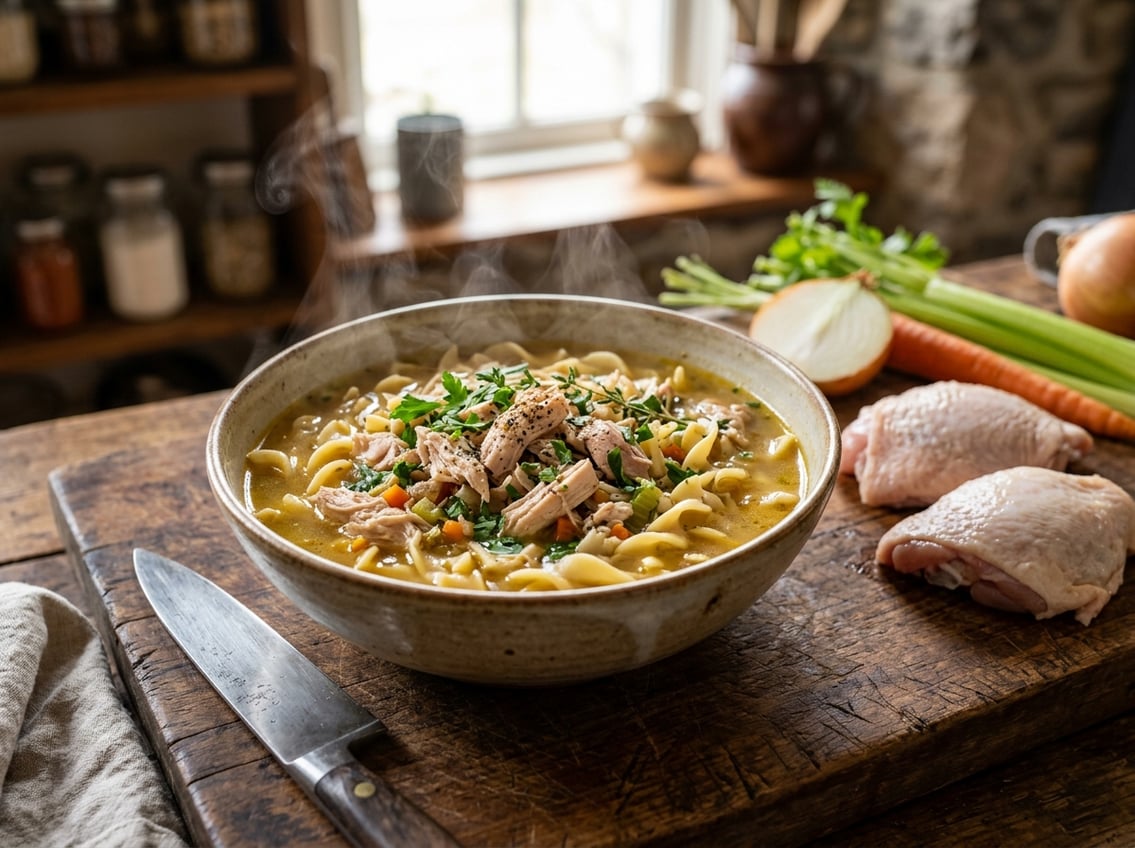
Thighs work well for both soup-style chicken and noodles and for a thicker, creamy chicken-and-noodles dish. Choose thighs to get a reliable, flavorful result.
This guide will explain why thighs excel, what ingredients to pair with them, different cooking approaches, step-by-step methods, and practical tips for storage and reheating.
Benefits of Using Chicken Thighs
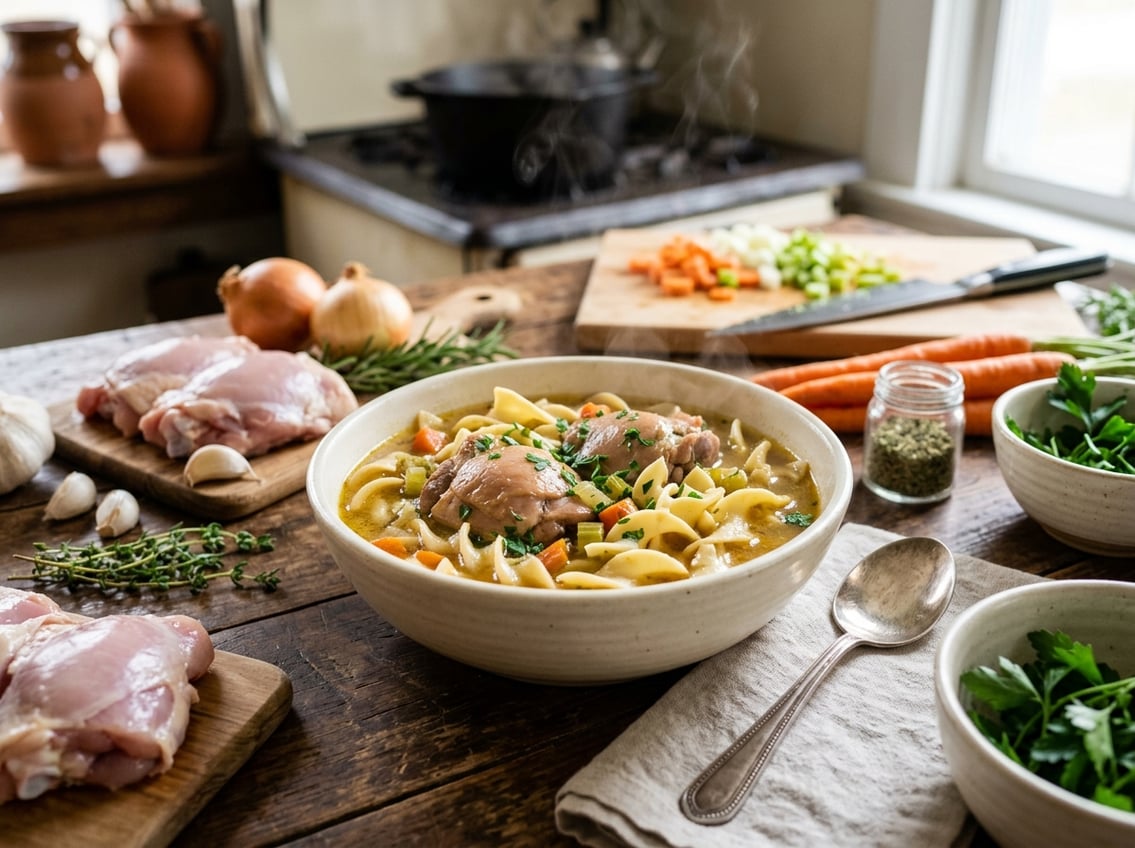
Chicken thighs bring richer flavor, forgiving cooking behavior, and lower cost to a comfort food recipe like chicken and noodles. You get more moist meat, flexible prep options (bone-in or boneless), and an affordable protein that stretches across several meals.
Flavor and Texture Advantages
Thighs deliver deeper savory flavor because they contain more intramuscular fat than breast meat. That fat melts during slow simmering, enriching both the meat and the cooking liquid so your noodle broth tastes fuller without extra butter or cream.
Thighs stay tender after longer simmer times. If you stew the dish for 30–60 minutes, boneless chicken thighs hold together and stay juicy, while bone-in thighs add gelatin that slightly thickens the sauce and improves mouthfeel.
Boneless skinless chicken thighs shred easily and remain moist, making them ideal for fork-tender comfort food. The result is a creamier, less dry bite compared with overcooked breast meat.
Cost and Availability
Chicken thighs are typically cheaper per pound than breasts, which helps when you make large batches for meal prep or family dinners. Buying bone-in thighs lowers cost further; you can use the bones to make a rich stock for your noodles.
Boneless skinless chicken thighs are widely available in supermarkets and often sold in bulk packs, which makes portioning simpler for recipes that feed 4–8 people. Their price point also lets you add extra vegetables or whole-grain noodles without raising the meal’s cost much.
Thighs reheat well and stay flavorful, so they reduce food waste and stretch your grocery budget. That makes them a practical choice for weeknight comfort meals and freezer-friendly batches.
Comparing Thighs to Chicken Breasts
Breasts are leaner and cook faster, but that very leanness makes them prone to drying when simmered for a long time. Thighs tolerate extended cooking and still deliver moist meat and a richer broth for your noodles.
Nutritionally, thighs contain more fat and slightly higher calories per serving than breasts. That fat contributes flavor and satiety; if you want lower fat, remove the skin or trim excess before cooking, or choose boneless skinless thighs for a middle ground.
Use breasts if you want a quick, light bowl. Choose boneless chicken thighs or bone-in thighs when you want slow-simmered depth, easy shredding, and a heartier comfort food texture.
Essential Ingredients for Chicken and Noodles
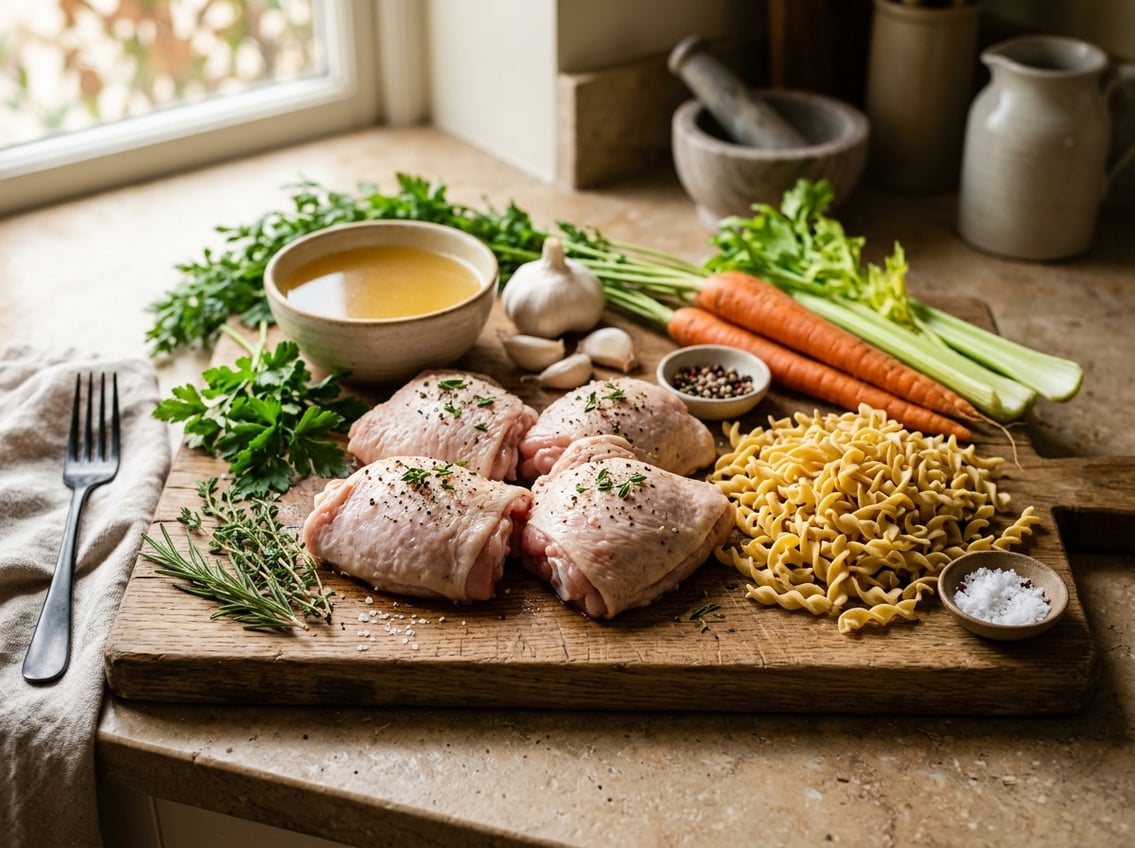
You’ll want tender chicken, a flavorful liquid, and noodles that hold sauce without turning mushy. Pick ingredients that balance richness, texture, and convenience for the style you plan to make.
Egg Noodles Versus Other Pasta
Egg noodles, especially wide egg noodles, provide a silky texture and absorb sauce without falling apart. They cook quickly—usually 6–8 minutes for fresh or 8–10 minutes for dried—so add them near the end of simmering to avoid overcooking.
If you prefer a firmer bite or pantry substitutes, use pappardelle or fresh pasta sheets. Avoid thin pastas like angel hair, which become mushy in broth.
If making soup-style chicken and noodles, drop in short egg noodles or cut wide noodles into strips for even spoonfuls.
Choosing the Right Broth
Chicken broth defines the dish’s backbone, so choose quality liquid. Homemade chicken broth yields the deepest flavor when you simmer bones, carrot, celery, onion, and herbs for 4–6 hours; it also gives you natural gelatin that improves mouthfeel.
If you don’t have time, buy low-sodium chicken broth and season it yourself to control salt. For creamy chicken and noodles, combine broth with a can of cream of chicken soup to add body and a velvety texture.
Use roughly 2 cups broth per 1 cup heavy addition (cream, milk, or cream of chicken) and adjust to taste. Always taste the broth before adding noodles so you can correct seasoning while the liquid reduces.
Best Vegetables and Seasonings
Classic vegetable choices are carrot, celery, and onion. Dice them small for even cooking and a smooth texture in the finished dish.
Add sliced mushrooms for earthiness or peas and parsley near the end for brightness. Sauté aromatics in a little butter or oil first to build flavor.
Seasonings should be simple: kosher salt, freshly ground black pepper, and a bay leaf while simmering. Finish with fresh herbs like chopped parsley or thyme.
If you use cream of chicken soup, reduce added salt and add a splash of acid (lemon juice or vinegar) at the end to lift richness.
Popular Approaches: Soup-Style vs. Hearty Chicken and Noodles
You’ll choose between a clear, broth-forward soup and a thicker, more filling chicken-and-noodles dish. Consider cook time, texture, and how much shredded or boneless chicken you want in each version.
Classic Homemade Chicken Noodle Soup
This version centers on a clear, flavorful broth and tender pieces of chicken. Use bone-in chicken thighs or a mix of thighs and wings to build rich stock.
Simmer 30–45 minutes to extract gelatin and depth. Remove bones, shred the meat, then return it to the broth.
Vegetables stay soft but distinct: carrot rounds, diced celery, and onion sautéed first add aromatic base. Add egg noodles or small pasta near the end so they don’t go mushy.
Season simply with thyme, bay leaf, salt, and pepper. Finish with fresh parsley for brightness.
Old-Fashioned Creamy Chicken and Noodles
This take thickens the cooking liquid into a saucy coating for wide egg noodles. Cook boneless or shredded chicken thighs in the pan, then make a roux (butter and flour) or whisk in a slurry to achieve a creamy texture.
Simmer until the sauce clings to the noodles. Use wide egg noodles and cook them in the sauce for the best integration.
Add diced onion, peas, or carrots for bite. Season with sage or thyme and a splash of cream or milk for silkiness.
Salt carefully—thighs add natural savory fat. This style reheats well but can thicken in storage; thin with stock when reheating.
Hearty Chicken Noodle Soup Variations
This category blurs soup and stew, leaning toward a thicker broth and more substantial chicken. Use bone-in thighs for maximum flavor, then shred the meat and include larger vegetable chunks.
Consider adding potatoes, rotini, or ditalini for extra body. Thicken without cream by reducing the stock, mashing a few cooked vegetables into the broth, or briefly simmering with a breadcrumb or cooked rice addition.
Herbs like oregano and extra bay leaves deepen flavor. Add a splash of white wine for brightness when reduced.
These variations suit cold nights and family dinners where you want a single-pot meal.
Step-by-Step Cooking Methods
You’ll learn practical ways to cook boneless skinless chicken thighs for chicken and noodles so the meat stays tender and the broth remains flavorful. Each method explains timing, liquid, and how to add egg noodles without overcooking them.
Stovetop Techniques
Sear boneless skinless chicken thighs in a large Dutch oven or heavy pot over medium-high heat, 3–4 minutes per side, until golden. Remove thighs, then sauté onions, carrots, and celery in the same pot to build flavor.
Return the thighs, add 6–8 cups of chicken stock, bring to a simmer, and cook covered for 20–25 minutes until thighs reach 165°F. For shredded chicken, cool slightly and shred with two forks; for sliced, remove and slice against the grain.
Add egg noodles in the last 8–10 minutes of simmering. If you prefer a creamier sauce, stir in ½ cup milk or cream after noodles are tender and heat gently.
Slow Cooker Adaptations
Place raw boneless skinless chicken thighs in the slow cooker with chopped carrots, celery, onions, and 4–6 cups of stock. Season well and cook on LOW for 6–7 hours or HIGH for 3–4 hours until thighs are fork-tender.
Remove and shred the chicken, then add noodles and an extra 1–2 cups of hot stock. Cook on HIGH for 20–30 minutes until noodles are al dente.
Alternatively, cook noodles separately and combine just before serving. For a thicker sauce, whisk 2 tablespoons cornstarch with cold water and stir into the crockpot during the last 10 minutes of cooking.
Taste and adjust salt; slow cookers can mellow seasoning.
Pressure Cooker and Instant Pot Options
Use the sauté function to brown boneless skinless chicken thighs 2–3 minutes per side for extra flavor. Add 3–4 cups of stock, vegetables, and seasonings, then lock the lid and cook on HIGH pressure for 8–10 minutes.
Perform a quick release, remove thighs to shred, and switch to sauté to add egg noodles. Simmer uncovered for 4–6 minutes, stirring frequently, until noodles are tender.
If you prefer, cook noodles separately and combine to avoid starch clouding the broth. If sauce needs thickening, mix 1–2 tablespoons cornstarch with cold water and stir in while on sauté until the broth reaches your desired consistency.
Check internal temperature of thighs (165°F) before shredding.
Tips for Achieving the Best Results
Focus on extracting tender, well-seasoned chicken and controlling noodle timing so the broth stays clear and the noodles finish with the desired bite. Use good-quality broth and layer aromatics early and late for depth without muddiness.
How to Shred and Add Chicken
Remove thighs from the pot when they register 165–175°F and rest 5–10 minutes; carryover heat finishes the cooking and makes shredding easier. Use two forks or your hands (wearing heatproof gloves) to pull along the grain into medium-thin shreds.
Discard bones and skin unless you want extra fat. Finely chop skin and return only if you like richer broth.
If you cooked thighs in the broth, skim surface fat before adding shredded meat back in. Add shreds in the last 5–10 minutes of simmering so they warm through without falling apart.
For thicker bites, reserve a few whole pieces and add them right before serving.
Timing and Texture for Noodles
If you use wide egg noodles, note they cook fast and can go from perfect to mushy in 1–2 minutes. Par-cook noodles separately in salted boiling water to 70–80% doneness, drain, and toss with a little oil to prevent clumping.
Finish them in the hot broth for 1–2 minutes just before serving. If you prefer cooking noodles in the soup pot, stir them in only after the broth is gently simmering and maintain low heat.
Test a noodle every 30–60 seconds once near done. For leftover-friendly chicken and noodles, keep noodles separate until reheating to preserve texture.
Enhancing Flavor with Broth and Aromatics
Start with a good base: use homemade chicken broth or a high-quality store-bought one that’s low in sodium. Roast or brown thighs first for better flavor, then deglaze the pan with a splash of broth before building the soup.
Sweat onion, carrot, and celery until soft, then add minced garlic and fresh thyme or bay leaf briefly to avoid bitterness. Simmer gently for at least 20–30 minutes when using bone-in thighs to extract collagen.
Adjust seasoning at the end—salt, pepper, and a squeeze of lemon brighten the soup. For clearer broth, strain before adding noodles and shredded chicken.
Storage, Freezing, and Serving Suggestions
Keep cooked chicken and noodles safe by cooling quickly, using airtight containers, and labeling with dates. Plan portions before freezing and choose sides and garnishes that reheat well with egg noodles and rich chicken thigh broth.
Refrigeration and Make-Ahead Tips
Cool chicken and noodles within two hours of cooking to prevent bacterial growth. Transfer them to shallow airtight containers or resealable bags to speed cooling, and refrigerate at 40°F (4°C) or below.
Store the dish for up to 3–4 days. If you plan to eat within 24–48 hours, keep noodles slightly undercooked when you assemble the dish so they don’t become mushy after reheating.
For make-ahead meals, separate the components. Place shredded or sliced chicken and broth in one container, and egg noodles in another.
This preserves noodle texture and lets you reheat the broth to a simmer before combining. Label containers with the cook date and use within the recommended time.
Freezer-Friendly Instructions
Freeze cooled portions in airtight, freezer-safe containers or heavy-duty freezer bags. Remove as much air as possible and freeze flat for easier stacking.
For best quality, use within 2–3 months, as texture and flavor can decline after that. If freezing assembled chicken noodle soup or casserole, slightly undercook egg noodles first.
You can also freeze chicken and broth together, and store noodles separately. Thaw overnight in the refrigerator, then reheat the broth to a simmer and add noodles last.
To reheat from frozen, simmer gently until fully heated. Avoid microwaving large frozen blocks because they reheat unevenly.
Best Sides and Garnishes
Pair chicken and noodles with simple sides that complement comfort food flavors.
Roasted root vegetables, buttered green beans, or a crisp mixed salad add texture contrast and color.
Serve smaller vegetable portions if the dish is already rich.
Garnish right before serving with chopped parsley, a squeeze of lemon, or a few thyme leaves to brighten the earthy taste of chicken thighs and broth.
Offer grated Parmesan or a drizzle of olive oil for added richness.
For egg noodles, finish the dish with a pat of butter and freshly cracked black pepper.


