
What Should Chicken Thighs Be Cooked At in the Oven: Temperatures and Expert Tips
You want juicy, safe chicken thighs with crisp skin and predictable timing.
Bake boneless thighs at about 425°F for roughly 20–30 minutes. Bake bone-in, skin-on thighs at 400–425°F for about 30–40 minutes, or until the internal temperature reaches 165°F.
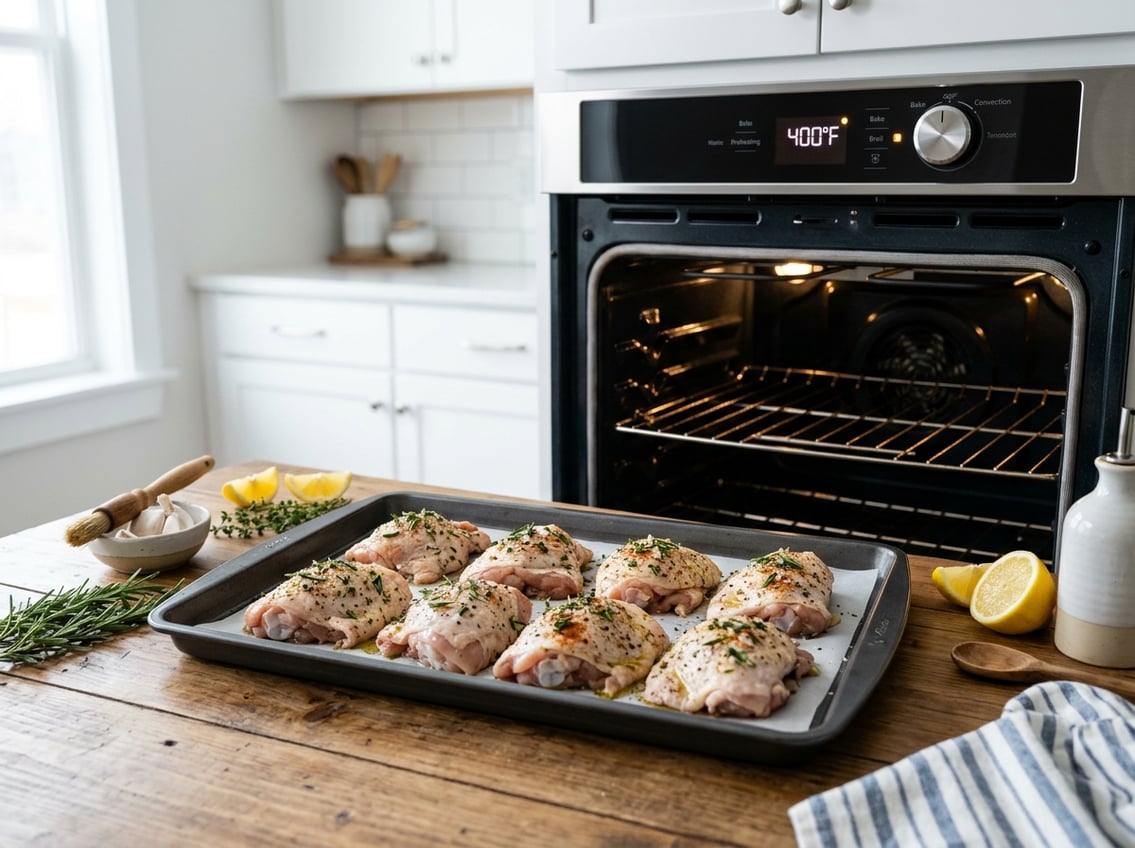
Oven temperature, bone-in versus boneless, and cooking technique all affect time and texture. With the right approach, you get baked chicken thighs that are tender inside and golden outside.
You’ll learn recommended internal temps, how oven settings affect cook time, techniques for crisp skin and moist meat, and a step‑by‑step method for perfect oven baked chicken thighs.
Best Oven Temperatures for Chicken Thighs
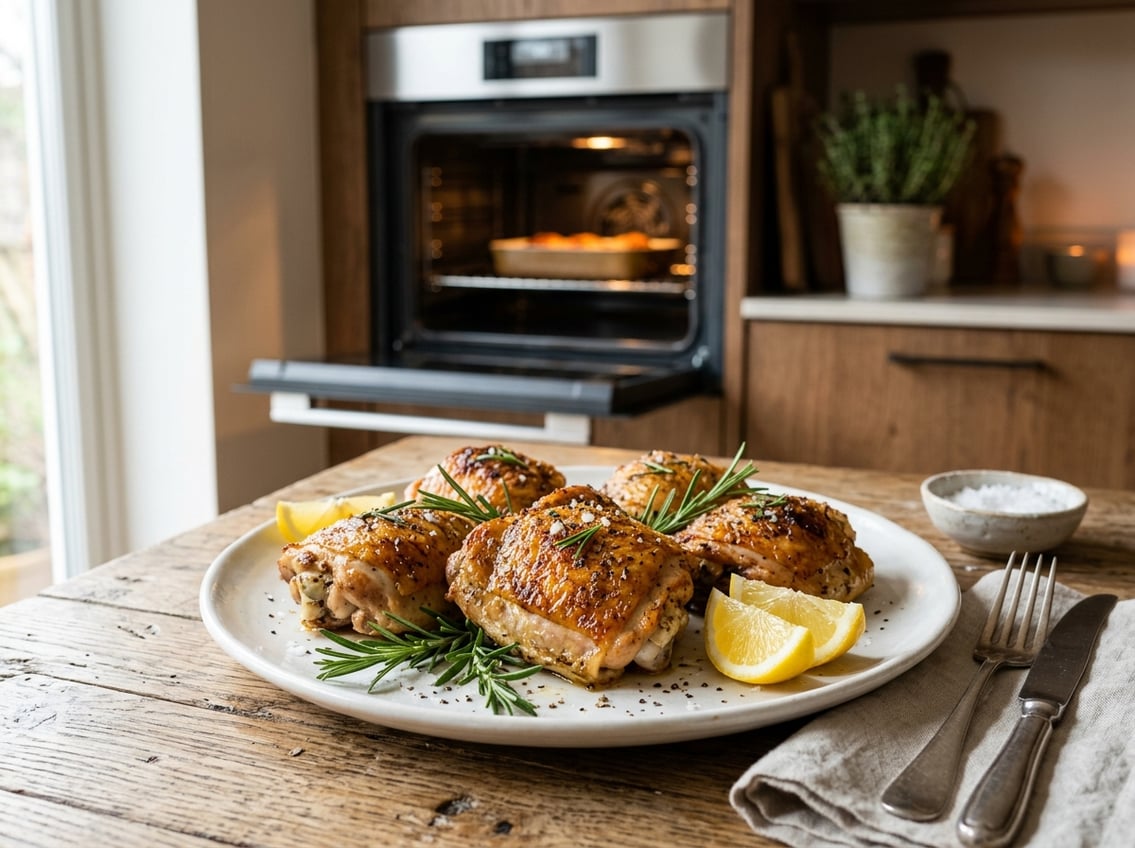
Choose a temperature that balances cooking time, crisping, and internal doneness. Higher heat shortens bake time and crisps skin. Moderate heat gives gentler cooking for bone-in pieces.
Temperature Ranges and Their Effects
Set the oven to 400–450°F (200–230°C) for quick browning and crispy chicken thighs. At these temperatures, fat renders quickly and skin crisps without drying out the meat.
Use 350–375°F (175–190°C) for even cooking of larger bone-in thighs. This range works well for a gentler roast that finishes through without overbrowning.
Try 300–325°F (150–165°C) for slow-roast approaches that break down connective tissue for very tender results. Skin won’t crisp at this range, and cook times stretch to 45–70+ minutes.
Ideal Temps for Bone-In Vs. Boneless Thighs
For boneless, skinless chicken thighs, set the oven to 400–425°F (200–220°C). Bake for about 18–25 minutes until the thickest part reaches 165°F. The short time keeps meat juicy and prevents overcooking.
For bone-in, skin-on thighs, use 375–425°F (190–220°C) depending on size. At 375°F, plan 35–45 minutes; at 425°F, expect 30–40 minutes. Check temperature near the bone to confirm doneness.
If you want crisp skin and tender meat, start at 425°F for 15–20 minutes, then lower to 375°F to finish. This method helps render fat and finish cooking without burning the exterior.
Impact on Texture and Juiciness
Higher temperatures (400–450°F) create crispy chicken thighs quickly by evaporating surface moisture and browning the skin. This delivers crispy chicken thighs with a firm exterior and juicy interior.
Moderate heat (350–375°F) yields more uniform internal texture and reduces the risk of dry patches around thinner areas. Use this for mixed-size trays or bone-in pieces that need longer to reach 165°F.
Low-and-slow roasting softens connective tissue for tender results but sacrifices crispness. To keep skinless chicken thighs juicy, cook at higher heat for shorter times or add a brief broil at the end.
Recommended Internal Temperature and Doneness

Cook chicken thighs to a safe minimum and consider higher target temps for better texture. Use an instant-read meat thermometer and aim for the finish you want: safe and juicy or richly tender.
USDA Guidelines for Safe Consumption
The USDA recommends poultry reach a minimum internal temperature of 165°F (74°C) measured in the thickest part of the thigh. Insert the thermometer probe into the fleshiest spot, avoiding bone contact.
Pull baked chicken thighs from the oven once the probe reads 165°F. Rest the thighs 5–10 minutes after cooking to let juices redistribute.
Why Higher Temperatures Improve Texture
Chicken thighs contain more connective tissue than breasts. Collagen converts to gelatin as internal temperature rises above 170°F–175°F, making the meat more tender.
Target 175°F–195°F (79°C–91°C) for baked chicken thighs if you want a softer, almost fall-off-the-bone texture. Avoid going above 210°F, as the meat can become stringy and lose flavor.
Using a Meat Thermometer Correctly
Use an instant-read meat thermometer for baked chicken thighs. It gives fast, accurate readings and helps avoid overcooking.
Insert the probe into the thickest part of the thigh about ¼ inch from bone. Wait until the reading stabilizes. Clean the probe between uses.
If you use an oven probe, place it in the same spot and monitor temps without opening the oven often.
How Cooking Times Vary by Oven Setting
Different oven temperatures change both cook time and final texture. Higher heat shortens time and crisps skin, while lower heat gives more even cooking but takes longer.
Standard Cooking Times at Different Temperatures
At 350°F (175°C), plan about 40–50 minutes for chicken thighs that weigh 4–8 ounces each. This temperature yields even cooking and works well when roasting with vegetables.
At 375–400°F (190–205°C), expect roughly 35–45 minutes for bone-in thighs and about 25–35 minutes for boneless skinless thighs. You get quicker browning and firmer skin at these temps.
At 425–450°F (220–230°C), boneless thighs typically finish in 20–30 minutes. Bone-in, skin-on thighs finish in about 25–35 minutes.
Always verify doneness with an instant-read thermometer. Target 165°F (74°C) in the thickest part of the meat, avoiding bone contact.
Timing for Bone-In and Skinless Chicken Thighs
Bone-in, skin-on thighs take longer because the bone slows heat transfer and the skin needs time to crisp. At 375°F, plan 35–45 minutes; at 425°F, plan 25–35 minutes. Monitor skin color and internal temp.
Boneless, skinless chicken thighs cook faster and dry out sooner. At 425°F, they often finish in 20–30 minutes; at 350°F, expect 25–40 minutes depending on thickness.
If you want juicy meat, pull boneless thighs as soon as they reach 165°F. For bone-in thighs, check temperature near the thickest meat while avoiding the bone.
Adapting for Convection and Conventional Ovens
Convection ovens circulate hot air, so reduce either temperature by 25°F (about 15°C) or subtract 5–10 minutes from listed times. For example, a convection setting at 400°F often behaves like 425°F in a conventional oven.
Conventional ovens need the full listed times and sometimes higher temp to achieve the same crispness. Use a hot sheet or preheated pan to jump-start browning.
In both oven types, use an instant-read thermometer and check at the lower end of the time range for boneless thighs.
Techniques for Crispy and Juicy Chicken Thighs
Dry the skin thoroughly, season both under and over the skin, and use high, consistent oven heat with airflow. Resting and proper internal temperature checks ensure tender meat and crisp skin.
Preparing Chicken Thighs Before Baking
Pat each thigh completely dry with paper towels. Trim excessive fat but leave the skin intact so rendered fat bastes the meat during baking.
For extra crispness, refrigerate the uncovered, skin-side up for 1–4 hours to air-dry the surface.
If using bone-in, skin-on thighs, let them sit at room temperature for 20–30 minutes before baking. This promotes even cooking and reduces oven time.
Season early: sprinkle kosher salt under the skin and on the surface at least 30 minutes before baking, or salt overnight for deeper flavor.
Tips for Maximizing Crispiness
Preheat the oven to 400–425°F (200–220°C) for chicken that crisps without burning. Use a wire rack set over a rimmed baking sheet so hot air circulates under the thighs.
Place thighs skin-side up and avoid overcrowding. Give each piece space to brown evenly.
Consider a light dusting of baking powder (mixed 1 part baking powder to 3 parts salt) on the skin to speed browning and crisping. Start at the higher end of temperature for 10–15 minutes, then reduce to 400°F for the remainder to render fat without charring.
Finish under the broiler for 1–3 minutes if needed, watching closely to prevent burning.
Seasoning and Flavor Enhancements
Make a simple dry rub of garlic powder, black pepper, paprika, and kosher salt. Rub some seasoning under the skin and the rest over the top.
Add about 1 tablespoon of olive oil per pound to help spices adhere and promote a golden crust.
For added flavor, brush with a garlic-herb butter or a honey-soy glaze in the last 5–10 minutes of cooking. Use fresh thyme or rosemary sparingly.
Always check internal temperature at the thickest part away from bone. Aim for 175°F (80°C) for juicy, pull-apart thighs, then rest 5–10 minutes before serving.
Step-by-Step Guide to Oven Baked Chicken Thighs
Preheat to the correct temperature, position thighs for even browning, and verify doneness with a thermometer. Small choices like rack, pan, and oven temperature affect whether the skin crisps and the meat stays juicy.
Essential Tools and Equipment
Use an instant-read meat thermometer to confirm chicken thighs reach 165°F in the thickest part. Calibrate it by checking ice water (32°F) or boiling water for your altitude.
Use a rimmed baking sheet or roasting pan with a rack for bone-in, skin-on thighs. For boneless thighs, a parchment-lined sheet pan prevents sticking and eases cleanup.
Have tongs, a small brush for oil, and a timer ready.
If you broil to finish skin crispness, use an ovenproof pan. A probe thermometer that stays in the meat while roasting lets you avoid repeated oven checks.
Arranging and Baking Methods
Preheat the oven based on your goal. Use 425°F for faster cooking and good browning for boneless thighs (about 25–30 minutes). Use 400–450°F for bone-in skin-on thighs, often 30–40 minutes depending on size.
For slower, juicier results, 350°F will take longer (40–50 minutes) but reduce risk of burnt edges.
Arrange thighs skin-side up, spaced 1–2 inches apart so hot air circulates and skin crisps. If using a rack, place skin-side up on the rack. For sheet-pan cooking, flip only once if needed.
Check internal temperature at the thickest point without touching bone. Remove when it reads 165°F.
Let the thighs rest 5–10 minutes before serving so juices redistribute.
Quick reference:
-
Boneless: 425°F — 25–30 min
-
Bone-in, skin-on: 400–450°F — 30–40 min
-
Slow roast: 350°F — 40–50 min
Use the thermometer, not time alone, to judge doneness.
Selecting and Storing Chicken Thighs
Pick thighs with the texture and fat level that match your cooking plan. Store them cold or frozen to keep flavor and safety.
Pay attention to bone, skin, and packaging choices. Proper refrigeration and reheating preserve juiciness and prevent foodborne illness.
Choosing Between Bone-In, Boneless, and Skinless
Bone-in thighs deliver more flavor and stay juicier during baking because the bone slows heat transfer. You should expect bone-in, skin-on thighs to need a few extra minutes in a 400–425°F oven compared to boneless pieces.
The skin crisps better when you expose it during baking. Boneless thighs cook faster and make slicing for salads or sandwiches easier.
Choose boneless thighs when you want even cooking on a sheet pan or shorter bake times, usually around 20–30 minutes at 400°F depending on thickness. Skinless thighs reduce surface fat and can dry out if you overcook them.
Monitor internal temperature closely when using skinless chicken thighs. Add a marinade, glaze, or a short high-heat finish to help retain moisture.
Proper Storage and Reheating
Refrigerate raw thighs at 40°F (4°C) or below. Use them within 1–2 days.
Freeze raw thighs at 0°F (-18°C) for longer storage. Keep packages sealed or place them in airtight containers to prevent cross-contamination and freezer burn.
Place cooked baked chicken thighs in shallow airtight containers within two hours of cooking. Use cooked thighs within 3–4 days if refrigerated.
Freeze cooked thighs for up to 2–6 months, depending on packaging quality.
Reheat chicken thighs to an internal temperature of 165°F (74°C) before serving. For best texture, reheat baked chicken thighs in a 325°F oven uncovered for 10–20 minutes to warm through and revive crisp skin.
You can also use a microwave covered for shorter times, but the skin will be softer.


