
What Do Chicken Thighs Need to Temp At: Ultimate Guide for Safe, Juicy Results
You want juicy, safe chicken thighs without guessing, so focus on temperature. Cook chicken thighs to at least 165°F for safety, but for the most tender, juicy results aim for 175–195°F depending on the texture you prefer.
That range lets connective tissue break down and delivers richer flavor without risking undercooking.
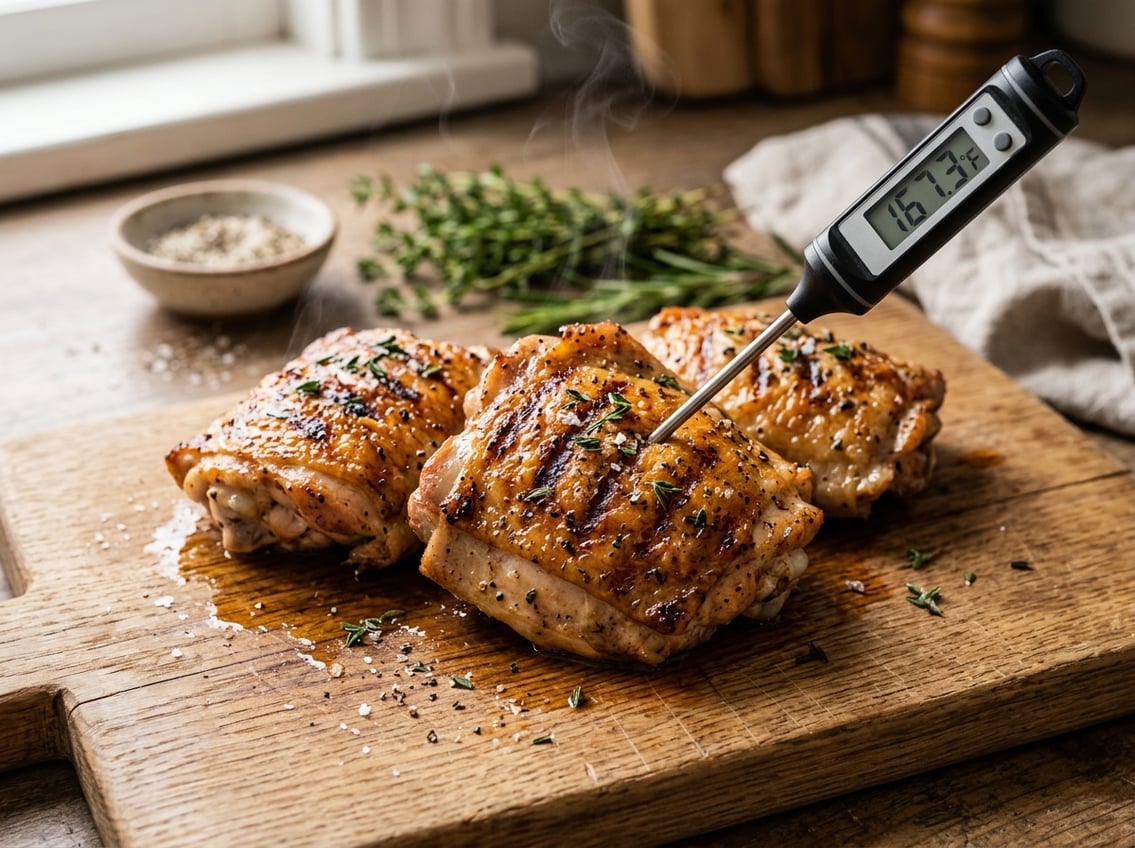
Bone-in and boneless thighs behave differently when cooked. Slow, steady heat helps, and you should check the thickest part with an instant-read thermometer.
Follow these steps and you’ll turn ordinary thighs into reliably delicious meals every time.
Safe Internal Temperature Requirements
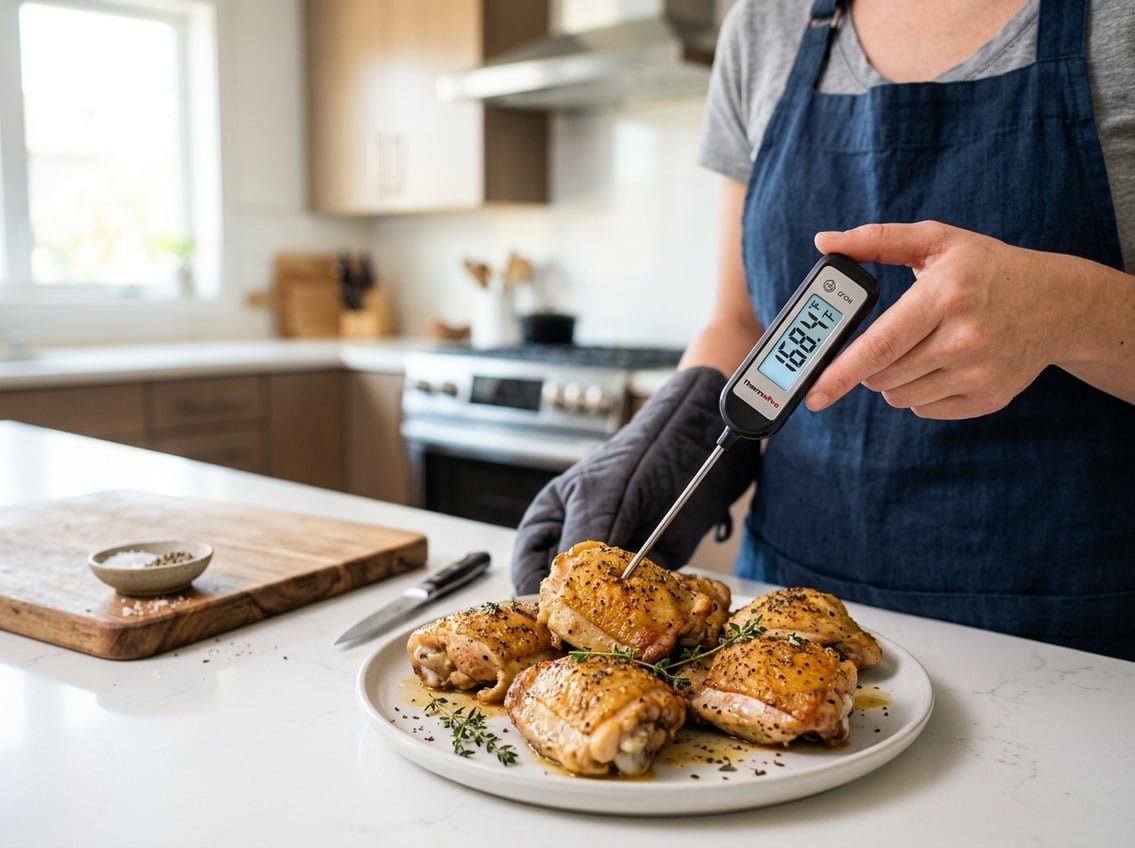
Cooking chicken thighs to the right internal temperature keeps your food safe and gives you the texture you want. Below are exact temperature targets and the bacteria risks tied to undercooking.
Understanding the USDA Guidelines
The USDA sets the minimum safe internal temperature for all poultry at 165°F (74°C) measured at the thickest part of the meat. Insert a calibrated instant-read thermometer into the deepest part of the thigh without touching bone to get an accurate reading.
The guideline is a safety minimum, not a texture prescription. Reaching 165°F ensures rapid inactivation of common pathogens, so you can remove the chicken from heat and rest it briefly before serving.
Some cooks prefer higher finished temperatures for thighs to break down connective tissue and fat. If you aim for 175–195°F, expect more tender, pull-apart meat.
Risks of Undercooked Chicken
Eating chicken that hasn’t reached 165°F increases your risk of foodborne illness, primarily from pathogens like Salmonella and Campylobacter. These bacteria can cause symptoms ranging from gastrointestinal upset to severe dehydration and hospitalization.
Cross-contamination can contaminate utensils, cutting boards, or ready-to-eat foods. Always wash surfaces and hands after handling raw poultry, and never rely on color or juices alone to judge doneness.
Use a thermometer to remove guesswork. If your thigh reads under 165°F, continue cooking and recheck until you meet or exceed the safe minimum.
Why 165°F is the Baseline
The 165°F baseline comes from microbial thermal death time data that shows common poultry pathogens are inactivated at that temperature when reached throughout the tissue. Achieving 165°F ensures a predictable reduction of bacteria regardless of cooking method.
Rest time matters. Carryover heat during a short rest can allow internal temperature to equalize and improve juiciness while maintaining safety.
For thighs specifically, muscle structure and fat content mean many cooks intentionally finish at a higher temp for tenderness. Still, 165°F remains the regulatory minimum for safe consumption.
Foodborne Bacteria Considerations
Salmonella and Campylobacter are the primary concerns with chicken. Proper cooking to 165°F greatly reduces their presence, but prevention also includes proper storage and handling.
Time-temperature relationships matter. Lower temperatures held for a long time can also reduce bacteria, but household practice should follow the USDA single-point 165°F rule for simplicity and reliability.
Always cool leftovers to safe storage temperatures quickly, and reheat to at least 165°F before serving.
Keep your thermometer clean and calibrated. Accurate measurement and safe handling ensure your chicken thighs are both safe and enjoyable.
Optimal Temperature Range for Tender and Juicy Thighs
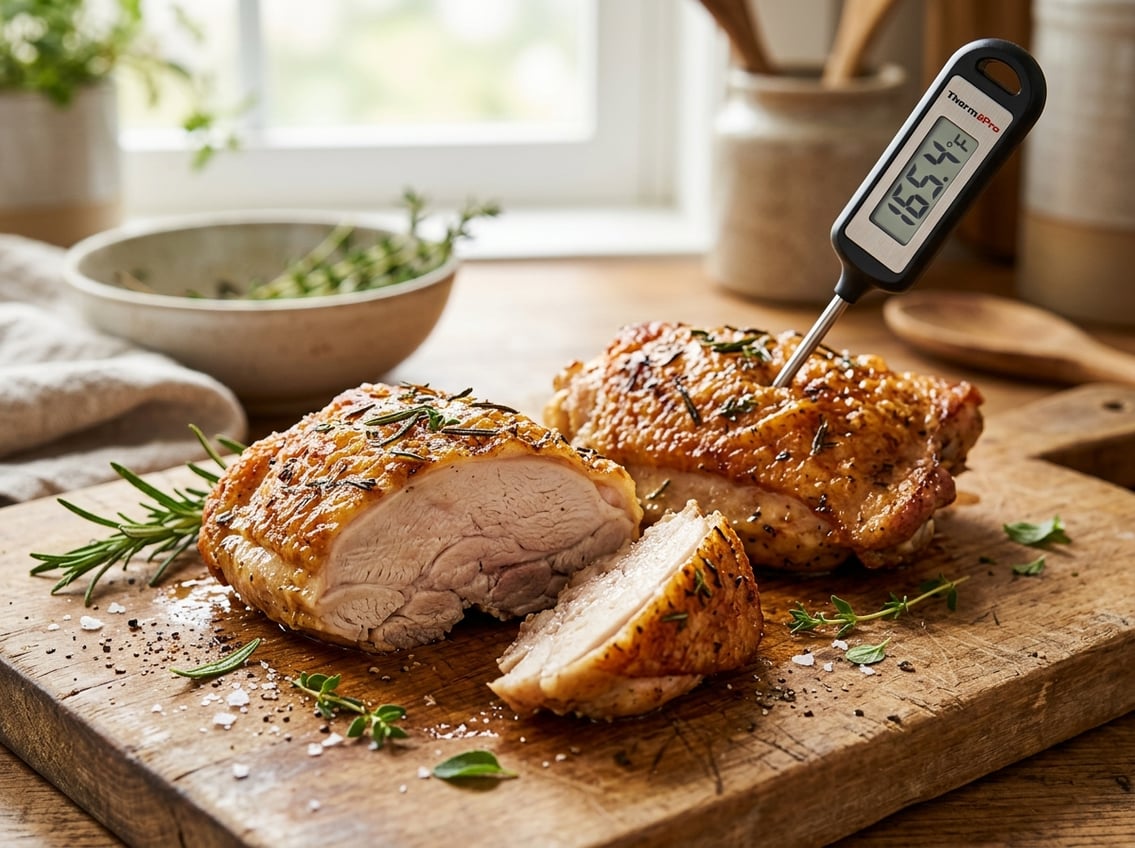
Aim for a temperature range that melts connective tissue without drying muscle fibers. Focus on internal readings between roughly 175°F and 195°F, and use a probe thermometer in the thickest part of the thigh, avoiding bone.
How Higher Temperatures Improve Texture
Chicken thighs contain collagen and intramuscular fat that start converting to gelatin as internal temperature rises. Between about 165°F and 175°F you make the meat safe and slightly more tender.
By 185°F–195°F you actively dissolve collagen, which yields the tender, pull-apart texture many cooks seek.
You need sustained heat rather than a quick spike. Slow roasting, braising, indirect grilling, or sous-vide hold the meat in the collagen-conversion window long enough to render fat and gelatin.
This improves mouthfeel and juiciness without relying on added fats.
Use a reliable thermometer and let thighs rest briefly after cooking. Resting lets juices redistribute and the gelatin set, so the meat feels more tender and moist when you cut or pull it.
Best Internal Temp for Flavor and Moisture
For a balance of flavor and moisture, target 175°F as a practical midpoint. This gives rendered fat and improved tenderness with reasonably quick cook times.
If you want deeper, shreddable results and richer flavor, aim for 185°F–195°F.
Adjust technique to protect moisture. At 175°F you can roast at moderate oven temps (about 375°F) for crisp skin and juicy interior.
For 185°F–195°F, use low-and-slow methods or sous-vide to avoid drying the muscle fibers while extracting flavor from connective tissue.
Always probe the thickest part of the thigh, not touching bone. Record the peak reading and allow 5–10 minutes of rest; the carryover heat and setting gelatin enhance final juiciness and mouthfeel.
Avoiding Dry or Stringy Meat
Stringy or dry texture happens when muscle fibers lose moisture faster than collagen converts. That typically occurs if you push past 200°F or cook too fast at high heat.
Control both temperature and time to avoid this. If you roast hot to crisp skin, finish with a quick high-heat blast and remove when the internal probe reaches your target.
For very tender, shreddable thighs, keep the internal temp in the 185°F–195°F window but cook slowly so the meat spends enough time under 190°F for collagen breakdown.
Use moisture-preserving techniques: braising liquid, a covered roast, or vacuum-sealed sous-vide. These methods keep the environment humid and prevent the muscle fibers from tightening and drying out.
Bone-In vs. Boneless Chicken Thighs
Bone-in thighs hold more flavor and take longer to heat through. Boneless thighs cook faster and are easier to slice and serve.
Both hit the same safe internal temperatures, but timing and techniques differ.
Differences in Cooking Time
Bone-in chicken thighs require more time because the bone absorbs and redistributes heat. Expect 10–20 minutes longer in most ovens and grills compared with boneless pieces of similar thickness.
If you sear then roast, start bone-in thighs in the pan and finish in the oven. That sequence gives you a crisp exterior without overcooking the interior.
Boneless chicken thighs cook quickly and more evenly. They often finish in 12–20 minutes at 400°F (204°C) depending on thickness.
For stir-fries or pan-sautéed dishes, trim to uniform thickness so all pieces reach the target internal temperature at the same time.
Temperature Considerations for Each Type
Target the same internal temperatures regardless of bone presence. Use an instant-read thermometer in the thickest flesh, not touching bone.
For safe minimum doneness, USDA recommends 165°F (74°C). For more tender dark meat, many cooks aim for 175°F–195°F (79°C–90°C) depending on texture preference.
With boneless thighs you’ll often stop around 170–175°F to keep them juicy and slightly pullable. With bone-in thighs you can safely go higher—175–190°F—if you want meat that breaks down more and yields a melt-in-the-mouth texture from collagen conversion.
How the Presence of Bone Affects Doneness
The bone slows how fast the center reaches the target temp. That creates a temperature gradient where meat near the bone is cooler longer.
Insert the thermometer 1/4″ away from the bone into the thickest part to read true doneness.
Bones also add flavor and help retain moisture during long cooks like braising or roasting. If you substitute boneless for a bone-in recipe, reduce cooking time and monitor the chicken thigh internal temperature more frequently to avoid overshooting your preferred doneness.
Baking Chicken Thighs for Best Results
Get the internal temperature right, choose an oven temperature that matches bone-in or boneless thighs, and use simple steps to crisp the skin without drying the meat.
Oven Temperature and Baking Times
Set your oven based on the cut and desired finish. Bake boneless, skinless thighs at 400–425°F (204–218°C) for about 20–30 minutes; this range promotes quick cooking and a moist interior.
For bone-in, skin-on thighs, use 425–450°F (218–232°C) and plan 30–40 minutes to allow heat to penetrate around the bone and render fat.
Use a rimmed baking sheet or shallow roasting pan. Arrange thighs skin-side up with space between pieces for even air circulation.
If you prefer lower, slower cooking (more tender connective tissue), 350°F (177°C) for 40–50 minutes works for bone-in thighs. Monitor temperature closely to avoid overcooking.
Use the oven’s upper third when you want extra browning on skin. Place a preheated baking sheet under the thighs for faster crisping.
Always factor in thigh size. Larger pieces need a few extra minutes.
Rest cooked thighs 5–10 minutes before slicing to let juices redistribute.
Achieving Crispy Skin
Start with dry skin. Pat thighs thoroughly with paper towels to remove surface moisture. Moisture prevents browning and causes steaming.
Lightly coat skin with oil (olive or neutral oil) and season with salt. Salt draws moisture from the skin during initial heating, improving crispness.
Use high, direct heat for the final stage. Roast at 425–450°F or switch the oven to broil for 1–3 minutes at the end, watching constantly to prevent burning.
Elevate thighs on a wire rack over a baking sheet to keep rendered fat away from the skin. This exposes all surfaces to hot air for even crisping.
Avoid overcrowding the pan. If skin sits in pooled fat, it softens instead of crisping.
For extra texture, pat dry again after resting briefly and finish under the broiler for a very short time.
Checking Doneness with a Thermometer
An instant-read thermometer gives the most reliable result. Insert the probe into the thickest part of the thigh without touching bone; target 165°F (74°C) for safe, fully cooked chicken.
For bone-in thighs, remove from oven at 165°F then rest. Carryover heat often raises the internal temp by a few degrees during the 5–10 minute rest.
If you lack a thermometer, check that juices run clear and the meat near the bone is opaque, but this is less precise.
Avoid piercing repeatedly, which lets juices escape and dries the meat. Calibrate or verify your thermometer periodically to ensure accuracy.
Enhancing Flavor and Texture with Marinating
Marinating adds targeted acids, oils, salts, and aromatics to your chicken thighs to both flavor and tenderize the meat. Proper ingredient choices and timing determine whether you get juicy, well-seasoned thighs or a mushy, overpowered result.
Why Marinate Chicken Thighs
Marinating helps break down muscle proteins and infuse fat-rich thighs with flavor. Use an acid (lemon juice, vinegar, or yogurt) to gently loosen fibers.
Combine with oil to carry fat-soluble flavors and keep the surface moist during cooking. Salt or a salty element (soy sauce, Worcestershire) seasons deeply and draws brine into the meat for better bite and juiciness.
Add aromatics—garlic, ginger, fresh herbs, or ground spices—for layers of taste. For skin-on thighs, the marinade primarily flavors the meat under the skin; consider lifting the skin to get more direct contact.
Always marinate in a nonreactive container or resealable bag and refrigerate while soaking.
Best Ingredients for Marinating
Balance is key: acid + oil + salt + aromatics + optional sweetener. Typical ratios to start with: 1 part acid to 2–3 parts oil, and 1–2 teaspoons salt per pound of meat (or 2 tablespoons soy sauce).
Choose acids that suit the cuisine—lime or orange for Mexican/Caribbean, vinegar or yogurt for Mediterranean/Indian, and soy-based blends for Asian profiles.
Aromatics to mix in: minced garlic or shallot, chopped fresh herbs (rosemary, cilantro), ground spices (paprika, cumin), and a sweetener (honey, brown sugar) to help with browning.
Liquid umami (soy sauce, fish sauce) replaces some salt while adding depth. If you plan to grill, add a small amount of oil with a higher smoke point, like canola or avocado.
Timing for Maximum Tenderness
Marinate boneless thighs for 30 minutes to add surface flavor. Extend the time to 2–4 hours for thorough seasoning and tenderizing.
For bone-in or thick thighs, marinate for 4–8 hours to allow deeper penetration. Avoid marinating more than 18–24 hours with strong acids like citrus or vinegar to prevent a mealy or mushy texture.
Use shorter times with yogurt- or enzyme-based marinades such as papaya or pineapple. Their proteases act quickly, so 30–90 minutes is usually enough.
Always refrigerate meat during marination. Discard used marinade or boil it before using as a sauce to eliminate raw poultry bacteria.
How to Measure Internal Temperature Accurately
Use a reliable thermometer, place the probe correctly, and observe visual or textural cues to judge doneness. Measure in the thickest part of the meat away from the bone, and let the probe reading stabilize.
Using a Meat Thermometer
Choose an instant-read digital thermometer for quick and accurate results. Calibrate or check it against ice water (32°F / 0°C) occasionally to ensure accuracy within ±1–2°F.
Insert the probe straight into the thickest part of the thigh. Avoid touching bone or large pockets of fat because they can give higher readings than the meat.
Hold the probe steady until the display stops changing, which usually takes 2–5 seconds. If you use a leave-in probe while roasting, place the tip in the thickest area and monitor the temperature during cooking.
The USDA recommends a safe temperature of 165°F (74°C) for chicken. Many cooks prefer dark meat thighs at 175–195°F for texture, but always confirm safety with the thermometer.
Proper Probe Placement
Aim for the center of the thickest cross-section of the thigh. Slide the probe from the side so the tip reaches the innermost muscle, staying at least 1/4 inch (6 mm) from bone.
For bone-in thighs, angle the probe parallel to the bone to avoid touching it. For small or irregular pieces, take two readings from different spots and use the higher reading to determine doneness.
When checking multiple pieces, test those farthest from heat and with the thickest mass. Clean the probe with hot, soapy water between uses to prevent cross-contamination.
Visual and Textural Cues
Visual cues supplement temperature checks. Properly cooked thighs show juices that run clear and meat that pulls away from the bone slightly for bone-in pieces.
Press the meat gently with tongs. Cooked dark meat feels springy and yields easily.
Do not rely on color alone. Chicken can remain slightly pink yet be safe if it has reached the required internal temperature.
After you pull thighs from heat, let them rest 5–10 minutes so carryover cooking raises the internal temperature a few degrees. Check temperature after resting if you need a final confirmation of the chicken thigh internal temperature.


