
What Happens If You Cook Frozen Chicken Thighs: Safety, Texture, and Best Methods
Cooking frozen chicken thighs is safe when you follow the right steps. Expect longer cooking times and some changes in texture.
If you cook them straight from the freezer and bring the thickest part to an internal temperature of 165°F (74°C), you can eat them safely. They may cook less evenly and be slightly drier than thawed thighs.
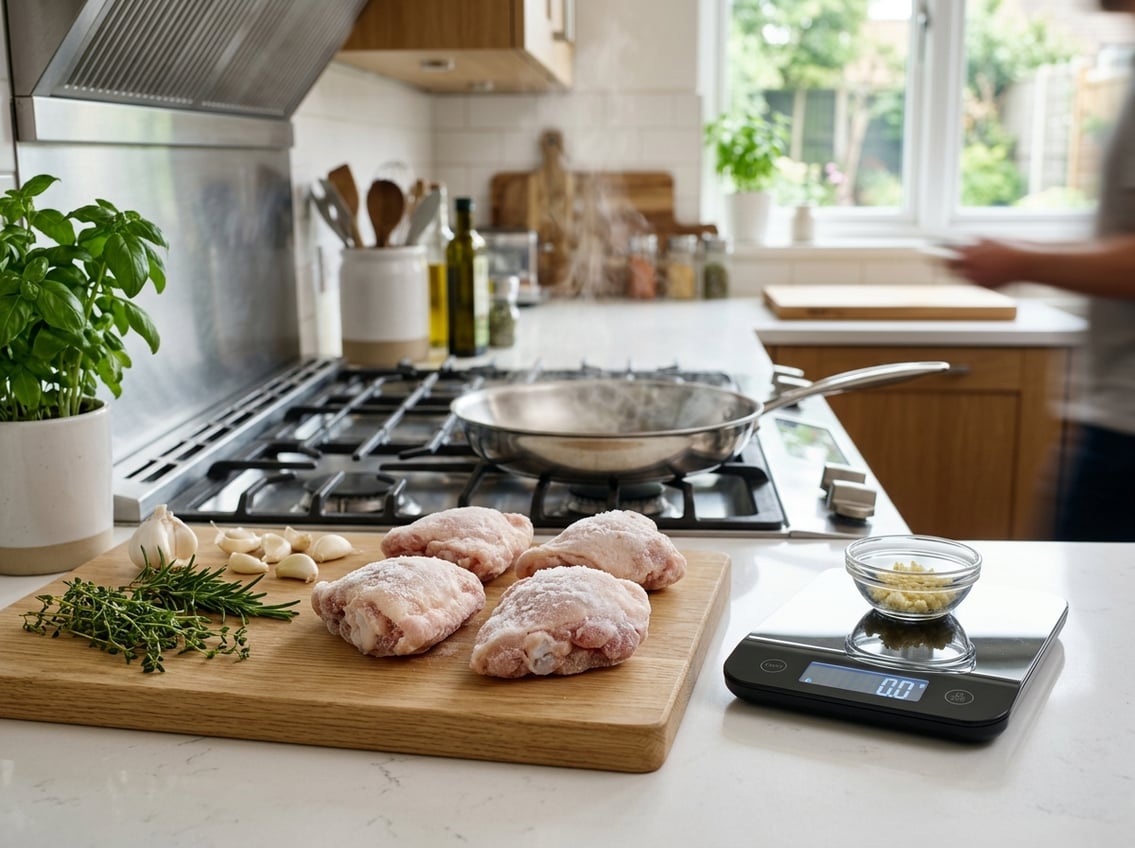
You’ll learn what safety checks to use and how texture and flavor can change. You’ll also see which methods—oven, Instant Pot, air fryer, or stovetop—give the best results when starting from frozen.
This guide also covers quick thawing options, ways to season or marinate for better flavor, and how to store or refreeze leftovers.
Food Safety Considerations
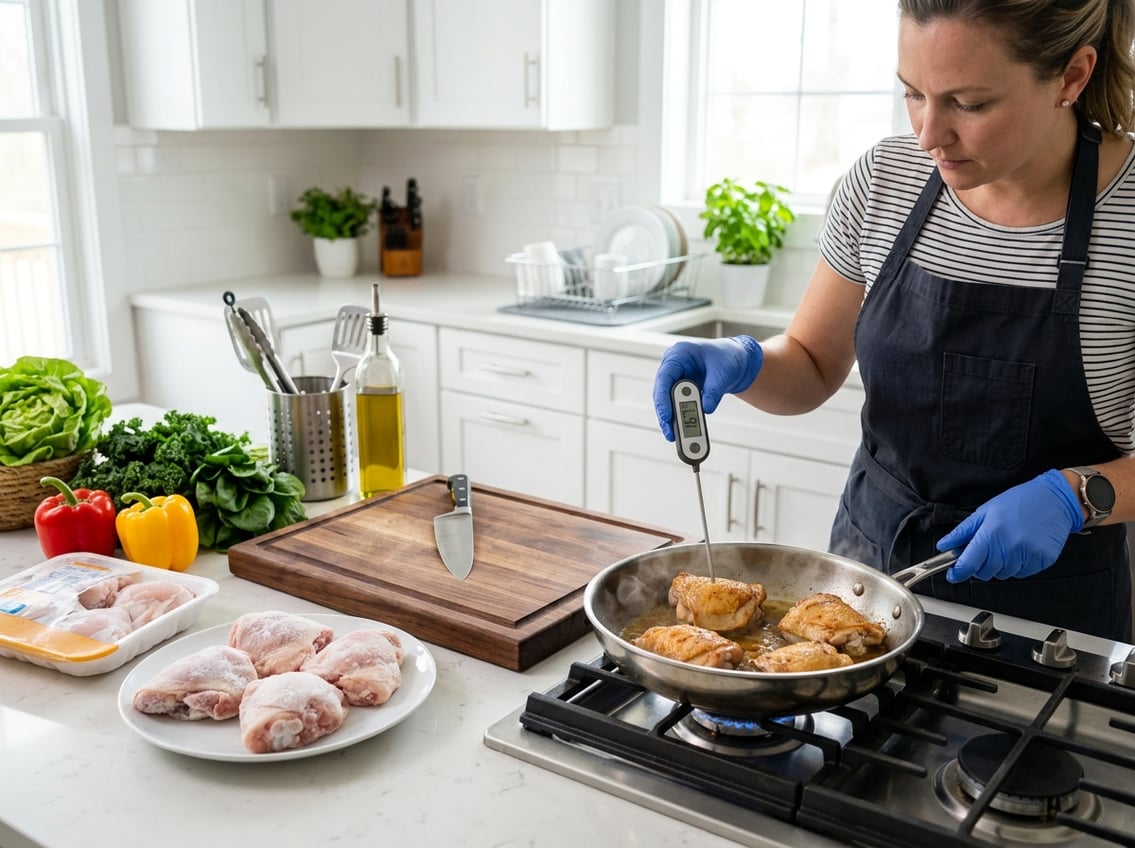
To cook frozen chicken thighs safely, reach the right internal temperature, avoid slow and uneven heating, and control cross-contamination. Use a calibrated meat thermometer, keep raw chicken separated, and plan for about 50% longer cook time than for thawed thighs.
Safe Internal Temperatures
Bring the thickest part of each thigh to a minimum internal temperature of 165°F (74°C) to kill Salmonella and other pathogens. Insert a calibrated digital meat thermometer into the bone-free center and check multiple pieces if sizes vary.
Hold that temperature for an instant. The USDA standard is 165°F as the endpoint.
Do not rely on color or juices alone. Pink meat can be safe if the temperature is correct.
If a thigh hasn’t reached 165°F, keep cooking and check every few minutes.
Rest larger thighs for 3–5 minutes after cooking. Carryover heat helps finish the interior safely.
Bacteria Risks and Prevention
Freezing chicken slows bacterial growth but does not sterilize the meat. Bacteria like Salmonella and Campylobacter can survive freezing and become active again as the meat warms.
Any thawing or partial thawing phase becomes a risk window for growth if temperatures sit between 40°F and 140°F (4°C–60°C).
Prevent cross-contamination by handling frozen pieces with clean hands or utensils. Sanitize surfaces and cutting boards after contact.
If you need to portion frozen thighs, do it over a tray to catch drips and immediately wash tools. Use separate containers for raw and cooked food when storing.
Cook fully frozen thighs straight through or fully thaw first. Avoid cooking partially thawed pieces that heat unevenly.
Why Slow Cooking Is Not Recommended
Slow cookers and low oven temperatures can keep the meat in the bacterial danger zone too long. If frozen thighs spend extended time below 140°F (60°C), surface bacteria can multiply while the center remains undercooked.
This creates a higher foodborne illness risk even if you later raise the temperature.
For tender results, sear or oven-roast at a moderate-to-high temperature, then finish at a lower heat while monitoring with a thermometer. Alternatively, thaw safely in the refrigerator before using a slow cooker.
Never place frozen chicken directly into hot oil for frying. This causes uneven cooking and oil splatter hazards.
Changes in Texture and Flavor
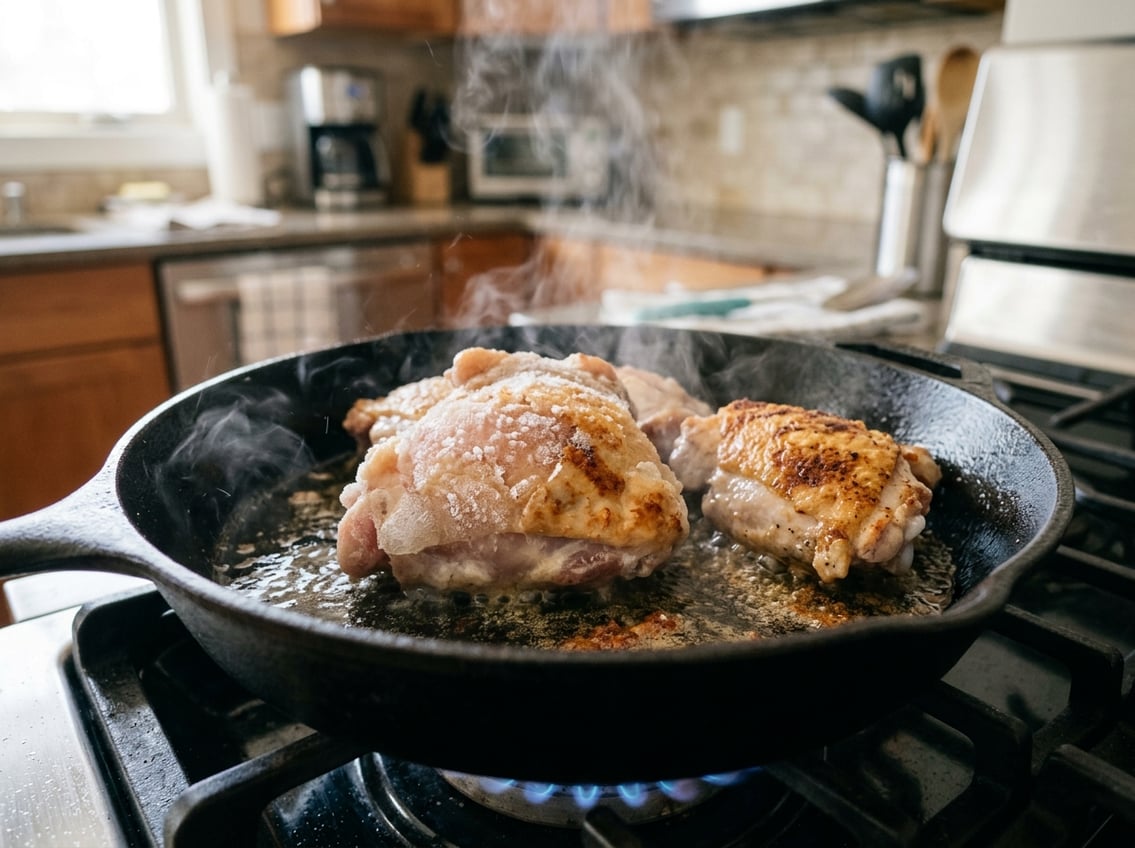
Cooking frozen chicken thighs changes how the meat holds moisture and how the fibers break down during cooking. Expect differences in surface browning, internal juiciness, and the uniformity of texture compared with thawed thighs.
Moisture Retention and Juiciness
When you cook chicken thighs from frozen, the outer layers thaw and heat before the center reaches 165°F (74°C).
Extra moisture from ice crystals and muscle cells increases pan or oven liquid, which can keep dark meat relatively juicy if you use even, moderate heat.
Longer cook times raise the risk of moisture migrating away from the center.
For bone-in or larger thighs, the center may lag and require extra time, so the exterior can dry while the interior finishes.
Using methods that trap moisture—covering the pan, adding a splash of stock, or pressure cooking—helps preserve juiciness.
Air frying or high-heat roasting crisps skin but needs careful timing. Spray lightly with oil and monitor temperature to avoid drying the meat while achieving a brown exterior.
Impact on Tenderness and Mouthfeel
Frozen-to-cooked thighs often feel less uniformly tender than thawed ones.
Rapid temperature gradients stress muscle fibers and can leave some sections firmer, especially near the bone.
Slow, moist heat allows collagen to convert to gelatin, improving tenderness in thighs.
If you braise, simmer, or use an Instant Pot, the extra cooking time from frozen gives collagen time to break down and produce a soft, shreddable texture.
High dry heat without enough internal cooking time can make meat stringy or chewy.
Rest thighs 3–5 minutes after cooking and cut across the grain to even texture and yield a more pleasant bite.
Recommended Cooking Methods
You can cook frozen chicken thighs safely several ways. Each method requires longer cooking time and checking internal temperature.
Use a meat thermometer to confirm the thickest part reaches 165°F (74°C). Adjust cooking time based on bone-in vs. boneless and thigh size.
Baking Directly from Frozen
Preheat the oven to 350–375°F (175–190°C). Arrange frozen thighs in a single layer on a rimmed baking sheet or in a roasting pan; do not stack them.
Brush with oil and sprinkle salt, pepper, and any dry seasonings.
Bake times vary. Plan about 60–75 minutes for bone-in thighs and 45–60 minutes for boneless, depending on size.
Start checking temperature at the lower end of the range. Insert a meat thermometer into the thickest part without touching bone.
If you want crisper skin, broil for 2–4 minutes at the end once the internal temperature is reached.
Rest the thighs 5–10 minutes before serving to let juices redistribute.
Grilling Techniques
Preheat the grill to medium (about 350–400°F) and create two heat zones: direct high heat for searing and indirect medium heat for finishing.
Place frozen thighs over indirect heat first to allow them to cook through without burning the exterior.
Sear over direct heat for 2–3 minutes per side toward the end to develop color and char.
Expect total cooking time of 50–75 minutes for bone-in, shorter for boneless. Always rely on a meat thermometer.
Keep the lid closed as much as possible to maintain even temperature. If flare-ups occur, move pieces to indirect heat until the internal temperature reaches 165°F.
Sautéing on the Stovetop
Sautéing frozen chicken thighs works best with a moist cooking method to avoid burned exterior and undercooked center.
Add 1–2 tablespoons oil to a skillet over medium-high heat. Sear the frozen thighs 3–4 minutes per side until browned.
Lower the heat, add 1/2–1 cup of broth, sauce, or canned tomatoes, then cover and simmer.
Cook 30–45 minutes for boneless and longer for bone-in, checking with a meat thermometer.
Uncover near the end to reduce sauce and crisp the surface if desired. Use a tight-fitting lid to trap steam and ensure the interior reaches 165°F before serving.
Using a Pressure Cooker
Set the electric pressure cooker (Instant Pot) to high pressure and add at least 1 cup of liquid (broth or water). Place frozen thighs in a single layer on the trivet or directly in the liquid.
Season lightly; you can add sauces after cooking.
Cook boneless thighs for about 10–15 minutes and bone-in for 12–18 minutes. Allow natural pressure release for 5–10 minutes before quick-releasing the rest.
Check with a meat thermometer. After pressure cooking, if you want browned skin, transfer thighs to a hot skillet or under a broiler for 2–4 minutes to finish.
Thawing Options and When to Use Them
Plan based on time and food safety. Choose slow refrigerator thawing for predictability, use the cold water method when you need faster but controlled thawing, and avoid microwave thawing unless you will cook immediately.
Refrigerator Thawing
Refrigerator thawing keeps chicken thighs below 40°F, which prevents bacterial growth while the meat softens.
Place sealed packages on a tray to catch juices. Thaw 24 hours for every 1–2 pounds; individual thighs usually need 12–24 hours.
Thawed thighs stored in the fridge remain safe 1–2 days before cooking.
You can safely refreeze chicken thawed in the refrigerator without cooking, though texture may decline slightly.
Choose this method when you can plan ahead and want even thawing. It’s the best choice if you need flexibility in cooking timing or intend to brine or marinate after thawing.
Cold Water Method
The cold water method thaws chicken thighs faster while keeping temperatures safer than room air.
Keep thighs in a leak-proof plastic bag and submerge in cold tap water, changing the water every 30 minutes.
Expect individual thighs to thaw in about 1–2 hours depending on package thickness.
Once fully thawed, cook the chicken immediately. Do not refreeze unless you cook it first.
Choose this method when you forgot to plan ahead but still want controlled thawing.
It requires attention (water changes) and works best for small batches or individual portions.
Risks of Microwave Thawing
Microwave thawing can produce uneven temperatures. Edges may begin to cook while centers remain frozen.
Partly cooked areas can enter the 40–140°F “Danger Zone,” increasing pathogen growth if not cooked immediately.
If you use the microwave, set the defrost function and rotate or flip thighs frequently to promote even thawing.
Cook the chicken right away after microwaving. Do not store or refreeze it in its partially cooked state.
Reserve microwave thawing for times when immediate cooking follows and when you can monitor the process closely.
Avoid using microwave thawing for large packages or when you need consistent texture for recipes.
Seasoning and Marinating Approaches
You can apply dry seasonings to frozen thighs before cooking, but marinades and wet sauces work best once the meat thaws or during cooking. Focus on patting surfaces dry, using oil to help adhesion, and timing acidic ingredients to avoid texture changes.
How to Season Frozen Chicken
Pat the surface with paper towels to remove ice glaze so salt and spices actually contact the skin or meat.
Use a thin layer of oil (1 tsp per thigh) to help dry rubs adhere. Sprinkle salt, pepper, paprika, garlic powder, and dried herbs evenly.
If you plan to cook straight from frozen, concentrate seasoning on the outer surface only. Flavors won’t penetrate deeply until the meat thaws during cooking.
For best results with skin-on thighs, season under the skin where possible once partially thawed to flavor the flesh, not just the surface.
Checklist:
- Pat dry to remove ice.
- Light oil coat for adhesion.
- Season heavily on the exterior if cooking frozen.
- Reserve fine finishing salt or fresh herbs for after cooking.
When to Add Marinades or Sauces
Avoid putting frozen thighs into a marinade expecting deep penetration. The cold and ice block diffusion.
If you want true marination, thaw in the refrigerator first, then marinate 30 minutes to 6 hours depending on acidity and cut.
If you must use a sauce while cooking from frozen, apply it after internal temperature reaches about 140°F (60°C) so it won’t wash off and acids won’t toughen the exterior.
Use basting or brush-on sauces in the last 10–20 minutes of roasting or grilling to build flavor and avoid burning sugar-heavy sauces early.
Quick rules:
- Thaw then marinate for true flavor infusion.
- Add oil-based or spice-heavy rubs to frozen surfaces.
- Apply sweet or acidic sauces late in the cook to preserve texture and adhesion.
Storage, Leftovers, and Refreezing
Keep cooked chicken thighs cold within two hours of cooking. Label any frozen portions with a date so you can use them while quality remains best.
How to Store Frozen and Cooked Chicken Thighs
Store raw frozen chicken thighs at 0°F (-18°C) or colder. Keep them in their original packaging or an airtight, freezer-safe bag to prevent freezer burn.
When you cook thighs from frozen, cool them quickly by cutting large pieces into smaller portions or spreading pieces on a shallow tray before refrigerating.
Refrigerate cooked chicken thighs at 40°F (4°C) or below and use within 3–4 days.
For longer storage, freeze cooked thighs in airtight containers or vacuum-seal bags. Remove as much air as possible and label with the date.
Frozen cooked thighs retain best quality for 3–4 months. They remain safe beyond that time.
When reheating, bring internal temperature to 165°F (74°C). Reheat only the portion you plan to eat to avoid repeated temperature cycling.
Is It Safe to Refreeze Cooked Chicken?
You can refreeze cooked chicken thighs, but follow rules to keep them safe and preserve quality.
If you thawed raw or cooked thighs in the refrigerator and kept them at 40°F (4°C) or below, you can refreeze them without cooking.
Quality declines with each freeze-thaw cycle.
If you thawed chicken using cold water or a microwave, cook it before refreezing.
After cooking, cool quickly and freeze within four days of the initial refrigerator thawing.
Label containers clearly, for example: “Cooked thighs — refrozen 2026-04-26.” This helps you track how long they’ve been stored.


