
What’s the Best Way to Reheat Chicken Thighs: Methods and Tips
If you want juicy, safe leftovers, use the oven or an air fryer for the best texture. Use a skillet or microwave only when speed matters.
Oven reheating at moderate heat with a splash of broth and covered will warm thighs evenly and help retain moisture. An air fryer restores crisp skin quickly.
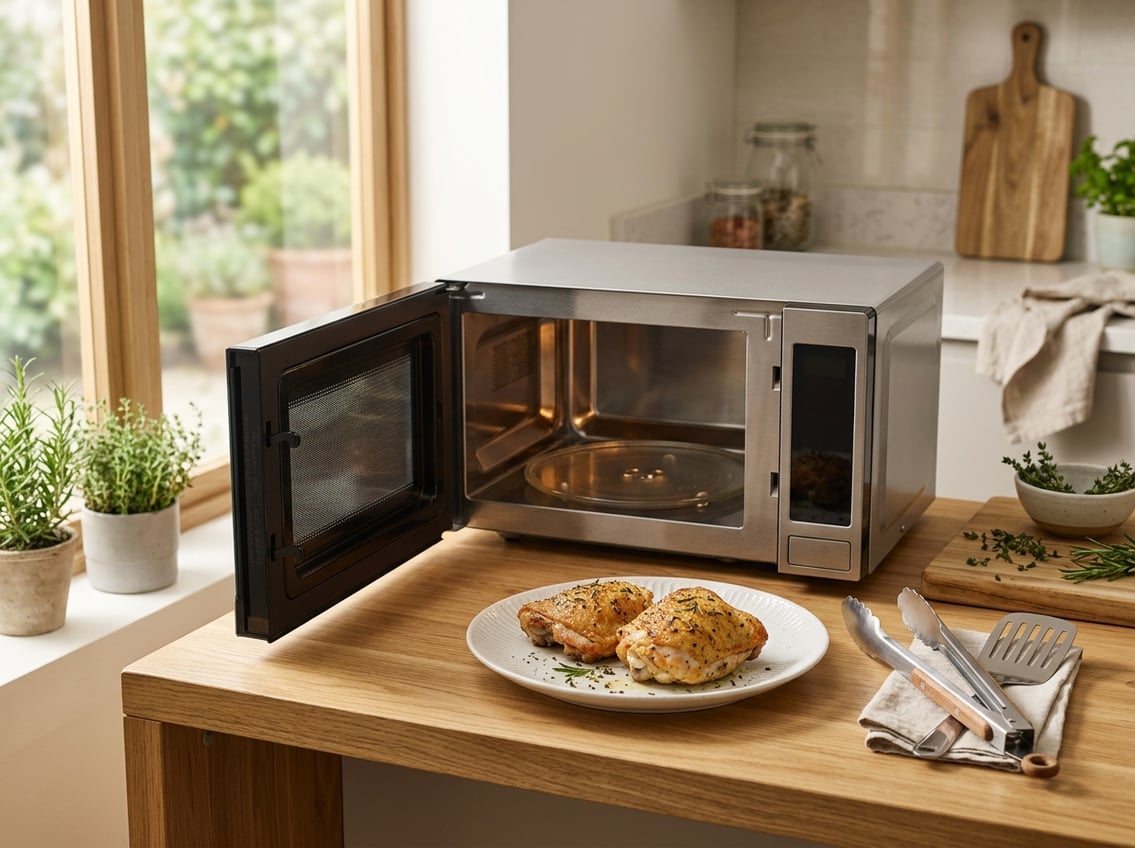
This post explains step-by-step oven, air fryer, skillet, and microwave techniques. You’ll also find tips for reheating from frozen, storing cooked chicken, and ensuring your reheated chicken reaches 165°F (75°C) every time.
Best Methods for Reheating Chicken Thighs
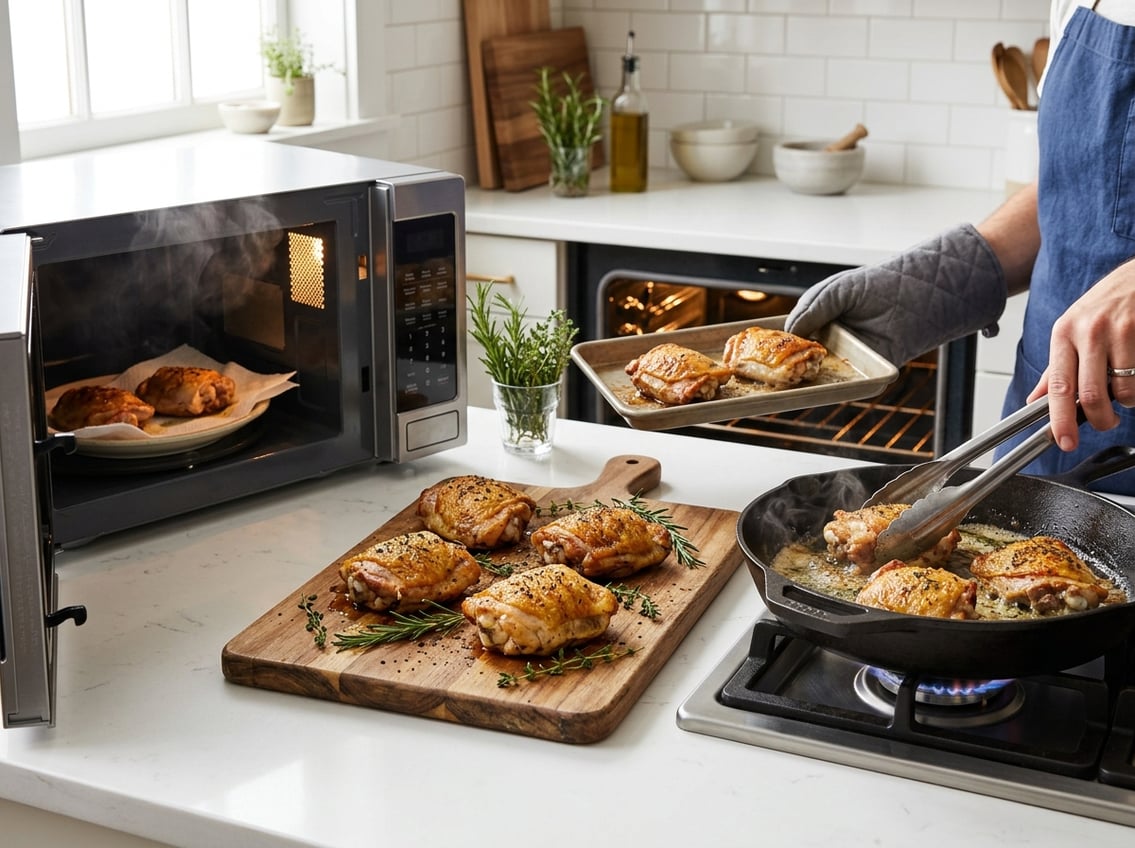
Choose a method that matches your thigh type and texture goal. Use the oven or air fryer to preserve skin crispness, the stovetop for saucy or shredded thighs, and the microwave for fast, covered reheating with added moisture.
Oven Techniques
Preheat the oven to 325–350°F (160–175°C). Place thighs in a single layer in a baking dish, add 2–4 tablespoons of chicken broth or pan juices per pound, and cover tightly with foil.
This low, even heat brings the internal temperature to 165°F without drying the meat. For crispy skin, remove the foil for the last 5–10 minutes and raise the temperature to 400°F briefly.
Insert a meat thermometer into the thickest part, avoiding bone, to confirm 165°F. Small boneless thighs need 10–15 minutes; bone-in thighs require 20–25 minutes.
Using an Air Fryer
Preheat the air fryer to 350–375°F. Arrange thighs with space between pieces and avoid overcrowding.
Lightly spray or brush skin with oil to revive texture. Reheat for 6–10 minutes, flipping halfway, until the internal temperature reaches 165°F.
For breaded or fried thighs, set the air fryer to 375°F for 4–6 minutes to restore crunch. Check doneness with a thermometer and let the thighs rest 3–5 minutes before serving.
Stovetop Reheating
Use the stovetop for sauced, shredded, or boneless thighs. Heat a skillet over medium-low, add 1–2 tablespoons of oil or ¼ cup of broth per two thighs, and add the chicken in a single layer.
Cover the pan to trap steam and heat gently. Stir or flip every 2–3 minutes to promote even warming and prevent sticking.
Remove the lid in the final minute to reduce excess moisture if you want some crust. Aim for 165°F internal temperature and let the chicken rest briefly before serving.
Microwave Approaches
Microwaving works for quick reheats or small portions but can cause uneven heating and rubbery texture. Place thighs on a microwave-safe plate, add a tablespoon or two of broth per piece, and cover with a vented microwave lid or damp paper towel.
Heat at medium power in 30–45 second intervals, turning thighs between intervals. Check the internal temperature with a thermometer.
Let the thighs sit covered for 1–2 minutes to allow residual heat to finish warming and redistribute juices before serving.
Step-by-Step Instructions for Juicy Results
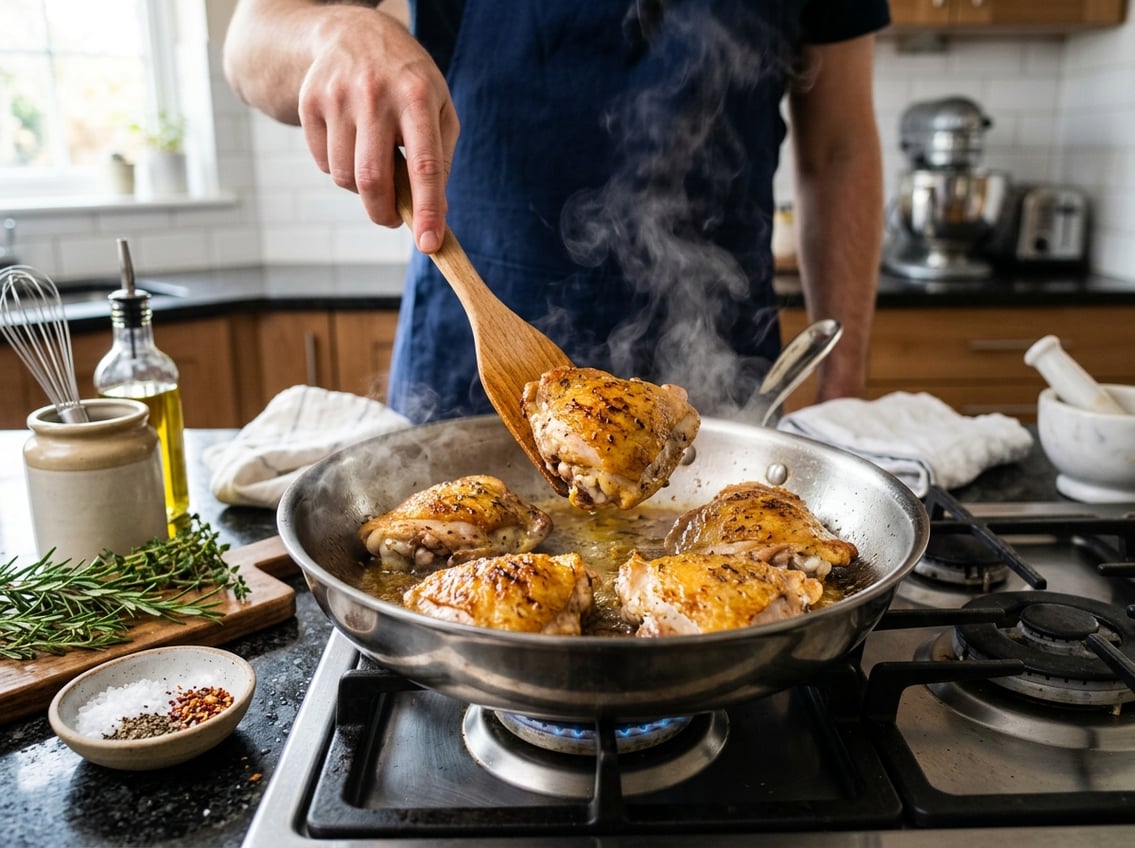
Use an oven or air fryer at moderate heat and add a little liquid to trap steam. Finish with high heat or broil to crisp skin.
Check internal temperature to 165°F (75°C) and avoid reheating more than once.
Maintaining Moisture and Flavor
Place your chicken thighs in a single layer in an oven-safe dish. Add 1/4 to 1/2 cup of chicken stock, water, or a splash of pan sauce to the bottom of the dish.
Cover the dish tightly with foil so steam circulates during reheating. Heat at 325–350°F (160–175°C) until the thickest part reaches 165°F (75°C).
Use an instant-read thermometer to confirm doneness. If the thighs were sauced or marinated, spoon some sauce over each piece before covering.
For plain leftovers, brush a thin coat of oil or melted butter and a pinch of salt to boost flavor.
Achieving Crispy Skin
To crisp skin, remove the foil for the final 3–5 minutes of reheating. Increase oven temperature to 400°F (200°C) or switch to broil for 1–3 minutes and watch closely.
Alternatively, transfer reheated thighs to a preheated air fryer at 400°F for 3–5 minutes. This restores texture quickly and prevents the meat from drying out.
Pat skin dry with paper towels before crisping if you added liquid earlier. A light brush of oil helps conduct heat and promotes even browning.
Recommended Reheating Times
For boneless thighs from the fridge, reheat at 325–350°F for 10–15 minutes covered, then 2–3 minutes uncovered to finish. Use a thermometer to verify 165°F in the center.
For bone-in thighs, plan 20–25 minutes covered at 325–350°F, then 3–5 minutes uncovered or under the broiler to crisp the skin. Thicker pieces may need a few extra minutes.
If reheating from frozen, thaw overnight in the fridge first. Reheating time increases by roughly 50 percent; expect about 30–35 minutes covered at 325°F for bone-in pieces.
Reheating Frozen or Refrigerated Chicken Thighs
Learn how to thaw cooked chicken safely and how to reheat from frozen if needed. Use these steps to avoid uneven heating and dryness.
Thawing Safely
Thaw cooked chicken thighs in the refrigerator for best quality and safety. Place sealed thighs on a tray or shallow dish to catch drips and allow 12–24 hours for a typical package.
If you need faster thawing, use the cold-water method: keep thighs in a leakproof bag and submerge in cold water, changing the water every 30 minutes until pliable. Never thaw at room temperature or in warm water.
Once thawed, store cooked thighs in the refrigerator at 40°F (4°C) or below and eat within 3–4 days. If you won’t use them within that window, refreeze only if they were thawed in the fridge and handled properly.
Reheating from Frozen
If thighs remain partially or fully frozen, you can reheat directly but expect longer cook times and a greater risk of uneven heating. The oven and air fryer give the most consistent results for frozen pieces.
For the oven, preheat to 350°F (175°C). Arrange thighs in a single layer on a baking sheet, add 2–3 tablespoons of broth or water, and cover loosely with foil to trap steam.
Bake 25–40 minutes for partially thawed pieces, or 40–60 minutes for fully frozen, checking internal temperature. Target 165°F (74°C) at the thickest point.
For the air fryer, preheat to 360–375°F (180–190°C). Place thighs in the basket without overcrowding, spray lightly with oil, and reheat 12–20 minutes, flipping halfway.
Use a probe thermometer to confirm 165°F. For refrigerated leftovers, reduce times by about half and keep a splash of liquid or cover to retain moisture.
Proper Storage and Handling of Cooked Chicken
Cool and store cooked chicken thighs promptly. Use airtight packaging and label with cooking or freezing dates.
Short-Term Refrigeration
Refrigerate cooked chicken thighs within 2 hours of cooking, or within 1 hour if the temperature is above 90°F. Place thighs in shallow airtight containers or heavy-duty resealable bags.
Flatten pieces into a single layer for quicker chilling. Label containers with the cooking date.
Store on a middle or lower shelf where temperature stays most consistent. Use refrigerated cooked chicken within 3–4 days.
When reheating, heat only the portion you plan to eat and verify internal temperature reaches 165°F with a probe thermometer.
Freezing for Later Use
Divide cooked thighs into meal-sized portions before freezing. Wrap each portion tightly in plastic wrap or use vacuum sealing, then place in labeled freezer bags or rigid containers.
Write the date and contents on each package. For best quality, use frozen cooked chicken within 2–4 months.
Thaw in the refrigerator overnight or use the defrost setting on your microwave. After thawing, reheat immediately and bring the chicken to an internal temperature of 165°F.
Common Pitfalls and How to Avoid Dry Chicken
Control moisture, pick cuts that tolerate reheating, and monitor internal temperature closely to keep thighs juicy.
Adding Moisture During Reheating
Add a small amount of liquid when reheating chicken thighs to replace what the meat lost in storage. Use 1–3 tablespoons of chicken stock, water, or a light sauce per thigh in a baking dish or skillet.
Cover the pan tightly with foil or a lid to trap steam for oven or stove reheating. If using a microwave, sprinkle a few teaspoons of liquid and cover with a microwave-safe bowl.
For breaded or crispy thighs, restore moisture underneath while protecting the crust. Warm covered at low heat until 150–155°F, then uncover and broil or air-fry for 1–3 minutes to crisp the exterior.
Choosing the Right Cut
Thighs are more forgiving than breasts because they contain more fat and connective tissue. That fat keeps the meat moist during reheating.
Prefer bone-in, skin-on thighs when possible, as they retain moisture and improve flavor. If you only have boneless, skinless thighs, slice them into even pieces before reheating.
For shredded or diced leftovers, warm gently in a sauce or broth. The added liquid and smaller pieces heat evenly and stay tender.
Treat each cut according to structure: bone-in for low, slow warming; boneless for thin, quick reheating; shredded for sauce-based revival.
Monitoring Temperature
Use an instant-read thermometer to hit safe and juicy results. Reheat to 165°F to satisfy food-safety guidance, but remove thighs from heat at 160–163°F if carryover will raise them to 165°F.
Check temperature at the thickest part near the bone for bone-in thighs. For smaller pieces or shredded meat, test multiple spots to avoid cold centers.
Adjust times based on method and starting temperature. Oven at 325–350°F usually needs 10–20 minutes for chilled thighs; skillet with a splash of liquid on medium-low takes 5–8 minutes for sliced meat.
Rely on the thermometer, not guesses.
Key Safety Tips for Reheating Leftover Chicken
Keep chicken refrigerated within two hours of cooking. Reheat it so the internal temperature reaches 165°F (74°C).
Discard any portions that show off odors, slime, or have been stored too long.
Safe Temperatures
Heat every part of the chicken to a safe internal temperature of 165°F (74°C). Use an instant-read meat thermometer inserted into the thickest part of the thigh without touching bone.
Check several spots for even heating. If you reheat in an oven, set it to 325–350°F and cover the chicken to retain moisture.
Check temperature after 15–25 minutes depending on piece size. For stovetop reheating, simmer gently with a few tablespoons of liquid and stir or turn pieces so the thermometer reads 165°F throughout.
Microwave reheating can create cold spots. Rotate pieces, use a microwave-safe cover, and always verify temperature in multiple locations. Do not rely on visual cues alone.
When to Discard Leftovers
Throw out cooked chicken that sits at room temperature for more than two hours. If the ambient temperature is above 90°F (32°C), discard it after one hour.
Remove chicken from the refrigerator if it has been stored for more than 3–4 days, even if it smells normal. If the meat smells sour, rotten, or off, or has a sticky or slimy texture, or visible mold, discard it immediately.
Reheat chicken until it reaches 165°F. If the pieces heat unevenly and you cannot correct it, do not serve it.


