
What Happens If You Eat Expired Chicken Thighs: Risks, Safety, and Prevention
You risk getting sick if you eat expired chicken thighs because harmful bacteria like Salmonella or Campylobacter can grow as the meat spoils. Symptoms can range from stomach upset to severe foodborne illness.
If the thighs smell off, feel slimy, show gray or green discoloration, or have been stored improperly past their safe window, throw them out. Eating them risks food poisoning.
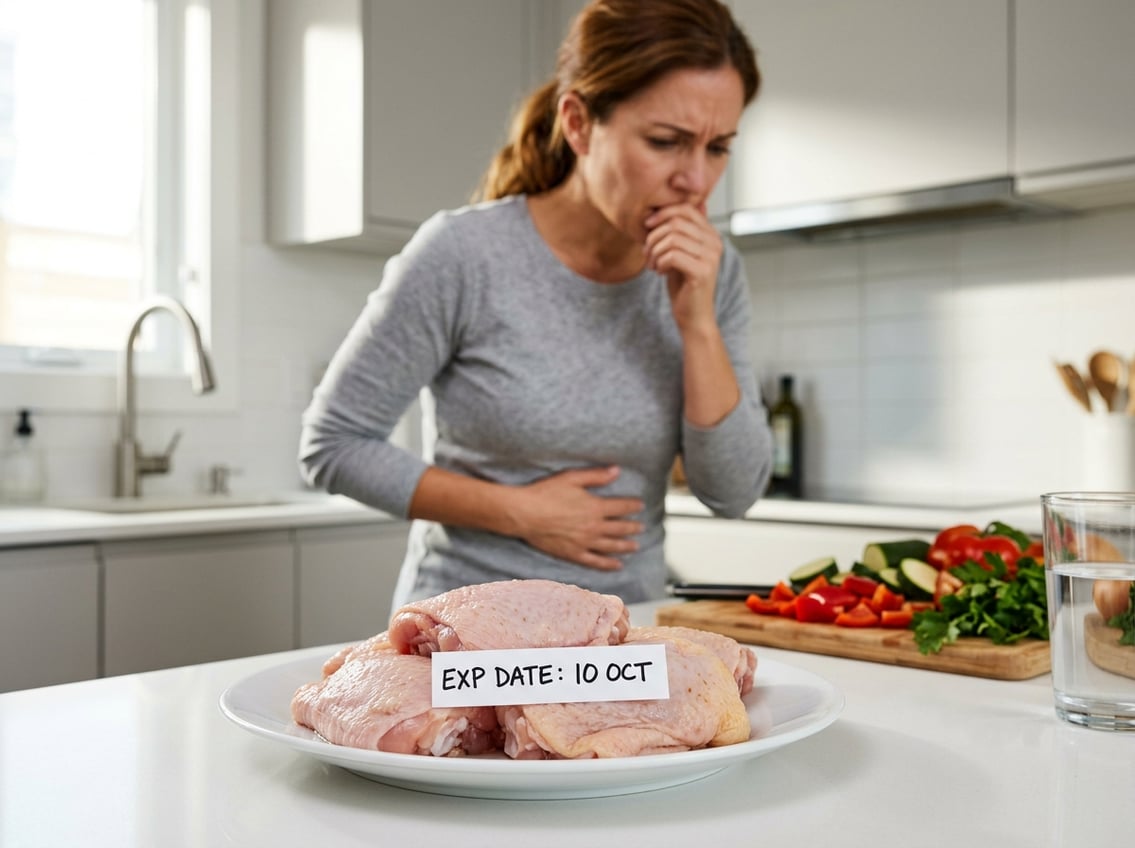
This post explains how chicken thighs spoil, which pathogens to watch for, what symptoms to expect, and practical storage and safety steps to avoid getting sick. Use this guidance to spot danger signs and handle chicken thighs safely.
Understanding Chicken Thigh Spoilage
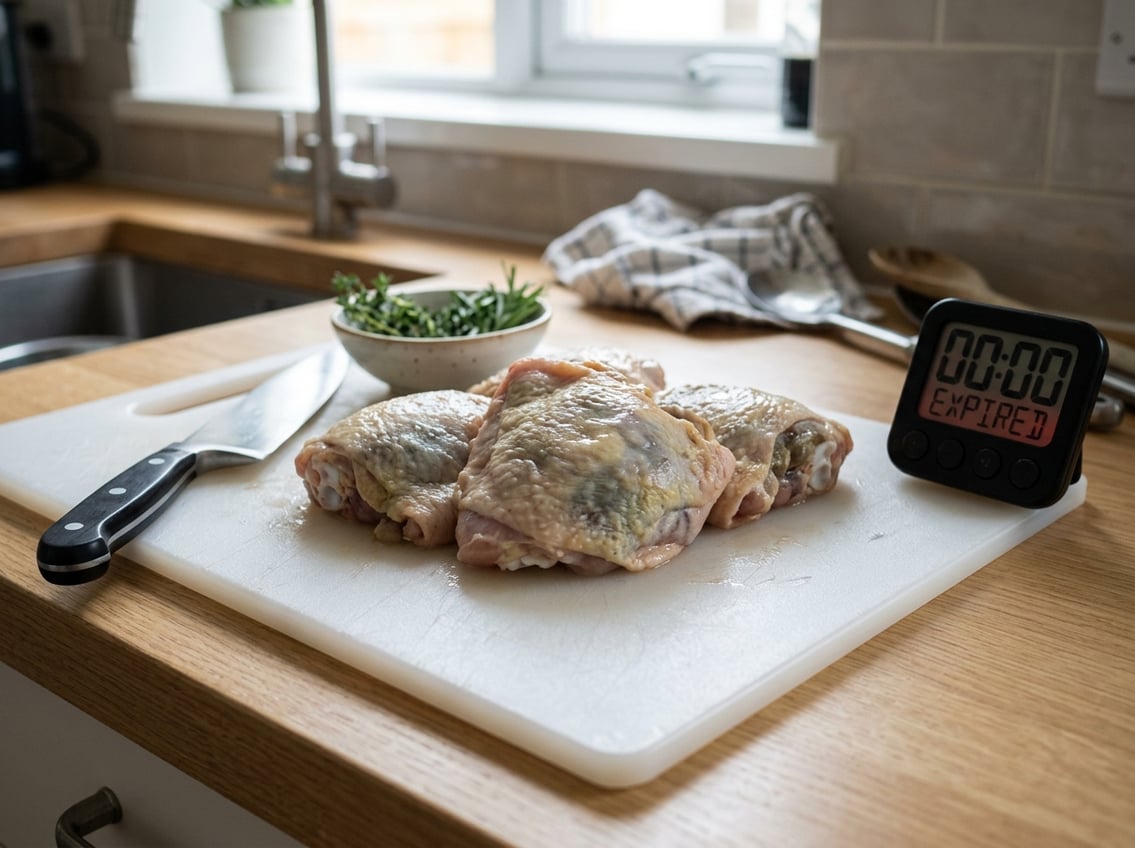
Bacteria, enzymes, or oxidation change the meat’s texture, color, and smell as chicken thighs spoil. You can reduce risk by following recommended storage times and recognizing key sensory and date-based signs.
How Raw and Cooked Chicken Thighs Go Bad
Bacterial growth and enzymatic breakdown cause raw chicken thighs to spoil. At refrigerator temperatures (≤40°F / 4°C), bacteria such as Salmonella and Campylobacter multiply slowly.
You should use raw thighs within 1–2 days or freeze them to slow that process. In the freezer, quality drops over months but the meat remains safer for longer if well-wrapped.
Cooking kills many bacteria in chicken thighs, but spores and surviving cells can regrow if the meat sits in the “temperature danger zone” (40–140°F / 4–60°C) for more than two hours. Reheat leftovers to 165°F (74°C) and consume within 3–4 days from refrigeration.
Enzymatic and oxidative changes can also cause off-flavors even if bacterial levels are low.
Common Signs That Chicken Thighs Are No Longer Safe to Eat
Check color, smell, and texture. Raw thighs that turn gray, green, or develop yellow fat indicate spoilage.
Cooked thighs that show mold or unusual darkening should be discarded immediately. Fresh raw chicken has little to no odor; a sour, ammonia, or rotten-egg smell signals bacterial spoilage.
Sliminess, tackiness, or a sticky residue on raw or cooked thighs means bacterial byproducts are present and you should throw the meat out. Check dates and storage history.
If raw chicken is past the use-by date, has been in the fridge over 2 days, or cooked leftovers have been refrigerated more than 4 days, discard them.
Bacterial Risks and Foodborne Pathogens
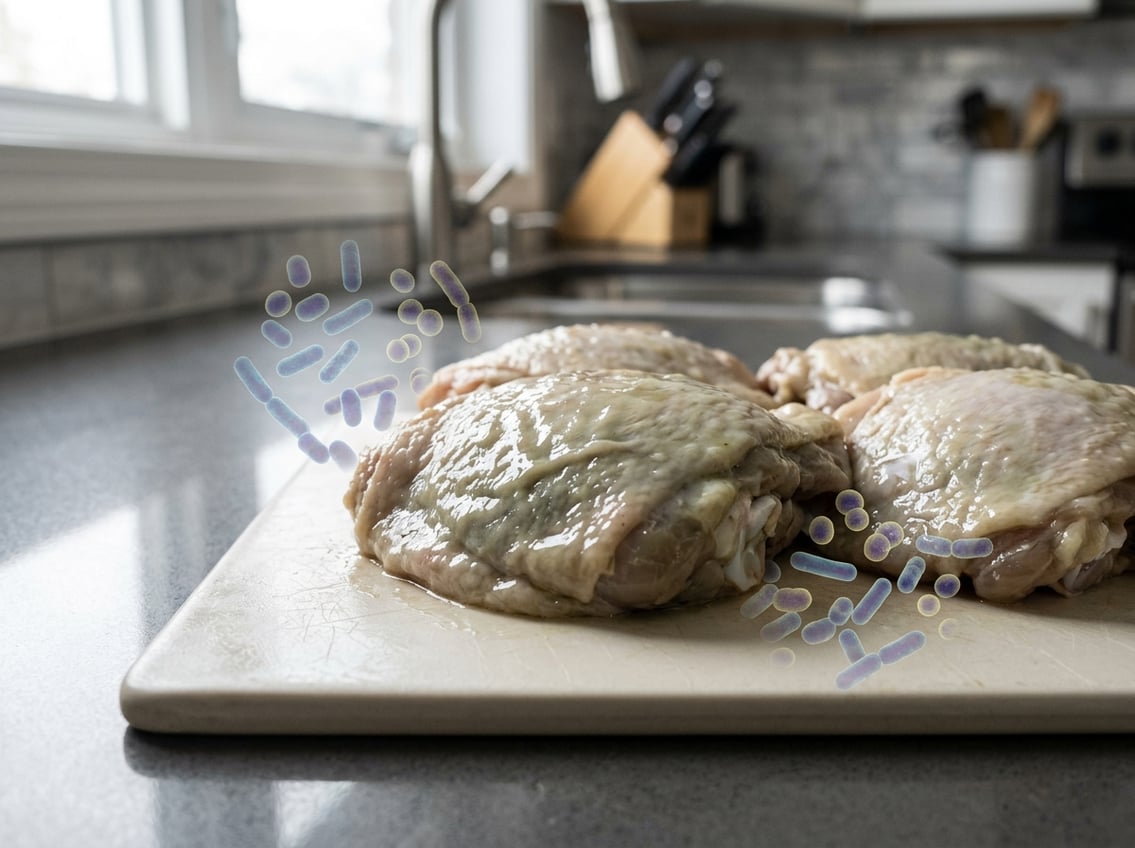
Expired chicken thighs can harbor bacteria that cause vomiting, diarrhea, fever, and severe infections in vulnerable people. How you handle, cook, and store chicken thighs directly affects your risk.
Salmonella and Its Impact
Salmonella commonly contaminates poultry and can survive on chicken thighs that are past their use-by date. If you eat contaminated meat that hasn’t reached an internal temperature of 165°F (74°C), Salmonella can invade your gut lining and cause gastroenteritis within 6–72 hours.
You may experience abdominal cramps, watery or bloody diarrhea, fever, nausea, and sometimes headache. Most healthy adults recover in 4–7 days.
Infants, older adults, pregnant people, and those with weakened immune systems can develop severe dehydration or bloodstream infections that require antibiotics or hospitalization. Avoid expired chicken, use a food thermometer, and prevent cross-contamination between raw thighs and ready-to-eat foods.
Campylobacter and Other Common Threats
Campylobacter jejuni is another high-risk bacterium in chicken thighs, especially when the meat is expired or improperly stored. It frequently causes fever, severe abdominal pain, and profuse diarrhea that can be bloody; symptoms usually start 2–5 days after exposure.
This bacterium can also trigger post-infectious complications such as Guillain–Barré syndrome, though that is rare. Clostridium perfringens multiplies in food left at room temperature and causes sudden abdominal cramps and watery diarrhea.
Staphylococcus aureus produces toxins that can cause rapid-onset vomiting. Proper refrigeration, prompt cooking, and discarding chicken that smells sour or feels slimy lower your chance of encountering these pathogens.
The Role of E. coli in Chicken Thigh Contamination
E. coli can contaminate chicken thighs through fecal contact during processing, though it is less common in poultry than in beef or produce. If you consume undercooked or expired chicken carrying pathogenic E. coli, you may have severe abdominal cramps and bloody diarrhea, typically appearing 1–8 days after exposure.
Some E. coli strains produce toxins that can lead to hemolytic uremic syndrome (HUS), a serious complication causing kidney failure, primarily in children and older adults. Discard expired thighs, cook poultry to 165°F, and clean surfaces and utensils that touched raw chicken to stop bacterial transfer.
Potential Health Outcomes from Consuming Expired Chicken Thighs
You can develop symptoms ranging from mild stomach upset to severe infection depending on the bacteria present, how much you ate, and your immune status. Risks increase if the thighs were stored improperly, smelled off, or left at room temperature for hours.
Symptoms and Onset of Food Poisoning
After eating expired chicken thighs contaminated with bacteria like Salmonella, Campylobacter, or Clostridium perfringens, symptoms usually start within 6 to 72 hours. Expect nausea, abdominal cramps, diarrhea (sometimes bloody), fever, and sometimes vomiting.
Symptoms often peak within 24–48 hours and then gradually improve for healthy adults. Dehydration from diarrhea and vomiting can occur quickly, so monitor urine output and dizziness.
Complications in Vulnerable Populations
If you are pregnant, elderly, very young, or immunocompromised, complications can be more severe. You face higher risk of bloodstream infections (sepsis), prolonged hospitalization, and in pregnant people, fetal infection or miscarriage in rare cases.
Chronic conditions like diabetes, liver disease, or HIV increase the chance that a routine foodborne infection will become systemic. Discard chicken thighs that are past their use-by date, smell sour, or feel slimy. Refrigerate at 40°F or below and follow storage times: raw chicken generally lasts 1–2 days in the fridge.
When to Seek Medical Attention
Seek urgent care if you have high fever (over 101.5°F), persistent vomiting preventing fluid intake, signs of dehydration (low urine, dry mouth, fainting), bloody stools, or severe abdominal pain. If you are pregnant, elderly, a young child, or immunocompromised, contact your healthcare provider as soon as symptoms begin.
Bring information about what you ate, when symptoms started, and whether others are sick. Emergency treatment may include IV fluids, lab tests, antibiotics for specific bacterial infections, or hospitalization for complications like sepsis.
Shelf Life and Storage Guidelines for Chicken Thighs
Treat raw chicken thighs as highly perishable. Refrigerate at 40°F (4°C) or below and freeze at 0°F (-18°C) or below to maintain safety and quality.
How Long Chicken Thighs Last in the Fridge
Raw chicken thighs will stay safe for about 1–2 days in your refrigerator when kept at 40°F (4°C) or lower. Store them in their original packaging on the lowest shelf or in a sealed container to prevent juices from contaminating other foods.
Cooked chicken thighs last longer—plan on 3–4 days refrigerated. Use an airtight container or wrap tightly in foil or plastic to slow moisture loss and bacterial growth.
If you see a sour smell, slimy texture, or grayish color, discard the thighs.
Extending Freshness: How to Freeze Chicken Thighs
For best quality, freeze raw chicken thighs within 1–2 days of purchase. Wrap each thigh or package tightly in plastic wrap, then place in heavy-duty freezer bags or vacuum-seal to minimize freezer burn.
Label with the date; use within 9 months for optimal quality, though they remain safe longer if continuously frozen. Thaw frozen thighs safely in the refrigerator (allow 24 hours for a package), in cold water changed every 30 minutes, or in the microwave if you’ll cook immediately.
Refreeze only if you thawed in the refrigerator and haven’t left the meat at room temperature.
Best Practices to Prevent Food Poisoning from Chicken Thighs
Follow strict temperature, timing, and cleaning steps to kill pathogens like Salmonella and Campylobacter and avoid contaminating other foods. Store, cook, and handle chicken thighs carefully to reduce risk.
Safe Handling and Preparation
Keep raw chicken thighs cold until you cook them. Store them on the bottom shelf in a sealed container and use within 1–2 days in the refrigerator, or freeze for longer storage.
Thaw frozen thighs in the refrigerator, in cold water changed every 30 minutes, or in the microwave. Use a food thermometer and cook thighs to an internal temperature of 165°F (74°C) measured at the thickest part, avoiding contact with bone when possible.
Wash your hands for 20 seconds before and after handling raw chicken. Avoid washing the meat itself; rinsing spreads juices and increases risk of contaminating sinks and surfaces.
Avoiding Cross-Contamination in the Kitchen
Designate a cutting board and set of utensils for raw chicken only. Keep them separate from produce, ready-to-eat foods, and cooked items.
After contact with raw thighs, immediately wash cutting boards, knives, and counters with hot, soapy water, then sanitize with a bleach solution (1 tablespoon bleach per gallon of water) or a commercial sanitizer. Change dishcloths and sponges frequently.
When plating cooked chicken, use a clean plate, not the one that held raw thighs. Keep raw juices contained during transport from store to fridge by double-bagging or placing packages in a leak-proof container.
Proper Reheating and Leftover Management
Refrigerate leftovers within 2 hours of cooking, or within 1 hour if the temperature exceeds 90°F (32°C).
Store leftovers in shallow airtight containers so they cool quickly and evenly.
Reheat chicken thighs until the center reaches 165°F (74°C). Use a probe thermometer to check the temperature when reheating in ovens or on stovetops.
Microwaves can heat unevenly. Stir or rotate pieces and measure the temperature in several spots.
Consume refrigerated leftovers within 3 to 4 days. If you freeze cooked thighs, use them within 4 months for best quality.
Throw away any chicken that smells off, feels slimy, or looks discolored, as these signs indicate spoilage and increased risk of foodborne illness.


