
The Best One-Pan Salmon Dinners for Busy Home Cooks
Last updated: May 20, 2026
Quick Answer
The best one-pan salmon dinners for busy home cooks combine roasted vegetables with perfectly cooked salmon on a single sheet pan, typically taking 30-40 minutes total with minimal cleanup. The key technique is roasting sturdy vegetables like potatoes for 15-20 minutes first, then adding salmon for the final 10-15 minutes to avoid overcooking the fish while ensuring vegetables reach ideal tenderness. Most recipes target 145°F internal temperature and use oven temperatures between 375°F and 425°F depending on desired browning and speed.
Key Takeaways
- Stagger cooking times: Roast dense vegetables 15-20 minutes before adding salmon to prevent overcooked fish
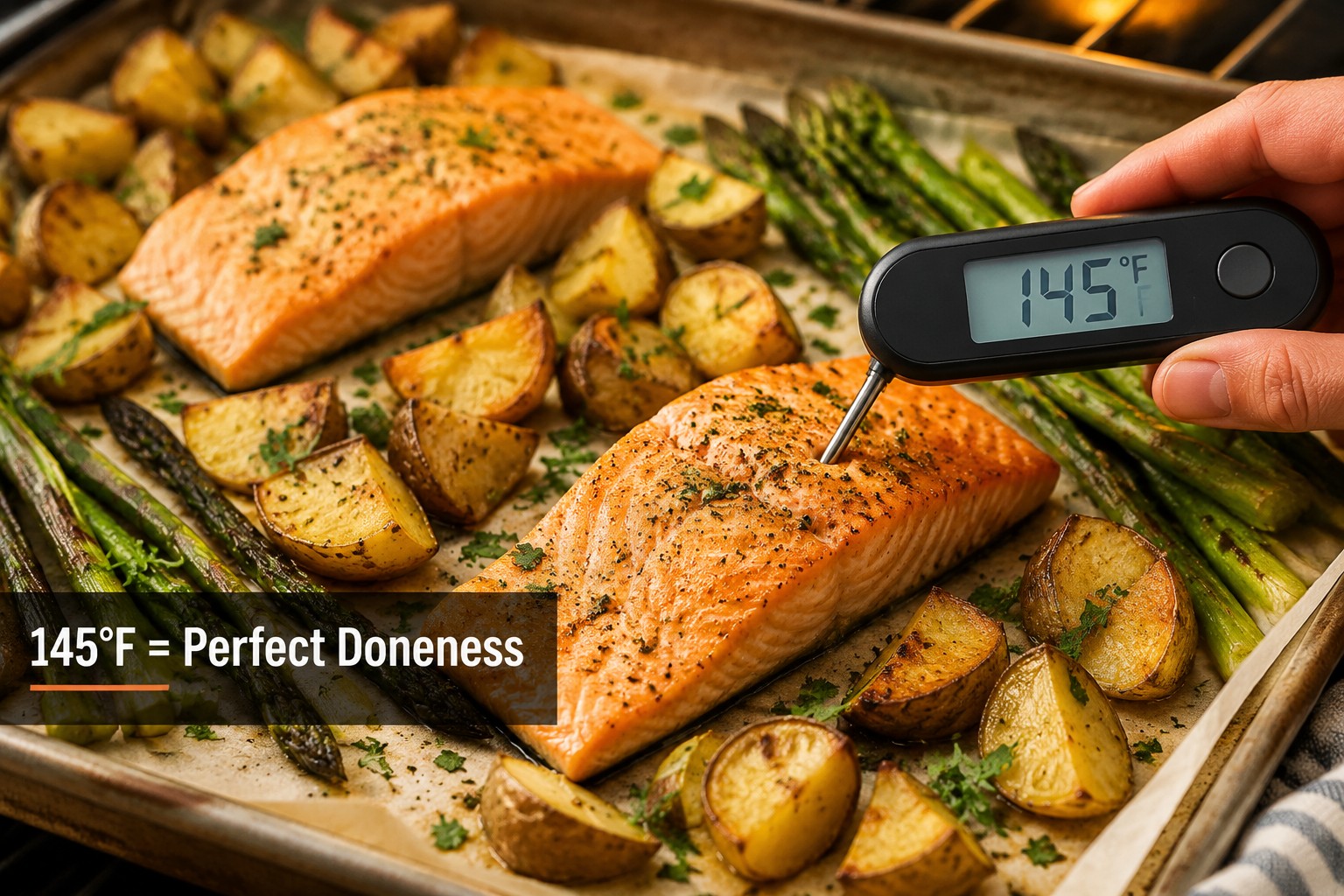
- Target 145°F internal temperature for perfectly cooked salmon using an instant-read thermometer
- Use parchment paper for easier cleanup and to help salmon retain moisture during roasting
- Choose 375°F for gentle cooking or 400-425°F for faster meals with more caramelization
- Pair potatoes with quick-cooking greens like asparagus or green beans for balanced timing
- Apply sauce in two stages: coat before roasting, then finish with fresh drizzle after cooking
- Total time stays under 40 minutes with most active prep taking just 10-15 minutes
- Microwave whole baby potatoes for 2 minutes before cutting to speed up roasting time
- Place salmon skin-side down or on lemon slices if using skinless fillets to prevent sticking
What Makes One-Pan Salmon Dinners Perfect for Busy Weeknights?
One-pan salmon dinners deliver restaurant-quality meals with minimal effort because they consolidate cooking, reduce dishes, and use a foolproof method that’s hard to mess up. The entire meal—protein, vegetables, and often a built-in sauce—cooks on a single sheet pan, which means less time at the stove and only one pan to wash afterward.
The timing works naturally for weeknight schedules. Most recipes require about 10-15 minutes of active prep (chopping vegetables, seasoning salmon, mixing a quick sauce), then the oven does the rest while you set the table or help with homework. Total time from start to finish typically stays under 40 minutes, making these dinners faster than takeout and far healthier.[1][2]
Why salmon specifically works so well:
- Cooks quickly: Salmon fillets need only 10-15 minutes at moderate oven temperatures
- Forgiving texture: Unlike chicken breast, salmon stays moist even if slightly overcooked
- Rich flavor: The natural oils in salmon mean you need minimal seasoning for great taste
- Nutritional density: High in protein and omega-3 fatty acids, fitting health-conscious meal plans
- Pairs with everything: Works with Mediterranean, Asian, American, or Scandinavian flavor profiles
Common mistake to avoid: Don’t add salmon and vegetables to the pan at the same time. Dense vegetables like potatoes or Brussels sprouts need a head start, or your salmon will overcook while waiting for the vegetables to soften.
How Do You Time Vegetables and Salmon on the Same Pan?
The core technique for successful one-pan salmon dinners is staggered timing: roast sturdy vegetables first, then add salmon partway through cooking. This prevents the fish from drying out while giving potatoes, carrots, or other dense vegetables enough time to become tender and caramelized.
Standard timing formula:
- Roast vegetables alone for 15-20 minutes at your chosen temperature (usually 375-425°F)
- Remove pan from oven, add salmon fillets (and any quick-cooking vegetables like green beans or asparagus)
- Return to oven for 10-15 minutes until salmon reaches 145°F internal temperature
For example, Budget Bytes roasts potatoes for 15 minutes before adding salmon and green beans, then bakes everything together for 10-15 minutes more.[1] Erin Lives Whole uses a similar approach: vegetables roast for 20 minutes, then salmon joins them for the final 12-14 minutes.[2]
Vegetable timing guide:
| Vegetable Type | Initial Roast Time | Add With Salmon? |
|---|---|---|
| Baby potatoes (quartered) | 15-20 minutes | No—add first |
| Brussels sprouts (halved) | 15-20 minutes | No—add first |
| Carrots (sliced) | 15-18 minutes | No—add first |
| Cherry tomatoes | 0 minutes | Yes—add with salmon |
| Green beans | 0 minutes | Yes—add with salmon |
| Asparagus | 0 minutes | Yes—add with salmon |
| Bell peppers (thick slices) | 10 minutes | Optional—depends on desired texture |
Pro shortcut: Microwave whole baby potatoes for 2 minutes before quartering them. This pre-softens the interior so they roast more evenly and reach ideal texture faster in the oven.[2]
Choose this timing approach if you want vegetables with crispy edges and tender centers while keeping salmon moist and flaky. If you prefer softer, steamed vegetables, you can wrap everything together in parchment from the start (see parchment technique below).
What Temperature Should You Cook One-Pan Salmon Dinners?
Most one-pan salmon recipes use oven temperatures between 375°F and 425°F, with the choice depending on whether you prioritize speed and browning or gentler, more even cooking. The salmon itself should reach an internal temperature of 145°F for safe, perfectly cooked fish.[1][2][3]
Temperature decision guide:
375°F (lower heat):
- Best for gentle roasting and steaming techniques
- Reduces risk of burning vegetables or over-browning edges
- Takes slightly longer (total time around 35-40 minutes)
- Ideal when using parchment packets or foil wraps
- Used by Budget Bytes and FoodByMaria[1][4]
400-425°F (higher heat):
- Faster cooking (total time around 25-30 minutes)
- Creates more caramelization and crispy edges on vegetables
- Better for achieving restaurant-style browning
- Requires closer monitoring to prevent overcooking salmon
- Used by Erin Lives Whole and The Modern Proper[2][3]
How to check salmon doneness accurately:
The most reliable method is an instant-read thermometer inserted into the thickest part of the fillet. When it reads 145°F, the salmon is done.[3] You can insert the thermometer through parchment paper without opening a packet if you’re using that technique.[1]
Visual cues work too: properly cooked salmon will flake easily with a fork and appear opaque throughout rather than translucent. The flesh should look moist but not raw in the center.
Common mistake: Relying only on cooking time rather than temperature. Fillet thickness varies significantly, so a thin tail piece might be done in 8 minutes while a thick center-cut fillet needs 15 minutes at the same temperature. Always verify with a thermometer when possible.
Should You Use Parchment Paper for One-Pan Salmon?
Parchment paper is one of the most useful techniques for one-pan salmon dinners, especially when you want juicier fish, easier cleanup, or a gentler cooking method. It serves multiple purposes: preventing sticking, creating a steam environment that keeps salmon moist, and making cleanup nearly effortless.
Two main parchment techniques:
1. Full pan liner (most common): Line your entire sheet pan with parchment paper before adding vegetables and salmon. This prevents sticking and makes cleanup as simple as lifting off the paper and tossing it.[2] The vegetables still roast and brown normally, while the salmon benefits from the non-stick surface.
2. Parchment packet (for extra moisture): Wrap the salmon (and optionally some vegetables) in a parchment parcel that seals in steam. Budget Bytes uses this method explicitly to keep salmon moist while the surrounding vegetables roast openly.[1] The packet creates a gentle steaming environment that’s nearly impossible to overcook.
Benefits of parchment paper:
- Prevents sticking: Salmon skin or skinless fillets won’t adhere to the pan
- Retains moisture: Creates a micro-steam environment around the fish
- Easier cleanup: No scrubbing stuck-on bits or fish oils
- Even cooking: Reflects heat gently, reducing hot spots
- Versatile: Works at any oven temperature from 350°F to 450°F
When to skip parchment: If you specifically want maximum browning and crispy edges on your vegetables, direct contact with a metal pan conducts heat better. In that case, lightly oil the pan instead and place salmon on lemon slices to prevent sticking.[6]
Pro tip for skinless salmon: If your fillets don’t have skin, place them on top of lemon slices on the parchment. This creates a barrier that prevents direct contact with the hot pan while infusing subtle citrus flavor.[6]
What Are the Best Vegetable Pairings for One-Pan Salmon?
The most successful vegetable pairings for one-pan salmon dinners combine one starchy or dense vegetable (for substance and timing) with one quick-cooking green vegetable (for color, nutrition, and texture contrast). This formula keeps prep simple, timing manageable, and plates visually appealing.
Most popular combinations:
Potatoes + Green Beans: The classic pairing seen in multiple top recipes.[1][2][5] Baby potatoes (quartered) provide hearty substance and roast beautifully, while green beans add bright color and crisp-tender texture. Both are pantry-friendly and appeal to most eaters, including kids.
Potatoes + Asparagus: A slightly more elegant variation that works especially well in spring. Asparagus cooks quickly (add with salmon) and pairs naturally with lemon-based seasonings.[2][5]
Potatoes + Cherry Tomatoes: Mediterranean-style approach used by FoodByMaria.[4] Cherry tomatoes burst and create a light sauce as they roast, adding moisture and acidity that complements rich salmon.
Brussels Sprouts + Carrots: For fall and winter meals, this combination provides earthy flavors and holds up well to higher roasting temperatures. Both vegetables benefit from the longer initial roast time.
Vegetable selection criteria:
- Cooking time compatibility: Choose vegetables that either roast at similar speeds or can be added in stages
- Visual contrast: Pair golden/brown vegetables with bright green or red options
- Nutritional balance: Include both starchy and non-starchy vegetables
- Flavor harmony: Consider whether you’re going Mediterranean (tomatoes, olives), Asian (bok choy, snap peas), or American (potatoes, green beans)
Vegetables to avoid or use carefully:
- Leafy greens (spinach, kale): Will wilt and potentially burn; add in the last 3-4 minutes only
- Zucchini or summer squash: Releases lots of water; cut thick and expect softer texture
- Broccoli: Can become mushy; use florets and add with salmon for best results
- Onions: Cut in thick wedges or they’ll burn; red onions hold up better than yellow
Choose potatoes + green beans if you want a universally appealing, kid-friendly meal. Choose tomatoes + Mediterranean vegetables if you prefer lighter, more acidic flavors that cut through salmon’s richness.
What Flavor Variations Work Best for One-Pan Salmon?
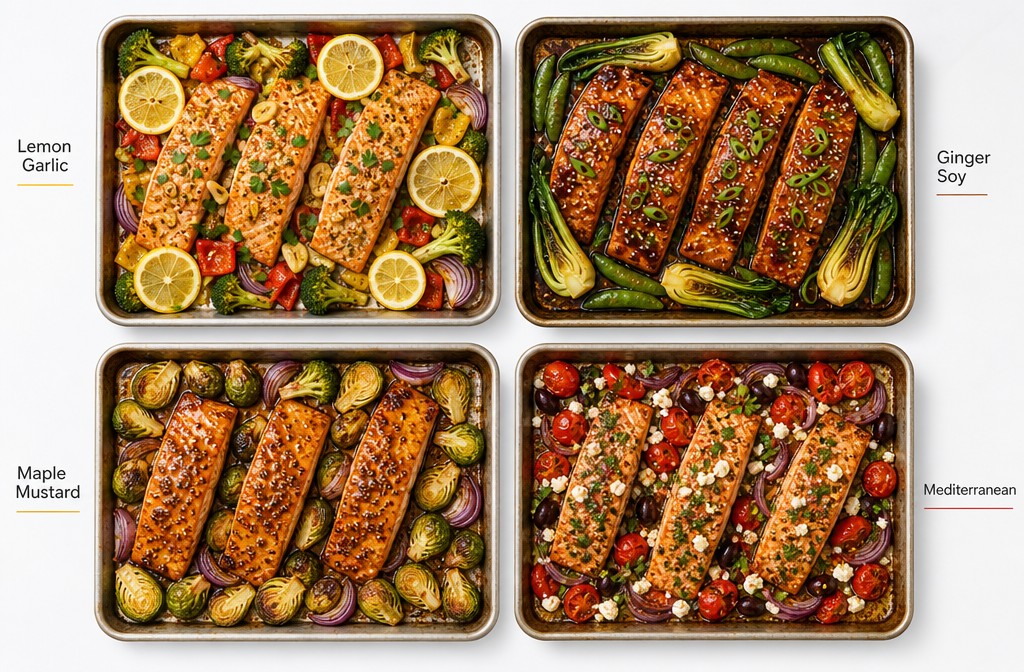
The beauty of one-pan salmon dinners is that the same basic technique adapts to multiple flavor profiles, letting you rotate through different styles all month without getting bored. The most common approaches are lemon-garlic, Asian ginger-soy, maple-mustard, and Mediterranean, each using pantry-friendly ingredients.
Four versatile flavor profiles:
1. Lemon-Garlic (Classic): The most universally appealing option. Combine olive oil, minced garlic, lemon juice, salt, pepper, and fresh or dried herbs (thyme, parsley, dill). Drizzle over salmon and vegetables before roasting, then finish with fresh lemon wedges.[2][4]
2. Asian Ginger-Soy: Mix soy sauce, rice vinegar, sesame oil, fresh grated ginger, minced garlic, and a touch of honey or brown sugar. The Modern Proper uses this style, coating everything with half the sauce before roasting, then drizzling the remaining fresh sauce after cooking to preserve bright flavor.[3]
3. Maple-Mustard: Whisk together Dijon mustard, maple syrup, olive oil, and a pinch of salt. This creates a sweet-tangy glaze that caramelizes beautifully on salmon. Works especially well with Brussels sprouts or sweet potatoes.
4. Mediterranean: Use olive oil, lemon, oregano, cherry tomatoes, olives, and capers. FoodByMaria’s version includes tomatoes that burst and create a light sauce as they roast.[4] Finish with crumbled feta cheese after baking.
5. Simple Italian Dressing: The easiest option for truly busy nights. Platings + Pairings features a 5-ingredient recipe using just salmon, potatoes, green beans, bottled Italian dressing, and lemon.[5] No mixing required—just drizzle and roast.
Two-stage sauce technique:
Several modern recipes apply sauce in two stages to maximize flavor:[2][3]
- Before roasting: Coat salmon and vegetables with most of the sauce to build flavor during cooking
- After roasting: Drizzle remaining fresh sauce over the finished dish to add brightness and prevent all the sauce from cooking down
This approach works especially well with Asian-style sauces where fresh ginger and garlic flavors can fade with prolonged heat.
Seasoning tips:
- Salt vegetables generously: They need more seasoning than salmon, which is naturally flavorful
- Add fresh herbs after cooking: Delicate herbs like basil, cilantro, or parsley taste better when added at the end
- Use citrus zest: Lemon or lime zest adds intense flavor without extra liquid
- Don’t forget acid: A squeeze of fresh lemon or splash of vinegar brightens rich salmon
Choose lemon-garlic if you’re cooking for picky eaters or want a safe crowd-pleaser. Choose Asian ginger-soy if you want bold, restaurant-style flavor. Choose maple-mustard for fall and winter comfort. Choose Mediterranean for lighter, summer-appropriate meals.
How Do You Prevent Salmon from Sticking or Drying Out?
Keeping salmon moist and preventing it from sticking to the pan are the two most common concerns for home cooks making one-pan dinners. Both issues are easily solved with proper technique and a few simple precautions.
To prevent sticking:
Use parchment paper: The single most effective solution. Line your sheet pan with parchment before adding anything, and salmon will lift off cleanly every time.[1][2]
Place salmon skin-side down: If your fillets have skin, always position them skin-side down on the pan. The skin acts as a natural barrier and can be easily removed after cooking if you don’t want to eat it.[2]
Use lemon slices as a barrier: For skinless fillets, place salmon on top of thin lemon slices. This prevents direct contact with the hot pan while adding subtle citrus flavor.[6]
Oil the pan lightly: If you’re not using parchment, brush the pan with olive oil or cooking spray before adding salmon.
To prevent drying out:
Don’t overcook: Use an instant-read thermometer and remove salmon from the oven as soon as it reaches 145°F. Carryover cooking will bring it up a few more degrees as it rests.[1][2][3]
Choose thicker fillets: Thin tail pieces dry out faster than thick center-cut fillets. Aim for fillets that are at least 1 inch thick at the thickest point.
Add moisture to the pan: Include juicy vegetables like cherry tomatoes, or drizzle a bit of white wine, broth, or lemon juice on the parchment before roasting.
Use the parchment packet method: Wrapping salmon in parchment creates a steam environment that makes it nearly impossible to dry out the fish.[1]
Brush with oil or butter: Lightly coat salmon with olive oil, melted butter, or your marinade before roasting to add protective fat.
Don’t skip the rest: Let salmon rest for 2-3 minutes after removing from the oven. This allows juices to redistribute throughout the fillet.
Common mistake: Opening the oven repeatedly to check on salmon. Each time you open the door, you lose heat and extend cooking time, increasing the risk of overcooking. Instead, set a timer for the minimum suggested time, then check once with a thermometer.
Choose parchment packets if you’re nervous about overcooking or want the most foolproof method. Choose skin-side-down on parchment if you want some browning but still need easy cleanup.
Can You Meal Prep One-Pan Salmon Dinners?
One-pan salmon dinners adapt well to partial meal prep, though you’ll get the best texture and flavor by doing final cooking fresh. The key is prepping components ahead while leaving the actual roasting for dinner time.
What to prep ahead:
Vegetables (up to 2 days ahead):
- Wash, peel, and cut all vegetables
- Store in airtight containers in the refrigerator
- Keep quick-cooking vegetables (green beans, asparagus) separate from dense vegetables (potatoes, carrots)
- Toss with oil and seasonings up to 4 hours before cooking, or season right before roasting
Sauce or marinade (up to 3 days ahead):
- Mix all sauce ingredients and store in a jar or container
- Keep refrigerated until ready to use
- Shake or stir before applying to salmon and vegetables
Salmon (best prepped same day):
- Pat fillets dry and portion if needed
- Season up to 2 hours before cooking for best results
- Don’t marinate salmon longer than 30-60 minutes if using acidic ingredients (lemon, vinegar), as the acid will start “cooking” the fish
Assembly strategy for busy weeknights:
- Sunday prep: Cut all vegetables, make sauce, store separately
- Weeknight (15 minutes active): Preheat oven, arrange vegetables on parchment-lined pan, season salmon, start roasting
- Hands-off time: 25-30 minutes while oven does the work
- Serve: Add fresh herbs or finishing sauce, plate, and eat
What NOT to prep ahead:
- Don’t pre-roast salmon: Reheated salmon loses moisture and texture
- Don’t combine raw salmon with vegetables ahead: The fish will release moisture and make everything soggy
- Don’t pre-cut lemon wedges more than a day ahead: They dry out and lose juice
Leftover strategy:
Cooked one-pan salmon dinners keep for 3-4 days refrigerated and reheat reasonably well, though salmon is always best fresh. To reheat without drying out:
- Use a 275°F oven for 10-12 minutes
- Cover loosely with foil to trap moisture
- Add a splash of broth or water to the pan
- Alternatively, flake leftover salmon and use in salads, grain bowls, or pasta where texture matters less
Choose Sunday vegetable prep if you want to minimize weeknight work but still enjoy fresh-cooked salmon. Choose full meal prep with cooked components if you’re okay with slightly less optimal texture in exchange for maximum convenience.
What Equipment Do You Need for One-Pan Salmon Dinners?
One-pan salmon dinners require minimal specialized equipment, making them accessible for most home kitchens. The essentials are a good sheet pan, parchment paper, and a reliable thermometer.
Essential equipment:
Sheet pan (half-sheet size recommended):
- Standard size: 18″ × 13″ (fits most home ovens)
- Choose heavy-gauge aluminum or stainless steel for even heat distribution
- Rimmed edges (at least 1 inch) prevent juices from spilling
- One pan serves 2-4 people depending on portion sizes
Parchment paper:
- Pre-cut sheets or roll format both work
- Must be oven-safe to at least 425°F
- Makes cleanup effortless and prevents sticking[1][2]
Instant-read thermometer:
- Digital models read in 2-3 seconds
- Essential for checking salmon doneness at 145°F[3]
- Eliminates guesswork and prevents overcooking
Helpful but not required:
- Silicone baking mat: Reusable alternative to parchment paper
- Fish spatula: Wide, flexible spatula makes lifting salmon easier
- Kitchen timer: Prevents forgetting about food in the oven
- Mixing bowls: For preparing sauces and tossing vegetables with oil
Pan capacity guide:
- 2 servings: One half-sheet pan with room to spare
- 4 servings: One half-sheet pan, vegetables and salmon arranged in single layer
- 6+ servings: Two half-sheet pans, or cook in batches
Common mistake: Overcrowding the pan. If vegetables and salmon overlap significantly, they’ll steam instead of roast, resulting in soggy texture rather than caramelized edges. Leave space between pieces for air circulation.
Choose a light-colored aluminum sheet pan if you want even browning without hot spots. Choose a dark or nonstick pan if you prefer deeper caramelization, but watch closely to prevent burning.
Frequently Asked Questions
How long does salmon take to cook on a sheet pan?
Salmon typically takes 10-15 minutes at 375-425°F, depending on fillet thickness and oven temperature. Check for an internal temperature of 145°F with an instant-read thermometer for perfect doneness.[1][2][3]
Can you cook frozen salmon on a sheet pan?
Yes, but add 5-7 minutes to the cooking time and expect slightly less browning. Pat frozen fillets dry, season well, and check internal temperature carefully. Fresh or thawed salmon produces better texture.
What’s the best way to season salmon for sheet pan dinners?
Simple combinations work best: olive oil, salt, pepper, garlic, and lemon for classic flavor. For variety, try soy-ginger-sesame (Asian), maple-mustard (sweet-savory), or oregano-tomato-olive (Mediterranean).[2][3][4]
Should salmon be covered with foil when baking?
No, leave salmon uncovered for the best texture and browning. If you want extra moisture, use a parchment packet instead of foil, which creates gentle steam without preventing browning.[1]
How do you know when sheet pan salmon is done?
Insert an instant-read thermometer into the thickest part of the fillet. When it reads 145°F, the salmon is done. Visually, it should flake easily with a fork and appear opaque throughout.[3]
Can you use skin-on or skinless salmon for one-pan dinners?
Both work well. Skin-on salmon should be placed skin-side down and the skin can be removed after cooking. Skinless fillets benefit from being placed on lemon slices to prevent sticking.[2][6]
What vegetables cook at the same rate as salmon?
Quick-cooking vegetables like asparagus, green beans, cherry tomatoes, and thinly sliced bell peppers can be added at the same time as salmon. Dense vegetables like potatoes need a 15-20 minute head start.[1][2]
How do you prevent vegetables from burning while salmon cooks?
Use the staggered timing method: roast dense vegetables first, then add salmon and quick-cooking vegetables for the final 10-15 minutes. This ensures everything finishes at the same time.[1][2]
Can you meal prep one-pan salmon dinners?
Prep vegetables and sauce up to 2 days ahead, but cook salmon fresh for best texture. Cooked salmon keeps 3-4 days refrigerated but loses moisture when reheated. Flake leftovers into salads or grain bowls.
What’s the easiest one-pan salmon recipe for beginners?
The 5-ingredient version using salmon, potatoes, green beans, bottled Italian dressing, and lemon requires minimal prep and no sauce-making.[5] Simply arrange, drizzle, and roast at 400°F.
Do you need to flip salmon when cooking on a sheet pan?
No, salmon cooks through from the bottom heat and oven heat without flipping. Flipping risks breaking the fillet and isn’t necessary for even cooking.
Can you use other fish instead of salmon for one-pan dinners?
Yes, cod, halibut, and sea bass work well with similar timing. Thinner fish like tilapia or sole cook faster (6-8 minutes), so adjust timing accordingly and still target 145°F internal temperature.
Conclusion
The best one-pan salmon dinners for busy home cooks deliver restaurant-quality results with minimal effort by combining smart timing, simple techniques, and flexible flavor options. The core method—roasting sturdy vegetables first, then adding salmon for the final 10-15 minutes—ensures perfectly cooked fish and caramelized vegetables every time, all on a single sheet pan that takes seconds to clean up.
Your action plan for this week:
- Choose your flavor profile: Start with lemon-garlic if you’re new to one-pan dinners, or try Asian ginger-soy for bolder taste
- Prep on Sunday: Cut vegetables, mix sauce, and store separately for quick weeknight assembly
- Master the timing: Roast potatoes or Brussels sprouts 15-20 minutes, add salmon and green vegetables, cook 10-15 minutes more to 145°F
- Use parchment paper: Line your pan for effortless cleanup and perfectly moist salmon
- Rotate through variations: Try a different flavor profile each week to keep meals interesting
The beauty of this formula is its flexibility. Once you understand the basic technique, you can adapt it to whatever vegetables are in season, whatever sauce sounds appealing, and whatever your family prefers. Whether you’re cooking for two on a Tuesday or feeding six on Sunday, one-pan salmon dinners make healthy, delicious eating accessible even on the busiest nights.
Start with one recipe this week, master the timing, then experiment with different vegetables and flavors. Within a month, you’ll have a rotation of go-to salmon dinners that feel fresh, taste restaurant-worthy, and require less cleanup than ordering takeout.
For more weeknight dinner inspiration, explore our guides on easy chicken breast recipes and quick chicken orzo dinners.
References
[1] One Pan Salmon Dinner – https://www.budgetbytes.com/one-pan-salmon-dinner/
[2] Easy One Pan Salmon Dinner – https://www.erinliveswhole.com/easy-one-pan-salmon-dinner/
[3] Asian Salmon Sheet Pan Dinner – https://themodernproper.com/asian-salmon-sheet-pan-dinner
[4] Sheet Pan Salmon – https://www.foodbymaria.com/sheet-pan-salmon/
[5] 5 Ingredient Sheet Pan Salmon – https://www.platingsandpairings.com/5-ingredient-sheet-pan-salmon/
[6] Watch – https://www.youtube.com/watch?v=GMs0b2aq-88


