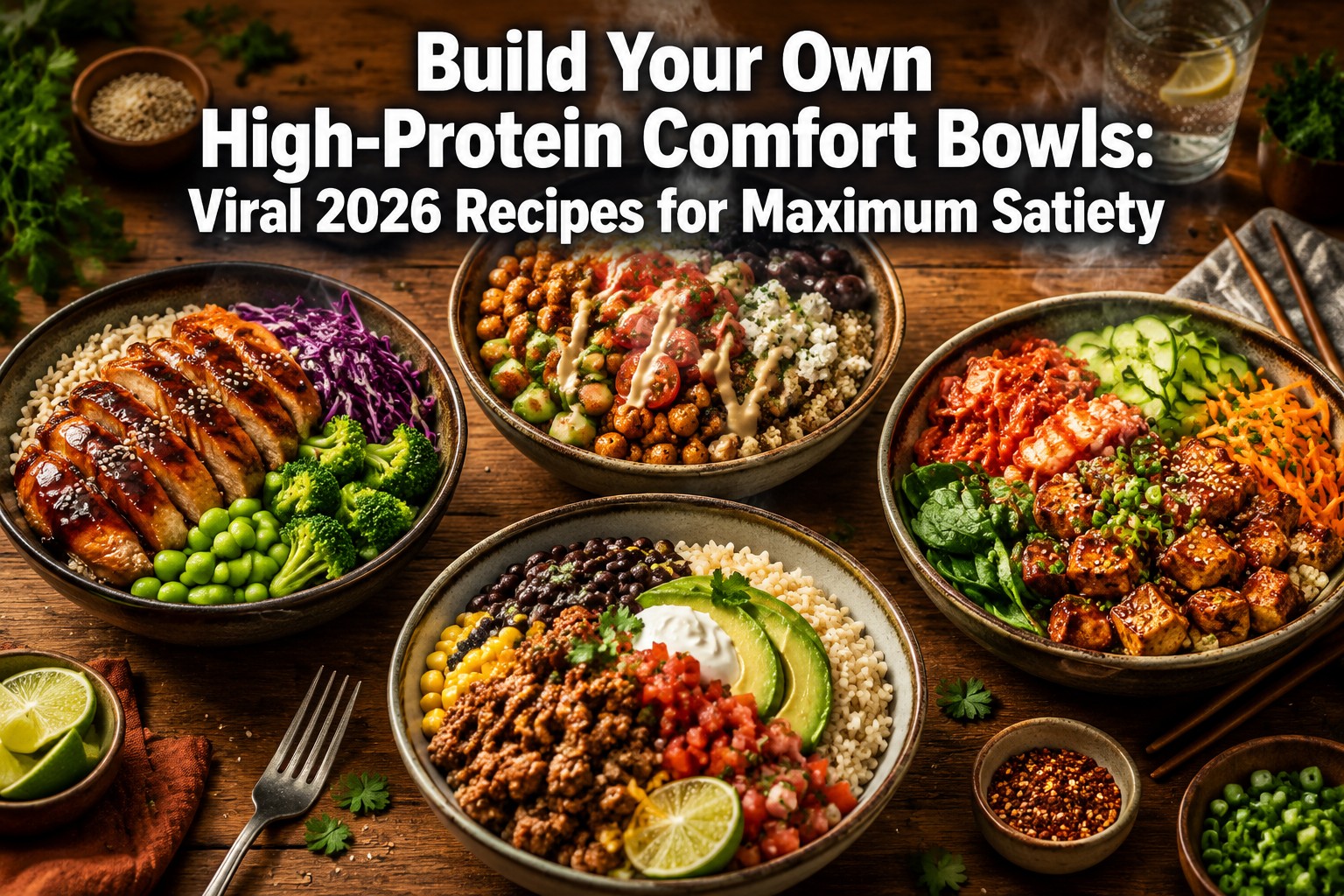
Build Your Own High-Protein Comfort Bowls: Viral 2026 Recipes for Maximum Satiety
Last updated: June 21, 2026
High-protein comfort bowls combine the satisfying flavors of takeout favorites with macro-friendly ingredients that keep you full for hours. These customizable bowls layer lean proteins, fiber-rich bases, colorful vegetables, and bold sauces to deliver 30-40 grams of protein per serving while tasting like your favorite street food or fakeaway meal, not diet food.
Key Takeaways
- High-protein comfort bowls typically contain 25-40 grams of protein per serving, combining multiple protein sources like chicken, tofu, eggs, or Greek yogurt with protein-rich toppings
- The basic formula is simple: grain or veggie base + lean protein + vegetables + flavorful sauce + protein-boosting toppings
- Satiety comes from the combination of protein, fiber, and volume, not just protein alone—aim for at least 25g protein and 8g fiber per meal
- Comfort-food flavors work perfectly in bowl format: buffalo chicken, Korean BBQ, Mediterranean falafel, and Mexican-inspired bowls all adapt well to high-protein builds
- Meal prep is straightforward: cook components separately, store in containers, and assemble fresh throughout the week
- Vegetarian and vegan options deliver comparable protein using tofu, tempeh, edamame, chickpeas, and cottage cheese
- Common mistakes include skipping healthy fats, under-seasoning proteins, and choosing only low-calorie bases that leave you hungry an hour later
What Makes a Comfort Bowl High Protein
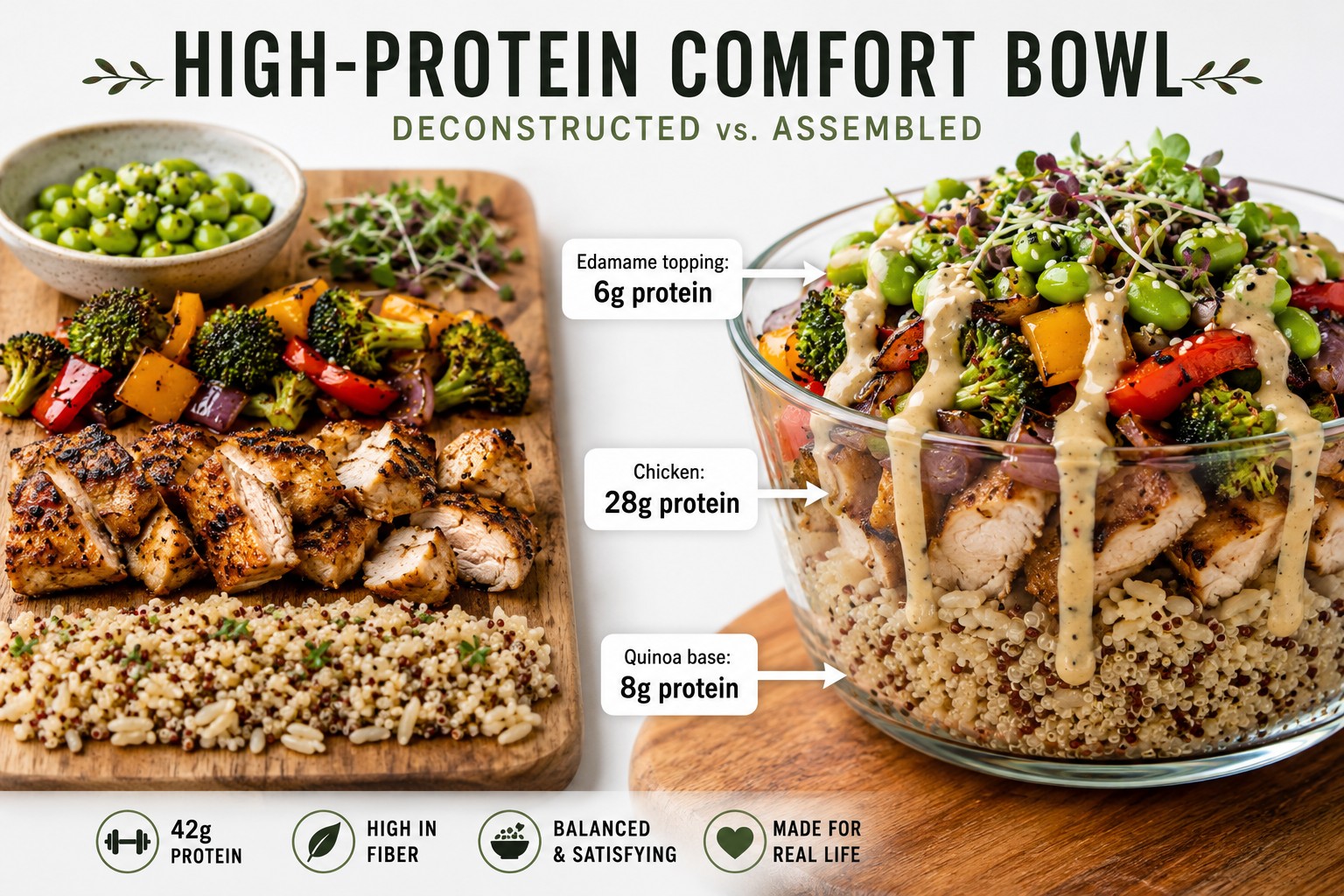
A comfort bowl qualifies as high-protein when it contains at least 25-30 grams of protein per serving, typically achieved by combining a primary protein source (chicken, tofu, fish, or eggs) with protein-rich toppings like edamame, chickpeas, nuts, seeds, or dairy. The “comfort” element comes from familiar flavor profiles—think buffalo sauce, teriyaki glaze, or creamy tahini—that make the bowl feel indulgent rather than restrictive [3][6].
The most effective high-protein comfort bowls use multiple protein sources rather than relying on a single ingredient. For example:
- Base protein (20-30g): grilled chicken breast, baked tofu, pan-seared salmon, or ground turkey
- Secondary protein (5-10g): edamame, black beans, quinoa, or cottage cheese
- Protein-boosting toppings (3-8g): hemp hearts, sliced almonds, hard-boiled egg, or Greek yogurt-based sauce
This layered approach not only increases total protein but also adds textural variety and keeps each bite interesting. Are chicken thighs protein-rich? Yes—chicken thighs deliver about 26 grams of protein per 4-ounce serving and work beautifully in comfort bowls because their higher fat content keeps them moist and flavorful [1][5].
Choose comfort-bowl ingredients if you want meals that satisfy cravings while supporting muscle maintenance, weight management, or athletic performance. Skip them if you’re looking for ultra-low-calorie options—these bowls prioritize satiety over calorie restriction.
How Much Protein Do I Need in a Meal to Feel Full
Most people need 25-40 grams of protein per meal to trigger satiety hormones and stay full for 3-4 hours, though individual needs vary based on body weight, activity level, and metabolic health. Research consistently shows that protein is the most satiating macronutrient, and spreading intake across meals (rather than loading it all at dinner) improves appetite control throughout the day [4][10].
A practical rule of thumb: aim for 0.4-0.6 grams of protein per kilogram of body weight per meal. For a 70kg (154 lb) person, that’s roughly 28-42 grams per meal. Athletes and highly active individuals may need the higher end of this range, while sedentary adults can function well at the lower end.
Protein alone isn’t enough for lasting fullness. Combine it with:
- Fiber (8-12g per meal): from vegetables, whole grains, or legumes
- Volume: bulky, water-rich foods like leafy greens, broccoli, or cauliflower rice
- Moderate healthy fat (10-15g): from avocado, nuts, seeds, or olive oil
The combination slows gastric emptying and stabilizes blood sugar, preventing the energy crash that often follows high-carb, low-protein meals. Which is better: chicken breast or whey protein? Both work, but whole-food proteins like chicken provide additional nutrients and greater satiety than isolated protein powders [5].
High Protein Comfort Bowl vs Regular Bowl Calories
High-protein comfort bowls typically contain 400-600 calories per serving, compared to 600-900 calories for restaurant-style grain bowls or takeout rice bowls. The calorie difference comes from using lean proteins, controlling added fats, and replacing some starchy carbs with non-starchy vegetables—not from eating tiny portions [7][10].
Here’s a side-by-side comparison:
| Component | Regular Takeout Bowl | High-Protein Comfort Bowl |
|---|---|---|
| Base | 2 cups white rice (400 cal) | 1 cup quinoa + 1 cup cauliflower rice (200 cal) |
| Protein | 3 oz fried chicken (250 cal) | 5 oz grilled chicken breast (180 cal) |
| Vegetables | 1/2 cup stir-fry veg (50 cal) | 2 cups roasted vegetables (100 cal) |
| Sauce | 3 tbsp teriyaki + oil (150 cal) | 2 tbsp tahini dressing (90 cal) |
| Toppings | Fried wontons (100 cal) | 1/4 cup edamame + sesame seeds (80 cal) |
| Total | ~950 calories, 25g protein | ~650 calories, 42g protein |
The high-protein version delivers 68% more protein with 32% fewer calories, primarily by increasing protein density and vegetable volume while moderating refined carbs and fried components. This doesn’t mean high-protein bowls are always lower-calorie—adding avocado, nuts, or full-fat dressings can push them to 700-800 calories, which is perfectly appropriate for active individuals or those not focused on weight loss [3][7].
Common mistake: Assuming all high-protein bowls are “diet food.” Many comfort-bowl recipes intentionally include 500-600 calories to support muscle building or maintenance eating, not restriction.
Best Protein Sources for Comfort Bowls Besides Chicken
While chicken breast remains popular for its lean protein profile, comfort bowls shine when you rotate through diverse protein sources that bring different flavors, textures, and nutrient profiles. The best alternatives deliver 20-30 grams of protein per serving while complementing bold sauces and seasonings [2][5][8].
Animal-based proteins:
- Chicken thighs (26g protein per 4 oz): juicier than breast meat, ideal for Korean BBQ or buffalo-style bowls. Learn the best way to cut chicken thighs for even cooking
- Ground turkey (22g per 4 oz): perfect for taco-style or Mediterranean bowls with cumin and paprika
- Salmon or tuna (25g per 4 oz): omega-3 rich, pairs beautifully with Asian-inspired sauces
- Shrimp (24g per 4 oz): cooks in minutes, works in Cajun, garlic-butter, or Thai-style bowls
- Eggs (12g per 2 large eggs): breakfast bowls or add hard-boiled eggs as a topping
Plant-based proteins:
- Extra-firm tofu (20g per 1 cup): press well, marinate, then bake or pan-fry until crispy
- Tempeh (31g per 1 cup): nutty flavor, holds up to bold marinades
- Edamame (18g per 1 cup shelled): works as both protein and vegetable
- Chickpeas (15g per 1 cup): roast with spices for crunchy topping or use in falafel-style bowls
- Black beans (15g per 1 cup): Mexican-inspired bowls with lime and cilantro
- Greek yogurt or cottage cheese (15-20g per 3/4 cup): breakfast bowls or as a creamy sauce base
Pro tip: Combine two protein sources in one bowl. A base of quinoa (8g protein per cup) plus grilled tofu (20g) plus edamame topping (9g per 1/2 cup) delivers 37g total protein with varied textures and complete amino acids [5][9].
Why Am I Still Hungry After Eating a High Protein Bowl
Persistent hunger after a high-protein bowl usually signals one of three issues: insufficient total calories, inadequate fiber or volume, or missing healthy fats that slow digestion. Protein alone doesn’t guarantee satiety—the entire macronutrient and micronutrient profile matters [4][10].
Most common causes:
- Too few calories overall: A 300-calorie bowl with 30g protein might hit your protein target but leave you in too large a deficit. Most adults need 400-600 calories per main meal
- Low fiber content: Protein without fiber digests quickly. Aim for 8-12g fiber per bowl from vegetables, whole grains, or legumes
- Insufficient volume: A dense, small bowl doesn’t trigger stretch receptors in your stomach. Add 2-3 cups of non-starchy vegetables
- Missing healthy fats: Fat slows gastric emptying. Include 1-2 tablespoons of olive oil, tahini, avocado, or nuts
- Inadequate seasoning: Bland food is less satisfying psychologically, even if macros are perfect. Use bold sauces and spices
- Eating too quickly: It takes 15-20 minutes for satiety signals to register. Slow down and chew thoroughly
Quick fix: If you’re hungry an hour after your bowl, add 1/4 avocado (80 cal, 7g fat) and an extra cup of roasted vegetables (50 cal, 3g fiber) to your next one. This small adjustment often makes the difference between satisfied and still searching for snacks.
Edge case: Some people have higher protein needs than standard recommendations. Athletes training intensely may need 40-50g protein per meal, not 25-30g [10].
Are High Protein Comfort Bowls Good for Weight Loss
High-protein comfort bowls support weight loss effectively when they create a calorie deficit while maintaining satiety, muscle mass, and meal satisfaction. The combination of high protein (which preserves lean tissue during weight loss), high fiber (which adds volume without calories), and comfort-food flavors (which prevent feelings of deprivation) makes them more sustainable than restrictive diets [4][7][10].
Why they work for weight loss:
- Protein increases thermic effect of food: Your body burns 20-30% of protein calories during digestion, compared to 5-10% for carbs and 0-3% for fats
- Satiety reduces total daily intake: People naturally eat less when meals are protein-rich and voluminous
- Muscle preservation: High protein during calorie restriction prevents the metabolic slowdown that comes from losing lean mass
- Psychological satisfaction: Bowls that taste like takeout reduce the urge to order actual takeout
Choose high-protein bowls for weight loss if you want to lose fat while maintaining muscle, prefer volume eating over tiny portions, and need meals that work for both weekday lunches and weekend dinners. They’re particularly effective for people who’ve failed on restrictive diets because they felt constantly hungry [7][10].
They’re NOT magic: You still need a calorie deficit. A 700-calorie high-protein bowl eaten three times daily (2,100 calories) won’t create weight loss for most people. Aim for 400-500 calorie bowls as main meals, with appropriate snacks, to hit your target intake.
Common mistake: Adding too many “healthy” toppings. Nuts, seeds, avocado, and tahini are nutritious but calorie-dense. Measure these ingredients rather than eyeballing them.
How to Meal Prep Comfort Bowls for the Week
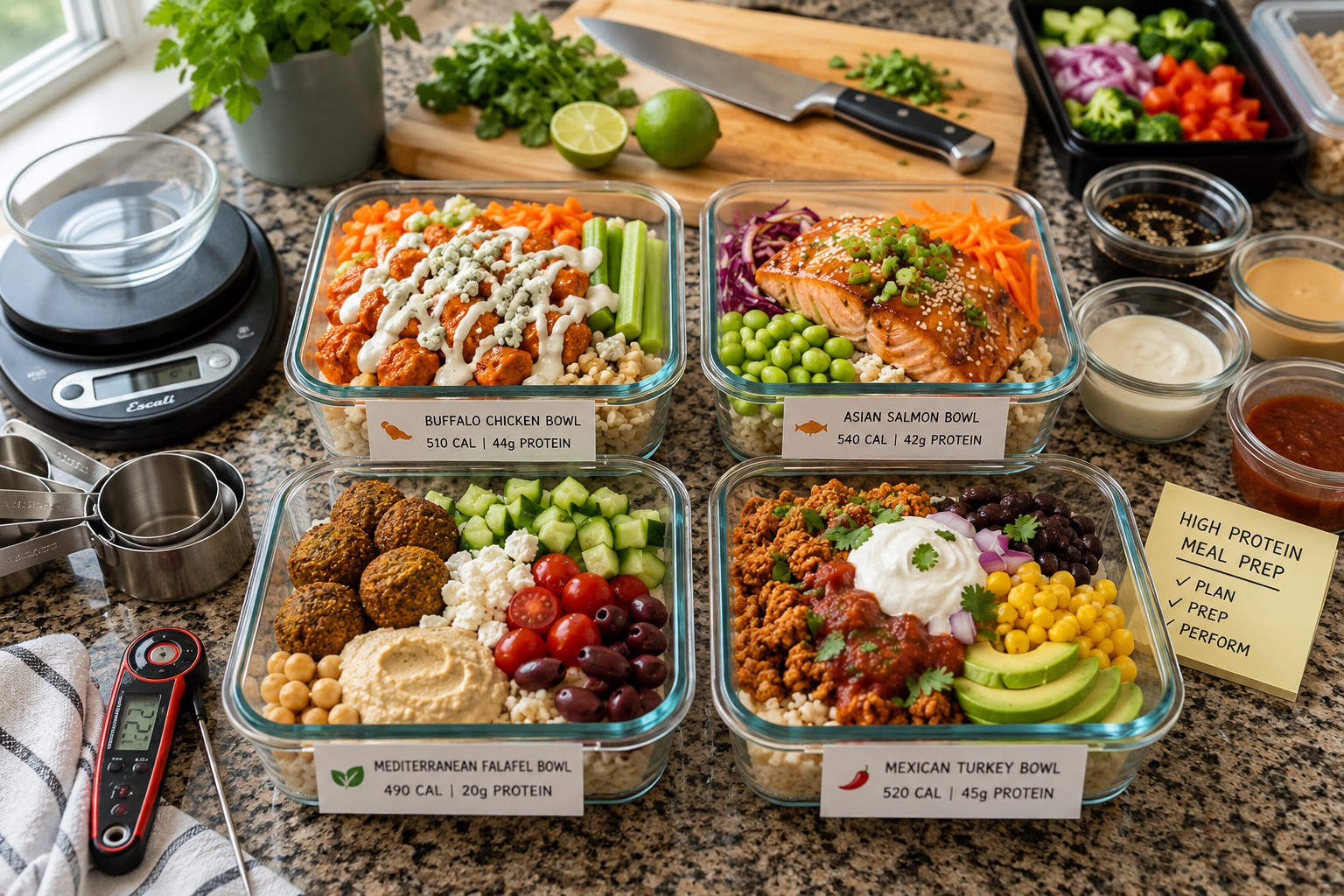
Meal prepping high-protein comfort bowls involves cooking components separately, storing them properly, and assembling fresh bowls throughout the week to maintain optimal texture and flavor. This approach takes 2-3 hours on a prep day and yields 4-6 ready-to-assemble meals [7][9].
Step-by-step meal prep process:
Cook your grains/bases (30 minutes):
- Make 4-6 cups cooked quinoa, brown rice, or farro
- Cool completely before portioning into containers
- Store refrigerated for up to 5 days
Prepare proteins (45 minutes):
- Bake 1.5-2 lbs chicken breast, tofu, or salmon
- Season well before cooking—underseasoned protein is the #1 meal-prep complaint
- Learn how to cook chicken breast without drying it out
- Slice or dice after cooling; store separately from other components
Roast vegetables (40 minutes):
- Prep 6-8 cups mixed vegetables (broccoli, bell peppers, zucchini, cauliflower)
- Toss with olive oil, salt, and pepper
- Roast at 425°F until caramelized
- Store in separate container from raw vegetables
Prep raw vegetables (15 minutes):
- Wash and chop lettuce, cucumber, tomatoes, shredded cabbage
- Store with paper towel to absorb moisture
- These stay crisp for 4-5 days
Make sauces (15 minutes):
- Prepare 2-3 different sauces in small containers
- Most dressings last 5-7 days refrigerated
- Keep separate until assembly to prevent sogginess
Storage strategy: Use 4-6 large glass containers (32 oz) or divided containers. Store components separately rather than fully assembled bowls. This prevents soggy greens and maintains texture. How long can cooked chicken thighs stay in the fridge? Properly stored, cooked chicken lasts 3-4 days refrigerated [9].
Assembly at mealtime (3 minutes):
- Add 1 cup base to bowl
- Top with 4-5 oz protein
- Add 1-2 cups vegetables (mix of roasted and raw)
- Drizzle with 2 tablespoons sauce
- Add protein-boosting toppings
Choose this method if you want variety throughout the week without cooking daily. Skip it if you prefer eating the same meal repeatedly—in that case, fully assembled bowls work fine.
High Protein Comfort Bowl Recipes Under 500 Calories
Creating satisfying high-protein bowls under 500 calories requires strategic ingredient choices that maximize protein and volume while moderating calorie-dense components like oils, nuts, and starchy bases. These bowls typically contain 30-40g protein and 8-12g fiber, keeping you full for 3-4 hours [3][7][10].
Buffalo Chicken Power Bowl (480 calories, 42g protein):
- 1 cup cauliflower rice (25 cal)
- 5 oz grilled chicken breast, diced (165 cal)
- 2 cups mixed greens (15 cal)
- 1 cup roasted broccoli (55 cal)
- 1/2 cup shredded carrots (25 cal)
- 3 tbsp buffalo sauce (15 cal)
- 2 tbsp Greek yogurt ranch (60 cal)
- 1/4 cup diced celery (5 cal)
- 2 tbsp crumbled blue cheese (60 cal)
Korean-Inspired Tofu Bowl (465 calories, 32g protein):
- 3/4 cup cooked brown rice (155 cal)
- 6 oz baked crispy tofu (180 cal)
- 1 cup sautéed bok choy (20 cal)
- 1/2 cup edamame (95 cal)
- 1/4 cup kimchi (15 cal)
- 2 tsp sesame oil (80 cal)
- 1 tbsp low-sodium soy sauce (10 cal)
- Sesame seeds and scallions (20 cal)
Mediterranean Chickpea Bowl (485 calories, 18g protein):
- 1/2 cup cooked quinoa (110 cal)
- 1 cup roasted chickpeas (200 cal)
- 2 cups mixed greens (15 cal)
- 1 cup cucumber and tomato (30 cal)
- 1/4 cup hummus (100 cal)
- 2 tbsp tahini dressing (90 cal)
- Fresh herbs and lemon (10 cal)
Mexican Turkey Bowl (495 calories, 38g protein):
- 1/2 cup black beans (110 cal)
- 5 oz seasoned ground turkey (200 cal)
- 1 cup cauliflower rice (25 cal)
- 1 cup bell peppers and onions (50 cal)
- 2 tbsp salsa (10 cal)
- 2 tbsp Greek yogurt (20 cal)
- 1/4 avocado (60 cal)
- Cilantro and lime (5 cal)
Key strategies for staying under 500 calories:
- Use cauliflower rice or zucchini noodles for half your base
- Choose lean proteins: chicken breast, white fish, shrimp, or extra-lean turkey
- Limit added fats to 1-2 tablespoons total
- Load up on non-starchy vegetables (they’re 20-50 calories per cup)
- Use Greek yogurt-based sauces instead of oil-based dressings
- Measure calorie-dense toppings like nuts, cheese, and avocado [7][10]
What Toppings Add Protein to Comfort Bowls
Strategic toppings can add 5-15 grams of protein to your comfort bowl while enhancing texture, flavor, and visual appeal. The most effective protein-boosting toppings are nutrient-dense, easy to prep in batches, and versatile enough to work across different flavor profiles [5][8][9].
High-protein toppings by category:
Legumes and soy:
- Edamame (9g protein per 1/2 cup) – works in Asian-inspired bowls
- Roasted chickpeas (6g per 1/4 cup) – Mediterranean or Indian flavors
- Black beans (8g per 1/2 cup) – Mexican-style bowls
Nuts and seeds:
- Hemp hearts (10g per 3 tbsp) – neutral flavor, works everywhere
- Sliced almonds (6g per 1/4 cup) – adds crunch
- Pumpkin seeds (9g per 1/4 cup) – Mexican or fall-inspired bowls
- Peanuts (7g per 2 tbsp) – Thai or Asian fusion bowls
Dairy and eggs:
- Hard-boiled egg (6g per egg) – any style bowl
- Cottage cheese (14g per 1/2 cup) – breakfast bowls or as sauce base
- Greek yogurt (10g per 1/3 cup) – Mediterranean or Indian bowls
- Feta or goat cheese (5g per 1/4 cup) – Mediterranean bowls
- Shredded mozzarella (6g per 1/4 cup) – Italian-inspired bowls
Protein-rich grains:
- Quinoa (4g per 1/2 cup cooked) – works as base or topping
- Farro (5g per 1/2 cup cooked) – Mediterranean bowls
Pro combinations that add 10+ grams protein:
- 1/4 cup edamame + 2 tbsp hemp hearts = 13g protein
- 1 hard-boiled egg + 1/4 cup chickpeas = 12g protein
- 1/3 cup Greek yogurt + 2 tbsp pumpkin seeds = 13g protein
Preparation tips: Roast chickpeas and nuts in batches with seasonings (curry powder, chili lime, everything bagel seasoning) and store in airtight containers for up to a week. This makes it easy to add protein and flavor without extra cooking time [8][9].
Can Vegetarians Make High Protein Comfort Bowls
Vegetarians can easily build high-protein comfort bowls delivering 30-40 grams of protein per serving by combining plant-based proteins like tofu, tempeh, legumes, eggs, and dairy with protein-rich grains and toppings. Plant-based bowls often require slightly larger portions or multiple protein sources to match the protein density of meat-based versions, but they’re equally satisfying and often higher in fiber [2][5][8].
Vegetarian protein sources for bowls:
Primary proteins (15-25g per serving):
- Extra-firm tofu, pressed and baked (20g per 1 cup)
- Tempeh, marinated and pan-fried (31g per 1 cup)
- Eggs, scrambled or hard-boiled (12g per 2 eggs)
- Cottage cheese (14g per 1/2 cup)
- Greek yogurt (15g per 3/4 cup)
Secondary proteins (8-15g per serving):
- Lentils (18g per 1 cup cooked)
- Black beans (15g per 1 cup)
- Chickpeas (15g per 1 cup)
- Edamame (18g per 1 cup shelled)
- Quinoa (8g per 1 cup cooked)
Sample vegetarian high-protein comfort bowls:
Mediterranean Falafel Bowl (38g protein):
- 1 cup quinoa (8g)
- 4 baked falafel patties (12g)
- 1/2 cup hummus (10g)
- Mixed vegetables
- Tahini dressing
- Hemp hearts (3g per tbsp)
Breakfast Power Bowl (35g protein):
- 2 scrambled eggs (12g)
- 1/2 cup cottage cheese (14g)
- 1/2 cup black beans (8g)
- Avocado, salsa, and vegetables
Asian Tofu Bowl (36g protein):
- 1 cup baked crispy tofu (20g)
- 1/2 cup edamame (9g)
- Brown rice and vegetables
- Peanut sauce
- Crushed peanuts (4g per tbsp)
Key strategy: Combine complementary proteins (grains + legumes, or soy + nuts) to ensure complete amino acid profiles. This isn’t strictly necessary at every meal, but it optimizes protein quality [5][8].
High Protein Comfort Bowls for People Who Hate Meal Prep
If meal prep feels overwhelming, you can still enjoy high-protein comfort bowls by using quick-cook proteins, pre-prepped ingredients, and simple assembly methods that take 15 minutes or less. The key is choosing ingredients that cook quickly or require no cooking at all [3][9].
No-prep and low-prep strategies:
Quick-cooking proteins (10 minutes or less):
- Shrimp (3-4 minutes in hot pan)
- Thin-sliced chicken breast (6-8 minutes)
- Eggs (scrambled in 3 minutes)
- Canned tuna or salmon (no cooking)
- Pre-cooked rotisserie chicken (just shred)
- Frozen pre-cooked chicken strips (microwave 2 minutes)
Store-bought shortcuts:
- Pre-washed salad greens and coleslaw mix
- Microwaveable rice and quinoa pouches (90 seconds)
- Frozen stir-fry vegetable blends
- Pre-cut fresh vegetables from salad bars
- Canned beans (rinse and use)
- Store-bought hummus, tzatziki, or pesto
- Pre-marinated tofu
15-minute bowl formula:
- Microwave rice pouch (90 seconds)
- Pan-sear shrimp or thin chicken (6-8 minutes)
- Steam frozen vegetables in microwave (3 minutes)
- Assemble with store-bought sauce
- Add quick toppings (canned beans, pre-shredded cheese, avocado)
Sample ultra-quick bowls:
Tuna Mediterranean Bowl (10 minutes):
- Microwave quinoa pouch
- Canned tuna (no cooking)
- Pre-washed greens
- Cherry tomatoes, cucumber (no cutting needed)
- Store-bought hummus
- Feta cheese
Rotisserie Chicken Bowl (8 minutes):
- Microwave brown rice
- Shred rotisserie chicken
- Frozen stir-fry vegetables (microwave)
- Bottled teriyaki sauce
- Sesame seeds
Choose this approach if you’re time-constrained, cooking-averse, or just getting started with home-cooked meals. The protein and satiety benefits remain the same even when using convenience ingredients [3][9].
Common Mistakes When Building High Protein Bowls
The most frequent mistakes when building high-protein comfort bowls include under-seasoning proteins, skipping healthy fats, using only raw vegetables, and creating bowls that are nutritionally complete but texturally boring. These errors don’t ruin the nutritional value but significantly reduce satisfaction and sustainability [6][8][10].
Top mistakes and fixes:
1. Bland, unseasoned protein
- Mistake: Plain grilled chicken with no marinade or seasoning
- Fix: Marinate proteins for 30+ minutes or use bold spice rubs. Season generously with salt, pepper, garlic powder, and paprika at minimum
- Why it matters: Bland protein makes the whole bowl feel like diet food, increasing the temptation to order takeout
2. Missing healthy fats
- Mistake: Fat-free dressing and no avocado, nuts, or seeds
- Fix: Include 1-2 tablespoons of healthy fat (olive oil, tahini, avocado, nuts)
- Why it matters: Fat slows digestion and improves satiety; fat-free bowls leave you hungry quickly
3. All raw vegetables
- Mistake: Only using cold, raw vegetables
- Fix: Include at least one cooked vegetable component (roasted, sautéed, or steamed)
- Why it matters: Cooked vegetables add warmth, deeper flavors, and better texture contrast
4. Wrong base portion
- Mistake: 2+ cups of rice or grain, crowding out vegetables
- Fix: Use 1/2-1 cup grain plus 1-2 cups vegetables for volume
- Why it matters: Too much grain reduces protein density and adds unnecessary calories
5. Insufficient protein variety
- Mistake: Chicken breast every single day
- Fix: Rotate through 4-5 different proteins weekly
- Why it matters: Variety prevents flavor fatigue and provides different nutrient profiles
6. Forgetting texture contrast
- Mistake: All soft components (rice, beans, avocado)
- Fix: Add at least one crunchy element (roasted chickpeas, nuts, raw vegetables, crispy tofu)
- Why it matters: Texture variety makes meals more satisfying and enjoyable
7. Sauce as afterthought
- Mistake: Dry bowl with sauce on the side
- Fix: Drizzle sauce over the bowl and toss lightly before eating
- Why it matters: Sauce ties all components together; dry bowls feel like separate ingredients, not a cohesive meal
8. Not tasting as you go
- Mistake: Assuming correct seasoning without tasting
- Fix: Taste each component and adjust seasoning before assembly
- Why it matters: Under-seasoned components can’t be fixed by sauce alone [6][8][10]
Do High Protein Comfort Bowls Work for Athletes
High-protein comfort bowls work exceptionally well for athletes when properly calibrated for training volume, timing, and total calorie needs. Athletes typically require 1.6-2.2 grams of protein per kilogram of body weight daily, meaning a 70kg athlete needs 112-154 grams of protein spread across 3-4 meals—roughly 30-40 grams per bowl [4][10].
Why they work for athletes:
- Customizable macros: Easy to adjust carbs, protein, and fats based on training phase
- Nutrient density: Vegetables provide vitamins, minerals, and antioxidants that support recovery
- Convenient fueling: Portable for post-training meals or between training sessions
- Muscle recovery: High protein content supports muscle protein synthesis after training
- Glycogen replenishment: Grain-based bowls provide carbs for glycogen restoration
Athlete-specific modifications:
For endurance athletes (runners, cyclists, swimmers):
- Increase grain portion to 1.5-2 cups for more carbohydrates
- Add sweet potato or regular potato for additional complex carbs
- Include anti-inflammatory ingredients (turmeric, ginger, berries)
- Target 40-50g carbs and 30g protein per bowl
For strength athletes (weightlifters, bodybuilders):
- Prioritize protein: 40-50g per bowl
- Include creatine-rich foods (red meat, salmon)
- Add extra healthy fats (nuts, avocado) for calorie density
- Consider post-workout bowls with faster-digesting proteins (chicken breast, white fish)
For team sport athletes (soccer, basketball, hockey):
- Balance carbs and protein: 35g protein, 40-50g carbs
- Include colorful vegetables for micronutrients
- Prep multiple bowls for busy training schedules
Timing considerations:
- Pre-training (2-3 hours before): Moderate protein (20-25g), higher carbs, lower fat
- Post-training (within 2 hours): Higher protein (35-40g), moderate carbs, moderate fat
- General meals: Standard 30-35g protein, balanced macros
Choose high-protein bowls if you need flexible, nutrient-dense meals that support training without requiring complicated meal planning. They’re particularly useful during heavy training blocks when appetite may be suppressed but nutrition needs are high [4][10].
How to Make Comfort Bowls Filling Without Too Many Carbs
Creating filling high-protein comfort bowls with moderate carbohydrates requires maximizing volume through non-starchy vegetables, including adequate protein and healthy fats, and using strategic low-carb base alternatives. The goal is satiety without relying heavily on grains or starchy vegetables [7][10].
Low-carb base alternatives:
Instead of 1 cup rice (45g carbs):
- Cauliflower rice (5g carbs per cup) – neutral flavor, works with any cuisine
- Zucchini noodles (7g carbs per cup) – Asian or Italian bowls
- Shredded cabbage (5g carbs per cup) – Asian-inspired bowls
- Mixed greens (2g carbs per 2 cups) – any style
- Broccoli rice (6g carbs per cup) – made by pulsing broccoli in food processor
Hybrid approach (moderate carbs, maximum satiety):
- 1/2 cup quinoa + 1 cup cauliflower rice = 25g carbs instead of 45g
- 1/2 cup sweet potato + 2 cups mixed greens = 20g carbs
- 1/3 cup black beans + 1 cup zucchini noodles = 18g carbs
Volume-building strategies:
- Double the vegetables: Use 2-3 cups of non-starchy vegetables (broccoli, bell peppers, mushrooms, asparagus, green beans)
- Increase protein portion: 6-8 oz protein instead of 4 oz adds satiety without many carbs
- Add healthy fats: 1/4 avocado, 2 tbsp nuts, or 1 tbsp olive oil slows digestion
- Include fiber-rich toppings: Chia seeds, hemp hearts, or flax seeds add bulk
Sample low-carb high-protein bowls:
Keto-Friendly Buffalo Chicken Bowl (12g net carbs, 45g protein):
- 2 cups cauliflower rice
- 6 oz grilled chicken
- 2 cups roasted broccoli and bell peppers
- Buffalo sauce
- 2 tbsp blue cheese dressing
- Celery and carrots
Mediterranean Low-Carb Bowl (18g net carbs, 38g protein):
- 2 cups mixed greens
- 5 oz grilled salmon
- 1 cup roasted zucchini and eggplant
- 1/4 cup hummus
- Olives, cucumber, tomatoes
- Tahini dressing
Asian-Inspired Low-Carb Bowl (15g net carbs, 40g protein):
- 1 cup zucchini noodles + 1 cup shredded cabbage
- 6 oz baked tofu
- 1 cup stir-fried bok choy and mushrooms
- 1/2 cup edamame
- Ginger-soy dressing
- Sesame seeds
Why this works: Protein (30-40g) and fiber (10-15g) from vegetables create satiety, while healthy fats (15-20g) slow gastric emptying. The combination keeps you full for 3-4 hours despite moderate carbohydrate intake (15-30g per bowl) [7][10].
Choose this approach if you’re managing blood sugar, following a lower-carb eating pattern, or find that high-carb meals leave you hungry quickly. Skip it if you’re highly active and need more carbohydrates for performance.
Build Your Own High-Protein Comfort Bowls: Viral 2026 Recipes for Maximum Satiety
The viral appeal of high-protein comfort bowls in 2026 centers on their ability to deliver takeout-style satisfaction with macro-friendly nutrition. These bowls combine familiar flavor profiles—buffalo chicken, Korean BBQ, Mediterranean falafel, Mexican-inspired—with strategic ingredient choices that maximize protein density and satiety [1][3][6].
Core formula for viral-worthy bowls:
Base layer (choose 1-2):
- 1/2-1 cup cooked grain (quinoa, brown rice, farro)
- 1-2 cups vegetable base (cauliflower rice, zucchini noodles, mixed greens)
Protein layer (25-35g total):
- 4-6 oz primary protein (chicken, tofu, salmon, shrimp, eggs)
- 1/2 cup secondary protein (beans, edamame, lentils)
Vegetable layer (2-3 cups total):
- 1 cup roasted vegetables (broccoli, bell peppers, cauliflower)
- 1 cup raw or lightly cooked vegetables (greens, cucumber, tomatoes, cabbage)
Sauce layer (2-3 tbsp):
- Bold, flavorful sauce that defines the bowl’s cuisine (buffalo, teriyaki, tahini, cilantro-lime, peanut)
Topping layer (5-10g protein):
- Protein-boosting toppings (hemp hearts, nuts, seeds, cheese, extra egg)
- Flavor enhancers (fresh herbs, scallions, lime, sesame seeds)
Viral 2026 flavor combinations:
1. Fakeaway Korean BBQ Bowl (38g protein, 520 calories):
- Brown rice + cauliflower rice blend
- Korean-marinated chicken thighs
- Kimchi, cucumber, shredded carrots
- Gochujang-sesame sauce
- Edamame, sesame seeds, scallions
2. Buffalo Ranch Power Bowl (42g protein, 480 calories):
- Cauliflower rice
- Buffalo-sauced chicken breast
- Roasted broccoli, celery, carrots
- Greek yogurt ranch
- Blue cheese crumbles, hard-boiled egg
3. Mediterranean Falafel Bowl (32g protein, 510 calories):
- Quinoa
- Baked falafel
- Roasted eggplant and zucchini
- Mixed greens, cucumber, tomato
- Tahini-lemon dressing
- Hummus, hemp hearts, fresh herbs
4. Thai Peanut Tofu Bowl (36g protein, 495 calories):
- Rice noodles (small portion) + shredded cabbage
- Crispy baked tofu
- Stir-fried bell peppers and snap peas
- Peanut-ginger sauce
- Crushed peanuts, cilantro, lime
5. Mexican-Inspired Turkey Bowl (40g protein, 505 calories):
- Black beans + cauliflower rice
- Seasoned ground turkey
- Roasted bell peppers and onions
- Salsa, Greek yogurt
- Avocado, cilantro, lime, pumpkin seeds
What makes these “viral” in 2026:
- They look visually appealing (colorful, layered, Instagram-worthy)
- They taste like restaurant food, not diet food
- They’re customizable to different dietary needs
- They include macro information (protein, calories)
- They use accessible ingredients, not exotic superfoods
- They work for meal prep or quick assembly [1][3][6][8]
Frequently Asked Questions
How much protein should be in a comfort bowl? Aim for 25-40 grams of protein per bowl, depending on your body weight and activity level. Most adults need 0.4-0.6 grams of protein per kilogram of body weight per meal to feel satisfied for 3-4 hours.
Can I freeze high-protein comfort bowls? Freeze cooked proteins and grains separately for up to 3 months. Don’t freeze assembled bowls with raw vegetables, as they become soggy when thawed. Sauces can be frozen in ice cube trays for easy portioning.
Are high-protein bowls safe for kids? Yes, high-protein bowls work well for kids when portioned appropriately. Children ages 4-8 need about 19g protein daily, while ages 9-13 need 34g. Adjust bowl sizes accordingly and include familiar flavors.
What’s the best time to eat a high-protein comfort bowl? High-protein bowls work for any meal. Post-workout bowls support muscle recovery, lunch bowls prevent afternoon energy crashes, and dinner bowls promote satiety overnight. Choose timing based on your schedule and hunger patterns.
Do I need to count macros for these bowls? Macro counting isn’t required but can be helpful initially to learn portion sizes. Once you understand what 30g protein and 400-500 calories looks like in a bowl, you can eyeball portions confidently.
Can I make high-protein bowls without cooking? Yes, use no-cook proteins like canned tuna, rotisserie chicken, hard-boiled eggs, cottage cheese, or deli turkey. Combine with pre-washed greens, pre-cut vegetables, canned beans, and store-bought dressings for a 5-minute bowl.
Are high-protein comfort bowls expensive? Costs vary by protein choice. Chicken thighs, eggs, canned tuna, and tofu are budget-friendly options at $2-4 per serving. Check current chicken breast prices at Costco for bulk savings. Buying grains and beans in bulk reduces costs further.
How do I prevent meal-prepped bowls from getting soggy? Store components separately and assemble just before eating. Keep dressings in small containers, store raw vegetables with paper towels to absorb moisture, and don’t mix hot and cold ingredients until serving.
Can diabetics eat high-protein comfort bowls? Yes, high-protein bowls can help manage blood sugar when built with moderate carbohydrates, plenty of fiber, and healthy fats. Choose lower-carb bases like cauliflower rice and focus on non-starchy vegetables. Consult your healthcare provider for personalized guidance.
What if I don’t like the protein sources listed? Rotate through different options until you find favorites. If you dislike chicken, try turkey, fish, shrimp, or plant-based proteins. The bowl formula works with any protein that delivers 20-30g per serving.
How long do high-protein bowls keep me full? Properly built bowls with 30-40g protein, 8-12g fiber, and moderate healthy fats typically provide satiety for 3-4 hours. If you’re hungry sooner, increase portion size or add more fiber and fat.
Are high-protein bowls good for building muscle? Yes, when combined with resistance training. Aim for 30-40g protein per bowl, eaten within 2 hours post-workout for optimal muscle protein synthesis. Include carbohydrates to replenish glycogen and support recovery.
Conclusion
Build Your Own High-Protein Comfort Bowls: Viral 2026 Recipes for Maximum Satiety represent the perfect intersection of nutrition science and culinary satisfaction. By layering lean proteins, fiber-rich bases, colorful vegetables, and bold sauces, you create meals that deliver 30-40 grams of protein while tasting like your favorite takeout—without the post-meal energy crash or lingering hunger.
The beauty of these bowls lies in their flexibility. Whether you’re meal prepping for the week, cooking a quick weeknight dinner, or fueling athletic performance, the basic formula adapts to your needs, preferences, and dietary requirements. Vegetarians can build equally satisfying bowls with tofu, tempeh, and legumes. Those watching calories can create filling 400-500 calorie versions. Athletes can increase portions to meet higher energy demands.
Start building your own high-protein comfort bowls today:
- Choose 2-3 favorite flavor profiles (Korean BBQ, Mediterranean, Mexican, Buffalo)
- Stock your kitchen with versatile proteins, grains, and vegetables
- Prep 2-3 bold sauces to keep meals interesting
- Start with one bowl this week, then gradually expand your rotation
- Track how long each bowl keeps you satisfied and adjust portions accordingly
The viral appeal of these bowls in 2026 isn’t about following a trend—it’s about discovering a sustainable eating pattern that supports your health goals without sacrificing the comfort-food flavors you crave. Learn more cooking techniques to expand your bowl-building skills and keep meals exciting week after week.
SEO Meta Title: High-Protein Comfort Bowls: Viral 2026 Recipes Guide
References
[1] High Protein Breakfast Bowl Recipes 11820668 – https://www.eatingwell.com/high-protein-breakfast-bowl-recipes-11820668
[2] High Protein Bowl Recipes – https://www.bbcgoodfood.com/recipes/collection/high-protein-bowl-recipes
[3] High Protein Bowl Recipes – https://www.delish.com/cooking/recipe-ideas/g69979441/high-protein-bowl-recipes/
[4] Protein Bowl Recipes – https://www.womenshealthmag.com/food/g65403665/protein-bowl-recipes/
[5] High Protein Bowls – https://moderatelymessyrd.com/high-protein-bowls/
[6] High Protein Comfort Foods – https://www.delish.com/cooking/recipe-ideas/g69254233/high-protein-comfort-foods/
[7] Protein Bowl Recipes – https://slimmingviolet.com/protein-bowl-recipes/
[8] Protein Bowl Recipes – https://www.jaroflemons.com/protein-bowl-recipes/
[9] Protein Bowl Recipes – https://goodhealthrecipes.com/protein-bowl-recipes/
[10] 21 High Protein Bowls Thatll Keep You Full Without The Food Coma – https://leanbitesdaily.com/21-high-protein-bowls-thatll-keep-you-full-without-the-food-coma/


