
Which Is More Healthy Chicken Breast or Salmon? Key Differences
You might wonder which is healthier, chicken breast or salmon, when you want a simple protein choice that fits your goals.
Both are healthy, but the better choice depends on whether you care more about lower calories and higher protein or more healthy fats and omega-3s.
If you want the leanest option with the most protein per calorie, chicken breast usually wins.
If you want more heart-healthy fats, omega-3 fatty acids, and nutrients like vitamin D, salmon is the stronger pick.
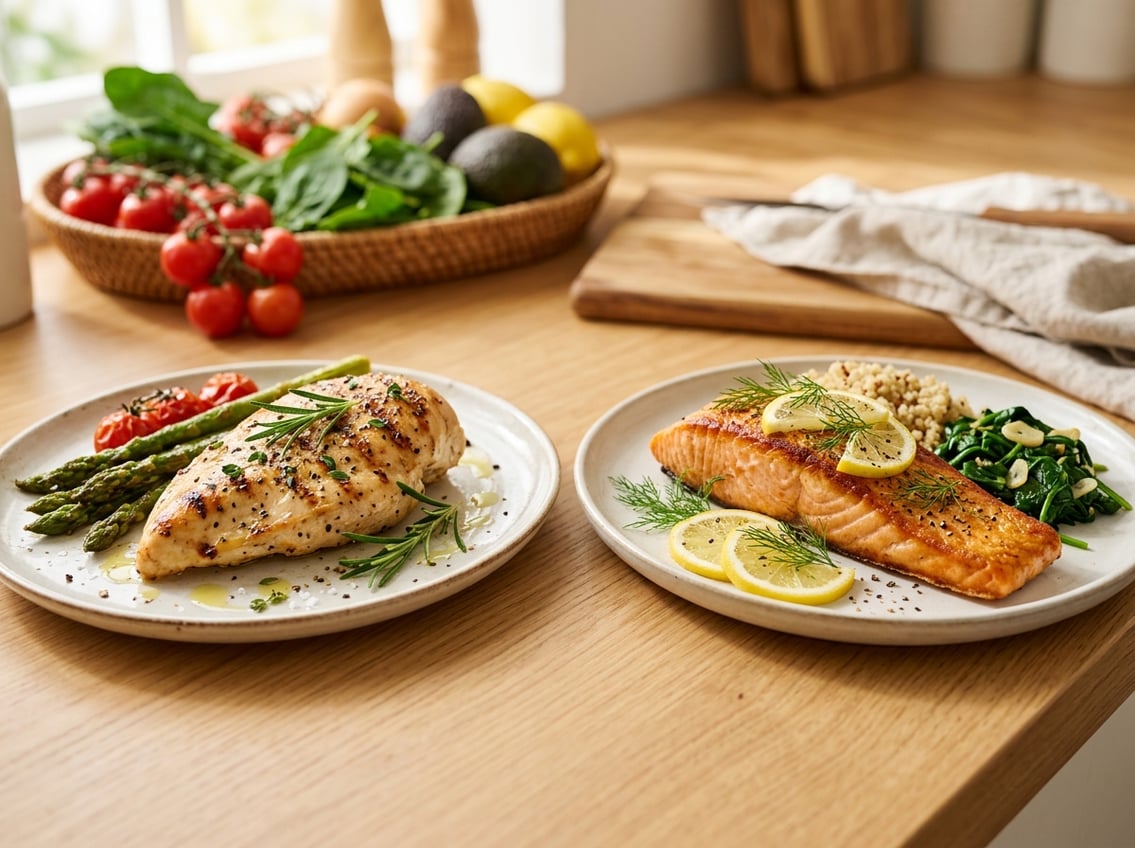
Chicken and salmon both fit into a healthy eating plan.
They are practical lean protein sources, and each brings different benefits to your meals.
The Short Answer: Which Option Fits Your Health Goal
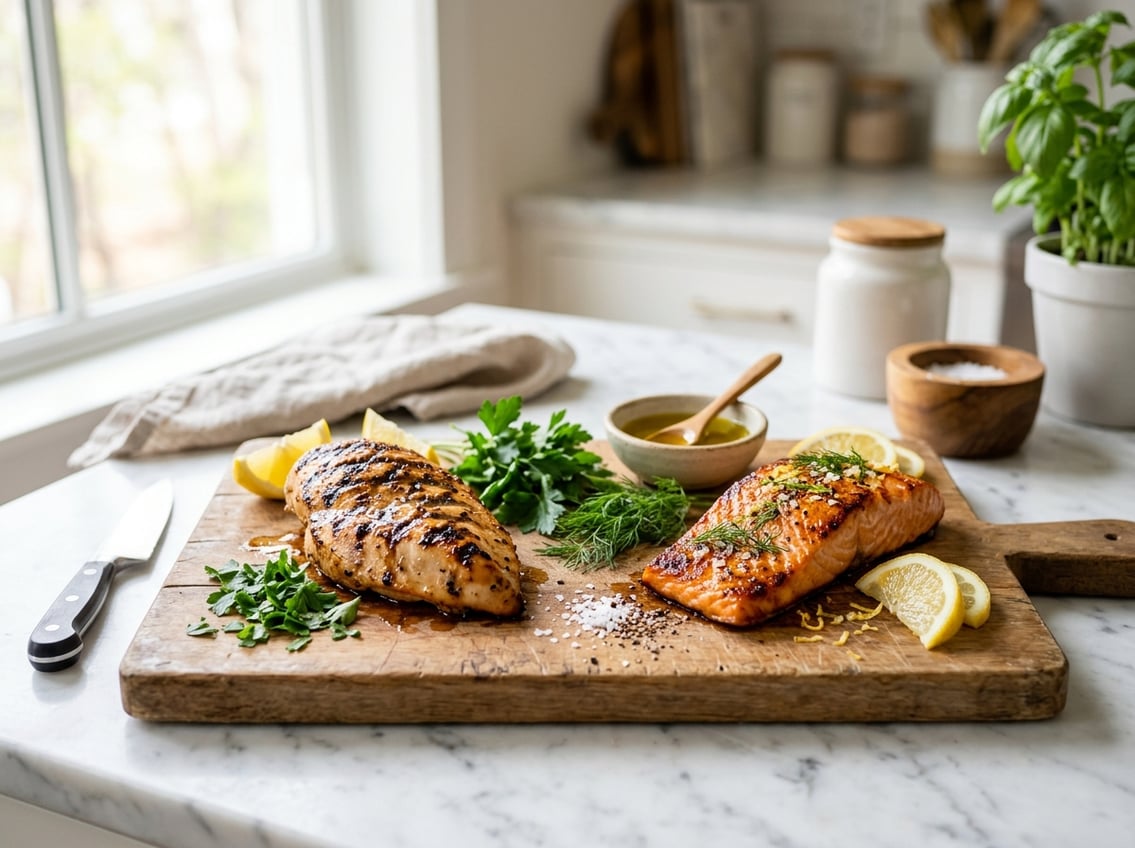
The best choice depends on what you want from your meals.
Chicken breast is usually better for weight loss and higher protein intake, while salmon is better for heart health and anti-inflammatory support because of its healthy fats.
According to Verywell Health, chicken breast has fewer calories and more protein per serving, while salmon has more heart-healthy omega-3 fatty acids.
That makes each food useful for different goals.
Best Pick for Weight Loss and Higher Protein Intake
If you want to manage calories while getting plenty of protein, chicken breast is usually the better pick.
A serving of cooked chicken breast gives you more protein with fewer calories than salmon, which can help you stay full while keeping your calorie intake lower.
Chicken breast often shows up in meal plans for fat loss and muscle building.
It is a simple way to get high-quality protein without adding much fat.
Best Pick for Heart Health and Anti-Inflammatory Benefits
If your goal is better heart health, salmon has the edge.
It provides more omega-3 fatty acids, especially EPA and DHA, which are linked to heart-healthy fats and may help reduce inflammation.
Salmon also gives you more vitamin D and vitamin B12 than chicken breast in a typical serving.
Those nutrients support bone health and red blood cell production.
When Eating Both Makes Sense
You do not need to choose one food forever.
Using both in your routine gives you more variety and a better mix of nutrients.
Chicken breast can anchor your everyday meals.
Salmon can appear a few times a week when you want more healthy fats and omega-3s.
Nutrition Differences That Matter Most
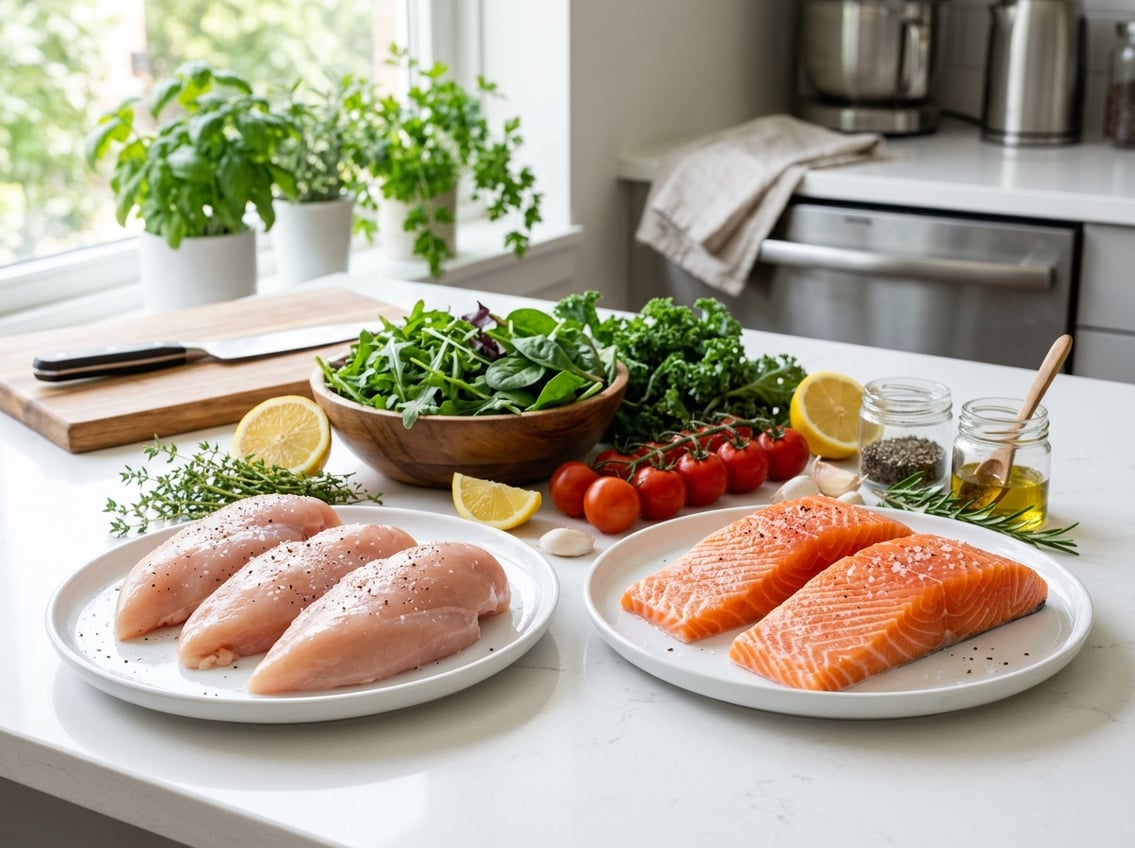
The biggest nutrition differences come from calories, protein, and fat quality.
Salmon has more calories because it contains more fat, while skinless chicken breast is leaner and gives you more protein for the calories.
Calories, Protein, and Fat Per Serving
In a cooked 3.5-ounce serving, chicken breast has about 187 calories and 33 grams of protein, while salmon has about 206 calories and 22 grams of protein, according to Verywell Health’s comparison.
Chicken breast also has less total fat.
That makes chicken breast a stronger fit if you want a lower-calorie protein.
Salmon still offers plenty of protein, just with more fat and energy per serving.
Omega-3s, EPA, and DHA in Salmon
Salmon stands out for omega-3 fatty acids, especially EPA and DHA.
These fats support heart health and are one reason salmon is often recommended in healthy eating plans.
Chicken contains very little omega-3 by comparison.
If you want more healthy fats in your diet, salmon is the clear winner.
Vitamin D, Vitamin B12, and Niacin Compared
Salmon is rich in vitamin D and vitamin B12.
Those nutrients are hard to get from food alone, which makes salmon especially useful if you do not get much sun or eat few animal foods.
Chicken breast provides more niacin, also called vitamin B3.
Niacin helps your body use food for energy and supports nerve function.
Saturated Fat and Overall Fat Quality
Skinless chicken breast is one of the leanest chicken cuts.
Salmon contains more total fat, but much of it is healthy fat.
That difference matters when you compare fat quality, not just fat quantity.
If you choose chicken, skinless chicken breast is the better option.
If you choose salmon, the fat profile is one of its main strengths.
How to Choose Based on Quality, Safety, and Sourcing
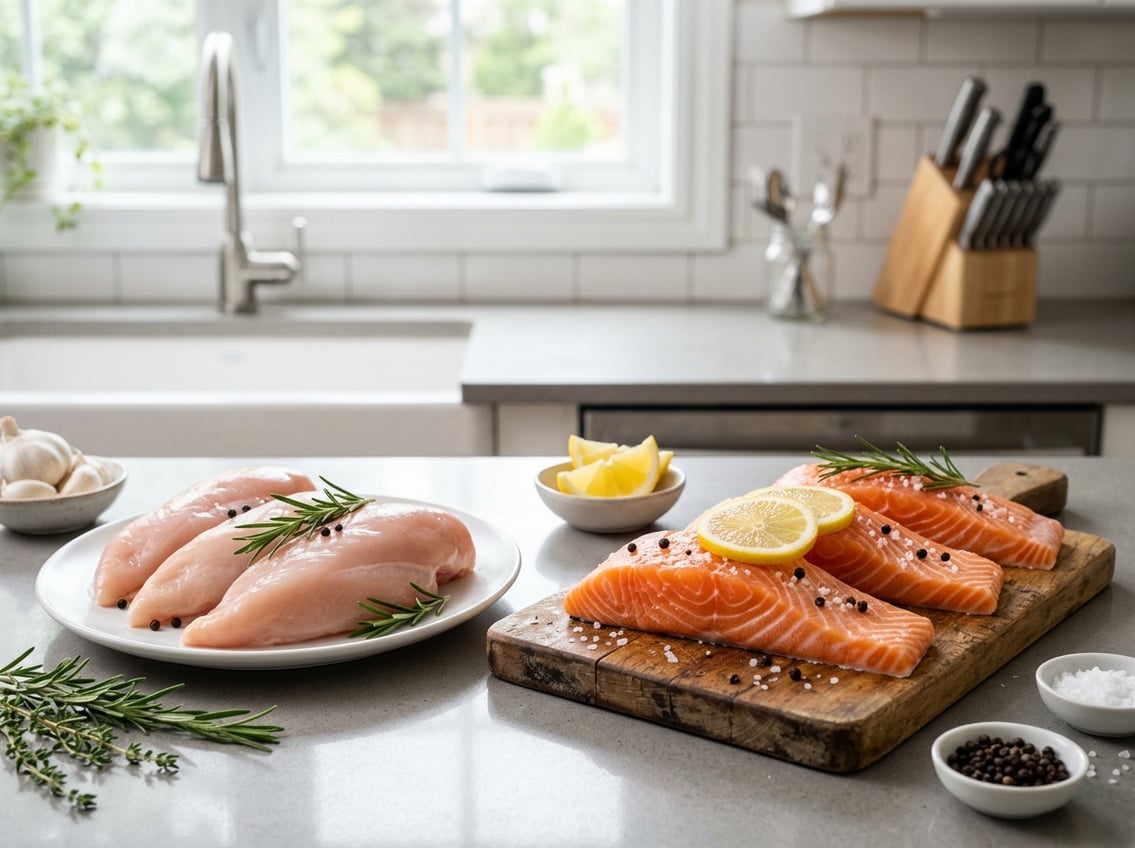
Nutrition is not the only factor.
Quality, sourcing, and food safety also shape how healthy each protein is in practice.
Wild vs. Farmed Salmon
Wild and farmed salmon both provide omega-3 fatty acids, but their nutrition and contaminant levels can differ.
Farmed salmon may contain more contaminants such as PCBs, while wild salmon may contain fewer of some contaminants but can still carry mercury.
Variety and responsible sourcing matter.
A sustainable seafood guide such as Seafood Watch’s sustainable salmon guide can help you shop more carefully.
Mercury and Other Contaminants to Know
Salmon is usually not among the highest-mercury fish, yet mercury and other contaminants still deserve attention.
Eating the same seafood every day can increase exposure to certain contaminants over time.
Rotating your protein choices lowers that risk.
That is one reason chicken and salmon work well together in a weekly plan.
Choosing Leaner Chicken Options
For chicken, the healthiest pick is usually skinless chicken breast.
The American Heart Association recommends skinless chicken and other lean poultry choices and suggests cooking methods such as baking, roasting, broiling, or air frying.
Trim visible fat and avoid breading or heavy sauces if your goal is a leaner meal.
Those choices keep chicken among the best lean protein sources.
How to Add Both to a Balanced Routine
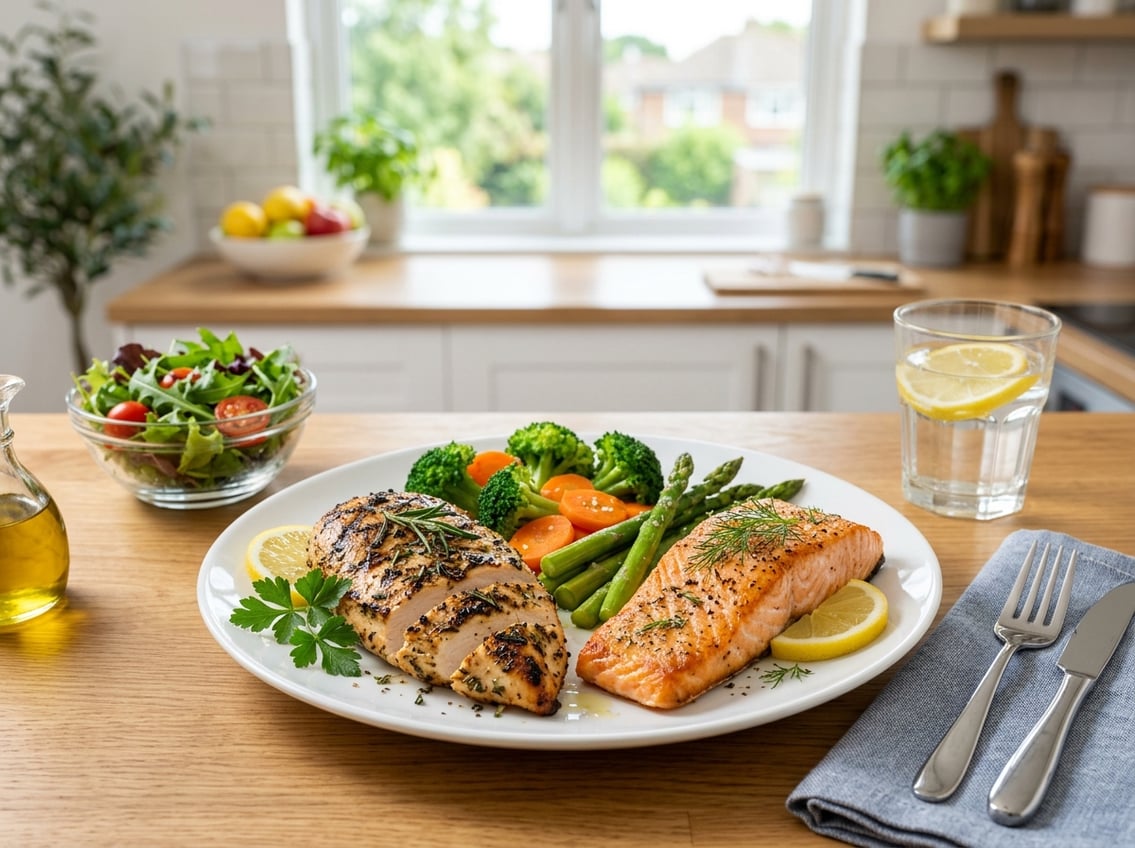
You can use chicken breast for simple weekday meals and salmon for a few planned dinners each week.
That approach gives you more balance and helps you get a wider range of nutrients.
Weekly Meal Planning Ideas
Use chicken breast in salads, grain bowls, tacos, soups, or stir-fries.
Use salmon for dinner with vegetables, rice, potatoes, or a simple green salad.
A practical weekly pattern is to eat chicken breast more often and salmon two times per week.
That gives you regular protein, plus enough omega-3 fatty acids, vitamin D, vitamin B12, and astaxanthin from salmon to add variety.
Who May Benefit From Professional Nutrition Advice
If you have heart disease, kidney disease, high cholesterol, or a medical condition that affects your diet, you may want guidance from a registered dietitian.
You may also benefit from professional advice if you take medications, are pregnant, or need a specific protein target.
A registered dietitian can help you choose the right mix of chicken breast and salmon for your needs.
This support is especially useful if you are trying to manage weight, improve heart health, or plan meals for a family.


