
Why Is Chicken Breast So Hard to Eat? Common Causes
Why is chicken breast so hard to eat? Most of the time, the answer is simple. The meat loses too much moisture, cooks past the safe point, or starts with a texture issue before it ever hits the pan.
Chicken breast is lean, so small mistakes can turn it dry, rubbery, or both.

If you want a juicy chicken breast, control temperature, thickness, and moisture from the start. That is the main difference between a dinner that feels chewy and one that stays tender.
You can usually fix the problem with a few basic habits. You do not need special equipment beyond a thermometer and a few simple prep steps.
What Usually Makes Chicken Breast Chewy or Tough
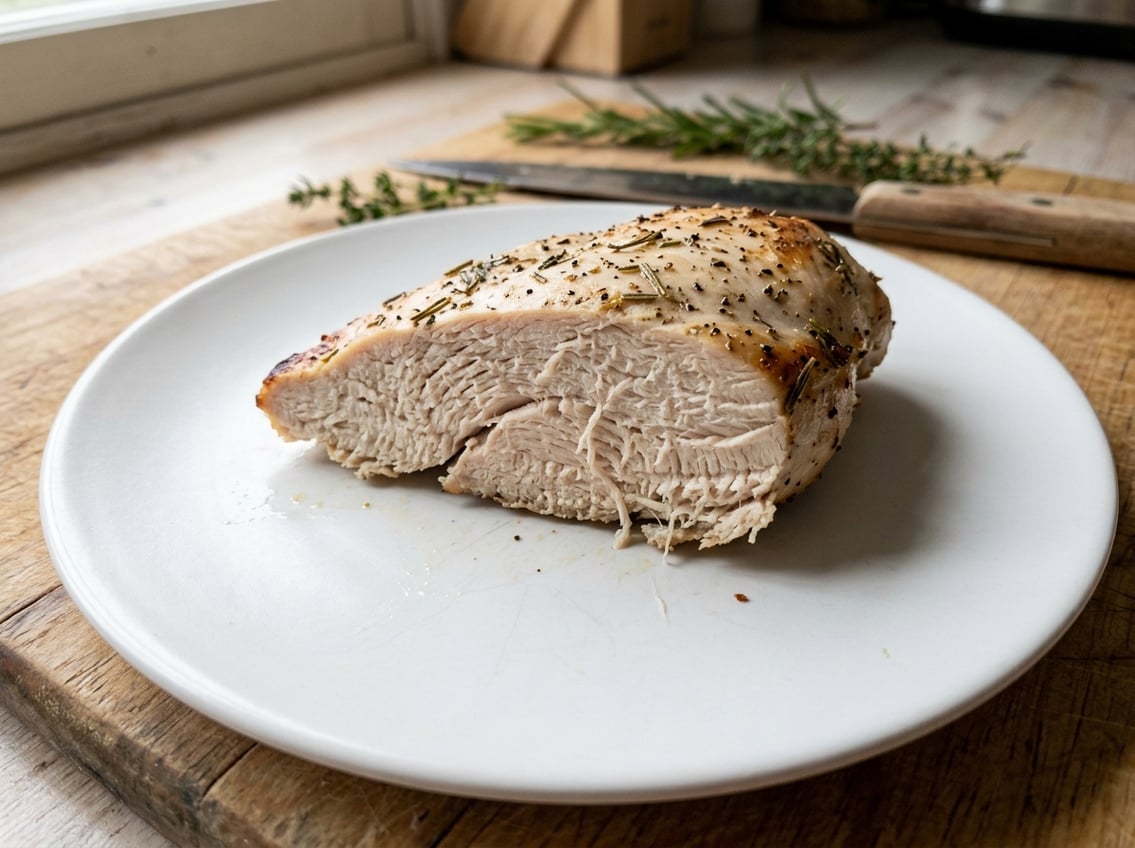
Heat, timing, or uneven shape usually cause tough chicken breast. Once you know where the texture went wrong, you can make a juicy chicken breast next time.
Overcooked Meat and Moisture Loss
Overcooked chicken breast is the most common cause of toughness. When it cooks too long, the proteins tighten and push out moisture, which leaves the meat dry and stringy.
According to Chicken breast toughness solved! the simple trick chefs swear by, cooking to the proper safe internal temperature helps you avoid that dry, tight texture. You want the chicken to reach 165°F at the thickest part, not well past it.
The more it moves beyond that point, the more it loses the moisture that keeps it tender.
Undercooked Centers and Rubbery Texture
A rubbery chicken breast can also happen when the center is not fully cooked. If the inside stays under the safe internal temperature, the texture can feel soft in a strange way, not pleasant or firm.
That rubbery bite can make you think the chicken is overcooked, but the real issue is uneven doneness. A thermometer helps you tell the difference.
Uneven Thickness and Fast-Drying Edges
Chicken breast often has a thick center and thin outer edges. The thin parts cook faster and dry out while the middle is still catching up.
If you cook a breast without evening out the thickness first, you often end up with a mix of dry and chewy spots.
How to Get a Tender, Juicy Result Every Time
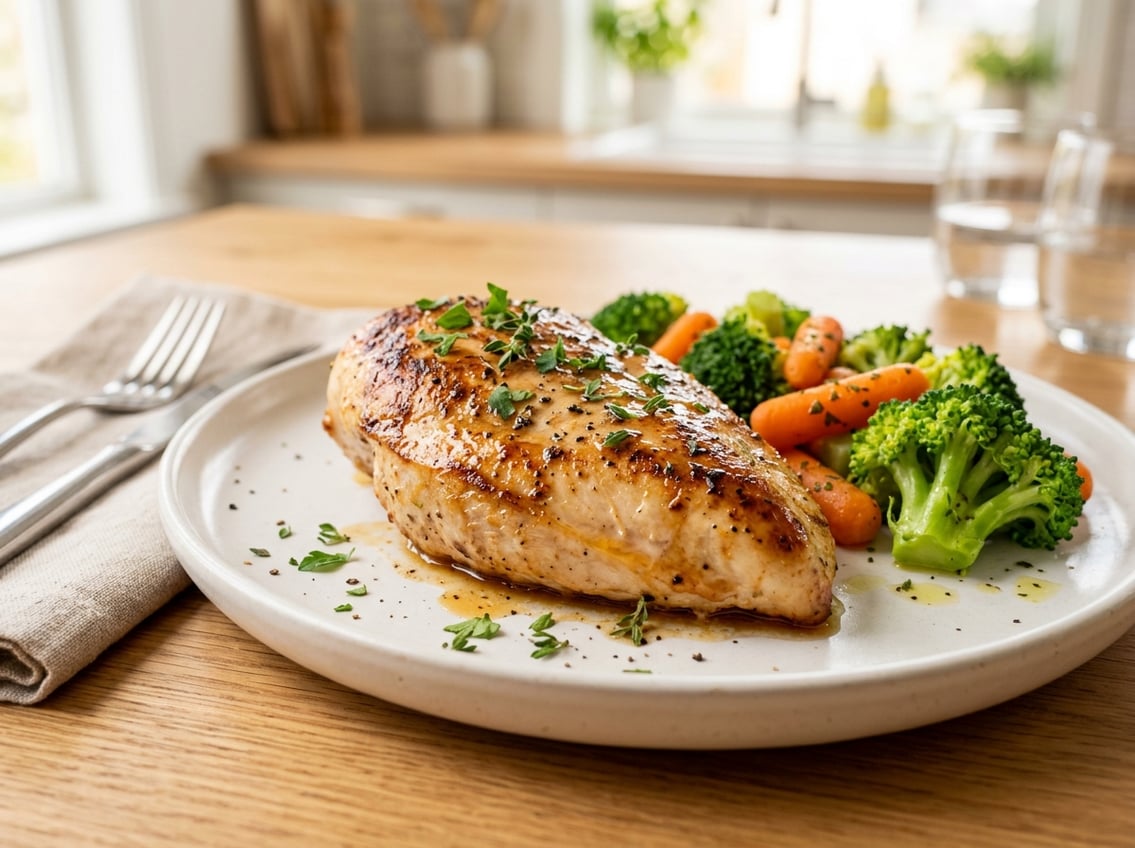
Control doneness before, during, and after cooking to make juicy chicken breasts. A few small prep steps help your chicken stay moist and tender.
Use a Meat Thermometer Instead of Guessing
Use a meat thermometer every time for better results. A thermometer takes out the guesswork and helps you stop cooking at the safe internal temperature.
Insert the probe into the thickest part of the breast, away from the pan or bone. This simple step helps you avoid overcooked chicken and keeps the moisture that makes juicy chicken possible.
Dry Brining for Better Moisture Retention
Dry brining means salting the chicken ahead of time and letting it rest before cooking. That salt helps the meat hold onto moisture and supports a more tender texture.
Salt the chicken, place it uncovered or lightly covered in the fridge for several hours, and let it rest before cooking. This step improves seasoning through the whole breast.
Marinating Chicken for Flavor and Tenderness
Marinating chicken adds both flavor and tenderness. A marinade with acid, oil, and seasoning softens the surface of the meat and helps protect it from drying out.
Keep the timing reasonable, since too much acid for too long can change the texture in a bad way. Used well, marinating supports a more flavorful, juicy chicken breast.
Pounding Chicken Breast to an Even Thickness
Pounding chicken breast is one of the easiest ways to improve texture. Use a meat mallet to gently flatten the thickest part so the whole piece cooks at the same speed.
When the breast has even thickness, the edges are less likely to dry out before the center cooks. This simple step can make a big difference in getting a tender result.
When the Problem Starts With the Chicken Itself
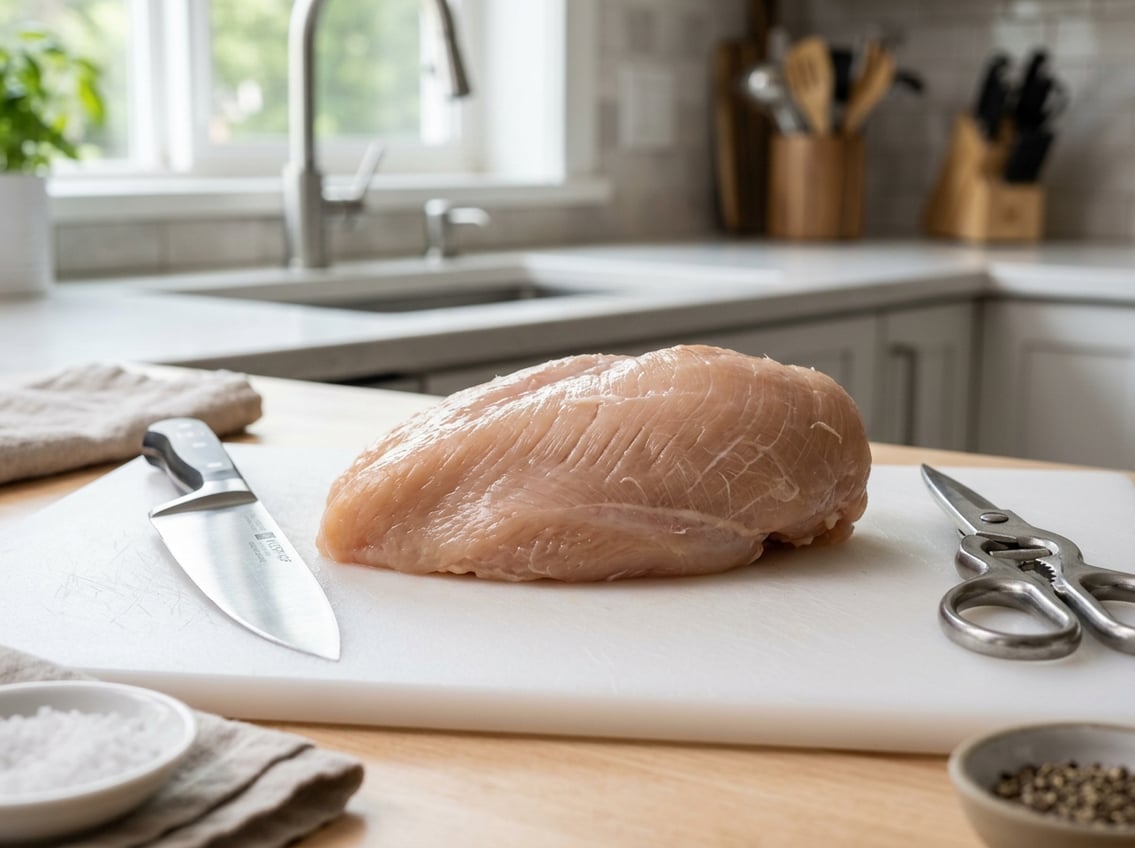
Sometimes the issue is not your method. Poor quality chicken can have texture problems that show up no matter how carefully you cook it.
Lean breast meat gives you less room for error than fattier cuts.
How Poor Quality Chicken Affects Texture
Not every chicken breast behaves the same way in the pan. Some breasts are naturally firmer, drier, or more uneven in texture before cooking, which can make the final result less tender.
If you keep doing everything right and still get tough chicken, the starting quality may be part of the problem. Freshness, storage, and processing all affect how the meat cooks.
Recognizing Woody Breast Before and After Cooking
Woody breast is a muscle condition that can make raw chicken feel hard or rigid. It is linked to rapid growth in poultry and can lead to a dense, chewy result after cooking, as noted by Why Your Chicken Breast Is Tough, 9 Fixes That Work.
Before cooking, woody breast may feel unusually firm or lumpy. After cooking, it can stay tough even when you stop at the right temperature.
Why Lean Breast Meat Is Less Forgiving Than Other Cuts
Chicken breast has less fat than thighs or drumsticks, so it dries out faster. Fat helps protect meat from heat, so lean breast meat has less natural defense against overcooking.
That is why chicken breast can go from tender to dry in a short time. Careful cooking matters more with lean cuts.
What to Do if It Is Already Too Tough to Enjoy
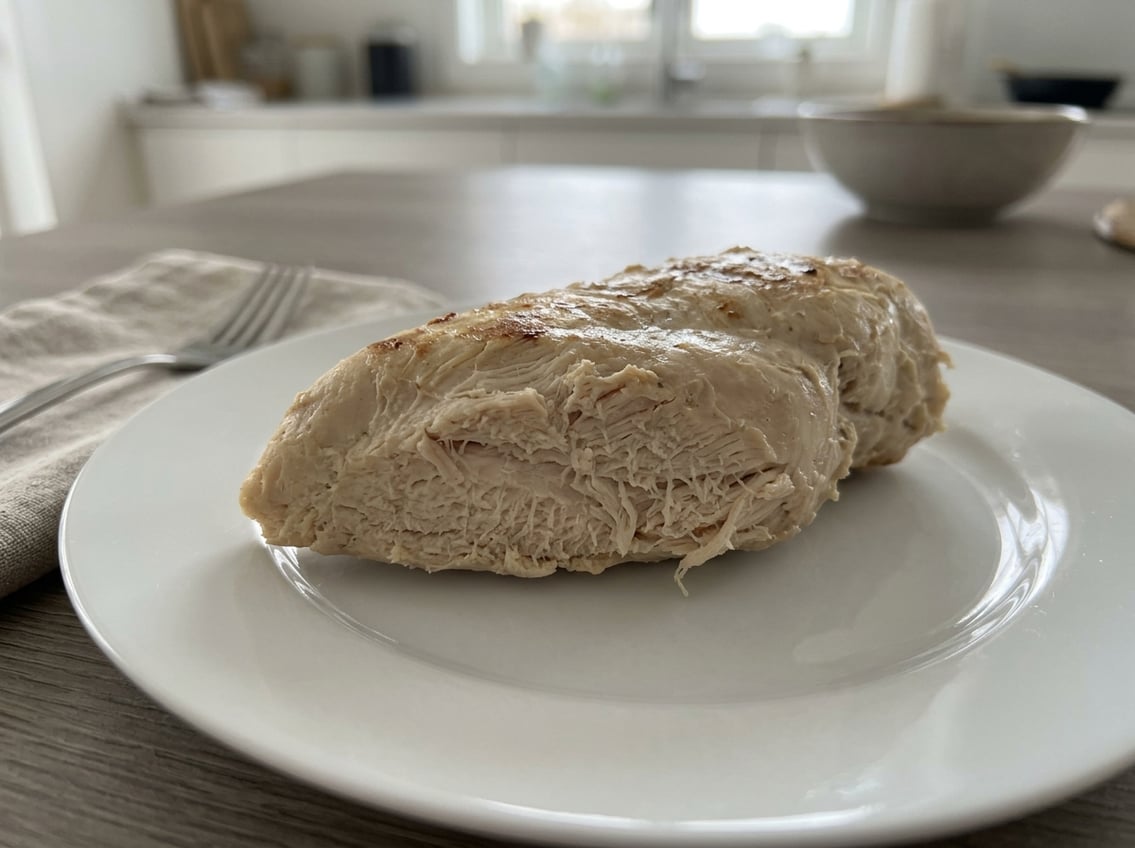
If your tough chicken breast is already cooked, you may still be able to improve it. The goal is to add moisture, reduce dryness, and make the texture easier to eat.
Ways to Fix Tough Chicken Breast After Cooking
To fix tough chicken breast, slice it thin and add moisture from a sauce, broth, or pan juices. A dry piece often feels better when it is coated or mixed with something wet.
If the chicken is only slightly dry, a short simmer in sauce can help. Avoid long, harsh reheating, since that can make overcooked chicken even firmer.
Best Ways to Slice, Rest, and Reheat
Always slice against the grain. That shortens the muscle fibers and makes each bite easier to chew.
Let the chicken rest before cutting if you can, since that helps keep more juices in the meat. When reheating, use low heat and a little liquid so the chicken stays closer to a juicy chicken breast texture.
When to Repurpose It Into Another Dish
If the breast is too dry to eat on its own, use it in a recipe where texture matters less.
Chicken salad, tacos, soups, casseroles, and pasta dishes can all hide a tough bite better than a plain plated breast.
Chop the chicken and mix it with sauce or dressing.
It can still work well in a new dish.


