
How Do You Cook Chicken Breast in the Oven So It Doesn’t Dry?
If you want juicy chicken breast from the oven, use evenly sized breasts, season them well, bake at the right temperature, and stop cooking as soon as the center reaches 165°F.
The biggest mistake is leaving chicken in the oven too long, even by a few minutes.
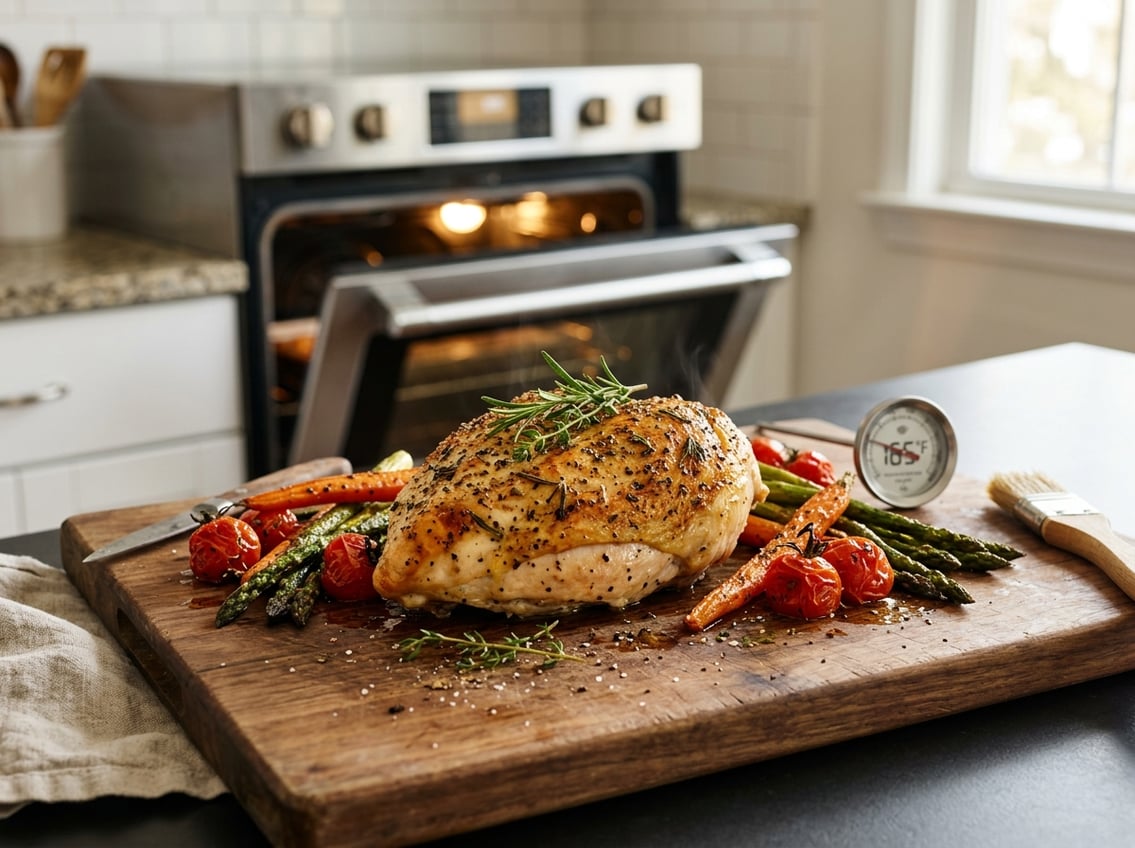
You get the juiciest baked chicken breast when you control thickness, temperature, and timing.
Let carryover cooking finish the job.
That approach works whether you make baked chicken breast for dinner, meal prep, or as a simple protein for salads and grain bowls.
Oven cooking is popular because it is easy and reliable.
A good method for baking chicken breast gives you tender meat without much hands-on work.
It also works well for chicken you plan to store and reheat later.
The Core Method for Juicy Oven-Baked Chicken
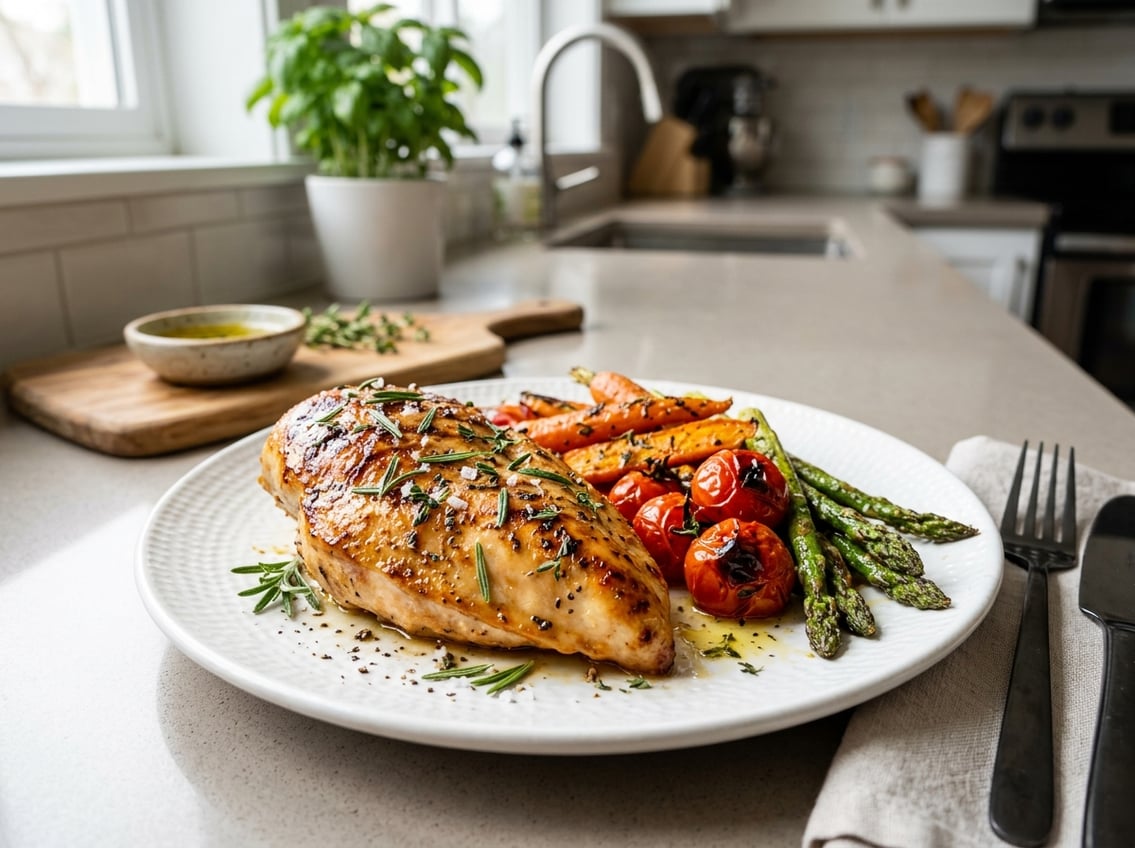
Start with even pieces, simple seasoning, and careful timing.
Use a hot oven and a meat thermometer for best results.
Choose Evenly Sized Boneless Skinless Chicken Breasts
Pick boneless skinless chicken breasts that are close in size and thickness.
If one piece is much thicker, pound the thicker part lightly so the chicken cooks more evenly.
That step helps the breasts finish at the same time.
Pat Dry, Coat Lightly, and Season Both Sides
Pat the chicken dry with paper towels so the surface can brown.
Coat it lightly with olive oil to help seasonings stick and support better browning.
Season both sides with kosher salt, garlic powder, and any other spices you like.
A light coating is enough.
Bake at the Right Temperature and Use a Thermometer
Bake chicken breasts at 375°F to 425°F, depending on thickness and your oven.
Chicken breasts baked uncovered at 375°F usually take 25 to 30 minutes, though larger pieces may take longer.
Use a meat thermometer in the thickest part.
Pull the chicken when it reaches 160°F to 162°F, because carryover cooking will bring it up to 165°F as it rests.
Pull Early and Let Carryover Cooking Finish the Job
Carryover cooking matters because the chicken keeps cooking after it leaves the oven.
Set the chicken on a plate or cutting board and leave it alone for a few minutes.
That short rest helps the juices settle back into the chicken.
Prep Choices That Prevent Dryness
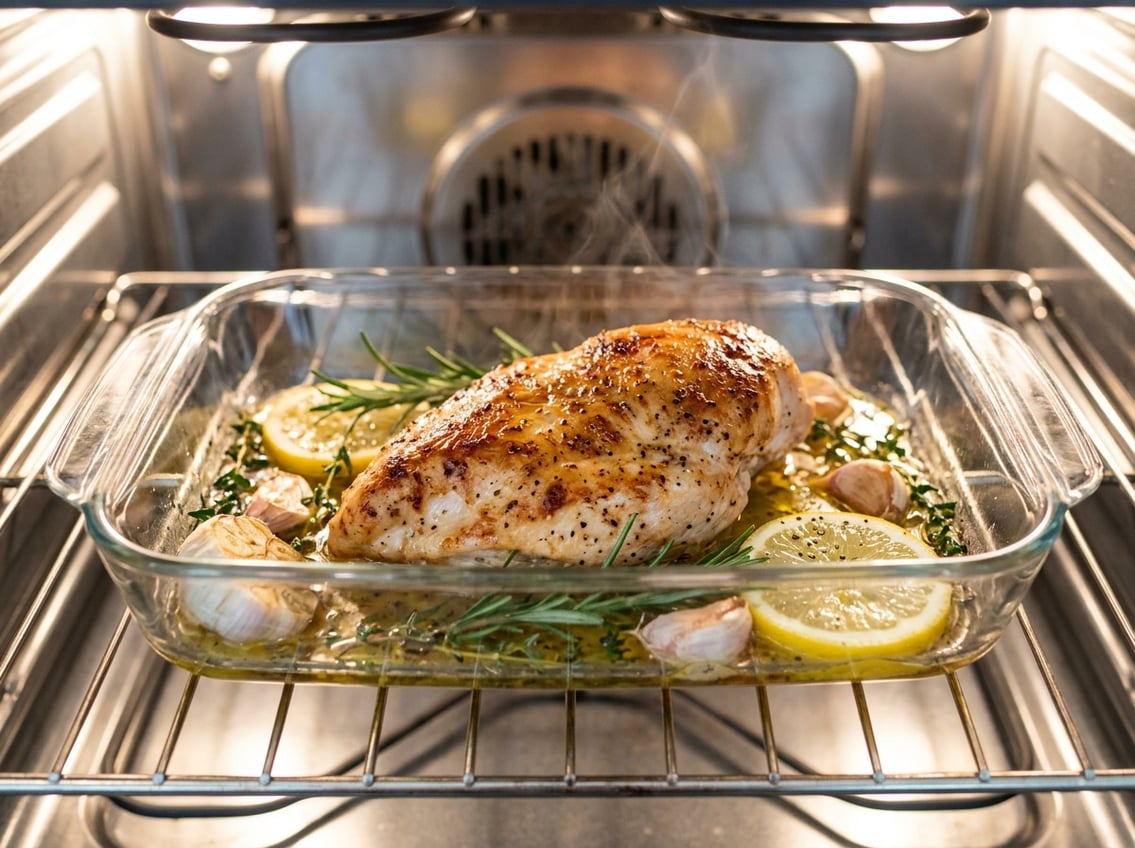
Prep makes a big difference before the chicken reaches the oven.
Brining, thickness, pan setup, and covering choices all affect whether you get juicy chicken or a dry result.
When to Brine Chicken Breasts
Brine chicken breasts when you want extra moisture and a little extra seasoning throughout the meat.
A basic salt brine is especially useful for lean, boneless skinless chicken breasts.
Brining is helpful for organic chicken too, since it can still dry out if you overcook it.
Keep the brine simple, and do not soak it so long that the texture turns too soft.
Why Thickness Matters More Than Size
Thickness affects cooking time most.
A wide but thin breast may cook faster than a smaller but very thick one.
If the center is much thicker than the edges, the outside will finish too early.
Flattening the thickest spot gives you a more tender chicken breast and more even baking.
Best Pan Setup for Moisture and Even Cooking
Place the chicken in a baking dish or roasting pan in a single layer with a little space between pieces.
Air should move around each breast so the heat reaches it evenly.
A light coating of olive oil or melted butter can help the surface stay moist.
Use just enough to gloss the chicken, not enough to pool in the bottom of the pan.
Should You Cover the Chicken While Baking
Start with the chicken uncovered for better browning and more even cooking.
If the top is browning too fast, loosely tent it with foil near the end.
Full-time covering is not the best choice because it softens the surface.
Seasoning Options That Add Flavor Without Hiding the Chicken
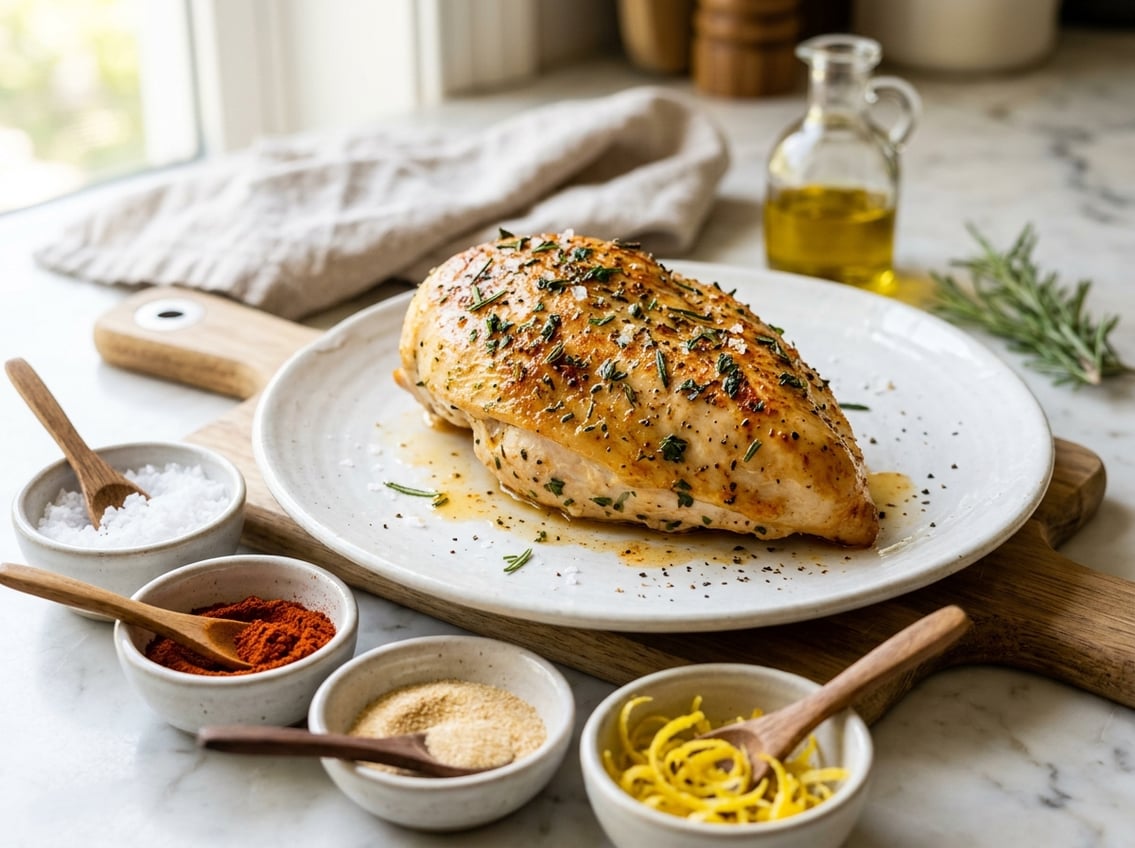
Good seasoning makes baked chicken breast taste fuller without covering up the meat.
A simple base gives you room to make lemon pepper chicken, smoky versions, or richer recipes.
A Simple All-Purpose Chicken Breast Recipe Base
For a basic recipe, use olive oil, kosher salt, garlic powder, and a little black pepper.
This keeps the flavor clean and works with almost any side dish.
If you want a richer finish, brush on a small amount of melted butter near the end of baking.
That adds flavor without making the surface greasy.
Lemon Pepper Chicken and Other Easy Variations
Lemon pepper chicken works well because citrus and pepper brighten mild chicken breast.
Smoked paprika adds color and a light smoky taste without overpowering the meat.
Use the same base and change only one spice at a time.
That makes it easy to build a few recipes from one method.
How Salt, Fat, and Spices Affect Texture
Salt helps chicken hold moisture when used in the right amount.
Fat from olive oil or melted butter can improve browning and help spices cling to the surface.
Spices like garlic powder and smoked paprika add flavor, not moisture.
A well-seasoned chicken breast still depends on proper heat and timing.
Timing, Resting, and Serving Without Losing Juices
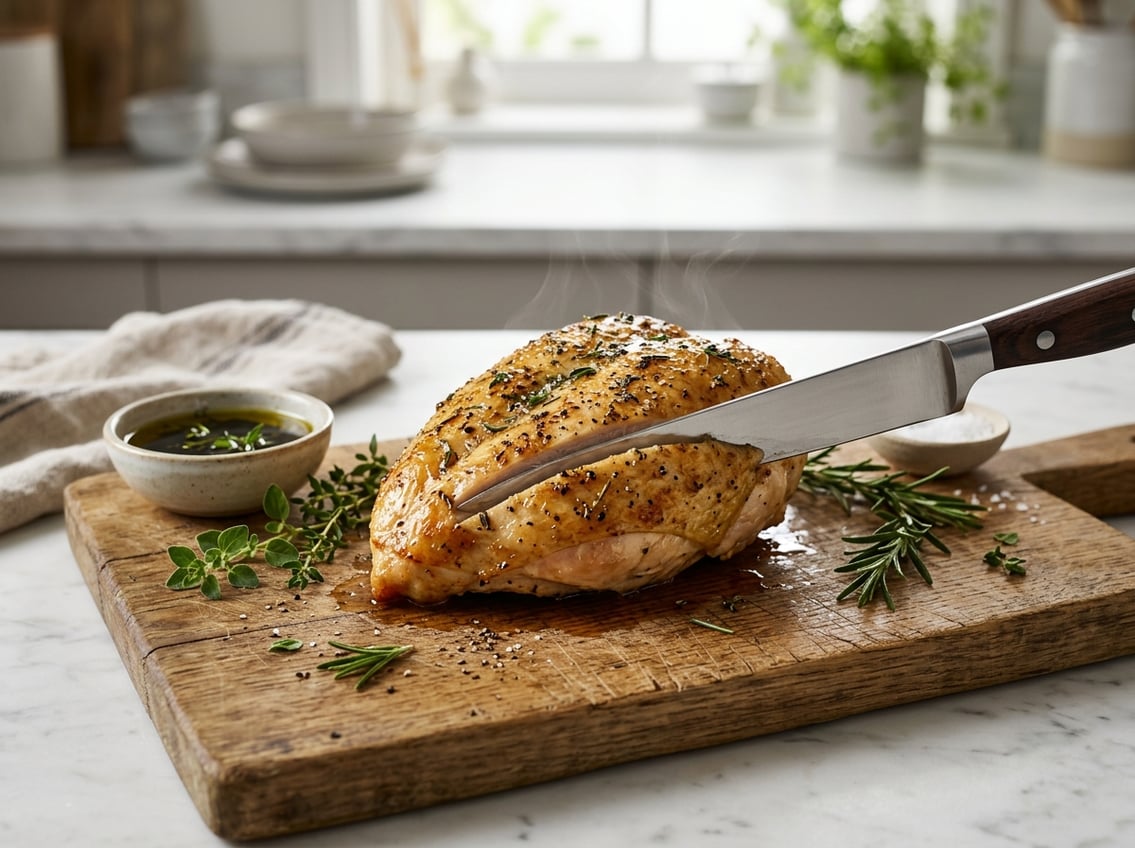
Timing often decides whether you get juicy chicken breast or dry meat.
Once the chicken leaves the oven, resting and slicing it the right way matter just as much as the bake itself.
How to Check Doneness Accurately
Use a meat thermometer in the thickest part of the chicken.
Check more than one piece if the breasts are different sizes.
The safe internal temperature is 165°F.
Do not guess by color alone.
A chicken breast can look done before it is fully cooked, or it can still look slightly pink and be safe if the thermometer says 165°F.
How Long Different Breast Sizes Usually Take
Cooking time depends on thickness and oven temperature.
At 375°F, many 6 to 8 ounce breasts take about 25 to 30 minutes.
Thicker pieces may need a few extra minutes, while smaller pieces may finish sooner.
Start checking early so you do not miss the best point for juicy chicken.
Why Resting Matters Before Slicing
Rest the chicken for 5 to 10 minutes before slicing.
This helps the juices stay inside the meat instead of running onto the cutting board.
If you cut too soon, even properly cooked chicken can seem dry.
Slice against the grain for a more tender bite.
Best Ways to Use and Store Leftovers
You can use leftover baked chicken breasts in sandwiches, salads, pasta, soups, and wraps.
Place the cooled chicken in an airtight container and store it in the refrigerator.
To reheat without drying out the chicken, warm it gently with a little broth or water and cover it while heating.
Keep the reheating time short so the meat stays moist.


