
What’s the Best Way to Cook Chicken Breast So It Doesn’t Dry Out?
If you want to cook chicken breast so it stays juicy, start with even pieces, season ahead of time, cook it quickly, and pull it from heat before it reaches the final target temperature. The most reliable way to get juicy chicken breast is to prepare even pieces, use a quick brine or dry brine when possible, and stop cooking at the right temperature.
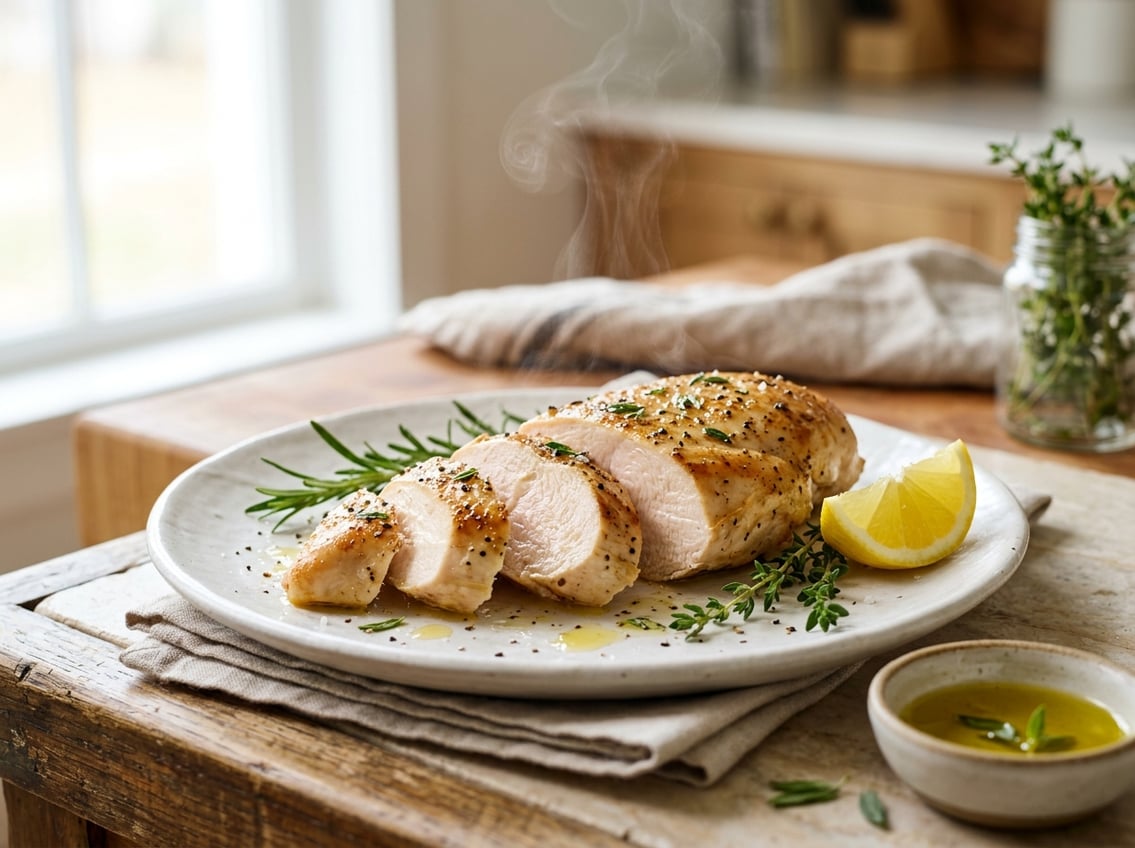
Chicken breasts are lean and give you little room for error. If you use a thermometer and a simple method, you can make tender chicken breast for dinner, meal prep, salads, and sandwiches.
If you cook chicken breast by guesswork, it can turn tough fast.
The Method That Works Best
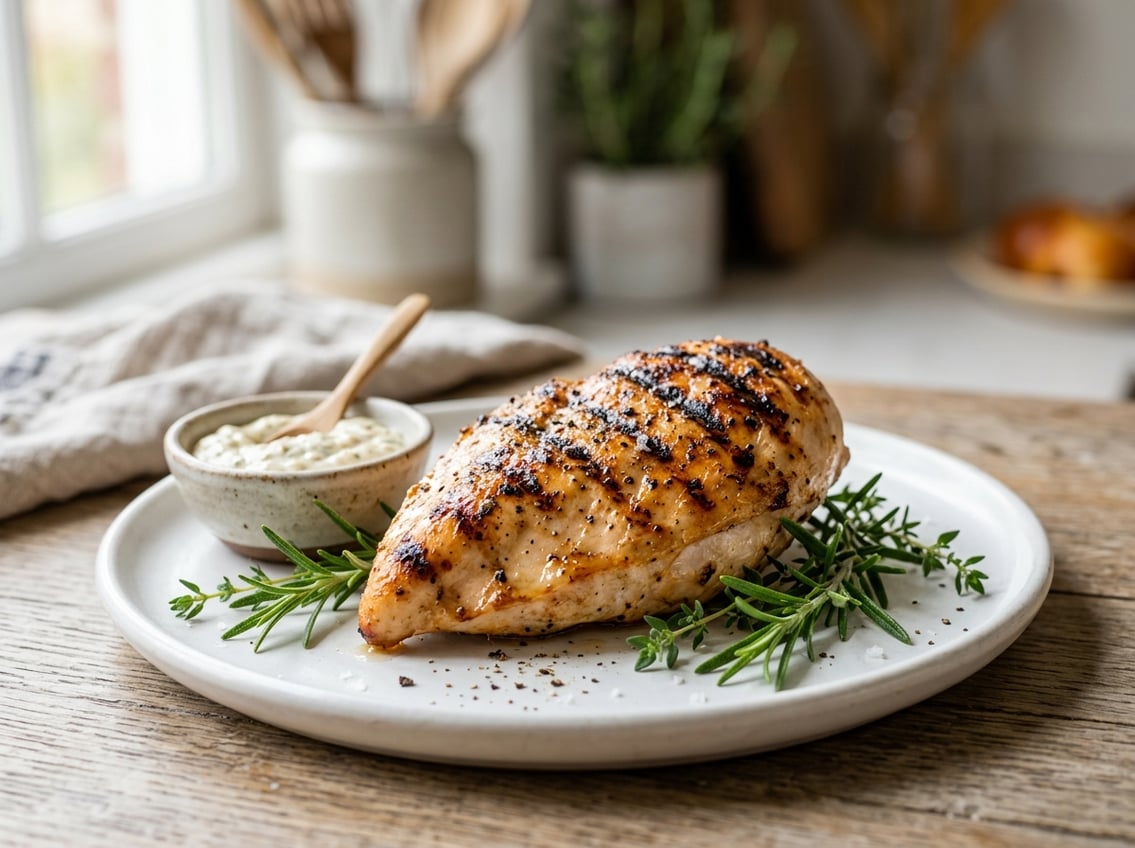
Start with preparation, then cook chicken breast quickly in a hot skillet or oven, and let the meat rest before slicing. This method gives you juicy chicken breast more reliably than using a long list of seasonings or complicated steps.
Most dry chicken comes from too much heat for too long. A smart prep step and a fast finish do more for tender chicken breast than any fancy coating.
Why Even Thickness Matters More Than Fancy Seasoning
Chicken breasts often have a thick end and a thin end, so the thin part finishes early. When one part overcooks, the whole piece feels dry.
Pound the breast to an even thickness or slice large pieces in half horizontally. This small step helps you cook chicken breast more evenly and keeps the texture close across the whole piece.
When to Brine, Dry Brine, or Skip It
If you have time, brining helps a lot. Chefs often choose a wet brine or a dry brine before cooking boneless skinless chicken breasts.
A wet brine works well when you plan ahead. A dry brine is easier for weeknights, since a short salt rest can help chicken breasts stay juicy and seasoned.
If your chicken is already small, fresh, and even in thickness, you can skip brining and still get good results.
The Ideal Pull Temperature and Rest Time
Pull the chicken when the thickest part reaches about 150°F to 155°F, then rest it for 5 to 10 minutes. Carryover cooking will finish the job, and the rest time helps the juices settle back into the meat.
If you wait until the center reads 165°F in the pan or oven, you risk going past it while it rests.
Step-by-Step Cooking Options
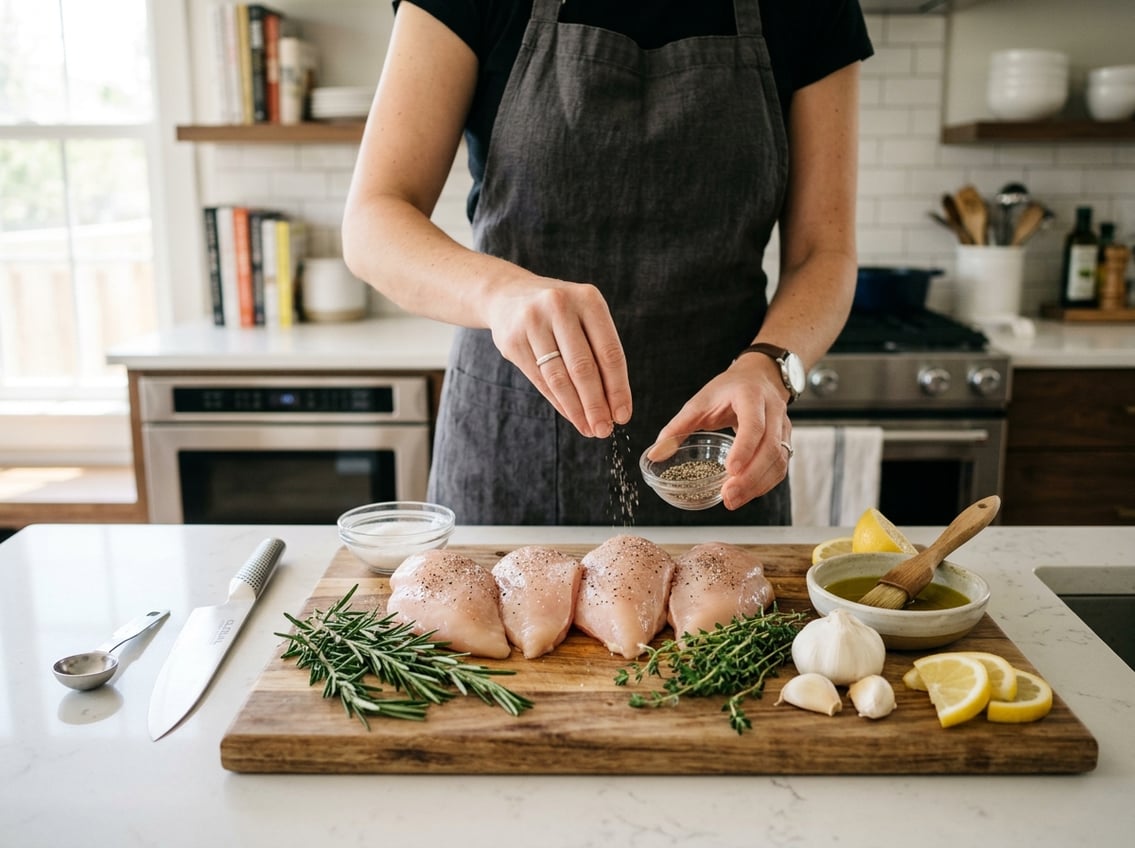
You can make juicy chicken breasts in several ways if you manage heat and time. The best choice depends on how much control you want and how fast you need dinner.
Skillet Sear-and-Cover for Fast, Juicy Results
Pat the chicken dry, season it, then sear it in a lightly oiled skillet over medium-high heat. Once both sides are browned, lower the heat and cover the pan so the chicken finishes gently.
This method gives you a good crust and helps boneless skinless chicken breasts cook through without losing too much moisture.
High-Heat Oven Roasting for Consistent Meal Prep
Season and lightly oil chicken breasts, then roast them at a high oven temperature. Place the pieces on a sheet pan so air can move around them.
This works well when you want several tender chicken breasts at once. You can cook a full batch with even browning and portion it for the week.
Air Fryer Cooking for Speed and Even Browning
The air fryer cooks chicken quickly with less cleanup. It circulates hot air around the chicken, which helps the outside brown while the inside cooks fast.
Use medium-sized chicken breasts and check the temperature early. If the pieces are too large, the outside can dry before the center is done.
Gentle Poaching for Salads, Soups, and Shredding
Poaching works well when you want soft, easy-to-shred chicken breasts. Keep the liquid at a low simmer instead of a hard boil.
This method gives you moist meat for soups, chicken salad, and tacos. It works best when texture matters more than a browned crust.
Common Mistakes That Dry Out the Meat
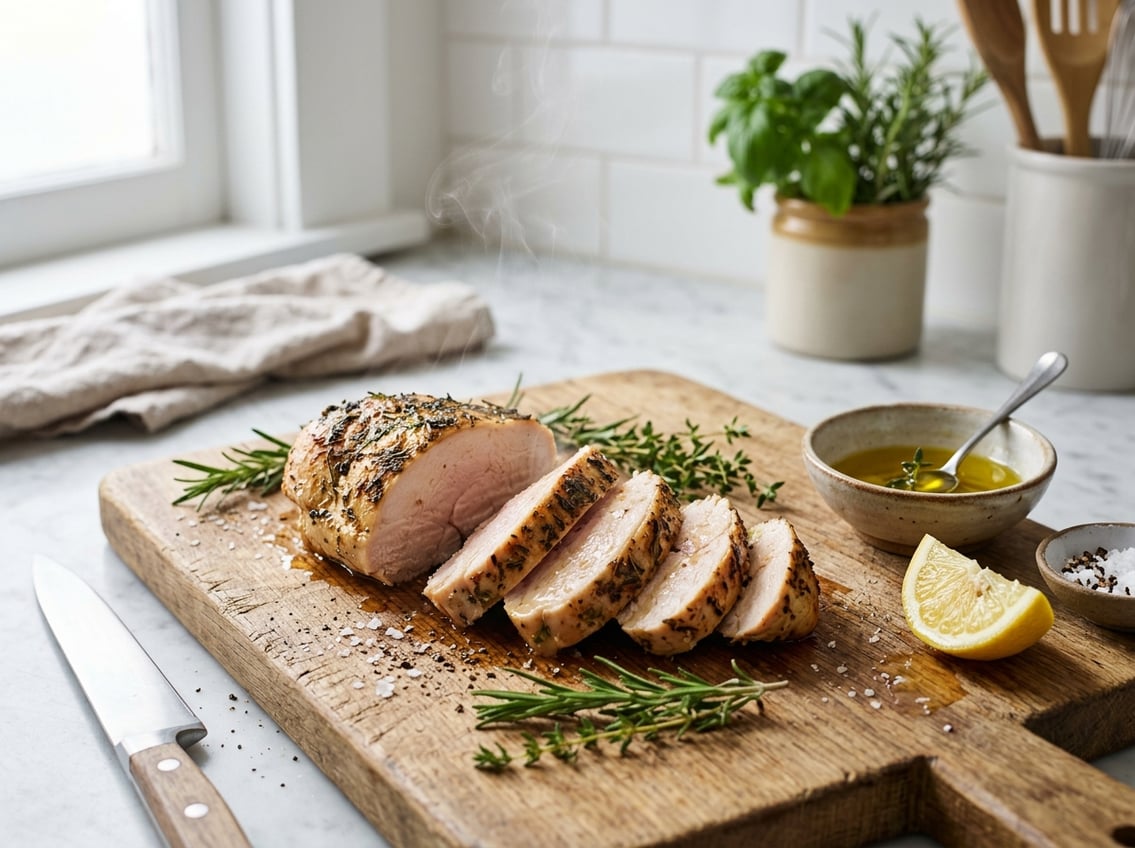
Most dry chicken breast problems come from a few repeat mistakes. If you avoid overcooking, choose manageable piece sizes, and wait before slicing, you will get better texture right away.
Overcooking and Guessing Doneness
Guessing doneness is the fastest way to lose moisture. Chicken breast is lean, so a small timing error can push it from tender to dry.
Use a thermometer instead of cutting into the meat to check. A thermometer gives you a much better chance of getting juicy chicken breast.
Using Uneven or Oversized Pieces
Huge chicken breasts are hard to cook well because the outside finishes long before the center. Uneven pieces cause the same problem.
Pound or slice very thick pieces before cooking. Smaller, even pieces are easier to season, cook, and serve as tender chicken breast.
Cutting Too Soon and Losing Juices
If you slice right away, the juices run out onto the board. That leaves the meat drier than it should be.
Rest the chicken first, then slice against the grain. You will keep more moisture in the meat and get a better bite.
Seasoning, Storage, and Reheating Without Losing Moisture
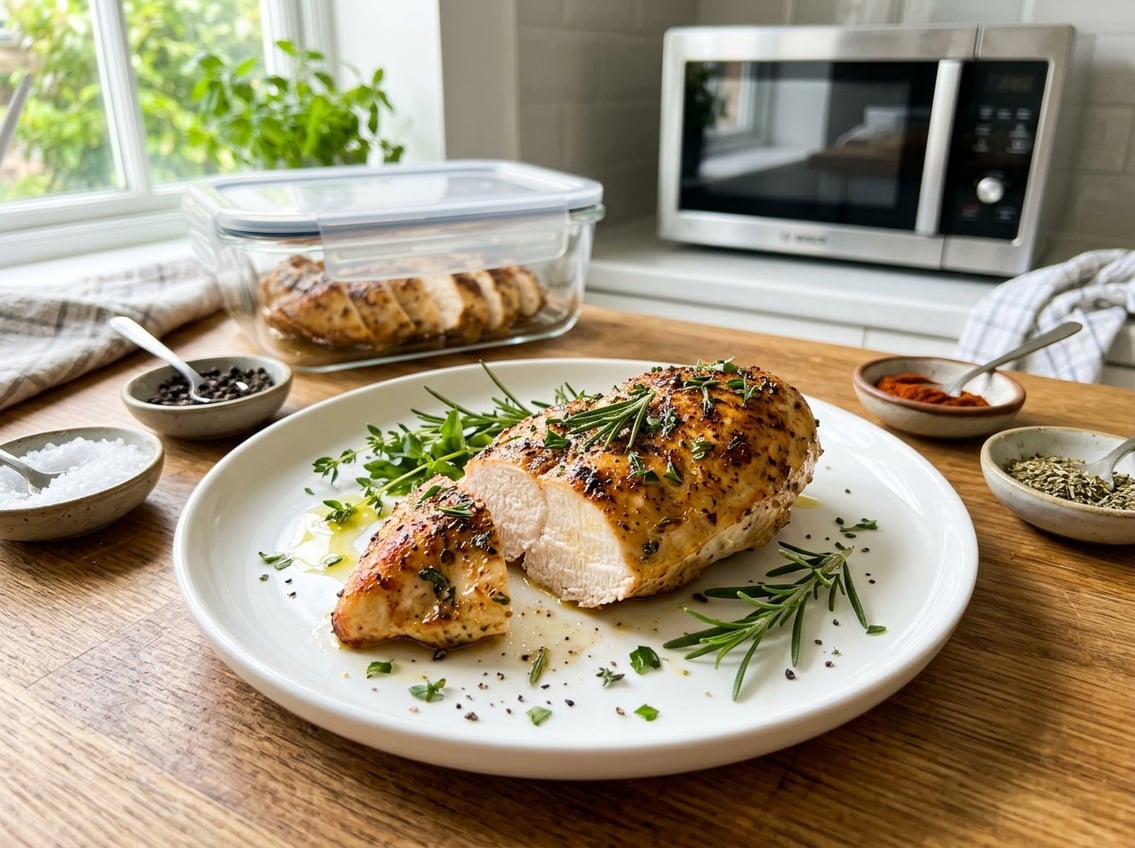
Seasoning should support moisture, not fight it. Simple salt, pepper, garlic, lemon, herbs, and a little oil help you cook chicken breast well without weighing it down.
Storage and reheating matter too. Even juicy chicken breasts can turn dry if you cool, store, or warm them the wrong way.
Simple Flavor Profiles That Support Moisture
A basic salt-and-pepper mix works well, especially if you brine first. You can also use lemon zest, garlic powder, paprika, thyme, rosemary, or a light yogurt marinade for extra flavor.
Brining and marinating can both improve flavor and help the meat stay moist. Keep the seasoning simple so it complements the chicken instead of masking a dry texture.
How to Store Cooked Chicken for Better Texture
Let cooked chicken cool, then store it in an airtight container in the fridge. If possible, keep the pieces whole instead of slicing all of them at once.
Whole pieces lose moisture more slowly than sliced chicken. For the best texture, store them with a little pan juice or broth if you have it.
The Best Way to Reheat Without Turning It Rubbery
Reheat chicken gently at a low temperature. Cover it with foil in the oven or add a splash of broth in a skillet.
Use short bursts at medium power in the microwave. Cover the meat with a damp paper towel.
High heat dries out leftovers and makes them rubbery. A slow, gentle reheat keeps chicken breasts tender.


