
What’s the Best Way to Cook Chicken Breast? Practical Guide
You are probably looking for a chicken breast recipe that gives you juicy results without guesswork.
The best answer is to control moisture before cooking, use even thickness, and stop at the right temperature instead of cooking by time alone.
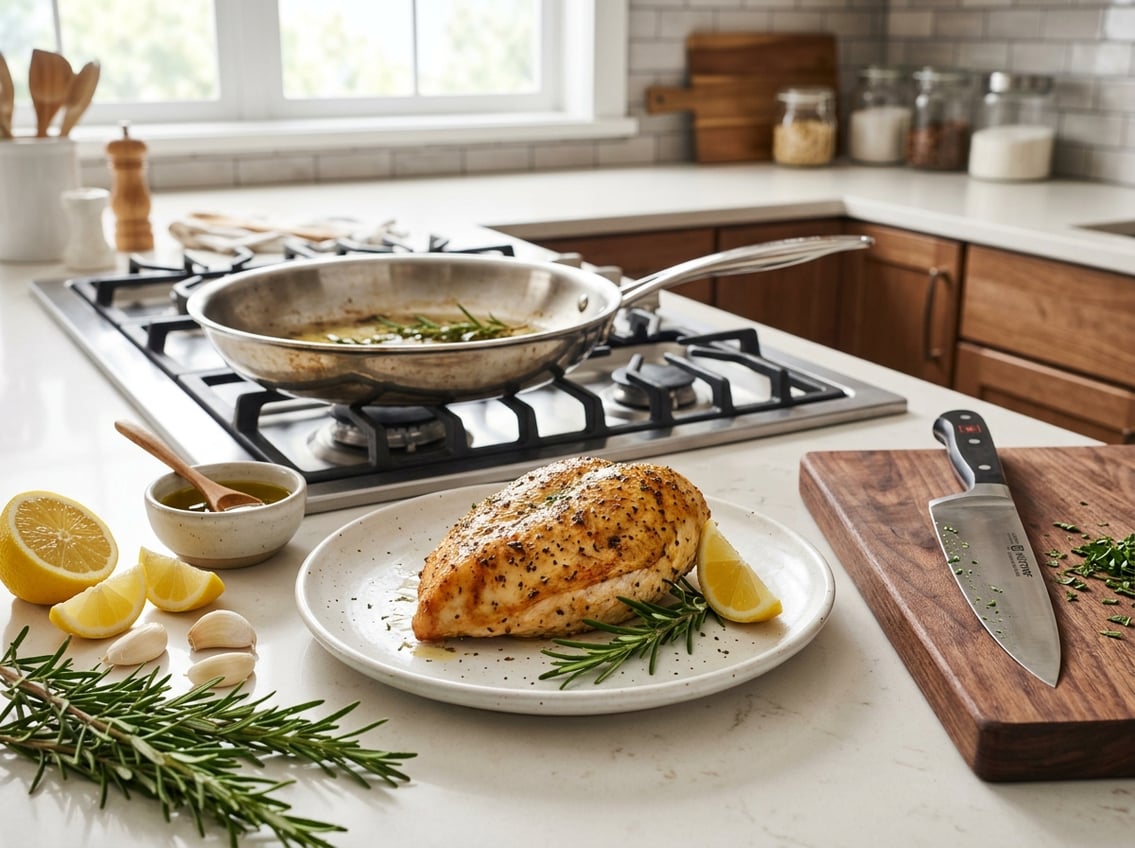
If you want to cook chicken breast well, season or brine it, cook it with steady heat, and pull it before it reaches the final temperature so carryover heat can finish the job.
That approach protects the lean meat from drying out and gives you a simple method you can repeat for weeknight dinners or meal prep.
The Most Reliable Method for Juicy Results
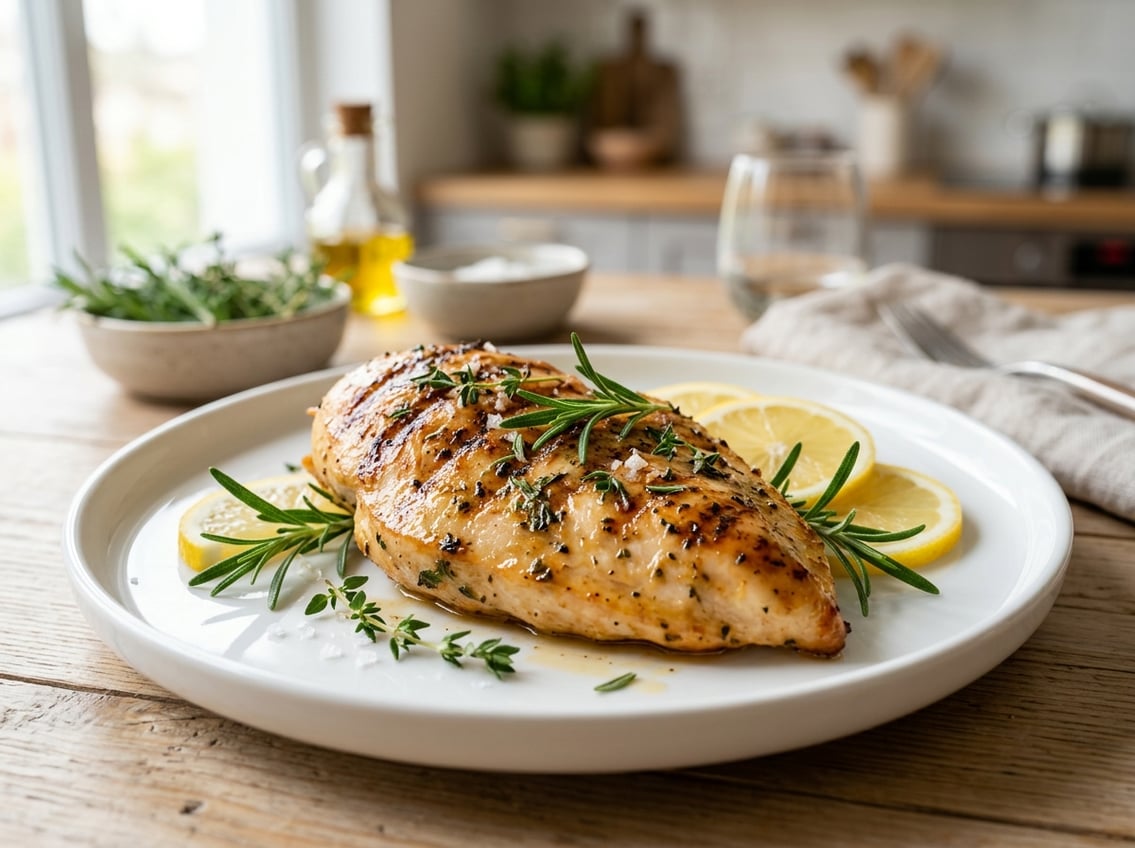
Start with a brine or marinade, then use an instant-read thermometer to avoid overcooking.
Chefs recommend this approach because lean chicken dries out quickly, especially when you cook it without skin or bone, as noted by Simply Recipes.
Brining or marinating helps a skinless chicken breast hold onto moisture.
Even a short dry brine can improve texture, while a marinade adds flavor and helps the meat stay tender.
Why Brining or Marinating Changes the Outcome
Salt changes the protein structure in the meat and helps it retain more moisture during cooking.
A wet brine, dry brine, or yogurt-based marinade can all help you get a moist chicken breast.
If you need a quick option, dry brine for 20 to 30 minutes.
If you have more time, an overnight marinade gives stronger flavor and a softer texture.
Why Even Thickness Matters Before Cooking
Chicken breasts cook unevenly when one side is much thicker than the other.
The thin end overcooks before the thick center is done.
Pound thicker areas to an even thickness, or slice a large breast into cutlets.
That step helps you get moist chicken breasts with less risk of dry edges.
How to Use an Instant-Read Thermometer
An instant-read thermometer removes guesswork.
Insert it into the thickest part of the breast, away from the pan, bone, or fat pocket.
Temperature gives a much more accurate result than color or cook time.
When to Pull the Chicken and Let Carryover Heat Finish
Pull the chicken a little early, then let it rest.
The temperature keeps rising after it leaves the heat, which is called carryover cooking.
Remove it a few degrees before the final safe temperature, then rest it for several minutes.
That small gap helps you keep a juicy chicken breast instead of a dry one.
Choose the Best Cooking Method
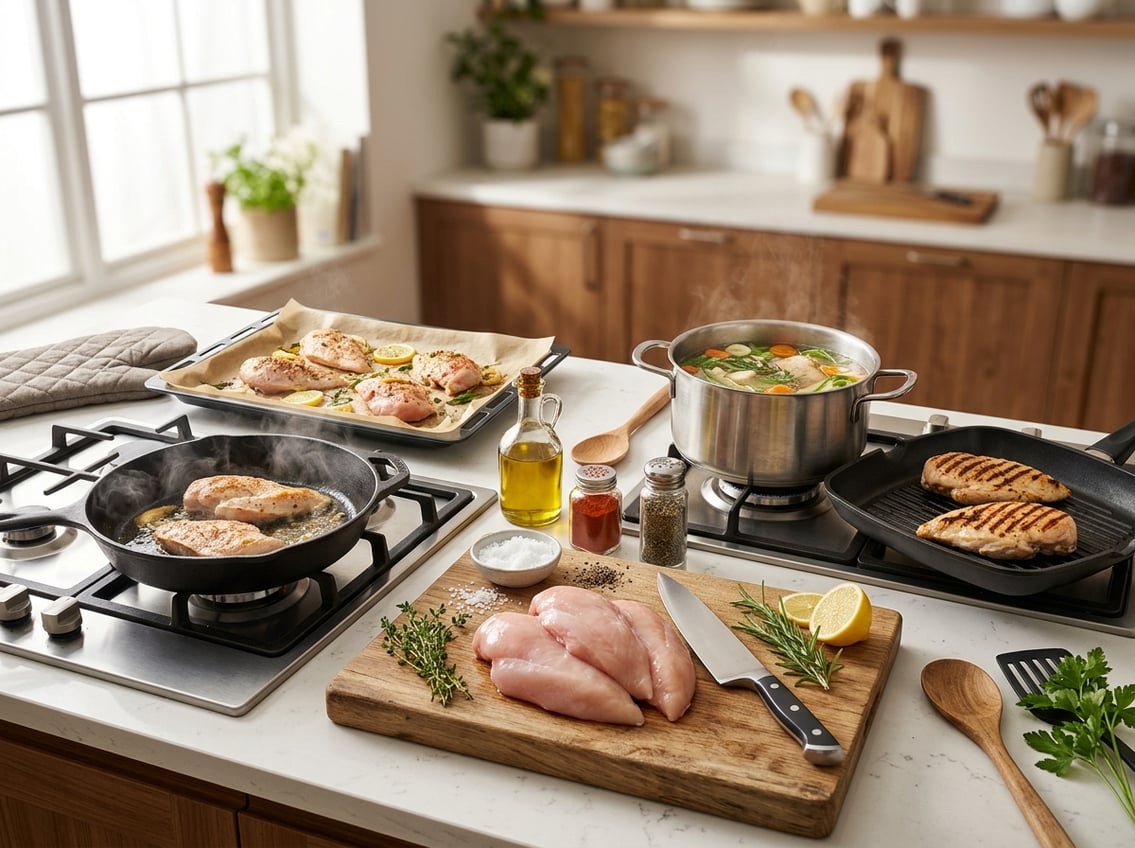
The best method depends on your schedule, your flavor goal, and how much attention you want to give the pan.
You can cook chicken breasts in a skillet, oven, grill, or pot, and each method fits a different need.
If you want the fastest route to a browned crust, use a skillet.
For hands-off cooking, baking chicken breast is the easiest choice.
Skillet Sear-and-Cover for Boneless, Skinless Pieces
For boneless and skinless chicken breast, searing in a hot skillet gives you quick browning and good control.
After the first side browns, lower the heat and cover the pan so the inside cooks through more gently.
This method works well when you want a grilled chicken breast style result without using a grill.
It is also practical for weeknight cooking.
Oven Roasting for Hands-Off Cooking
If you want low effort, bake chicken breasts in the oven.
Set the chicken breasts on a sheet pan, season them, and roast until the center reaches the right temperature.
Oven heat is steady, which makes it easier to avoid hot spots.
Grilling for Smoky Flavor
Grilling gives you a stronger char and smoky flavor.
It works best when the chicken breasts are even in thickness and lightly oiled so they do not stick.
Watch the heat closely, since chicken breast can go from done to dry very fast on a grill.
A thermometer is especially important here.
Poaching for Slicing and Meal Prep
Poaching keeps chicken breasts tender and mild.
It is a good choice when you plan to slice chicken for salads, shred it for soups, or prep meals ahead.
Use gentle simmering, not a hard boil.
Lower heat helps protect the texture and keeps the meat from turning tough.
Match the Technique to the Cut
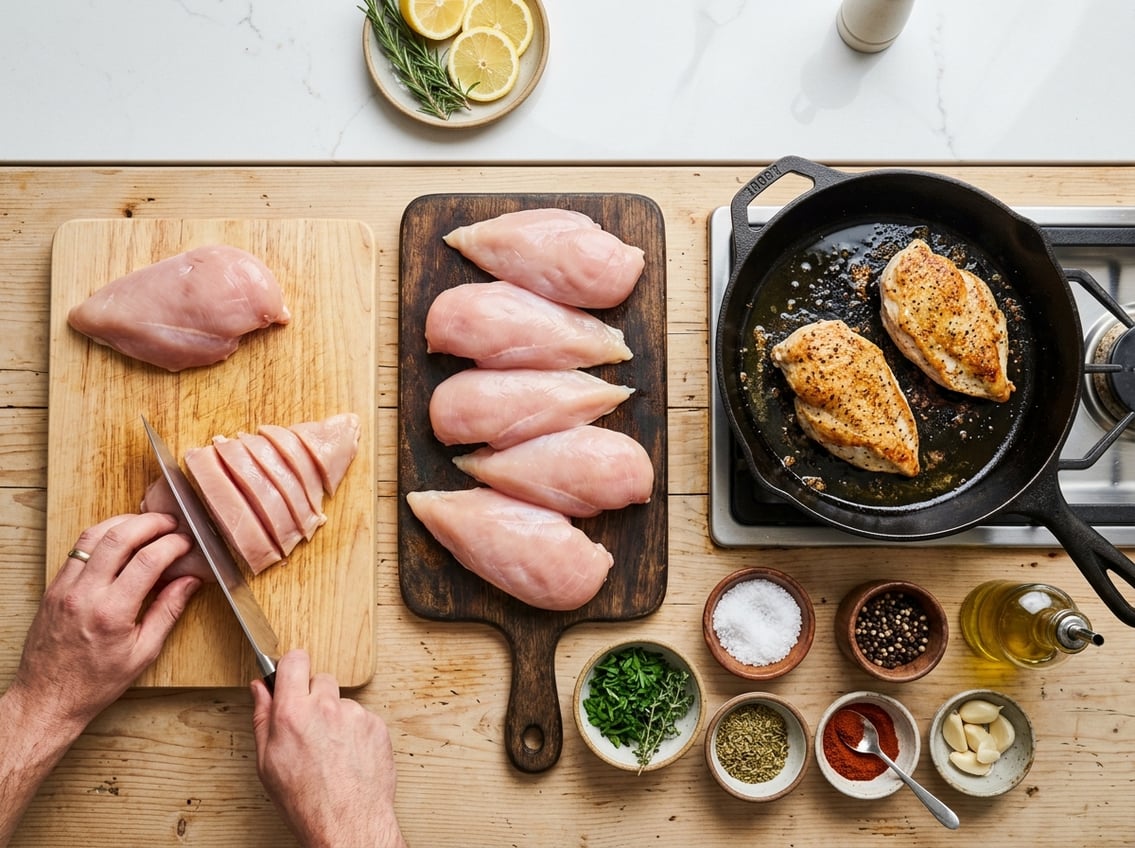
The cut changes how you should cook it.
A boneless chicken breast does not behave the same way as a bone-in or skin-on chicken breast.
Match the method to the cut and its thickness.
The right choice makes it easier to end up with chicken breasts that cook evenly and stay flavorful.
When Boneless, Skinless Breasts Are the Better Choice
Boneless and skinless chicken breast are the most flexible options for weeknight meals.
They cook fast, slice easily, and work in many recipes.
Choose them when you want speed and convenience.
They are easy to portion for salads, pasta, tacos, and simple protein meals.
Why Bone-In Breasts Stay Juicier
Bone-in chicken breast tends to stay juicier because the bone slows down heat transfer.
That gives the meat more time to cook before it dries out.
If you want more forgiveness, this is a strong option.
When Skin-On Breasts Deliver Better Flavor
Skin-on chicken breast gives you more flavor and better browning.
The skin helps protect the meat and adds richness as it cooks.
A skin-on chicken works well when you want a classic roasted result.
The texture and flavor are often better than a lean, bare breast.
How Thickness and Size Affect Timing
Large chicken breasts need more time, while thin ones cook fast.
A thick, uneven piece can look done on the outside while still being undercooked inside.
If your chicken breasts are very large, split them horizontally or pound them thinner before cooking.
That adjustment often matters more than the cooking method itself.
Common Mistakes That Dry Out Chicken
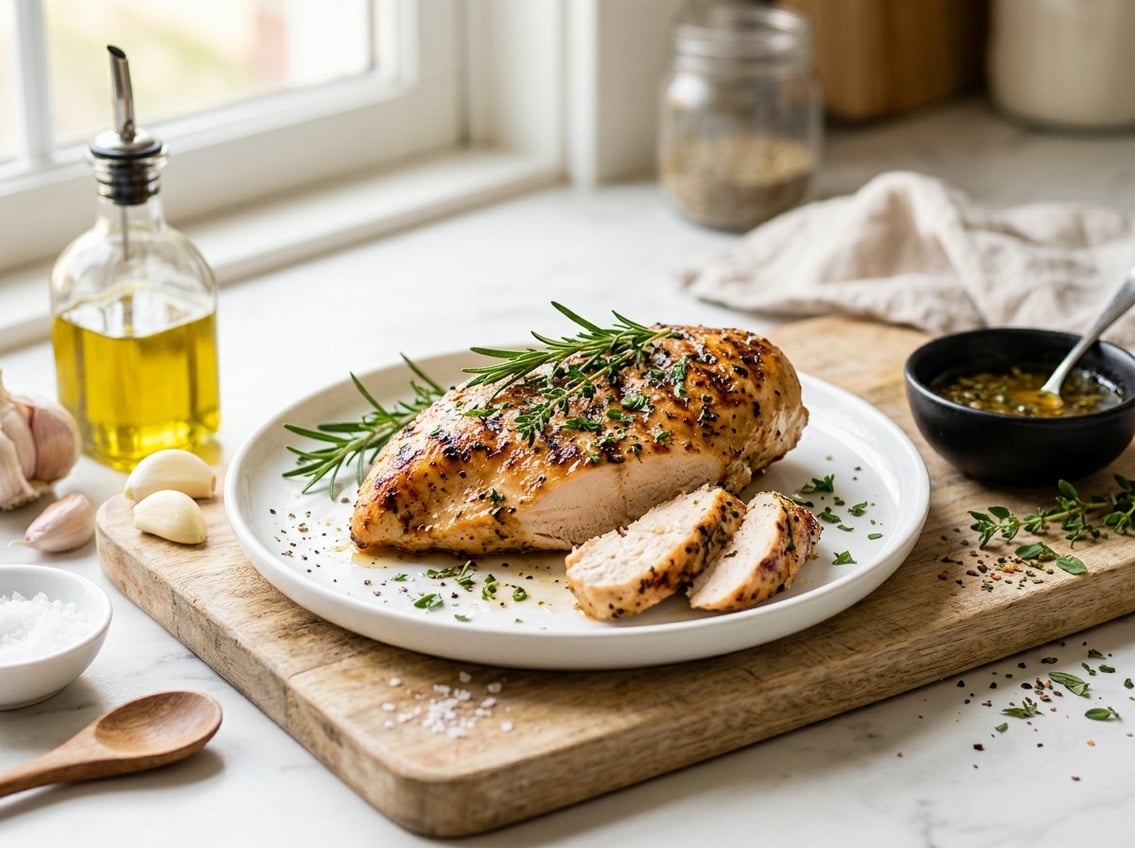
Most dry chicken breast problems come from a few preventable mistakes.
Each one has a simple fix.
If you want a moist chicken breast, focus on temperature, rest time, heat level, and surface moisture.
Those details matter as much as the recipe itself.
Overcooking by Time Instead of Temperature
A timer alone is not enough.
Chicken breasts vary in size, so a set minute count can be too short for one piece and too long for another.
Use an instant-read thermometer instead of guessing.
That gives you a much better chance of making moist chicken breasts.
Skipping Rest Time After Cooking
Cutting into chicken right away lets the juices run out.
Resting gives the juices time to settle back into the meat.
Even a short rest can improve texture.
If you skip this step, your chicken is more likely to seem dry.
Using the Wrong Heat Level
High heat works for searing, not for every stage of cooking.
Low heat alone can leave the outside pale, while overly high heat can dry out the center.
When you bake chicken breasts, use steady oven heat.
When you sear, keep the first stage hot and then reduce the heat so the inside cooks gently.
Ignoring Surface Moisture Before Searing or Baking
Wet chicken surfaces steam instead of browning. This can leave the outside soft and the inside overcooked by the time the color develops.
Pat the chicken dry before you put it in the pan or oven. This small step helps you get better browning and a more appealing texture.


