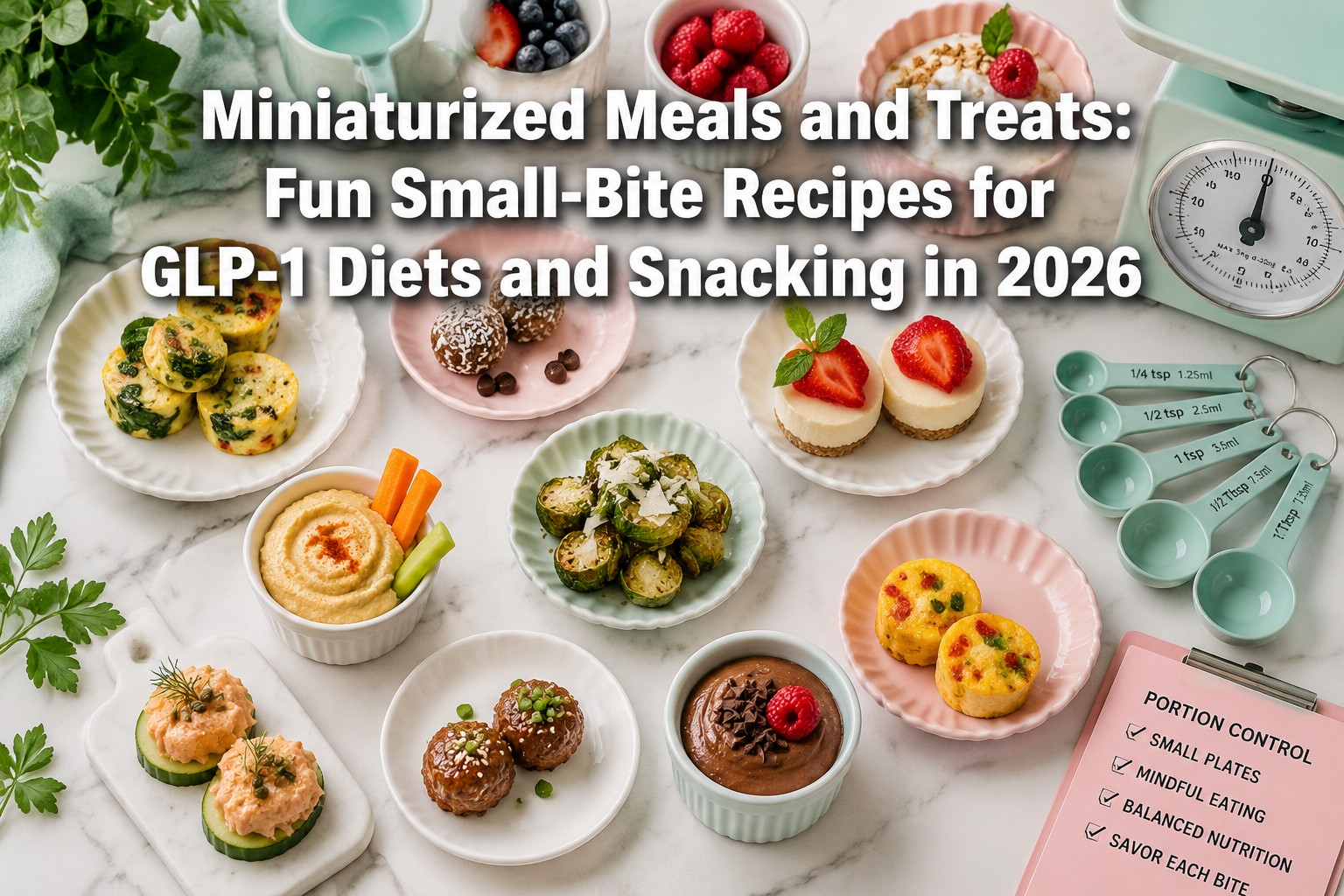
Miniaturized Meals and Treats: Fun Small-Bite Recipes for GLP-1 Diets and Snacking in 2026
Last updated: July 6, 2026
More than 15 million Americans now take GLP-1 medications like Ozempic, Wegovy, and Mounjaro, and they’re discovering that traditional meal portions no longer work. Miniaturized Meals and Treats: Fun Small-Bite Recipes for GLP-1 Diets and Snacking in 2026 addresses the growing need for adorable, satisfying small-portion foods that prevent nausea, control cravings, and make eating enjoyable again. These tiny versions of comfort foods, desserts, and protein-packed snacks fit perfectly into the reduced appetite and early satiety that GLP-1 users experience daily.
Key Takeaways
- GLP-1 medications slow stomach emptying and reduce appetite, making traditional portion sizes uncomfortable and often triggering nausea
- Miniaturized meals should range from 100-200 calories per serving, with 15-25g protein to maintain muscle mass during weight loss
- Small-bite recipes work for anyone practicing portion control, not just GLP-1 users, making them family-friendly
- Pre-made mini snacks are available at major retailers, but homemade versions offer better nutrition control and cost savings
- Common mistakes include eating too quickly, choosing low-protein options, and making portions too large (over 1 cup volume)
- Meal prepping miniaturized snacks on Sundays prevents decision fatigue and ensures proper nutrition throughout the week
- Protein-packed mini meals under 150 calories include egg muffin cups, Greek yogurt parfaits, and turkey meatball bites
- Reflux and fullness issues on GLP-1 medications improve by eating slowly, avoiding high-fat foods, and stopping at the first sign of satiety
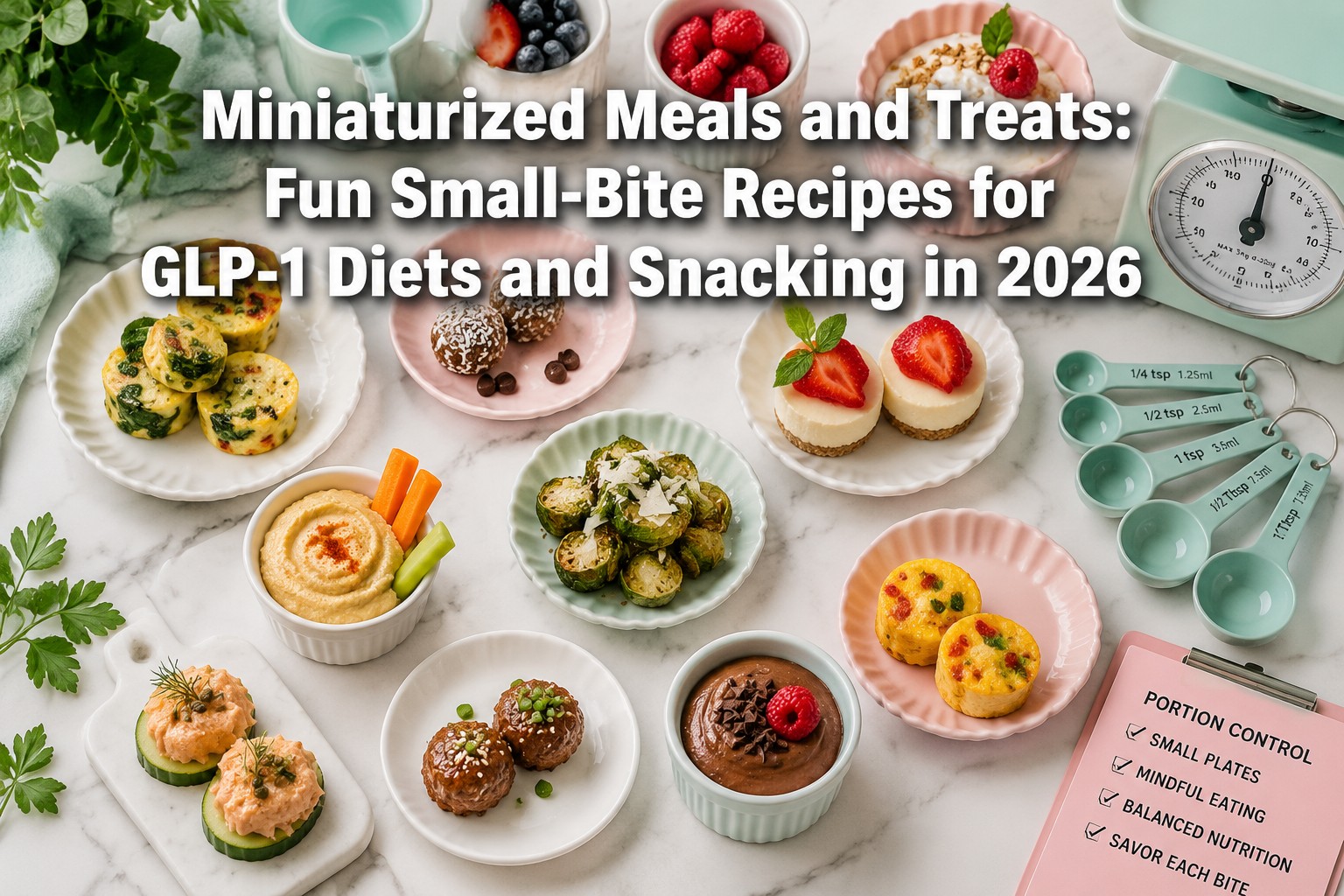
What Are GLP-1 Diets and Why Do They Need Small Portion Meals?
GLP-1 (glucagon-like peptide-1) medications like semaglutide and tirzepatide slow gastric emptying and signal fullness to the brain, dramatically reducing appetite and food intake. People taking these medications need smaller portions because their stomachs empty much more slowly than normal, and eating standard-sized meals causes uncomfortable fullness, nausea, and sometimes vomiting.
The physiological changes from GLP-1 medications create specific dietary needs:
- Delayed gastric emptying means food sits in the stomach 2-3 times longer than usual
- Early satiety signals trigger fullness after just a few bites
- Reduced hunger hormones eliminate the drive to finish large portions
- Increased nausea risk when the stomach becomes overfull
Miniaturized meals solve these challenges by providing complete nutrition in portions that match the body’s new capacity. Instead of forcing down a full chicken breast, GLP-1 users can enjoy 2-3 ounces of protein in an appealing mini format that satisfies both physically and psychologically.
Choose miniaturized meals if: you’re taking Ozempic, Wegovy, Mounjaro, or similar medications and struggle to finish normal portions without discomfort.
How Many Calories Should Miniaturized Meals Be for Ozempic Users?
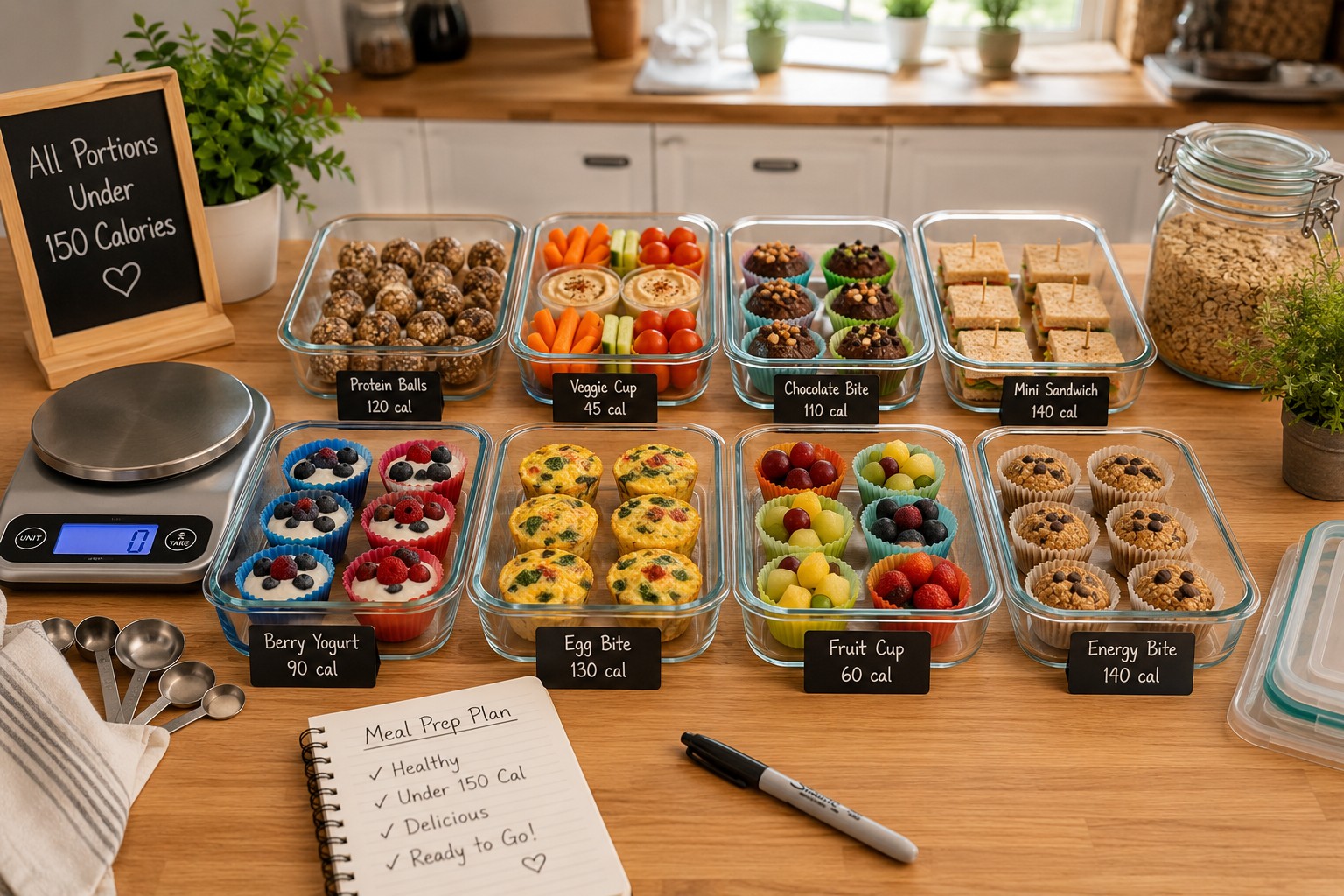
Miniaturized meals for Ozempic and other GLP-1 users should contain 100-200 calories per serving, with most people eating 4-6 of these small meals throughout the day for a total of 800-1,200 calories. The exact calorie target depends on your starting weight, activity level, and healthcare provider’s recommendations.
Calorie guidelines by meal type:
- Mini breakfast: 150-200 calories (egg cups, mini parfaits)
- Mid-morning snack: 100-150 calories (protein balls, mini smoothies)
- Mini lunch: 200-250 calories (small protein bowl, mini wrap)
- Afternoon snack: 100-150 calories (veggie cups with hummus, mini cheese plate)
- Mini dinner: 200-250 calories (small protein portion with vegetables)
- Evening treat (optional): 80-120 calories (mini dessert, small fruit portion)
The key is maintaining adequate protein intake (60-100g daily) to preserve muscle mass during weight loss. Each mini meal should include 15-25g of protein, which means protein should be the star ingredient rather than an afterthought.
Common mistake: Focusing only on calories and neglecting protein leads to muscle loss, fatigue, and hair thinning. Always build your mini meals around a protein source first, then add vegetables and a small amount of healthy fat or complex carbs.
For precise portion control, consider using a smart kitchen scale to track macros and ensure each miniaturized meal hits your nutritional targets.
Best Mini Meal Recipes for Wegovy That Won’t Cause Nausea
The best mini meal recipes for Wegovy users prioritize lean protein, avoid excessive fat, and feature mild flavors that don’t trigger nausea. High-fat and heavily spiced foods are common nausea triggers on GLP-1 medications because they slow digestion even further.
Top 5 nausea-friendly mini meal recipes:
1. Mini Turkey Meatball Bites (140 calories, 22g protein)
- Mix 4 oz ground turkey breast with 1 egg white, minced garlic, Italian herbs
- Form into 6 small meatballs (about 1 inch each)
- Bake at 375°F for 15 minutes
- Serve with 2 tbsp marinara sauce
2. Greek Yogurt Parfait Cups (160 calories, 18g protein)
- Layer 5 oz plain Greek yogurt in small glass
- Add 2 tbsp fresh berries
- Top with 1 tsp honey and 1 tbsp crushed almonds
- Prepare in 4-oz mason jars for perfect portions
3. Mini Egg Muffin Cups (120 calories, 15g protein)
- Whisk 3 eggs with 2 tbsp milk, salt, pepper
- Pour into 6 mini muffin cups
- Add diced bell peppers, spinach, 1 tbsp cheese per cup
- Bake at 350°F for 12-15 minutes
4. Tiny Chicken Salad Lettuce Wraps (135 calories, 20g protein)
- Mix 3 oz shredded chicken breast with 1 tbsp Greek yogurt
- Add diced celery, grapes, pinch of curry powder
- Serve in 2 butter lettuce leaves
- Keep portions to 3-4 bites total
5. Mini Cottage Cheese Bowl (145 calories, 19g protein)
- Portion ½ cup low-fat cottage cheese into small bowl
- Top with 3 cherry tomatoes, cucumber slices, everything bagel seasoning
- Add 5 whole-grain crackers on the side
- Eat slowly over 15-20 minutes
Why these work: Each recipe stays under 200 calories, provides substantial protein, uses gentle cooking methods (baking, no frying), and creates visually appealing mini portions that feel satisfying despite the small size.
For more protein-packed ideas, explore high-protein comfort bowls that can be scaled down to mini portions.
Miniaturized Meals vs Regular Portions for GLP-1 Medication
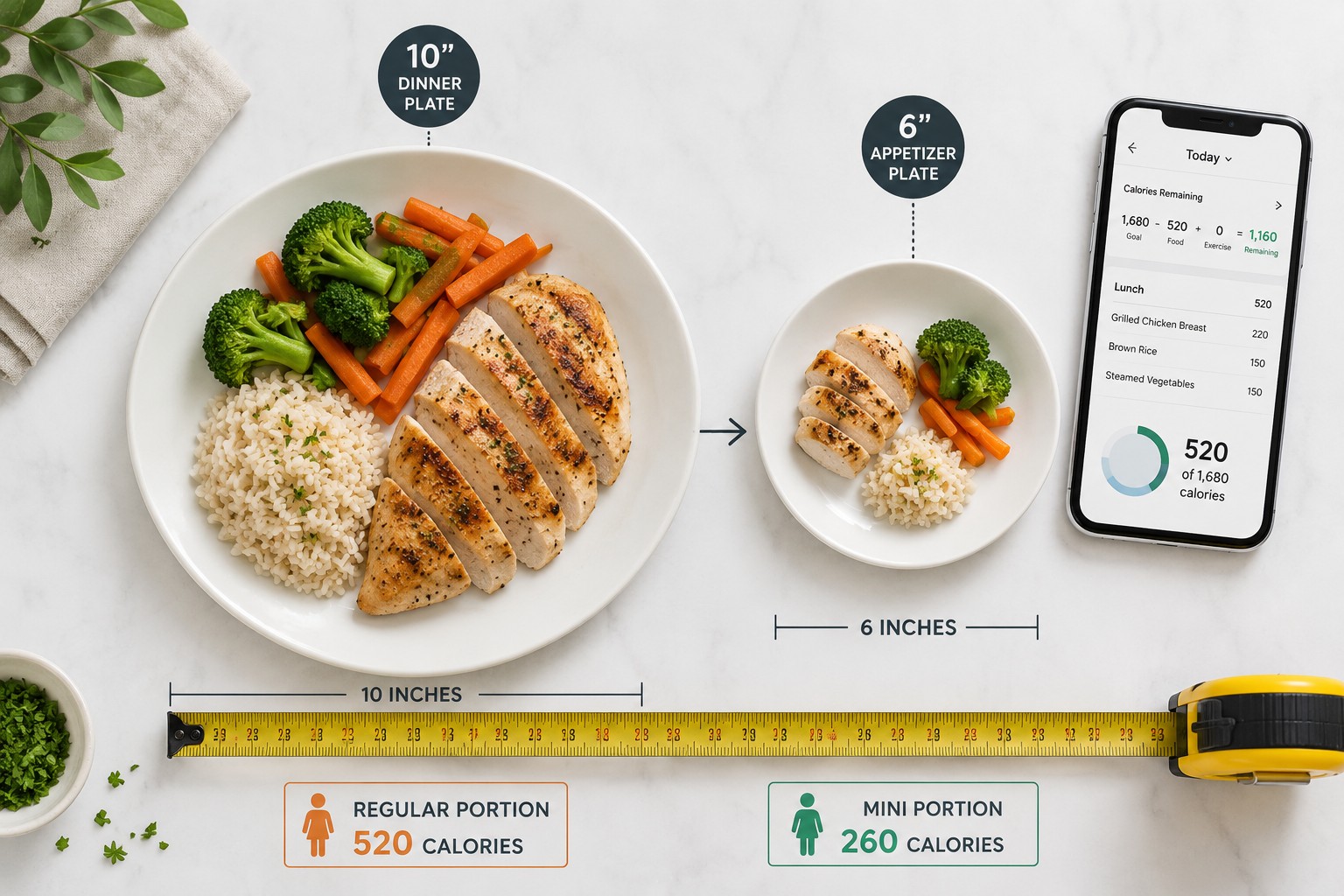
Miniaturized meals differ from regular portions in volume, eating time, and nutritional density. While a standard meal might be 2-3 cups of food eaten in 10-15 minutes, a miniaturized meal is typically ½ to 1 cup eaten slowly over 20-30 minutes.
Key differences:
| Aspect | Regular Portions | Miniaturized Meals |
|---|---|---|
| Volume | 2-3 cups per meal | ½ to 1 cup per meal |
| Calories | 400-700 per meal | 100-200 per meal |
| Eating time | 10-15 minutes | 20-30 minutes |
| Frequency | 3 meals daily | 4-6 mini meals daily |
| Protein per serving | 25-40g | 15-25g |
| Plate size | 10-12 inch dinner plate | 6-8 inch appetizer plate |
The psychological shift matters as much as the physical one. Miniaturized meals require retraining your brain to recognize that a small, beautifully plated portion is a complete meal. Using smaller dishes, eating from ramekins, and creating visually appealing presentations help with this mental adjustment.
Choose miniaturized meals if: you experience fullness, nausea, or discomfort after eating more than a few bites on GLP-1 medication. Stick with regular portions if: you’re not on medication and can comfortably eat standard serving sizes without digestive issues.
Where to Buy Pre-Made Small Bite Snacks for Semaglutide Diet
Pre-made small-bite snacks designed for portion control are increasingly available at major retailers, health food stores, and online platforms in 2026. Look for products specifically marketed as “100-calorie packs,” “protein snack packs,” or “portion-controlled” options.
Top retailers for pre-made mini snacks:
Grocery stores:
- Trader Joe’s: Mini cheese portions, 100-calorie nut packs, single-serve hummus cups
- Whole Foods: Pre-portioned protein boxes, mini veggie trays with dip
- Costco: Bulk packs of individual cheese sticks, mini protein bars, portion-controlled nuts
Online options:
- Thrive Market: Organic portion-controlled snacks, mini protein packs
- Amazon: Subscribe & Save for regular delivery of 100-calorie snack packs
- Specialized GLP-1 meal services: Several companies now offer subscription boxes specifically for semaglutide users
Convenience stores:
- String cheese (80 calories)
- Hard-boiled egg packs (70 calories)
- Mini hummus cups with vegetables (120 calories)
- Greek yogurt single-serves (100-150 calories)
What to look for on labels:
- 100-200 calories per package
- At least 10g protein per serving
- Less than 5g added sugar
- Minimal processing and recognizable ingredients
Cost comparison: Pre-made options typically cost $2-4 per serving, while homemade miniaturized meals cost $0.75-1.50 per serving. If budget matters, meal prep your own mini portions on weekends.
For quick upgrades to store-bought items, check out frozen aisle hacks that can transform basic frozen foods into gourmet mini meals.
Are Mini Meals Good for People Not on GLP-1 Drugs?
Mini meals work well for anyone practicing portion control, managing blood sugar, or trying to lose weight without medication. The strategy of eating smaller, more frequent meals can help stabilize energy levels, prevent overeating, and make calorie tracking easier for people not taking GLP-1 medications.
Benefits for non-GLP-1 users:
- Better blood sugar control: Smaller meals prevent glucose spikes and crashes
- Reduced hunger: Eating every 3-4 hours prevents extreme hunger that leads to overeating
- Easier calorie tracking: Pre-portioned mini meals simplify food logging
- Portion awareness: Training yourself to recognize appropriate serving sizes
- Family-friendly: Kids often prefer smaller, more frequent meals
Who benefits most from mini meals without medication:
- People with insulin resistance or prediabetes
- Those recovering from bariatric surgery
- Anyone learning portion control skills
- Busy professionals who prefer grazing to large meals
- Parents who want to model healthy eating for children
Important difference: Without GLP-1 medication, you won’t experience the same dramatic appetite suppression or early satiety signals. This means you’ll need to rely more on conscious portion control and may feel genuinely hungry between mini meals (which is normal and healthy).
Choose mini meals if: you want to lose weight gradually, improve blood sugar control, or simply prefer eating smaller amounts more frequently. Skip this approach if: you have a history of disordered eating or find that frequent eating triggers obsessive food thoughts.
Common Mistakes When Making Tiny Portions for Weight Loss Meds
The most common mistakes when preparing miniaturized meals include making portions too large, eating too quickly, choosing low-protein options, and creating meals that look unappetizing on the plate. These errors reduce the effectiveness of both the medication and the dietary approach.
Top 7 mistakes and how to fix them:
1. Portions still too large (over 1 cup)
- Fix: Use measuring cups initially to calibrate your eye, then switch to smaller plates (6-inch diameter)
2. Eating too fast
- Fix: Set a timer for 20 minutes per mini meal, put your fork down between bites, chew each bite 15-20 times
3. Skipping protein
- Fix: Build every mini meal around a protein source first (eggs, Greek yogurt, lean meat, cottage cheese)
4. Drinking with meals
- Fix: Stop drinking 30 minutes before eating and wait 30 minutes after to avoid filling your stomach with liquid
5. Making food look sad and unappetizing
- Fix: Use colorful vegetables, garnish with fresh herbs, serve in attractive small bowls or ramekins
6. Not planning ahead
- Fix: Meal prep 12-15 mini meals on Sunday so you always have appropriate portions ready
7. Choosing high-fat options
- Fix: Limit added fats to 1-2 teaspoons per meal; avoid fried foods, heavy cream sauces, and fatty cuts of meat
Edge case: Some people make portions so small (under 50 calories) that they’re eating 8-10 times daily, which becomes unsustainable. Aim for 4-6 mini meals of 100-200 calories each rather than constant grazing.
How to Meal Prep Miniaturized Snacks for the Week
Meal prepping miniaturized snacks requires planning 12-15 individual portions for the week, using appropriate storage containers, and organizing them by day or meal type. Dedicate 2-3 hours on Sunday to prepare a full week of mini meals and snacks.
Step-by-step meal prep process:
1. Plan your menu (30 minutes)
- Choose 3-4 mini meal recipes to rotate
- Select 2-3 snack options
- Write shopping list with exact quantities
2. Shop strategically (45 minutes)
- Buy pre-cut vegetables to save time
- Purchase small storage containers (4-6 oz size)
- Get protein in bulk (chicken breast, ground turkey, eggs)
3. Prep proteins first (60 minutes)
- Bake 2 lbs chicken breast, portion into 3-oz servings
- Make 24 mini egg muffin cups
- Form and bake 30 turkey meatballs
- Hard-boil 12 eggs
4. Prep vegetables and sides (30 minutes)
- Wash and portion vegetables into snack bags
- Divide hummus into 2-tbsp portions
- Prepare mini salads in mason jars
5. Assemble and label (30 minutes)
- Portion everything into individual containers
- Label with contents and calorie/protein counts
- Organize in fridge by day or meal type
Storage tips:
- Use glass containers for reheating (avoid plastic in microwave)
- Keep first 3 days in fridge, freeze remaining portions
- Store wet and dry ingredients separately when possible
- Label everything with prep date (use within 5 days)
Time-saving tools:
- Silicone kitchen bags for easy portioning and storage
- Mini muffin tins for perfect portion sizes
- Food scale for accurate protein measurements
- Smart blender for quick protein smoothies and sauces
Do Mini Meals Work If You’re Not Taking Mounjaro or Ozempic?
Mini meals work effectively for weight loss and portion control without GLP-1 medication, but require more conscious effort and discipline since you won’t have medication-induced appetite suppression. Research shows that eating smaller, more frequent meals can support weight loss when total daily calories remain controlled.
How mini meals work without medication:
The strategy succeeds by preventing extreme hunger that leads to overeating, keeping blood sugar stable throughout the day, and making calorie tracking simpler. However, without GLP-1 medication, you’ll need to actively manage hunger between meals and resist the temptation to make portions larger.
Success factors for non-medicated mini meal eating:
- Protein at every meal: Aim for 20-30g protein per mini meal to maximize satiety
- Consistent timing: Eat every 3-4 hours to prevent hunger spikes
- Adequate total calories: Don’t go below 1,200 calories daily without medical supervision
- Fiber-rich foods: Include vegetables and whole grains to increase fullness
- Hydration: Drink water between meals (not during) to manage appetite
Realistic expectations: Without medication, weight loss will be more gradual (0.5-1 lb per week vs. 1-2 lbs weekly with GLP-1 drugs). You’ll also need stronger portion control habits since your body won’t physically stop you from eating more.
This approach works best for non-medicated people who:
- Prefer grazing to large meals naturally
- Have busy schedules that make frequent small meals convenient
- Want to learn portion control skills
- Need stable blood sugar throughout the day
Why Do I Feel Too Full After Small Bites on GLP-1?
Feeling uncomfortably full after just a few bites on GLP-1 medication happens because the drug dramatically slows gastric emptying and amplifies satiety signals from your gut to your brain. This is the intended effect of the medication, but it can feel alarming when you’re used to eating normal portions.
Physiological reasons for extreme fullness:
GLP-1 medications slow the movement of food from your stomach to your intestines by 50-70%, meaning food sits in your stomach much longer. Additionally, these drugs activate receptors in your brain that signal fullness, creating a double effect of physical stomach fullness plus neurological satiety signals.
What to do when you feel too full:
- Stop eating immediately at the first sign of fullness (don’t try to finish your portion)
- Walk gently for 10-15 minutes to aid digestion
- Sit upright for at least 2 hours after eating (lying down worsens discomfort)
- Sip water slowly but don’t chug (adds to stomach volume)
- Wait 4-5 hours before eating again, even if it’s past your usual meal time
Prevention strategies:
- Reduce portion sizes further (try ½ cup instead of 1 cup)
- Eat even more slowly (30 minutes per mini meal)
- Choose softer, easier-to-digest foods
- Avoid carbonated beverages entirely
- Stop eating when you’re 70% full, not 100%
When to call your doctor: If you’re unable to eat more than a few bites for several days, experiencing persistent nausea or vomiting, or losing weight too rapidly (more than 3 lbs per week), contact your healthcare provider. Your dose may need adjustment.
Protein-Packed Mini Meal Ideas Under 150 Calories
Protein-packed mini meals under 150 calories focus on lean protein sources, minimal added fats, and high-volume, low-calorie vegetables to create satisfying portions that support muscle maintenance during weight loss.
10 protein-rich mini meals under 150 calories:
1. Shrimp Cocktail Cup (130 calories, 24g protein)
- 4 oz cooked shrimp with 2 tbsp cocktail sauce
- Serve in martini glass with lemon wedge
2. Tuna Cucumber Boats (140 calories, 22g protein)
- 2 oz canned tuna mixed with 1 tsp mayo
- Stuff into 2 cucumber halves, top with everything seasoning
3. Mini Caprese Skewers (145 calories, 18g protein)
- 3 oz fresh mozzarella balls, cherry tomatoes, basil leaves
- Drizzle with balsamic glaze (1 tsp)
4. Egg White Scramble Cup (120 calories, 20g protein)
- 4 egg whites scrambled with spinach, mushrooms
- Season with garlic powder and herbs
5. Turkey Roll-Ups (135 calories, 21g protein)
- 3 oz deli turkey breast wrapped around cucumber sticks
- Spread with 1 tsp Dijon mustard
6. Cottage Cheese Veggie Bowl (140 calories, 19g protein)
- ½ cup low-fat cottage cheese
- Top with diced bell peppers, cherry tomatoes, cucumber
7. Mini Salmon Salad (145 calories, 20g protein)
- 2 oz canned salmon mixed with Greek yogurt
- Serve on 3 cucumber rounds
8. Protein Smoothie Shot (130 calories, 25g protein)
- ½ scoop protein powder, ½ cup unsweetened almond milk
- Blend with ice and 2 frozen strawberries
9. Mini Greek Meatballs (140 calories, 22g protein)
- 3 small turkey meatballs with tzatziki (1 tbsp)
- Serve with 3 cucumber slices
10. Edamame Hummus Cup (135 calories, 18g protein)
- ½ cup shelled edamame, lightly salted
- 2 tbsp hummus for dipping
Preparation tip: Make these in batches during meal prep and store in 6-oz containers. Each recipe takes 5-10 minutes to assemble and can be prepared 3-4 days in advance.
Can Kids Eat Miniaturized GLP-1 Style Meals Safely?
Kids can safely eat miniaturized meals as long as total daily calories meet their growth and development needs, which are significantly higher than adult weight-loss targets. The mini meal format works well for children who prefer smaller, more frequent eating, but portion sizes must be adjusted upward from adult GLP-1 portions.
Age-appropriate mini meal guidelines:
- Ages 4-8: 4-6 mini meals of 200-300 calories each (1,200-1,800 daily total)
- Ages 9-13: 5-6 mini meals of 300-400 calories each (1,600-2,200 daily total)
- Ages 14-18: 5-6 mini meals of 350-500 calories each (2,000-2,800 daily total)
Benefits for kids:
- Matches natural preference for grazing
- Prevents blood sugar crashes that affect behavior and focus
- Teaches portion awareness early
- Reduces mealtime battles over large portions
- Accommodates busy schedules with sports and activities
Important differences from adult GLP-1 portions:
Children need more calories per pound of body weight than adults for growth, brain development, and activity. Never restrict a child’s calories to adult weight-loss levels (800-1,200 daily) unless specifically directed by a pediatrician for medical reasons.
Red flags to avoid:
- Don’t use mini meals to restrict a child’s food intake for weight loss without medical guidance
- Never label foods as “good” or “bad” when teaching portion control
- Ensure kids get adequate healthy fats for brain development (nuts, avocado, olive oil)
- Watch for signs of food anxiety or obsessive portion measuring
When to use mini meals for kids: If your child naturally prefers smaller portions, has blood sugar regulation issues, or you want to model healthy portion sizes for the whole family. Always prioritize nutrient density and adequate calories for growth.
Mini Meals Causing Reflux on Wegovy: What to Do
Reflux and heartburn on Wegovy and other GLP-1 medications occur because delayed gastric emptying allows stomach acid to back up into the esophagus more easily. Even small meals can trigger reflux if they contain certain foods or if you eat too close to lying down.
Immediate relief strategies:
- Elevate your head when sleeping (use 2-3 pillows or bed risers)
- Stay upright for 3 hours after eating
- Take small sips of water to clear acid from esophagus
- Chew sugar-free gum to increase saliva production (neutralizes acid)
- Try over-the-counter antacids like Tums or Pepcid (consult your doctor first)
Foods that trigger reflux on GLP-1 medications:
Avoid or minimize:
- Tomato-based sauces (high acid)
- Citrus fruits and juices
- Chocolate and mint
- Coffee and caffeinated beverages
- Spicy foods and hot peppers
- Fatty or fried foods
- Carbonated drinks
- Alcohol
Reflux-friendly mini meal options:
- Oatmeal with banana and almond butter
- Grilled chicken with steamed green beans
- Scrambled eggs with spinach
- Plain Greek yogurt with melon
- Turkey and avocado on whole grain bread
- Baked fish with roasted carrots
- Cottage cheese with cucumber
Eating technique adjustments:
- Eat even more slowly (30-40 minutes per mini meal)
- Take tiny bites and chew thoroughly
- Don’t drink liquids during meals
- Stop eating at 60-70% fullness
- Wait 4-5 hours between meals
When to see your doctor: If reflux persists despite dietary changes, occurs more than 3 times weekly, causes chest pain, or leads to difficulty swallowing, contact your healthcare provider. You may need prescription medication or a dose adjustment.
For gentle, easy-to-digest meal ideas, explore nostalgic comfort foods adapted for modern wellness needs.
FAQ
How long should I wait between miniaturized meals on GLP-1 medication? Wait 3-4 hours between miniaturized meals on GLP-1 medication to allow adequate digestion time. Since these drugs slow gastric emptying significantly, eating too frequently can cause uncomfortable fullness and nausea. Listen to your body and only eat when genuinely hungry, even if it means extending the time between meals.
Can I eat miniaturized desserts on Ozempic without gaining weight? Yes, miniaturized desserts under 120 calories can fit into a GLP-1 diet when they replace other snacks rather than adding extra calories. Choose protein-rich options like Greek yogurt with berries, mini protein cheesecakes, or small portions of dark chocolate. The key is portion control and accounting for dessert calories in your daily total.
What size containers should I use for meal prepping mini portions? Use 4-6 oz containers for miniaturized meals and 2-4 oz containers for snacks. Glass containers with tight-sealing lids work best for reheating and preventing leaks. Mason jars (4 oz size) are perfect for parfaits, salads, and layered meals. Silicone muffin cups create ideal single-serving portions for baked items.
Do miniaturized meals provide enough nutrients for daily needs? Miniaturized meals provide adequate nutrients when carefully planned to include lean protein, vegetables, healthy fats, and whole grains across 4-6 daily servings. Most people on GLP-1 medications should take a daily multivitamin to ensure adequate micronutrient intake, especially calcium, vitamin D, and B vitamins. Consult a registered dietitian for personalized guidance.
How do I prevent muscle loss while eating tiny portions on Wegovy? Prevent muscle loss by consuming 60-100g protein daily spread across all mini meals, incorporating resistance training 2-3 times weekly, and ensuring adequate total calories (at least 1,200 daily for most people). Each miniaturized meal should contain 15-25g protein from sources like chicken, fish, eggs, Greek yogurt, or cottage cheese.
Can I use regular recipes and just make smaller portions? Yes, most regular recipes can be scaled down to miniaturized portions by dividing the recipe into 8-12 servings instead of 4-6. Use a food scale to ensure accuracy and calculate calories per mini portion. Recipes with high fat or heavy sauces may need modification to prevent nausea on GLP-1 medications.
What’s the best way to make mini meals look appealing? Make mini meals appealing by using small, attractive dishes (ramekins, appetizer plates, small bowls), adding colorful vegetables, garnishing with fresh herbs, and arranging food thoughtfully. Visual presentation matters more with smaller portions because your brain needs to register the meal as satisfying and complete despite the reduced size.
How many mini meals should I eat daily on Mounjaro? Most people on Mounjaro eat 4-6 mini meals daily, totaling 800-1,200 calories depending on individual needs and weight loss goals. Start with 5 mini meals of 150-200 calories each and adjust based on hunger, energy levels, and weight loss progress. Never go below 800 calories daily without medical supervision.
Are frozen mini meals okay for GLP-1 diets? Frozen mini meals work for GLP-1 diets if they contain 150-250 calories, at least 15g protein, and less than 600mg sodium per serving. Many commercial frozen meals are too large and need to be divided in half. Look for brands specifically marketing portion-controlled or “light” options, or make your own frozen mini meals during meal prep.
What should I do if I can’t finish my mini meal? Stop eating immediately if you can’t finish your mini meal and save the remainder for later. Never force yourself to finish a portion on GLP-1 medication, as this can cause nausea and vomiting. If you consistently can’t finish mini meals, reduce portion sizes further until you find your comfortable capacity.
Can I drink protein shakes instead of solid mini meals? Protein shakes can replace 1-2 mini meals daily but shouldn’t be your only food source because chewing solid food supports satiety and provides fiber. Choose shakes with 20-30g protein, under 200 calories, and minimal added sugar. Blend with ice to increase volume and sip slowly over 20-30 minutes.
How do I handle social eating when I can only eat tiny portions? Handle social eating by ordering appetizers instead of entrees, sharing dishes with others, asking for a to-go box immediately and portioning your meal before eating, or eating a small mini meal before events so you’re not hungry. Most people understand dietary restrictions, and you don’t need to explain your medication unless you choose to.
Conclusion
Miniaturized Meals and Treats: Fun Small-Bite Recipes for GLP-1 Diets and Snacking in 2026 represent a practical, sustainable approach to eating while managing appetite changes from medications like Ozempic, Wegovy, and Mounjaro. By creating adorable, nutrient-dense portions of 100-200 calories that prioritize protein and minimize nausea triggers, these mini meals make eating enjoyable again while supporting healthy weight loss.
The key to success lies in meal prepping 12-15 portions weekly, using appropriate storage containers, and focusing on visual appeal to satisfy both physical and psychological hunger. Whether you’re taking GLP-1 medications or simply practicing portion control, these miniaturized meals offer a flexible framework that works for various dietary needs and preferences.
Take action this week:
- Choose 3-4 mini meal recipes from this guide to try
- Purchase 4-6 oz storage containers and a food scale
- Dedicate 2-3 hours this Sunday to meal prep your first batch
- Track how you feel after each mini meal to identify your ideal portion size
- Adjust recipes and portions based on your individual tolerance and preferences
Remember that finding your perfect mini meal routine takes experimentation. Start with the recipes and guidelines provided, then customize based on what makes you feel best. With consistent meal prep and attention to protein intake, miniaturized meals can transform your relationship with food while supporting your health goals throughout 2026 and beyond.
SEO Meta Title: Mini Meals for GLP-1 Diets: Small-Bite Recipes 2026


