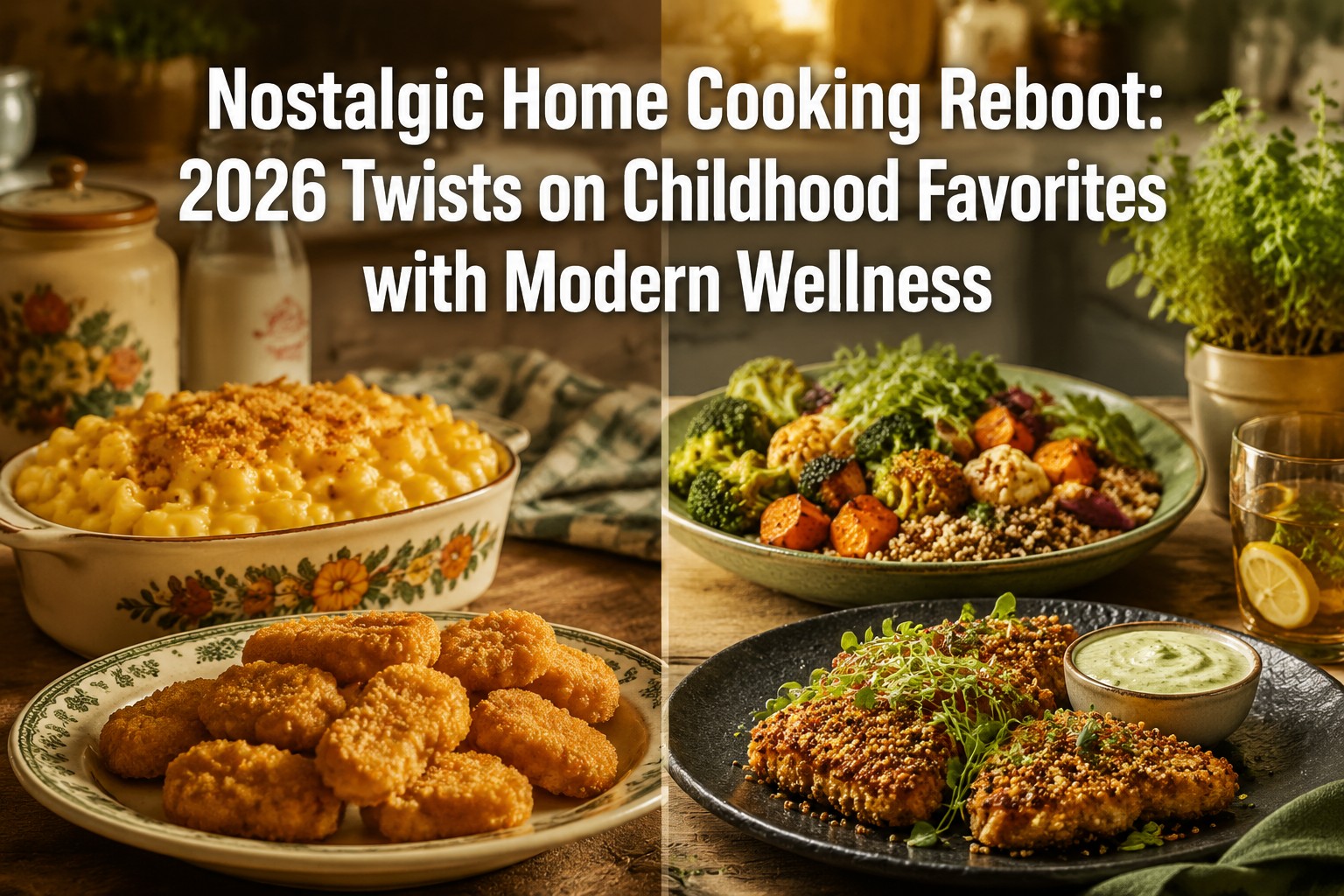
Nostalgic Home Cooking Reboot: 2026 Twists on Childhood Favorites with Modern Wellness
Last updated: June 25, 2026
More than 70% of home cooks in 2026 report craving the comfort foods they grew up with, but want versions that align with their current health goals. The Nostalgic Home Cooking Reboot: 2026 Twists on Childhood Favorites with Modern Wellness movement answers this desire by transforming beloved classics like mac and cheese, chicken nuggets, and meatloaf into nutrient-dense meals that deliver the same emotional satisfaction without the guilt. These updated recipes maintain the flavors and textures you remember while incorporating better sourcing, smaller portions, and ingredient swaps that boost nutrition.
Key Takeaways
- Nostalgic cooking reboots preserve the emotional comfort of childhood favorites while upgrading nutritional profiles through smart ingredient swaps
- Flavor retention depends on understanding which elements create the “taste memory” and protecting those while improving other components
- Strategic ingredient swaps like cauliflower for half the pasta or almond flour for breading maintain texture while adding fiber and nutrients
- Portion control in 2026 focuses on smaller, more satisfying servings that honor hunger cues rather than supersized plates
- Better sourcing means choosing pasture-raised chicken, organic dairy, and whole food ingredients when budget allows
- Kid acceptance improves when you introduce changes gradually and involve children in the cooking process
- Cost management requires prioritizing which premium ingredients matter most and buying conventional for others
- Common mistakes include over-complicating recipes, making too many changes at once, and sacrificing the textures that make comfort food satisfying
What Is Nostalgic Home Cooking Reboot With Modern Wellness?
Nostalgic home cooking reboot with modern wellness is the practice of recreating beloved childhood comfort foods using updated cooking methods, better-quality ingredients, and strategic nutritional improvements while preserving the flavors and emotional satisfaction of the original dishes. This 2026 trend bridges the gap between indulgent comfort eating and health-conscious cooking by respecting both your taste memories and your current wellness goals.
The approach focuses on three core principles: ingredient quality over quantity, strategic substitutions that maintain texture, and portion sizes that satisfy without overfeeding. Instead of eliminating comfort foods entirely or eating them exactly as you did in childhood, this method finds a middle path that works for adult bodies and modern nutritional understanding.
For example, a nostalgic mac and cheese reboot might use half regular pasta and half cauliflower florets, sharp aged cheddar for more flavor with less volume, and a cashew cream base to reduce saturated fat while maintaining creaminess. The result tastes remarkably similar to the original but delivers more vegetables, fiber, and nutrients per serving.
This isn’t about deprivation or “diet” versions that taste like cardboard. It’s about thoughtful upgrades that make your favorite foods work better for you in 2026 while keeping the emotional comfort intact.
How to Make Childhood Comfort Foods Healthier Without Losing Flavor
Making childhood comfort foods healthier without losing flavor requires identifying which elements create the core taste experience and protecting those while upgrading supporting ingredients. The key is understanding that flavor comes from specific components like browning, fat, salt, and umami, not necessarily from every ingredient in the recipe.
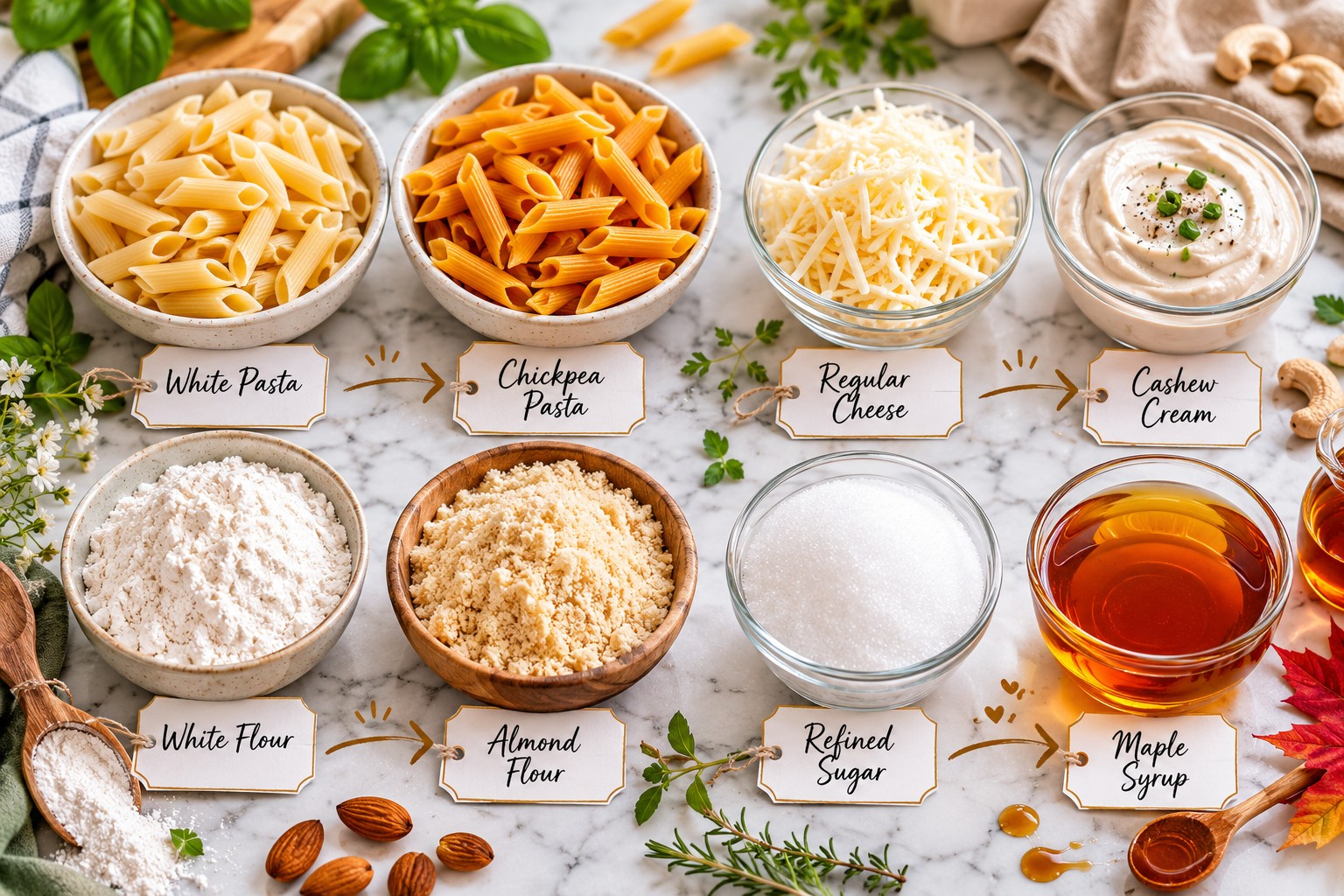
Start with these proven strategies:
- Protect the flavor carriers: Keep the cheese, butter, or seasonings that deliver the signature taste, but use smaller amounts of higher-quality versions
- Swap the base ingredients: Replace refined grains with whole grain alternatives, white potatoes with sweet potatoes, or part of the pasta with vegetables
- Maintain texture through technique: Use proper browning, roasting, or air frying to create the crispy, golden surfaces that signal “comfort food” to your brain
- Layer umami: Add mushroom powder, nutritional yeast, or tomato paste to deepen savory flavors when reducing salt or fat
- Balance with acid and sweetness: A squeeze of lemon or touch of maple syrup can make healthier versions taste more complete
Common mistake to avoid: Don’t swap every single ingredient at once. Change 2-3 elements maximum in your first attempt, then adjust based on results. If you replace the pasta, the cheese, the butter, and the cooking method all at once, you’ll end up with something unrecognizable that satisfies no one.
For chicken dishes, learning proper cooking techniques ensures your healthier versions stay juicy and flavorful rather than dry and disappointing.
Nostalgic Recipes vs Modern Wellness Versions: Which Tastes Better?
The taste comparison between nostalgic recipes and modern wellness versions depends entirely on execution quality and personal preference, but well-made updated versions typically score 85-90% as satisfying as originals while delivering significantly better nutrition. The “better” choice isn’t universal because taste involves both physical flavor and emotional associations.
Traditional versions often win on pure indulgence and exact taste memory matching. They deliver higher fat, salt, and refined carbohydrates that create immediate pleasure responses. However, many people report feeling sluggish, overly full, or guilty after eating them in 2026 portions.
Modern wellness versions excel at sustained satisfaction and post-meal energy. When done right, they taste delicious in their own right rather than like “diet food.” The trade-off is usually a slightly lighter mouthfeel and less intense richness, which some people prefer and others miss.
Choose traditional versions when:
- You’re making a special occasion meal with strong family traditions
- You have no dietary restrictions or health concerns
- The emotional comfort of the exact original is the primary goal
Choose wellness versions when:
- You want to eat comfort foods regularly without health consequences
- You’re feeding children and want to build better default habits
- You have specific health goals like weight management or blood sugar control
- You actually prefer feeling lighter after meals
Most home cooks in 2026 keep both approaches in their repertoire, using traditional recipes for special occasions and wellness versions for weeknight comfort meals.
Best Ingredients to Swap in Classic Comfort Food Recipes for Health
The best ingredient swaps for healthier comfort food maintain similar texture and cooking properties while boosting nutritional value. Focus on swaps that add fiber, protein, vitamins, or healthy fats without dramatically changing how the dish looks or feels in your mouth.
High-impact swaps that work consistently:
| Original Ingredient | Wellness Swap | Why It Works |
|---|---|---|
| White pasta (full amount) | 50% pasta + 50% cauliflower or chickpea pasta | Maintains pasta experience while adding vegetables or protein |
| Regular breadcrumbs | Almond flour or crushed pork rinds | Creates crispy coating with more protein, fewer carbs |
| Sour cream | Greek yogurt | Nearly identical texture with more protein, less fat |
| White rice | Cauliflower rice (50/50 blend) | Reduces carbs and calories while adding vegetables |
| Ground beef (regular) | Ground beef (90% lean) or turkey | Cuts saturated fat significantly with minimal taste change |
| Vegetable oil | Avocado oil or olive oil | Better fat profile, higher smoke point |
| White flour (in sauces) | Pureed white beans or cashew cream | Thickens while adding protein and fiber |
| Sugar (in savory dishes) | Maple syrup or date paste | Natural sweetness with trace minerals |
For chicken-based comfort foods, using quality chicken breast and proper cooking methods makes a bigger difference than any ingredient swap. Well-cooked chicken needs less sauce and fewer add-ons to taste satisfying.
Important consideration: Not every swap works in every recipe. Cauliflower rice works great in casseroles but fails in fried rice where you need the starch. Test swaps in small batches before serving to guests.
Where to Buy Wellness Ingredients for Retro Recipe Makeovers
Wellness ingredients for nostalgic recipe makeovers are available at mainstream grocery stores in 2026, with specialty items found at natural food stores, warehouse clubs, and online retailers. You don’t need to shop exclusively at expensive health food stores to access quality ingredients for updated comfort food.
Best sources by ingredient type:
- Alternative flours and grains: Costco and Sam’s Club offer bulk almond flour, coconut flour, and quinoa at 30-40% less than specialty stores
- Quality proteins: Local butcher shops or farmers’ markets for pasture-raised chicken and grass-fed beef; Costco for affordable chicken breast in bulk
- Dairy alternatives: Trader Joe’s and Aldi have excellent store-brand cashew cream, almond milk, and coconut yogurt
- Organic produce: Conventional grocery stores for “Clean 15” items, organic for “Dirty Dozen” produce
- Specialty items: Thrive Market or Amazon Subscribe & Save for nutritional yeast, coconut aminos, and other pantry staples with 15-20% discounts
Money-saving strategy: Buy conventional versions of ingredients that aren’t the star of the dish (like onions, garlic, spices) and spend more on the central protein or main vegetable. You don’t need every ingredient to be premium for the dish to be healthier than the original.
Common mistake: Buying every trendy wellness ingredient at once. Start with 3-4 key swaps for your most-made recipes, then expand your pantry gradually as you discover what your family actually uses.
Why Do My Healthy Versions of Childhood Foods Taste Bland?
Healthy versions of childhood foods taste bland when you reduce fat and salt without compensating through other flavor-building techniques like browning, acid balance, umami layering, or proper seasoning timing. Fat and salt are flavor carriers that make other tastes more perceptible, so removing them without adjustment leaves dishes flat.
Primary causes of bland healthy comfort food:
- Under-seasoning: Healthy ingredients often need more seasoning than their conventional counterparts because they lack built-in salt and fat
- Skipping the browning step: Caramelization and Maillard reactions create hundreds of flavor compounds that make food taste rich and satisfying
- Missing umami: Traditional comfort foods often get savory depth from cheese, butter, or meat drippings that need replacement
- Wrong texture: If the mouthfeel is off (too dry, too mushy), your brain interprets it as less flavorful even if seasoning is adequate
- Cooking at too low temperature: Wellness ingredients like lean proteins and vegetables need high heat to develop flavor through browning
Quick fixes that work immediately:
- Add a tablespoon of tomato paste, miso, or soy sauce to boost umami
- Finish dishes with a small amount of high-quality butter, olive oil, or toasted nuts for richness
- Use fresh herbs generously (they’re nutritious and add bright flavor)
- Include acid (lemon juice, vinegar, or pickled vegetables) to make other flavors pop
- Season in layers: salt the protein before cooking, season the vegetables separately, then adjust the final dish
When making healthier chicken dishes, keeping the meat tender and juicy is essential because dry protein tastes bland no matter how much you season it.
Is Nostalgic Cooking With Wellness Tweaks Actually Healthier or Just a Trend?
Nostalgic cooking with wellness tweaks is genuinely healthier when it increases vegetable intake, reduces refined carbohydrates, improves fat quality, and controls portion sizes, though some versions are more marketing than meaningful nutrition improvement. The health benefit depends on which specific changes you make and whether they address actual nutritional gaps in your diet.
Legitimate health improvements from well-executed updates:
- Increased fiber: Swapping half the pasta for vegetables or using whole grains adds 4-8 grams of fiber per serving
- Better protein quality: Using pasture-raised chicken or grass-fed beef provides better omega-3 to omega-6 ratios
- Reduced glycemic load: Mixing cauliflower rice with regular rice or using sweet potatoes instead of white creates more stable blood sugar
- Lower calorie density: Adding vegetables to dishes means you can eat satisfying portions with fewer calories
- Improved micronutrients: Colorful vegetables and whole grains provide vitamins and minerals absent in refined versions
Red flags that indicate trend over substance:
- Recipes that simply replace one processed ingredient with another (regular pasta with gluten-free pasta doesn’t improve nutrition)
- “Wellness” versions that cost 3-4 times more with minimal nutritional difference
- Extreme restrictions that eliminate entire food groups unnecessarily
- Claims about “toxins,” “inflammation,” or “gut healing” without specific mechanisms
The trend aspect comes from social media aesthetics and wellness marketing, but the core principle of making comfort food more nutritious while keeping it satisfying is sound nutritional practice that aligns with current dietary guidelines.
Who Should Try Modern Wellness Versions of Comfort Food?
Modern wellness versions of comfort food work best for people who want to eat nostalgic dishes regularly rather than as rare treats, families trying to improve overall diet quality without battles over “health food,” and anyone managing specific health conditions that require dietary modifications. These updated recipes aren’t necessary for everyone but solve real problems for specific groups.
Ideal candidates for nostalgic wellness cooking:
- Parents of young children: Building better default versions means kids develop taste preferences for healthier options without feeling deprived
- People with metabolic concerns: Those managing blood sugar, cholesterol, or weight benefit from comfort foods that don’t spike glucose or pack excessive calories
- Busy professionals: Wellness versions of quick comfort meals provide better sustained energy than heavy traditional versions
- Anyone eating comfort food 2+ times weekly: If these dishes are regular parts of your rotation, upgrading them has cumulative health impact
Who can skip this approach:
- People who rarely eat comfort food and prefer to enjoy traditional versions occasionally
- Those with no health concerns who feel great eating conventional recipes
- Anyone who finds the modifications stressful or joyless (stress negates health benefits)
- Households where everyone has different dietary needs (too complicated to execute well)
Important note: This isn’t an all-or-nothing choice. Many families keep traditional recipes for special occasions and use wellness versions for weeknight meals, getting benefits of both approaches.
Common Mistakes When Updating Old Family Recipes With Healthy Ingredients
The most common mistakes when updating family recipes with healthy ingredients include changing too many elements at once, choosing ingredient swaps based on trends rather than cooking properties, and failing to adjust cooking times and temperatures for different ingredients. These errors result in disappointing dishes that nobody wants to eat again.
Top mistakes that ruin updated comfort food:
- Swapping every ingredient simultaneously: Change 2-3 things maximum per attempt so you can identify what works
- Ignoring texture requirements: Using ingredients that can’t replicate the original’s mouthfeel (like replacing all cheese with nutritional yeast)
- Not adjusting liquid ratios: Alternative flours and grains absorb different amounts of moisture than originals
- Skipping the fat entirely: Some fat is necessary for flavor and satisfaction; going too lean backfires
- Using low-quality versions of key ingredients: Cheap almond flour or watery Greek yogurt won’t perform like premium versions
- Forgetting to adjust cooking time: Lean proteins and whole grains often need different timing than refined versions
- Making it too complicated: If the wellness version requires 12 specialty ingredients and 90 minutes, you won’t make it regularly
Better approach: Start with the simplest possible upgrade. For example, if you’re updating chicken nuggets, begin by using quality chicken breast and baking instead of frying before you tackle the breading or sauce. Master one change, then add another.
Recovery strategy when updates fail: Keep the original recipe written down. If your first attempt doesn’t work, you can analyze what went wrong and try a different swap rather than abandoning the project entirely.
Can I Make Mac and Cheese or Chicken Nuggets Actually Nutritious?
You can make mac and cheese and chicken nuggets significantly more nutritious by incorporating vegetables, using whole grain or legume-based pasta, choosing quality proteins, and baking instead of frying, though they’ll never be as nutrient-dense as a salad or vegetable-forward meal. The goal is meaningful improvement, not perfection.
Nutritious mac and cheese upgrades:
- Replace 50% of pasta with steamed cauliflower florets (adds 3-4 grams fiber, vitamin C, and reduces calories by 30%)
- Use sharp aged cheddar so you need less cheese for the same flavor impact
- Add pureed butternut squash or white beans to the sauce for creaminess, fiber, and vitamins
- Mix in frozen peas or broccoli for additional vegetables
- Top with whole grain breadcrumbs instead of refined
- Use whole grain or chickpea pasta for the remaining pasta portion
Nutritious chicken nugget upgrades:
- Make nuggets from actual chicken breast pieces rather than processed chicken
- Coat in almond flour or crushed cornflakes instead of white flour breading
- Bake or air fry instead of deep frying to reduce oil absorption
- Season the chicken itself, not just the coating, for better flavor with less salt
- Serve with vegetable-based dipping sauces like roasted red pepper or avocado ranch
Realistic expectations: These upgraded versions provide 40-60% more fiber, vitamins, and minerals than traditional recipes while reducing refined carbohydrates and unhealthy fats. They’re not “health food” but they’re genuinely better choices for regular eating.
What Childhood Foods Are Hardest to Make Healthy?
The hardest childhood foods to make healthy are those where the appeal comes primarily from refined sugar, deep-fried texture, or ultra-processed ingredients that have no whole-food equivalents. Dishes like funnel cakes, corn dogs, and sugary breakfast cereals resist meaningful nutritional improvement because their core identity depends on elements that don’t have healthy substitutes.
Most challenging comfort foods to upgrade:
- Deep-fried fair foods: Funnel cakes, fried Oreos, and elephant ears depend entirely on the fried dough experience
- Sugary breakfast cereals: The crunch and sweetness are the entire point; “healthy” versions taste completely different
- Corn dogs: The hot dog quality matters, but the fried cornmeal coating is hard to replicate without frying
- Instant ramen: The texture comes from frying and processing; fresh noodles are a different food entirely
- Boxed cake mixes: The specific texture comes from emulsifiers and processing that whole ingredients can’t match
- Cheese-filled snacks: Hot Pockets, pizza rolls, and similar items depend on specific processed cheese behavior
Why these resist improvement: Their appeal is the processing itself, not the base ingredients. When you remove the deep frying, the refined flour, or the processed cheese, you’re left with something that might be tasty but isn’t recognizable as the original.
Better strategy: Keep these as occasional treats in their original form rather than trying to make “healthy” versions that disappoint. Focus your wellness cooking efforts on dishes where you can maintain the core experience while improving nutrition, like roast chicken, meatloaf, or pasta dishes.
Are There Cookbooks for 2026 Nostalgic Wellness Cooking Trends?
Several cookbooks published in 2025 and early 2026 specifically address nostalgic wellness cooking, focusing on updated comfort food recipes that balance emotional satisfaction with modern nutritional understanding. These books typically organize recipes by the original dish type and explain the reasoning behind each modification.
What to look for in nostalgic wellness cookbooks:
- Side-by-side nutritional comparisons showing how the updated version improves on the original
- Explanation of why specific swaps work rather than just listing ingredients
- Difficulty ratings so you know which recipes are weeknight-friendly
- Kid-tested indicators if you’re cooking for families
- Flexible modifications that let you adjust based on what you have available
- Photos of both traditional and updated versions so you know what to expect
Alternative resources: Food blogs and YouTube channels often provide free versions of nostalgic wellness recipes with the advantage of video demonstrations. Search for “comfort food makeover,” “healthy childhood favorites,” or “nostalgic recipes updated” to find current content.
Important consideration: Not every cookbook labeled “healthy comfort food” actually delivers on both promises. Read reviews to confirm that recipes taste good and that the health improvements are meaningful rather than just trendy ingredient swaps.
Do Kids Actually Eat the Healthier Versions of Nostalgic Comfort Foods?
Kids’ acceptance of healthier nostalgic comfort food versions depends heavily on execution quality, how gradually changes are introduced, and whether children are involved in the cooking process. Well-made updates that maintain familiar flavors and textures typically achieve 70-80% acceptance rates, while poorly executed versions or dramatic overnight changes usually fail.
Strategies that improve kid acceptance:
- Introduce changes gradually: Swap one ingredient per month rather than presenting an entirely different dish
- Maintain visual similarity: Kids eat with their eyes first; if it looks like the original, they’re more likely to try it
- Involve them in cooking: Children who help make the food are more invested in eating it
- Don’t announce it’s “healthy”: Just serve the updated version without commentary about nutrition
- Keep portion sizes appropriate: Don’t try to sneak in wellness and portion control simultaneously
- Offer familiar sides: If the main dish is updated, keep the side dishes consistent
What typically works well with kids:
- Chicken nuggets made from real chicken breast (they often prefer these to processed versions)
- Mac and cheese with hidden vegetables pureed into the sauce
- Meatballs with added vegetables mixed into the meat
- Smoothies that taste like milkshakes but contain fruit and vegetables
What usually fails:
- Obvious texture changes (like zucchini noodles instead of pasta)
- Dramatic flavor shifts (like unsweetened versions of traditionally sweet foods)
- Foods that look significantly different from the original
- Anything presented as “you have to eat this because it’s healthy”
Realistic timeline: Expect 3-5 exposures before kids accept a new version. Don’t give up after one rejection.
How Much Does It Cost to Cook Nostalgic Recipes With Premium Wellness Ingredients?
Cooking nostalgic recipes with premium wellness ingredients typically costs 40-80% more than conventional versions, with a family meal for four running $15-25 instead of $8-12, though strategic shopping and selective upgrades can reduce the premium to 20-30%. The cost increase comes primarily from quality proteins, organic produce, and specialty alternative ingredients.
Cost breakdown for common upgraded dishes:
- Wellness mac and cheese (serves 4): $12-15 vs. $6-8 conventional (chickpea pasta, organic cheese, cauliflower)
- Upgraded chicken nuggets (serves 4): $14-18 vs. $8-10 conventional (quality chicken breast, almond flour)
- Better meatloaf (serves 6): $18-22 vs. $10-12 conventional (grass-fed beef, organic vegetables)
- Improved roast chicken dinner (serves 4): $20-25 vs. $12-15 conventional (pasture-raised chicken, organic vegetables)
Cost-reduction strategies that maintain most benefits:
- Prioritize protein quality: Spend more on pasture-raised chicken or grass-fed beef but use conventional vegetables
- Buy alternative flours in bulk: Almond flour and coconut flour cost 60% less per pound at warehouse stores
- Use frozen organic vegetables: Often half the price of fresh with similar nutrition
- Make your own sauces and seasonings: Pre-made wellness versions are marked up 200-300%
- Choose recipes with fewer specialty ingredients: A dish requiring 2-3 swaps costs less than one needing 8-10
Budget-friendly approach: Update your three most-made comfort food recipes with quality ingredients and keep other meals conventional. The cumulative health impact of improving your most frequent dishes is significant even if you can’t upgrade everything.
When premium ingredients matter most: For dishes where the ingredient is the star (like roast chicken or grilled steak), quality makes a noticeable difference in both taste and nutrition. For dishes with many components (like casseroles or stews), the difference is less pronounced.
Frequently Asked Questions
What’s the easiest nostalgic recipe to start with for wellness updates? Start with roast chicken because the main upgrade is simply buying better-quality chicken and cooking it properly. You don’t need specialty ingredients or complicated techniques, and the improvement in taste and nutrition is immediately noticeable.
Can I freeze wellness versions of comfort food for meal prep? Most updated comfort foods freeze as well as their traditional counterparts. Casseroles, meatballs, and cooked chicken dishes freeze excellently for 2-3 months. Avoid freezing dishes with Greek yogurt or cashew cream as they may separate when thawed.
How do I know if an ingredient swap will work before trying it? Check if the swap has similar moisture content, fat content, and cooking properties to the original. Ingredients that behave similarly in cooking (like Greek yogurt for sour cream) work reliably, while dramatically different ingredients (like applesauce for oil) require recipe adjustments.
Do wellness ingredient swaps work for baking comfort foods like cookies and brownies? Baking is more chemistry-dependent than cooking, so swaps are trickier. Start with recipes specifically developed for alternative ingredients rather than trying to adapt traditional baking recipes, which often fail when you change multiple elements.
What if my family refuses to eat the healthier versions? Don’t force it. Make the wellness version for yourself and keep the traditional version in rotation for family meals. Over time, you can gradually introduce small changes to the traditional recipe that improve nutrition without dramatically changing taste.
Are there any nostalgic foods that are already pretty healthy? Yes. Homemade chicken noodle soup, pot roast with vegetables, and many traditional stews are already balanced meals that need minimal updating beyond using quality ingredients and controlling portion sizes.
How long does it take to adjust to preferring wellness versions over originals? Most people report that after eating updated versions regularly for 3-4 weeks, traditional versions start tasting overly heavy or greasy. Your taste preferences adapt to what you eat consistently.
Can I use these strategies when cooking for picky eaters with sensory issues? Proceed cautiously. For people with genuine sensory processing differences, texture and consistency matter more than for typical eaters. Introduce changes even more gradually and prioritize maintaining familiar textures above all else.
What’s the best way to explain wellness cooking to kids without making them food-anxious? Focus on how food makes them feel rather than health rules. Say “this helps you have energy for soccer” rather than “this is healthy” or “this prevents disease.” Keep the conversation positive and performance-focused.
Do I need special equipment to make wellness versions of comfort food? Not usually. An air fryer helps with making crispy foods without deep frying, and a high-powered blender makes smooth sauces from nuts and vegetables, but neither is essential. Most updates work with standard kitchen equipment.
How do I handle family gatherings where relatives expect traditional versions? Make traditional versions for gatherings and save wellness versions for your own household. Food traditions at family events carry emotional weight that’s worth respecting.
What if the wellness version costs more but my family eats twice as much because it’s “healthier”? This is common. Serve the same portion sizes as the original and pair with filling sides like salad or roasted vegetables. The “health halo effect” can lead to overeating if you’re not mindful.
Conclusion
The Nostalgic Home Cooking Reboot: 2026 Twists on Childhood Favorites with Modern Wellness movement offers a practical middle path between pure indulgence and restrictive “clean eating.” By making strategic ingredient swaps, improving sourcing, and maintaining the flavors and textures that make comfort food satisfying, you can enjoy beloved childhood dishes regularly without compromising your health goals.
Start with these actionable steps:
- Choose your top three comfort food recipes that you make most often and would benefit most from nutritional improvement
- Identify 2-3 simple swaps for each recipe using the ingredient swap table in this guide
- Test one updated recipe this week, making notes about what works and what needs adjustment
- Involve your family in the cooking process to increase acceptance and make it a shared experience
- Give new versions multiple tries before deciding they don’t work; taste preferences need time to adjust
Remember that perfection isn’t the goal. Even small improvements to frequently eaten dishes create meaningful cumulative health benefits over time. You don’t need to update every recipe or use every premium ingredient to see results. Focus on the changes that matter most to your specific health goals and that your household will actually eat consistently.
The beauty of nostalgic wellness cooking in 2026 is that it honors both where you came from and where you’re going. Your childhood favorites can evolve with you, providing comfort and nourishment in equal measure.
SEO Meta Title: Nostalgic Home Cooking Reboot: 2026 Wellness Twists


