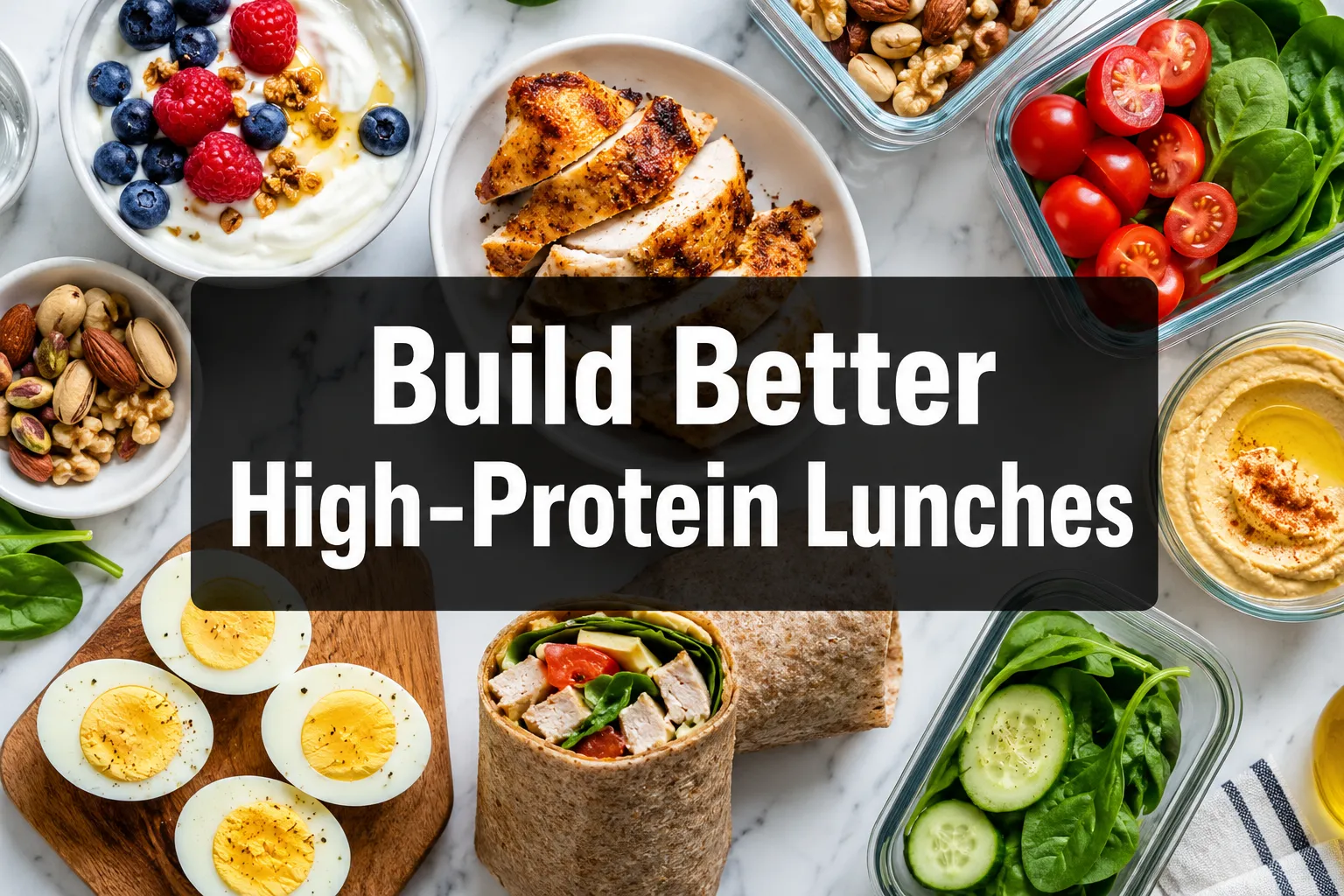
How to Build a Better High-Protein Lunch Without Meal Prep Burnout
Last updated: July 19, 2026
Quick Answer
Building a better high-protein lunch without meal prep burnout means using flexible formulas instead of identical containers. Combine one protein source (rotisserie chicken, Greek yogurt, deli meat, canned fish, or hard-boiled eggs) with fresh vegetables, a simple carb, and a flavor booster you actually enjoy. This approach keeps protein intake high while preventing the monotony that makes people abandon their lunch plans by Wednesday.
Key Takeaways
- Aim for 25-40 grams of protein per lunch to support muscle maintenance and satiety throughout the afternoon
- Rotisserie chicken is the ultimate no-prep protein at roughly $1.50 per serving and ready to eat
- Formula-based lunches beat identical meal prep because you can mix components daily without cooking
- Store-bought options under $10 include Greek yogurt parfaits, deli meat wraps, and canned tuna salads
- Protein fatigue happens when you eat the same lunch repeatedly,variety in texture and flavor prevents burnout
- Add protein to regular lunches with hard-boiled eggs, nuts, cheese, or a scoop of canned beans
- Greek yogurt alone (15-20g protein) isn’t quite enough for a complete lunch but works as part of a larger meal
- Non-chicken proteins include cottage cheese, turkey, salmon, tofu, edamame, and legume-based options
What Counts as High Protein for Lunch
A high-protein lunch contains at least 25 grams of protein, though many people aiming to build muscle or maintain satiety target 30-40 grams per meal. This amount supports muscle protein synthesis, keeps you full for 4-5 hours, and prevents the mid-afternoon energy crash that leads to vending machine raids.
For context, here’s what common protein sources deliver:
- Rotisserie chicken breast (4 oz): 35g protein
- Greek yogurt (1 cup, plain): 15-20g protein
- Canned tuna (5 oz can): 30g protein
- Deli turkey (4 slices): 20g protein
- Hard-boiled eggs (2 large): 12g protein
- Cottage cheese (1 cup): 25g protein
- Chickpeas (1 cup, cooked): 15g protein
The sweet spot for most people is combining two protein sources rather than relying on one massive portion. A wrap with turkey (20g) plus a side of Greek yogurt (15g) hits 35 grams without feeling like you’re forcing down food.
How Much Protein Should I Eat at Lunch to Build Muscle
For muscle building, aim for 0.4-0.5 grams of protein per kilogram of body weight at lunch, which translates to roughly 25-40 grams for most adults. A 180-pound person (82 kg) would target about 33-41 grams per meal if eating three to four times daily.
The key is distribution throughout the day rather than loading all protein into one meal. Your body can only synthesize muscle protein at a certain rate, so spreading intake across lunch, dinner, and potentially breakfast or snacks maximizes the anabolic response.
Choose higher targets (35-40g) if you:
- Train in the afternoon or evening
- Have a physically demanding job
- Are over 40 (older adults need more protein per meal for the same muscle response)
- Skip breakfast or eat a light dinner
Stick with moderate targets (25-30g) if you:
- Eat four or more times per day
- Train in the morning and already had a post-workout meal
- Are managing calorie intake for fat loss
High-Protein Lunch Ideas That Don’t Require Cooking
The best no-cook high-protein lunches use pre-cooked proteins and fresh components you can assemble in under five minutes. These formulas prevent burnout because you vary the flavors and textures daily without touching a stove.
The Wrap Formula
- Base: Large whole-grain or low-carb tortilla
- Protein: Deli turkey, rotisserie chicken, or hummus (for plant-based)
- Crunch: Shredded cabbage, cucumber, or bell pepper
- Flavor: Mustard, hot sauce, or a thin spread of cream cheese
- Result: 25-35g protein, ready in 3 minutes
The Chopped Salad Formula
- Greens: Pre-washed spinach or mixed greens
- Protein: Canned tuna, hard-boiled eggs, or chickpeas
- Texture: Cherry tomatoes, shredded carrots, sunflower seeds
- Dressing: Olive oil + lemon juice, or store-bought vinaigrette
- Result: 30-40g protein, feels fresh every time
For more inspiration on building satisfying salads with make-ahead proteins, check out our guide on how to make better salad dinners with crispy toppings and bold dressings.
The Snack-Lunch Combination
- Protein 1: Greek yogurt (1 cup) with berries
- Protein 2: String cheese or handful of almonds
- Carb: Apple slices or whole-grain crackers
- Result: 25-30g protein, perfect for grazing eaters
The Grain-Free Bowl
- Base: Cauliflower rice (microwaveable bag) or skip the base entirely
- Protein: Rotisserie chicken or canned salmon
- Vegetables: Pre-cut broccoli, snap peas, or shredded carrots
- Sauce: Soy sauce, tahini, or salsa
- Result: 35-45g protein, low-carb friendly
Common mistake: Buying pre-made salads that look protein-rich but only contain 10-15 grams. Always check the label or add your own protein source.
Best Store-Bought High-Protein Lunches
Store-bought options work when you need zero assembly time, but quality and protein content vary wildly. Look for options with at least 20 grams of protein and under 600 calories if you’re managing intake.
Top picks under $10:
| Option | Protein | Where to Find | Cost |
|---|---|---|---|
| Rotisserie chicken (1/4 bird) + bagged salad | 40g | Any grocery store | $6-8 |
| Greek yogurt parfait + hard-boiled eggs (2) | 30g | Convenience stores | $5-7 |
| Canned tuna + whole-grain crackers + string cheese | 35g | Grocery store | $4-6 |
| Deli turkey (6 oz) + hummus + veggie sticks | 35g | Deli counter | $7-9 |
| Cottage cheese (2 cups) + cherry tomatoes + everything bagel seasoning | 50g | Grocery store | $4-5 |
Pre-made meals to skip:
- Most grocery store sushi (only 8-12g protein)
- “Protein” bars under 15g (they’re snacks, not meals)
- Salads with only cheese as the protein source
- Sandwiches with one thin slice of meat
Better convenience store strategy: Buy a rotisserie chicken once, keep it in your work fridge, and pair it with different sides throughout the week. One $6 chicken provides 4-5 lunches at $1.20-1.50 per serving.
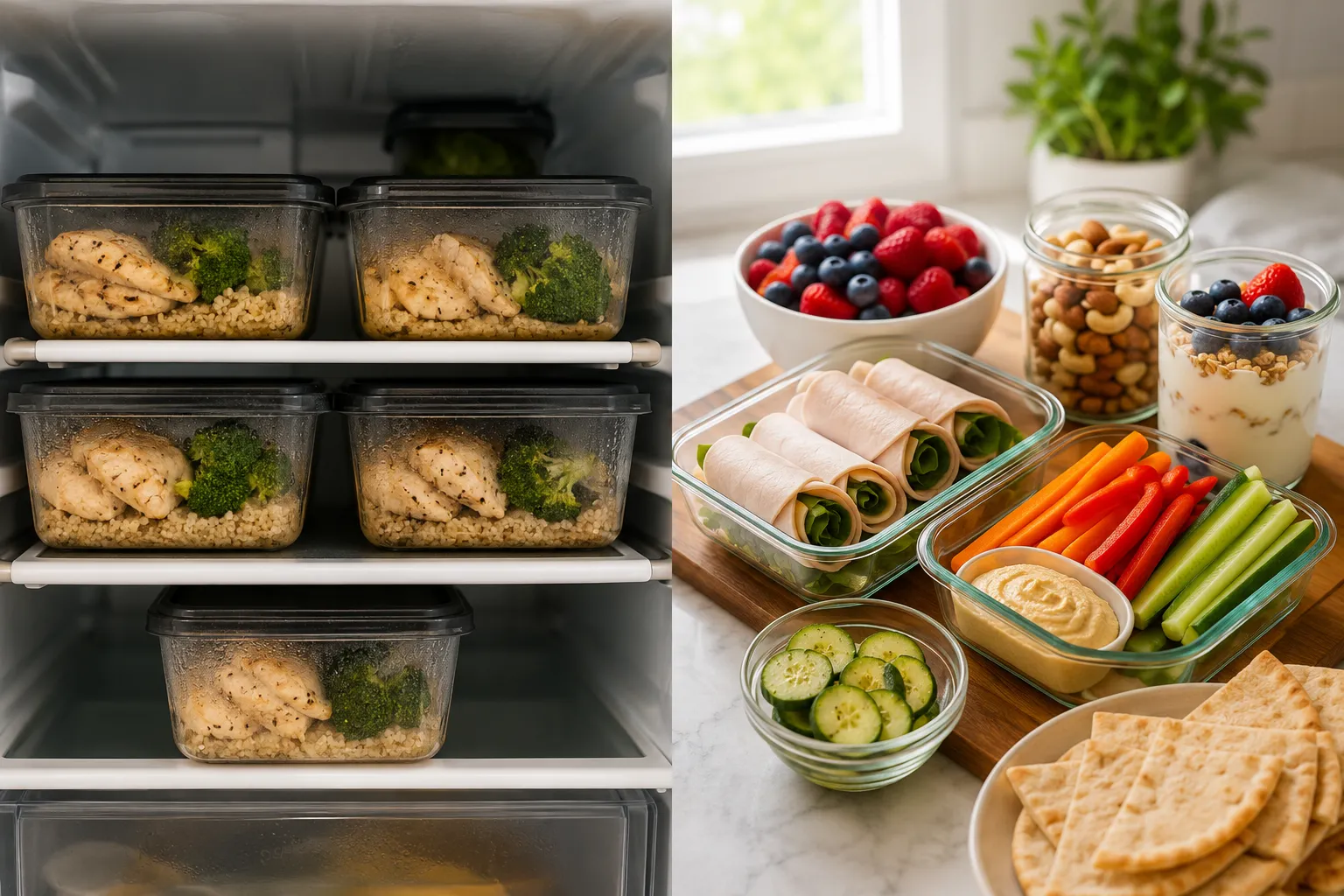
High-Protein Lunch vs Meal Prep: Which Is Easier
Flexible component assembly is easier than traditional meal prep for most people because it eliminates the Sunday cooking marathon and prevents flavor fatigue. Instead of making five identical containers, you keep versatile proteins and fresh components on hand and combine them differently each day.
Traditional meal prep wins if you:
- Actually enjoy eating the same lunch repeatedly
- Have extremely limited lunch break time (under 5 minutes)
- Need precise macro tracking for competition prep
- Have access to reliable reheating equipment
Flexible assembly wins if you:
- Get bored eating identical meals
- Have 5-10 minutes for lunch assembly
- Want to adjust portions based on daily hunger
- Prefer fresh vegetables over reheated ones
- Travel for work and can’t always access a microwave
The hybrid approach: Prep one or two proteins on Sunday (bake chicken thighs, boil eggs), then mix them with fresh components daily. This gives you the time-saving benefit of batch cooking without the monotony of identical meals.
For those who want to streamline prep without burnout, our silicone kitchen bags guide offers smart storage hacks that keep components fresh longer.
Rotisserie Chicken Lunch Ideas with No Prep
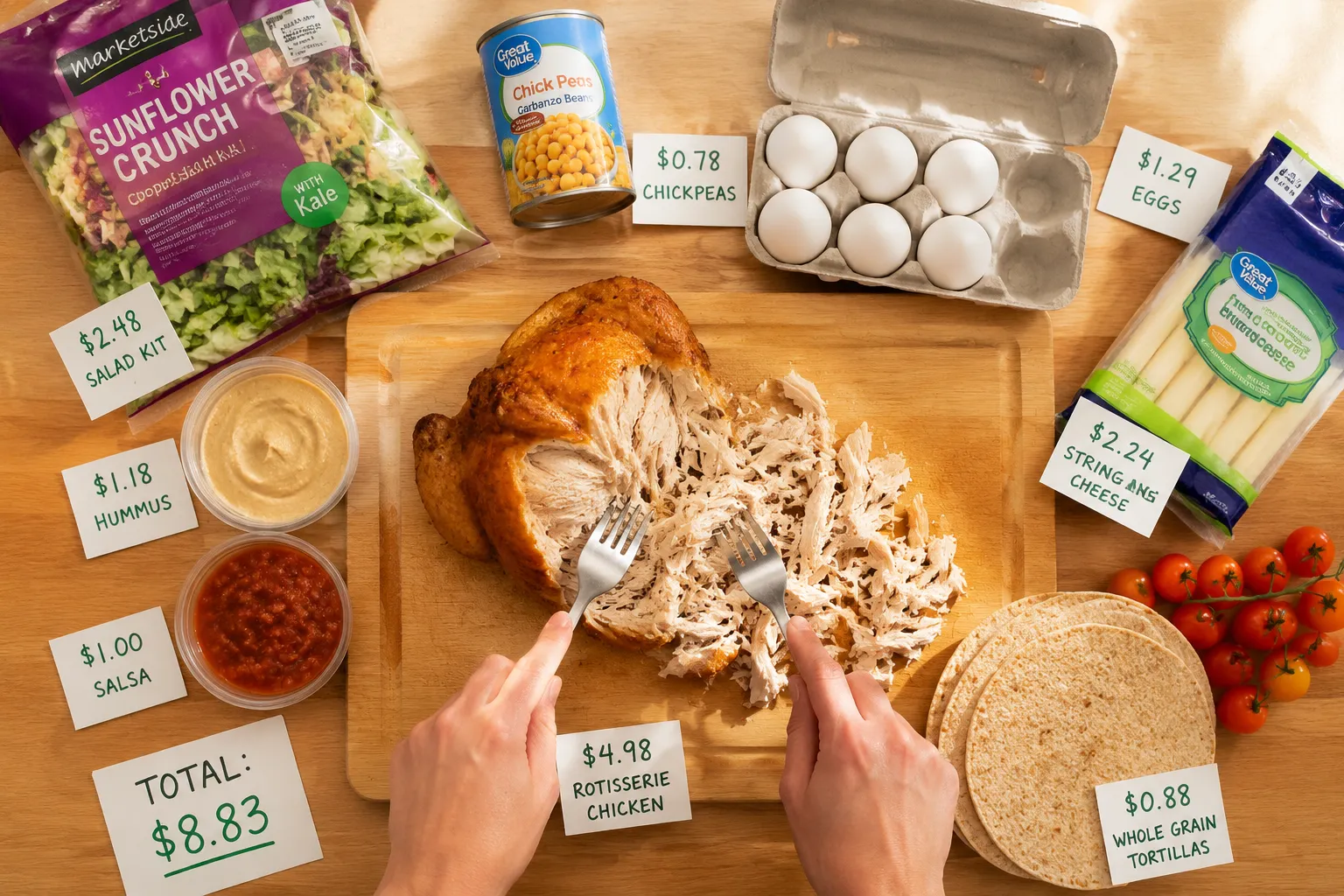
Rotisserie chicken is the MVP of no-prep high-protein lunches because it’s already seasoned, cooked, and ready to eat cold or warm. One chicken yields 3-4 cups of meat (roughly 120-140g protein total) for $5-7.
Five ways to use rotisserie chicken without cooking:
Chicken Caesar wrap: Shred chicken, add romaine, parmesan, and Caesar dressing in a tortilla (35g protein)
Buffalo chicken salad: Mix shredded chicken with hot sauce and Greek yogurt, serve over greens (40g protein)
Chicken and hummus plate: Slice chicken breast, serve with hummus, cucumber, and pita (30g protein)
Chicken taco bowl: Shred chicken, add black beans, salsa, cheese, and lettuce (no tortilla needed, 45g protein)
Chicken and cottage cheese bowl: Dice chicken, mix with cottage cheese, cherry tomatoes, and everything bagel seasoning (50g protein)
Storage tip: Remove all meat from the bones immediately when you get home, store in an airtight container, and it’ll stay fresh for 4 days. The bones can go straight into a freezer bag for future stock.
Flavor rotation: Buy different rotisserie chicken flavors (lemon pepper, BBQ, plain) or add your own sauces (teriyaki, pesto, chimichurri) to prevent taste fatigue.
Why Do I Get Tired of Eating the Same High-Protein Lunch
Protein fatigue happens because your brain craves sensory variety, different textures, flavors, and temperatures, to maintain interest in food. Eating identical lunches triggers sensory-specific satiety, where the pleasure response to a particular food decreases with repeated exposure, making each meal less satisfying than the last.
The science: Your taste receptors adapt to repeated flavors, and dopamine response (the “reward” signal) drops when meals become predictable. This is why restaurant meals feel more satisfying than home cooking, they offer novelty.
How to prevent protein lunch fatigue:
- Rotate textures: Alternate between crispy (nuts, raw vegetables), creamy (Greek yogurt, hummus), and chewy (chicken, turkey) proteins
- Change temperatures: Eat cold lunches some days, room-temperature others
- Vary flavor profiles: Monday = Mexican spices, Tuesday = Mediterranean, Wednesday = Asian-inspired
- Switch protein sources: Don’t eat chicken every single day
- Add crunchy toppings: Sunflower seeds, crispy chickpeas, or crushed crackers make the same base feel different
The two-week rotation rule: Plan 10 different lunch formulas and rotate through them. By the time you return to option one, it feels fresh again.
High-Protein Lunch for People Who Hate Meal Prep
If you hate meal prep, focus on “assembly meals” that require zero cooking but still hit 30+ grams of protein. The key is keeping a rotation of grab-and-go proteins and fresh components that don’t require Sunday afternoon cooking sessions.
Your anti-meal-prep shopping list:
Proteins (no cooking required):
- Rotisserie chicken
- Pre-cooked hard-boiled eggs
- Deli turkey or roast beef
- Canned tuna or salmon
- Greek yogurt
- Cottage cheese
- String cheese
- Pre-cooked frozen shrimp (thaw overnight)
Quick carbs:
- Pre-washed salad greens
- Baby carrots and cherry tomatoes
- Whole-grain tortillas
- Microwaveable rice pouches
- Canned chickpeas or black beans
Flavor boosters:
- Hot sauce
- Mustard
- Hummus
- Salsa
- Everything bagel seasoning
- Olive oil + lemon juice
The 5-minute assembly method:
- Pick one protein
- Add one vegetable
- Choose one carb (or skip if low-carb)
- Add one flavor booster
- Done
Example week with zero cooking:
- Monday: Turkey wrap with hummus and cucumber
- Tuesday: Greek yogurt with berries and almonds + hard-boiled eggs
- Wednesday: Tuna salad on greens with chickpeas
- Thursday: Rotisserie chicken with microwaved rice and salsa
- Friday: Cottage cheese bowl with cherry tomatoes and everything seasoning
For more protein-rich options that don’t require extensive prep, explore our collection of functional fiber snacks with high-protein recipes.
Quick High-Protein Lunch for Busy Professionals
Busy professionals need lunches that assemble in under 10 minutes, travel well, and don’t require refrigeration until the last moment. The best strategy is keeping shelf-stable proteins at your desk and adding fresh components from a weekly grocery run.
Desk drawer protein stash:
- Canned tuna or salmon (pop-top cans)
- Individual nut butter packets
- Protein powder (mix with water or milk)
- Shelf-stable Greek yogurt cups (some brands don’t need refrigeration until opened)
- Roasted chickpeas or edamame (dry-roasted)
Monday morning fridge stock:
- One rotisserie chicken
- Pre-washed salad greens
- Cherry tomatoes
- String cheese
- Hard-boiled eggs (buy pre-cooked or boil Sunday night)
Three lunches under 7 minutes:
The desk tuna bowl (5 minutes)
- Open can of tuna, drain
- Mix with individual mayo packet or mustard
- Eat with crackers or over greens
- Add cherry tomatoes
- Protein: 30g
The protein shake meal (3 minutes)
- Blend protein powder with milk
- Eat with string cheese and apple
- Add handful of almonds
- Protein: 35g
The rotisserie chicken plate (6 minutes)
- Pull chicken from container
- Arrange on plate with cherry tomatoes
- Add hummus for dipping
- Microwave for 60 seconds if desired
- Protein: 40g
Travel tip: Invest in a good insulated lunch bag with an ice pack. This extends your protein options and prevents the 11 AM “I need to find lunch” scramble.
Common Mistakes When Trying to Eat More Protein at Lunch
The biggest mistake is trying to hit protein goals with a single massive portion of one food, which leads to taste fatigue and digestive discomfort. Eating 8 ounces of plain chicken breast might hit your numbers, but you won’t want to do it again tomorrow.
Other common mistakes:
Mistake 1: Forgetting about protein density
- Problem: Filling up on low-protein foods first (bread, chips, fruit)
- Fix: Eat your protein source first, then add other components
Mistake 2: Buying “high-protein” products that aren’t
- Problem: Many products labeled “protein” contain only 10-12g
- Fix: Read labels and aim for at least 20g per main component
Mistake 3: Not counting plant proteins
- Problem: Dismissing beans, lentils, and nuts as “not real protein”
- Fix: A cup of chickpeas (15g) plus hummus (4g) plus nuts (6g) = 25g protein
Mistake 4: Skipping protein because you’re “not hungry”
- Problem: Under-eating at lunch leads to overeating at dinner
- Fix: Eat at least 25g even if you’re not ravenous; protein regulates appetite later
Mistake 5: Making lunch too complicated
- Problem: Recipes with 12 ingredients you’ll never make twice
- Fix: Stick to 3-5 component formulas you can actually repeat
Mistake 6: Not having backup options
- Problem: When your plan fails, you default to low-protein convenience food
- Fix: Keep shelf-stable proteins (canned fish, protein bars over 20g) as emergency backup
High-Protein Lunch Options Under $10
Budget-friendly high-protein lunches focus on cost-per-gram of protein rather than fancy ingredients. The cheapest proteins are eggs, canned fish, rotisserie chicken, and legumes, all delivering 20+ grams for under $3.
Cost breakdown per 30g protein:
- Eggs (5 large): $1.25
- Canned tuna (5 oz): $1.50
- Rotisserie chicken (4 oz): $1.50
- Greek yogurt (1.5 cups): $2.00
- Cottage cheese (1 cup): $1.75
- Deli turkey (6 oz): $3.00
- Chickpeas (1.5 cups cooked): $0.75
- Ground beef (4 oz, cooked): $2.50
Five complete lunches under $10:
Egg salad wrap ($4.50)
- 4 hard-boiled eggs, mashed with mustard
- Whole-grain tortilla
- Lettuce and tomato
- Protein: 28g
Tuna and bean salad ($5.00)
- Can of tuna
- Can of white beans
- Cherry tomatoes
- Olive oil and lemon
- Protein: 40g
Rotisserie chicken bowl ($6.50)
- 1/4 rotisserie chicken
- Microwaveable rice pouch
- Frozen broccoli (microwaved)
- Soy sauce
- Protein: 45g
Greek yogurt parfait plus ($5.50)
- 2 cups Greek yogurt
- Frozen berries
- Handful of almonds
- Protein: 35g
Chickpea and cottage cheese plate ($4.75)
- 1 cup cottage cheese
- 1 cup chickpeas (canned, drained)
- Cherry tomatoes
- Everything bagel seasoning
- Protein: 40g
Money-saving strategy: Buy whole rotisserie chickens and canned proteins in bulk. A case of tuna (12 cans) often costs 30% less per can than buying individually.
Is Greek Yogurt Enough Protein for Lunch
Greek yogurt alone provides 15-20 grams of protein per cup, which falls short of the 25-40 gram target for a complete high-protein lunch. However, it works well as the foundation of a lunch when combined with other protein sources or eaten alongside protein-rich sides.
When Greek yogurt is enough:
- You’re eating 4-5 smaller meals per day
- You had a high-protein breakfast and will have a high-protein dinner
- You’re pairing it with nuts (6g per ounce) and seeds (5g per ounce)
- You’re using it as a base for a larger bowl with added proteins
How to boost Greek yogurt lunches to 30+ grams:
- Add protein powder: Mix in half a scoop (10-12g additional)
- Top with nuts and seeds: 1/4 cup adds 7-8g
- Pair with hard-boiled eggs: 2 eggs add 12g
- Mix in cottage cheese: 1/2 cup adds 12g
- Serve with deli meat on the side: 3 slices add 15g
The Greek yogurt bowl formula:
- 1 cup Greek yogurt (17g)
- 1/4 cup almonds (8g)
- 1 scoop protein powder (12g)
- Berries for flavor
- Total: 37g protein
Brand matters: Some Greek yogurts contain only 10g per cup (usually the flavored varieties with added sugar). Always check the label and aim for brands with 15g+ per cup.
If you’re looking for more ways to incorporate high-protein ingredients into quick meals, our smart blender recipes for high-protein sauces and soups can help you create versatile bases.
How to Add Protein to Regular Lunch Without Cooking
Adding protein to your existing lunch requires keeping versatile, no-cook protein boosters on hand that complement rather than overpower your meal. The goal is to add 10-20 grams without changing the fundamental character of what you’re eating.
Protein boosters that work with any lunch:
For salads:
- Hard-boiled eggs, sliced (+12g for 2 eggs)
- Canned chickpeas, drained (+15g per cup)
- Sunflower seeds (+6g per 1/4 cup)
- Shredded rotisserie chicken (+20g per 3 oz)
- Crumbled feta or goat cheese (+8g per 1/4 cup)
For sandwiches:
- Add an extra slice of deli meat (+7g per slice)
- Spread with hummus instead of mayo (+4g per 2 tablespoons)
- Add sliced hard-boiled egg (+6g per egg)
- Use Greek yogurt as a spread (+5g per 2 tablespoons)
For soups:
- Stir in canned white beans (+15g per cup)
- Top with shredded cheese (+7g per 1/4 cup)
- Add pre-cooked frozen shrimp (+20g per 3 oz)
- Crack an egg into hot soup and stir (+6g per egg)
For wraps:
- Double the meat (+15-20g)
- Add a layer of hummus (+4g per 2 tablespoons)
- Include sliced cheese (+7g per slice)
- Spread with Greek yogurt instead of sour cream (+3g per 2 tablespoons)
The stealth protein strategy: Keep individual packets of nut butter, string cheese, and hard-boiled eggs in your lunch bag. If your main meal is protein-light, eat these as “sides” to hit your target without reconstructing the entire lunch.
High-Protein Lunch Ideas for People Who Don’t Like Chicken
Chicken fatigue is real, and plenty of high-protein lunches skip poultry entirely. Fish, dairy, legumes, and red meat all deliver 20+ grams per serving with completely different flavor profiles.
Non-chicken protein sources:
Seafood options:
- Canned tuna: 30g per 5 oz can, pairs with mayo, mustard, or olive oil
- Canned salmon: 25g per 5 oz can, works in salads or on crackers
- Pre-cooked shrimp: 20g per 3 oz, thaw overnight and eat cold with cocktail sauce
- Smoked salmon: 16g per 3 oz, excellent on whole-grain crackers with cream cheese
Dairy-based lunches:
- Cottage cheese bowl: 25g per cup, top with tomatoes, cucumber, and everything seasoning
- Greek yogurt parfait: 17g per cup, add nuts and berries
- Cheese and crackers plate: Combine 3 oz cheese (21g) with whole-grain crackers and vegetables
Plant-based proteins:
- Chickpea salad: 15g per cup, mash with mustard and pickles for a “tuna salad” texture
- Lentil soup: 18g per cup, buy pre-made or use canned
- Edamame: 17g per cup, eat cold with sea salt
- Tofu cubes: 20g per cup, marinate in soy sauce and sesame oil
Red meat options:
- Deli roast beef: 20g per 4 slices, roll with cheese and mustard
- Leftover steak: 25g per 3 oz, slice thin for salads or wraps
- Beef jerky: 9g per oz, pair with cheese and fruit for a snack-lunch
The rotation strategy: Plan a weekly protein rotation (Monday = tuna, Tuesday = cottage cheese, Wednesday = turkey, Thursday = chickpeas, Friday = salmon) to prevent any single protein from becoming boring.
Frequently Asked Questions
Can I build muscle eating the same high-protein lunch every day? Yes, as long as you hit your daily protein target (roughly 0.7-1g per pound of body weight) and train consistently. However, most people struggle with adherence when eating identical meals, so variety improves long-term success even if it’s not physiologically necessary.
How long does rotisserie chicken last in the fridge? Rotisserie chicken stays fresh for 3-4 days when stored properly in an airtight container. Remove all meat from the bones immediately after purchase and refrigerate within two hours to maximize shelf life.
What if I don’t have time to assemble lunch in the morning? Prep your components the night before: portion your protein into a container, wash and cut vegetables, and pack your flavor boosters. In the morning, you’re just grabbing containers rather than assembling from scratch.
Are protein bars a good lunch replacement? Most protein bars contain only 15-20g protein and lack the volume and satiety of a real meal. They work as a backup option or part of a larger lunch (bar + Greek yogurt + fruit), but shouldn’t be your daily go-to.
How do I hit 40g protein without eating a huge portion? Combine two moderate protein sources rather than one massive portion. For example, 3 oz chicken (26g) plus 1/2 cup cottage cheese (14g) = 40g total without feeling overstuffed.
Can I meal prep without getting bored? Yes, by prepping components rather than complete meals. Cook 2-3 proteins on Sunday, then mix them with different fresh vegetables, carbs, and sauces throughout the week. This gives you the time-saving benefit without the monotony.
What’s the cheapest high-protein lunch? Eggs are the most cost-effective protein at roughly $0.25 per egg (6g protein). A five-egg scramble or egg salad provides 30g protein for $1.25, making it cheaper than any other animal protein source.
Do I need to eat protein immediately after working out? The “anabolic window” is less critical than once thought. As long as you eat a high-protein meal within 3-4 hours of training, you’ll support muscle recovery. If you train at lunch, eating your high-protein lunch within an hour is ideal but not mandatory.
How much protein is too much in one meal? Your body can process and use more than 30g per meal (the old myth), but there’s a point of diminishing returns. Most research suggests 40-50g per meal maximizes muscle protein synthesis, and eating more doesn’t provide additional benefit for muscle building.
Can I eat cold chicken for lunch? Absolutely. Cold rotisserie chicken is safe and delicious, especially in salads, wraps, or with dipping sauces. Many people prefer cold chicken because it doesn’t require reheating equipment at work.
What if I’m vegetarian? Focus on Greek yogurt, cottage cheese, eggs, legumes (chickpeas, lentils, black beans), tofu, tempeh, and nuts. Combine multiple plant proteins to reach 30+ grams per meal, such as a chickpea salad (15g) with Greek yogurt dressing (8g) and sunflower seeds (6g).
How do I prevent my lunch from getting soggy? Pack wet ingredients (dressings, sauces, tomatoes) separately and add them right before eating. For wraps, place lettuce as a barrier between wet ingredients and the tortilla. Use containers with compartments to keep components separate.
Conclusion
Building a better high-protein lunch without meal prep burnout comes down to flexibility over rigidity. Instead of forcing yourself to eat identical containers all week, keep versatile proteins and fresh components on hand and combine them differently each day. Aim for 25-40 grams of protein per lunch using affordable staples like rotisserie chicken, Greek yogurt, canned fish, eggs, and legumes.
The formula is simple: pick one protein, add vegetables, choose a carb (or skip it), and include a flavor booster you actually enjoy. Rotate your protein sources throughout the week, vary textures and temperatures, and keep shelf-stable backups for busy days. This approach delivers the nutritional benefits of meal prep without the Sunday cooking marathon or Wednesday burnout.
Your action steps for this week:
- Buy one rotisserie chicken and portion it into containers for 3-4 lunches
- Stock your fridge with three no-cook proteins (Greek yogurt, deli meat, hard-boiled eggs)
- Keep shelf-stable proteins at your desk (canned tuna, nuts, protein powder)
- Plan five different lunch formulas using the same core proteins with different vegetables and flavors
- Track your protein intake for three days to ensure you’re hitting 25+ grams at lunch
The goal isn’t perfection, it’s building a sustainable system that keeps you fueled, satisfied, and actually looking forward to lunch instead of dreading another identical container.
SEO Meta Title: High-Protein Lunch Without Meal Prep Burnout Guide


