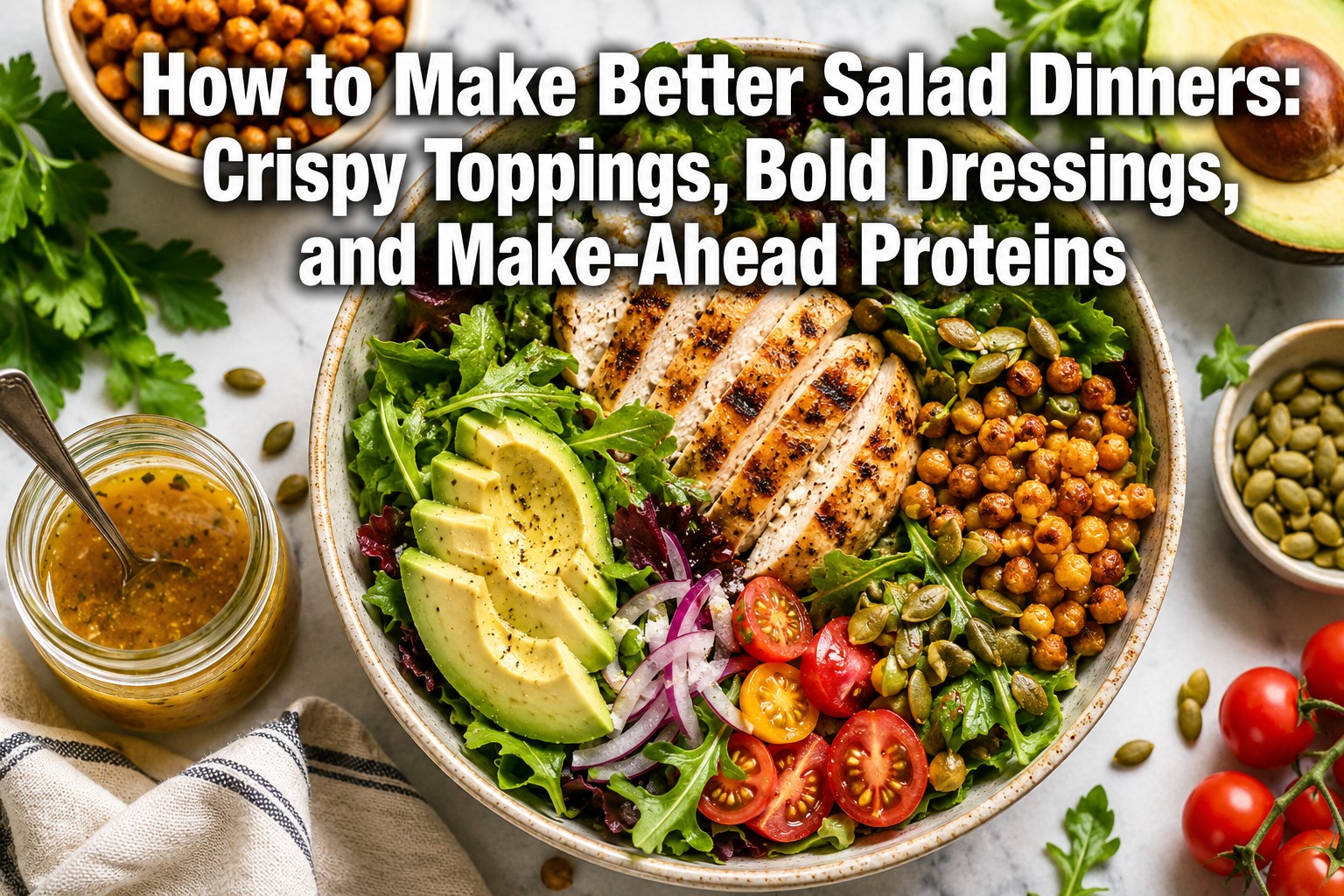
How to Make Better Salad Dinners: Crispy Toppings, Bold Dressings, and Make-Ahead Proteins
Last updated: May 28, 2026
Quick Answer
To make better salad dinners, build them with three essential components: 4–6 ounces of protein (about 20–30 grams), bold homemade dressings that add flavor without making greens soggy, and crispy toppings like nuts, seeds, or roasted chickpeas for texture. Meal-prep these elements separately and assemble just before eating, or layer them strategically in containers with dressing on the bottom and delicate greens on top.
Key Takeaways
- Aim for 4–6 ounces of protein per salad to make it filling enough for dinner (chicken, tofu, lentils, eggs, or tuna work well)
- Batch-cook proteins on Sunday and store them for 3–4 days to streamline weeknight salad assembly
- Make dressings from scratch using a 3:1 oil-to-acid ratio; they last 5–7 days refrigerated and taste fresher than store-bought
- Add healthy fats like avocado, nuts, cheese, or olives (2 tablespoons to 1/4 cup) to increase satiety
- Use hearty greens such as kale, cabbage, or romaine for meal prep instead of tender lettuce that wilts quickly
- Keep toppings crispy by storing them separately and adding them right before serving
- Layer meal-prep salads strategically: dressing first, then sturdy vegetables, protein, and greens on top
- Include fiber-rich carbs like quinoa, beans, sweet potato, or farro to make salads more substantial
- Avoid watery salads by patting greens dry, dressing just before eating, and keeping wet ingredients separate
- Choose bold flavors with fresh herbs, citrus, garlic, and spices to make salads feel like complete meals
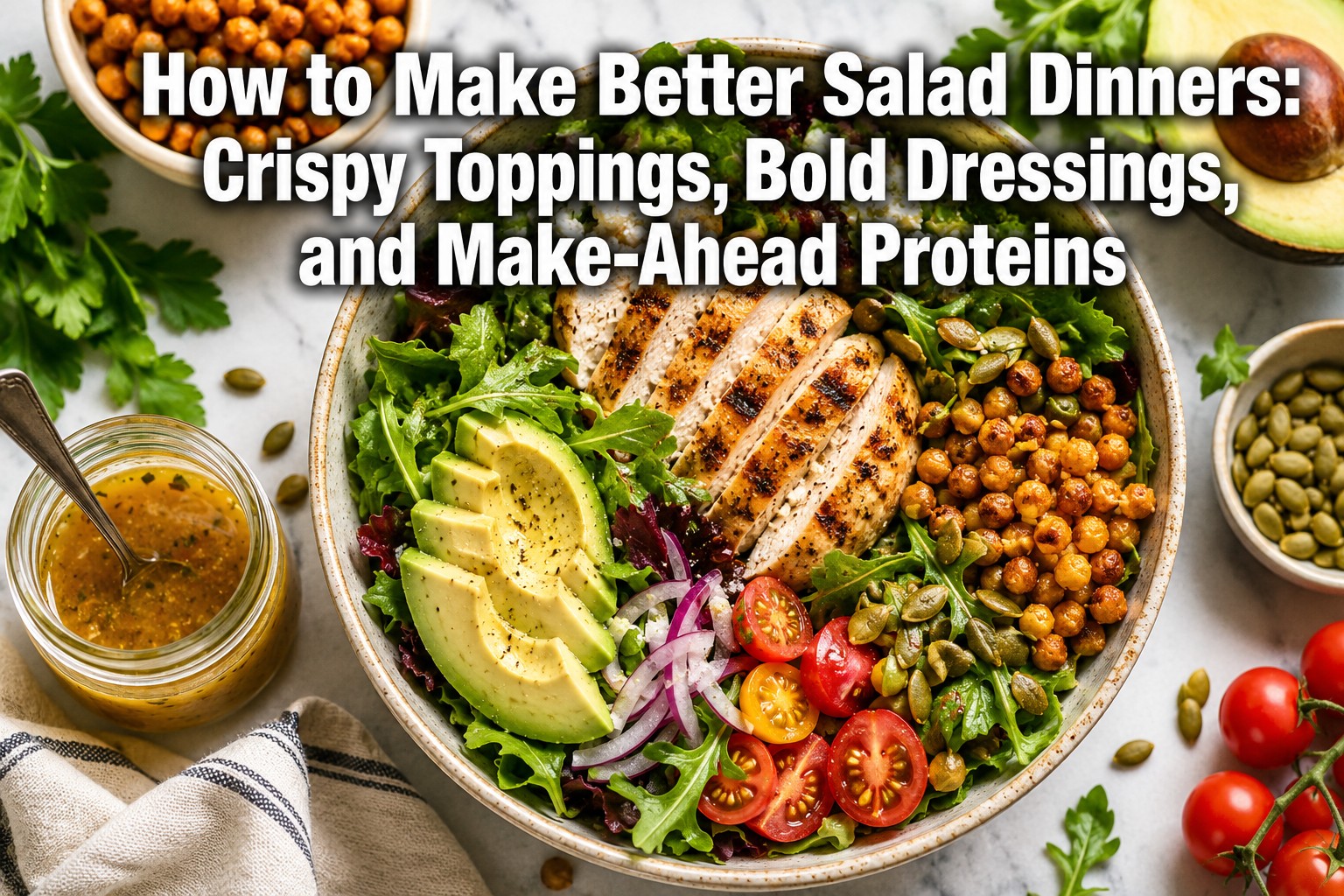
What Makes a Salad Filling Enough for Dinner
A salad becomes dinner-worthy when it contains 4–6 ounces of cooked protein (roughly 20–30 grams), a source of healthy fat, and fiber-rich carbohydrates. Without these three components, even a large bowl of greens will leave you hungry within an hour.
The protein is non-negotiable. Whether it’s grilled chicken, hard-boiled eggs, chickpeas, or tofu, this element provides the satiety that turns a side dish into a main course. For reference, a palm-sized portion of chicken breast or a cup of cooked lentils hits that 20–30 gram target.
Essential components for a dinner salad:
- Protein: 4–6 oz chicken, salmon, tuna, tofu, tempeh, lentils, or 2–3 eggs
- Healthy fats: 2 tablespoons to 1/4 cup of avocado, nuts, seeds, cheese, or olives
- Fiber carbs: 1/2 to 1 cup of quinoa, beans, sweet potato, farro, or fruit
- Greens: 2–3 cups of mixed greens, spinach, kale, or romaine
- Vegetables: 1–2 cups of raw or roasted vegetables for volume and nutrients
Common mistake: Loading up on greens and skipping the protein and fat. This creates a high-volume, low-calorie meal that won’t sustain energy through the evening.
Choose this approach if you want salads to replace traditional dinner plates without needing a snack two hours later.
Best Proteins to Meal Prep for Salads
Chicken breast, hard-boiled eggs, and lentils are the top three proteins for salad meal prep because they hold up well in the fridge for 3–4 days and work with most flavor profiles. Chicken breast is the most versatile option and can be seasoned dozens of ways.
To batch-cook chicken for salads, bake 8–10 oz breasts at 400°F for 20–25 minutes until they reach 165°F internal temperature. Let them rest for 5 minutes, then slice or dice. Store in an airtight container and use within four days. For more chicken preparation methods, check out our guide on what chicken breast recipes to make for any night.
Best make-ahead proteins for salads:
- Chicken breast – bake, grill, or poach; slice or shred
- Hard-boiled eggs – cook a dozen at once, peel, and store for up to one week
- Lentils – simmer French or green lentils for 20–25 minutes, drain, and refrigerate
- Chickpeas – roast canned chickpeas at 400°F for 25–30 minutes for crunch
- Tofu – press, cube, and bake at 425°F for 25 minutes until crispy
- Tuna or salmon – canned or pouch varieties need no prep
- Grilled shrimp – cook in batches and store for 2–3 days
Edge case: If you’re using fatty fish like salmon, eat it within 2 days rather than 4, as the oils can turn rancid faster than lean proteins.
For detailed protein content, see our breakdown of chicken breast protein amounts and nutrition.
What Proteins Can I Cook Ahead for Salad Bowls
You can cook ahead any protein that maintains texture and flavor when refrigerated, including all poultry, most fish, eggs, legumes, and plant-based options like tofu or tempeh. The key is to slightly undercook proteins that will be reheated or to serve them cold.
Proteins that work well cooked ahead:
- Poultry: Chicken breast, chicken thighs, turkey breast
- Seafood: Shrimp, salmon, tuna steaks (eat within 2 days)
- Eggs: Hard-boiled, soft-boiled, or baked egg cups
- Legumes: Lentils, black beans, chickpeas, white beans
- Plant-based: Baked tofu, tempeh, edamame
- Red meat: Sliced steak or ground beef (though less common in salads)
Proteins to avoid cooking ahead:
- Delicate white fish (tilapia, cod) – they fall apart when stored
- Fried proteins – they lose crispness and become soggy
Pro tip: Season proteins lightly when batch-cooking so you can adjust flavors when assembling different salad styles throughout the week. A plain grilled chicken breast can become Mediterranean with feta and olives on Monday, then Asian-inspired with sesame and ginger on Wednesday.
If you’re deciding between chicken cuts, our comparison of chicken thighs versus breast can help you choose based on your preferences.
How to Make Salad Dressing from Scratch
Homemade salad dressing follows a simple 3:1 ratio: three parts oil to one part acid (vinegar or citrus juice), plus seasonings. Whisk or shake these ingredients together until emulsified, and you’ll have a fresher, healthier dressing than most store-bought versions.
Basic vinaigrette formula:
- 3 tablespoons olive oil
- 1 tablespoon vinegar (red wine, balsamic, apple cider) or lemon juice
- 1 teaspoon Dijon mustard (helps emulsify)
- 1 small garlic clove, minced
- Salt and black pepper to taste
- Optional: 1 teaspoon honey or maple syrup for sweetness
Method: Combine all ingredients in a jar with a tight lid. Shake vigorously for 30 seconds until the mixture looks creamy and uniform. Alternatively, whisk in a bowl for 1–2 minutes.
Three bold dressing variations:
- Tahini-lemon: 1/4 cup tahini + 2 tablespoons lemon juice + 2 tablespoons water + 1 garlic clove + salt
- Ginger-sesame: 3 tablespoons sesame oil + 1 tablespoon rice vinegar + 1 teaspoon grated ginger + 1 teaspoon soy sauce
- Herb ranch: 1/2 cup Greek yogurt + 2 tablespoons olive oil + 1 tablespoon lemon juice + fresh dill, parsley, and chives + garlic powder + salt
Common mistake: Adding dressing to the salad too early. Dress salads right before eating to prevent wilting and sogginess.
How Long Do Homemade Salad Dressings Last in the Fridge
Oil-based vinaigrettes last 5–7 days refrigerated, while creamy dressings made with dairy or eggs last 3–5 days. Always store dressings in airtight glass jars or bottles and check for off smells or separation before using.
Dressing shelf life guide:
| Dressing Type | Refrigerator Life | Signs It’s Bad |
|---|---|---|
| Oil + vinegar vinaigrette | 5–7 days | Rancid oil smell, cloudiness |
| Citrus-based vinaigrette | 3–5 days | Sour smell, mold |
| Tahini or nut-based | 5–7 days | Bitter taste, separation that won’t re-mix |
| Dairy-based (ranch, Caesar) | 3–5 days | Sour smell, curdling |
| Yogurt-based | 3–5 days | Watery separation, off smell |
Storage tips:
- Use clean utensils when scooping dressing to avoid contamination
- Label jars with the date you made the dressing
- Shake or whisk before each use, as natural separation is normal
- Keep dressings in the coldest part of your fridge (back, not door)
Edge case: Dressings with fresh garlic or herbs may develop stronger flavors after 2–3 days. If the taste becomes too intense, dilute with a bit of water or oil.
Store-Bought vs Homemade Dressing: Which Is Healthier
Homemade dressings are generally healthier because they contain fewer preservatives, less sodium, and no added sugars or artificial ingredients. Most commercial dressings include 200–400mg of sodium per 2-tablespoon serving, while homemade versions typically have 50–100mg when you control the salt.
Nutritional comparison (per 2 tablespoons):
| Component | Store-Bought | Homemade |
|---|---|---|
| Sodium | 200–400mg | 50–150mg |
| Added sugar | 2–6g | 0–2g (if you add honey) |
| Preservatives | Yes (potassium sorbate, calcium disodium EDTA) | None |
| Oil quality | Often soybean or canola | Your choice (olive, avocado) |
| Cost per serving | $0.30–$0.75 | $0.15–$0.30 |
When store-bought makes sense:
- You need convenience and won’t make salads otherwise
- You’re traveling or packing lunches without refrigeration
- You want specialty flavors that are complex to recreate (like authentic Asian dressings)
When homemade is worth it:
- You make salads 3+ times per week
- You have dietary restrictions (low-sodium, sugar-free, allergen-free)
- You want to control oil quality and avoid seed oils
Decision rule: If you eat salads regularly, make a big batch of vinaigrette on Sunday. If salads are occasional, quality store-bought dressings are a reasonable compromise.
How to Keep Lettuce Crisp in Meal Prep Salads
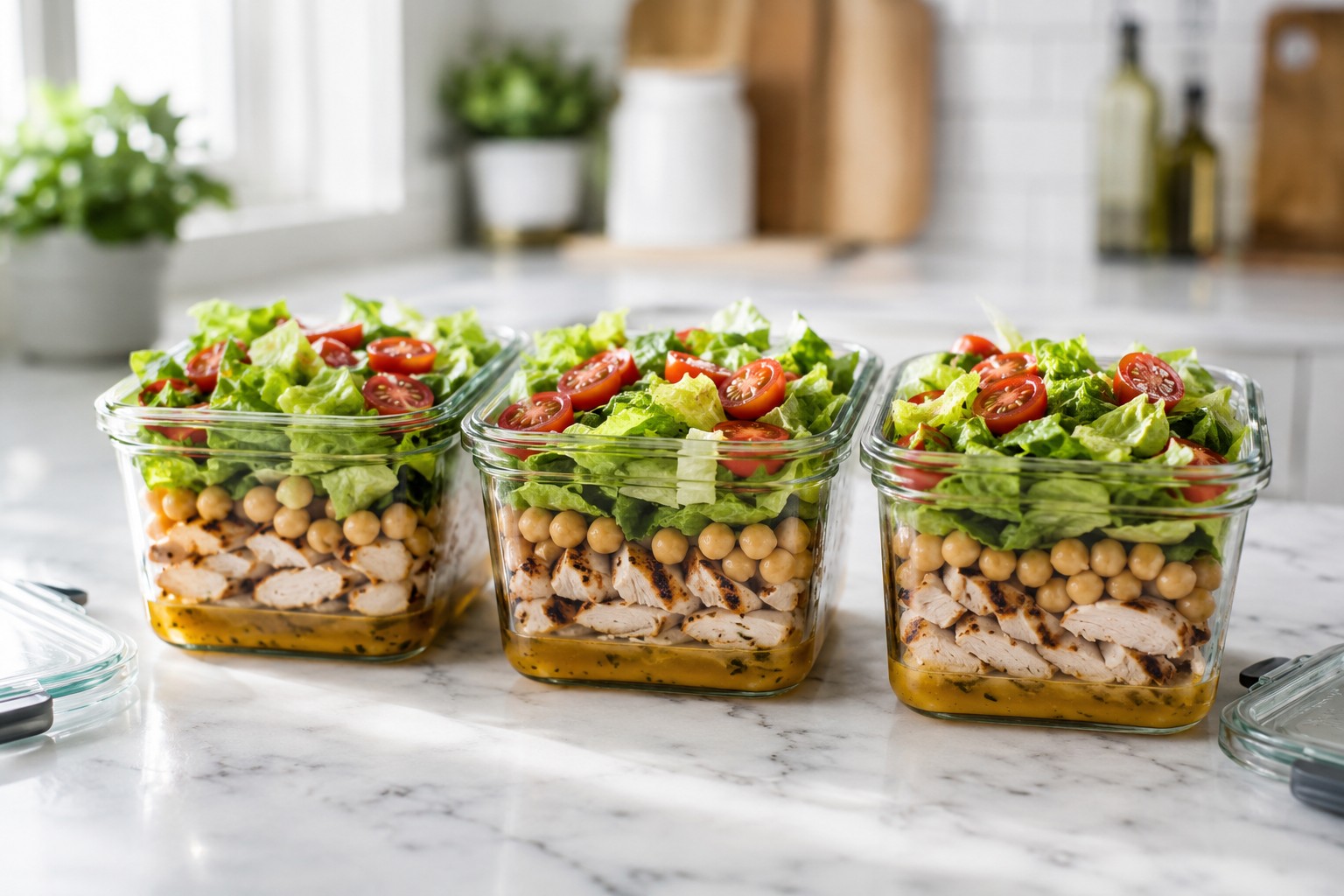
Keep lettuce crisp by storing it on top of meal-prep containers with dressing at the bottom, or by using heartier greens like kale, cabbage, or romaine that resist wilting. Wash and thoroughly dry greens before storing, as excess moisture accelerates spoilage.
Layering method for crisp meal-prep salads:
- Bottom layer: Dressing (2–3 tablespoons)
- Second layer: Sturdy vegetables that can marinate (cucumbers, bell peppers, onions, carrots)
- Third layer: Protein (chicken, chickpeas, tofu)
- Fourth layer: Grains or beans (quinoa, lentils)
- Top layer: Greens and delicate vegetables (lettuce, spinach, tomatoes)
When ready to eat, shake the container or dump into a bowl and toss. The greens stay dry until serving time.
Alternative: Use hardy greens
Swap tender lettuce for these options that hold up 3–4 days:
- Shredded cabbage (green, red, or Napa)
- Chopped kale (massage with a bit of oil to soften)
- Broccoli slaw
- Shredded Brussels sprouts
- Romaine (heartier than leaf lettuce)
Pro tip: Store washed greens wrapped in paper towels inside a container or bag. The towels absorb excess moisture and keep leaves crisp for up to 5 days.
Common mistake: Putting wet greens in containers. Always use a salad spinner or pat leaves completely dry before storage.
Crispy Salad Toppings That Don’t Get Soggy
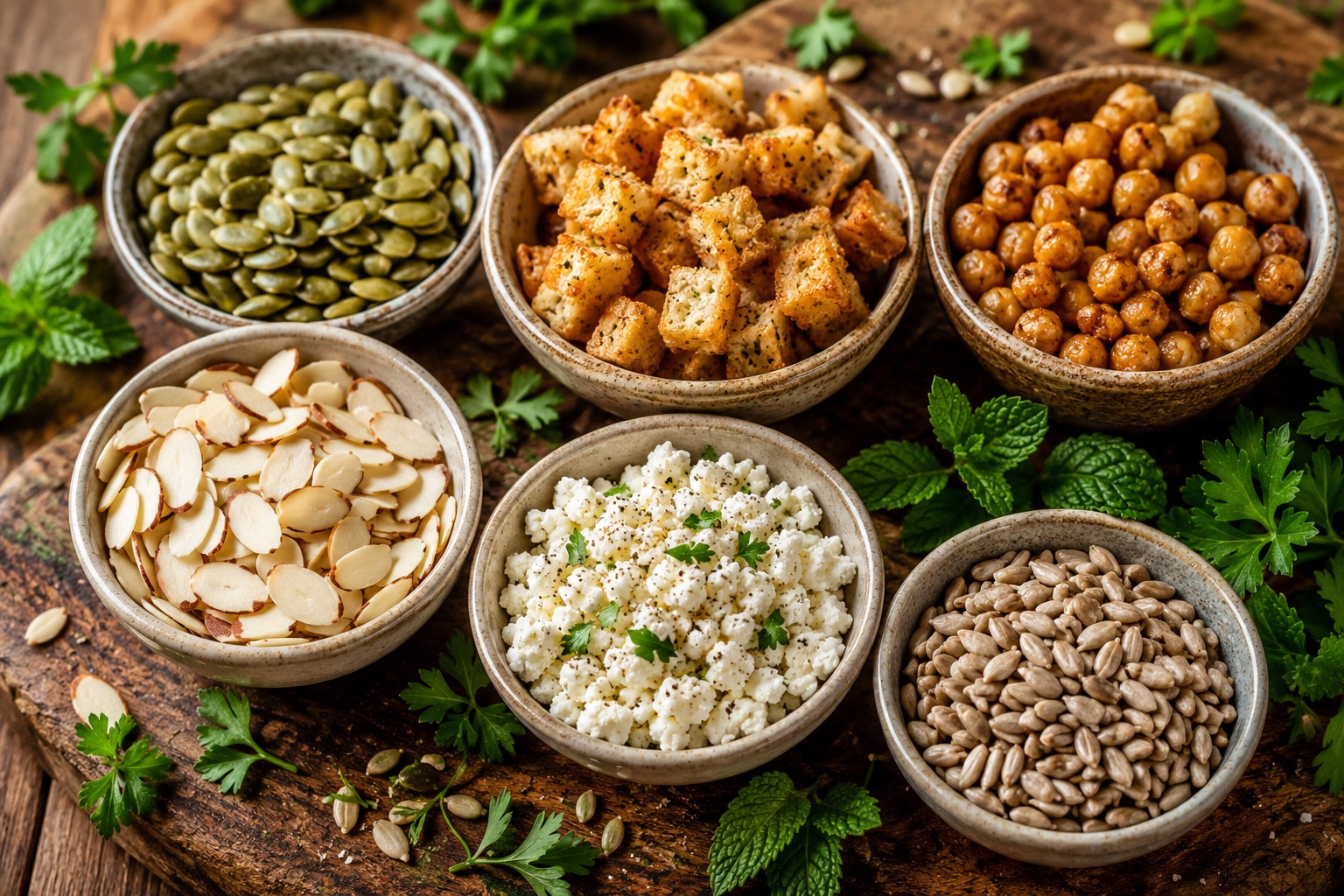
Store crispy toppings separately from dressed salads and add them right before eating. Nuts, seeds, croutons, and roasted chickpeas all lose their crunch within 30 minutes of contact with moisture.
Best crispy toppings for salad dinners:
- Nuts: Almonds, walnuts, pecans, pistachios (raw or toasted)
- Seeds: Pumpkin seeds (pepitas), sunflower seeds, hemp hearts
- Roasted chickpeas: Toss canned chickpeas with oil and spices, roast at 400°F for 25–30 minutes
- Croutons: Cube bread, toss with olive oil and garlic, bake at 375°F for 12–15 minutes
- Tortilla strips: Cut tortillas into strips, bake until crispy
- Fried onions or shallots: Store-bought or homemade
- Cheese crisps: Bake small piles of shredded Parmesan at 400°F for 5–7 minutes
Storage method:
Keep toppings in small containers or snack bags separate from your salad. Pack them in your lunch bag or keep a jar of mixed seeds and nuts at your desk for easy sprinkling.
How to make croutons crispy without burning them:
- Cut bread into 3/4-inch cubes (day-old bread works best)
- Toss with 2 tablespoons olive oil per 2 cups bread
- Add minced garlic, salt, and dried herbs
- Spread in a single layer on a baking sheet
- Bake at 375°F for 12–15 minutes, stirring halfway through
- Remove when golden brown and let cool completely before storing
Edge case: If you’re making salads for the week, portion out toppings into 5 small containers on Sunday so you can grab-and-go each day.
Why Does My Salad Get Watery After Adding Dressing
Salads get watery when vegetables release moisture after being dressed, or when greens aren’t dried properly before assembly. Tomatoes, cucumbers, and zucchini are the biggest culprits because they have high water content that leaches out when salt in the dressing draws it out.
How to prevent watery salads:
- Dry greens thoroughly using a salad spinner or paper towels
- Seed cucumbers and tomatoes before adding them (scoop out the gel and seeds)
- Salt vegetables separately if using tomatoes or cucumbers, let them drain for 10 minutes, then pat dry before adding to salad
- Dress right before eating rather than hours in advance
- Use thicker dressings like tahini or yogurt-based options that cling to ingredients instead of pooling
Vegetables that release the most water:
- Tomatoes (especially cherry tomatoes when cut)
- Cucumbers
- Zucchini
- Radishes
- Onions
Decision rule: If you must dress salads ahead, use these vegetables sparingly or keep them in a separate container to add at serving time.
Pro tip: Toss greens with just a light coating of oil first (no acid), then add the full dressing right before eating. The oil creates a barrier that slows moisture absorption.
Easy Salad Dinner Recipes for Beginners
Start with a simple formula: greens + protein + 3–4 toppings + dressing. This approach removes the guesswork and lets you mix and match based on what’s in your fridge.
Beginner-friendly salad dinner formula:
Base (pick one):
- Romaine lettuce
- Mixed greens
- Baby spinach
- Chopped kale
Protein (4–6 oz):
- Rotisserie chicken (shredded)
- Canned tuna or salmon
- Hard-boiled eggs (2–3)
- Canned chickpeas (rinsed)
Toppings (pick 3–4):
- Cherry tomatoes (halved)
- Cucumber (diced)
- Shredded carrots
- Avocado (sliced)
- Shredded cheese
- Nuts or seeds
Dressing:
- Store-bought or simple olive oil + lemon juice
Three easy starter recipes:
1. Mediterranean Chicken Salad
- Romaine lettuce
- 5 oz grilled chicken breast (see our chicken breast recipes for preparation tips)
- Cherry tomatoes, cucumber, red onion
- Feta cheese, Kalamata olives
- Olive oil + red wine vinegar dressing
2. Taco Salad
- Mixed greens
- 1 cup seasoned black beans (canned, rinsed)
- Corn, diced bell pepper, avocado
- Shredded cheddar, tortilla strips
- Lime-cilantro dressing (lime juice + olive oil + cilantro)
3. Asian-Inspired Salad
- Shredded cabbage and carrots
- 5 oz baked tofu or chicken
- Edamame, mandarin oranges, sliced almonds
- Sesame-ginger dressing
Time-saving tip: Use rotisserie chicken or canned proteins for your first few salad dinners. Once you’re comfortable with assembly, graduate to batch-cooking your own proteins on weekends.
What to Add to Salad to Make It More Satisfying
Add a combination of healthy fats, fiber-rich carbohydrates, and umami-rich ingredients to make salads more satisfying. These components slow digestion, stabilize blood sugar, and provide the savory depth that makes meals feel complete.
Healthy fats (choose 1–2):
- 1/4 avocado, sliced
- 2 tablespoons nuts (walnuts, almonds, pecans)
- 1 tablespoon seeds (pumpkin, sunflower, hemp)
- 1 oz cheese (feta, goat cheese, Parmesan)
- 2 tablespoons olives
Fiber carbs (choose 1):
- 1/2 cup cooked quinoa
- 1/2 cup beans (black, white, chickpeas)
- 1/2 cup roasted sweet potato cubes
- 1/2 cup cooked farro or barley
- 1/2 cup fruit (apple slices, berries, dried cranberries)
Umami boosters:
- Parmesan cheese (shaved or grated)
- Sun-dried tomatoes
- Roasted mushrooms
- Miso in dressing
- Nutritional yeast
- Anchovies or anchovy paste in dressing
Texture elements:
- Crunchy: nuts, seeds, croutons, crispy chickpeas
- Creamy: avocado, cheese, hard-boiled egg
- Chewy: dried fruit, sun-dried tomatoes
Example of a highly satisfying salad:
- Base: Chopped kale and romaine
- Protein: 5 oz grilled chicken
- Fat: 1/4 avocado + 2 tablespoons pumpkin seeds
- Carb: 1/2 cup roasted sweet potato
- Umami: Shaved Parmesan
- Dressing: Tahini-lemon
This combination hits all the satisfaction markers: protein, fat, fiber, crunch, creaminess, and savory depth.
Are Salad Dinners Good for Weight Loss
Salad dinners can support weight loss when they’re built with adequate protein and fiber while keeping calorie-dense toppings in check. A well-constructed dinner salad typically contains 400–600 calories and provides high satiety, making it easier to maintain a calorie deficit without feeling deprived.
Why salad dinners work for weight loss:
- High volume, moderate calories: Large portions of greens and vegetables fill you up with fewer calories
- Protein keeps you full: 20–30g protein per meal reduces hunger hormones
- Fiber slows digestion: Vegetables, beans, and whole grains extend satiety
- Nutrient density: More vitamins and minerals per calorie than most dinner options
Calorie breakdown of a typical dinner salad:
- Greens and vegetables: 50–100 calories
- Protein (5 oz chicken): 150–200 calories
- Healthy fats (nuts, avocado, dressing): 150–200 calories
- Carbs (1/2 cup quinoa or beans): 100–150 calories
- Total: 450–650 calories
Common weight-loss mistakes with salads:
- Using too much dressing (2 tablespoons = 100–200 calories)
- Adding excessive cheese or nuts (easy to overdo by 200+ calories)
- Skipping protein (leads to hunger and snacking later)
- Using only greens without substantial ingredients (not filling enough)
Decision rule: If weight loss is your goal, measure calorie-dense ingredients (dressing, nuts, cheese, avocado) and eyeball high-volume, low-calorie ingredients (greens, cucumbers, tomatoes, peppers).
For more on protein content in chicken, which is a popular salad protein, see our article on chicken breast protein amounts.
Common Mistakes When Making Dinner Salads
The most common mistakes are under-seasoning, using too little protein, and adding dressing too early. These errors result in bland, unsatisfying salads that don’t hold up as complete meals.
Top 10 salad dinner mistakes:
- Not enough protein – Using 2–3 oz instead of 4–6 oz leaves you hungry
- Skipping healthy fats – Makes salads less satisfying and prevents absorption of fat-soluble vitamins
- Overdressing – Drowns ingredients and adds unnecessary calories
- Under-seasoning – Forgetting to salt vegetables and protein separately
- Using only one texture – All soft or all crunchy gets boring
- Dressing too early – Causes wilting and sogginess
- Not drying greens – Water dilutes dressing and makes salads watery
- Ignoring temperature contrast – All cold ingredients can be less appealing
- Forgetting herbs – Fresh herbs add major flavor with minimal calories
- Making it too complicated – Trying to use 15 ingredients when 6–8 is plenty
How to fix bland salads:
- Season each component separately (salt the protein, dress the grains)
- Add fresh herbs (parsley, cilantro, basil, mint)
- Include something pickled or acidic (pickled onions, lemon wedges)
- Use bold dressings with garlic, mustard, or ginger
- Add a salty element (feta, Parmesan, olives)
Pro tip: Taste your salad before serving and adjust. If it’s bland, it usually needs salt, acid (lemon juice or vinegar), or a salty/umami element like cheese or olives.
FAQ
How much protein should a dinner salad have? A dinner salad should contain 4–6 ounces of cooked protein, which translates to roughly 20–30 grams. This amount is sufficient to make the salad filling and sustain energy for 3–4 hours.
Can I make salad dressing ahead of time? Yes, oil-based vinaigrettes last 5–7 days refrigerated, while creamy dressings last 3–5 days. Store in airtight glass jars and shake before each use to re-emulsify.
What greens hold up best for meal prep? Kale, cabbage, romaine, broccoli slaw, and shredded Brussels sprouts hold up best for 3–4 days. Avoid tender greens like butter lettuce or arugula for meal prep.
How do I keep croutons from getting soggy? Store croutons separately from dressed salads and add them right before eating. Keep them in an airtight container at room temperature for up to 5 days.
What’s the best way to cook chicken for salads? Bake chicken breasts at 400°F for 20–25 minutes until they reach 165°F internal temperature. Let rest 5 minutes before slicing. This method keeps chicken moist and easy to batch-cook. For more techniques, check our guide on how to keep chicken breast juicy.
Can I use frozen vegetables in salad dinners? Yes, but cook them first. Roasted frozen broccoli, cauliflower, or Brussels sprouts work well. Don’t use frozen vegetables raw, as they become mushy when thawed.
How long do meal-prep salads last in the fridge? Properly layered meal-prep salads last 3–4 days when stored with dressing on the bottom and greens on top. Salads with hardy greens like kale can last up to 5 days.
What’s the healthiest salad dressing? Simple olive oil and lemon juice vinaigrette is the healthiest option, providing healthy fats and minimal sodium. Add Dijon mustard, garlic, and herbs for flavor without added sugar or preservatives.
Do I need to wash pre-washed salad greens? It’s optional but recommended. Pre-washed greens can still harbor bacteria, and an extra rinse and spin ensures they’re clean and crisp.
Can I eat salad for dinner every night? Yes, as long as you vary the ingredients to ensure nutritional diversity. Rotate proteins, change up vegetables, and use different dressings to prevent boredom and nutrient gaps.
What makes a salad more filling than a sandwich? A salad can be more filling when it contains more protein, fiber, and volume than a sandwich. The key is including 4–6 oz protein, healthy fats, and fiber-rich carbs, which many sandwiches lack.
Should I massage kale for salads? Yes, massaging kale with a bit of oil and salt for 1–2 minutes breaks down tough fibers and makes it more tender and easier to digest. This step is especially important for raw kale salads.
Conclusion
Building better salad dinners comes down to structure, not complexity. Start with 4–6 ounces of protein, add healthy fats and fiber-rich carbs, keep crispy toppings separate until serving, and use bold homemade dressings that you can make in under five minutes. When you follow this formula, salads stop being boring side dishes and become satisfying, meal-worthy dinners that you’ll actually look forward to eating.
The meal-prep approach makes weeknight salad dinners effortless: batch-cook proteins on Sunday, prep hardy greens and vegetables, make a big jar of dressing, and portion out crispy toppings. Layer everything strategically in containers with dressing on the bottom and greens on top, and you’ll have fresh, crisp salads ready in seconds all week long.
Your next steps:
- Choose one protein to batch-cook this weekend (chicken breast, hard-boiled eggs, or lentils)
- Make one simple dressing using the 3:1 oil-to-acid ratio
- Prep one batch of crispy toppings (roasted chickpeas or homemade croutons)
- Assemble your first dinner salad using the formula: greens + protein + 3–4 toppings + dressing
- Experiment with different combinations throughout the week
Once you master the basics, you can customize endlessly based on your taste preferences, dietary needs, and what’s in season. The key is having the core components ready to go so that making a satisfying salad dinner becomes as easy as throwing together a sandwich.
For more protein preparation ideas, explore our collection of chicken breast recipes for fast, easy meals and learn why boiling chicken breast can be a great option for salad prep.
SEO Meta Title: Better Salad Dinners: Crispy Toppings & Bold Dressings


