10 New Ways to Cook with Asparagus Beyond Roasting
Last updated: May 27, 2026
Roasting asparagus has become the default method for home cooks, but this spring vegetable shines in at least ten other preparations that keep it crisp, vibrant, and full of flavor. From high-heat grilling and quick blanching to raw shaved salads and air-frying, these techniques transform asparagus into the star of pasta dishes, grain bowls, tarts, omelets, and soups without the mushy texture that comes from overcooking.
Key Takeaways
- Grilling asparagus over direct heat adds smoky char and works perfectly when spears are placed perpendicular to grates or threaded on skewers.
- Blanching for 2–3 minutes in boiling water, then shocking in ice, preserves bright green color and crisp-tender texture for salads and make-ahead dishes.
- Air-frying at 400°F for 7–12 minutes (depending on thickness) delivers roasted flavor with less oil and faster cook time.
- Raw preparations work best with thin, fresh spears that are shaved into ribbons or sliced thinly for salads and pizza toppings.
- Stir-frying in a hot wok or skillet with aromatics and savory sauces keeps asparagus crisp and prevents sogginess when cooked for just 3–4 minutes.
- Pickling asparagus at home extends shelf life and adds tangy crunch to charcuterie boards and sandwiches.
- Thick vs. thin spears require different techniques: thick stalks benefit from peeling and longer cook times, while thin spears cook quickly and can be eaten raw.
- Common mistakes include overcrowding the pan, skipping the ice bath after blanching, and cooking asparagus until it bends limply.
What Are the Best Cooking Methods for Asparagus Besides Roasting?
The best non-roasting methods for asparagus include grilling, blanching, stir-frying, air-frying, steaming, pickling, and serving raw. Each technique offers distinct texture and flavor benefits that roasting cannot replicate.
Grilling delivers smoky char and caramelized edges when spears are cooked over direct heat for 8–10 minutes. Blanching in boiling water for 2–3 minutes followed by an ice bath locks in bright green color and crisp texture, making it ideal for cold salads and meal prep. Stir-frying in a hot wok with garlic, ginger, or fermented black beans keeps asparagus crisp while infusing it with bold flavors in under five minutes.
Air-frying has become a mainstream alternative, cooking asparagus at 400°F for 7–12 minutes with minimal oil and producing results similar to roasting but faster. Steaming is the healthiest option, preserving nutrients while keeping spears tender without added fat. Pickling transforms asparagus into a tangy, crunchy condiment that lasts weeks in the refrigerator. Raw preparations work when spears are very fresh and thin, shaved into ribbons for salads or sliced thinly for pizza and grain bowls.
Choose grilling if you want smoky flavor and char. Choose blanching if you need bright color and crisp texture for salads. Choose stir-frying if you want bold, savory flavors in minutes. Choose air-frying if you want roasted texture without turning on the oven.
How to Grill Asparagus Without It Falling Through the Grates
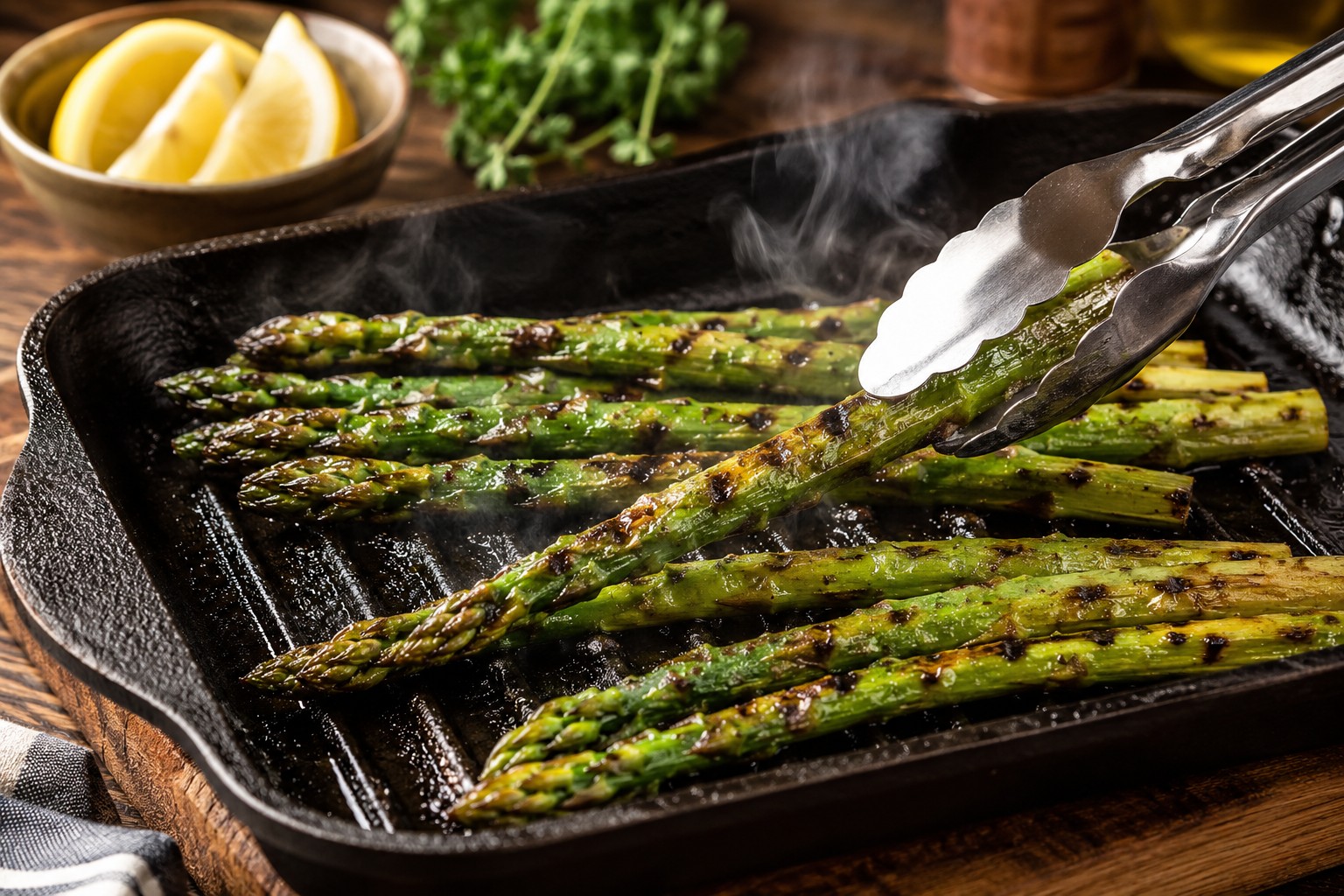
To prevent asparagus from falling through grill grates, place spears perpendicular to the grates, use a grill basket, or thread multiple spears onto two parallel skewers. These methods keep asparagus secure while allowing direct heat contact for char and caramelization.
When placing spears directly on the grill, arrange them at a 90-degree angle to the grate bars so they rest on multiple bars rather than slipping between them. Turn spears once or twice during the 8–10 minute cook time using tongs. For smaller or thinner spears, a grill basket with small holes allows heat and smoke to reach the asparagus while containing it in one layer.
Threading asparagus onto two parallel skewers creates a raft that makes flipping easy and prevents rolling. Push skewers through the middle and tip of each spear, spacing them about one inch apart. This method works especially well when grilling asparagus alongside other vegetables like bell peppers or cherry tomatoes.
Common mistake: Oiling the grill grates instead of the asparagus. Brush spears with olive oil or a lemon-oil mixture before placing them on the grill to prevent sticking and add flavor.
Can You Eat Asparagus Raw or Does It Need to Be Cooked?
Yes, asparagus can be eaten raw when spears are very fresh, thin, and tender. Raw asparagus has a crisp, slightly grassy flavor and works best when shaved into ribbons or sliced thinly for salads, grain bowls, and pizza toppings.
Choose asparagus with tightly closed tips and firm stalks for raw preparations. Thick, woody spears are too fibrous to eat raw and should be cooked. To prepare raw asparagus, snap off the tough bottom inch, then use a vegetable peeler to shave spears lengthwise into thin ribbons. Alternatively, slice spears on a sharp diagonal into paper-thin rounds.
Raw shaved asparagus pairs well with lemon vinaigrette, shaved Parmesan, toasted nuts, and fresh herbs in salads. It also works as a topping for flatbreads and pizzas, where it wilts slightly from residual heat without becoming mushy.
Who should avoid raw asparagus: People with sensitive digestion may find raw asparagus harder to digest than cooked. Blanching for just 30 seconds softens the fiber slightly while keeping the crisp texture.
Asparagus Grilling vs Steaming: Which Is Healthier?
Steaming is slightly healthier than grilling because it preserves more water-soluble vitamins and requires no added fat. However, grilling adds beneficial antioxidants through caramelization and can increase vegetable intake by making asparagus more flavorful.
Steaming asparagus for 4–6 minutes retains vitamin C, folate, and B vitamins that can leach into water during boiling or degrade at high heat. Steamed asparagus contains no added calories from oil or butter unless dressed afterward. Grilling, on the other hand, uses moderate amounts of oil (typically 1–2 teaspoons per pound) and exposes asparagus to temperatures above 400°F, which can reduce some heat-sensitive nutrients but creates flavorful browning compounds.
The health difference between the two methods is small. Grilling’s smoky flavor and char may encourage people to eat more vegetables, which offsets the minor nutrient loss. Steaming is the better choice for low-calorie, nutrient-dense meals, while grilling is ideal when flavor and variety are priorities.
Decision rule: Choose steaming if you’re tracking calories or maximizing nutrient retention. Choose grilling if you want bold flavor and are already meeting your vegetable intake goals.
How to Pickle Asparagus at Home
To pickle asparagus at home, pack trimmed spears into sterilized jars, pour hot brine over them, and refrigerate for at least 24 hours before eating. Refrigerator pickles last 3–4 weeks and require no canning equipment.
Basic pickling steps:
- Trim asparagus to fit upright in pint or quart jars, leaving 1/2 inch headspace.
- Add aromatics to each jar: 2 garlic cloves, 1 teaspoon dill seed, 1/2 teaspoon black peppercorns, and 1/4 teaspoon red pepper flakes.
- Heat 2 cups white vinegar, 2 cups water, and 2 tablespoons kosher salt in a saucepan until salt dissolves.
- Pour hot brine over asparagus, covering spears completely.
- Let jars cool to room temperature, then seal and refrigerate for 24 hours before tasting.
Pickled asparagus stays crisp and tangy for up to one month in the refrigerator. Use it on charcuterie boards, in Bloody Marys, or as a crunchy side for sandwiches and grain bowls.
Common mistake: Using thick asparagus spears that don’t fit upright in jars. Choose medium or thin spears, or cut thick ones in half lengthwise.
What Mistakes Do People Make When Cooking Asparagus?
The most common mistakes when cooking asparagus are overcooking until mushy, overcrowding the pan, skipping the ice bath after blanching, and not trimming woody ends properly. These errors result in limp, dull-colored, or unevenly cooked spears.
Top mistakes and fixes:
- Overcooking: Asparagus should be crisp-tender, not soft. Blanch for 2–3 minutes, stir-fry for 3–4 minutes, grill for 8–10 minutes, and air-fry for 7–12 minutes depending on thickness.
- Overcrowding the pan: When sautéing or stir-frying, leave space between spears so they brown instead of steam. Cook in batches if necessary.
- Skipping the ice bath: After blanching, plunge asparagus into ice water immediately to stop cooking and preserve bright green color.
- Not trimming woody ends: Snap or cut off the bottom 1–2 inches where the stalk turns from green to white. Thick spears may also need the lower half peeled with a vegetable peeler.
- Using high heat for too long: High heat is good for browning, but leaving asparagus on the heat after it’s tender will make it mushy and drab.
Edge case: Very thick asparagus (thicker than a thumb) benefits from a hybrid method—blanch for 3 minutes, then finish on the grill or in a hot skillet for char and flavor.
Is Asparagus Good for Stir Fry or Does It Get Too Soggy?
Asparagus is excellent for stir fry when cut into 2-inch pieces and cooked over high heat for 3–4 minutes. It stays crisp and absorbs savory sauces without becoming soggy if the wok or skillet is hot enough and the pan is not overcrowded.
Cut asparagus on a sharp diagonal into uniform pieces so they cook evenly. Heat a wok or large skillet over high heat, add 1–2 tablespoons of oil (peanut or vegetable oil work best), and wait until the oil shimmers. Add asparagus and stir constantly, tossing every 20–30 seconds. The spears should develop light brown spots and remain bright green.
Add aromatics like garlic, ginger, or shallots in the last minute, then finish with soy sauce, fish sauce, or oyster sauce. For extra flavor, toss in fermented black beans or a splash of rice wine. The total cook time should be under five minutes from start to finish.
Common mistake: Adding asparagus to a cold or medium-heat pan, which causes it to release water and steam instead of browning. Preheat the pan until a drop of water sizzles and evaporates immediately.
How Long to Blanch Asparagus for Salads
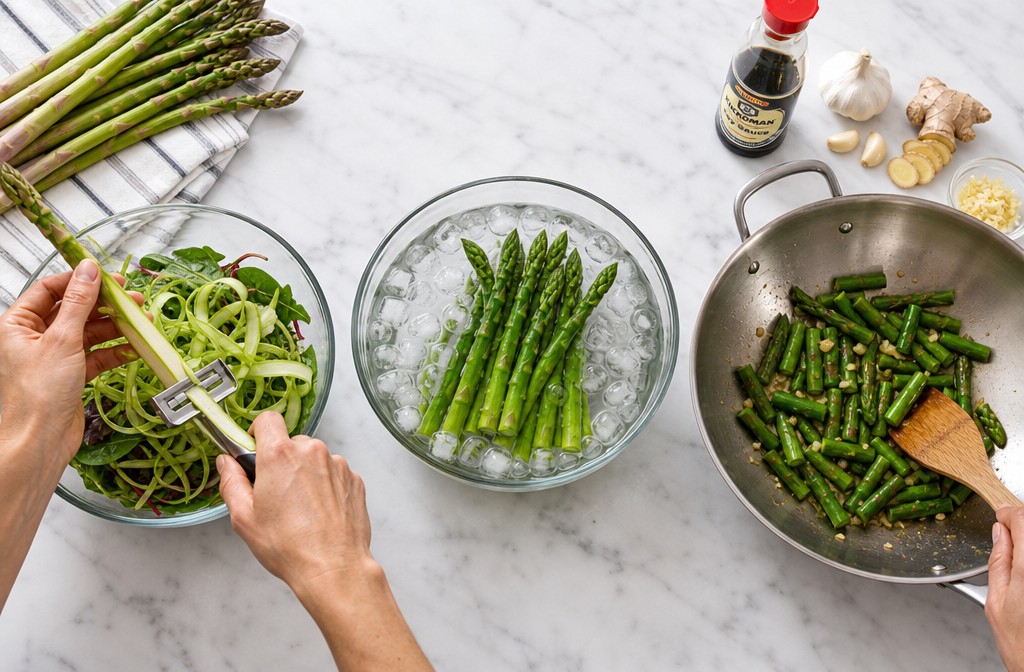
Blanch asparagus for 2–3 minutes in boiling salted water, then shock immediately in ice water for salads. This timing produces crisp-tender spears with bright green color that hold up well when dressed and stored.
Bring a large pot of water to a rolling boil and add 1 tablespoon of salt per quart of water. Drop trimmed asparagus into the boiling water and set a timer for 2 minutes for thin spears or 3 minutes for medium to thick spears. Prepare a large bowl of ice water while the asparagus cooks.
When the timer goes off, use tongs or a slotted spoon to transfer asparagus directly into the ice bath. Let spears sit in the ice water for at least 2 minutes to stop the cooking process completely. Drain well and pat dry with a towel before adding to salads or storing in the refrigerator.
Blanched asparagus can be refrigerated for up to 3 days and used in cold salads, grain bowls, or as a make-ahead side dish. Dress it just before serving to prevent sogginess.
Decision rule: Blanch for 2 minutes if you want very crisp asparagus with a slight raw bite. Blanch for 3 minutes if you prefer fully tender spears that are still firm.
Can You Air Fry Asparagus and What Temperature?
Yes, asparagus air fries beautifully at 400°F for 7–12 minutes depending on thickness. Air frying produces crisp, lightly browned spears with minimal oil and faster cook time than oven roasting.
Trim asparagus and toss with 1–2 teaspoons of olive oil, salt, and pepper. Arrange spears in a single layer in the air fryer basket, leaving space between them for air circulation. Set the temperature to 400°F and cook for 7–8 minutes for thin spears, 10 minutes for medium spears, or 12–13 minutes for thick spears. Shake the basket halfway through for even browning.
Air-fried asparagus comes out crisp-tender with lightly caramelized tips. Finish with a squeeze of lemon juice, grated Parmesan, or a drizzle of balsamic glaze.
Common mistake: Overloading the air fryer basket, which causes uneven cooking and steaming instead of crisping. Cook in batches if you have more than one pound of asparagus.
Asparagus Recipes for People Who Don’t Like Mushy Vegetables
People who dislike mushy vegetables should try grilled asparagus with lemon oil, stir-fried asparagus with garlic and soy sauce, air-fried asparagus with Parmesan, or raw shaved asparagus salad. These methods keep asparagus crisp and flavorful without the soft, overcooked texture that comes from boiling or over-roasting.
Crisp-focused recipes:
- Grilled asparagus with lemon oil: Brush spears with olive oil, lemon zest, and lemon juice, then grill for 8–10 minutes, turning once. The high heat creates char while keeping the interior crisp-tender.
- Stir-fried asparagus with garlic and soy: Cut asparagus into 2-inch pieces and stir-fry over high heat for 3–4 minutes with garlic, ginger, and soy sauce. The quick cook time preserves crunch.
- Air-fried asparagus with Parmesan: Toss spears with olive oil, salt, and pepper, air fry at 400°F for 8–10 minutes, then top with grated Parmesan. The asparagus stays firm with crispy edges.
- Raw shaved asparagus salad: Use a vegetable peeler to shave raw asparagus into ribbons, then toss with lemon vinaigrette, arugula, shaved Parmesan, and toasted almonds. The asparagus remains completely crisp.
Decision rule: Choose grilling or air-frying if you want cooked asparagus with texture. Choose raw preparations if you want maximum crunch and freshness.
What to Do with Thick Asparagus Stalks vs Thin Ones
Thick asparagus stalks should be peeled, blanched, or grilled, while thin stalks are best for quick cooking methods like stir-frying, air-frying, or eating raw. Thickness determines both cooking time and the best preparation method.
Thick asparagus (thicker than a pencil) has a fibrous outer layer that benefits from peeling with a vegetable peeler from just below the tip to the base. After peeling, thick spears can be blanched for 3–4 minutes, grilled for 10–12 minutes, or roasted at 425°F for 15–18 minutes. Thick stalks also work well in soups and tarts where longer cooking times are acceptable.
Thin asparagus (pencil-thick or thinner) cooks quickly and has tender skin that doesn’t need peeling. Thin spears are ideal for stir-frying (3 minutes), air-frying (7–8 minutes), or eating raw when shaved or sliced thinly. They also work well in omelets and pasta dishes where quick cooking preserves texture.
Common mistake: Cooking thick and thin asparagus together in the same pan. Separate them by size and adjust cooking times, or trim thick spears to match the diameter of thin ones.
How to Shave Asparagus for Raw Salads
To shave asparagus for raw salads, use a vegetable peeler to create long, thin ribbons by peeling each spear lengthwise from tip to base. This technique works best with fresh, thin to medium asparagus and produces delicate ribbons that absorb dressing well.
Trim the woody ends from asparagus spears and lay them flat on a cutting board. Hold the tip of one spear with your non-dominant hand and use a Y-shaped vegetable peeler to shave long strips from the spear, rotating it slightly after each stroke to shave all sides. Continue until you reach the fibrous core, then discard or save it for stock.
Shaved asparagus ribbons work beautifully in salads with lemon vinaigrette, olive oil, shaved Parmesan, toasted pine nuts, and fresh herbs like basil or mint. They can also be tossed with arugula, cherry tomatoes, and a light balsamic dressing for a spring salad.
Edge case: Very thick asparagus can be shaved, but the ribbons will be wider and slightly tougher. Blanch thick ribbons for 30 seconds if you want a softer texture while keeping the salad fresh.
Does Asparagus Work in Soup or Does It Lose Flavor?
Asparagus works well in soup when added near the end of cooking or pureed immediately after cooking to preserve its bright flavor and color. Overcooking asparagus in soup causes it to turn drab and lose its fresh, grassy taste.
For chunky soups, add trimmed asparagus pieces in the last 5–7 minutes of cooking so they stay crisp-tender. For pureed asparagus soup, simmer asparagus with aromatics (onion, garlic, leek) and broth for 10–12 minutes, then blend immediately while hot. Adding a handful of fresh spinach or herbs during blending boosts the green color.
Asparagus soup pairs well with cream, lemon, and fresh herbs like tarragon or dill. Serve it hot or chilled, and top with croutons, a drizzle of olive oil, or a dollop of crème fraîche.
Common mistake: Simmering asparagus in soup for 20+ minutes, which turns it gray-green and mushy. Add asparagus late or puree it quickly to keep the flavor and color vibrant.
10 New Ways to Cook with Asparagus Beyond Roasting
Now that you understand the techniques, here are ten specific ways to cook asparagus that move beyond the usual roasted side dish:
- Grilled asparagus with lemon oil: Brush spears with olive oil, lemon zest, and juice, then grill for 8–10 minutes, turning once.
- Stir-fried asparagus with fermented black beans: Cut into 2-inch pieces and stir-fry with garlic, fermented black beans, and soy sauce for 3–4 minutes.
- Air-fried asparagus with Parmesan: Toss with olive oil, air fry at 400°F for 8–10 minutes, then top with grated Parmesan.
- Blanched asparagus salad with lemon vinaigrette: Blanch for 2–3 minutes, shock in ice water, then toss with lemon vinaigrette, arugula, and toasted almonds.
- Raw shaved asparagus on pizza: Shave asparagus into ribbons and scatter over pizza after baking for a fresh, crisp topping.
- Pickled asparagus: Pack spears into jars with garlic, dill, and peppercorns, cover with hot vinegar brine, and refrigerate for 24 hours.
- Asparagus omelet: Sauté thin asparagus pieces for 2 minutes, then fold into beaten eggs and cook until set.
- Asparagus and pesto pasta: Blanch asparagus, cut into 1-inch pieces, and toss with pasta, basil pesto, and cherry tomatoes.
- Grilled asparagus with spicy lime-honey glaze: Brush with lime juice, honey, and red chile flakes, then grill with bell peppers and scallions.
- Asparagus soup with tarragon: Simmer asparagus with leeks and broth for 10 minutes, puree until smooth, and finish with fresh tarragon and cream.
Each method keeps asparagus crisp, vibrant, and flavorful while offering variety in texture and presentation.
Frequently Asked Questions
How do you keep asparagus from getting soggy in stir fry?
Use high heat, cook in a single layer without overcrowding, and stir constantly for 3–4 minutes. The asparagus should brown lightly and stay crisp-tender.
Can you freeze blanched asparagus for later use?
Yes. Blanch for 2–3 minutes, shock in ice water, drain well, and freeze in a single layer on a baking sheet before transferring to freezer bags. Use within 8 months.
What’s the best way to trim asparagus?
Hold the spear at both ends and bend gently until it snaps naturally at the point where the tender part meets the woody base. Alternatively, cut off the bottom 1–2 inches.
Does asparagus lose nutrients when grilled?
Grilling causes minor loss of heat-sensitive vitamins like vitamin C, but the difference is small. The smoky flavor may encourage higher vegetable intake, which offsets nutrient loss.
Can you marinate asparagus before grilling?
Yes. Marinate trimmed spears in olive oil, lemon juice, garlic, and herbs for 15–30 minutes before grilling. Pat dry slightly to prevent flare-ups on the grill.
How do you know when asparagus is done cooking?
Asparagus is done when it’s crisp-tender and bright green. It should bend slightly but not flop when lifted with tongs. Overcooked asparagus turns drab and limp.
What’s the difference between steaming and blanching asparagus?
Steaming cooks asparagus with steam heat above boiling water, while blanching submerges it in boiling water. Blanching is faster and better for salads because the ice bath stops cooking immediately.
Can you reheat cooked asparagus without it getting mushy?
Yes. Reheat gently in a skillet over medium heat for 1–2 minutes or in the microwave for 20–30 seconds. Avoid boiling or steaming reheated asparagus.
What herbs pair best with asparagus?
Tarragon, dill, basil, mint, and parsley all pair well with asparagus. Lemon zest, garlic, and shallots are also classic flavor companions.
How long does pickled asparagus last in the fridge?
Refrigerator-pickled asparagus lasts 3–4 weeks when stored in a sealed jar and kept fully submerged in brine.
Can you use frozen asparagus for these cooking methods?
Frozen asparagus works for soups, stir-fries, and omelets but will be softer than fresh. Avoid using frozen asparagus for grilling, air-frying, or raw preparations.
What’s the best oil for grilling asparagus?
Olive oil is the most popular choice for flavor, but avocado oil and grapeseed oil have higher smoke points and work well for high-heat grilling.
Conclusion
Asparagus deserves a place beyond the roasting pan. Grilling, blanching, stir-frying, air-frying, pickling, and serving raw all offer distinct textures and flavors that keep this spring vegetable crisp, vibrant, and versatile. Whether you’re tossing shaved asparagus into a salad, folding blanched spears into an omelet, or stir-frying them with garlic and soy sauce, these ten methods give you the tools to cook asparagus in ways that suit your taste and schedule.
Start with one new technique this week. If you usually roast asparagus, try grilling it with lemon oil or air-frying it with Parmesan. If you’ve never eaten asparagus raw, shave a few spears into your next salad. Each method takes less than 15 minutes and transforms asparagus from a predictable side dish into a meal-worthy ingredient that stays crisp and full of flavor.
SEO Meta Title: 10 New Ways to Cook Asparagus Beyond Roasting Guide


