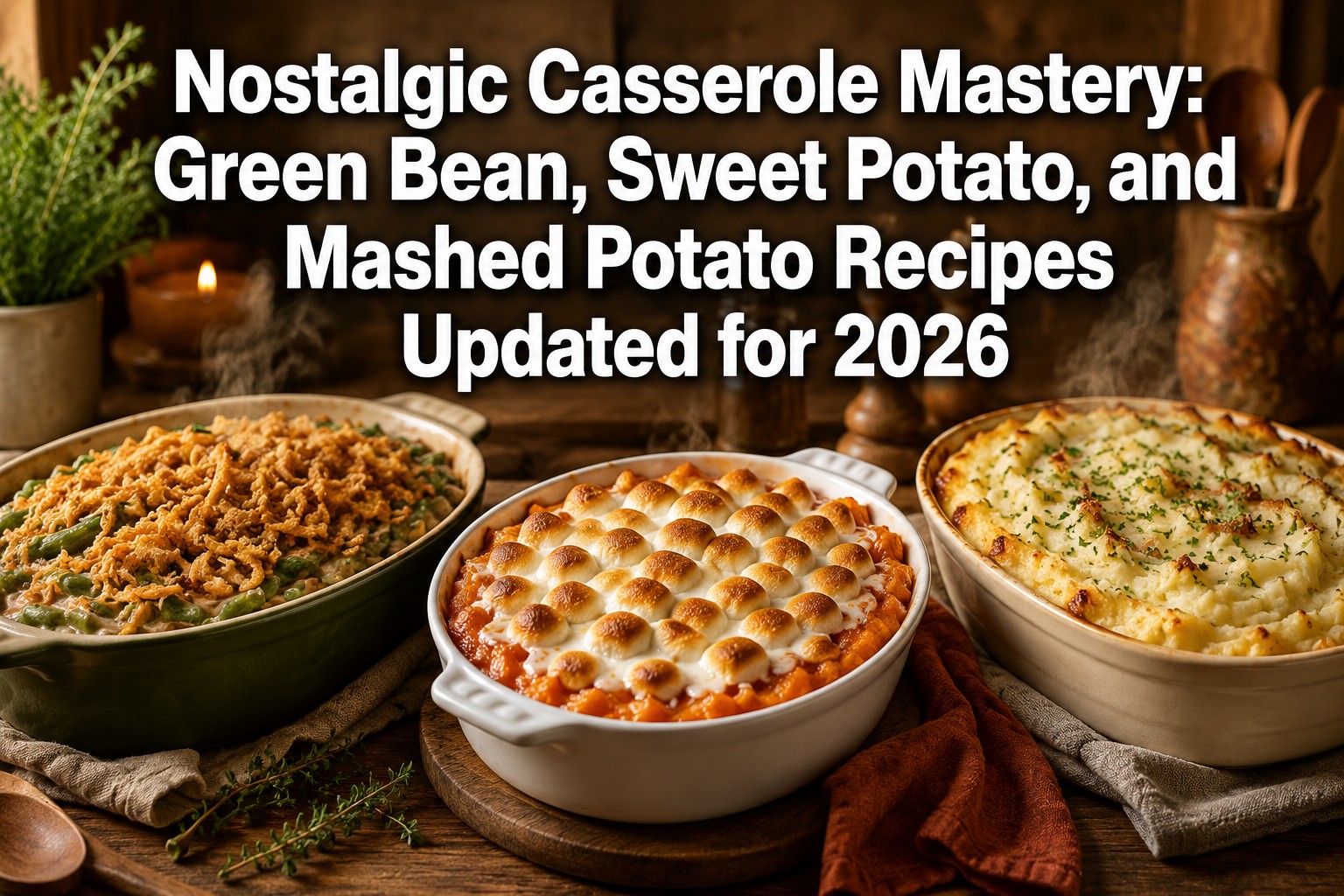
Nostalgic Casserole Mastery: Green Bean, Sweet Potato, and Mashed Potato Recipes Updated for 2026
Last updated: May 26, 2026
Quick Answer
Nostalgic Casserole Mastery: Green Bean, Sweet Potato, and Mashed Potato Recipes Updated for 2026 combines classic comfort food formats with modern nutritional upgrades—swapping canned soup for homemade sauces, adding fiber-rich legumes, and incorporating fresh herbs and whole-food toppings. These updated recipes maintain the convenience and crowd-pleasing appeal of vintage casseroles while meeting 2026 dietary preferences for higher protein, lower sodium, and cleaner ingredient lists. Most recipes can be assembled in 15–20 minutes and baked at 350°F for 25–35 minutes.
Key Takeaways
- Nostalgic casseroles use familiar formats (creamy binders, crunchy toppings, one-dish convenience) but swap processed ingredients for fresh alternatives in 2026 updates
- Green bean casserole now skips canned soup in favor of homemade mushroom sauce with fresh garlic, shallots, and cream, topped with crispy fried shallots or panko
- Sweet potato casserole offers two paths: traditional marshmallow topping or modern pecan-oat streusel for lower sugar and added fiber
- Mashed potato casserole (also called funeral potatoes) gets upgraded with Greek yogurt, sharp cheddar, and herb-infused butter instead of sour cream and processed cheese
- All three casseroles can be made ahead, frozen for up to 3 months, and reheated without significant quality loss
- Cost per serving ranges from $1.50–$3.00 depending on ingredient quality and whether you use organic or conventional produce
- Dietary modifications are straightforward: dairy-free versions use coconut cream or cashew cream, gluten-free versions use rice flour or cornstarch thickeners
- Common mistakes include watery fillings (from under-draining vegetables), soggy toppings (from covering during baking), and over-baking (which dries out casseroles)
What Makes a Casserole Nostalgic vs Modern
A casserole is nostalgic when it relies on convenience ingredients popular from the 1950s–1980s: canned cream soups, frozen vegetables, processed cheese, and pre-packaged toppings like French fried onions. These recipes prioritized speed and shelf-stable pantry items, often resulting in high sodium and preservative content.[1] Modern casseroles in 2026 keep the one-dish format and comforting textures but replace processed components with fresh or minimally processed alternatives—homemade sauces, fresh vegetables, real cheese, and whole-grain or nut-based toppings.
Key differences:
- Nostalgic: Cream of mushroom soup, canned green beans, canned fried onions
- Modern: Fresh mushroom béchamel, blanched fresh green beans, homemade crispy shallots or panko breadcrumbs
- Nostalgic: Marshmallow fluff, canned sweet potatoes, margarine
- Modern: Fresh-roasted sweet potatoes, real butter, optional marshmallows or pecan streusel with oats and brown sugar
- Nostalgic: Sour cream, Velveeta, cornflakes
- Modern: Greek yogurt, aged cheddar, herb-infused breadcrumbs or crushed potato chips
Choose nostalgic formats if you want maximum speed and pantry convenience. Choose modern updates if you prioritize lower sodium, higher fiber, and cleaner ingredient labels without sacrificing the casserole’s comforting appeal.
How to Make Green Bean Casserole Without Canned Soup
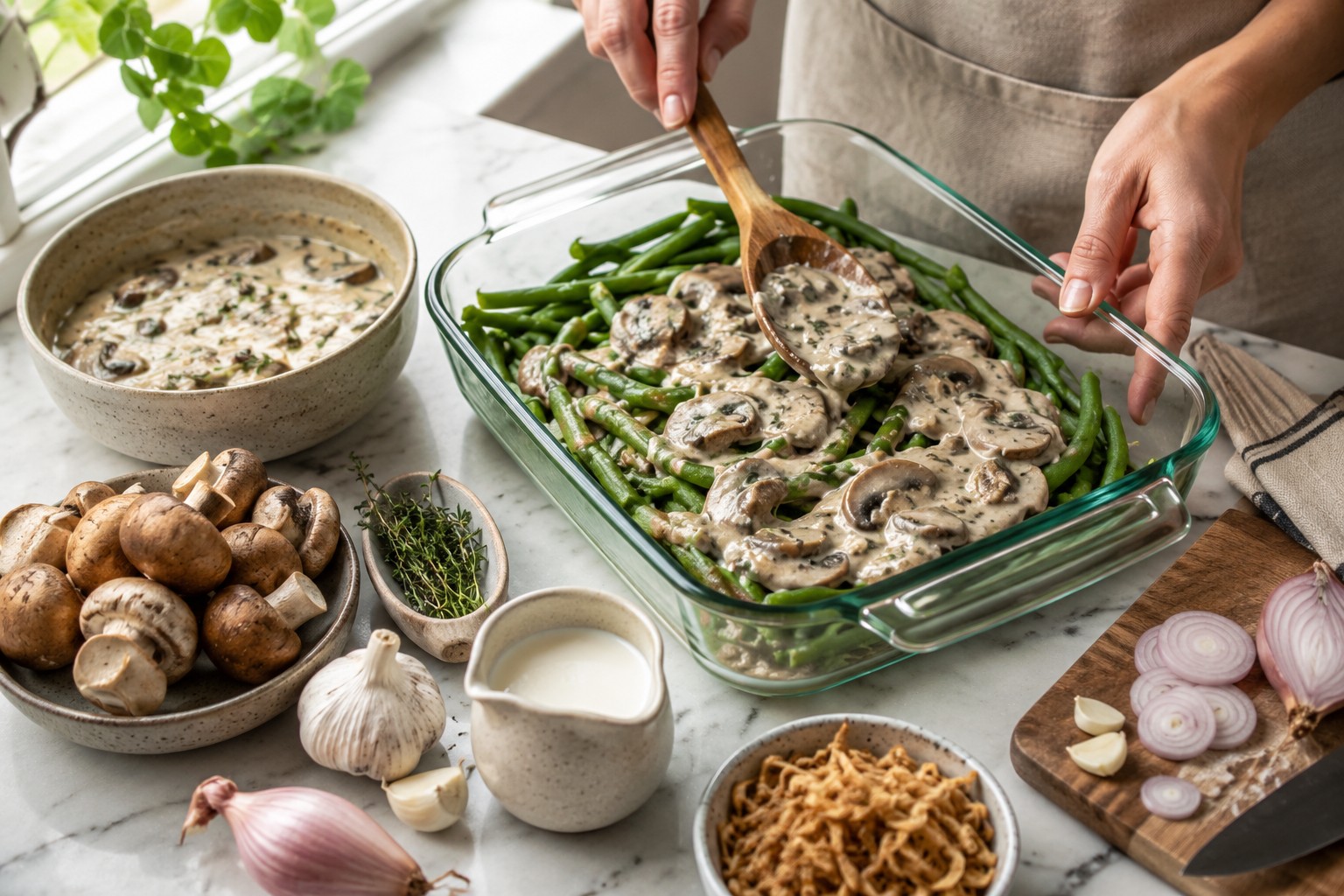
Green bean casserole without canned soup starts with a homemade mushroom sauce built from butter, flour, fresh mushrooms, garlic, shallots, and cream or milk. This method takes about 10 minutes longer than opening a can but delivers fresher flavor, lower sodium (typically 200–300 mg per serving vs. 800+ mg in canned versions), and no preservatives.
Step-by-step:
- Blanch 1.5 pounds fresh green beans in boiling salted water for 4–5 minutes until bright green and crisp-tender. Drain and shock in ice water to stop cooking.
- Make the sauce: Melt 3 tablespoons butter in a skillet over medium heat. Add 8 ounces sliced mushrooms (cremini or button), 2 minced garlic cloves, and 1 diced shallot. Cook 5–6 minutes until mushrooms release moisture and begin to brown.
- Add 3 tablespoons flour and stir for 1 minute to cook off raw flour taste.
- Slowly whisk in 1.5 cups whole milk or half-and-half and bring to a simmer. Cook 3–4 minutes until thickened to coat the back of a spoon.
- Season with 1/2 teaspoon salt, 1/4 teaspoon black pepper, and 1/4 teaspoon dried thyme.
- Combine green beans and sauce in a 9×13-inch baking dish.
- Top with 1.5 cups crispy fried shallots (homemade or store-bought) or panko breadcrumbs tossed with melted butter.
- Bake at 350°F for 25–30 minutes until bubbly and topping is golden.
Common mistake: Adding the topping too early or covering the dish during baking, which steams the topping and makes it soggy. Always bake uncovered and add delicate toppings in the final 10 minutes if they brown too quickly.
Sweet Potato Casserole With Marshmallows or Without
Sweet potato casserole in 2026 offers two equally popular topping choices: traditional toasted marshmallows or a pecan-oat streusel. The marshmallow version delivers nostalgic sweetness and visual appeal (especially for Thanksgiving), while the streusel version adds fiber, healthy fats, and a less sugary profile that appeals to adults and health-conscious eaters.
Marshmallow version:
- Roast or boil 3 pounds sweet potatoes until tender, then mash with 1/4 cup butter, 1/4 cup milk, 1/4 cup brown sugar, 1 teaspoon vanilla, 1/2 teaspoon cinnamon, and 1/4 teaspoon nutmeg.
- Spread in a greased 9×13-inch dish and top with 2–3 cups mini marshmallows.
- Bake at 350°F for 20 minutes, then broil 1–2 minutes until marshmallows are golden and toasted (watch closely to prevent burning).
Pecan streusel version:
- Use the same sweet potato base but skip or reduce the brown sugar to 2 tablespoons.
- Mix 1 cup chopped pecans, 1/2 cup old-fashioned oats, 1/2 cup flour, 1/3 cup brown sugar, 1/4 cup melted butter, and 1/2 teaspoon cinnamon.
- Sprinkle over sweet potatoes and bake at 350°F for 30–35 minutes until topping is crisp and filling is set.
Choose marshmallows if you want a sweeter, kid-friendly dish with nostalgic appeal. Choose streusel if you prefer added texture, lower sugar, and a more sophisticated flavor profile. Both versions can be made a day ahead and baked just before serving.
Best Mashed Potato Casserole Recipe for Thanksgiving 2026
The best mashed potato casserole for Thanksgiving 2026 is a make-ahead version that combines creamy mashed potatoes, sharp cheddar, Greek yogurt (for tang and extra protein), and a buttery herb breadcrumb topping. This dish—sometimes called funeral potatoes or cheesy potato casserole—serves 10–12 and can be assembled up to 2 days in advance.
Recipe:
- Boil 4 pounds Yukon Gold potatoes (peeled and cubed) in salted water until fork-tender, about 15 minutes. Drain well.
- Mash with 1/2 cup butter, 1 cup whole milk, 1 cup plain Greek yogurt, 1 teaspoon salt, and 1/2 teaspoon black pepper until smooth.
- Fold in 2 cups shredded sharp cheddar cheese and 1/2 cup chopped green onions.
- Spread in a greased 9×13-inch baking dish.
- Make topping: Combine 1.5 cups panko breadcrumbs, 1/4 cup melted butter, 2 tablespoons chopped fresh parsley, and 1 teaspoon garlic powder. Sprinkle over potatoes.
- Bake at 350°F for 30–35 minutes until bubbly and topping is golden brown.
Make-ahead tip: Assemble the casserole through step 4, cover tightly, and refrigerate up to 48 hours. Add the topping just before baking and increase bake time by 5–10 minutes if starting from cold.
Edge case: If your family prefers a lighter version, substitute half the butter with olive oil and use 2% Greek yogurt instead of whole milk. The casserole will be slightly less rich but still creamy and satisfying.
Green Bean Casserole vs Sweet Potato Casserole: Which Is Healthier
Green bean casserole is generally lower in calories and sugar but can be high in sodium if made with canned soup. Sweet potato casserole is higher in fiber, vitamin A, and antioxidants but often contains more added sugar, especially with marshmallow toppings.
Nutritional comparison (per 1-cup serving):
| Nutrient | Green Bean Casserole (homemade) | Sweet Potato Casserole (streusel) | Sweet Potato Casserole (marshmallow) |
|---|---|---|---|
| Calories | 180–220 | 280–320 | 320–380 |
| Fiber | 3–4g | 5–6g | 4–5g |
| Sugar | 3–5g | 12–15g | 20–25g |
| Sodium | 300–400mg | 200–300mg | 250–350mg |
| Vitamin A | 15% DV | 300% DV | 300% DV |
| Protein | 5–7g | 4–5g | 3–4g |
Choose green bean casserole if you want a lower-calorie, lower-sugar side that still feels indulgent. Choose sweet potato casserole (streusel version) if you want maximum fiber and vitamin A with moderate sugar. Avoid marshmallow-topped sweet potato casserole if you’re managing blood sugar or prefer savory sides.
Both casseroles can be made healthier by using Greek yogurt or cashew cream instead of heavy cream, reducing added sugar, and increasing the vegetable-to-topping ratio.
How to Fix Watery Green Bean Casserole
Watery green bean casserole happens when green beans release excess moisture during baking or when the sauce is too thin. Fix it by draining vegetables thoroughly, thickening the sauce properly, and baking uncovered.
Prevention steps:
- Drain blanched green beans completely and pat dry with paper towels before mixing with sauce.
- Cook the roux (butter and flour) for a full minute before adding liquid to ensure proper thickening power.
- Simmer the sauce until it coats the back of a spoon before combining with green beans—it should be thick enough to cling, not runny.
- Bake uncovered so steam can escape rather than condensing back into the casserole.
If your casserole is already watery after baking:
- Remove the topping and drain off excess liquid.
- Return the casserole to a 375°F oven uncovered for 10–15 minutes to evaporate moisture.
- If the sauce is very thin, whisk 1 tablespoon cornstarch with 2 tablespoons cold water, stir into the casserole, and bake another 10 minutes.
Common mistake: Using frozen green beans without thawing and draining them first. Frozen vegetables hold significant water that will leach out during baking. Always thaw, drain, and squeeze frozen vegetables before adding to casseroles.
Can I Make Casseroles Ahead and Freeze Them
All three casseroles—green bean, sweet potato, and mashed potato—can be made ahead and frozen for up to 3 months with minimal quality loss. Assemble the casserole completely (but do not bake), wrap tightly in plastic wrap and then aluminum foil, label with the date and baking instructions, and freeze.
Freezing guidelines:
- Green bean casserole: Freeze without the crispy topping. Add topping after thawing and just before baking.
- Sweet potato casserole: Freeze without marshmallows or streusel topping. Add topping after thawing.
- Mashed potato casserole: Can be frozen with or without topping, but breadcrumb toppings stay crispier if added fresh.
Thawing and baking:
- Thaw in the refrigerator for 24 hours before baking.
- Let sit at room temperature for 30 minutes before baking to take the chill off.
- Bake as directed, adding 5–10 minutes to the bake time if the casserole is still cold in the center.
- Check internal temperature: Casseroles should reach 165°F in the center before serving.
Edge case: If you need to bake from frozen (no time to thaw), cover tightly with foil and bake at 350°F for 60–75 minutes, then uncover, add topping, and bake 15–20 minutes more until bubbly and golden.
What Are Updated Casserole Recipes for 2026 Trends
Updated casserole recipes for 2026 emphasize higher protein, more vegetables, cleaner ingredients, and global flavors while keeping the convenience and comfort of traditional formats. Current trends include adding legumes (chickpeas, lentils, white beans) for fiber and protein, using fresh herbs and spices instead of seasoning packets, and incorporating international ingredients like miso, harissa, or coconut milk.[2][3]
2026 casserole trends:
- Protein-packed versions: Add shredded rotisserie chicken, ground turkey, or white beans to green bean or potato casseroles for a complete meal.
- Vegetable-forward: Increase the vegetable-to-sauce ratio and add roasted Brussels sprouts, kale, or cauliflower to traditional recipes.
- Global twists: Use miso paste in mushroom sauce for umami depth, add curry powder to sweet potato casserole, or top mashed potato casserole with za’atar and feta.
- Dairy alternatives: Swap cream and cheese for coconut cream, cashew cream, or nutritional yeast to accommodate dairy-free diets.
- Whole-grain toppings: Replace cornflakes or breadcrumbs with crushed whole-grain crackers, quinoa crisps, or toasted nuts and seeds.
Example: A 2026 green bean casserole might include white beans for added protein, fresh thyme and rosemary instead of dried herbs, and a topping of crushed almonds and panko instead of fried onions. This version delivers 8–10 grams of protein per serving vs. 3–4 grams in traditional recipes.
Are Nostalgic Casseroles Good for Meal Prep
Nostalgic casseroles are excellent for meal prep because they hold well in the refrigerator for 4–5 days, reheat evenly in the microwave or oven, and can be portioned into individual servings. The one-dish format and balanced macros (carbs from potatoes or pasta, protein from dairy or added meat, vegetables) make them practical for weekday lunches or dinners.
Meal prep tips:
- Bake the full casserole, let cool completely, then cut into 6–8 portions.
- Store in individual airtight containers in the refrigerator for up to 5 days or freezer for up to 3 months.
- Reheat single portions in the microwave for 2–3 minutes or in a 350°F oven for 15–20 minutes until heated through.
- Add fresh toppings (herbs, green onions, extra cheese) after reheating to refresh flavor and texture.
Best casseroles for meal prep:
- Mashed potato casserole with added protein (chicken, turkey, or beans)
- Green bean casserole with white beans and extra vegetables
- Sweet potato casserole (streusel version) paired with a protein source
Not ideal for meal prep: Casseroles with delicate toppings like marshmallows or very crispy fried onions, which soften during storage and reheating. Add these toppings fresh if possible.
Common Mistakes When Making Sweet Potato Casserole
The most common mistakes when making sweet potato casserole are over-sweetening the filling, under-baking so the casserole is soupy, and burning the topping during the final broil. Sweet potatoes are naturally sweet, so many recipes add too much sugar, resulting in a dessert-like dish rather than a balanced side.
Mistakes and fixes:
| Mistake | Why It Happens | Fix |
|---|---|---|
| Too sweet | Recipes add 1/2–1 cup sugar to already-sweet potatoes | Reduce added sugar to 2–4 tablespoons; let natural sweetness shine |
| Soupy texture | Not baking long enough or adding too much liquid | Bake until center is set (jiggle test); use only 1/4 cup liquid per 3 lbs potatoes |
| Burnt marshmallows | Broiling too long or too close to heat | Broil 1–2 minutes max, 6 inches from element; watch constantly |
| Dry filling | Over-baking or not enough fat | Add 1/4 cup butter or cream; cover with foil if baking longer than 30 minutes |
| Bland flavor | Skipping spices | Always add cinnamon, nutmeg, and vanilla; consider a pinch of cayenne for depth |
Pro tip: Roast sweet potatoes whole (pierce with a fork, bake at 400°F for 45–60 minutes) instead of boiling. Roasting concentrates sweetness and prevents waterlogging, resulting in a creamier, more flavorful filling.
Alternatives to French Fried Onions for Green Bean Casserole
French fried onions are the classic green bean casserole topping, but 2026 alternatives offer better nutrition, lower sodium, and more interesting textures. Options include homemade crispy shallots, panko breadcrumbs, crushed nuts, or even crispy chickpeas.
Top alternatives:
Crispy fried shallots (homemade): Thinly slice 3–4 shallots, toss with 2 tablespoons flour, and fry in 1/4 inch of oil over medium heat for 3–4 minutes until golden. Drain on paper towels and season with salt. Lower sodium than canned onions and fresher flavor.
Panko breadcrumbs: Toss 1.5 cups panko with 3 tablespoons melted butter, 1 teaspoon garlic powder, and 1/2 teaspoon salt. Bake on the casserole for 25–30 minutes until golden. Adds crunch without frying.
Crushed almonds or pecans: Combine 1 cup chopped nuts with 1/2 cup panko, 2 tablespoons melted butter, and 1/4 teaspoon smoked paprika. Adds healthy fats and a nutty flavor.
Crispy chickpeas: Toss 1 can drained chickpeas with 1 tablespoon oil and 1/2 teaspoon salt. Roast at 400°F for 20–25 minutes until crunchy. Adds protein and fiber.
Fried leeks: Slice 2 leeks thinly, toss with flour, and fry until crispy. Milder and sweeter than onions.
Choose panko if you want the easiest, most reliable crispy topping. Choose nuts if you want added nutrition and a gourmet touch. Choose crispy chickpeas if you want a protein boost and gluten-free option.
Who Should Avoid Traditional Casseroles: Dietary Restrictions
Traditional casseroles often contain dairy, gluten, and high sodium, making them unsuitable for people with lactose intolerance, celiac disease, or hypertension. However, all three casseroles can be modified to accommodate most dietary restrictions without losing their comforting appeal.
Dietary considerations:
- Lactose intolerance: Replace milk and cream with lactose-free milk, oat milk, or coconut cream. Use dairy-free cheese or nutritional yeast for cheesy flavor.
- Gluten sensitivity/celiac disease: Use gluten-free flour (rice flour, cornstarch) for sauces and gluten-free breadcrumbs or crushed rice crackers for toppings.
- Vegan: Replace butter with olive oil or vegan butter, use plant-based milk and cream, and skip cheese or use cashew-based alternatives.
- Low-sodium diets: Make sauces from scratch (canned soups contain 600–900mg sodium per serving), use fresh vegetables instead of canned, and season with herbs and spices instead of salt.
- Low-carb/keto: Replace potatoes with cauliflower or turnips in mashed potato casserole; use almond flour for thickening and toppings.
- Diabetes: Reduce or eliminate added sugar in sweet potato casserole, use the streusel topping instead of marshmallows, and pair with protein to slow glucose absorption.
Who should avoid even modified versions: People with severe allergies to specific ingredients (nuts, coconut, nightshades) should check all substitutions carefully. Those on very low-fat diets may find casseroles too rich even with modifications.
How Much Does It Cost to Make Casseroles for a Family
The cost to make green bean, sweet potato, or mashed potato casserole for a family of 6–8 ranges from $12–$24 per dish ($1.50–$3.00 per serving), depending on whether you use conventional or organic ingredients and whether you make components from scratch or buy convenience items.
Cost breakdown (conventional ingredients, serves 8):
Green bean casserole:
- 1.5 lbs fresh green beans: $3.50
- 8 oz mushrooms: $2.50
- Butter, flour, milk, seasonings: $2.00
- Crispy topping (panko or fried onions): $2.00
- Total: $10.00 ($1.25/serving)
Sweet potato casserole (streusel):
- 3 lbs sweet potatoes: $4.50
- Butter, milk, spices: $2.00
- Pecans, oats, brown sugar: $4.00
- Total: $10.50 ($1.31/serving)
Mashed potato casserole:
- 4 lbs Yukon Gold potatoes: $5.00
- Butter, milk, Greek yogurt: $4.00
- Cheddar cheese: $3.50
- Breadcrumb topping: $1.50
- Total: $14.00 ($1.75/serving)
Organic/premium versions cost 40–60% more: organic vegetables, grass-fed butter, and artisan cheese can push costs to $18–$24 per casserole ($2.25–$3.00 per serving).
Budget tips:
- Buy potatoes and sweet potatoes in bulk (5–10 lb bags) for 20–30% savings
- Use frozen green beans when fresh are expensive (typically $1–$2 cheaper per pound)
- Make crispy toppings from scratch instead of buying canned fried onions (saves $2–$3)
- Shop seasonal sales in November when casserole ingredients are heavily discounted
Can You Make Casseroles in Air Fryer Instead of Oven
You can make individual portions of all three casseroles in an air fryer, but full-size 9×13-inch casseroles won’t fit. Air fryer casseroles work best in small oven-safe dishes (6–8 oz ramekins or 1-quart baking dishes) and cook faster than conventional ovens—typically 15–20 minutes at 350°F instead of 25–35 minutes.
Air fryer method:
- Assemble casserole in an oven-safe dish that fits your air fryer basket with at least 1 inch clearance on all sides for air circulation.
- Preheat air fryer to 350°F.
- Cook for 15–20 minutes until bubbly and heated through (internal temp 165°F).
- Add topping in the final 5 minutes if using breadcrumbs or crispy elements to prevent over-browning.
Best casseroles for air fryer:
- Mashed potato casserole in individual ramekins (perfect for portion control)
- Green bean casserole in small baking dishes (serves 2–3)
- Sweet potato casserole in mini dishes (easier to control marshmallow browning)
Limitations:
- Can’t cook for a crowd (limited capacity)
- Toppings may brown too quickly (check frequently and cover with foil if needed)
- Uneven heating in some air fryer models (rotate dish halfway through)
Choose air fryer if you’re cooking for 1–2 people, want faster cooking, or don’t want to heat a full oven. Stick with conventional oven if you’re serving 6+ people or want even, reliable results.
Frequently Asked Questions
Can I use canned green beans instead of fresh?
Yes, but drain and rinse them thoroughly to remove excess sodium. Canned green beans are softer than fresh or frozen, so reduce baking time by 5–10 minutes to prevent mushiness. Fresh or frozen green beans deliver better texture and flavor.
How do I know when sweet potato casserole is done?
The center should be set (no jiggle when you shake the dish) and the internal temperature should reach 165°F. If using marshmallows, they should be golden and toasted but not burnt. If using streusel, the topping should be crisp and golden brown.
Can I make mashed potato casserole without cheese?
Yes. Replace cheese with extra Greek yogurt or sour cream for tang, and add nutritional yeast (2–3 tablespoons) for a cheesy flavor without dairy. The casserole will be lighter but still creamy and satisfying.
What’s the best potato for mashed potato casserole?
Yukon Gold potatoes are ideal because they’re naturally creamy and buttery. Russet potatoes work but can be starchy and dry; add extra butter and milk if using Russets. Avoid red or fingerling potatoes, which are too waxy for smooth mashing.
How long do casseroles last in the fridge?
All three casseroles keep for 4–5 days in airtight containers in the refrigerator. Reheat individual portions in the microwave for 2–3 minutes or in a 350°F oven for 15–20 minutes until heated through.
Can I double casserole recipes?
Yes. Use two 9×13-inch dishes or one large roasting pan. Baking time may increase by 5–10 minutes for larger volumes. Check the center with a thermometer to ensure it reaches 165°F.
What if my casserole is too dry?
Drizzle 1/4–1/2 cup warm milk, cream, or broth over the casserole before reheating. Cover with foil and bake at 350°F for 10–15 minutes to rehydrate. Prevent dryness by not over-baking initially and covering with foil if baking longer than 30 minutes.
Can I use sweet potatoes and yams interchangeably?
True yams are starchy and dry, while sweet potatoes (often mislabeled as yams in U.S. stores) are sweet and moist. For casseroles, use orange-fleshed sweet potatoes (often labeled as yams) for the best flavor and texture.
How do I prevent green bean casserole from curdling?
Use whole milk or half-and-half instead of skim milk, and don’t let the sauce boil after adding dairy. If using Greek yogurt or sour cream, stir it in off the heat after the sauce has thickened to prevent separation.
What’s the best way to reheat frozen casseroles?
Thaw in the refrigerator for 24 hours, then bake covered at 350°F for 20–25 minutes. Remove foil, add fresh topping if needed, and bake uncovered 10–15 minutes more until bubbly and golden. Or bake from frozen (covered) for 60–75 minutes, then uncovered 15–20 minutes.
Can I make casseroles in a slow cooker?
Yes, but texture will be softer and toppings won’t crisp. Assemble the casserole in the slow cooker (without topping), cook on low for 3–4 hours, then transfer to a baking dish, add topping, and broil 2–3 minutes to crisp. Best for mashed potato and green bean casseroles; sweet potato casserole is harder to control in a slow cooker.
Are casseroles healthy?
It depends on ingredients and portion size. Homemade versions with fresh vegetables, moderate dairy, and whole-grain toppings can be nutritious sides (200–300 calories, 4–6g fiber, 6–8g protein per serving). Traditional versions with canned soup, processed cheese, and sugary toppings are higher in sodium, saturated fat, and calories (300–400+ calories per serving).
Conclusion
Nostalgic Casserole Mastery: Green Bean, Sweet Potato, and Mashed Potato Recipes Updated for 2026 proves that comfort food can evolve without losing its soul. By swapping canned soups for homemade sauces, adding fiber-rich legumes and fresh vegetables, and choosing cleaner toppings, these updated recipes deliver the same crowd-pleasing appeal with better nutrition and flavor. All three casseroles are make-ahead friendly, freezer-safe, and adaptable to most dietary needs—making them practical for busy weeknights, holiday gatherings, and meal prep.
Your next steps:
- Choose one casserole to try this week based on what you have on hand or what sounds most appealing.
- Make the homemade sauce or topping from scratch at least once to taste the difference from canned versions.
- Batch-cook and freeze individual portions for quick weeknight dinners or last-minute potluck contributions.
- Experiment with 2026 trends: add white beans to green bean casserole for protein, try the pecan streusel on sweet potato casserole, or fold Greek yogurt into mashed potato casserole for extra tang.
- Share your results with family and friends—these updated classics are conversation starters and crowd-pleasers that bridge generations.
Whether you’re feeding a holiday table or prepping lunches for the week, these nostalgic casseroles updated for 2026 deliver comfort, convenience, and better-for-you ingredients in every bite.
References
[1] Watch – https://www.youtube.com/watch?v=JDKj4L0_LGo
[2] Emmylou Harris Chicken Elegante Recipe Review – https://parade.com/food/emmylou-harris-chicken-elegante-recipe-review
[3] Tuna Noodle Casserole An Updated Vintage Classic – https://lifewithdee.com/tuna-noodle-casserole-an-updated-vintage-classic/
[4] Penny Supper Casserole – https://www.amish365.com/penny-supper-casserole/
[5] Tennessee Onions – https://www.maebells.com/tennessee-onions/


