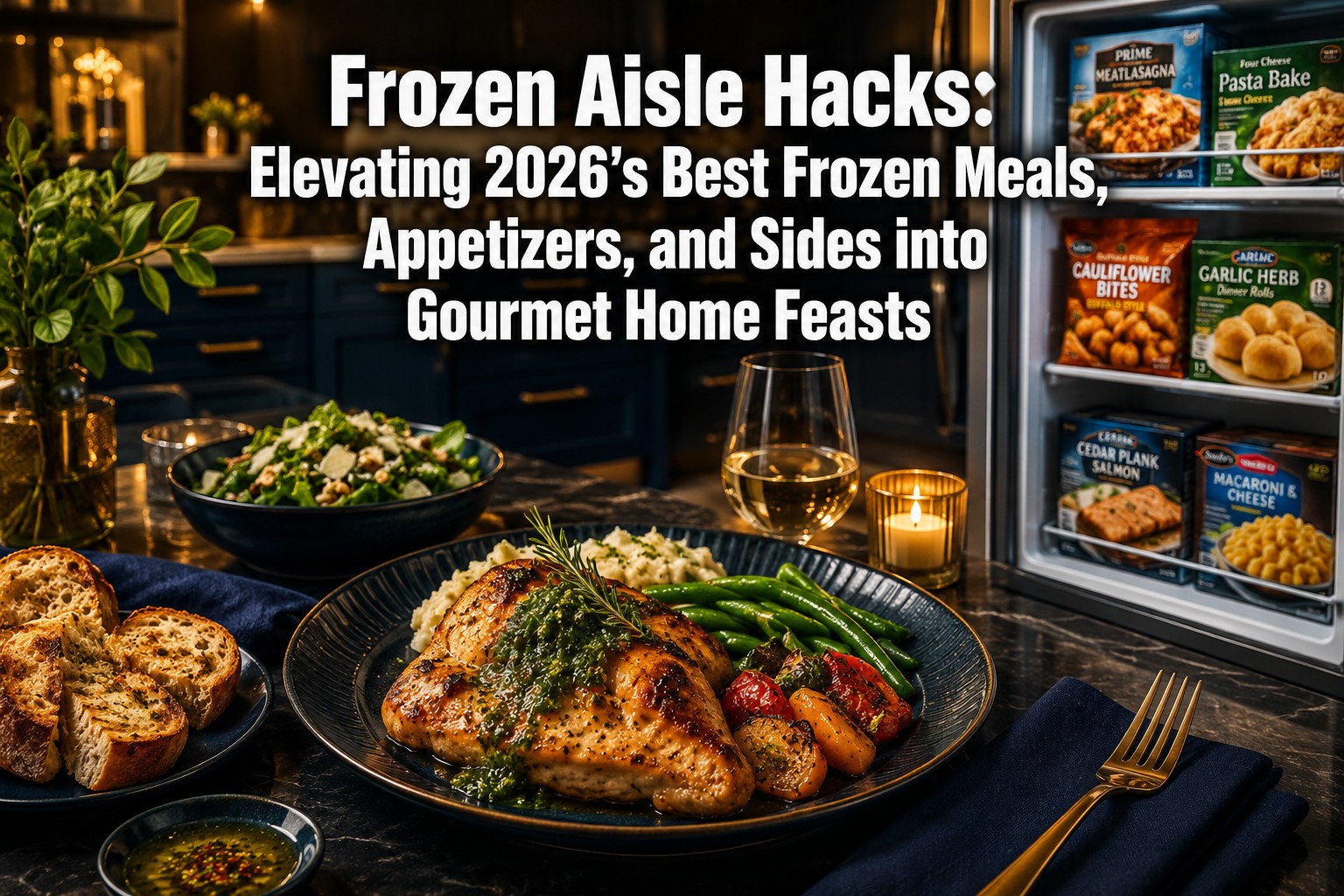
Frozen Aisle Hacks: Elevating 2026’s Best Frozen Meals, Appetizers, and Sides into Gourmet Home Feasts
Last updated: May 25, 2026
Quick Answer
Frozen aisle hacks in 2026 focus on transforming high-protein frozen meals (30g+ protein, under 400 calories) into restaurant-quality dinners by adding fresh garnishes, global sauces, quality cooking fats, and complementary sides. The best approach pairs premium frozen bases with quick upgrades like fresh herbs, citrus, spices, and proper plating techniques—delivering gourmet results at half the cost of takeout in under 15 minutes.
Key Takeaways
- High-protein frozen meals with 30g+ protein and under 400 calories provide the best base for gourmet upgrades in 2026 [1]
- Add fresh elements like herbs, citrus, and quality olive oil to transform frozen meals from bland to restaurant-worthy
- Global sauces (harissa, gochujang, chimichurri) instantly elevate frozen appetizers and sides with minimal effort
- Proper cooking techniques like oven-finishing frozen meals instead of microwaving creates better texture and flavor
- Strategic pairing of frozen mains with freezer-staple sides (hash browns, garlic bread, soup) builds complete gourmet feasts [3]
- Cost savings average 50-60% compared to restaurant delivery when using upgraded frozen meals
- Protein-to-calorie ratio of 0.08 or higher ensures satisfying, nutritionally dense meals [1]
- Avoid common mistakes like overcrowding pans, skipping seasoning, and serving straight from packaging
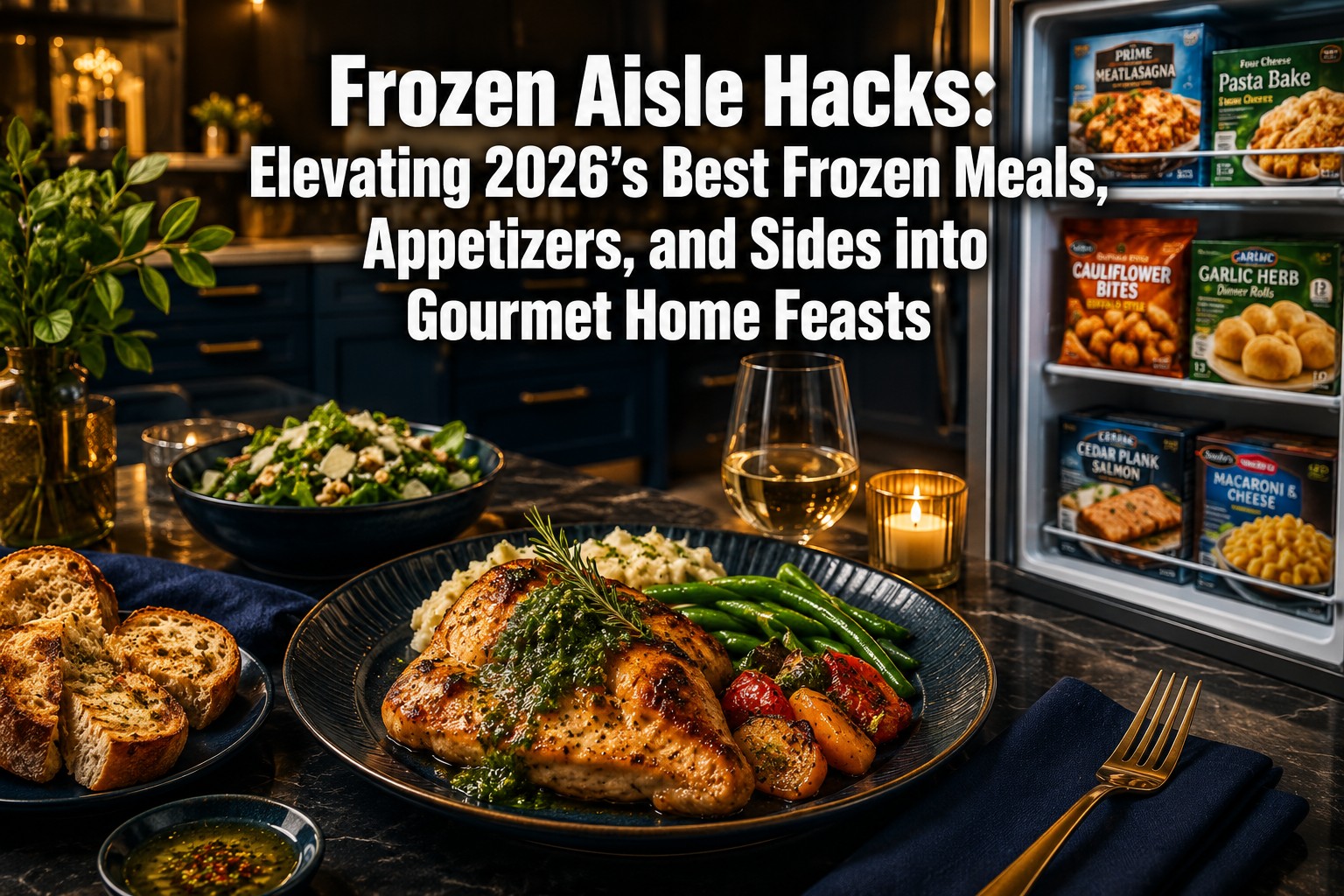
What Are Frozen Aisle Hacks for Making Meals Taste Gourmet
Frozen aisle hacks transform standard frozen products into restaurant-quality meals by adding fresh ingredients, upgrading cooking methods, and using strategic plating. The core strategy involves choosing high-quality frozen bases, then layering flavors with fresh herbs, acids (lemon, vinegar), quality fats (olive oil, butter), and finishing touches that mimic professional kitchens.
Essential hack categories:
- Flavor boosters: Fresh garlic, shallots, ginger, citrus zest, and finishing salts add complexity frozen meals lack
- Texture upgrades: Oven-crisping instead of microwaving, adding crunchy toppings (nuts, panko, fried onions)
- Visual appeal: Plating on real dishes, adding colorful fresh vegetables, garnishing with herbs
- Sauce enhancements: Stirring in cream, pesto, or hot sauce to frozen sauces creates depth
- Temperature contrast: Pairing hot frozen mains with cool fresh elements (slaw, pickles, fresh tomatoes)
Choose this approach if you want restaurant-quality results without cooking from scratch, have 10-15 minutes for upgrades, and already shop the frozen aisle regularly. Skip it if you prefer meal kits with pre-measured ingredients or enjoy the full cooking process.
Common mistake: Adding upgrades to low-quality frozen bases. Start with better frozen products—premium ingredients respond better to enhancement than budget meals loaded with fillers and sodium.
Best Frozen Meals to Buy in 2026 That Taste Restaurant Quality
The best restaurant-quality frozen meals in 2026 prioritize high protein content (30-31g per serving), low calories (under 400), and clean ingredient lists. According to 2026 category analysis, frozen meals delivering a protein-to-calorie ratio of 0.08 or higher provide the satiety and quality that supports gourmet upgrades [1].
Top frozen meal characteristics for 2026:
- Protein-forward bowls: Single-serve options with 30g+ protein from whole food sources
- Chef-crafted variety: Premium brands emphasizing culinary technique over mass production [2]
- Functional nutrition: Meals designed for satiety and muscle maintenance, not just convenience [1]
- Minimal processing: Recognizable ingredients without excessive sodium or preservatives
Specific 2026 standouts:
The frozen meals aisle has shifted toward high-protein offerings, with products like Lazy Lasagna delivering 31g protein at just 310 calories—a protein-to-calorie ratio of 0.100 [1]. Premium frozen meal delivery services like Mosaic Foods lead with “chef-crafted experience with incredible variety,” while Splendid Spoon and Daily Harvest focus on health-oriented convenience [2].
Decision rule: Choose frozen meals with at least 25-30g protein and under 400 calories if you’re building a satisfying dinner. For lighter appetizers or sides, prioritize ingredient quality over macros.
Edge case: Legacy brands like Hungry-Man, Smart Ones, and Lean Cuisine still dominate grocery freezer aisles by volume [4], but they typically require more aggressive hacks to reach restaurant quality due to higher sodium and simpler flavor profiles.
How to Make Frozen Appetizers Taste Homemade
Frozen appetizers taste homemade when you upgrade their cooking method, add fresh garnishes, and serve them with quality dipping sauces. The key is treating frozen apps as components rather than finished products—oven-crisping for better texture, then finishing with fresh elements that signal “made from scratch.”
Proven appetizer upgrade techniques:
- Oven-finish everything: Even “microwave-safe” appetizers taste better crisped in a 425°F oven for 8-12 minutes
- Add fresh herbs: Toss hot frozen mozzarella sticks or spring rolls with chopped cilantro, basil, or parsley immediately after cooking
- Upgrade dipping sauces: Replace packet sauces with homemade or premium store-bought options (garlic aioli, sriracha mayo, balsamic reduction)
- Season aggressively: Frozen apps are often under-seasoned; add flaky salt, cracked pepper, or spice blends right before serving
- Create visual appeal: Arrange on a wooden board with fresh vegetables, olives, and artisan crackers instead of serving in the bag
Specific examples:
- Frozen dumplings: Pan-fry in sesame oil until crispy, finish with scallions and chili oil
- Frozen wings: Toss with fresh buffalo sauce and serve with celery and blue cheese
- Frozen spanakopita: Brush with melted butter and sprinkle with za’atar before baking
Common mistake: Overcrowding the baking sheet. Frozen appetizers need space for air circulation to crisp properly—leave at least 1 inch between pieces.
Frozen Meals vs Meal Kits: Which Is Better for Busy Families
Frozen meals beat meal kits for busy families when time is the primary constraint, while meal kits win when cooking engagement and variety matter more. Upgraded frozen meals cost 50-60% less than meal kits ($4-8 per serving vs $10-12) and require just 10-15 minutes total, compared to 30-40 minutes for most meal kits.
Frozen meals advantages:
- Speed: Microwave or oven-ready in 5-12 minutes
- Flexibility: No commitment, buy only what you need
- Lower cost: $4-8 per premium frozen meal vs $10-12 per meal kit serving
- Zero prep: No chopping, measuring, or cleanup beyond one plate
- Long shelf life: Months in the freezer vs days for meal kit ingredients
Meal kit advantages:
- Cooking experience: Teaches techniques and builds skills
- Customization: Adjust seasoning and portions during cooking
- Fresher taste: Ingredients are fresher than frozen (though frozen can be nutritionally comparable)
- Family engagement: Cooking together as an activity
Decision rule: Choose frozen meals with hacks if your family has unpredictable schedules, limited cooking interest, or needs meals ready in under 15 minutes. Choose meal kits if you have 30-40 minutes, want cooking variety, and value the process of preparing food together.
Edge case: Hybrid approach works best for many families—use upgraded frozen meals on busy weeknights (Monday-Thursday), reserve meal kits or from-scratch cooking for weekends when time allows.
What Spices and Ingredients Elevate Frozen Dinners
The spices and ingredients that most effectively elevate frozen dinners are fresh aromatics (garlic, ginger, shallots), finishing acids (lemon juice, vinegar), quality fats (olive oil, butter), and bold condiments (harissa, gochujang, chimichurri). These additions layer complexity onto frozen meals’ often one-dimensional flavor profiles.
Essential flavor upgrades by category:
Fresh aromatics:
- Minced garlic sautéed in butter (30 seconds)
- Fresh ginger grated over Asian-style frozen bowls
- Sliced shallots crisped in olive oil
Acids and brightness:
- Fresh lemon or lime juice squeezed over finished meals
- Rice vinegar or apple cider vinegar stirred into sauces
- Pickled vegetables (jalapeños, red onions) as garnish
Quality fats:
- Extra virgin olive oil drizzled before serving
- Grass-fed butter melted over vegetables
- Toasted sesame oil for Asian dishes
Bold condiments and sauces:
- Harissa (North African chili paste) for Mediterranean meals
- Gochujang (Korean chili paste) for Asian bowls
- Chimichurri for Latin-inspired proteins
- Pesto stirred into pasta or grain bowls
- Hot honey drizzled over pizza or chicken
Spice blends that transform frozen meals:
- Everything bagel seasoning on vegetables and proteins
- Za’atar on Mediterranean dishes
- Tajín on Mexican-style meals
- Chinese five-spice on Asian proteins
- Herbes de Provence on French-inspired dishes
Pro tip: Add fresh herbs in two stages—hardy herbs (rosemary, thyme) during reheating, delicate herbs (basil, cilantro, parsley) as a final garnish for maximum impact.
Common mistake: Over-salting. Many frozen meals already contain significant sodium, so taste before adding salt—focus on other seasonings first.
Are Upgraded Frozen Meals Actually Cheaper Than Takeout
Upgraded frozen meals cost 50-60% less than restaurant takeout or delivery in 2026. A premium frozen meal ($6-8) plus $2-3 in fresh upgrades (herbs, vegetables, quality bread) totals $8-11 per person, compared to $18-25 per person for comparable restaurant delivery after fees, tips, and markups.
Cost breakdown comparison:
| Option | Base Cost | Add-ons | Total per Person | Time |
|---|---|---|---|---|
| Premium frozen meal + hacks | $6-8 | $2-3 | $8-11 | 12-15 min |
| Restaurant delivery | $15-18 | $3-7 fees/tip | $18-25 | 30-45 min |
| Meal kit service | $10-12 | $0 | $10-12 | 30-40 min |
| From-scratch cooking | $4-6 | $0 | $4-6 | 45-60 min |
Additional savings factors:
- No delivery fees: Save $3-6 per order
- No tipping: Save 15-20% of order total
- No minimum orders: Buy single servings without meeting delivery minimums
- Reduced food waste: Frozen products last months; takeout leftovers often go bad
When takeout is worth the premium: Special occasions, when you want specific restaurant dishes that can’t be replicated, or when convenience truly justifies the 2x cost difference.
Budget optimization strategy: Use upgraded frozen meals for weeknight dinners (4-5 nights), reserve takeout budget for one weekend meal, and cook from scratch when time allows. This hybrid approach maximizes both savings and variety.
Common Mistakes When Cooking Frozen Food That Ruins the Taste
The most common mistakes that ruin frozen food are microwaving when oven-cooking would be better, not seasoning after cooking, serving straight from packaging, and cooking from frozen when thawing first improves texture. These errors prevent frozen products from reaching their potential quality.
Critical mistakes and fixes:
Mistake 1: Microwaving everything
- Why it fails: Microwaves create steam, making food soggy and preventing browning
- Fix: Use oven or air fryer for anything that should be crispy (pizza, appetizers, breaded items)
- Exception: Soups, stews, and saucy bowls are fine microwaved
Mistake 2: Skipping post-cooking seasoning
- Why it fails: Frozen meals lose seasoning intensity during freezing and reheating
- Fix: Taste and adjust with salt, pepper, acids, or spices after cooking
- Rule: Always have finishing salt and fresh-cracked pepper ready
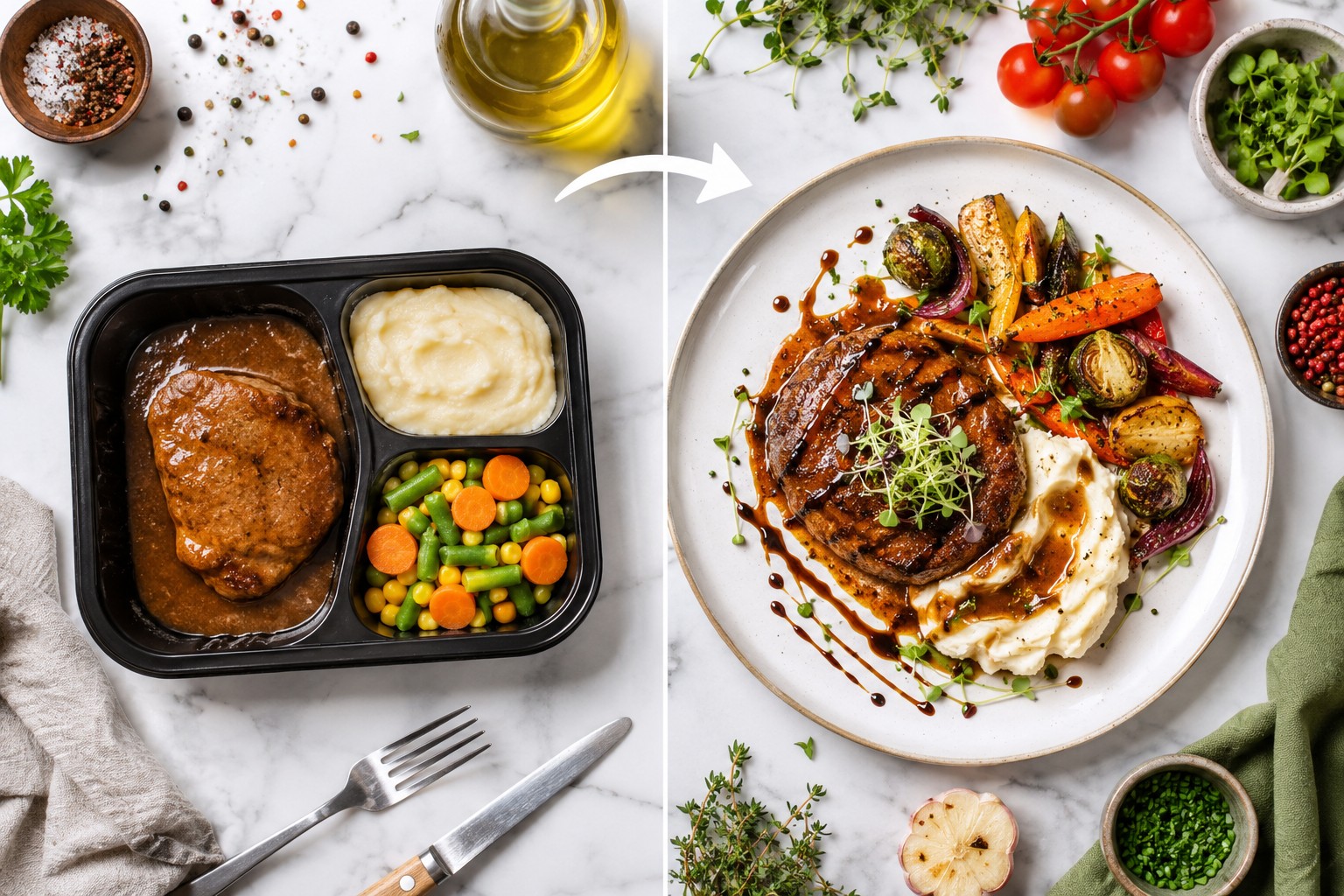
Mistake 3: Serving in original packaging
- Why it fails: Plastic trays and bags signal “frozen dinner,” not “gourmet meal”
- Fix: Transfer to real plates or bowls, add garnishes, create visual appeal
- Impact: Same food tastes better when plated attractively (proven psychological effect)
Mistake 4: Overcrowding the cooking surface
- Why it fails: Prevents air circulation, causes steaming instead of crisping
- Fix: Leave 1-2 inches between items on baking sheets
- Applies to: Frozen vegetables, appetizers, breaded proteins
Mistake 5: Ignoring package directions completely
- Why it fails: Manufacturers test optimal cooking methods for their specific products
- Fix: Start with package directions, then adjust based on your equipment and preferences
- Note: Oven temps and times are usually more reliable than microwave instructions
Mistake 6: Not adding fresh elements
- Why it fails: Frozen-only meals lack the brightness and texture contrast of restaurant food
- Fix: Always add at least one fresh component (herbs, lemon, vegetables, bread)
For more guidance on cooking frozen proteins properly, see our guide to cooking chicken from frozen.
How to Make Trader Joe’s Frozen Meals Taste Fancy
Trader Joe’s frozen meals taste fancy when you upgrade their presentation, add fresh components, and pair them strategically with complementary sides. TJ’s products are already higher quality than most grocery store frozen meals, so they respond exceptionally well to simple enhancements.
Best Trader Joe’s products for upgrading:
- Mandarin Orange Chicken: Serve over jasmine rice with fresh scallions, sesame seeds, and steamed broccoli
- Cauliflower Gnocchi: Pan-fry in brown butter with sage, add cherry tomatoes and parmesan
- Kung Pao Chicken: Add fresh bell peppers, cashews, and a squeeze of lime
- Butter Chicken: Serve over basmati rice with fresh cilantro, naan bread, and cucumber raita
- Mac and Cheese: Top with panko breadcrumbs and broil until golden, add fresh herbs
Universal TJ’s upgrade formula:
- Choose the right cooking method: Oven or stovetop over microwave when possible
- Add fresh vegetables: Bell peppers, snap peas, spinach, or cherry tomatoes
- Upgrade the starch: Serve over quality rice, pasta, or with artisan bread instead of eating alone
- Fresh herb finish: Cilantro, basil, or parsley added at the end
- Plate properly: Use real dishes, add color contrast, create height
Pro tip: Trader Joe’s frozen appetizers (spanakopita, samosas, spring rolls) work perfectly as components in a “gourmet grazing board”—oven-crisp them, then arrange with fresh vegetables, dips, olives, and cheese.
Cost consideration: TJ’s frozen meals ($3-6) plus upgrades ($2-3) still total under $10 per person, maintaining the value proposition while dramatically improving quality.
What Frozen Sides Pair Well With Fresh Proteins
The best frozen sides to pair with fresh proteins are those that complement cooking time and flavor profile while adding convenience without sacrificing quality. Hash browns, garlic bread, frozen vegetables, and baked potatoes work particularly well because they cook in similar timeframes and enhance rather than compete with the main protein.
Top frozen side pairings:
For grilled or pan-seared chicken:
- Frozen roasted vegetables (Brussels sprouts, broccoli, cauliflower)
- Hash browns crisped in the oven
- Garlic bread for texture contrast
For steak or beef:
- Frozen baked potatoes (microwave, then finish in oven with butter)
- Frozen green beans with almonds
- Frozen twice-baked potatoes
For fish or seafood:
- Frozen rice pilaf or quinoa blends
- Frozen asparagus or snap peas
- Frozen dinner rolls
For pork:
- Frozen sweet potato fries
- Frozen corn or succotash
- Frozen apple-based sides
Strategic freezer staples for complete meals:
Keep these frozen sides on hand to quickly convert a simple protein into a complete dinner [3]:
- Shredded or country-style hash browns: Crisp in oven while protein rests
- Garlic bread or dinner rolls: Add carbs and help soak up sauces
- Frozen soup: Serve as a starter or side
- Frozen vegetables: Choose plain versions, season yourself for better control
Cooking coordination tip: Start frozen sides that need oven time (hash browns, garlic bread) first, then cook quick proteins (chicken breast, fish) while sides finish. This ensures everything finishes hot at the same time.
For tips on preparing fresh chicken to pair with frozen sides, check our chicken breast cooking guide.
Who Should Avoid Relying on Frozen Meals Even With Hacks
People with sodium-sensitive conditions, those requiring strict dietary control for medical reasons, and individuals with specific food allergies should avoid relying heavily on frozen meals even with upgrades. While premium frozen meals have improved nutritionally, they still contain higher sodium than home-cooked equivalents and offer less ingredient transparency.
Groups who should limit frozen meal reliance:
Medical conditions requiring strict control:
- Hypertension or heart disease (sodium concerns)
- Kidney disease (sodium and potassium management)
- Diabetes requiring precise carbohydrate counting
- Severe food allergies (cross-contamination risks)
Dietary goals better served by fresh cooking:
- Athletes with specific macro targets
- Bodybuilders in contest prep
- People following elimination diets
- Those with multiple food sensitivities
Lifestyle situations where fresh is better:
- Families with young children learning food preferences
- People recovering from eating disorders (need ingredient awareness)
- Those on very tight budgets (from-scratch cooking is cheapest)
When frozen meals work despite these concerns: If you’re choosing high-quality frozen options with clean ingredient lists, limiting frequency to 2-3 times per week, and balancing with fresh meals, most people can incorporate upgraded frozen meals safely.
Alternative approach: Use frozen components (vegetables, proteins) rather than complete frozen meals. This gives you more control over sodium, seasonings, and ingredients while maintaining convenience.
Can You Make Frozen Pizza Taste Like Pizzeria Quality
Frozen pizza can approach pizzeria quality when you upgrade the cooking method, add fresh toppings, and finish with quality ingredients after baking. The key is treating frozen pizza as a base rather than a finished product, then layering improvements that mimic pizzeria techniques.
Essential frozen pizza upgrades:
Cooking method improvements:
- Preheat a pizza stone or steel: Place in oven at 475-500°F for 30 minutes before cooking
- Skip the cardboard: Bake directly on the stone or a preheated baking sheet
- Increase temperature: Most frozen pizzas bake better at 450-500°F than package directions suggest
- Finish under broiler: Last 1-2 minutes under broiler creates char and crispy edges
Fresh topping additions (add halfway through baking):
- Fresh mozzarella torn into pieces
- Fresh basil leaves
- Sliced cherry tomatoes
- Prosciutto or salami
- Arugula (added after baking)
Post-baking finishes:
- Drizzle with quality olive oil
- Sprinkle with red pepper flakes and oregano
- Add fresh-grated Parmesan
- Drizzle with hot honey or balsamic glaze
- Top with fresh arugula dressed in lemon juice
Best frozen pizza bases for upgrading:
- Thin-crust varieties (respond better to high heat)
- Simple cheese pizzas (easier to customize)
- Neapolitan-style frozen pizzas (already higher quality)
Realistic expectation: Upgraded frozen pizza won’t match the best pizzerias but can easily surpass chain delivery pizza at a fraction of the cost ($6-8 vs $18-25).
Common mistake: Adding too many fresh toppings before baking. This adds moisture and prevents crisping. Add delicate toppings in the last 5 minutes or after baking.
What Are the Healthiest Frozen Meals at Costco in 2026
The healthiest frozen meals at Costco in 2026 prioritize high protein content (25g+), moderate calories (300-450), clean ingredient lists, and balanced macronutrients. While specific Costco inventory varies by region and season, look for frozen meals meeting these nutritional benchmarks rather than focusing on specific brands.
Nutritional criteria for healthy frozen meals:
- Protein: At least 25-30g per serving for satiety [1]
- Calories: 300-450 for a main meal, 150-250 for lighter options
- Sodium: Under 700mg per serving (lower is better)
- Fiber: At least 5g for digestive health
- Ingredients: Recognizable whole foods, minimal preservatives
- Protein-to-calorie ratio: 0.08 or higher for optimal satiety [1]
Costco frozen meal categories to explore:
Protein-forward bowls:
- Look for chicken, salmon, or plant-based protein as the first ingredient
- Asian-style bowls often deliver good protein-to-calorie ratios
- Check for whole grains (brown rice, quinoa) rather than white rice
Organic and premium lines:
- Costco’s organic frozen meals typically have cleaner ingredient lists
- Premium brands at Costco often match quality of specialty frozen meal delivery services at lower prices
Individual vs. family packs:
- Individual portions offer better portion control
- Family packs are more economical but require discipline
What to avoid:
- Frozen meals with cream-based sauces (often 600+ calories)
- Products listing “modified food starch” or “maltodextrin” in top 5 ingredients
- Meals with sodium exceeding 800mg per serving
Shopping strategy: Compare nutrition labels for protein-to-calorie ratio on the spot. Divide protein grams by total calories—aim for 0.08 or higher. A meal with 30g protein and 350 calories (ratio: 0.086) beats one with 20g protein and 400 calories (ratio: 0.050).
For more on healthy protein choices, see our guide on whether chicken breast is healthy.
How to Fix Bland Frozen Vegetables and Make Them Flavorful
Bland frozen vegetables become flavorful when you cook them with fat, season aggressively, add aromatics, and finish with acids or fresh herbs. The key is treating frozen vegetables as raw ingredients that need proper cooking technique, not just reheating.
Step-by-step flavor transformation:
1. Choose the right cooking method:
- Roasting (best for Brussels sprouts, broccoli, cauliflower): 425°F for 20-25 minutes
- Sautéing (best for green beans, snap peas, spinach): High heat, 5-7 minutes
- Air frying (best for any vegetable): 400°F for 10-15 minutes, shake halfway
2. Use enough fat:
- 1-2 tablespoons olive oil or butter per 2 cups vegetables
- Fat carries flavor and enables browning
- Don’t skimp—this is where restaurant taste comes from
3. Season in stages:
- Before cooking: Salt, pepper, garlic powder
- During cooking: Add fresh garlic or shallots halfway through
- After cooking: Finishing salt, fresh herbs, acids
4. Add aromatics:
- Fresh garlic (minced or sliced)
- Shallots or red onion
- Ginger for Asian-style vegetables
- Lemon zest
5. Finish with brightness:
- Squeeze of lemon or lime juice
- Splash of vinegar (balsamic, red wine, rice)
- Fresh herbs (parsley, cilantro, basil)
- Grated Parmesan or nutritional yeast
Specific vegetable upgrades:
- Frozen broccoli: Roast with olive oil and garlic, finish with lemon and Parmesan
- Frozen green beans: Sauté with butter and almonds, season with garlic salt
- Frozen Brussels sprouts: Roast until crispy, toss with balsamic glaze and bacon bits
- Frozen spinach: Sauté with garlic and red pepper flakes, finish with lemon
- Frozen corn: Sauté with butter, add chili powder and lime juice (Mexican street corn style)
Common mistake: Microwaving frozen vegetables. This steams them into mush. Always use dry-heat methods (roasting, sautéing, air frying) for better texture and flavor.
Time-saving tip: Keep frozen vegetables in 1-2 cup portions so you can cook exactly what you need without thawing a full bag.
Do Frozen Meal Hacks Work for Picky Eaters and Kids
Frozen meal hacks work well for picky eaters and kids when you focus on familiar flavors, involve them in customization, and use upgrades that add rather than change the base meal. The strategy is enhancing what they already like rather than transforming it into something unrecognizable.
Kid-friendly frozen meal hack strategies:
Start with familiar bases:
- Frozen chicken nuggets, pizza, mac and cheese, pasta
- Choose plain versions kids already accept
- Avoid introducing too many new elements at once
Let kids customize:
- Set up a “topping bar” for frozen pizza (cheese, pepperoni, olives)
- Allow them to choose which vegetables to add
- Give options: “Do you want parsley or basil on top?”
Sneak in nutrition subtly:
- Add finely chopped vegetables to frozen pasta sauce
- Mix frozen cauliflower rice into regular rice (50/50 blend)
- Stir spinach into frozen mac and cheese
- Top frozen pizza with vegetables they can pick off (gives control)
Focus on presentation:
- Use fun plates or divided trays
- Create “faces” or patterns with food
- Serve with dipping sauces (kids love dipping)
- Cut foods into fun shapes
Upgrade without changing core taste:
- Add cheese to almost anything
- Use butter (kids prefer it to olive oil)
- Keep seasonings mild (garlic powder, not fresh garlic)
- Offer fresh fruit as a side (adds color and nutrition)
Specific kid-tested upgrades:
- Frozen chicken nuggets: Serve with 3 dipping sauces, add carrot sticks and ranch
- Frozen pizza: Let them add their own toppings before baking
- Frozen mac and cheese: Mix in frozen peas, top with breadcrumbs
- Frozen meatballs: Serve over pasta with marinara, sprinkle with Parmesan
- Frozen fish sticks: Make “fish tacos” with soft tortillas and mild toppings
When hacks don’t work: If a child has severe sensory issues or extremely limited accepted foods, consult a pediatric feeding therapist rather than pushing food changes. Some picky eating requires professional support.
Gradual exposure strategy: Introduce one new element per week. If they accept roasted frozen broccoli this week, try a different vegetable next week. Slow, consistent exposure works better than dramatic changes.
Frozen Aisle Hacks: Elevating 2026’s Best Frozen Meals, Appetizers, and Sides into Gourmet Home Feasts – Complete Strategy
Successfully elevating frozen products into gourmet home feasts in 2026 requires a systematic approach: choose high-quality frozen bases, master quick upgrade techniques, and develop a strategic pantry of fresh finishing ingredients. The complete strategy combines smart shopping, proper cooking methods, and restaurant-inspired plating.
The complete frozen-to-gourmet system:
Phase 1: Smart frozen product selection
- Prioritize frozen meals with 30g+ protein and under 400 calories [1]
- Choose products with clean ingredient lists (5-10 recognizable ingredients)
- Stock versatile frozen sides: hash browns, garlic bread, vegetables, soup [3]
- Keep frozen appetizers that crisp well: dumplings, spring rolls, spanakopita
Phase 2: Essential fresh upgrade pantry
Keep these fresh ingredients on hand for quick upgrades:
- Herbs: Cilantro, parsley, basil (last 5-7 days refrigerated)
- Aromatics: Garlic, shallots, ginger (last weeks)
- Acids: Lemons, limes, vinegars (last months)
- Quality fats: Extra virgin olive oil, grass-fed butter
- Condiments: Harissa, gochujang, pesto, hot honey
Phase 3: Cooking method mastery
- Use oven or air fryer for anything that should be crispy
- Reserve microwave for soups, stews, and saucy bowls
- Preheat cooking surfaces (pizza stone, baking sheets)
- Don’t overcrowd pans—leave space for air circulation
Phase 4: Plating and presentation
- Always transfer to real plates or bowls
- Add at least one fresh element (herbs, vegetables, bread)
- Create height and color contrast
- Use finishing touches (drizzles, sprinkles, garnishes)
Weekly meal planning with frozen hacks:
Monday-Thursday: Upgraded frozen meals (12-15 minutes)
- High-protein frozen bowl + fresh vegetables + quality bread
- Frozen appetizers + fresh salad + soup
- Frozen pizza + upgraded toppings + side salad
Friday: Frozen feast night (20-25 minutes)
- Multiple frozen appetizers plated as a grazing board
- Frozen main + two upgraded frozen sides
- Fresh dessert or premium frozen dessert with fresh fruit
Weekend: Mix of from-scratch cooking and strategic frozen components
- Fresh protein + frozen sides
- Meal prep for the week using frozen vegetables
Budget allocation:
- 60% on quality frozen bases
- 25% on fresh upgrade ingredients
- 15% on pantry staples (oils, condiments, spices)
Time investment:
- 5 minutes: Basic frozen meal with one fresh element
- 10 minutes: Frozen meal with 2-3 upgrades and proper plating
- 15 minutes: Frozen feast with multiple components and full presentation
This systematic approach delivers restaurant-quality results at 50-60% the cost of takeout while requiring minimal cooking skills and time investment.
FAQ
How much money can I save using frozen meal hacks instead of ordering takeout?
Upgraded frozen meals cost $8-11 per person compared to $18-25 for restaurant delivery, saving 50-60% per meal. Over a month (20 dinners), that’s $200-280 in savings for a family of two.
What’s the single most important upgrade for frozen meals?
Adding fresh herbs after cooking is the single most impactful upgrade. Fresh cilantro, parsley, or basil immediately signals “homemade” and adds brightness frozen meals lack, taking just 30 seconds and costing under $1.
Can I meal prep with frozen products?
Yes, but use frozen products as components rather than reheating frozen meals twice. Cook frozen vegetables and proteins in batches, then assemble fresh meals throughout the week. Avoid freezing, thawing, cooking, then refrigerating and reheating.
Are expensive frozen meal delivery services worth it compared to grocery store frozen meals?
Premium frozen meal delivery services ($10-12 per serving) offer better variety and ingredient quality than most grocery frozen meals ($4-8) but cost more than upgraded grocery options. They’re worth it if you value variety and don’t want to shop, but upgraded grocery frozen meals deliver better value.
How long do frozen meals last in the freezer?
Most frozen meals maintain quality for 3-6 months in a standard freezer, though they remain safe indefinitely at 0°F. Check package dates and rotate stock—use oldest products first. Freezer burn affects quality but not safety.
What’s the healthiest way to cook frozen vegetables?
Roasting or air frying frozen vegetables at 400-425°F creates the best texture and flavor while preserving nutrients. Avoid boiling, which leaches water-soluble vitamins. Use 1-2 tablespoons of healthy fat (olive oil) for nutrient absorption.
Can I use frozen meal hacks for weight loss?
Yes, if you choose high-protein frozen meals (30g+) under 400 calories and add low-calorie fresh vegetables. This creates satisfying, portion-controlled meals that support weight loss while requiring minimal effort. Avoid adding high-calorie sauces or excessive cheese.
Do frozen meals have too much sodium even with upgrades?
Many frozen meals contain 600-800mg sodium per serving, which is moderate but adds up across a day. Choose frozen meals with under 700mg sodium, avoid adding extra salt, and balance with low-sodium fresh foods throughout the day.
What frozen products should I always keep stocked?
Keep high-protein frozen meals, plain frozen vegetables (broccoli, green beans, spinach), frozen hash browns, garlic bread, and versatile frozen appetizers (dumplings, spring rolls). This combination allows you to create complete gourmet meals in under 15 minutes.
How do I know if a frozen meal is high quality?
Check for: (1) protein as the first ingredient, (2) 25g+ protein per serving, (3) recognizable ingredients (avoid long chemical names), (4) under 700mg sodium, and (5) a protein-to-calorie ratio of 0.08 or higher. These markers indicate quality frozen meals worth upgrading.
Can picky eaters enjoy upgraded frozen meals?
Yes, start with frozen foods they already like, then add subtle upgrades (cheese, butter, mild seasonings). Let them customize toppings and involve them in the upgrade process. Avoid dramatic flavor changes—enhance rather than transform.
What’s the best way to reheat frozen meals for optimal taste?
Use the oven or air fryer for anything that should be crispy (pizza, breaded items, appetizers). Microwave is fine for soups, stews, and saucy bowls. Always finish with fresh elements regardless of reheating method to restore brightness and texture.
Conclusion
Frozen aisle hacks in 2026 transform convenient frozen products into restaurant-quality home feasts through strategic upgrades, proper cooking techniques, and smart ingredient additions. The key is choosing high-quality frozen bases—particularly high-protein meals with 30g+ protein and under 400 calories—then layering fresh herbs, quality fats, global sauces, and proper plating to create gourmet results.
The approach delivers significant value: upgraded frozen meals cost 50-60% less than restaurant delivery while requiring just 10-15 minutes of active time. By maintaining a strategic pantry of fresh finishing ingredients and mastering simple techniques like oven-crisping and fresh herb garnishes, anyone can elevate frozen products into satisfying, nutritious meals that rival takeout quality.
Your next steps:
- Audit your freezer: Stock 3-4 high-protein frozen meals, versatile frozen sides, and quality frozen appetizers
- Build your upgrade pantry: Fresh herbs, quality olive oil, acids (lemons, vinegars), and bold condiments (harissa, gochujang, pesto)
- Master one technique: Start with oven-finishing frozen products instead of microwaving for immediate quality improvement
- Practice plating: Transfer meals to real dishes and add one fresh element to every frozen meal this week
- Track savings: Calculate your monthly savings compared to previous takeout spending
The frozen aisle in 2026 offers unprecedented quality and variety. With these hacks, you’re equipped to turn convenient frozen products into gourmet home feasts that satisfy both your taste buds and your budget.
For more cooking guidance, explore our chicken breast cooking methods and protein preparation tips.
References
[1] The Frozen Meals Aisle In 2026 Whats Changed And What To Buy Now – https://eatcounter.com/blogs/news/the-frozen-meals-aisle-in-2026-whats-changed-and-what-to-buy-now
[2] Best Frozen Meal Delivery 2026 The Ultimate Convenience Ranked – https://www.mosaicfoods.com/blogs/main/best-frozen-meal-delivery-2026-the-ultimate-convenience-ranked
[3] Watch – https://www.youtube.com/watch?v=bZplUfYWZro
[4] Best Frozen Dinners – https://www.buzzfeed.com/evelinamedina/best-frozen-dinners
[5] New Frozen Meals March 2026 – https://sporked.com/article/new-frozen-meals-march-2026/
[6] Freezies 2026 11903212 – https://www.simplyrecipes.com/freezies-2026-11903212
SEO Meta Title: Frozen Aisle Hacks 2026: Gourmet Meals from Frozen Foods


