Simplicity in the Kitchen: 12 Minimalist Recipes Highlighting Single-Star Ingredients for 2026
Last updated: May 24, 2026
Quick Answer
Simplicity in the Kitchen: 12 Minimalist Recipes Highlighting Single-Star Ingredients for 2026 focuses on dishes built around one premium ingredient, supported by no more than four complementary items. This approach reduces decision fatigue, cuts prep time to under 30 minutes per meal, and lets high-quality sourcing shine without relying on complex techniques or viral gimmicks. It’s ideal for home cooks who want flavorful results with less clutter and fewer steps.
Key Takeaways
- Single-star ingredient cooking means building each recipe around one hero component (like heirloom tomatoes or grass-fed beef) plus 2-4 supporting ingredients
- Minimalist recipes typically use 5 ingredients or fewer, excluding salt, pepper, and water
- This style works for beginners and experienced cooks alike because it emphasizes ingredient quality over technique complexity
- Prep and cook time average 20-30 minutes per dish, making it practical for weeknight meals
- Minimalist cooking is not the same as one-pot meals—it’s about ingredient restraint, not equipment limits
- Common mistakes include under-seasoning and choosing low-quality star ingredients, which become obvious when there’s nothing to hide behind
- Meal prep is highly compatible: batch-cook your star ingredient (like perfectly juicy chicken breast) and rotate supporting flavors throughout the week
- Startup costs are low if you already own basic cookware; specialty ingredients can be sourced from farmers markets, Costco, or online retailers
- Picky eaters often respond better to minimalist plates because each flavor is distinct and recognizable rather than hidden in a complex sauce
What Does Single-Star Ingredient Mean in Minimalist Cooking?
A single-star ingredient is the hero component that defines the dish’s flavor, texture, and identity. In minimalist cooking, you select one premium item—such as wild-caught salmon, heirloom tomatoes, or aged Parmesan—and build the entire recipe around it using only 2-4 supporting ingredients. The goal is to let that star ingredient’s natural qualities take center stage without masking or competing flavors.
This approach differs from traditional recipes that layer multiple proteins, vegetables, and sauces. Instead, you might pair a perfectly seared steak with just sea salt, butter, and fresh thyme. The star (the steak) does the heavy lifting, and the supporting cast enhances rather than overshadows.
Why it works: When you invest in a high-quality star ingredient, you don’t need elaborate preparation. A ripe heirloom tomato with flaky salt and good olive oil becomes a complete dish. A grass-fed ribeye needs only heat and seasoning. This philosophy aligns with the broader 2026 shift toward thoughtful restraint in home cooking, where premium sourcing replaces complexity.
Choose this approach if:
- You want to taste the ingredient itself, not just the seasoning
- You’re willing to spend more per ingredient but less on total grocery volume
- You prefer shorter ingredient lists and faster decision-making at the store
How Is Minimalist Cooking Different from Regular Cooking?
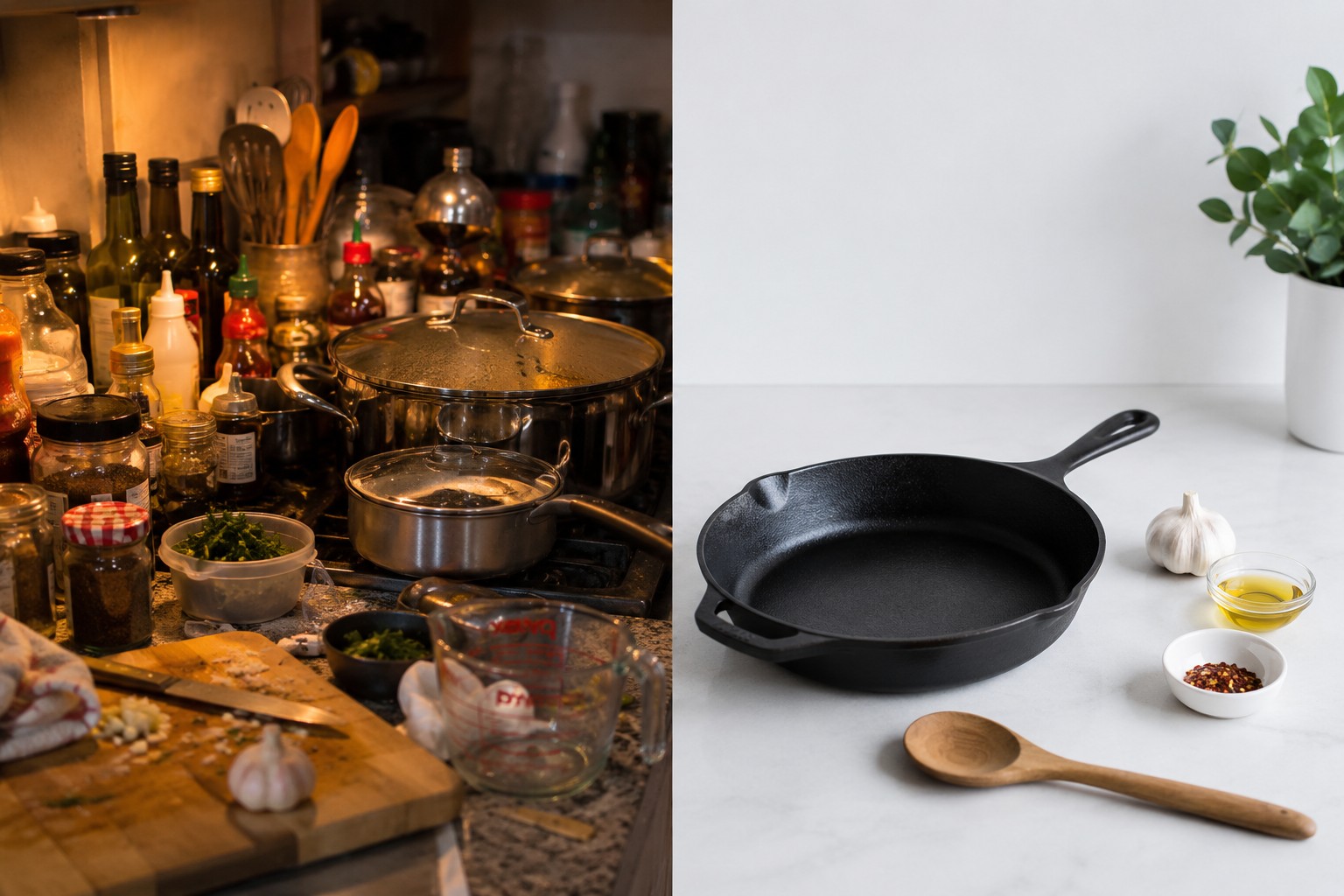
Minimalist cooking prioritizes ingredient count and quality over technique complexity or equipment variety. Regular cooking often involves 8-12 ingredients per dish, multiple cooking methods (sauté, then braise, then broil), and layered flavor-building steps. Minimalist cooking strips that down to 5 ingredients or fewer and one or two techniques, relying on the inherent flavor of each component.
Key differences:
| Aspect | Regular Cooking | Minimalist Cooking |
|---|---|---|
| Ingredient count | 8-15 per recipe | 2-5 per recipe |
| Prep time | 30-60 minutes | 15-30 minutes |
| Technique layers | Multiple (sear, deglaze, reduce, finish) | One or two (roast and rest, or sauté and serve) |
| Flavor source | Spice blends, sauces, marinades | Ingredient quality and simple seasoning |
| Equipment | Multiple pots, pans, tools | Often one pan or pot |
Minimalist cooking also emphasizes repeatable templates. Once you master a roasted vegetable formula (vegetable + olive oil + salt + acid), you can swap the star ingredient weekly without relearning the method. Regular cooking often requires following a new recipe each time.
Common mistake: Assuming minimalist means bland. In reality, fewer ingredients demand better-quality choices. A mediocre tomato will taste mediocre no matter how simply you prepare it. A peak-season heirloom tomato needs almost nothing.
What Are the 12 Single-Star Ingredients for 2026 Minimalist Recipes?
The 12 single-star ingredients trending in 2026 minimalist kitchens are chosen for their versatility, availability, and ability to shine with minimal support. These ingredients form the foundation of the recipes highlighted in Simplicity in the Kitchen: 12 Minimalist Recipes Highlighting Single-Star Ingredients for 2026.
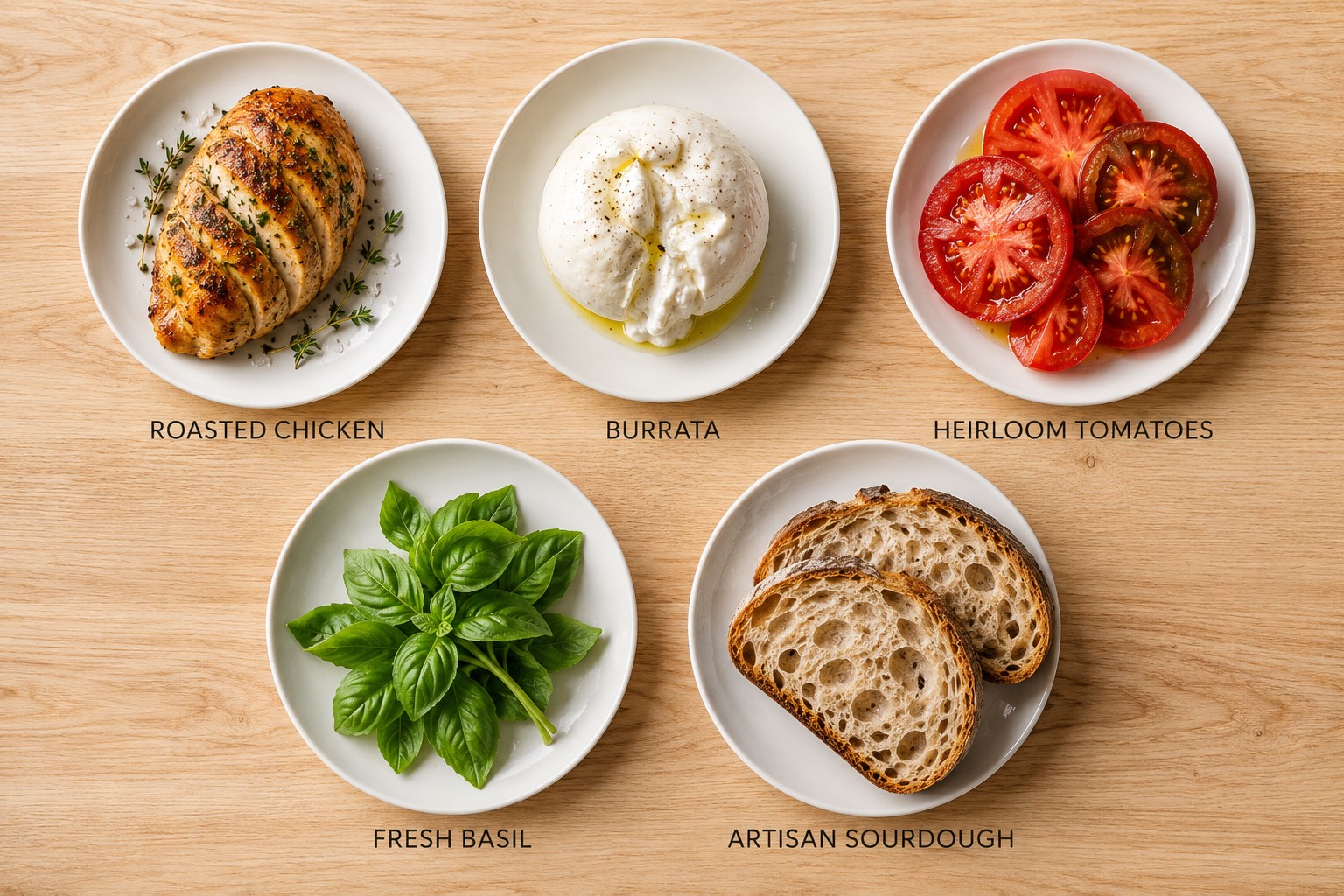
- Heirloom tomatoes – Peak summer fruit that needs only salt and olive oil
- Grass-fed beef (ribeye or sirloin) – Rich marbling carries the dish with butter and herbs
- Wild-caught salmon – Omega-rich, pairs with lemon and dill
- Burrata cheese – Creamy center becomes the sauce; add bread and basil
- Free-range chicken breast – Lean protein that benefits from brining; see our guide on keeping chicken breast juicy
- Artisan sourdough bread – Fermented flavor stands alone with butter or olive oil
- Hass avocados – Creamy texture and healthy fats; pair with lime and sea salt
- Fresh mozzarella – Mild, milky base for caprese or simple pasta
- Pasture-raised eggs – Rich yolks add depth; scramble with butter and chives
- Aged Parmesan (Parmigiano-Reggiano) – Umami bomb; shave over vegetables or pasta
- Wild mushrooms (chanterelles, porcini) – Earthy, meaty; sauté with garlic and thyme
- Stone fruit (peaches, nectarines) – Natural sweetness for desserts or savory pairings with prosciutto
These ingredients are widely available at farmers markets, specialty grocers like Whole Foods, and warehouse clubs like Costco. Each can anchor a dish with 2-4 supporting ingredients, keeping total recipe complexity low while delivering restaurant-quality flavor.
Edge case: If you live in a region with limited access to specialty produce, substitute with the best local equivalent. A high-quality supermarket tomato in winter won’t match an heirloom in August, so shift your star ingredient to what’s in season near you.
Minimalist Recipes vs One-Pot Meals: Which Is Easier?
Minimalist recipes and one-pot meals serve different goals, and neither is universally easier—it depends on your priority. Minimalist recipes focus on ingredient restraint (5 or fewer items), which simplifies shopping and decision-making but may still use multiple pans. One-pot meals focus on equipment restraint (everything cooks in one vessel), which simplifies cleanup but often requires 8-12 ingredients and longer cook times.
Choose minimalist recipes if:
- You want faster prep and fewer ingredients to buy
- You don’t mind washing an extra pan if it means better texture (e.g., searing meat separately before plating)
- You prioritize ingredient quality and distinct flavors
Choose one-pot meals if:
- Cleanup time is your main constraint
- You’re cooking for a crowd and need volume
- You prefer set-it-and-forget-it methods like slow cooking or braising
Example comparison:
- Minimalist: Pan-seared salmon (salmon, butter, lemon, dill) – 4 ingredients, 2 pans (one for fish, one for side), 15 minutes
- One-pot: Chicken and rice casserole (chicken, rice, broth, onion, garlic, carrots, peas, thyme, bay leaf) – 9 ingredients, 1 pot, 45 minutes
Both have a place in a 2026 kitchen. Many home cooks rotate between them depending on the day’s schedule. For a quick weeknight dinner, minimalist wins. For Sunday meal prep, one-pot wins.
Where to Buy Specialty Single-Star Ingredients for Minimalist Cooking
Specialty single-star ingredients like heirloom tomatoes, wild-caught salmon, and aged Parmesan are available through multiple channels in 2026, each with trade-offs in price, quality, and convenience.
Best sources:
- Farmers markets – Peak-season produce, direct from growers; best for tomatoes, stone fruit, mushrooms. Prices vary but quality is typically highest. Go early for best selection.
- Costco and warehouse clubs – Bulk grass-fed beef, wild salmon, organic chicken breast, and aged cheese at lower per-unit cost. Ideal if you meal prep or have freezer space. See our Costco chicken breast buying guide for details.
- Whole Foods and specialty grocers – Curated selection of premium items; higher prices but consistent quality and smaller pack sizes for singles or couples.
- Online retailers (Thrive Market, Crowd Cow, Wild Alaskan Company) – Subscription or one-time orders for hard-to-find items like wild mushrooms or heritage-breed meats. Shipping costs add up, so batch orders.
- Local butchers and fishmongers – Personalized service, custom cuts, and sourcing transparency. Build a relationship and ask for recommendations.
- CSA (Community Supported Agriculture) boxes – Weekly or biweekly delivery of seasonal produce. You don’t choose specific items, but you get peak-season stars at a discount.
Cost-saving tip: Buy your star ingredient in season and at its peak. Heirloom tomatoes in August cost half what they do in February and taste exponentially better. Freeze or preserve extras (roast and freeze tomatoes, portion and freeze salmon) to extend the season.
Common mistake: Buying specialty ingredients out of season and expecting the same result. A January tomato will never match an August one, no matter how you cook it. Shift your star ingredient with the calendar.
How Much Does It Cost to Start Cooking Minimalist Recipes?
Starting with minimalist recipes costs between $50 and $150 upfront if you already own basic cookware, with ongoing weekly grocery costs of $40-$80 for two people, depending on ingredient quality and sourcing.
Upfront costs (if starting from scratch):
- Essential cookware: One 10-12 inch cast iron or stainless skillet ($30-$80), one chef’s knife ($25-$60), one cutting board ($15-$30)
- Pantry staples: Good olive oil ($15-$25 for 500ml), flaky sea salt ($8-$12), whole peppercorns and grinder ($10-$15)
- Total: $88-$222, but most home cooks already own at least a pan and knife
Weekly grocery costs (for two people, 5 dinners):
- Budget approach: $40-$50 – Supermarket chicken breast, conventional produce, domestic Parmesan
- Mid-tier approach: $60-$80 – Organic chicken, farmers market tomatoes, imported Parmigiano-Reggiano
- Premium approach: $100-$150 – Grass-fed beef, wild salmon, heirloom produce, artisan bread
Minimalist cooking can actually reduce grocery spending compared to traditional cooking because you’re buying fewer items per trip and wasting less. A typical complex recipe might call for 12 ingredients, half of which you use once and then forget in the pantry. A minimalist recipe uses 5 ingredients you’ll rotate through multiple dishes.
Decision rule: If you’re on a tight budget, start with affordable star ingredients like pasture-raised eggs or seasonal vegetables, and upgrade to premium proteins as your budget allows. The method works at any price point.
Why Are My Minimalist Recipes Turning Out Bland?
Minimalist recipes turn out bland when the star ingredient is low-quality, under-seasoned, or cooked incorrectly. With only 3-5 ingredients, there’s no sauce or spice blend to mask mistakes, so each element must be optimized.
Top causes and fixes:
Low-quality star ingredient – A watery supermarket tomato or previously frozen chicken breast won’t deliver flavor no matter how you season it. Fix: Invest in the best version of your star ingredient you can afford. One great tomato beats three mediocre ones.
Under-salting – Salt is the most important flavor amplifier, and minimalist dishes need proper seasoning at every stage. Fix: Salt your protein before cooking (not just at the table), taste as you go, and finish with flaky sea salt for texture.
Skipping acid – Lemon, vinegar, or tomato acidity brightens dishes and balances richness. Fix: Add a squeeze of lemon or a splash of vinegar at the end. It’s often the missing piece.
Overcooking protein – Dry chicken or rubbery salmon kills the dish. Fix: Use a meat thermometer (chicken breast to 160°F, salmon to 125°F) and let meat rest before slicing. See our guide on safe chicken breast temperature.
Ignoring texture contrast – All-soft or all-crunchy dishes feel one-dimensional. Fix: Add a crunchy element (toasted nuts, crispy breadcrumbs) or a creamy one (butter, cheese) to create contrast.
Common mistake: Assuming “simple” means “no technique.” Even a 3-ingredient dish benefits from proper searing, resting, and seasoning. The fewer ingredients you use, the more each technique matters.
Is Minimalist Cooking Good for Beginners or Experienced Cooks?
Minimalist cooking works for both beginners and experienced cooks, but for different reasons. Beginners benefit from shorter ingredient lists, fewer steps, and less room for error. Experienced cooks appreciate the focus on technique refinement and ingredient quality over recipe complexity.
For beginners:
- Fewer decisions – A 5-ingredient recipe is less intimidating than a 15-ingredient one
- Faster learning curve – Master one technique (like pan-searing) and apply it to multiple star ingredients
- Lower cost of mistakes – If you overcook a simple chicken breast, you’ve wasted $5, not $50 worth of ingredients
- Clear feedback – With fewer flavors, it’s obvious what went wrong (undersalted, overcooked, wrong ingredient quality)
For experienced cooks:
- Technique showcase – Minimalist cooking highlights skills like proper searing, knife work, and seasoning
- Ingredient exploration – Focuses attention on sourcing and seasonality rather than recipe hunting
- Creative constraint – Limiting ingredients forces innovation and deeper understanding of flavor building
- Time efficiency – Experienced cooks can produce restaurant-quality results in 20 minutes
Who it’s NOT ideal for: Cooks who enjoy elaborate multi-step projects or those who find satisfaction in complex spice blending and sauce-making. If you love spending Sunday afternoon on a 12-hour braise, minimalist cooking may feel too restrained.
Edge case: If you’re a beginner with zero cooking knowledge, start with a hybrid approach—minimalist ingredient lists but with detailed technique instructions. Our easy weeknight chicken recipes offer a good middle ground.
Can You Meal Prep with Single-Star Ingredient Recipes?
Yes, single-star ingredient recipes are highly compatible with meal prep because you can batch-cook the star component and vary the supporting ingredients throughout the week. This approach reduces repetition fatigue while keeping prep time low.
Meal prep strategy:
- Cook your star ingredient in bulk – Roast 4-6 chicken breasts, grill 2 pounds of salmon, or hard-boil a dozen eggs on Sunday
- Prep supporting ingredients separately – Chop vegetables, portion cheese, toast nuts, make simple vinaigrettes
- Mix and match daily – Monday: chicken + lemon + arugula; Tuesday: chicken + Parmesan + tomatoes; Wednesday: chicken + avocado + lime
Example weekly plan (chicken breast as star):
- Sunday prep: Roast 5 chicken breasts with salt and pepper (see how to keep chicken breast juicy)
- Monday: Slice chicken over arugula with lemon vinaigrette and shaved Parmesan
- Tuesday: Dice chicken into grain bowl with avocado and lime
- Wednesday: Shred chicken for simple tacos with salsa and cilantro
- Thursday: Slice chicken for caprese-style plate with mozzarella and tomato
- Friday: Chop chicken for quick fried rice with egg and soy sauce
Storage tips:
- Store cooked star ingredients in airtight containers for 4-5 days
- Keep supporting ingredients separate until assembly to maintain texture
- Reheat protein gently (low heat, covered) to avoid drying out
Common mistake: Cooking the entire assembled dish in advance. Minimalist meals taste best when the star ingredient is paired with fresh supporting elements at serving time. Prep the components, not the final plate.
What Are Common Mistakes When Cooking Minimalist Recipes?
The most common mistakes in minimalist cooking stem from underestimating the importance of each ingredient and technique when there’s nothing to hide behind. With only 3-5 components, every choice matters.
Top mistakes and how to avoid them:
Choosing low-quality star ingredients – A bland tomato or tough cut of beef will ruin the dish. Fix: Buy the best version of your star ingredient, even if it means spending more or waiting for peak season.
Under-seasoning – Salt, pepper, and acid are not optional; they’re essential. Fix: Season in layers (before cooking, during, and at the finish) and taste as you go.
Overcooking protein – With no sauce to add moisture, overcooked meat is obvious and unpleasant. Fix: Use a thermometer and pull protein 5°F before target temp; carryover cooking will finish it.
Skipping the rest period – Cutting into meat immediately releases juices onto the plate instead of keeping them in the protein. Fix: Let chicken, beef, or pork rest 5-10 minutes before slicing.
Ignoring texture – All-soft or all-hard dishes feel incomplete. Fix: Add one contrasting element—crispy breadcrumbs on creamy pasta, or soft cheese on crunchy bread.
Using the wrong cooking method – Not every ingredient shines with every technique. Fix: Match method to ingredient—delicate fish needs gentle heat, tough cuts need low-and-slow.
Forgetting acid – Richness without brightness tastes flat. Fix: Finish with lemon juice, vinegar, or fresh tomato to balance fat and salt.
Edge case: If you’re cooking for someone with a very limited palate (young children, texture-averse eaters), minimalist cooking can backfire because there’s no “sauce” to mask unfamiliar flavors. In that case, add one familiar element (like a simple butter sauce or ketchup) as a bridge ingredient.
Minimalist Cooking for Families with Picky Eaters: Does It Work?
Minimalist cooking can work well for families with picky eaters because each ingredient remains distinct and recognizable, rather than hidden in a complex sauce or casserole. This transparency helps children (and adults) identify what they’re eating and build trust with new foods.
Why it works:
- Clear flavors – Picky eaters often reject dishes where they can’t identify components. A plate with chicken, tomato, and mozzarella is less threatening than a layered lasagna.
- Easy customization – Each family member can choose which supporting ingredients to add. One child might want just chicken and cheese; another adds tomato.
- Familiar templates – Once a child accepts a minimalist formula (protein + vegetable + starch), you can rotate star ingredients without changing the structure.
- Less food waste – If a child rejects one component, the rest of the plate is still edible. In a mixed casserole, they might reject the entire dish.
Strategies for success:
- Involve kids in ingredient selection – Let them choose the star ingredient at the market (within your budget). Ownership increases willingness to try.
- Serve components separately – Plate the star ingredient and supporting items in distinct sections rather than mixed together.
- Start with familiar stars – Chicken breast, pasta, eggs, and cheese are widely accepted. Introduce adventurous ingredients (mushrooms, fish) gradually.
- Keep one “safe” option – Always include one element you know they’ll eat, even if they reject the star ingredient.
Common mistake: Assuming picky eaters need heavily seasoned or “hidden vegetable” dishes. Many children prefer simple, recognizable foods and will eat plain roasted chicken or steamed broccoli if it’s not drowning in sauce.
Edge case: If your child has sensory processing issues or extreme food aversions, consult a pediatric feeding therapist. Minimalist cooking can be part of the solution, but professional guidance helps tailor the approach.
How Long Do Minimalist Single-Ingredient Recipes Take to Make?
Most minimalist single-star ingredient recipes take 20-30 minutes from start to finish, with some as quick as 10 minutes and others extending to 45 minutes if the star ingredient requires longer cooking (like roasting a whole fish or braising short ribs).
Time breakdown by cooking method:
- Pan-searing (chicken, fish, steak): 10-15 minutes – Quick, high-heat method for tender proteins
- Roasting (vegetables, chicken breast, salmon): 20-30 minutes – Hands-off oven time; see when baking chicken breast for timing details
- Grilling (steak, vegetables, stone fruit): 15-20 minutes – Includes preheat time
- Sautéing (mushrooms, greens, eggs): 5-10 minutes – Fastest method for delicate ingredients
- Braising (tougher cuts, root vegetables): 45-90 minutes – Longer but mostly unattended
Prep time is minimal because you’re working with 3-5 ingredients. Chopping one onion, mincing two garlic cloves, and zesting a lemon takes 5 minutes. Compare that to traditional recipes requiring 15-20 minutes of prep for a dozen ingredients.
Decision rule: Choose your cooking method based on available time. If you have 15 minutes, pan-sear a protein. If you have 30 minutes and can walk away, roast. If you’re home for an hour but busy, braise and let the oven do the work.
Common mistake: Rushing the cooking process. Even a 10-minute recipe benefits from proper preheating, resting, and finishing. Don’t skip steps to save 2 minutes—you’ll sacrifice texture and flavor.
Are Minimalist Recipes Healthy or Just Trendy?
Minimalist recipes can be very healthy because they emphasize whole, unprocessed ingredients and eliminate hidden sugars, excess sodium, and industrial seed oils often found in complex prepared foods. However, “minimalist” is a cooking philosophy, not a nutrition guarantee—a dish can be minimalist and still high in saturated fat or low in vegetables.
Health advantages:
- Ingredient transparency – You know exactly what’s in your food (no hidden additives or preservatives)
- Whole food focus – Most minimalist recipes center on proteins, vegetables, fruits, and whole grains rather than processed items
- Portion control – Simpler plates make it easier to see and control serving sizes
- Lower sodium – You control salt levels rather than relying on packaged sauces or seasonings
- Nutrient density – High-quality star ingredients (wild salmon, pasture-raised eggs, heirloom vegetables) pack more vitamins and minerals than conventional equivalents
Potential drawbacks:
- Macronutrient imbalance – A plate of just steak and butter is minimalist but lacks fiber and micronutrients. Add a vegetable.
- Calorie density – Cheese, nuts, and fatty cuts of meat are calorie-dense. Watch portions if weight management is a goal.
- Limited variety – Rotating the same 12 star ingredients might lead to nutrient gaps. Vary your choices weekly.
Is it just trendy? The 2026 minimalist cooking movement is partly trend-driven (social media loves clean, photogenic plates), but the underlying principles—whole foods, simple preparation, quality over quantity—align with long-standing nutrition advice. The trend may fade, but the health benefits of eating recognizable, minimally processed ingredients won’t.
Choose minimalist cooking for health if: You want to reduce processed food intake, control sodium and sugar, and eat more whole ingredients. Pair it with balanced macros (protein, fat, carbs) and plenty of vegetables.
Single-Star Ingredient Recipes for People with Limited Kitchen Equipment
Single-star ingredient recipes are ideal for people with limited kitchen equipment because they typically require only one or two tools—often just a skillet, pot, or sheet pan. The ingredient restraint naturally limits equipment needs.
Essential equipment (choose 1-2):
- Cast iron or stainless skillet (10-12 inch) – Sear, sauté, roast, and bake. Handles 80% of minimalist recipes.
- Sheet pan – Roast vegetables, proteins, and stone fruit. Easy cleanup with parchment paper.
- Medium pot (3-4 quart) – Boil eggs, blanch vegetables, make simple soups.
Recipes by equipment:
Skillet only:
- Pan-seared salmon with lemon and dill
- Scrambled eggs with butter and chives
- Sautéed mushrooms with garlic and thyme
- Grilled cheese with artisan bread and aged cheddar
Sheet pan only:
- Roasted chicken breast with tomatoes and basil
- Roasted stone fruit with honey and sea salt
- Baked salmon with olive oil and lemon
Pot only:
- Soft-boiled eggs with flaky salt
- Blanched green beans with butter and Parmesan
- Simple pasta with olive oil and garlic
No-cook options:
- Burrata with heirloom tomatoes and basil
- Avocado toast on sourdough with sea salt
- Caprese salad with mozzarella, tomato, and olive oil
Common mistake: Thinking you need a full kitchen to cook well. Some of the best minimalist dishes require zero cooking—just assembly of high-quality ingredients. A ripe tomato, good bread, and olive oil need nothing but a knife and plate.
Edge case: If you’re cooking in a dorm, hotel, or temporary space with only a microwave or hot plate, focus on no-cook and single-burner recipes. Hard-boil eggs in a pot, microwave-steam vegetables, and assemble fresh ingredients.
The 12 Minimalist Recipes Highlighting Single-Star Ingredients for 2026
Here are 12 recipes that embody Simplicity in the Kitchen: 12 Minimalist Recipes Highlighting Single-Star Ingredients for 2026, each built around one hero component and 2-4 supporting ingredients. These recipes keep total ingredient counts at 5 or fewer (excluding salt, pepper, and water) and prep time under 30 minutes.
1. Heirloom Tomato with Burrata and Basil
Star: Heirloom tomato
Supporting: Burrata cheese, fresh basil, olive oil, flaky salt
Method: Slice tomato, tear burrata, scatter basil, drizzle oil, finish with salt
Time: 5 minutes
2. Pan-Seared Ribeye with Butter and Thyme
Star: Grass-fed ribeye
Supporting: Butter, fresh thyme, sea salt, black pepper
Method: Sear steak 3-4 minutes per side, baste with butter and thyme, rest 5 minutes
Time: 15 minutes
3. Wild Salmon with Lemon and Dill
Star: Wild-caught salmon
Supporting: Lemon, fresh dill, olive oil, sea salt
Method: Roast at 400°F for 12-15 minutes, finish with lemon and dill
Time: 20 minutes
4. Burrata Toast with Olive Oil
Star: Burrata cheese
Supporting: Artisan sourdough, olive oil, flaky salt, cracked pepper
Method: Toast bread, tear burrata on top, drizzle oil, season
Time: 5 minutes
5. Roasted Chicken Breast with Tomatoes
Star: Free-range chicken breast
Supporting: Cherry tomatoes, garlic, olive oil, basil
Method: Roast chicken and tomatoes at 425°F for 20 minutes, finish with basil
Time: 25 minutes
Tip: See our guide on keeping chicken breast juicy for best results
6. Avocado with Lime and Sea Salt
Star: Hass avocado
Supporting: Lime, flaky sea salt, olive oil
Method: Halve avocado, drizzle oil, squeeze lime, sprinkle salt
Time: 3 minutes
7. Caprese with Fresh Mozzarella
Star: Fresh mozzarella
Supporting: Heirloom tomato, basil, olive oil, balsamic vinegar
Method: Slice tomato and mozzarella, layer with basil, drizzle oil and vinegar
Time: 5 minutes
8. Soft-Boiled Eggs with Butter and Chives
Star: Pasture-raised eggs
Supporting: Butter, fresh chives, flaky salt, black pepper
Method: Boil eggs 6.5 minutes, peel, top with butter and chives
Time: 10 minutes
9. Shaved Parmesan over Arugula
Star: Aged Parmigiano-Reggiano
Supporting: Arugula, lemon, olive oil, black pepper
Method: Toss arugula with oil and lemon, shave Parmesan on top
Time: 5 minutes
10. Sautéed Wild Mushrooms with Garlic
Star: Wild mushrooms (chanterelles or porcini)
Supporting: Garlic, butter, thyme, sea salt
Method: Sauté mushrooms in butter with garlic and thyme until golden
Time: 12 minutes
11. Grilled Peaches with Honey
Star: Ripe peaches
Supporting: Honey, sea salt, fresh mint
Method: Halve peaches, grill cut-side down 3-4 minutes, drizzle honey, sprinkle salt and mint
Time: 10 minutes
12. Simple Pasta with Olive Oil and Garlic
Star: Artisan pasta (fresh or dried)
Supporting: Olive oil, garlic, Parmesan, red pepper flakes
Method: Cook pasta, toss with oil and garlic, finish with Parmesan and pepper
Time: 15 minutes
Each recipe follows the same philosophy: let the star ingredient shine, support it with complementary flavors, and keep technique simple. These dishes work for weeknight dinners, weekend entertaining, or meal prep when you batch-cook the star component.
FAQ
What makes a recipe “minimalist” in 2026?
A minimalist recipe in 2026 uses 5 ingredients or fewer (excluding salt, pepper, and water), focuses on one star ingredient, and requires minimal technique or equipment. The goal is to let high-quality ingredients shine without complex preparation.
Can I substitute ingredients in minimalist recipes?
Yes, but choose substitutes of similar quality and flavor profile. Swap heirloom tomatoes for peak-season cherry tomatoes, or grass-fed beef for pasture-raised pork. Avoid downgrading quality—the star ingredient is the dish.
Do minimalist recipes work for meal prep?
Absolutely. Batch-cook your star ingredient (chicken, salmon, eggs) and store it separately. Pair with fresh supporting ingredients daily to avoid repetition and maintain texture.
How do I make minimalist recipes taste better?
Use the best-quality star ingredient you can afford, season in layers (before, during, and after cooking), add acid (lemon or vinegar) for brightness, and finish with flaky salt for texture.
Are minimalist recipes more expensive?
Per ingredient, yes—you’re buying premium items. Per meal, often no, because you’re buying fewer total ingredients and wasting less. A $12 heirloom tomato serves 2-3 people; a $15 jar of specialty sauce you use once is less efficient.
What’s the difference between minimalist and simple recipes?
Minimalist recipes emphasize ingredient restraint (5 or fewer items). Simple recipes emphasize ease of preparation but may use more ingredients. A slow-cooker stew with 12 ingredients is simple but not minimalist.
Can beginners cook minimalist recipes?
Yes. Shorter ingredient lists and fewer steps make minimalist cooking beginner-friendly. The key is choosing quality ingredients and mastering basic techniques like searing and roasting.
How do I know if an ingredient is high-quality?
Look for seasonal produce at peak ripeness, meat with visible marbling or pasture-raised labels, wild-caught fish, and artisan or imported cheeses. Farmers markets and specialty grocers are reliable sources.
Do minimalist recipes work for large families?
Yes, but you’ll need to scale quantities. The ingredient list stays short; you just buy more of each item. Batch-cooking the star ingredient (like roasted chicken breast) makes feeding a crowd efficient.
What if I don’t like one of the 12 star ingredients?
Swap it for another high-quality ingredient you enjoy. The method matters more than the specific item. If you don’t like salmon, use chicken or tofu with the same supporting ingredients.
How do I store leftover star ingredients?
Refrigerate cooked proteins in airtight containers for 4-5 days. Store fresh produce in the crisper drawer. Freeze extras (cooked chicken, roasted tomatoes) for up to 3 months.
Can I use frozen or canned star ingredients?
Fresh is best for minimalist cooking because there’s nothing to hide behind, but high-quality frozen wild salmon or canned San Marzano tomatoes can work. Avoid low-quality frozen or canned items—they’ll taste flat.
Conclusion
Simplicity in the Kitchen: 12 Minimalist Recipes Highlighting Single-Star Ingredients for 2026 offers a practical, sustainable approach to home cooking that prioritizes quality over complexity. By building meals around one hero ingredient and 2-4 supporting items, you reduce decision fatigue, cut prep time, and let premium sourcing shine. This method works for beginners learning foundational techniques and experienced cooks seeking creative constraint.
Your next steps:
- Choose one star ingredient from the list of 12 and source the best version you can afford—visit a farmers market, specialty grocer, or warehouse club this week
- Master one cooking method (pan-searing, roasting, or sautéing) and apply it to multiple star ingredients
- Batch-prep your star component on Sunday and rotate supporting ingredients throughout the week to avoid repetition
- Taste and adjust as you cook—season in layers, add acid for brightness, and finish with flaky salt for texture
- Track what works by keeping a simple list of successful combinations, then repeat and refine
The shift toward thoughtful restraint in 2026 isn’t about deprivation—it’s about making every ingredient count. Start with one recipe this week, focus on quality, and let simplicity guide your kitchen.
References
[1] Simple And Easy Recipes Your Family Will Love – https://www.thesimplicityhabit.com/simple-and-easy-recipes-your-family-will-love/
[3] Can We Share Our Minimalist Recipes And Food Preparation – https://www.reddit.com/r/minimalism/comments/n7o7ue/can_we_share_our_minimalist_recipes_and_food_preparation/


