
Which Is Better Chicken Breast or Turkey Breast? Key Differences
If you ask which is better, chicken breast or turkey breast, neither one wins in every case. Your best choice depends on your goals, your budget, and how you plan to cook it.
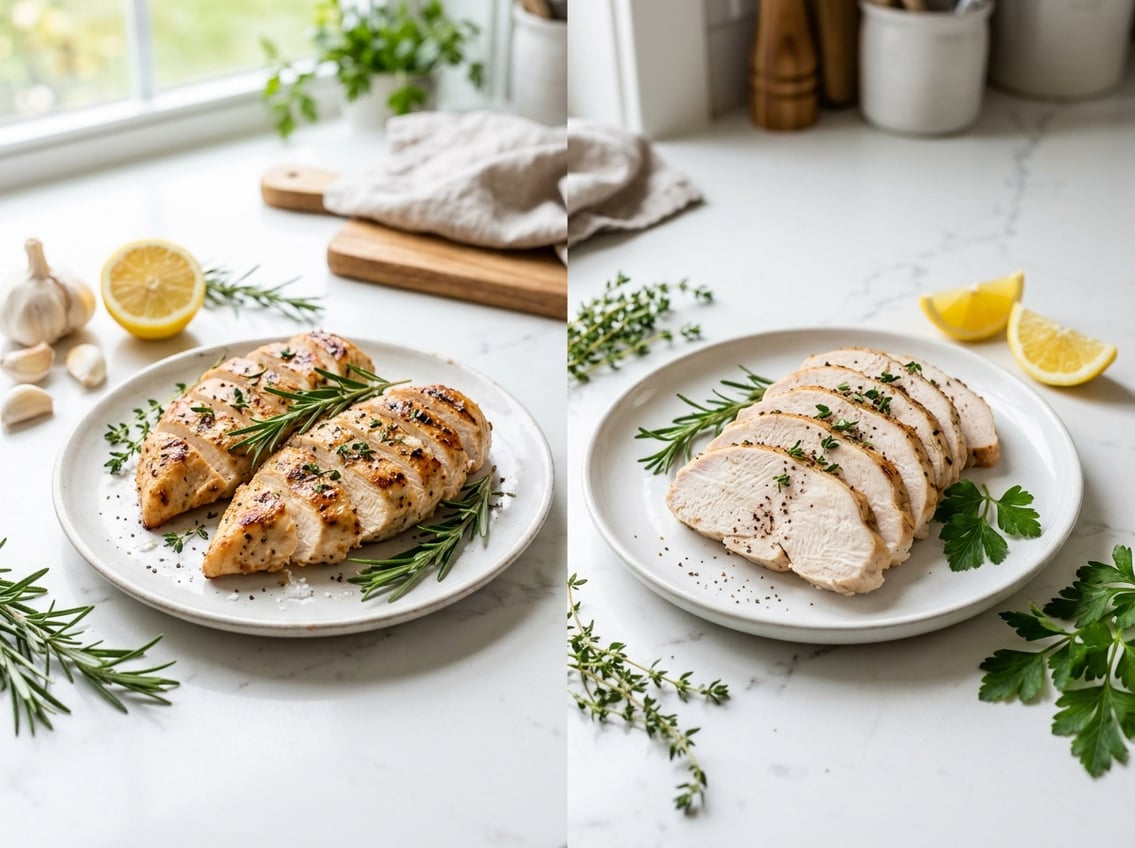
Chicken breast usually gives you a little more vitamin B3, vitamin B6, selenium, and phosphorus. Turkey breast often provides slightly more protein and less fat, so the better option depends on your dietary needs.
Both are strong lean protein choices. Both can fit into a balanced diet.
The real difference comes down to small nutrition gaps, taste, texture, cost, and how easily each one fits into your routine.
Nutrition Comparison at a Glance
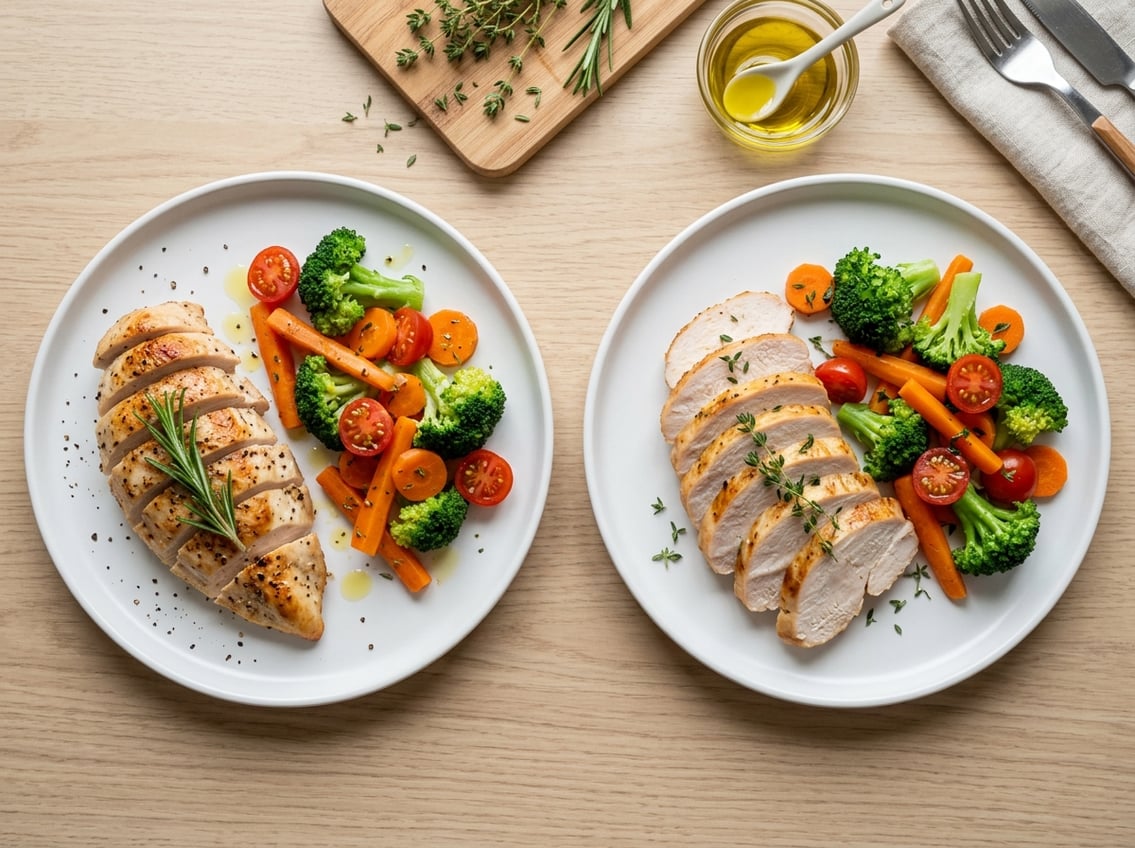
Both chicken breast and turkey breast provide high protein and low carbs, supporting lean eating. The numbers are close, but a few differences matter if you track calories, fat, or specific nutrients.
Protein Content
Turkey breast usually has more protein per serving than chicken breast. In one comparison of cooked portions, turkey breast provided about 33.44 grams of protein, while chicken breast had 21.89 grams, according to FoodStruct’s nutrition comparison.
Both are excellent protein sources. If your focus is simply getting enough protein, either choice works well.
Calories and Fat Content
Turkey breast can be a little higher in calories in some cooked comparisons. Chicken breast can be slightly higher in fat.
In the same analysis, chicken breast had 157 calories and 7.02 grams of fat, while turkey breast had 187 calories and 4.71 grams of fat. If you want lean protein with fewer grams of fat, turkey breast has a small edge.
If you want a slightly richer profile with a bit more fat, chicken breast may suit you better.
Saturated Fat and Cholesterol Differences
Chicken breast and turkey breast both stay relatively low in saturated fat. Turkey breast tends to be lower in cholesterol, while chicken breast can be a little lower in saturated fat in some comparisons.
For example, FoodStruct lists turkey breast at 1.29 grams of saturated fat and chicken breast at 1.91 grams. Turkey breast also comes in lower for cholesterol in that data set.
If you are watching saturated fat and cholesterol closely, turkey breast often looks slightly better.
Vitamins and Minerals: Niacin, Vitamin B6, Selenium, Zinc, Phosphorus, Vitamin B12, and Choline
Chicken breast is often richer in niacin, vitamin B6, phosphorus, and selenium. Those nutrients support energy use, nerve function, and immune function.
Turkey breast often provides more zinc and choline. It may also offer a little more vitamin B12 in some comparisons.
Which One Fits Your Health Goals
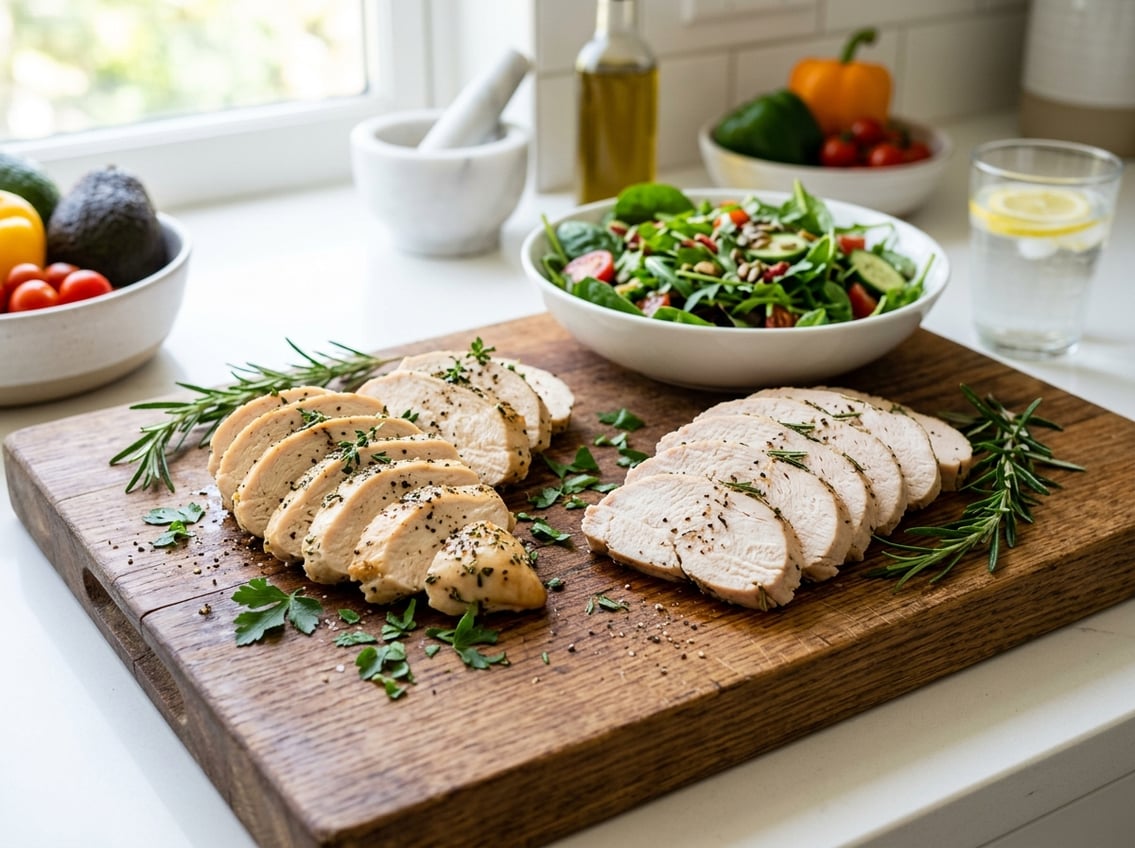
Your health goal should guide the choice more than a single nutrition label. Chicken breast and turkey breast both support high-protein eating, yet one may fit better if you focus on weight loss, heart health, or recovery after exercise.
Best Choice for Weight Loss and High-Protein Eating
If your goal is weight loss, turkey breast often has a slight edge because it is very lean and tends to deliver a bit more protein with less fat. Higher protein can help you stay full longer, which can make calorie control easier.
Chicken breast still works well for weight loss. If you prefer it, the difference is small enough that your total meal plan matters more than the meat itself.
Heart Health and Lower-Fat Priorities
If you choose for heart health, both are reasonable lean protein sources, especially when you remove the skin and avoid heavy sauces. Turkey breast may be the better pick if you want to keep cholesterol and fat as low as possible.
Preparation plays a big role. Grilled, baked, or roasted chicken breast and turkey breast are very different from breaded or fried versions.
Muscle Recovery, Tryptophan, and Immune Function
Both meats support muscle repair because they are rich in protein. Turkey breast also contains tryptophan, which helps make serotonin.
Chicken breast gives you more selenium in many comparisons. Turkey breast gives you more tryptophan.
Taste, Texture, and Everyday Cooking

Taste and texture matter because the best protein is the one you will actually keep eating. Chicken breast is usually milder and softer, while turkey breast can taste a little stronger and feel firmer.
Taste and Texture Differences
Chicken breast has a neutral taste, which makes it easy to season in many ways. Turkey breast often tastes slightly richer and can seem a little drier if you cook it too long.
A recent flavor comparison from Cychicken notes that turkey meat is leaner, firmer, and chewier than chicken. That texture difference is useful when you want a more substantial bite.
Best Cooking Methods for Juicy Results
Gentle cooking helps keep both meats moist. Baking, roasting, grilling over medium heat, poaching, and air frying at careful temperatures all work well.
You can also use marinades, brines, or a quick rest after cooking to help with juiciness. Turkey breast is especially sensitive to overcooking, so a thermometer helps.
How Each Works in Salads and Sandwiches
Chicken breast is often easier for cold dishes because of its mild flavor. It blends well in salads, wraps, and sandwiches without standing out too much.
Turkey breast also works well in these meals, especially when you want a slightly firmer texture. If you want a more traditional deli-style bite, turkey is a strong option.
Cost, Availability, and Buying Considerations

Price and shopping habits often decide the winner. In U.S. grocery stores, chicken breast is usually easier to find all year, while turkey breast can be more seasonal and sometimes costs more.
Price and Value for Regular Meal Prep
Chicken breast is usually the better everyday value for meal prep because it is widely produced and sold in many package sizes. Turkey breast can cost more per pound, especially when demand rises around holidays.
If you cook in bulk each week, chicken breast often makes budgeting simpler. Turkey breast can still be worth it if you prefer its flavor or want a leaner texture.
Availability in Stores and Seasonal Patterns
Chicken breast is stocked in most supermarkets year-round. Turkey breast is available too, though some stores carry more of it near Thanksgiving and other holiday periods.
If you need a protein source that is easy to find at any time, chicken breast is usually more convenient.
Sustainability and Choosing Based on Preferences
How farmers raise, process, and ship birds affects sustainability, not just the species. Labels like organic, pasture-raised, and local often matter more than choosing between chicken breast and turkey breast.
If you want lower fat, higher protein, or a specific taste, pick the option that fits your routine. Choose what you can buy often, cook well, and enjoy.


