
What Is the Best Way to Cook Chicken Breast for Dogs Safely
You may ask what is the best way to cook chicken breast for dogs when you want a safe, simple protein that is easy to digest.
For most dogs, the best method is plain boiling or poaching with no salt, oil, or seasoning.
That gives you a lean, fully cooked chicken breast that you can serve alone, mix with bland foods, or use as part of a short-term recovery meal.
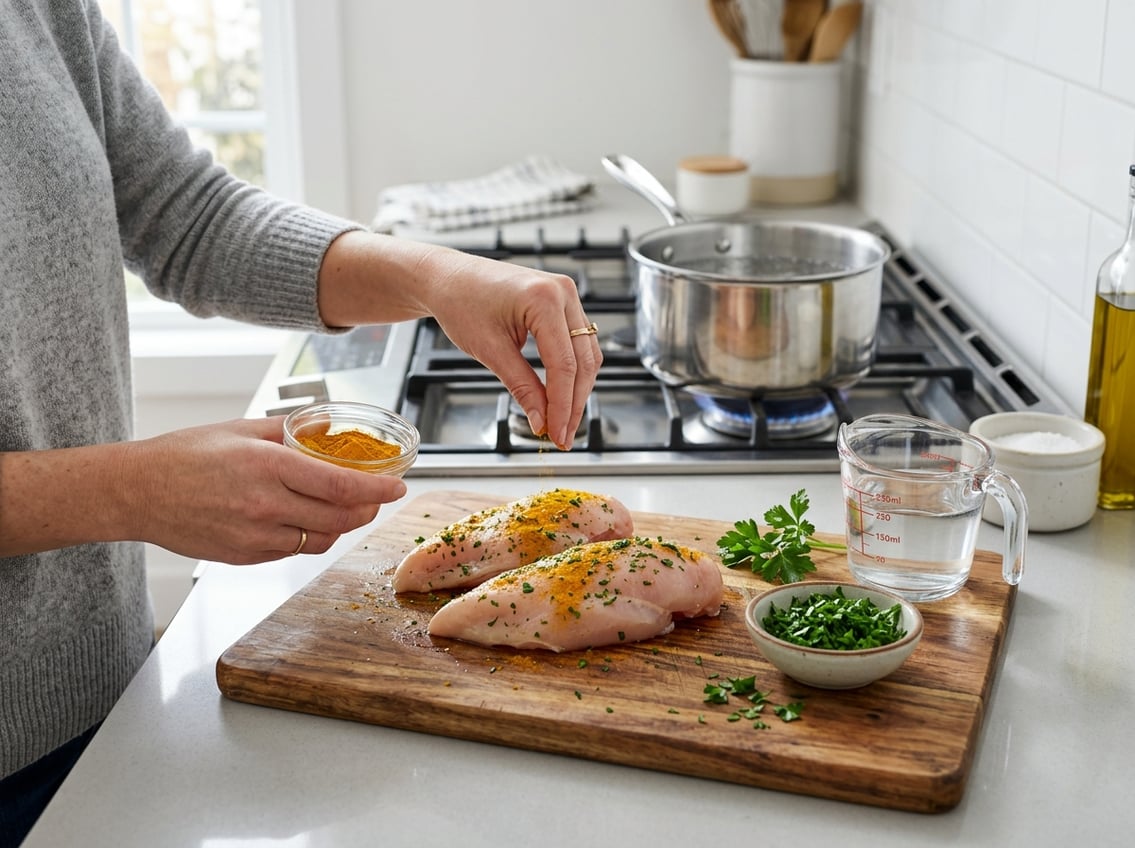
Chicken can be a useful food for dogs when you prepare it the right way.
The main goal is safety, so you avoid bacteria, bones, and added ingredients that can upset your dog’s stomach.
If you are wondering whether dogs can eat chicken, the answer is yes, as long as it is plain, fully cooked, and served in the right amount.
Best Cooking Method for Most Dogs
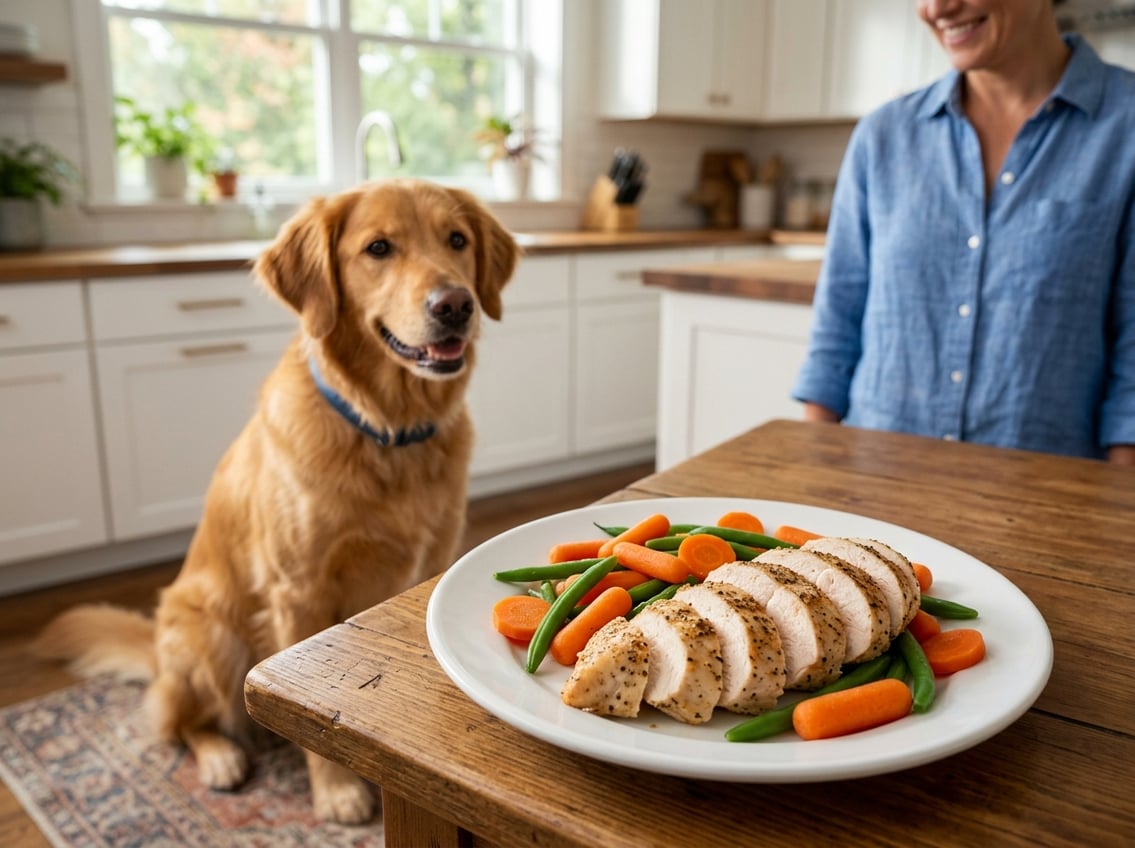
Most dogs benefit from plain boiled chicken as the most practical choice.
It is simple to make, easy to portion, and gentle on the stomach.
Many dog owners use boiled chicken for dogs when they need a bland, low-fat protein.
The key is to keep it plain and fully cooked.
If you want to know how to boil chicken for dogs, the method is straightforward and does not require extra ingredients.
Why Plain Boiling Is Usually the Top Choice
Plain boiling keeps the chicken moist without added fat.
That makes it a good fit for dogs with sensitive digestion, and it is easy to shred for small mouths or quick meals.
You also avoid common problems that come with seasoning, frying, or sauces.
Boiling lets you check doneness clearly.
Chicken is safe when it reaches 165°F, which is the standard food safety target found in many cooking guides, including how to cook chicken for dogs safely.
When Baking or Poaching Can Also Work
Baking can work if you keep the chicken plain and watch the temperature closely.
Poaching is another solid choice because it uses gentle heat and adds moisture without oil.
These methods are useful when you want to make a larger batch or prefer not to stand over a pot.
If you bake, skip butter, marinades, and spice blends.
The same rule applies to poaching, which should use only water and chicken.
Why Seasoned, Fried, or Raw Chicken Is a Poor Fit
Seasoned chicken is risky because common ingredients like onion and garlic are not safe for dogs.
Fried chicken adds extra fat and often contains breading, salt, and spices that can cause stomach upset.
Raw chicken can carry bacteria, so it is not a safe choice for routine feeding.
The safest plan is plain cooked chicken with no extras.
How to Prepare Chicken Breast Step by Step
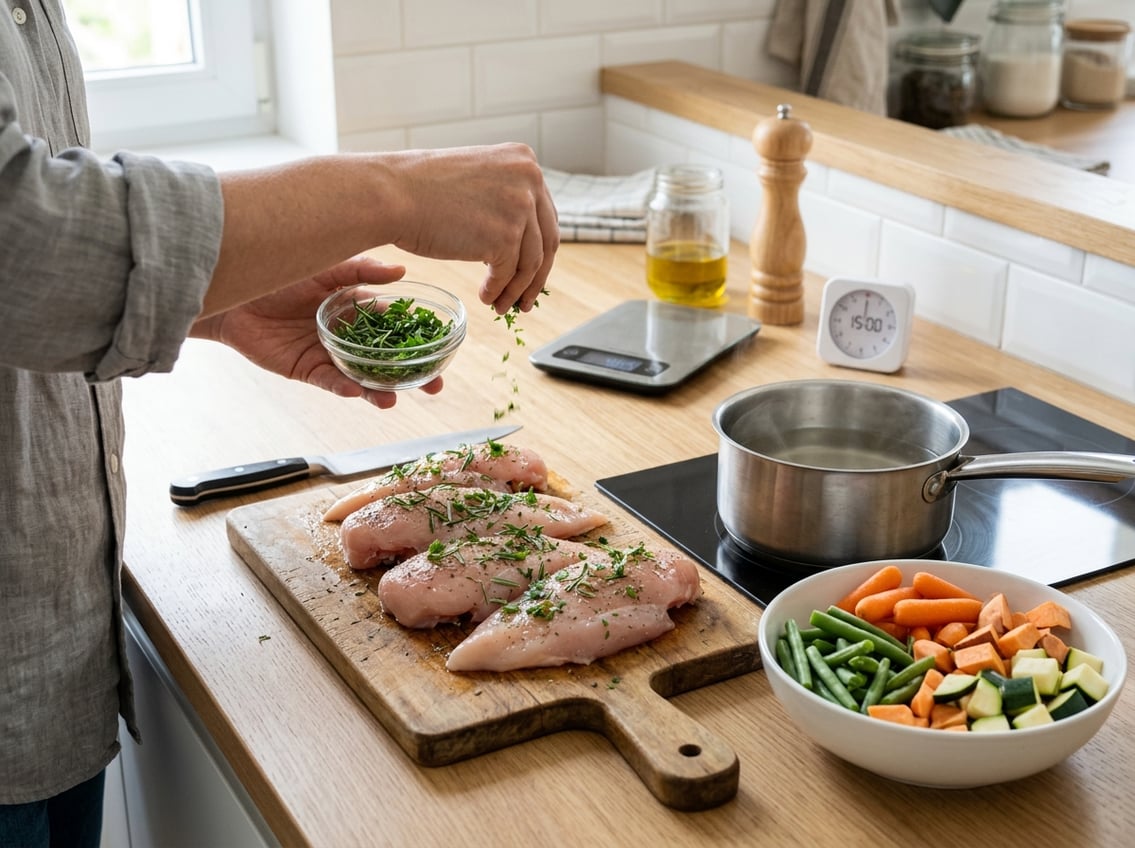
When you prepare chicken breast for dogs, keep the process basic and clean.
The goal is to make a plain, fully cooked protein that is easy to shred, serve, and store safely.
If you are learning how to boil chicken for dogs, use a simple method and avoid adding salt or seasoning.
Choose Boneless Skinless Cuts
Start with boneless, skinless chicken breast.
Removing the skin lowers the fat content, and skipping the bones removes a choking and splinter risk.
This cut is also easy to portion into small servings.
Look for fresh chicken with no marinade or added flavoring.
Pre-seasoned packages are not a good fit for dogs.
Boil Until Fully Cooked and Safe
Place the chicken in a pot and cover it with water.
Bring it to a boil, then reduce the heat and cook until the center reaches 165°F.
Many pieces take about 12 to 15 minutes, though thicker cuts may need more time.
Use a thermometer if you have one.
That is the most reliable way to make sure the chicken is safe.
Cool, Shred, and Portion Properly
Let the chicken cool before serving so you do not burn your dog’s mouth.
Once it is cool, shred or chop it into small pieces based on your dog’s size.
Small pieces are easier to digest and easier to mix with rice or other bland foods.
Store leftovers in the refrigerator for a few days in a sealed container.
If you make extra, freeze small portions so you can thaw only what you need.
Serving Chicken Breast Without Causing Problems
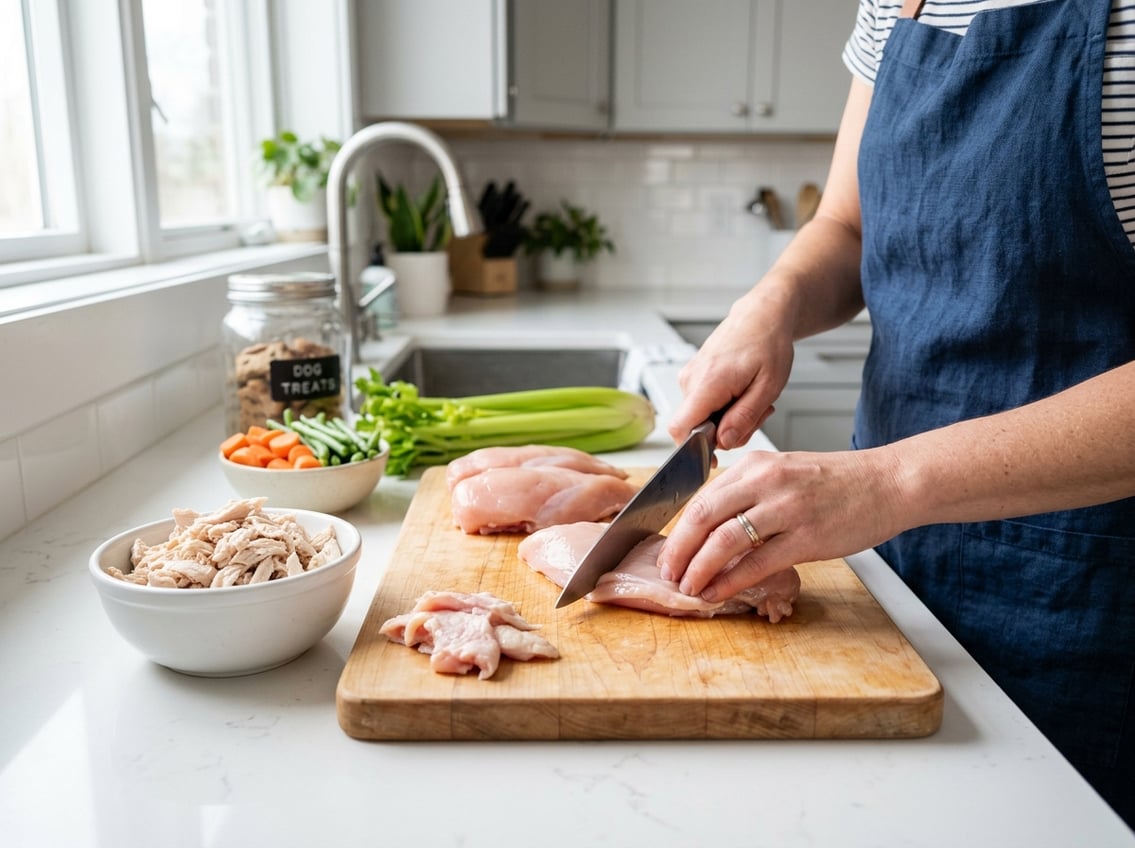
Boiled chicken for dogs can be useful as a topper, a short-term bland meal, or a protein source during recovery.
The right amount depends on your dog’s size, diet, and reason for eating it.
Plain chicken should support your dog’s diet, not replace balance.
That is why homemade feeding needs some planning.
How Much to Feed Based on Use
For a short-term bland meal, many dogs can eat small portions of plain boiled chicken several times a day, depending on body size and vet advice.
For regular use as part of a meal, keep the portion modest so the rest of the diet stays balanced.
A few useful ranges from guidance on serving chicken to dogs are:
- Small dogs, about 1/4 to 1/2 cup per day
- Medium dogs, about 1/2 to 1 cup per day
- Large dogs, about 1 to 2 cups per day
When to Pair It With Rice or Other Bland Foods
Chicken and white rice is a common short-term meal when your dog has an upset stomach.
Plain rice adds easy carbohydrates, while chicken supplies lean protein.
You can also pair chicken with other bland foods your vet approves.
A simple combo is often easier on the stomach than a rich or high-fat meal.
Keep everything plain and serve small portions.
Why It Should Not Be the Only Long-Term Meal
Even though dogs can eat chicken, they should not eat only chicken for long periods.
Chicken breast alone does not provide a complete balance of vitamins, minerals, fat, and fiber.
A long-term diet needs more than one ingredient to stay complete.
If you want to make homemade dog food, use chicken as one part of a balanced recipe.
A veterinarian or board-certified nutritionist can help you create a diet that fits your dog’s age, health, and calorie needs.


