
What Does Chicken Breast Look Like When Cooked? Key Signs
Color, texture, and juices—not just time—tell you when chicken breast is cooked.
A properly cooked chicken breast appears opaque and white throughout, feels firm with a little spring, and releases clear juices.
You can use these visual clues for a quick check.
Confirm doneness with a thermometer for safety.
Chicken can look ready before it reaches a safe internal temperature.
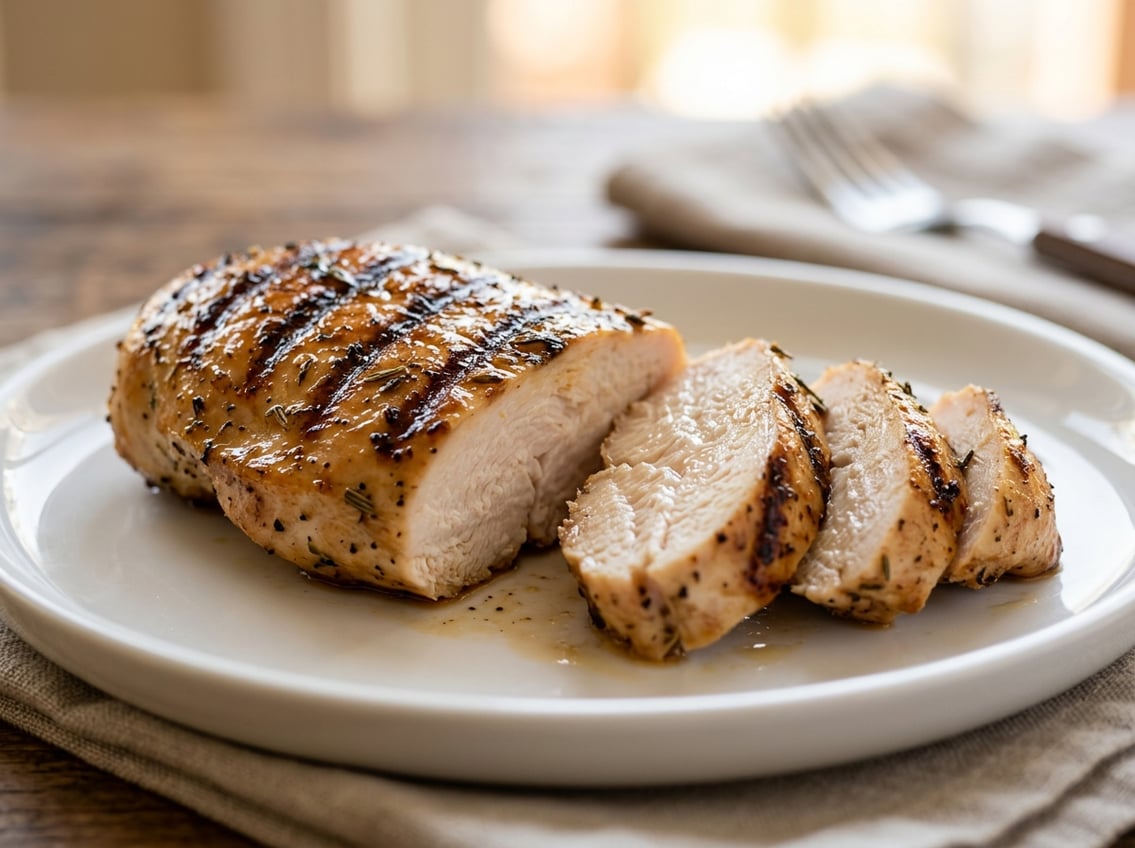
How to Recognize Doneness at a Glance
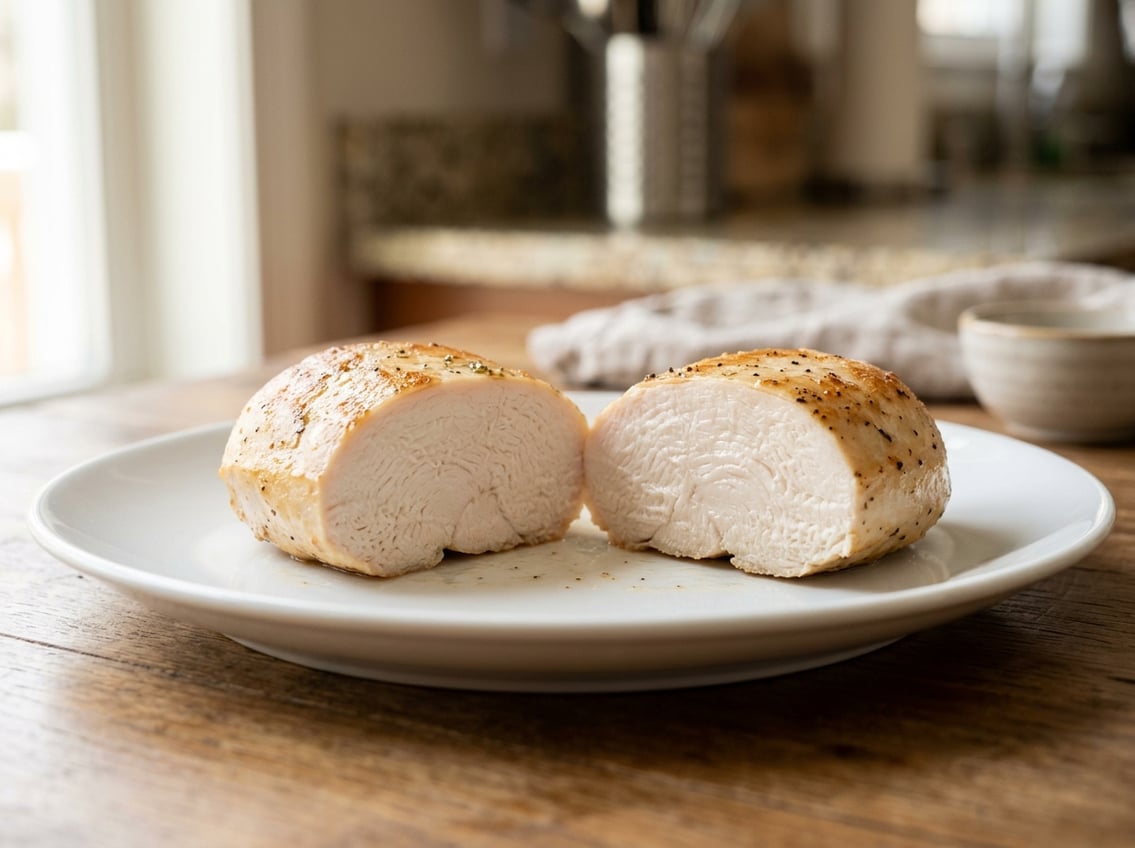
You can spot a lot from a quick look at cooked chicken breast.
The most reliable signs are a fully opaque center, a light white or pale tan color, and clear juices when you cut or pierce the meat.
Interior Color and Opacity
Cooked chicken breast looks opaque, not glossy or translucent.
The center should be white or pale cream, with no pink or glassy areas near the thickest part.
Fully cooked breast meat is pale white inside and may have a light golden exterior from roasting, grilling, or pan-searing.
If you see pink in the center, cook it longer.
Texture, Firmness, and Spring
A cooked chicken breast feels firm when you press it, yet it still has a little give.
If it feels squishy or slippery, it is not done.
If it feels very hard, dry, or tight, you may have overcooked it.
Properly cooked meat slices cleanly and stays tender, not shredding into dry fibers.
Juices and Surface Appearance
Clear juices signal doneness.
Pink or red-tinged juices usually mean the meat needs more heat.
The outside color changes by method.
Roasted and grilled chicken breast often turns golden brown, while poached chicken stays pale and white on the surface.
Check Temperature Before You Trust Appearance
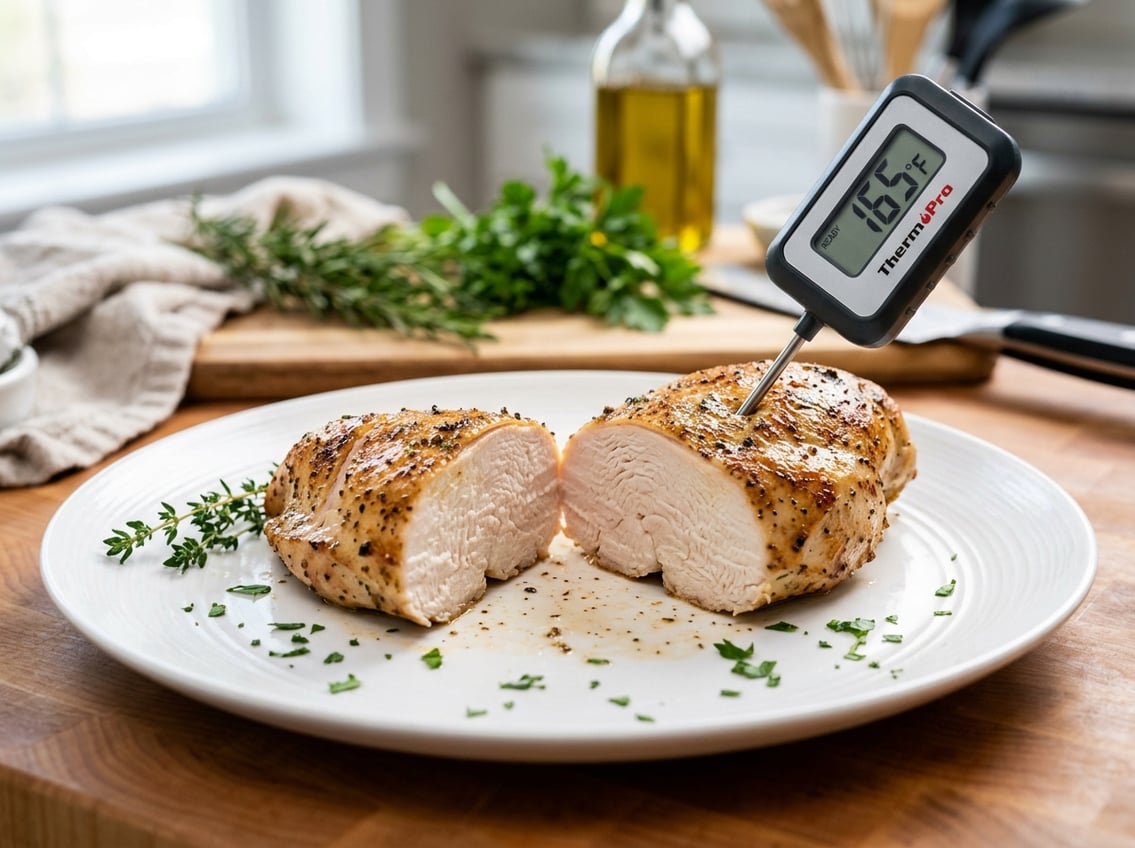
Appearance helps, but you should always check with a meat thermometer.
This is especially important for thick cuts that can look done before the center heats fully.
Why 165°F Matters
Chicken is safe to eat when it reaches an internal temperature of 165°F.
That temperature reduces the risk of foodborne illness from undercooked chicken.
Pink color and soft texture can signal a problem, but temperature tells you when it is truly safe.
Where to Insert a Meat Thermometer
Insert the thermometer into the thickest part of the breast.
Avoid touching bone, fat, or the pan.
If the chicken breast is uneven, check the deepest center from the side.
That spot gives a more reliable reading than the thinner edges.
Why Chicken Can Look Done Too Early
Chicken can turn white on the surface before the center reaches 165°F.
Surface color changes first, so the inside may still be undercooked.
This happens often with thick breasts and high heat.
A thermometer prevents guesswork and helps you serve fully cooked chicken.
How Cooking Method Changes the Look
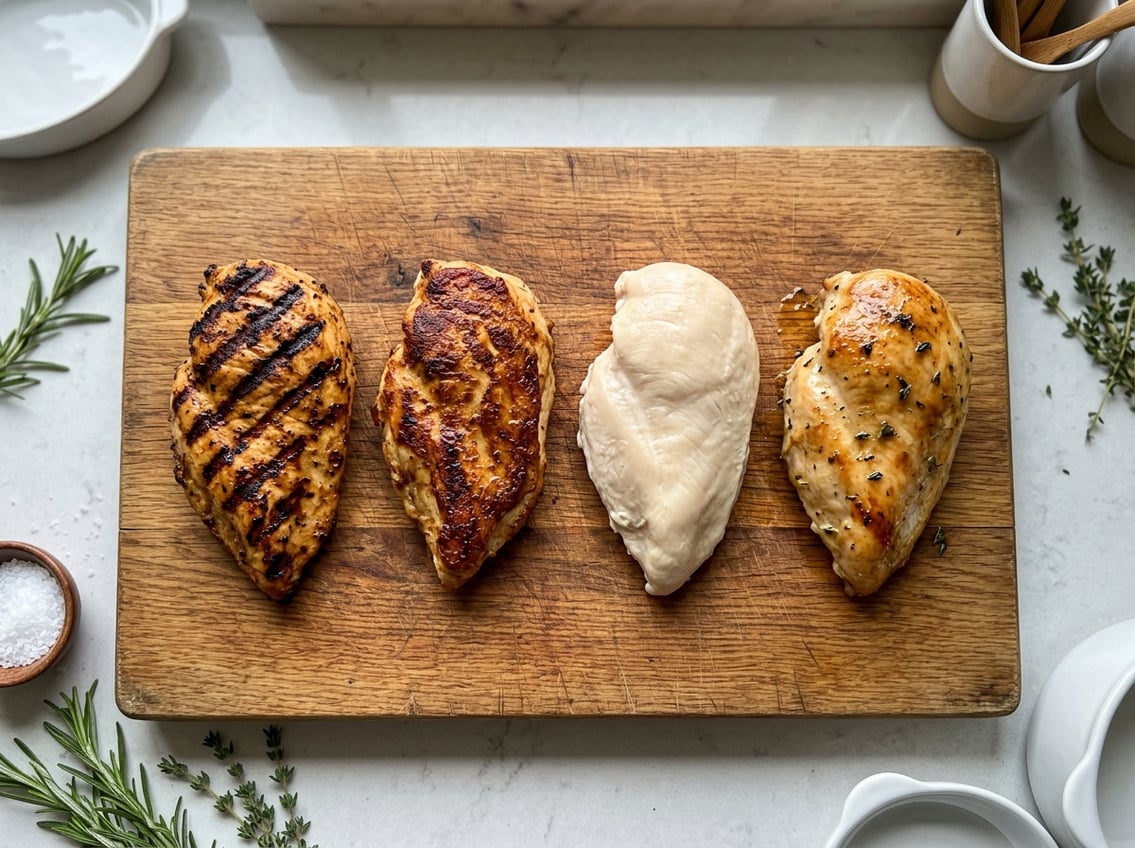
The cooking method changes the outside color, crust, and moisture.
A cooked chicken breast can look browned, pale, or lightly blistered depending on whether you bake, grill, or poach it.
Baked Chicken Breast
A baked chicken breast often looks lightly golden on the outside, especially if you brushed it with oil or seasoning.
The inside should still be white and opaque.
Dry spots on the surface can mean too much heat or too much time.
A small amount of browning is normal, while a dark, tough crust can mean overcooking.
Grilled Chicken Breast
A grilled chicken breast usually has browned color and visible grill marks.
The inside should be white, juicy, and cooked evenly.
If the outside is dark before the center is done, the heat may be too high.
Aim for color on the outside and full opacity inside.
Poached Chicken Breast
Poached chicken breast looks the plainest.
It usually stays pale white with little to no browning.
That gentle look is normal because poaching does not create a crust.
The breast should still feel firm and slice cleanly, with no pink center.
Signs It Is Undercooked or Overcooked
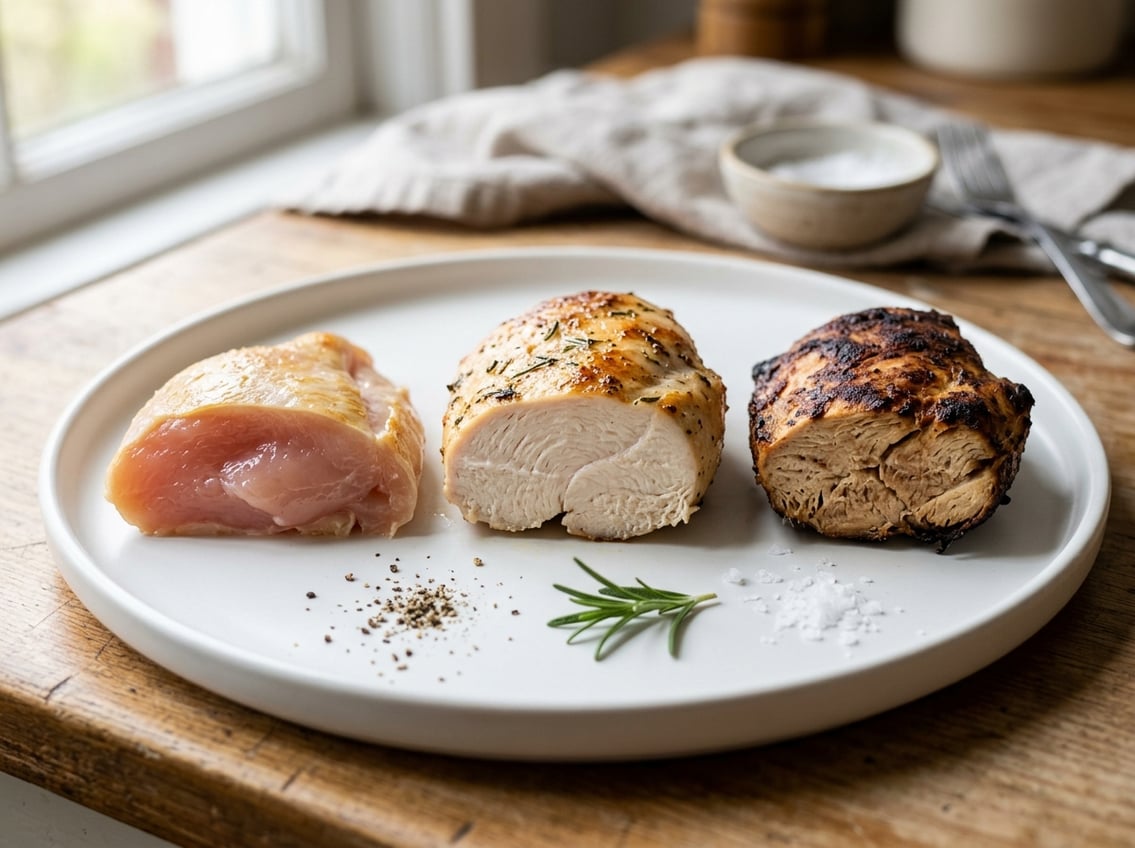
You can spot cooking mistakes by looking at color and texture.
Undercooked chicken breast looks soft and pink in the center, while overcooked chicken turns dry, stringy, and dull.
What Undercooked Meat Usually Looks Like
Undercooked chicken often has pink or translucent areas in the middle.
The juices may look pink or reddish, and the meat can feel slippery or overly soft.
If you cut into the thickest part and see shiny, raw-looking fibers, cook it longer.
A raw or slightly slimy texture is another warning sign.
How Dry, Stringy Meat Signals Overcooking
Overcooked chicken breast usually looks pale, grayish, or very dull.
The meat pulls into dry strings, and the surface can feel tight or tough.
If the chicken is hard to chew and loses most of its juices, it has likely gone too far.
That dry texture is common when the meat stays on heat after it reaches doneness.
Resting and Carryover Cooking Basics
After you finish cooking, let the chicken rest for a few minutes. The internal temperature may rise slightly as heat moves through the meat.
Resting helps the juices settle. If you cut too soon, more liquid escapes and the chicken can seem drier.


