
What Are the Health Benefits of Chicken Breast? Key Facts
Chicken breast is one of the most common lean proteins in the U.S., and for good reason. It gives you a lot of protein with relatively few calories, plus key nutrients that support muscles, metabolism, and daily health.
When you choose skinless chicken breast and prepare it with little added salt or saturated fat, you can fit it well into a balanced eating pattern. This supports several health goals.
Chicken breast is also versatile. You can easily use it in meals you already enjoy.

Why Chicken Breast Is Considered a Healthy Protein
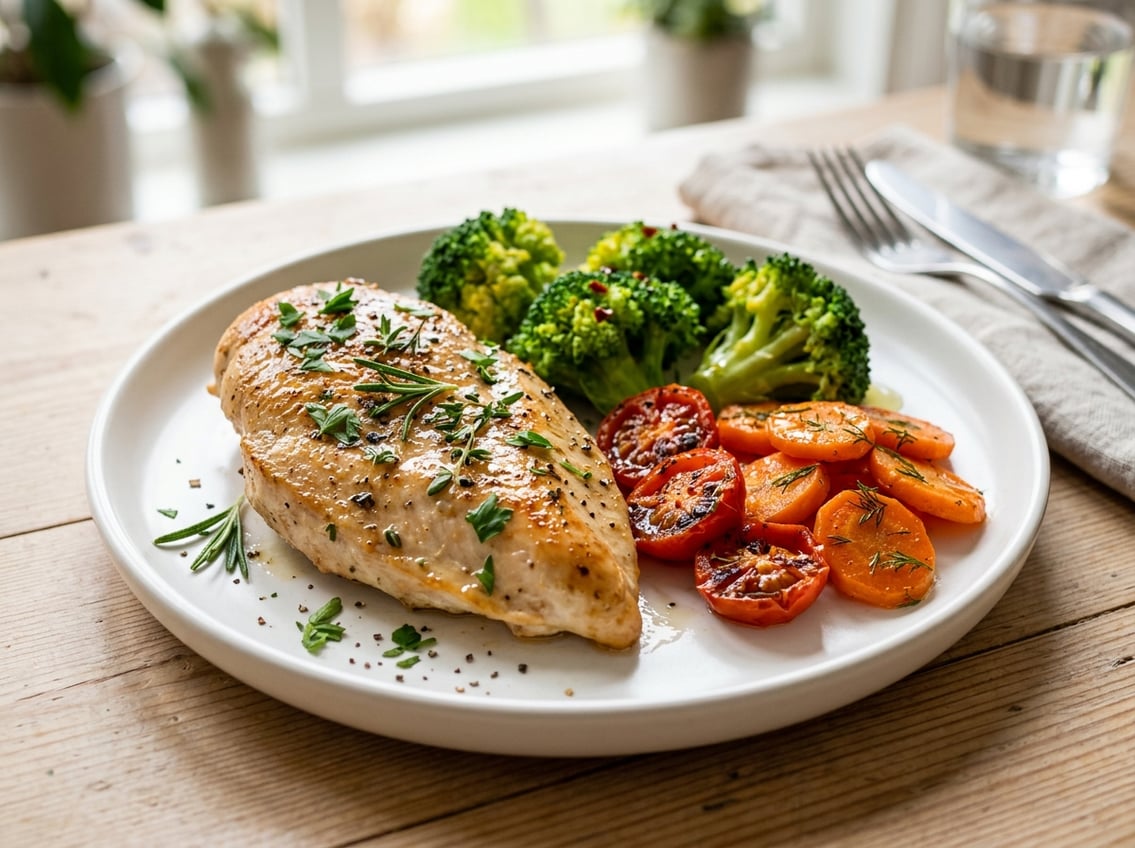
Many people see chicken breast as a healthy protein because it is lean, filling, and easy to work into many meals. The USDA nutrition profile shows that skinless cooked chicken breast delivers a high amount of protein with limited fat.
High Protein With Relatively Few Calories
A 3-ounce serving of skinless cooked chicken breast has about 128 calories and 26 grams of protein, according to EatingWell’s summary of USDA data. That amount of protein helps you meet daily needs without adding a lot of extra calories.
How Skinless Chicken Breast Fits Into a Balanced Diet
Skinless chicken breast works well in many eating patterns, including Mediterranean and DASH-style diets. You can pair it easily with vegetables, beans, whole grains, and healthy fats to build a complete meal.
Because it is mild in flavor, you can season it in many ways without needing heavy sauces or large amounts of cheese.
When Chicken Breast Is a Better Choice Than Processed or Higher-Fat Meats
Chicken breast often works better than processed meats or fattier cuts when you want more protein with less saturated fat. That matters if you are trying to reduce foods that may work against heart and metabolic health.
Choosing chicken breast instead of processed deli meats, sausage, or fried fast-food options adds more nutrients to your meal.
Chicken Breast Nutrition at a Glance

Chicken breast nutrition is simple to read. It is high in protein, low in carbohydrates, and a useful source of several vitamins and minerals.
Calories, Protein, Fat, and Zero-Carb Profile
A 3-ounce serving of skinless cooked chicken breast has about 128 calories, 26 grams of protein, 3 grams of fat, and 0 grams of carbohydrates, according to EatingWell’s chicken breast nutrition breakdown. That makes it a strong fit for high-protein meals, lower-carb eating, and portion-controlled plates.
Important Micronutrients Like Niacin, Selenium, Vitamin B6, and Choline
Chicken breast gives you important micronutrients, including niacin, selenium, vitamin B6, and choline. These nutrients help your body turn food into energy, support cell function, and maintain normal nervous system activity.
It also contains small amounts of other nutrients like vitamin B12, zinc, and pantothenic acid.
How Cooked Chicken Breast Nutrition Changes With Skin and Portion Size
Leaving the skin on cooked chicken breast adds more fat and calories. Skinless chicken breast is usually the leanest choice.
Portion size matters too. A larger serving gives you more protein and calories, so your cooking method and portion size both affect the final nutrition.
Main Ways It Can Support Health Goals
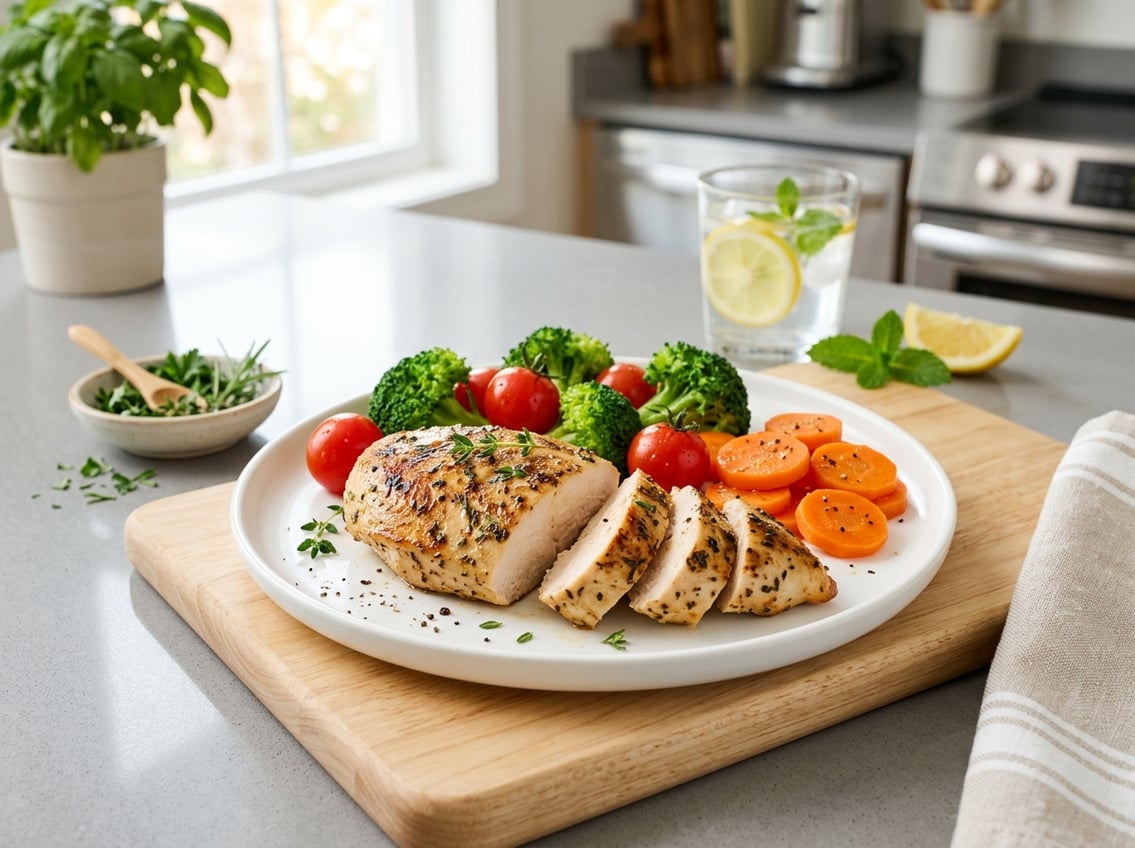
Chicken breast supports health goals through its protein quality, low saturated fat, and useful micronutrients. These features can help your muscles, appetite control, heart health, blood sugar goals, and brain function.
Muscle Repair, Strength, and Healthy Aging
Chicken breast provides complete protein, which means it contains the amino acids your body needs for repair and maintenance. That supports muscle recovery after exercise and helps you maintain strength as you age.
If you want to preserve lean mass, getting enough protein from foods like skinless chicken breast can help.
Satiety and Weight Management Support
Protein helps you feel full for longer than many refined carbs or low-protein snacks. That can make chicken breast useful for weight management, since feeling satisfied may help you eat fewer extra calories later.
A lean protein like chicken breast can work well at lunch or dinner when you want a meal that keeps you full.
Heart Health and Lower Saturated Fat Intake
Chicken breast can support heart health when you choose it instead of higher-fat meats. It is naturally lower in saturated fat than many red or processed meats, which can help you keep your diet more heart-friendly.
Eating fresh lean poultry links with more favorable cardiometabolic patterns in recent nutrition reviews.
Potential Benefits for Blood Sugar and Type 2 Diabetes Risk
Chicken breast may help with blood sugar control because it provides protein without carbohydrates. When you use it instead of processed red meat, poultry has been linked with a lower risk of type 2 diabetes in a large cohort study.
That does not make chicken breast a diabetes treatment, but it can be part of a smarter meal pattern.
Brain and Nervous System Support From Choline and B Vitamins
Chicken breast contains choline and B vitamins such as B6, which support normal brain and nervous system function. Choline plays a role in cell membranes and in making neurotransmitters your body uses for communication.
How Preparation Affects the Benefits

How you cook chicken breast matters almost as much as the chicken itself. Simple methods keep the nutrition strong, while heavy breading, deep frying, and rich sauces can quickly change the nutrition.
Why Grilled Chicken Breast and Baked Chicken Are Usually Better Options
Grilled chicken breast and baked chicken are usually good choices because they need little added fat. You can keep the flavor flexible by using herbs, citrus, garlic, and spices instead of heavy coatings.
Simple cooking methods help keep cooked chicken breast closer to its lean, high-protein profile.
When Grilled Chicken or Baked Chicken Can Become Less Healthy
Grilled chicken or baked chicken can lose some of their health value if you add sugary sauces, lots of salt, or large amounts of butter and oil. Marinades can add flavor, yet they can also add extra sodium or sugar.
A healthy protein can become a less healthy meal if the toppings and sides are overly rich.
What to Watch for With Fried, Breaded, or Heavily Processed Chicken
Fried or breaded chicken often contains more calories, refined carbs, and unhealthy fats than plain chicken breast.
Heavily processed chicken products also have higher sodium and may contain unnecessary additives.
If you want the most from chicken breast, choose plain cuts.
Keep the preparation simple.


