
What Happens If You Boil Chicken Breast Too Long? Signs and Fixes
If you boil chicken breast too long, you usually end up with meat that is dry, tough, and less flavorful. The longer it stays in hot water, the more moisture it loses, especially if the liquid is at a hard boil instead of a gentle simmer.
You can cook chicken breast safely without ruining the texture by stopping as soon as it reaches 165°F. A meat thermometer gives you a clear answer, and a gentle simmer gives you better control than a rolling boil.
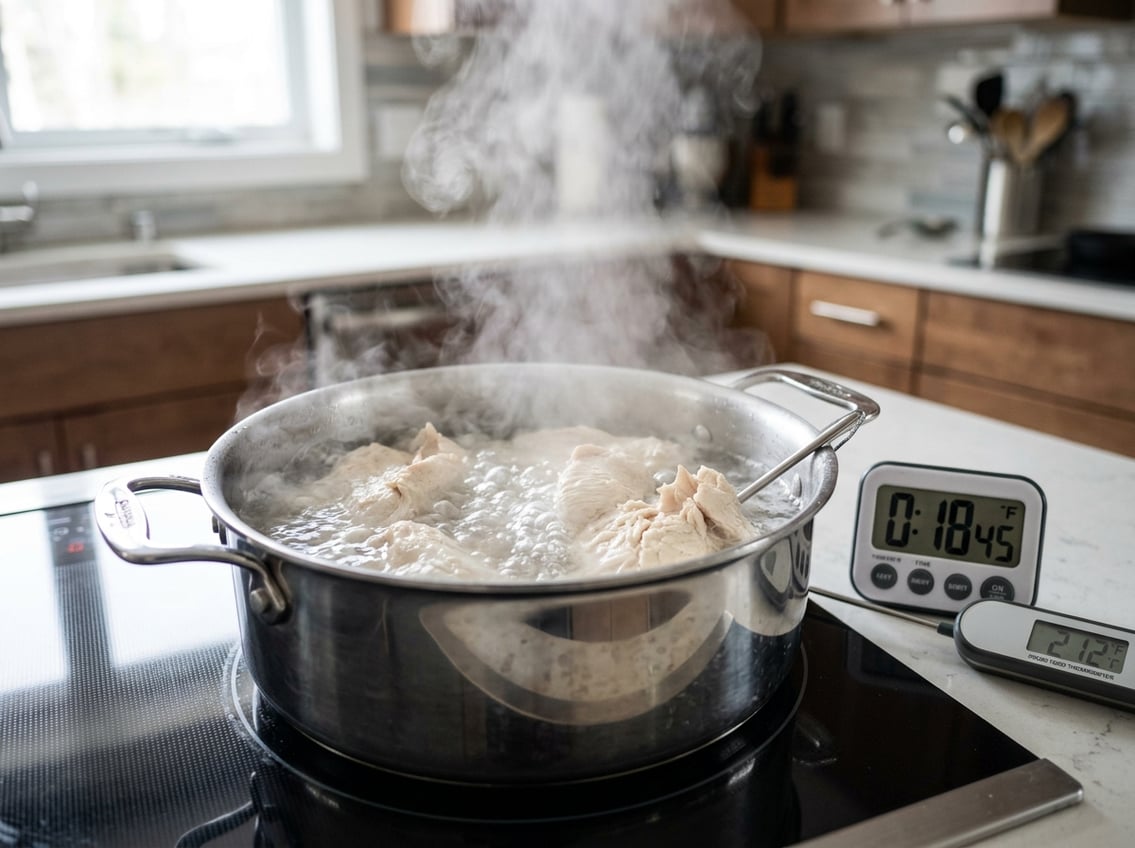
What Changes in Chicken Breast When It Cooks Too Long
When you boil chicken for too long, the breast muscle keeps tightening after it is already cooked through. That extra heat drives out moisture, making overcooked chicken feel dry and chewy instead of tender.
Once you go past the right point, the meat keeps getting less juicy, and the flavor becomes flatter.
Why the Meat Turns Dry and Tough
Chicken breast is lean, so it does not have much fat to protect it from heat. When you over-boil chicken, the water inside the meat escapes, and the surface can start to feel stringy or rubbery.
Overboiled chicken is often harder to slice neatly. It pulls apart in a dry way instead of staying moist.
How Protein Tightening Affects Texture
Heat changes the proteins in chicken breast. As they tighten, they squeeze out liquid, which makes the texture firmer and less soft.
With prolonged cooking, that tightening continues past the ideal point. The result is chicken that feels dense and less pleasant to chew.
Why Flavor Fades in Overcooked Meat
Moisture carries flavor. When chicken loses water, it also loses some of the taste that makes boiled chicken appealing.
A rolling boil can make this worse by moving the meat around and exposing it to stronger heat. A gentle simmer is easier on the texture and helps keep more flavor in the meat, as noted in tips for avoiding dry meat.
How to Tell When You Have Gone Past the Ideal Point
You can spot overcooked chicken with your eyes, your fork, and a thermometer. The best sign is not just that it is safe to eat, but that it still looks juicy and feels tender.
Visual and Texture Signs to Watch For
Perfectly boiled chicken usually looks opaque, firm, and moist. Overcooked chicken often looks dry on the edges, stringy when pulled, and less smooth on the surface.
You may also notice the meat feels dense when pressed with a fork. If it starts to shred in a dry way instead of separating cleanly, it has likely gone too far.
Safe Temperature vs Best Eating Quality
Chicken is safe to eat at 165°F, which is the standard internal temperature for poultry. That temperature gives you food safety, but it does not mean the chicken will still be at its best texture.
You can reach safe doneness and still overshoot the point where the meat tastes good.
When to Use a Meat Thermometer
Use a meat thermometer any time you want consistent results. It removes guesswork and helps you stop cooking before the chicken turns dry.
Check the thickest part of the breast, away from the pot bottom and away from the bone if you are cooking bone-in pieces. A reliable reading is the easiest way to avoid what happens if you boil chicken breast too long, as also noted by food safety guidance on boiled chicken.
How Long to Simmer Chicken Breast for Better Results
The safest timing starts with the cut size, then ends with a thermometer check. A gentle simmer gives you more control than a strong boil, and that control helps keep the chicken juicy.
For best results, think in ranges, not exact minutes. The thickness of the breast matters as much as the clock.
Typical Time Ranges for Boneless and Bone-In Pieces
Boneless chicken breasts often need about 10 to 15 minutes at a gentle simmer. Bone-in pieces usually take longer, often around 20 to 30 minutes depending on size.
Some guides for boiled chicken breast suggest 12 to 16 minutes for average boneless pieces, which fits the same basic range. The key is to start checking early, then stop when the center reaches 165°F.
Why a Gentle Simmer Works Better Than a Rolling Boil
A rolling boil is harsher on lean meat. It can make the chicken bounce around and cook unevenly, which raises the chance of over-boiling chicken.
A gentle simmer keeps the liquid moving just enough to cook the meat through without beating up the texture. Poaching and simmering usually give you better results than rapid boiling.
Simple Steps to Keep the Meat Juicy
Use enough water or broth to cover the chicken by about 1 inch. Bring the liquid to a boil, then reduce it to a simmer right away.
Keep the lid partially on, check early, and remove the chicken as soon as it reaches 165°F. Letting it rest in the hot liquid for a few minutes can also help it stay moist.
How to Rescue Overdone Chicken Breast
If you boil chicken too long, you cannot turn it back into juicy breast meat. You can still make it useful by adding moisture, changing the texture, or using it in dishes where dryness matters less.
The best fix depends on how far past the ideal point it went. Mildly dry chicken can still work well in many meals.
Best Ways to Add Moisture Back
Slice or shred the chicken, then mix it with broth, sauce, gravy, salsa, or salad dressing. Moist ingredients help soften the dry texture and make the meat easier to eat.
You can also add it to soups or casseroles, where the liquid from the dish helps compensate for the lost moisture. This is one of the most practical ways to use overboiled chicken without wasting it.
Recipes Where Dry Chicken Can Still Work
Dry chicken often works better when you chop it small or shred it. Tacos, chicken salad, enchiladas, soup, grain bowls, and pasta dishes can all hide some dryness.
If the chicken is already seasoned, those recipes can still taste good. Strong sauces and broths do most of the work.
When It Is Safe but Not Worth Serving as Is
If the chicken reached 165°F and stayed there too long, it is safe but may not be pleasant to eat plain.
At that point, use it in another dish instead of serving it like freshly boiled chicken breast.
If the meat is very dry and stringy, use it in mixed dishes rather than serving it on its own.


