
How Long Can Chicken Breast Stay in Fridge? Safe Storage
You can keep chicken breast in the fridge for a short time, so pay attention to the date on the package.
For food safety, use raw chicken breast within 1 to 2 days and cooked chicken breast within 3 to 4 days when your refrigerator stays at 40°F or below.
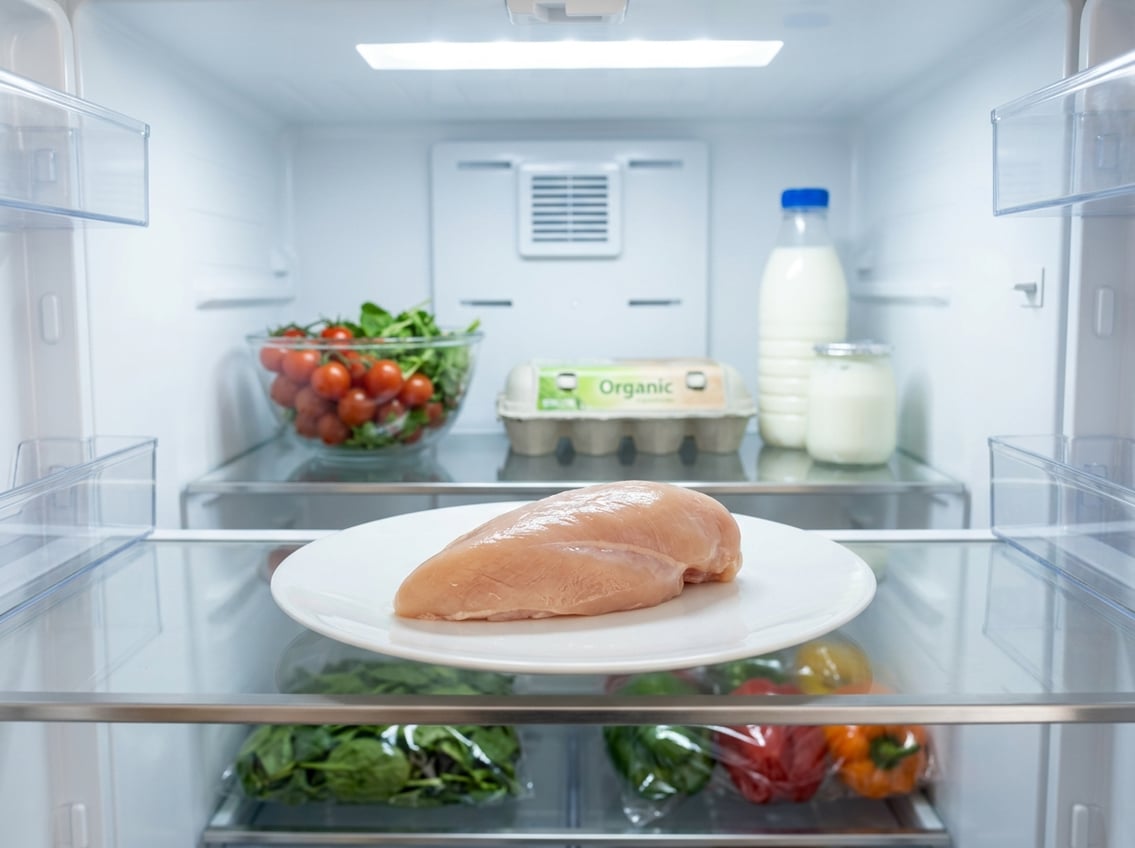
The safest answer depends on whether the chicken is raw or cooked, how it was packaged, and how cold your fridge is.
Good storage habits help you avoid waste and lower the risk of foodborne illness.
Safe Fridge Timelines at a Glance
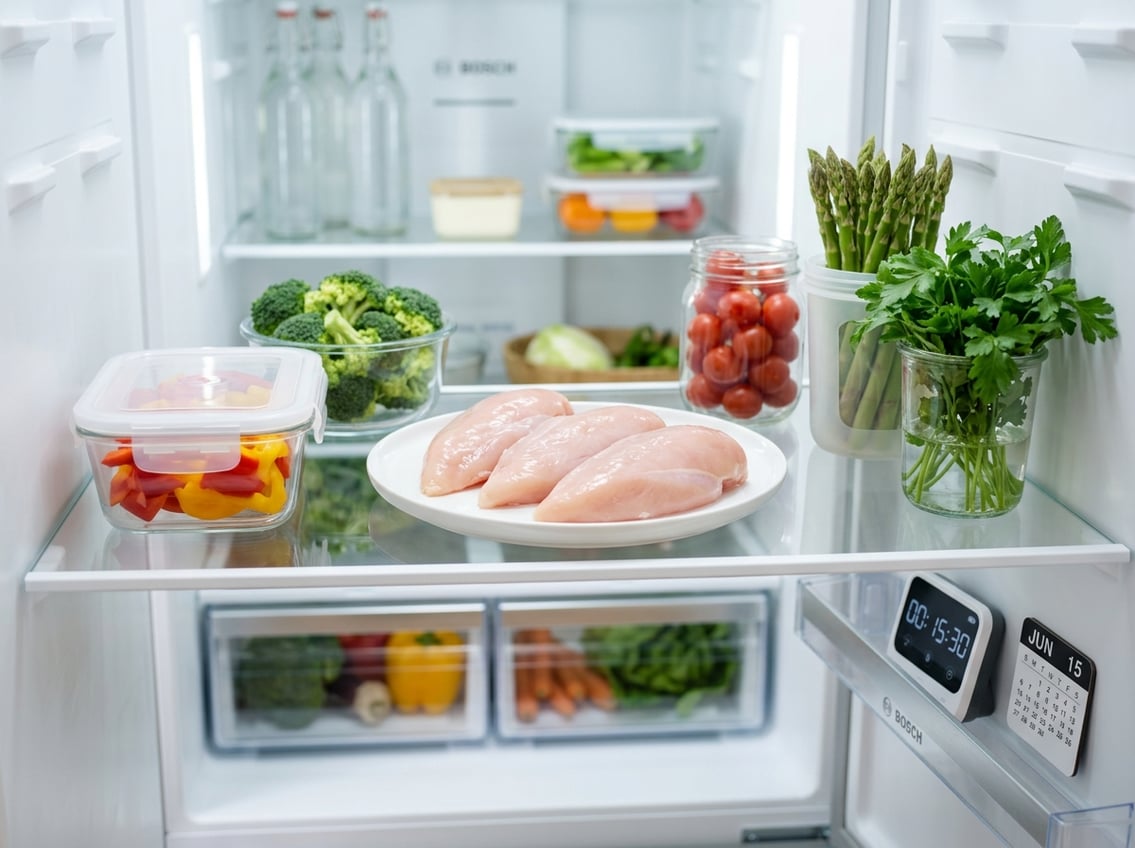
Keep your fridge at 40°F or lower and follow the time limits for raw and cooked chicken breast.
These timelines apply to chicken breast stored in a typical home refrigerator, not to meat left out or kept in a warm cooler.
Raw Chicken Breast: 1 to 2 Days
Store raw chicken breast in the refrigerator and use it within 1 to 2 days.
That is the standard food safety window in the U.S. for store-bought raw poultry.
A Good Housekeeping guide also recommends using fresh chicken within 1 to 2 days when refrigerated.
After that, the risk of bacterial growth increases, even if the meat still looks normal.
Cooked Chicken Breast: 3 to 4 Days
Cooked chicken breast lasts 3 to 4 days in the fridge.
This includes plain cooked chicken, grilled chicken, baked chicken, and most leftovers that you cooled and stored promptly.
If you cooked a large batch for meal prep, label the container and eat it within that window.
Do not rely on extra seasoning, sauce, or reheating to extend the safe time.
What Changes the Storage Window
Several factors can shorten safe storage time.
How long the chicken sat out before chilling, your fridge temperature, and whether the packaging was opened or leaked all matter.
Marinades, shallow containers, and frequent door opening can also affect freshness.
For raw chicken breast, colder and more stable temperatures help keep it fresh.
How to Store It Correctly
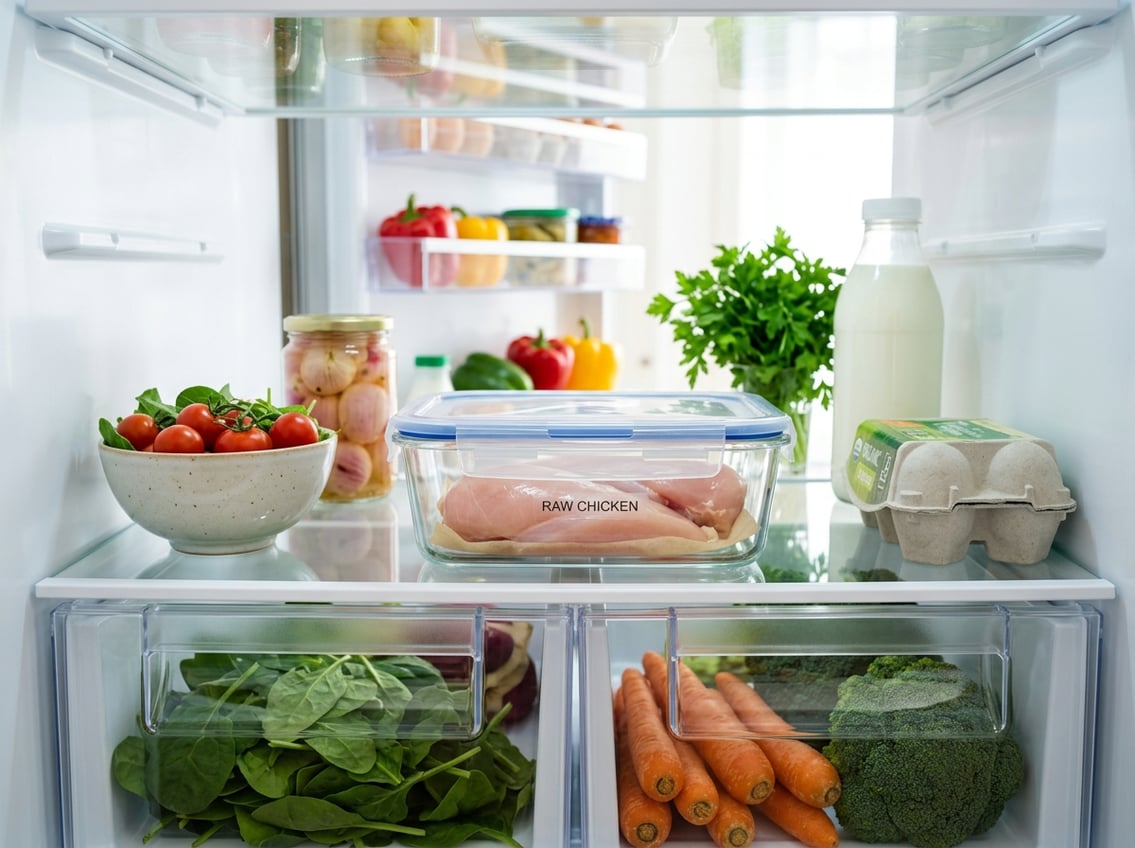
Good storage helps keep chicken breast safe and improves quality.
Limit leaks, reduce air exposure, and keep raw poultry away from foods you eat without cooking.
Best Packaging to Reduce Leaks and Air Exposure
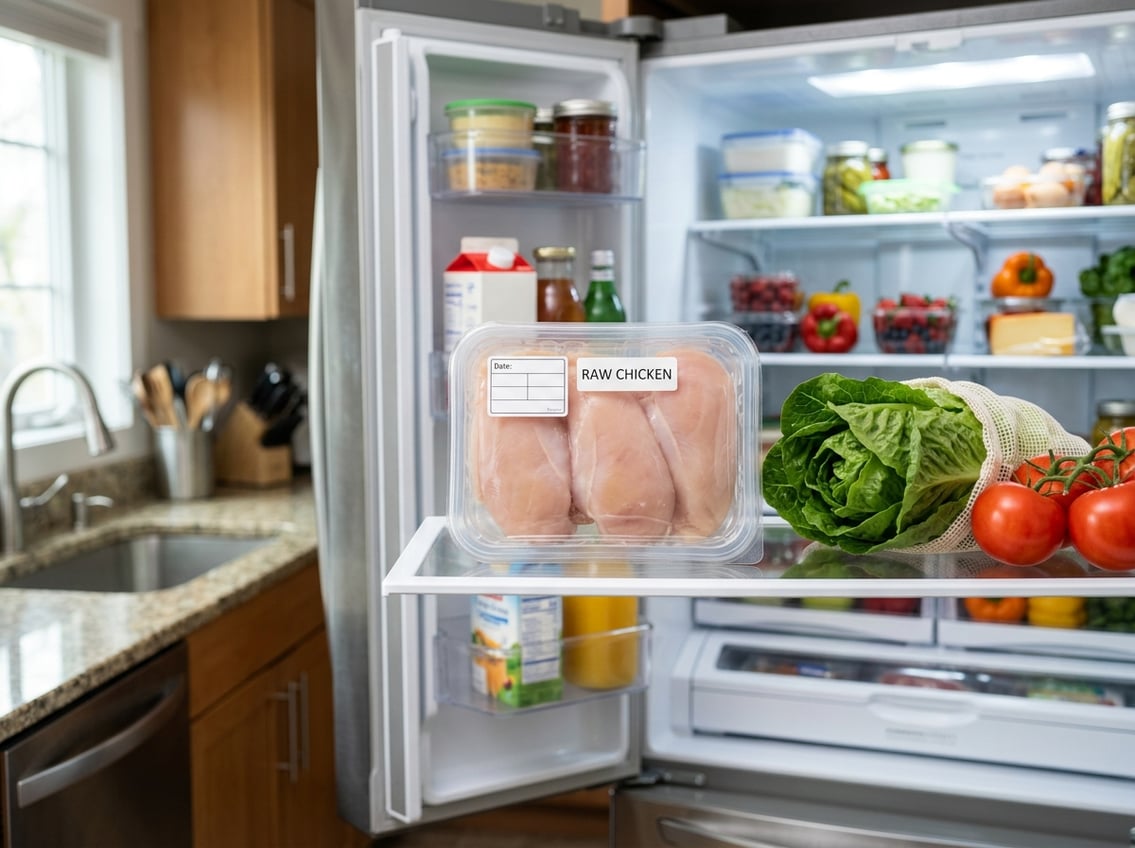
Keep raw chicken breast in its original package if sealed and intact, or move it to a leakproof container.
If you want to freeze it, wrap it tightly first to help prevent freezer burn.
For freezing, use airtight freezer bags, heavy-duty foil, or plastic wrap.
Too much air inside the package can dry out the surface and lower quality faster.
The same care helps when you freeze raw chicken after buying it in bulk.
Where to Place It in the Refrigerator
Store raw chicken breast on the bottom shelf, ideally in a tray or sealed container.
That placement helps prevent drips from falling onto produce, leftovers, or ready-to-eat foods.
Do not place chicken breast in the refrigerator door.
The temperature there changes more often, which is not ideal for raw poultry.
When Freezing Is the Better Choice
If you know you will not cook the chicken within 1 to 2 days, freeze it while it is still fresh.
This preserves quality better than waiting until the end of the fridge window.
The Good Housekeeping article suggests freezing when you will not use chicken in time, and proper packaging helps prevent freezer burn.
Freezing does not make old chicken safe again, so freeze it early.
How to Tell When It Has Gone Bad
Check color, smell, and texture together, and trust your senses when something feels off.
Color, Smell, and Texture Warning Signs
Spoiled chicken often has a sour or rotten smell, a slimy feel, and a dull or gray appearance that does not improve after a few minutes in air.
Slight odors can happen with vacuum-packed meat when first opened, so give it a moment before deciding.
Color alone is not a reliable test.
A piece of chicken breast can look a little different once you remove packaged air, yet still be fine if it smells normal and feels firm.
When to Toss It Even If the Date Looks Fine
Throw it out if the chicken feels sticky, smells unpleasant, or has visible mold.
If the package is swollen, leaking, or has been left out too long, do not try to save it.
When your senses tell you something is wrong, discard it even if the date looks fine.
Date labels are helpful, but they do not replace proper handling.
Why Time and Temperature Matter More Than Guessing
Time and temperature matter more than guesswork for food safety.
Harmful bacteria can grow without changing the look of the meat right away.
If raw chicken breast has been in the fridge too long, or if cooked chicken sat in the danger zone, throw it out.
Freezing, Thawing, and Using It Later
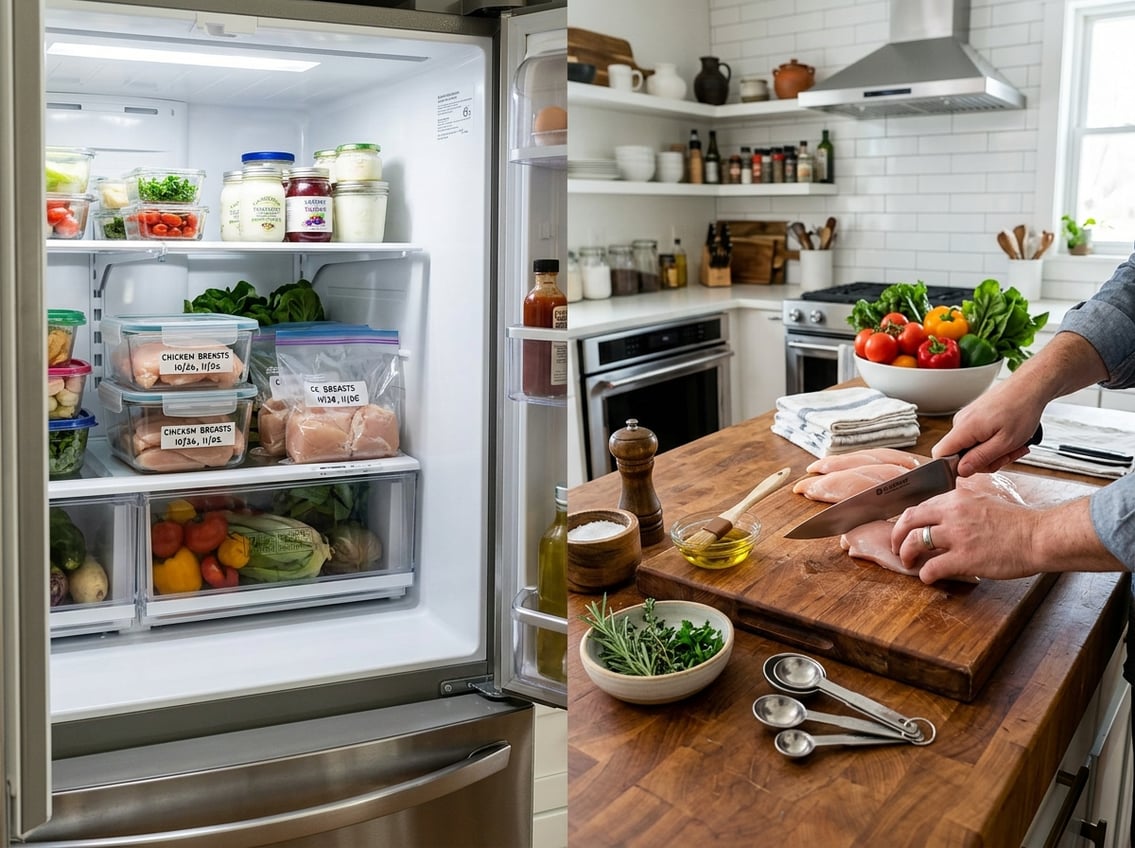
Freezing chicken gives you more flexibility when you cannot cook it right away.
Freeze it fresh, thaw it safely, and use it soon after thawing.
How Long Frozen Chicken Breast Keeps Quality
Frozen chicken breast stays safe for a long time if it stays frozen, though quality slowly drops.
The Good Housekeeping guide notes that quality may decline after about 11 to 12 months, even though proper freezing keeps it safe longer.
For the best texture, use frozen chicken breast sooner rather than later.
Tightly wrapped packages help prevent freezer burn and dry spots.
Refrigerator Thawing vs. Cold Water Thawing
Refrigerator thawing is the safest way to thaw frozen chicken breast.
It keeps the meat at a safe temperature while it thaws, though it takes planning.
Cold water thawing works faster, as long as you keep the chicken sealed and change the water every 30 minutes.
Never thaw chicken on the counter, since the outside can warm up while the inside is still frozen.
Thawing Frozen Chicken Breast and Reheating Leftovers Safely
Once you thaw raw chicken in the fridge, use it within 1 to 2 days.
If you cooked the chicken before freezing, reheat it until it is steaming hot all the way through.
If you thaw chicken using cold water or the microwave, cook it right away.
This helps limit bacterial growth and keeps your food safer.


