
How Do You Know Chicken Breast Went Bad? Quick Checks
If you are asking how do you know chicken breast went bad, check smell, texture, color, and storage time together. A bad chicken breast often gives clear warning signs, and if time or temperature has been wrong, do not trust appearance alone.
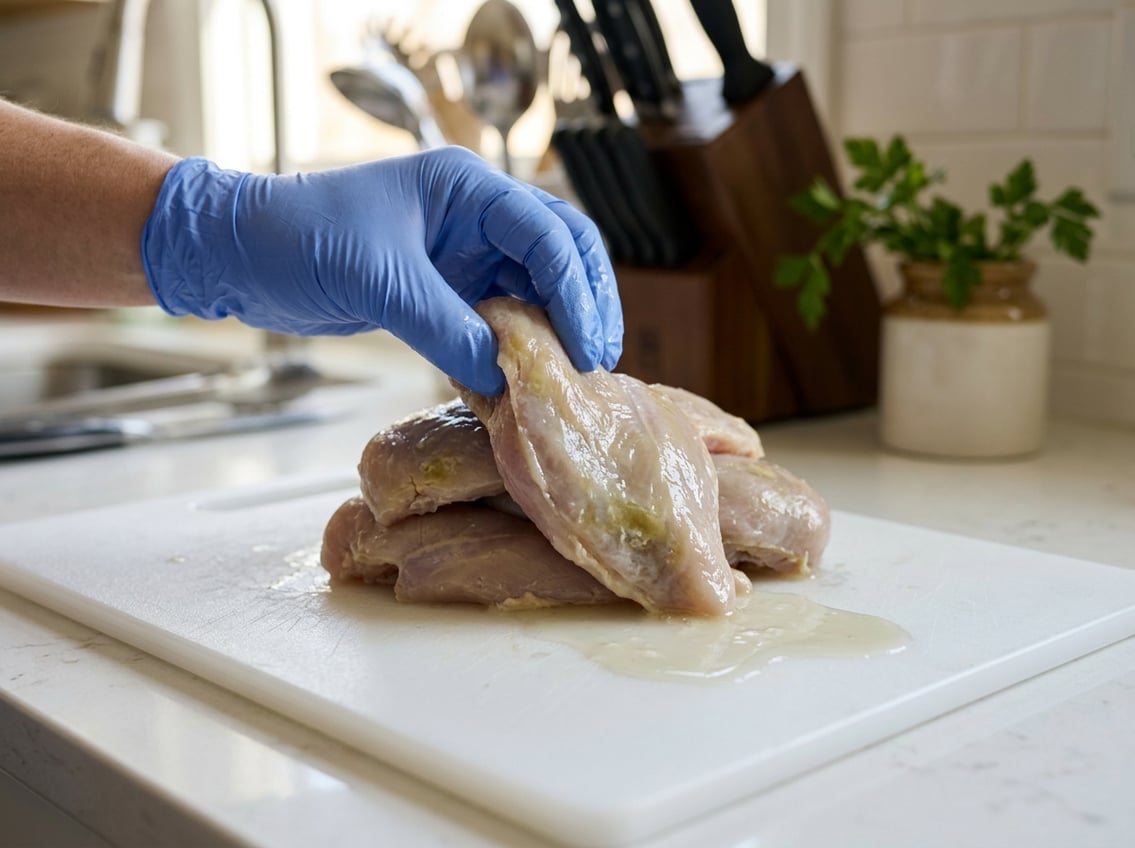
Combine a quick sensory check with storage rules, then throw it out if anything seems off.
Chicken can look normal and still carry harmful bacteria. Food safety groups warn that time and temperature matter more than smell alone, especially with raw poultry.
If the chicken smells sour, feels slimy, looks discolored, or sat too long in the fridge or at room temperature, throw it out.
Immediate Signs It Should Be Thrown Out
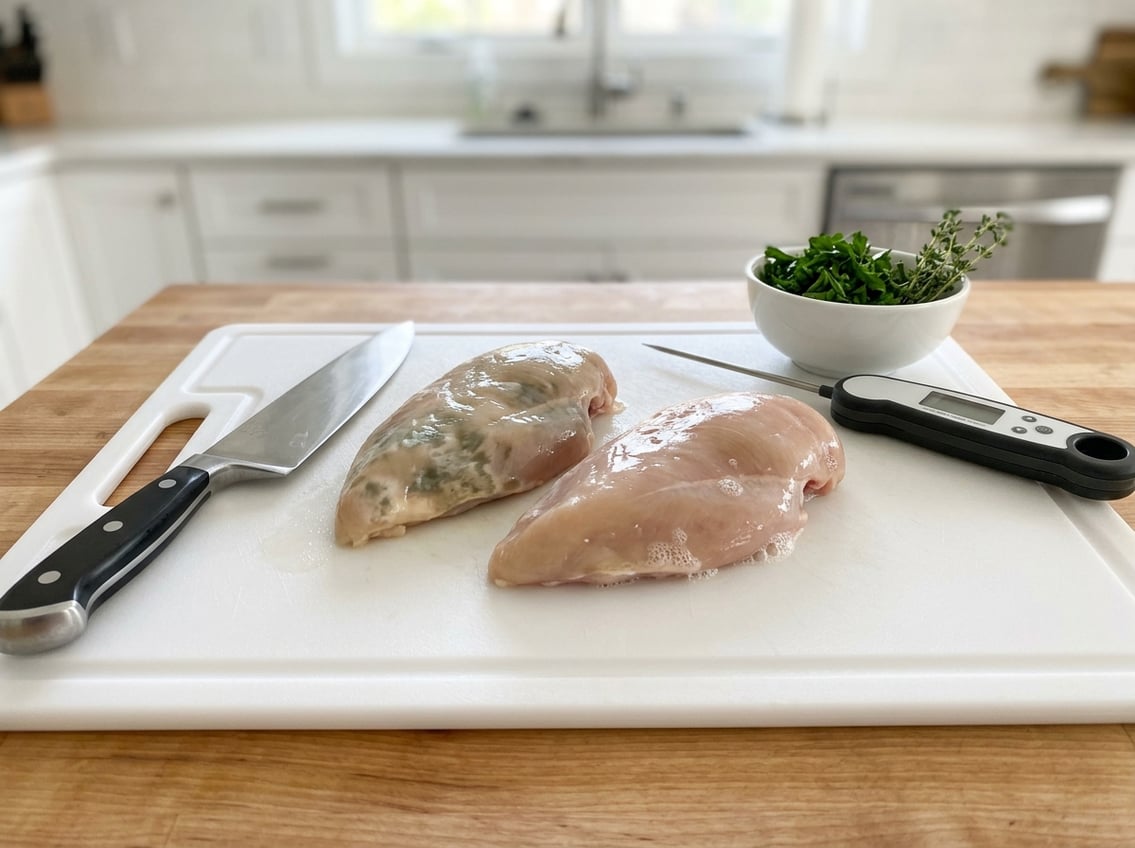
Spoiled chicken usually gives more than one warning sign. If the smell, texture, or color looks wrong, do not try to rescue it by rinsing or cooking it longer.
Bad Smell, Sour Odor, or Rotten-Egg Notes
A fresh chicken breast should smell mild or nearly neutral. A strong sour smell, a rotten-egg note, or an ammonia-like odor means you should toss it.
Raw chicken can sometimes smell a little odd when you first open vacuum-sealed packaging. That smell should fade quickly, and if it lingers, the chicken is not safe.
Slimy, Sticky, or Tacky Surface Changes
Fresh chicken should feel moist, not slippery. A slimy film, sticky coating, or tacky surface signals spoilage.
If the texture leaves a slick residue on your hands and soap does not remove it easily, the chicken is past its safe point.
Gray, Green, or Yellow Discoloration
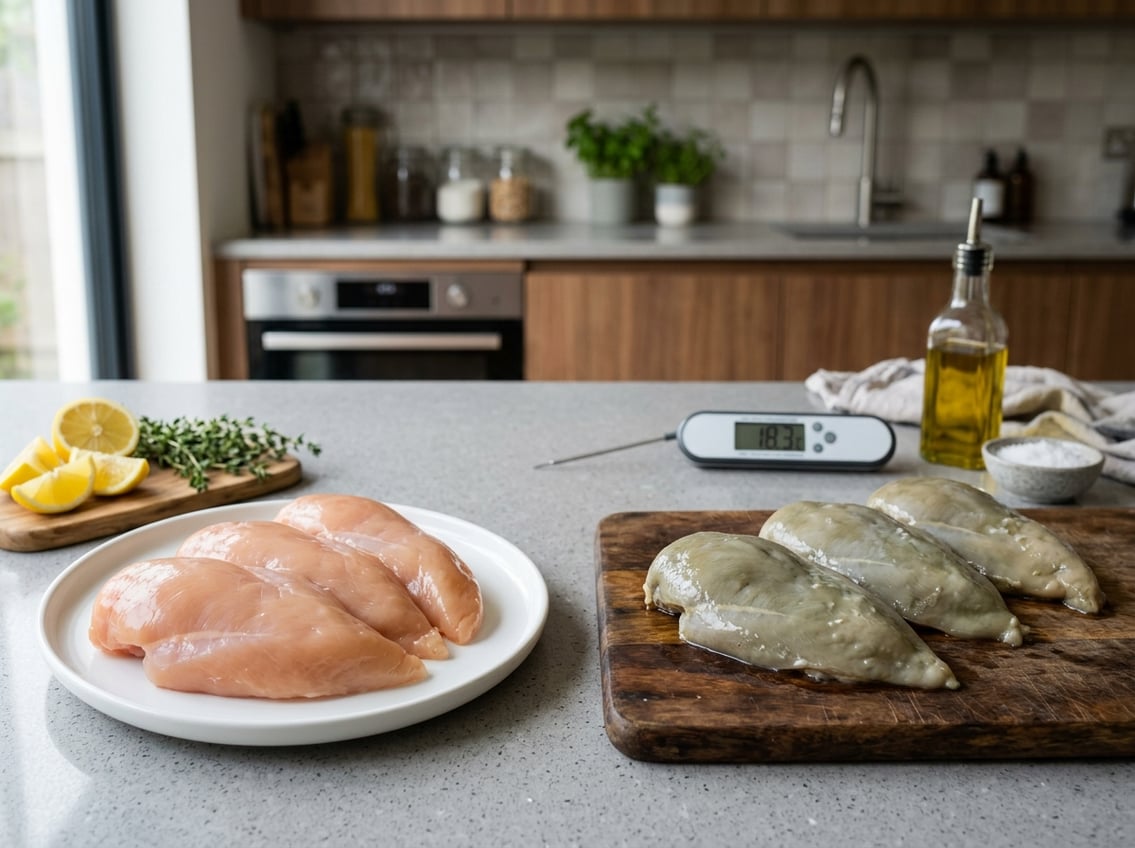
Chicken breast is usually pink with some white or pale yellow fat. Gray, green, or deep yellow patches can point to spoilage, especially when they appear with bad smell or slimy texture.
Color alone is not enough to judge safety. A noticeable color change is a reason to check storage time before you cook it.
Mold, Leakage, or Other Clear Warning Signs
Visible mold means you should discard the chicken. Do not scrape it off, since mold can spread beyond the part you see.
If raw juices have escaped the package or the seal looks broken, the chicken may have contaminated nearby foods and surfaces. Swollen packages, leaks, and torn seals are clear signs to throw it out.
Check Storage Time Before You Trust Appearance
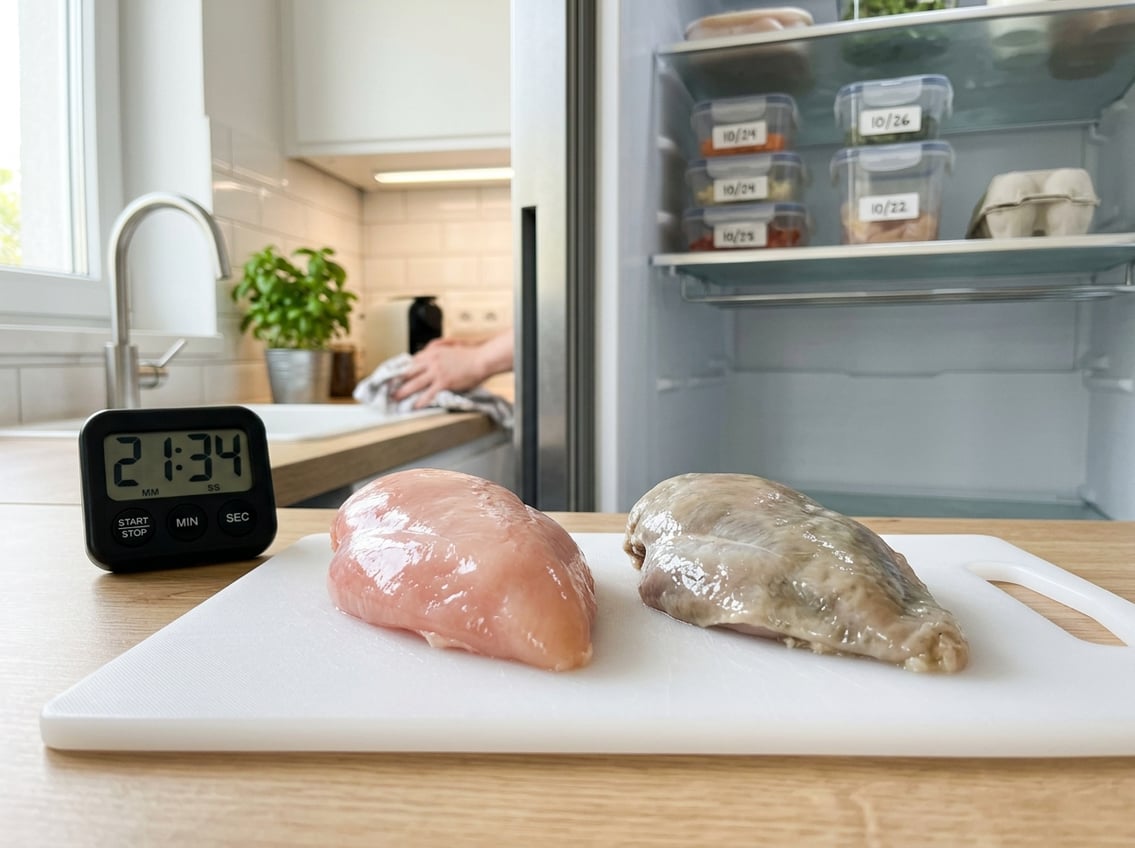
Even chicken that looks fine can be unsafe after too much time in the fridge or at room temperature. Knowing how long chicken lasts helps you make a better call before you cook.
How Long Raw Chicken Breast Lasts in the Fridge
Cook or freeze raw chicken breast within 1 to 2 days in the refrigerator. After that window, the risk rises, even if it still looks normal.
If you cannot remember when you bought or opened it, treat that as a warning. Uncertainty is enough reason to toss it.
How Long Cooked Chicken Breast Lasts in the Fridge
Cooked chicken breast leftovers are usually safe for 3 to 4 days in the fridge. After day 4, throw it away.
Seasoning, sauce, or breading can hide signs of spoilage. Time matters more than what the meat looks like.
When Time Out at Room Temperature Makes It Unsafe
Do not let chicken sit out for more than 2 hours at room temperature. If the room is above 90°F, that limit drops to 1 hour.
Bacteria grow quickly in the danger zone between 40°F and 140°F. If you left chicken out during a meal, on a counter, or in a hot car, it is safer to discard it.
Why Sell-By and Use-By Dates Are Not the Same
A sell-by date is for store stock control, not your safety. A use-by date is closer to a freshness guide, but it does not replace smell, texture, and time rules.
If someone stored the chicken wrong, a date on the package will not save it. Check the date, then check the actual storage history.
What to Know About Frozen Chicken Breast
Freezing can help you keep chicken breast longer, but it works best when you freeze the chicken before it spoils. Good freezer storage protects quality and helps you freeze chicken safely for later use.
When to Freeze Chicken for Best Quality
Freeze chicken breast before the fridge clock runs out, ideally within 1 to 2 days of purchase if it is raw. If you will not use cooked leftovers within 3 to 4 days, move them to the freezer sooner.
The freezer stops bacterial growth when it stays at 0°F or below. Earlier freezing usually gives better results.
How to Spot Freezer Burn and Heavy Ice Buildup
Freezer burn often shows up as dry, whitish, or gray patches on the surface. Heavy ice crystals, clumped frost, or frozen liquid around the package can also signal thawing and refreezing.
That does not always mean the chicken is unsafe. The texture and flavor may be poor, and the handling history may be less reliable.
What Freezer Burn Means for Safety and Texture
Freezer burn mostly affects texture and taste, not immediate safety, as long as the chicken stayed frozen continuously. The meat can turn dry or tough after cooking.
If the package thawed and refroze, the risk changes. Temperature swings can reduce quality and raise the chance of spoilage if the chicken spent too long above 40°F.
How to Prevent Freezer Burn During Storage
Wrap chicken tightly, press out excess air, and use freezer-safe bags or sealed containers. Label the package with the date so you know how long it has been frozen.
Keep raw chicken sealed on the bottom shelf of the fridge while thawing so juices do not drip onto other foods. Good wrapping helps prevent freezer burn and keeps the meat in better shape.
Safe Handling Mistakes That Lead to Risk
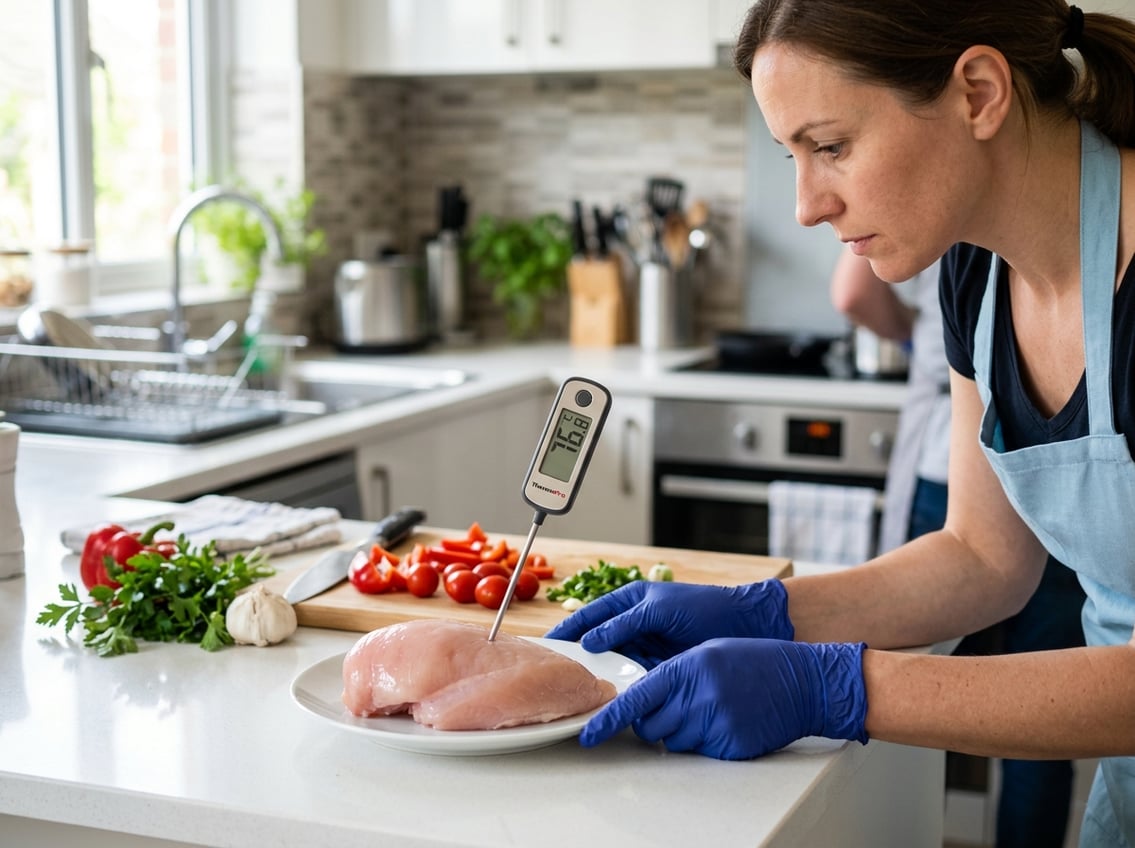
Many chicken safety problems happen because of handling mistakes, not just bad storage. Small errors can turn safe chicken into spoiled chicken or contaminate other foods in your kitchen.
Why Smell Alone Is Not Enough
Bad smell is a useful warning, yet chicken can carry harmful bacteria and still smell normal. A neutral smell does not prove the meat is safe.
Time and temperature are more reliable than scent. If storage rules were broken, toss the chicken even when it smells fine.
Why You Should Never Taste Chicken to Test It
Tasting chicken to check safety is a bad idea. Even a small bite can expose you to bacteria or toxins that cause foodborne illness.
Decide before cooking, not during eating. If you need to taste it to know whether it is safe, you already have enough doubt to discard it.
How to Store Raw and Cooked Chicken Breast Properly
Keep raw chicken sealed on the bottom shelf of the fridge so juices cannot drip onto ready-to-eat food. Store cooked chicken in a covered container and cool it quickly before refrigerating.
If you want to freeze chicken, do it before the fridge time limit runs out. Clear labeling helps you stay within safe storage windows.
When in Doubt, Throw It Out
If you cannot confirm the storage time, the temperature, or the condition of the chicken, do not take a chance.
Chicken is one food where guessing is a poor trade for safety.
The rule is simple. If anything smells wrong, feels wrong, looks wrong, or sat out too long, throw it out.


