
What’s the Best Way to Fry Chicken Breast at Home
If you want to fry chicken breast well, use a skillet, keep the thickness even, season well, and stop cooking at the right internal temperature. This method gives you a juicy center and a crisp crust without needing a deep fryer.
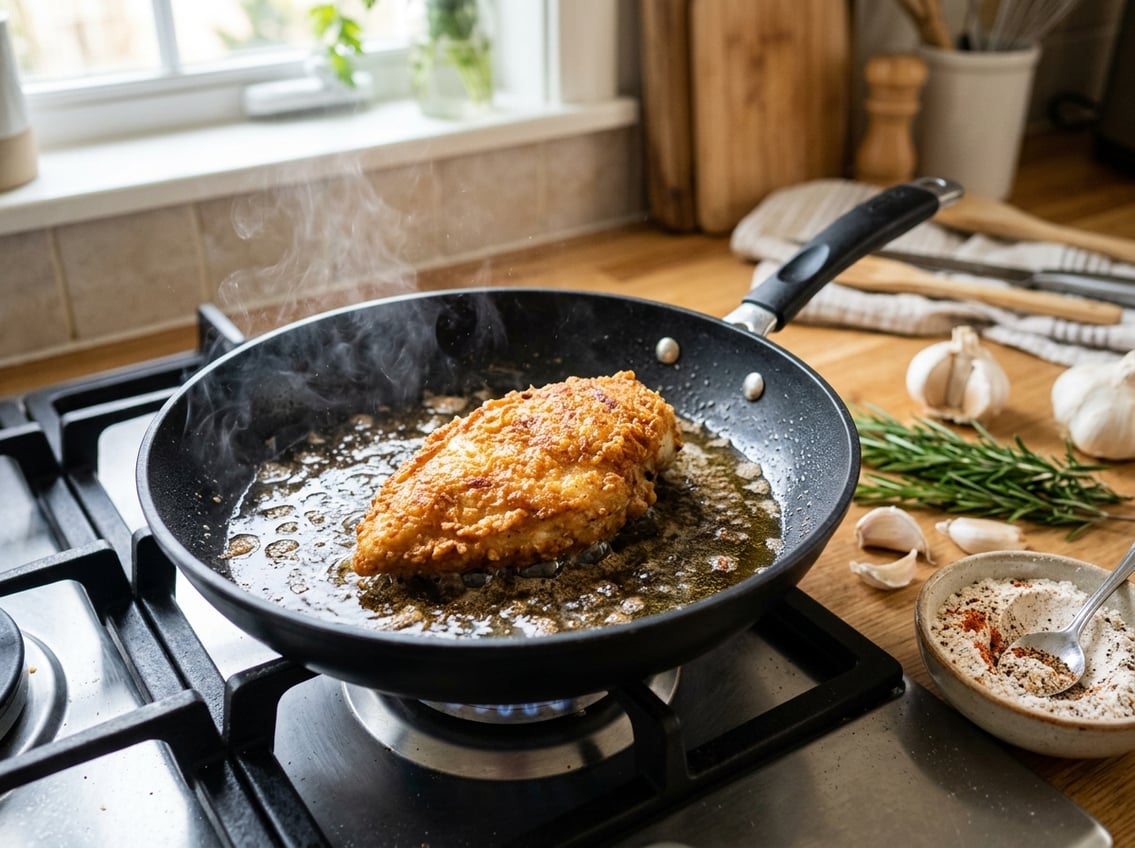
Pan frying works especially well for boneless chicken breasts because you can control the heat closely. You can cook each side until the crust turns golden.
This is one of the most reliable ways to make a fried chicken breast at home that tastes great. You avoid ending up with a dry piece of plain chicken.
When you prep the meat correctly, use the right oil, and check doneness with a thermometer, you get fried chicken that stays tender inside and crisp outside.
The Fastest Route to Juicy, Crispy Results
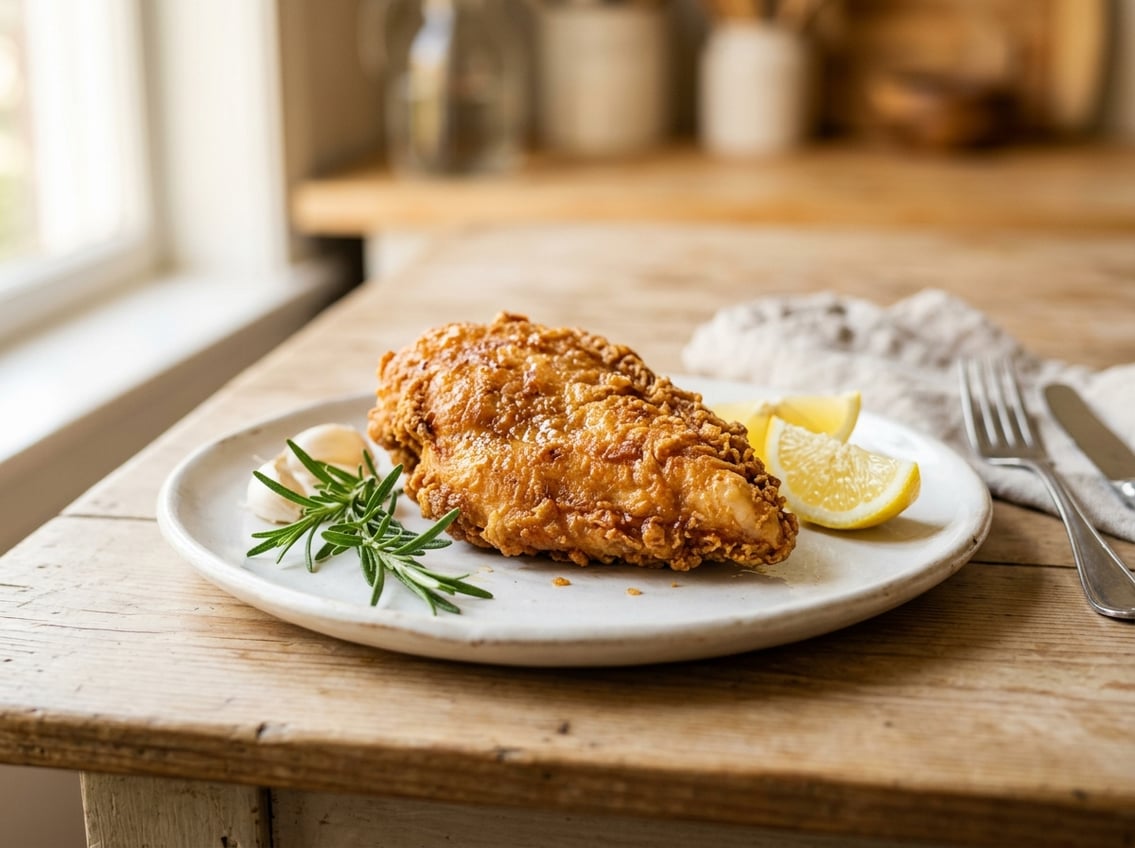
Pan frying is the fastest way to get chicken breasts with a crisp crust and juicy center. It uses less oil than deep frying and gives you more control than oven methods.
Why Pan-Frying Works Best for Boneless Breasts
Boneless breasts cook quickly, so pan frying is practical for weeknights. A shallow layer of oil heats the outside fast enough to brown the coating while the inside finishes cooking gently.
This method also lets you watch the crust closely. If you see the coating darkening too fast, lower the heat before the chicken burns.
The Ideal Thickness for Even Cooking
Chicken breast cooks more evenly when the thickest part is no more than about 3/4 inch after pounding. Thick ends can stay undercooked while the thinner end dries out.
Butterfly large breasts or pound them between sheets of plastic wrap for the most even result. This step helps the chicken cook evenly.
When to Choose Whole Breasts vs Chicken Cutlets
Use whole breasts when you want a larger portion and a thicker bite. Use chicken cutlets when you want faster cooking and more crust per bite.
Cutlets fit the skillet better, cook more evenly, and are easier to keep juicy.
Prep, Seasoning, and Coating That Actually Sticks
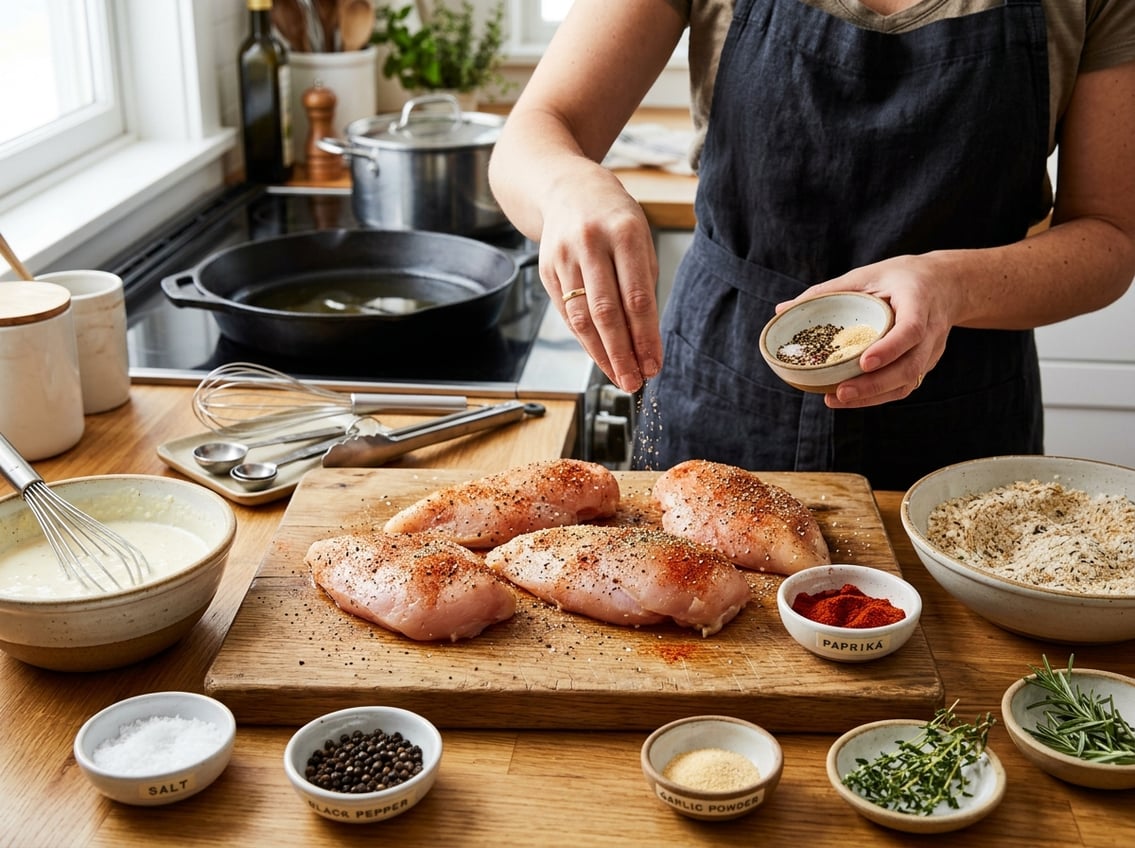
Good fried chicken breast starts before you heat the pan. Dry meat, balanced seasoning, and a coating that clings give you a crisp finish instead of a patchy one.
How to Dry, Pound, and Season the Meat
Pat the chicken dry with paper towels first. Surface moisture keeps seasoning from sticking and makes the coating slip off during frying.
Pound the breasts to an even thickness and season both sides with salt, pepper, garlic powder, and paprika. This gives the meat flavor, not just the crust.
Using a Flour Mixture for a Crispy Coating
Combine all-purpose flour with salt, pepper, paprika, garlic powder, and a little cornstarch if you want extra crispness. Press the chicken firmly into the flour mixture so the coating adheres.
Dry chicken and a flour-and-egg wash dredge help the crust stay on during frying, as explained by ChefsKnowHow.
Optional Marinades and Egg Dredges for Extra Protection
A short buttermilk marinade can add flavor and help the coating stick. Marinate for 30 minutes to several hours, then dredge the chicken in flour before frying.
An egg dredge creates a stronger bond between the meat and the flour. This helps the crust stay on during pan frying.
Heat, Oil, and Timing in the Skillet
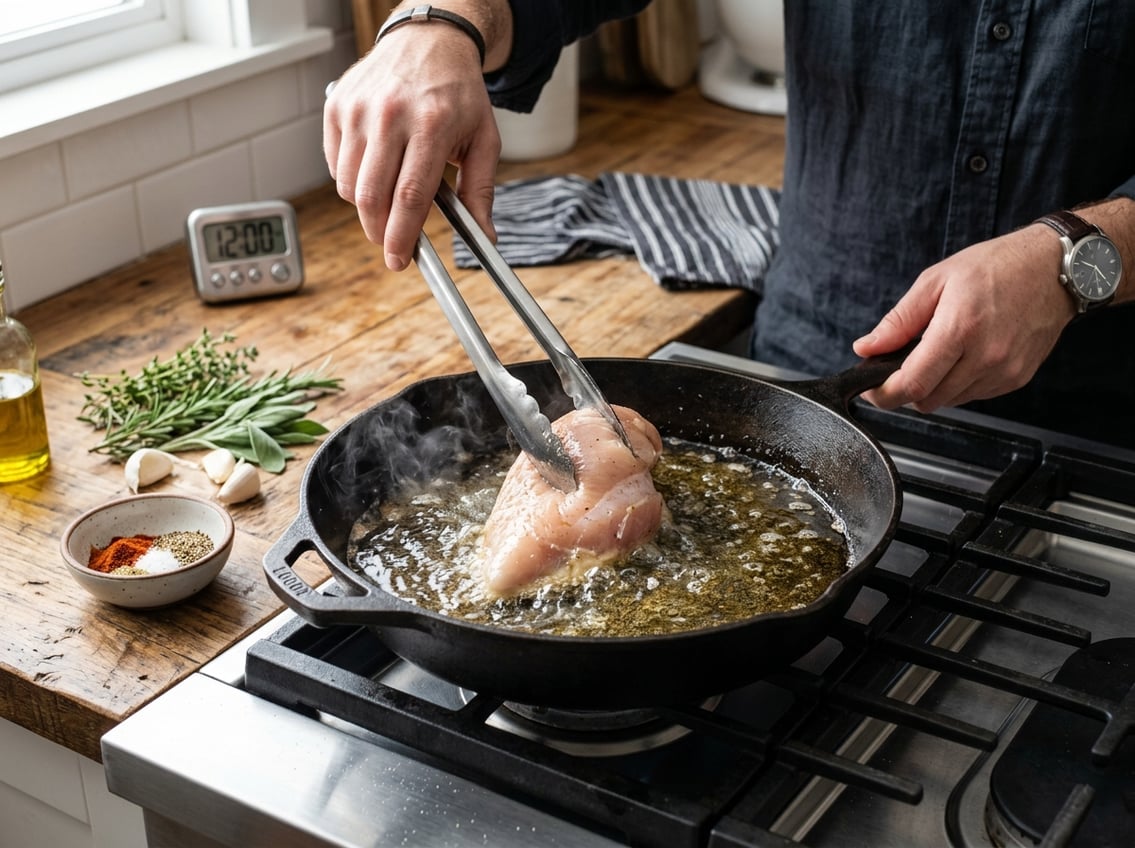
The skillet does most of the work, so your heat and timing matter a lot. A steady medium to medium-high flame gives you a golden crust without burning the flour mixture.
Best Oil Choices and Target Frying Temperature
Choose oil with a high smoke point and a neutral taste, such as canola, vegetable, or peanut oil. These oils handle heat well and do not overpower the seasoning.
Aim for about 350°F to 375°F. If the oil smokes hard, it is too hot. If the coating soaks up oil, it is too cool.
How Long to Cook Each Side Without Burning the Crust
Most boneless pieces need about 4 to 8 minutes per side, depending on thickness. Thin chicken cutlets cook faster, while larger breasts need more time.
Do not crowd the pan. Too many pieces lower the oil temperature and make the crust soft instead of crisp.
Checking Doneness With a Meat Thermometer
Use a meat thermometer to check when fried chicken is done. The center should reach 165°F.
Check the thickest part of the breast, not the edge. Once it hits temperature, move the chicken to a wire rack so the crust stays crisp while the meat rests.
Common Mistakes, Variations, and Serving Ideas
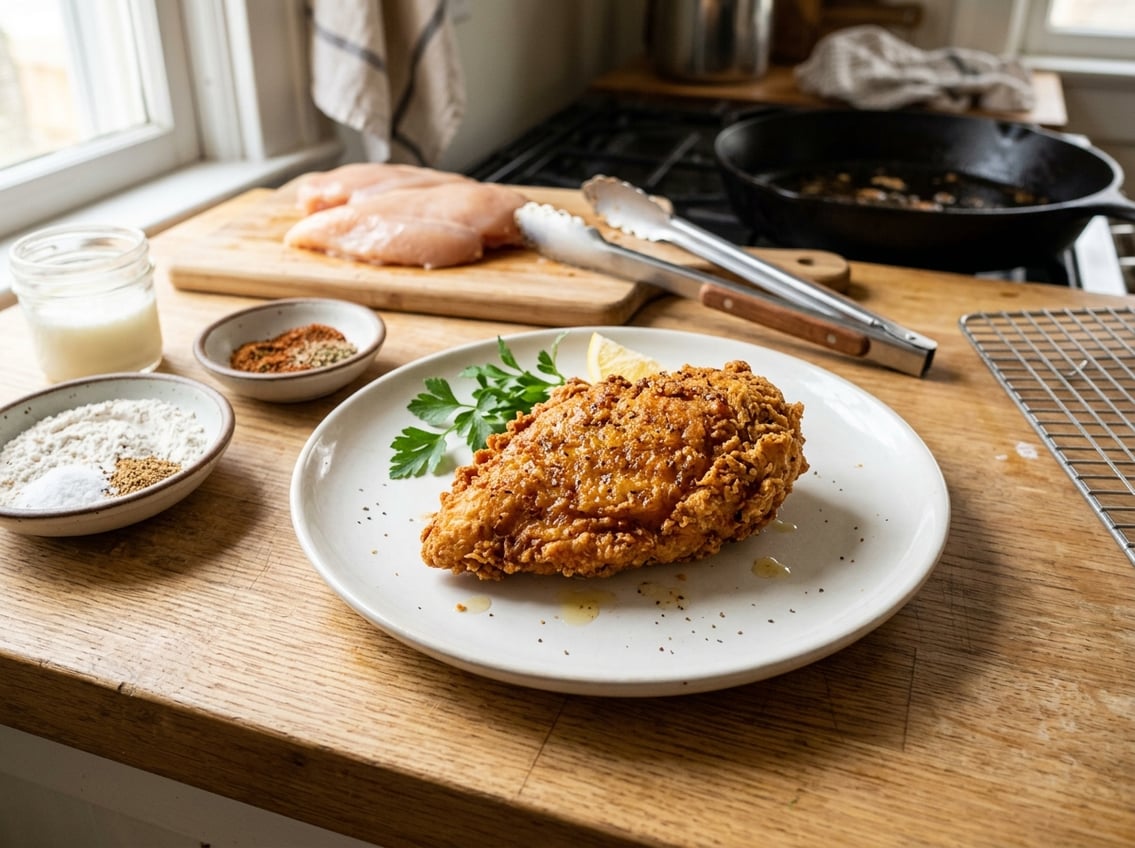
Most fried chicken problems come from too much heat, too much moisture, or overcooking. If you control those three things, your fried chicken breast is far more likely to stay crisp and juicy.
Why Chicken Breast Turns Dry or Greasy
Chicken breast turns dry when it cooks too long or starts too thick in the middle. It turns greasy when the oil is not hot enough and the coating absorbs fat instead of crisping.
Southern Living notes that mistakes in brining, dredging, and frying can lead to soggy or dry results. The fix is simple, steady heat and careful timing.
How Air Fryer Chicken Compares to Skillet Frying
Air fryer chicken can give you a crisp exterior with less oil, and it is useful when you want a lighter result. Skillet frying gives you a more classic fried chicken texture and deeper browning.
If you want the most authentic crispy coating, use the skillet. If you want less cleanup and less oil, the air fryer is a good backup method.
Best Ways to Serve and Reheat Leftovers
Serve fried chicken with mashed potatoes, slaw, biscuits, green beans, or on a sandwich.
Chicken tenders pair well with dipping sauces if you make smaller pieces.
Reheat leftovers in the oven or air fryer to keep the coating crisp.
Avoid the microwave to prevent the crust from turning soft.


