
What Should Chicken Breast Look Like When Cooked? Key Signs
Chicken breast looks opaque, pale white, and firm when it is cooked through. The most reliable visual signs are a white center, clear juices, and a springy texture, with a thermometer reading of 165°F (74°C) for safety.
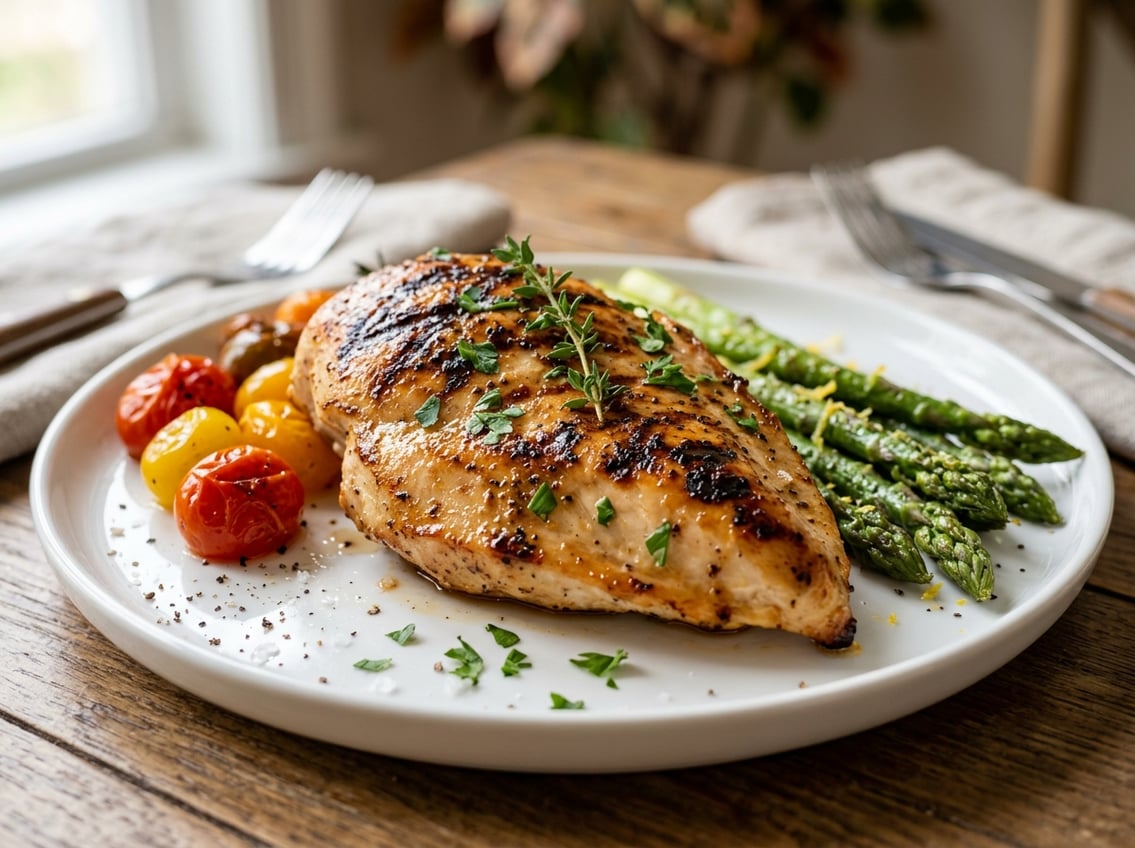
You can often tell a lot just by looking at it, especially if you cut into the thickest part. Cooked chicken breast does not look shiny and translucent in the center, and it does not feel soft or slippery like raw meat.
How to Tell at a Glance
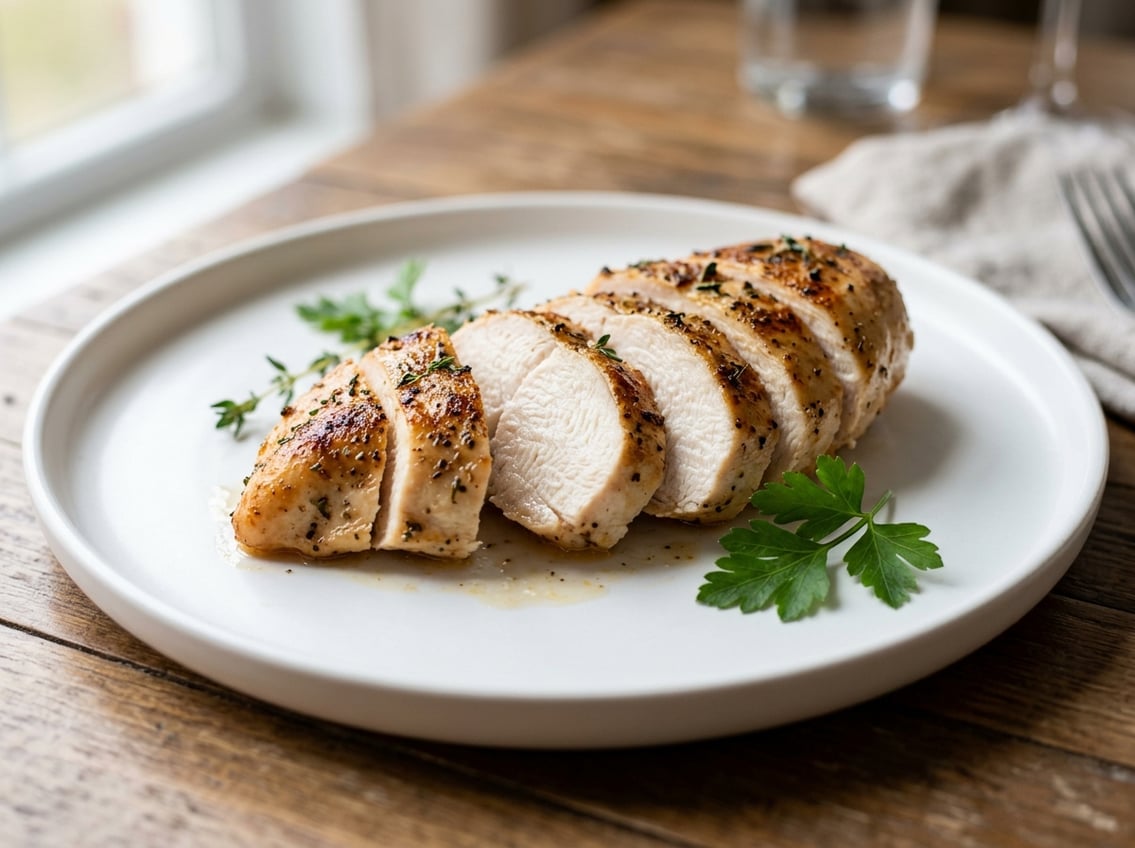
At first glance, cooked chicken breast has an opaque center, pale white meat, and juices that do not look pink. The surface may be lightly browned from baking, grilling, or pan-searing, while the inside should look evenly cooked.
Color and Opacity in the Center
A cooked chicken breast looks white or very pale throughout the center. If you cut into it and still see translucent or glossy pink areas, it needs more time.
The outside can be golden, browned, or lightly charred depending on the cooking method. Focus on the center, not the crust.
Texture, Firmness, and Fibers
Cooked chicken breast feels firm when you press it. It springs back a little and the fibers look set, not stringy and wet.
Raw chicken feels softer and more slippery. Cooked pieces usually look tighter and slice cleanly instead of dragging apart.
Whether Juices Run Clear
Clear juices provide another useful clue. When you cut into cooked chicken, the liquid looks clear or very lightly tinted, not pink or red.
Clear juices alone do not prove the chicken is safe. Use them as one sign, not the only sign.
The Safest Way to Confirm Doneness
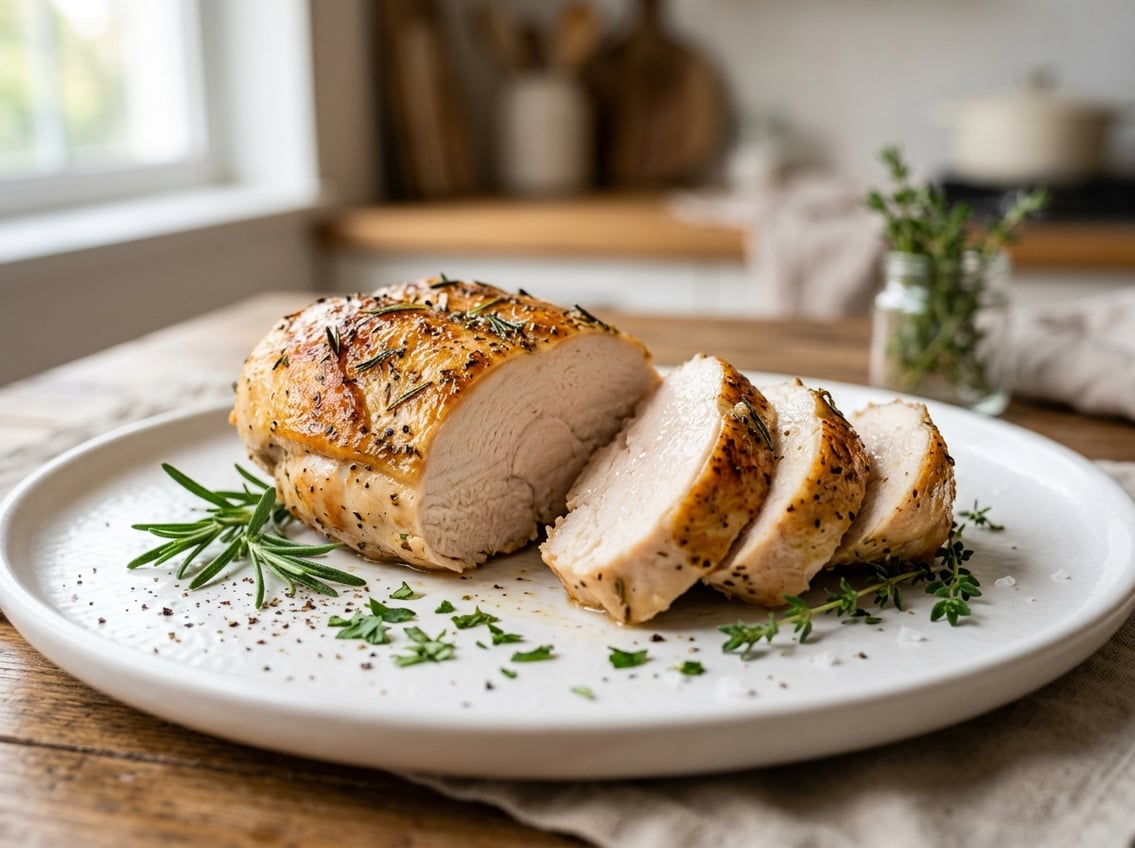
Temperature provides the safest check. Chicken breast is safe when the thickest part reaches 165°F (74°C), which reduces the risk from bacteria such as campylobacter.
Why 165°F (74°C) Matters
At 165°F (74°C), cooked chicken breast reaches the level needed to make it safe to eat. Anything lower can leave undercooked chicken with harmful bacteria still present.
This matters even if the meat looks mostly white. Color changes during cooking, but bacteria do not disappear just because the surface looks done.
Where to Insert the Thermometer
Insert the thermometer into the thickest part of the breast. Aim for the center, and avoid touching bone, the pan, or a thick pocket of fat.
If the chicken breast is uneven in shape, check the thickest spot first. That is the part most likely to stay undercooked.
When Visual Signs Are Not Enough
Use a thermometer any time the chicken is thick, stuffed, or cut from a large piece. Visual checks are less reliable with bone-in chicken, dark kitchen lighting, or heavily seasoned meat.
If the center still looks pink, trust the thermometer over the color.
How to Avoid Dry or Unsafe Results
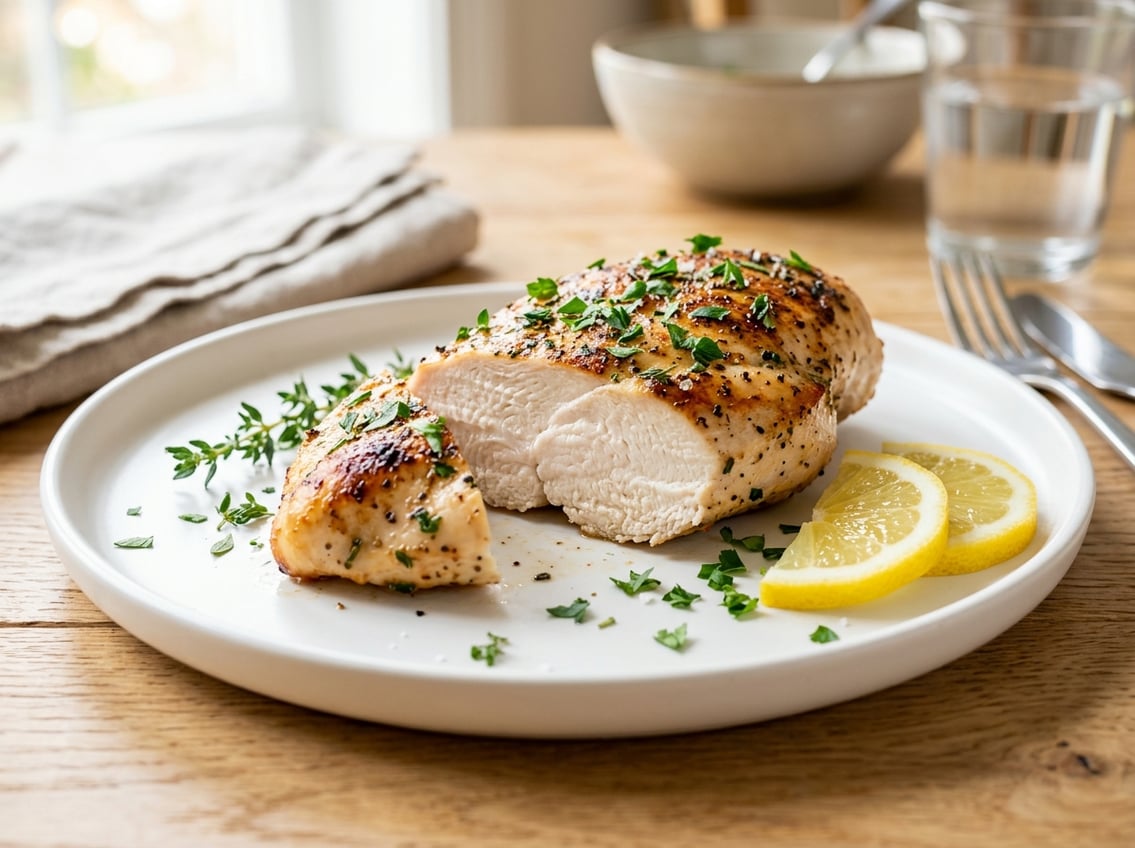
Chicken breast goes from safe to dry very quickly because it is lean. Stop cooking at the right point, not when it looks extra white or hard.
Signs of Overcooked Meat
Overcooked chicken often looks stringy, shrunken, and very firm. The meat may split into dry fibers, and the juices can seem limited because moisture has been pushed out.
An overcooked chicken breast may also feel tough when you slice it. If the edges look chalky or the center seems dry and chalk-like, it likely stayed on the heat too long.
What to Do If the Center Is Still Pink
If the center is pink, put the chicken back on the heat right away. Check the thickest part again after a few minutes.
A pink center does not always mean the chicken is unsafe, since some seasonings and cooking methods can affect color. Even so, if the thermometer has not reached 165°F (74°C), treat it as undercooked chicken and keep cooking.
How Cooking Time Affects Texture
Cooking time for chicken depends on thickness, heat level, and the method you use.
A thin breast may finish quickly. A thick breast needs more time even if the outside looks ready.
Time alone does not give a reliable test.
You get the best result by checking both the look and the internal temperature. This helps you avoid chicken that is unsafe or dry.


