
What Is Chicken Breast Meant to Smell Like? Freshness Signs
What is chicken breast meant to smell like? Fresh raw chicken breast should smell very mild, with little to no strong odor.
You may notice a faint poultry scent or a slightly gamey note, but it should not smell sour, rotten, or sharply chemical.
If your chicken breast smells strong, sour, ammonia-like, or slimy, treat it as unsafe and follow basic food safety rules before cooking.
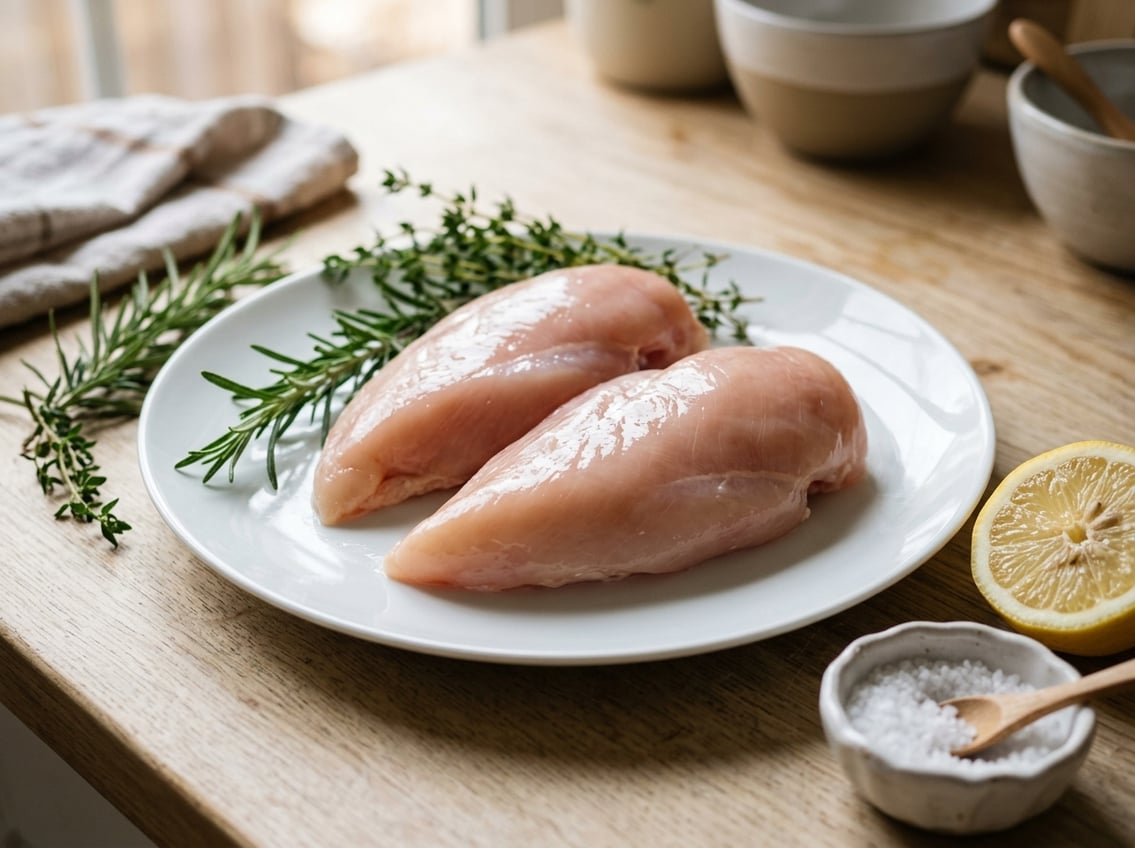
Many people expect raw chicken to have a noticeable smell, but fresh chicken is usually quiet on the nose.
The smell of chicken can change with packaging, storage time, and temperature, so not every odor means spoilage right away.
You can use smell as one clue, along with texture and color, to judge freshness.
Spoiled chicken can carry harmful bacteria such as salmonella and campylobacter.
What a Normal Raw Aroma Actually Smells Like
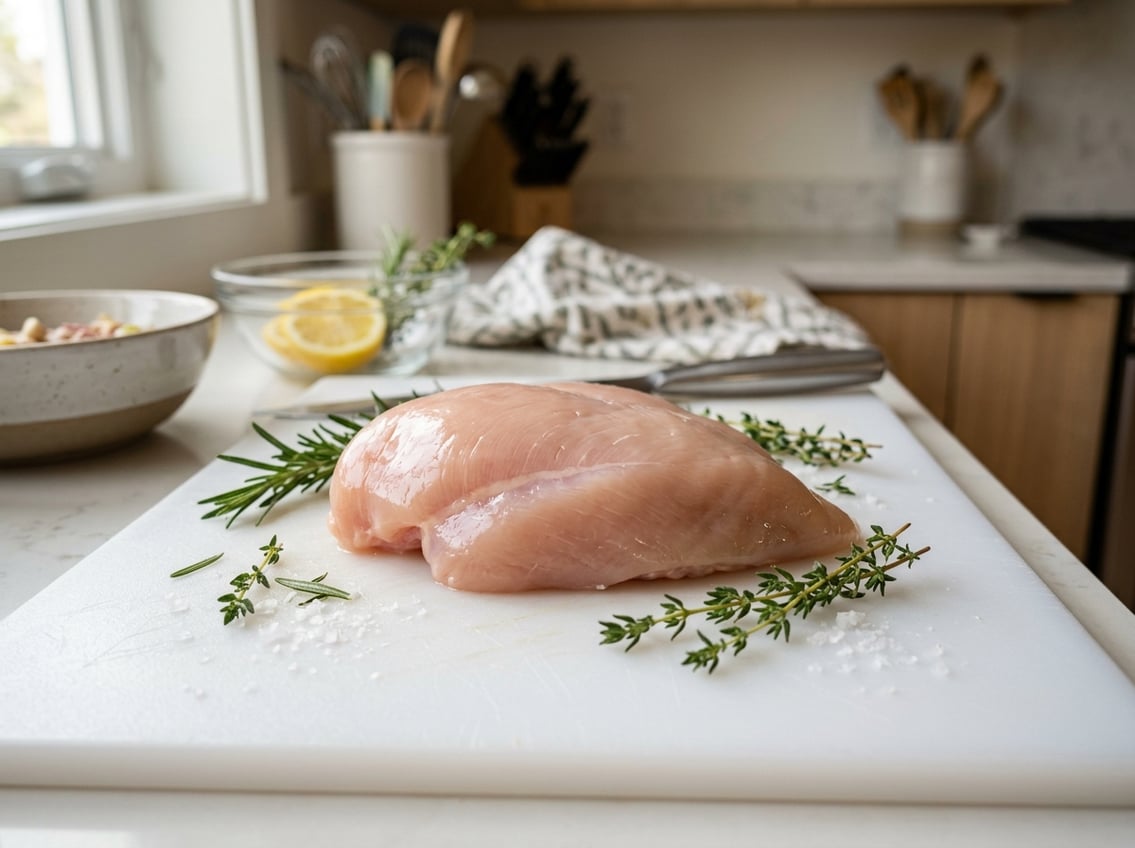
Fresh chicken should smell light and clean, not powerful.
A mild, slightly gamey aroma is normal, and many packages have almost no smell at all when you open them.
The Mild Scent You Should Expect From Fresh Poultry
Fresh chicken breast usually has a faint poultry scent or a nearly neutral smell.
According to Cookindocs, fresh chicken should smell mild and slightly gamey, not sour or foul.
If you need to lean in hard to detect anything, that is usually a good sign.
Strong chicken smells are more likely to show up after the meat ages or sits too long in warm air.
Why Some Chicken Smells Slightly Metallic or Gamey
A small metallic or gamey note can be normal.
Meat contains natural compounds that shape its aroma, and those compounds can be more noticeable in some cuts or from some brands.
That does not mean the chicken is bad.
It only means the natural smell of chicken breast is not always odorless.
How Dimethyl Sulfide and Natural Meat Compounds Affect Aroma
Volatile compounds such as dimethyl sulfide can form as meat breaks down at a basic chemical level.
These compounds help explain why the smell of chicken can seem a little earthy, savory, or slightly sulfur-like without meaning spoilage.
Small changes in freshness can make these natural odors stronger.
Once the smell turns sharp, sour, or unpleasant, it is no longer in the normal range.
How to Tell When the Meat Has Gone Bad
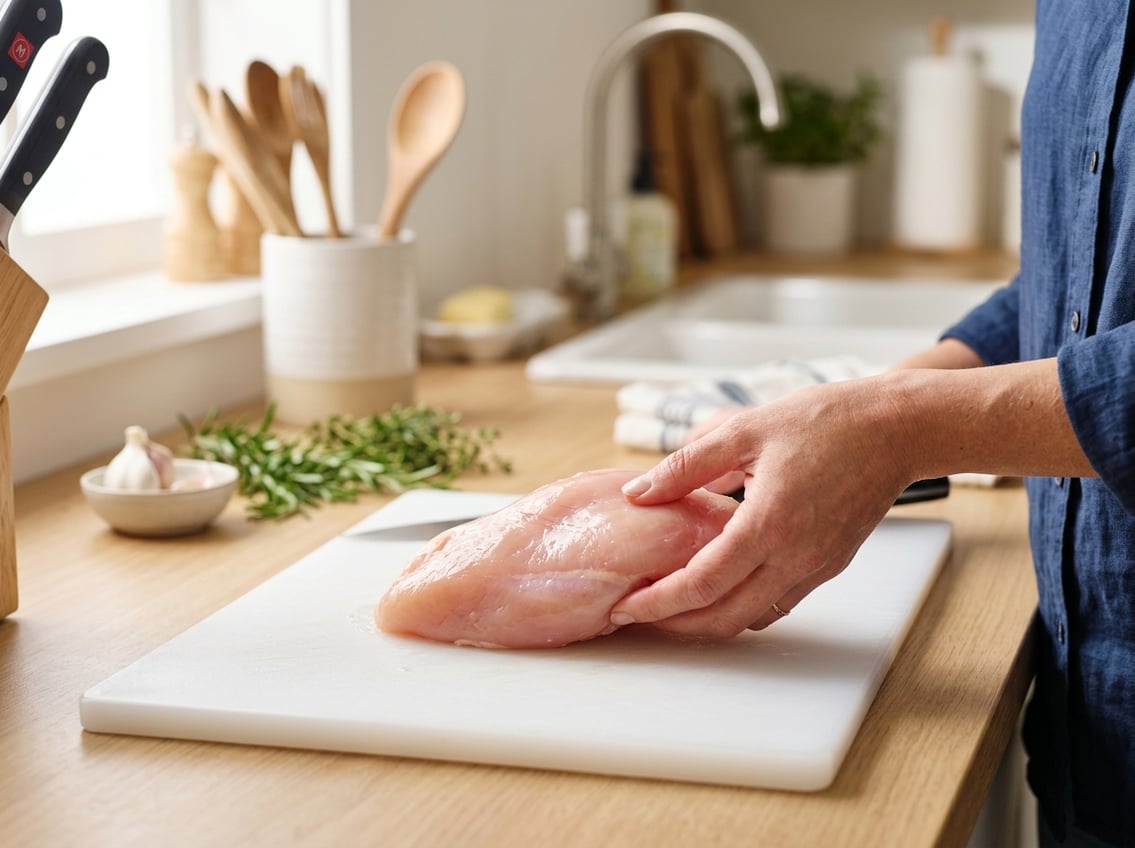
A bad chicken odor is usually easy to notice once spoilage starts.
Smell alone is useful, yet you should also check the surface, firmness, and color before you decide to cook it.
Off-Odors That Signal Spoiled Chicken
Spoiled chicken often smells sour, rotten, sulfur-like, or like ammonia.
EatingWell notes that raw chicken with a foul, rotten-egg-like smell should be thrown out, not cooked.
A strong chicken odor that gets worse the longer the package stays open is another warning sign.
If the smell makes you pull back from the meat, trust that reaction.
Texture, Slime, and Color Changes to Check Alongside Smell
Fresh chicken should feel firm and slightly moist, not sticky.
If the surface feels slippery or slimy, that is a clear sign of spoilage, as noted by Cookindocs.
Color changes matter too.
Raw chicken breast should look pink to light pink, while gray, yellow, or greenish tones can point to bad meat.
Why Sour, Sulfur, or Ammonia Notes Are Red Flags
Those smells usually mean bacteria are active on the meat.
That raises food safety concerns because spoiled chicken can contain harmful pathogens such as salmonella and campylobacter.
You should not try to “cook away” a clearly bad odor.
Heat can kill many germs, but it does not make spoiled meat fresh again.
When Packaging and Storage Change the Smell
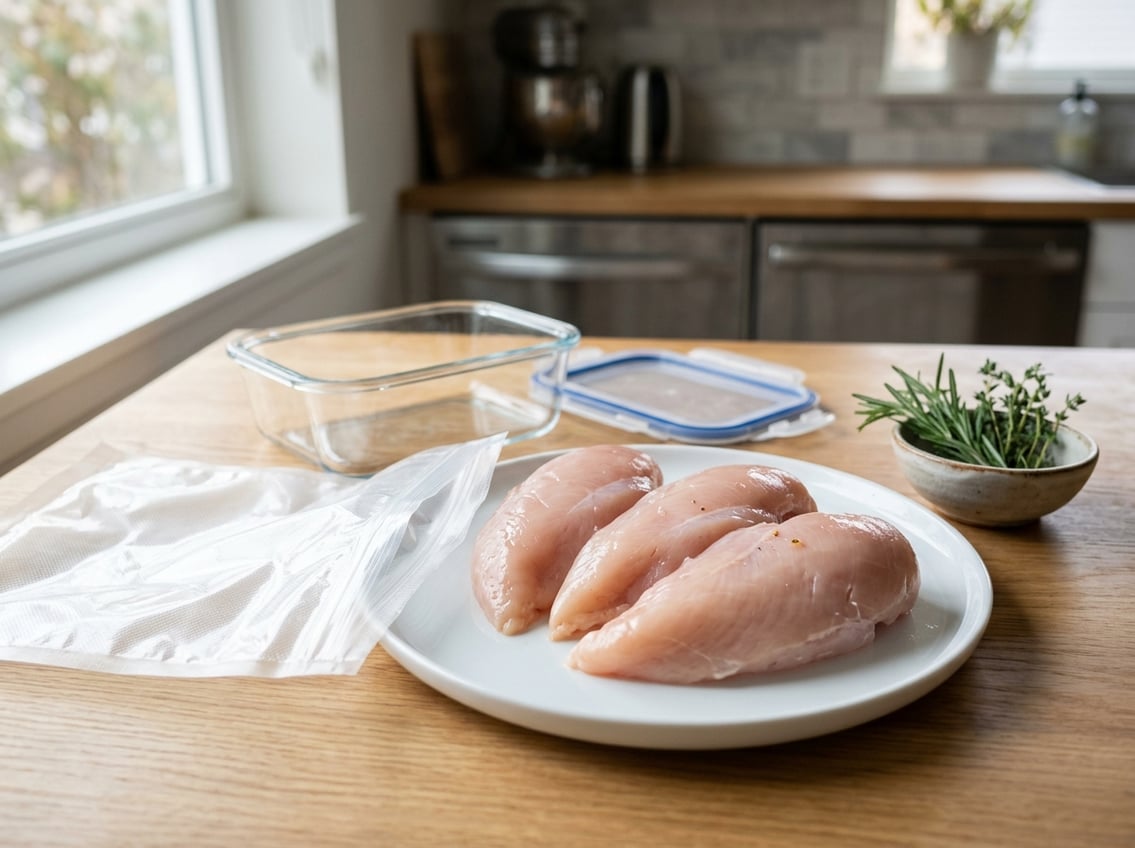
Packaging can trap harmless odors or create a stronger smell when you first open the meat.
Storage time, fridge temperature, and thawing method all affect how fresh chicken smells.
Why Vacuum-Sealed Packaging Can Cause a Temporary Odor
Vacuum-sealed packaging removes air, which slows spoilage and can hold in natural meat gases.
When you open the package, you may notice a slightly odd smell for a short time, especially if it has been tightly sealed.
That smell should fade after a few minutes of air exposure.
If the odor stays sour, rotten, or ammonia-like, treat it as spoiled chicken rather than a packaging effect.
How to Store Raw Chicken to Slow Spoilage
Store raw chicken in the coldest part of your refrigerator at 40°F or below.
Keep it sealed, on a tray or plate, so juices cannot leak onto other foods and create a food safety risk.
Use it within a short time frame, or freeze it if you do not plan to cook it soon.
Good storage helps keep the smell of chicken closer to normal for longer.
How to Thaw Frozen Chicken Without Increasing Risk
Thaw frozen chicken in the refrigerator, in cold water, or in the microwave if you plan to cook it right away.
Do not leave it on the counter, where warmer temperatures can speed bacterial growth and create off-smells.
A proper thaw helps preserve freshness and reduces the chance that the chicken smells bad before cooking.
It also lowers the risk linked to unsafe handling.
What to Do if the Smell Seems Slightly Off
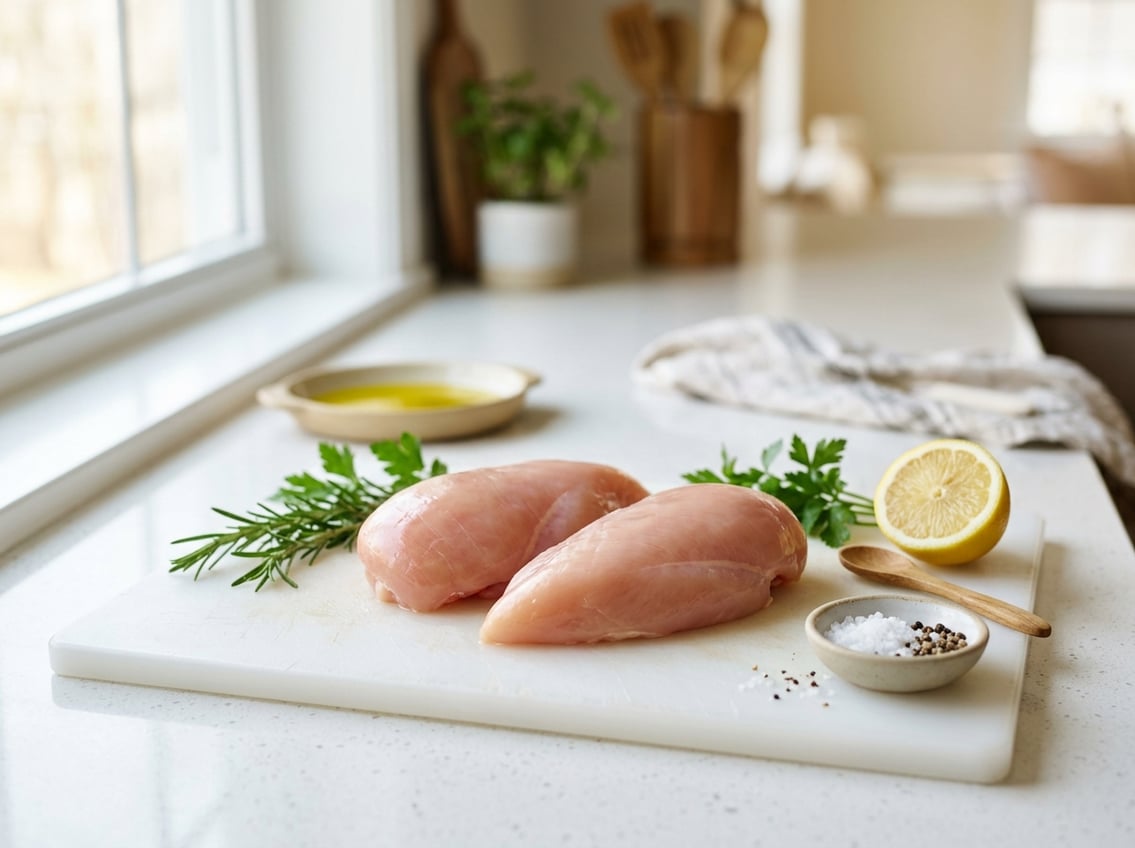
A slight odor does not always mean spoiled chicken, especially right after opening a sealed package.
Give it a quick check, then decide based on smell, texture, and color together.
When to Air It Out and Recheck
If the chicken only smells a little odd after opening vacuum-sealed packaging, let it sit for a few minutes.
A temporary smell may fade as air reaches the meat.
Recheck the chicken after the odor has had time to disperse.
If the smell becomes more noticeable, or if you notice slime or discoloration, discard it.
When to Cook Promptly and When to Throw It Out
You may still cook chicken breast with a very slight odor if the texture and color look normal and the smell is not sour or foul.
Cook it promptly and make sure it reaches 165°F, as noted by Cookindocs.
Throw it out if the smell is strong, unpleasant, or clearly off.
Do the same if the meat feels slimy or looks gray, yellow, or greenish.
Why Safe Handling Still Matters Even if It Smells Fine
Harmful bacteria can still be present on a chicken breast that smells normal. Salmonella and campylobacter do not always create a strong odor.
Wash your hands and clean cutting boards. Keep raw chicken separate from ready-to-eat foods.
Safe handling reduces risk even when the meat seems fresh.


