
Easy Dips and Spreads for Entertaining: The New Party Food Formula for 2026
Last updated: July 8, 2026
Dip boards and spreadable appetizers remain the go-to choice for hosts in 2026 because they require minimal cooking skill, adapt to any dietary need, and let guests serve themselves at their own pace. The new party food formula centers on make-ahead spreads, whipped textures, and strategic combinations of hot and cold options that stay fresh throughout your event.
Key Takeaways
- Make-ahead flexibility: Most dips can be prepared 1-3 days in advance and stored covered in the refrigerator
- Portion planning: Budget 3-4 ounces of dip per person for appetizer-style gatherings
- Temperature strategy: Combine one hot dip with 2-3 cold spreads to reduce last-minute kitchen stress
- Dietary coverage: Offer at least one plant-based option and one gluten-free dipper to accommodate most guests
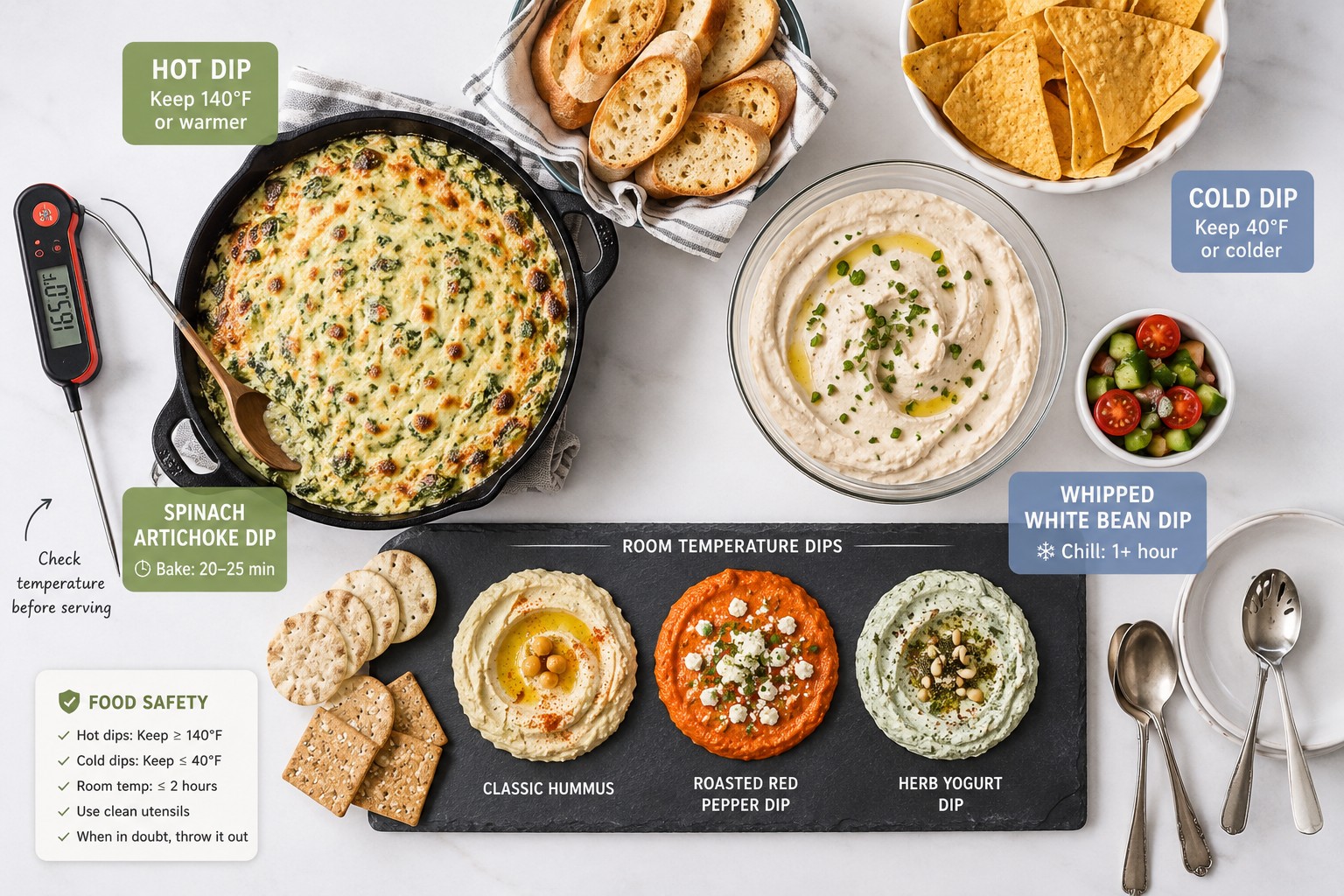
- Food safety window: Cold dips stay safe at room temperature for 2 hours; hot dips should remain above 140°F
- Texture matters: Whipped and aerated dips (like whipped feta) feel lighter and more modern than dense, mayo-heavy classics
- Store-bought shortcuts: High-quality prepared hummus, tzatziki, and pesto can anchor a spread when paired with one homemade element
What Makes a Dip or Spread Good for Entertaining in 2026
A great entertaining dip in 2026 balances convenience with perceived effort. It should look impressive, taste fresh, and require minimal active cooking time while guests are present.
The best party dips share these characteristics:
- Stable texture: Won’t separate, weep, or turn watery after sitting out for 30-60 minutes
- Visual appeal: Colorful, layered, or topped with garnishes that photograph well
- Flexible serving: Works with multiple dippers (vegetables, crackers, bread, chips)
- Dietary transparency: Clearly plant-based, dairy-free, or gluten-free when applicable
- Temperature forgiving: Tastes good whether served cold, room temperature, or warm
Choose dips that can be made 1-2 days ahead and assembled or reheated just before guests arrive. This approach lets you focus on hosting rather than cooking during the event.
Common mistake: Selecting only heavy, cream-based dips. Balance rich options with lighter, vegetable-forward spreads to keep guests from feeling too full early in the party.
Easiest No-Cook Dips for Party Guests
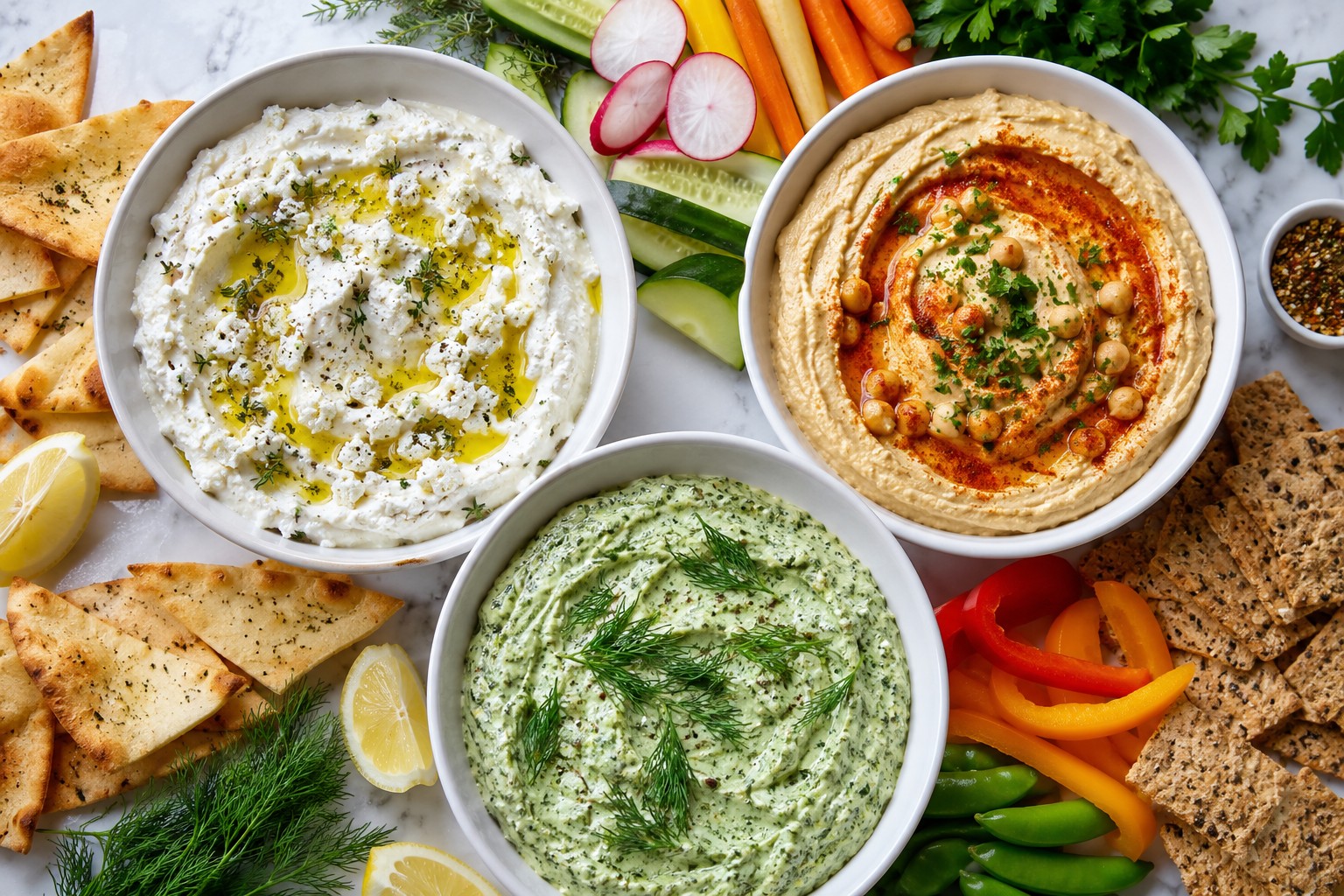
No-cook dips eliminate oven timing stress and can be assembled in under 10 minutes. Whipped feta, hummus variations, and herb-forward spreads dominate 2026 party tables because they deliver maximum flavor with zero heat required.
Top no-cook options:
- Whipped feta with honey and herbs: Blend feta, cream cheese, olive oil, and lemon juice until smooth; drizzle with honey and fresh thyme
- Loaded hummus bar: Start with store-bought hummus and top with roasted chickpeas, pine nuts, za’atar, and olive oil
- Green goddess spread: Combine Greek yogurt, fresh herbs (basil, dill, parsley), lemon, and garlic in a food processor
- Smoked trout dip: Mix flaked smoked trout with cream cheese, horseradish, and chives (see our smoked trout recipes for home cooks for variations)
- White bean and rosemary spread: Blend canned white beans with garlic, rosemary, lemon, and olive oil until creamy
Choose a no-cook dip if: You’re short on oven space, hosting in warm weather, or need to transport appetizers to another location.
For more herb-forward options, explore our creamy green goddess dips and spreads featuring seasonal ingredients.
Whipped Feta Dip vs Hummus: Which Is Better for Parties
Both whipped feta and hummus work well for entertaining, but whipped feta feels more current in 2026 while hummus offers better dietary flexibility. Whipped feta has a lighter, airier texture and pairs beautifully with sweet toppings like hot honey or fig jam, making it feel more upscale. Hummus remains the safer choice for vegan guests and those avoiding dairy.
Whipped feta advantages:
- Richer, tangier flavor profile
- Takes toppings well (nuts, honey, chili oil)
- Less common than hummus, so feels more special
- Pairs with both sweet and savory dippers
Hummus advantages:
- Naturally vegan and allergen-friendly
- Lower in saturated fat
- Familiar to all guests
- Easier to customize with spices
Decision rule: Serve whipped feta when you want a showstopper centerpiece dip and your guest list doesn’t include strict vegans. Choose hummus when dietary restrictions are unknown or when you need a reliable crowd-pleaser.
How Much Dip Do I Need Per Person for a Party
Plan for 3-4 ounces of total dip per person for a 2-3 hour appetizer party. For a full meal replacement or longer event, increase to 5-6 ounces per person.
Practical portioning guide:
- Small gathering (8-12 people): 3 cups total dip (about 24-36 ounces)
- Medium party (15-20 people): 5-6 cups total dip
- Large event (25+ people): 8-10 cups total dip
Divide your total dip quantity across 3-4 different varieties rather than making one giant batch. This prevents waste and accommodates different preferences.
Dipper quantities: For every cup of dip, provide approximately:
- 1 bag of crackers or chips (8-10 ounces)
- 2-3 cups of cut vegetables
- 1 baguette or pita bread package
Edge case: If dips are the only food being served (no other appetizers or meal), increase portions by 50% and add at least one protein-rich option like a bean dip or cheese-based spread.
Best Store-Bought Dips to Serve at Parties
High-quality store-bought dips save time without sacrificing taste when you choose carefully and elevate them with fresh toppings. In 2026, prepared hummus, tzatziki, and specialty spreads have improved significantly in flavor and ingredient quality.
Top store-bought picks:
- Hummus: Look for brands with short ingredient lists (chickpeas, tahini, lemon, garlic, salt)
- Tzatziki: Greek-style brands with visible cucumber and dill
- Pesto: Refrigerated versions taste fresher than shelf-stable jars
- Guacamole: Fresh-made from the deli section, not jarred
- Spinach artichoke dip: Refrigerated varieties that can be heated
Elevation strategies:
- Transfer to attractive serving bowls (never serve in plastic containers)
- Add fresh garnishes: herbs, olive oil drizzle, toasted nuts, or spices
- Warm cold dips slightly to enhance flavor
- Pair with homemade or artisan crackers and bread
Choose store-bought when: You’re hosting on short notice, need to focus cooking energy on a main dish, or want to offer variety without kitchen overwhelm.
For quick assembly ideas, check our frozen aisle hacks for upgrading prepared appetizers.
Why Is My Dip Watery After Sitting Out
Dips become watery when ingredients separate, condensation forms, or vegetables release moisture. Dairy-based dips can break when they warm up too much, while yogurt and sour cream naturally release whey over time.
Common causes and fixes:
- Yogurt or sour cream base: Drain Greek yogurt in cheesecloth for 30 minutes before mixing, or add a tablespoon of cream cheese to stabilize
- Fresh vegetables mixed in: Pat cucumbers, tomatoes, and peppers completely dry before adding; salt and drain watery vegetables first
- Temperature fluctuation: Keep cold dips on ice or in chilled serving bowls; don’t let them sit at room temperature for more than 2 hours
- Over-blending: Stop processing once smooth; excessive blending can break emulsions
- Condensation from covers: Let hot dips cool slightly before covering; wipe condensation from lids before serving
Prevention tip: Make dips slightly thicker than your target consistency. They’ll naturally thin as they come to room temperature and as guests dip repeatedly.
Are Hot Dips or Cold Dips More Popular Right Now
Cold and room-temperature dips dominate 2026 party trends because they require less equipment, travel better, and feel lighter. Hot dips still have their place for cozy gatherings and winter entertaining, but the majority of hosts now build spreads around 2-3 cold options with one optional hot centerpiece.
Why cold dips lead in 2026:
- No need for slow cookers or chafing dishes
- Can be made entirely ahead
- Better for outdoor and warm-weather events
- Align with lighter, vegetable-forward eating trends
- Easier to transport to potlucks
When to choose hot dips:
- Fall and winter gatherings
- Game day parties where comfort food is expected
- When you have reliable warming equipment
- For smaller groups where you can monitor temperature
Trending hot dips: Baked feta with tomatoes and olives, warm artichoke spinach dip, queso fundido, and buffalo chicken dip remain popular for specific occasions.
Dip Recipes That Can Be Made Ahead and Frozen
Most bean-based, cheese-based, and cooked vegetable dips freeze well for up to 3 months when stored properly. Freezing lets you prepare party food weeks in advance and simply thaw and reheat on the day of your event.
Freezer-friendly dips:
- Black bean dip: Freeze in airtight containers; thaw overnight and stir before serving
- Spinach artichoke dip: Freeze unbaked; thaw and bake according to recipe
- Buffalo chicken dip: Freeze after mixing; thaw and bake until bubbly
- White bean and rosemary spread: Freezes beautifully; may need a splash of olive oil after thawing
- Caramelized onion dip: Freeze the onion mixture separately; combine with dairy base after thawing
Do NOT freeze:
- Mayonnaise-based dips (they separate and turn grainy)
- Fresh herb dips (herbs turn brown and lose flavor)
- Sour cream or Greek yogurt bases (texture becomes grainy)
- Dips with raw vegetables mixed in
Freezing method: Portion into freezer-safe containers, leaving 1/2 inch headspace for expansion. Label with contents and date. Thaw in refrigerator for 24 hours before serving.
What Dips Are Good for People with Dietary Restrictions
Plant-based bean dips, nut-free hummus, and dairy-free vegetable spreads accommodate the most common dietary restrictions while still tasting delicious to all guests. In 2026, hosts typically offer at least one vegan and one gluten-free dipper option alongside their dip selection.
Dietary-friendly dip matrix:
| Restriction | Best Options | Avoid |
|---|---|---|
| Vegan | Hummus, baba ganoush, bean dips, guacamole, salsa | Cheese-based, mayo, sour cream, yogurt |
| Gluten-free | Most dips (check labels); serve with vegetables, rice crackers, corn chips | Dips with wheat-based thickeners |
| Dairy-free | Bean dips, nut-based spreads, tahini-based, vegetable dips | Cheese, sour cream, yogurt, cream cheese |
| Nut-free | Bean dips, dairy-based, vegetable-based | Pesto (often contains pine nuts), almond-based spreads |
| Low-carb | Cheese-based, guacamole, spinach dip; serve with vegetables | Serve with veggie dippers instead of crackers |
Universal crowd-pleaser: A well-seasoned white bean dip with lemon and herbs satisfies vegan, dairy-free, and gluten-free requirements while tasting rich enough for unrestricted eaters.
For high-protein options that work across diets, see our beans and lentils revolution recipes.
Biggest Mistakes When Serving Dips at Parties
The most common dip-serving mistakes involve temperature control, portion misjudgment, and presentation oversights. Watery dips, insufficient dippers, and unclear serving utensils frustrate guests and make hosting harder than necessary.
Top mistakes to avoid:
- Not providing enough serving spoons: Place 2-3 small spoons or spreaders with each dip to prevent cross-contamination
- Serving everything at once: Refresh dips and dippers halfway through the party rather than putting everything out immediately
- Ignoring temperature zones: Keep cold dips cold (under 40°F) and hot dips hot (above 140°F) for food safety
- Choosing only heavy dips: Balance rich, creamy options with lighter, vegetable-based spreads
- Forgetting backup dippers: Run out of crackers? Have backup vegetables or bread ready
- No labels: Guests with allergies need to know what’s in each dip
- Poor dipper-to-dip ratio: Sturdy chips and vegetables work better than flimsy crackers that break
Pro tip: Set up your dip station away from the main traffic flow to prevent bottlenecks. Place dippers on both sides of the dip bowls so multiple guests can serve themselves simultaneously.
Do Fancy Charcuterie Boards Count as Dips and Spreads
Charcuterie boards and dip spreads overlap significantly in 2026, with many hosts combining elements of both into “snack boards” that feature 2-3 dips alongside cheeses, meats, and accompaniments. This hybrid approach offers more variety than traditional dip-only presentations while remaining low-effort.
Modern snack board formula:
- 2 spreadable dips (hummus, whipped feta, or bean spread)
- 2-3 cheeses (soft, hard, and blue)
- 1-2 cured meats (if serving omnivores)
- Fresh and dried fruits
- Nuts and olives
- Multiple dipper options (crackers, bread, vegetables)
Choose a snack board over dips alone when: You want to accommodate very diverse tastes, need to serve as a light meal rather than appetizer, or want a more Instagram-worthy presentation.
Choose dips alone when: You’re serving a larger crowd (20+ people), need everything to be shareable rather than picked over, or want to keep costs lower.
The line between the two has blurred enough that most casual hosts now think in terms of “spreadable things on a board” rather than strict categories.
How Long Can Dips Sit Out at Room Temperature Safely
Cold dips containing dairy, eggs, or meat should not sit at room temperature for more than 2 hours (1 hour if the room is above 90°F). Hot dips must stay above 140°F to remain safe, while shelf-stable dips like salsa and oil-based spreads can sit out longer.
Food safety guidelines by dip type:
- Dairy-based (sour cream, cream cheese, yogurt): 2 hours maximum at room temperature
- Mayonnaise-based: 2 hours maximum; discard if left longer
- Hot dips (spinach artichoke, queso): Keep above 140°F in slow cooker or chafing dish
- Bean dips and hummus: 2-4 hours (less risky but still perishable)
- Salsa and oil-based spreads: 4+ hours (more stable)
- Guacamole: 2 hours (oxidizes and browns but remains safe slightly longer)
Best practices:
- Keep cold dips in bowls nested over ice
- Use small serving bowls and refresh from refrigerated backup
- Set a phone timer to remind yourself to check temperatures
- When in doubt, throw it out
Edge case: If your party runs longer than 2 hours, replace dips with fresh batches from the refrigerator rather than leaving the same bowl out all evening.
Are Dips Still Trendy for 2026 Parties or Overdone
Dips remain popular for 2026 entertaining because they solve real hosting problems: they’re make-ahead, customizable, and self-serve. While the format isn’t new, the specific dips trending have evolved toward lighter, whipped textures and global flavors rather than heavy, mayo-based classics.
What’s changed in 2026:
- Whipped and aerated textures replace dense, heavy dips
- Global flavors (za’atar, harissa, miso) appear more frequently
- Plant-based options are expected, not optional
- Presentation matters more (garnishes, attractive bowls, height variation)
- Smaller portions of more varieties replace one giant bowl
What’s fading:
- Packet-mix dips (ranch, onion soup)
- Extremely heavy, cream-and-cheese-only dips
- Dips with no fresh elements
- Single-dip presentations
The verdict: Dips aren’t overdone, but lazy execution is. Thoughtful combinations with fresh ingredients, good presentation, and dietary consideration still impress guests in 2026.
For modern flavor inspiration, explore our Asian ingredient essentials to incorporate trending tastes.
Quick 5-Minute Dip Recipes for Last-Minute Guests
When guests arrive unexpectedly, five-minute dips made from pantry staples save the day. These recipes require no cooking and minimal chopping, using a food processor or blender to do most of the work.
Emergency dip recipes:
1. White Bean and Garlic Dip
- Blend 1 can white beans (drained), 2 garlic cloves, 3 tablespoons olive oil, juice of 1 lemon, salt, and pepper
- Top with red pepper flakes and more olive oil
- Serve with crackers or vegetables
2. Cottage Cheese Ranch Dip
- Blend 1 cup cottage cheese, 1/4 cup milk, 1 teaspoon each of dried dill, garlic powder, and onion powder
- Season with salt and pepper
- Ready immediately (see our cottage cheese recipes for more ideas)
3. Spicy Peanut Dip
- Whisk 1/3 cup peanut butter, 2 tablespoons soy sauce, 1 tablespoon honey, 1 tablespoon rice vinegar, and water to thin
- Add sriracha to taste
- Serve with vegetables or crackers
4. Feta and Olive Tapenade
- Pulse 1 cup feta, 1/2 cup olives, 2 tablespoons olive oil, and lemon zest in food processor
- Serve with pita chips
5. Avocado Lime Crema
- Blend 1 avocado, 1/4 cup sour cream, juice of 1 lime, and salt
- Thin with water if needed
All of these recipes work with a smart blender for even faster preparation.
FAQ
How far in advance can I make dips for a party? Most dips can be made 2-3 days ahead and stored covered in the refrigerator. Dairy-based and bean dips hold well for 3 days, while fresh herb dips are best made 1 day ahead to preserve color and flavor.
What’s the best way to keep dips cold during a party? Nest serving bowls in larger bowls filled with ice, or use insulated serving dishes. Refresh ice every hour and replace dips with fresh batches from the refrigerator after 2 hours at room temperature.
Can I use Greek yogurt instead of sour cream in dip recipes? Yes, but choose full-fat Greek yogurt for the best texture and stability. Drain it in cheesecloth for 30 minutes before using to prevent watery dips. The flavor will be tangier than sour cream.
What dippers work for guests who can’t eat gluten? Vegetables (carrots, celery, bell peppers, cucumber), rice crackers, corn tortilla chips, gluten-free crackers, and rice cakes all work well. Always check chip labels, as some contain wheat.
How do I prevent guacamole from turning brown? Press plastic wrap directly onto the surface of the guacamole to eliminate air exposure, or cover with a thin layer of water that you’ll pour off before serving. Add extra lime juice for acidity.
Should I label dips at a party? Yes, especially for guests with allergies or dietary restrictions. Use small cards or labels noting major allergens (dairy, nuts, gluten) and whether the dip is vegan or vegetarian.
What’s the best way to reheat a cold dip? Transfer to an oven-safe dish and bake at 350°F for 15-20 minutes until hot throughout, or microwave in 1-minute intervals, stirring between each. Add a splash of milk or broth if the dip seems dry.
Can I make dips less fattening without losing flavor? Replace half the cream cheese or sour cream with Greek yogurt, use pureed white beans as a creamy base, or increase herbs and spices to boost flavor without adding calories.
How many different dips should I serve? For 8-12 guests, serve 3 dips. For 15-20 guests, offer 4-5 varieties. Include at least one plant-based option and vary textures and flavors (one creamy, one chunky, one spicy, one mild).
What do I do with leftover dip? Store in airtight containers for up to 3 days. Use as sandwich spreads, pasta sauce bases, baked potato toppings, or thin with broth to make soup. Most dips also work as salad dressings when thinned.
Are dips cheaper than other party appetizers? Generally yes. Bean-based and yogurt-based dips cost $0.50-$1.50 per serving, while cheese-based dips run $1-$2 per serving. Compare this to $2-$4 per serving for individual appetizers or charcuterie.
What’s the difference between a dip and a spread? The terms are often used interchangeably, but spreads are typically thicker and meant to be applied to bread or crackers, while dips are thinner and meant for scooping. In practice, most recipes work as both.
Conclusion
Easy dips and spreads remain the smartest entertaining choice for 2026 because they balance impressive presentation with practical make-ahead convenience. The new party food formula centers on variety over volume: offer 3-4 different dips that cover dietary needs, temperature preferences, and flavor profiles rather than one massive bowl of the same thing.
Your action plan for stress-free dip entertaining:
- Choose your lineup: Select 2 cold dips, 1 room-temperature spread, and 1 optional hot dip
- Make ahead: Prepare everything 1-2 days before your event and store covered in the refrigerator
- Plan portions: Budget 3-4 ounces of total dip per person and provide 1.5x as many dippers as you think you’ll need
- Set up smart: Arrange dips away from traffic flow with serving utensils for each bowl and clear labels for allergens
- Monitor safety: Refresh cold dips after 2 hours and keep hot dips above 140°F throughout your event
Start with one reliable no-cook option like whipped feta or hummus, add a make-ahead bean dip, and round out your spread with fresh vegetables and quality crackers. This simple formula works for casual weeknight gatherings and special celebrations alike, giving you more time to actually enjoy your guests instead of stressing in the kitchen.
SEO Meta Title: Easy Dips and Spreads for Entertaining: 2026 Party Guide


