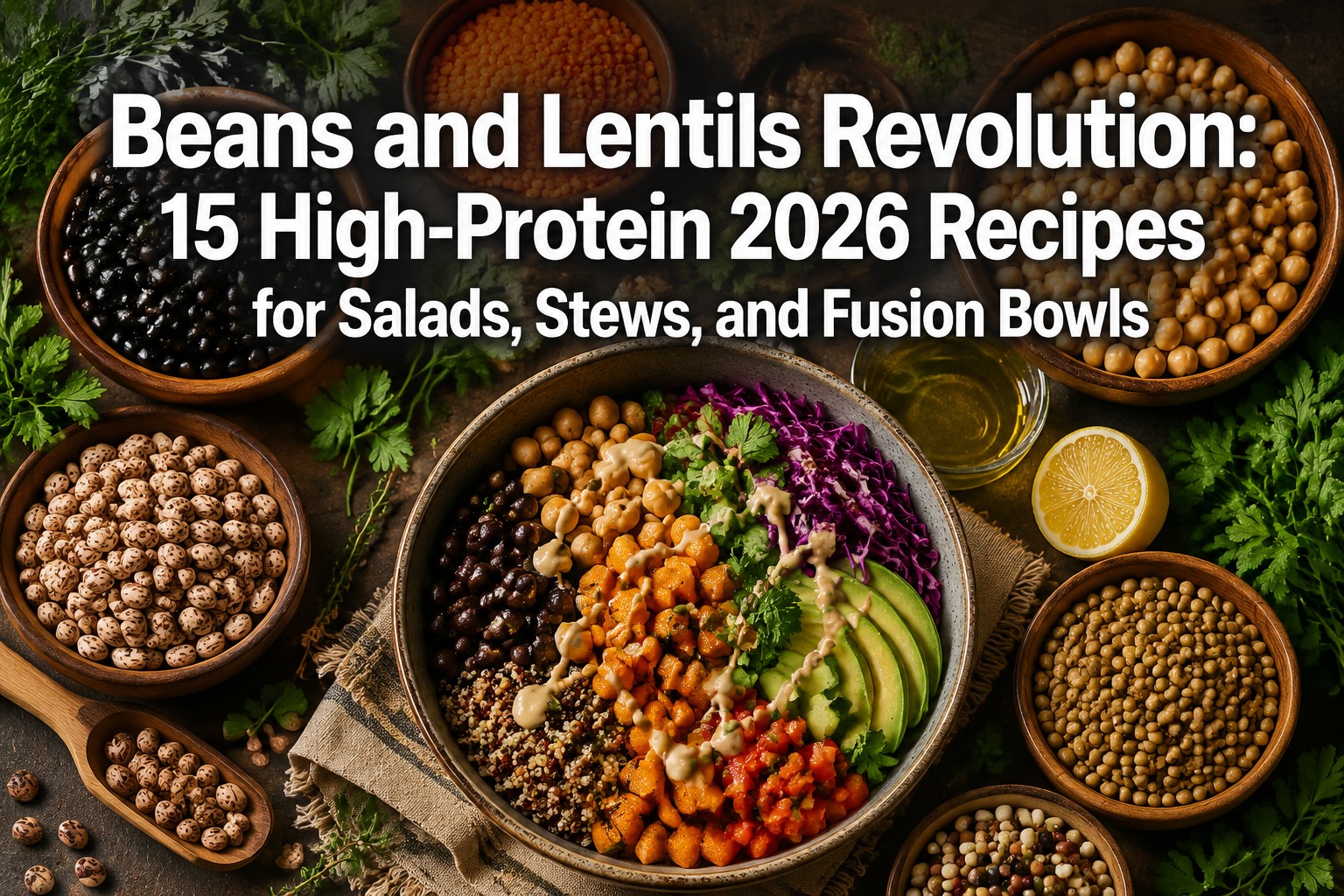
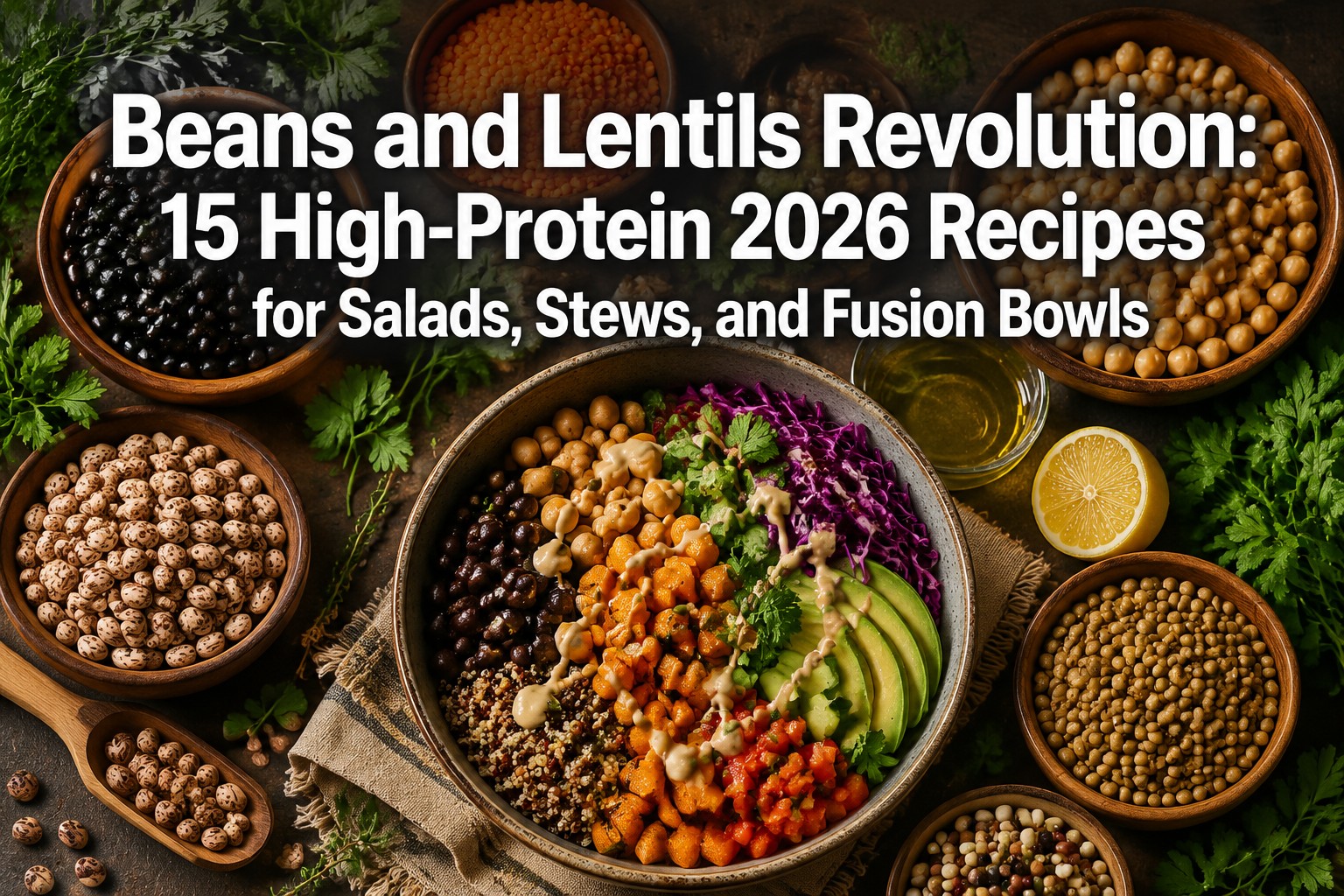
Beans and Lentils Revolution: 15 High-Protein 2026 Recipes for Salads, Stews, and Fusion Bowls
Last updated: May 9, 2026
Quick Answer
The Beans and Lentils Revolution: 15 High-Protein 2026 Recipes for Salads, Stews, and Fusion Bowls represents a shift toward affordable, protein-rich plant-based meals that deliver 15-25g of protein per serving. These recipes combine traditional legumes like red lentils and chickpeas with emerging varieties such as tepary beans, using global flavors and simple cooking methods to create satisfying salads, hearty stews, and customizable fusion bowls. Most recipes require 20-30 minutes of active prep and cost $1-3 per serving.
Key Takeaways
- Protein powerhouses: Beans and lentils deliver 15-25g protein per cooked cup, rivaling many meat options at a fraction of the cost
- Budget-friendly: Dry legumes cost $1-2 per pound, making high-protein meals affordable during 2026’s food inflation
- Quick cooking: Red lentils cook in 15-20 minutes; pressure cookers reduce bean cooking time to under 30 minutes
- Tepary beans: This drought-resistant variety offers 22g protein per cup and thrives in 2026’s climate challenges[1]
- Fusion flexibility: Bean and lentil bases adapt to Mediterranean, Asian, Latin, and Middle Eastern flavor profiles
- Meal prep ready: Most recipes store 4-5 days refrigerated or freeze for up to 3 months
- Health boost: UK’s 2026 “Bang in Some Beans” campaign links daily legume intake to long-term health benefits[3]
Why Are Beans and Lentils Dominating 2026 Protein Trends?
Beans and lentils are taking center stage in 2026 because they solve three major challenges: rising food costs, protein needs, and sustainability concerns. With food inflation spiking 12% in Q1 2026, legumes offer 20-30% more protein per dollar than meat while requiring less water and land to produce[4].
The UK’s official “Bang in Some Beans” campaign launched in early 2026 specifically promotes daily pulse intake for health, with nutritionists forecasting 15-20% market growth in lentil and bean bowls by Q4 2026[3]. This isn’t just marketing—tepary beans, highlighted in Boonville Barn Collective’s Bean Month 2026, demonstrate how climate-adapted varieties can deliver 22g protein per cup while thriving in drought conditions[1].
Choose beans and lentils if you:
- Need 15-25g protein per meal without meat
- Want meals under $3 per serving
- Prefer 30-minute or less cooking times
- Follow plant-based or flexitarian diets
Common mistake: Assuming all legumes cook the same. Red lentils soften in 15 minutes, while chickpeas need 60-90 minutes unless pressure-cooked.
What Makes These 15 High-Protein Recipes Different?
These recipes go beyond basic bean soups by incorporating global fusion techniques, strategic protein stacking, and 2026’s emerging legume varieties. Each recipe targets 18-30g protein per serving through combinations like lentils with bulgur (Entilufte patties deliver 15g from 1 cup lentils plus 12g from bulgur)[2], or tepary bean stews with curry spices that boost both flavor and protein absorption.
The collection spans three categories:
Salads (5 recipes)
- Cold prep, 10-15 minutes assembly
- Protein range: 15-20g per serving
- Examples: Mediterranean chickpea salad, black bean-corn fusion, tepary bean tabbouleh
Stews (5 recipes)
- One-pot cooking, 25-40 minutes total
- Protein range: 20-25g per serving
- Examples: Curry-spiced tepary bean soup (adapted from Bean Month 2026)[1], red lentil dal, white bean cassoulet
Fusion Bowls (5 recipes)
- Customizable bases, 20-30 minutes
- Protein range: 22-30g per serving
- Examples: Korean-inspired black bean bowl, Middle Eastern lentil-bulgur bowl, Mexican bean burrito bowl
Decision rule: Pick salads for meal prep (they improve overnight), stews for batch cooking, and fusion bowls when you want variety from one base recipe.
How Do You Build a High-Protein Bean or Lentil Salad?
Start with 1.5 cups cooked legumes per serving (18-22g protein), add a whole grain or pseudo-grain for texture and extra protein, then layer vegetables and a fat-based dressing. The key is balancing soft beans with crunchy elements and acidic components that brighten flavors.
Basic formula for 4 servings:
- Protein base: 6 cups cooked beans or lentils (chickpeas, black beans, or French lentils hold shape best)
- Grain layer: 2 cups cooked quinoa, farro, or bulgur (adds 8-12g protein per serving)
- Vegetables: 2 cups diced (tomatoes, cucumbers, peppers, red onion)
- Fresh herbs: 1 cup chopped (parsley, cilantro, mint)
- Dressing: 1/3 cup olive oil, 3 tbsp lemon juice or vinegar, 1 tsp salt, spices to taste[2]
Mediterranean Chickpea Power Salad
- 6 cups cooked chickpeas (24g protein per serving)
- 2 cups cooked farro
- Cherry tomatoes, cucumber, red onion, Kalamata olives
- Lemon-oregano dressing with 1/3 cup olive oil
- Crumbled feta (optional, adds 4g protein)
- Total protein: 28g per serving
Edge case: If beans taste bland, they need more salt and acid. Add 1-1.5 tsp salt per 6 cups beans, plus 3-4 tbsp lemon juice or vinegar.
For readers looking to compare plant-based protein sources with animal options, our guide on whole chicken breast protein content shows how different proteins stack up nutritionally.
What Are the Best Stew Recipes in the Beans and Lentils Revolution?
The standout stew from 2026’s bean movement is the curry-spiced tepary bean soup from Boonville Barn Collective’s Bean Month, which substitutes tepary beans for standard lentils to boost protein from 18g to 22g per serving[1]. This recipe serves 4-6 and takes 35-40 minutes total.
Tepary Bean Curry Stew (adapted from Bean Month 2026)
- Soak 2 cups dry tepary beans overnight, or quick-soak 1 hour
- Boil beans in 6 cups water for 25-30 minutes until tender
- Sauté 3 diced onions in 2 tbsp olive oil until golden
- Add 1-2 tbsp curry powder, 1 tsp cumin, 1/2 tsp cayenne (adjust to taste)
- Combine beans, onions, spices, and 2 cups vegetable broth
- Simmer 10 minutes, finish with 2 tbsp lemon juice and 1 cup chopped parsley
- Season with 1-1.5 tsp salt[1]
Red Lentil Dal (15-minute version)
- 1 cup red lentils (rinse well)
- 3 cups water or broth
- 1 can coconut milk
- 2 tbsp curry paste or powder
- 1 diced onion, 3 minced garlic cloves
- Ginger, turmeric, cumin to taste
- Boil lentils 15-20 minutes until soft[2]
- Protein: 18g per serving
White Bean Tuscan Stew
- 4 cups cooked cannellini beans
- 4 cups vegetable broth
- 2 cups chopped kale
- 4 minced garlic cloves, 1 tbsp rosemary
- 1/4 cup olive oil, 1 tsp salt
- Simmer 20 minutes
- Protein: 20g per serving
Common mistake: Overcooking lentils turns them mushy. Red lentils need exactly 15-20 minutes; check at 15 minutes and drain immediately when tender.
How Do Fusion Bowls Maximize Protein from Beans and Lentils?
Fusion bowls layer multiple protein sources—typically beans or lentils plus a grain, topped with nuts, seeds, or a protein-rich sauce—to reach 25-30g per serving. The base formula uses 1.5 cups legumes (20g) plus 1 cup grain (8g) plus toppings (2-5g).
Master Fusion Bowl Template
- Base layer: 1 cup cooked grain (brown rice, quinoa, farro)
- Protein layer: 1.5 cups seasoned beans or lentils
- Vegetable layer: 1 cup roasted or raw vegetables
- Sauce: 2-3 tbsp tahini, peanut sauce, or yogurt-based dressing
- Toppings: 2 tbsp seeds/nuts, fresh herbs, lime wedge
Korean-Inspired Black Bean Bowl
- Brown rice base
- Black beans sautéed with gochujang and sesame oil
- Kimchi, shredded carrots, cucumber
- Gochujang-tahini sauce (mix 2 tbsp each)
- Sesame seeds and scallions
- Protein: 27g per serving
Middle Eastern Lentil-Bulgur Bowl (Entilufte-inspired) Based on the Armenian recipe from Slate’s 2026 Lent collection, this bowl uses the same lentil-bulgur mixture as patties but serves it warm over greens[2]:
- 1 cup red lentils, boiled 15-20 minutes
- 1 cup bulgur, soaked in hot water 15 minutes
- Mix with 1/3 cup olive oil, sautéed onions, parsley
- Serve over arugula with lemon wedges
- Top with cucumber-tomato salad
- Protein: 30g per serving (18g lentils + 12g bulgur)
Mexican Bean Burrito Bowl
- Cilantro-lime rice
- Pinto beans with cumin and chili powder
- Corn, black beans, pico de gallo
- Avocado, pepitas, lime crema
- Protein: 25g per serving
Decision rule: Choose grain bases by cooking time. Quinoa cooks in 15 minutes, brown rice needs 45 minutes, but instant brown rice cuts that to 10 minutes.
While beans and lentils offer excellent plant-based protein, readers comparing protein sources might find our article on chicken breast versus thigh nutrition helpful for understanding different protein profiles.
What Cooking Methods Work Best for 2026 Bean and Lentil Recipes?
The fastest methods for 2026 are pressure cooking (Instant Pot), stovetop boiling for lentils, and batch cooking with freezer storage. Pressure cookers reduce bean cooking from 60-90 minutes to 20-30 minutes without soaking.
Cooking time comparison (1 cup dry legumes):
| Legume Type | Stovetop (soaked) | Stovetop (unsoaked) | Pressure Cooker | Protein per cup cooked |
|---|---|---|---|---|
| Red lentils | 15-20 min | 15-20 min | 8-10 min | 18g |
| Green/brown lentils | 25-30 min | 35-40 min | 12-15 min | 18g |
| Black beans | 60-90 min | 90-120 min | 20-25 min | 15g |
| Chickpeas | 60-90 min | 90-120 min | 25-30 min | 15g |
| Tepary beans | 60-75 min | 90-120 min | 20-25 min | 22g[1] |
Quick-soak method (when you forgot to soak overnight):
- Boil beans in water for 2 minutes
- Remove from heat, cover, let sit 1 hour
- Drain, rinse, cook as normal
- Cuts cooking time by 30-40%
Batch cooking strategy:
- Cook 4-6 cups dry beans on Sunday
- Divide into 2-cup portions (one recipe’s worth)
- Freeze in containers or bags
- Thaw overnight in fridge or 5 minutes in microwave
- Lasts 3 months frozen, 5 days refrigerated
Common mistake: Adding salt or acidic ingredients (tomatoes, lemon) at the start of cooking toughens beans. Add these in the final 10 minutes.
How Do You Adapt These Recipes for Different Dietary Needs?
All 15 recipes in the Beans and Lentils Revolution are naturally gluten-free if you substitute bulgur or farro with quinoa or rice. They’re vegan by default except for optional cheese toppings, and they work for low-FODMAP diets if you use canned beans (rinsed well) instead of cooking from dry.
Adaptations by dietary need:
Gluten-free
- Replace bulgur → quinoa or rice
- Replace farro → millet or buckwheat
- Check curry powder and spice blends for wheat fillers
Low-FODMAP
- Use canned beans, rinse thoroughly (removes oligosaccharides)
- Limit serving to 1/2 cup beans per meal
- Choose lentils over chickpeas (lower FODMAP)
- Skip onions and garlic; use garlic-infused oil instead
High-protein (30g+ per serving)
- Double the bean portion to 2 cups
- Add 1/4 cup hemp hearts (10g protein)
- Use protein-rich grains: quinoa over rice, farro over couscous
- Top with 2 tbsp tahini (5g protein)
Budget optimization (under $2 per serving):
- Buy dry beans in bulk ($1-1.50/lb vs. $2-3 for canned)
- Use seasonal vegetables
- Skip specialty ingredients like tahini; use peanut butter
- Freeze portions to prevent waste[4]
Edge case: If beans cause digestive discomfort, try these steps in order: rinse canned beans thoroughly, cook with kombu seaweed (reduces gas), start with small portions (1/2 cup) and increase gradually, or choose easier-to-digest lentils over beans.
For readers interested in other high-protein cooking methods, our guide on how chicken breast protein varies by cooking method offers useful comparisons.
What Are the Top 5 Salad Recipes from the Revolution?
These five salads deliver 18-25g protein per serving, require no cooking beyond boiling legumes, and improve in flavor after 24 hours in the fridge, making them ideal for meal prep.
1. Mediterranean Chickpea Power Salad (28g protein)
- 6 cups chickpeas, 2 cups farro, cherry tomatoes, cucumber, olives, feta
- Lemon-oregano dressing
- Prep: 15 minutes (if beans pre-cooked)
2. Black Bean-Corn Fiesta Salad (22g protein)
- 6 cups black beans, 2 cups corn, red peppers, red onion, cilantro
- Lime-cumin dressing with 1/3 cup olive oil
- Avocado and pepitas on top
- Prep: 10 minutes
3. Tepary Bean Tabbouleh (24g protein)
- 4 cups cooked tepary beans (substitute for bulgur in traditional tabbouleh)
- 4 cups chopped parsley, 1 cup mint
- 2 cups diced tomatoes, 1 cup cucumber
- Lemon-olive oil dressing (1/2 cup oil, 1/4 cup lemon juice)[1]
- Prep: 20 minutes
4. French Lentil Salad with Dijon (20g protein)
- 6 cups cooked French (Puy) lentils
- Shallots, carrots, celery
- Dijon vinaigrette (2 tbsp Dijon, 1/3 cup olive oil, 2 tbsp red wine vinegar)
- Fresh thyme
- Prep: 25 minutes (includes lentil cooking)
5. White Bean-Arugula Salad (18g protein)
- 6 cups cannellini beans
- 4 cups arugula
- Sun-dried tomatoes, shaved Parmesan
- Balsamic-garlic dressing
- Pine nuts
- Prep: 10 minutes
Pro tip: Make dressing separately and add just before serving to keep salads crisp for 5 days. Beans absorb dressing over time, so you may need to add more lemon juice or vinegar before eating leftovers.
What Are the Top 5 Stew Recipes for High Protein?
These stews range from 20-25g protein per serving and work for batch cooking—most recipes yield 6-8 servings and freeze well for up to 3 months.
1. Curry-Spiced Tepary Bean Stew (22g protein)
- Adapted from Boonville Barn’s Bean Month 2026[1]
- 2 cups dry tepary beans, 3 onions, 1-2 tbsp curry powder
- 35-40 minutes total
- Serves 4-6
2. Red Lentil Coconut Dal (18g protein)
- 1 cup red lentils, 1 can coconut milk
- Curry paste, ginger, garlic, turmeric
- 20 minutes total[2]
- Serves 4
3. White Bean Tuscan Stew (20g protein)
- 4 cups cannellini beans, 4 cups broth, 2 cups kale
- Rosemary, garlic, olive oil
- 25 minutes
- Serves 6
4. Black Bean Chili (23g protein)
- 6 cups black beans, 1 can diced tomatoes, 2 cups vegetable broth
- Chili powder, cumin, smoked paprika
- Optional: top with Greek yogurt (adds 5g protein)
- 30 minutes
- Serves 8
5. Lentil-Vegetable Stew (21g protein)
- 2 cups green lentils, 4 cups mixed vegetables (carrots, celery, potatoes)
- Tomato paste, bay leaves, thyme
- 40 minutes
- Serves 6
Serving suggestion: Pair stews with whole-grain bread or over brown rice to boost protein to 28-32g per serving. Freeze individual portions in 2-cup containers for quick weeknight meals.
What Are the Top 5 Fusion Bowl Recipes?
These bowls combine global flavors with strategic protein stacking to reach 25-30g per serving. Each recipe serves 4 and takes 25-35 minutes with pre-cooked beans.
1. Korean Black Bean Bowl (27g protein)
- Brown rice, black beans with gochujang
- Kimchi, carrots, cucumber
- Gochujang-tahini sauce, sesame seeds
- 25 minutes
2. Middle Eastern Lentil-Bulgur Bowl (30g protein)
- Red lentils and bulgur mixture (Entilufte-inspired)[2]
- Arugula base, cucumber-tomato salad
- Lemon wedges, olive oil drizzle
- 30 minutes
3. Mexican Burrito Bowl (25g protein)
- Cilantro-lime rice, pinto beans
- Corn, pico de gallo, avocado
- Lime crema, pepitas
- 25 minutes
4. Thai Peanut Lentil Bowl (28g protein)
- Jasmine rice, green lentils
- Shredded cabbage, carrots, edamame
- Peanut sauce (peanut butter, lime, soy sauce, ginger)
- Crushed peanuts, cilantro
- 30 minutes
5. Mediterranean Chickpea Bowl (26g protein)
- Quinoa, chickpeas with za’atar
- Roasted red peppers, cucumber, tomatoes
- Tahini-lemon sauce, Kalamata olives
- Fresh mint, feta (optional)
- 35 minutes (includes roasting peppers)
Customization tip: Prep components separately on Sunday—cook grains, beans, and chop vegetables. Store in separate containers and assemble bowls throughout the week with different sauce combinations for variety.
How Do You Store and Meal Prep These Recipes?
Most bean and lentil recipes store 4-5 days refrigerated or 3 months frozen. Salads and fusion bowls require separate storage of wet and dry components to maintain texture.
Storage guidelines by recipe type:
Salads
- Store dressing separately in small jar
- Keep 4-5 days refrigerated
- Don’t freeze (vegetables get mushy)
- Add fresh herbs just before serving
Stews
- Store in airtight containers
- Refrigerate 5-6 days
- Freeze 3 months in portion-sized containers
- Reheat on stovetop or microwave, adding water if thickened
Fusion bowls
- Store components separately:
- Grains: 5 days refrigerated, 3 months frozen
- Beans: 5 days refrigerated, 3 months frozen
- Raw vegetables: 3-4 days refrigerated, don’t freeze
- Sauces: 1 week refrigerated, 2 months frozen
- Assemble just before eating
Batch cooking schedule (Sunday meal prep):
- Hour 1: Start beans in pressure cooker or on stovetop
- Hour 1-2: While beans cook, chop vegetables, make dressings
- Hour 2: Cook grains (rice, quinoa, farro)
- Hour 2-3: Assemble salads, portion stews, pack bowl components
- Result: 12-15 meals ready for the week
Common mistake: Freezing beans in large batches. Freeze in 2-cup portions (one recipe’s worth) so you can thaw exactly what you need.
FAQ
How much protein do beans and lentils really provide? Cooked beans and lentils provide 15-22g protein per cup. Tepary beans lead at 22g, followed by lentils at 18g, and black beans or chickpeas at 15g per cup[1]. This matches or exceeds many meat alternatives.
Can you get complete protein from beans and lentils alone? Beans and lentils are incomplete proteins (low in methionine) but become complete when paired with grains, nuts, or seeds within the same day. You don’t need to combine them in one meal—your body pools amino acids throughout the day.
Do you have to soak beans before cooking? Soaking reduces cooking time by 30-40% and may improve digestibility, but it’s not required. Lentils never need soaking. For beans, use the quick-soak method (boil 2 minutes, rest 1 hour) if you forgot to soak overnight.
Why do my beans taste bland? Beans need more salt and acid than you think. Add 1-1.5 tsp salt per 6 cups cooked beans, plus 3-4 tbsp lemon juice or vinegar. Add these after cooking—salt and acid during cooking toughens beans.
How long do cooked beans last in the fridge? Cooked beans last 5 days refrigerated in airtight containers or 3 months frozen. Cool completely before refrigerating to prevent bacterial growth. If beans smell sour or develop slime, discard them.
Are canned beans as nutritious as dried? Canned beans have the same protein and fiber as home-cooked but contain more sodium (300-500mg per cup vs. 0-10mg). Rinse canned beans thoroughly to remove 40% of sodium. Canned beans cost 2-3x more than dried but save 60-90 minutes cooking time.
What’s the difference between red and green lentils? Red lentils cook faster (15-20 minutes) and break down into a creamy texture, perfect for dal and soups. Green and brown lentils take 25-30 minutes and hold their shape, better for salads and bowls[2]. Both provide 18g protein per cup.
Can you cook beans without a pressure cooker? Yes, stovetop cooking works fine—it just takes longer. Soaked beans need 60-90 minutes of simmering, unsoaked beans need 90-120 minutes. Lentils cook in 15-30 minutes on the stovetop without any special equipment.
How do you prevent gas from beans? Rinse canned beans thoroughly, cook dried beans with kombu seaweed, start with small portions (1/2 cup) and increase gradually, or choose lentils which cause less gas than beans. Your digestive system adapts with regular consumption.
What are tepary beans and where do you find them? Tepary beans are drought-resistant legumes native to the Southwest US and Mexico, offering 22g protein per cup—higher than most beans. Find them at specialty stores, online retailers, or through sources like Boonville Barn Collective[1]. They cook like pinto beans.
Can you meal prep these recipes for the whole week? Yes, stews and cooked beans/lentils last 5 days refrigerated. For salads and bowls, store components separately and assemble daily. Freeze extra portions for weeks 2-4 to maintain variety without daily cooking.
Are these recipes actually budget-friendly in 2026? Yes, dry beans cost $1-2 per pound and yield 6-7 cups cooked, making meals $1-3 per serving even with vegetables and grains. This beats meat-based meals by 50-70%, crucial during 2026’s 12% food inflation[4].
Conclusion
The Beans and Lentils Revolution: 15 High-Protein 2026 Recipes for Salads, Stews, and Fusion Bowls offers a practical solution to three major challenges facing home cooks in 2026: rising food costs, protein needs, and time constraints. With recipes delivering 18-30g protein per serving at $1-3 per meal, these dishes prove that plant-based eating can be both affordable and satisfying.
The key to success is batch cooking and smart storage. Spend 2-3 hours on Sunday cooking beans, grains, and chopping vegetables, then assemble meals throughout the week in 5-10 minutes. Start with one category—salads for cold prep, stews for comfort food, or fusion bowls for variety—and master 2-3 recipes before expanding your rotation.
Your next steps:
- Choose 3 recipes from different categories (one salad, one stew, one bowl)
- Buy dry beans or lentils in bulk this week ($5-10 investment)
- Batch cook on your next free afternoon
- Store components separately for maximum freshness
- Track which recipes you enjoy and adjust seasonings to your taste
The revolution isn’t about perfection—it’s about adding more affordable, protein-rich plant-based meals to your weekly rotation. Start with the 15-minute red lentil dal or the Mediterranean chickpea salad, both requiring minimal ingredients and delivering maximum protein. Your wallet, your health, and your meal planning stress will thank you.
For readers exploring diverse protein sources beyond beans and lentils, our comprehensive guide on chicken breast cooking methods provides additional high-protein meal ideas.
References
[1] All The Recipes From Bean Month 2026 – https://www.boonvillebarn.com/blogs/recipes/all-the-recipes-from-bean-month-2026
[2] Lent 2026 Dates Ends Easter Recipes – https://slate.com/life/2026/04/lent-2026-dates-ends-easter-recipes.html
[3] Bang In Your Beans The Healthiest Habit You Ll Build In 2026 – https://thegovernorevoo.co.uk/blogs/news/bang-in-your-beans-the-healthiest-habit-you-ll-build-in-2026
[4] Budget Friendly Bean Recipes To Save Money During 2026s Inflation – https://www.tablemagazine.com/budget-friendly-bean-recipes-to-save-money-during-2026s-inflation/